Assurance to all age groups. 12-14. Assurance. 12-13. God Abides in us. 14. Escaped the Wicked one. 13,14. Strength in the Word. 14.
Love not the world. 15-17. Abide in the world or Abide in the Father. “And the world passeth away, and the lust thereof: but he that doeth the will of God abideth for ever.”
Here’s a link to all the published studies from 1 John.
The Franklin and Juniper church of Christ begins an overview study of the book of 1John. If you live in the Borger area, We invite you to join us at 9:30am each Sunday Morning.
Why do we doubt? What is the source of doubt? This series of articles will seek to search the scriptures for the answer, and to learn how to combat, or to Overcome Doubt.
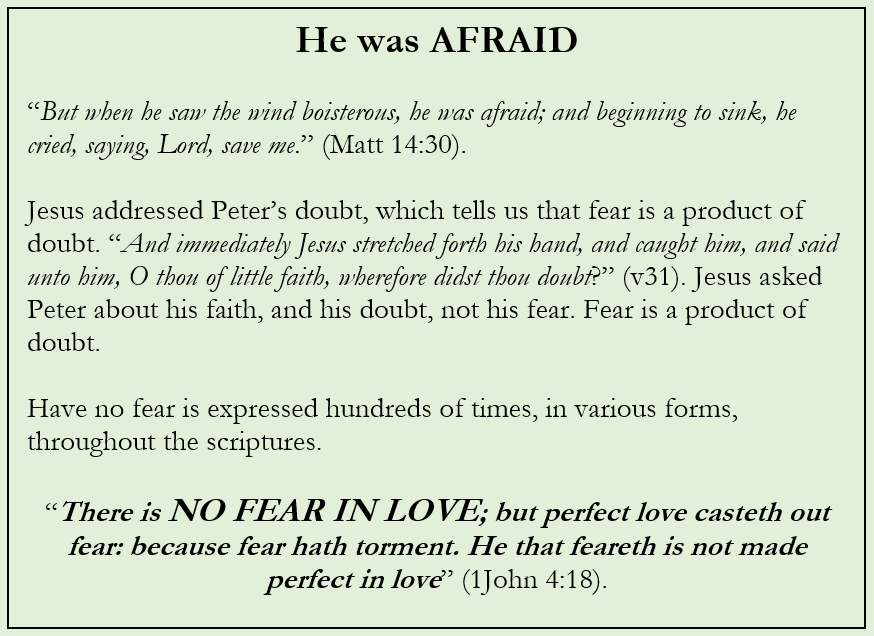
Jesus asked this question of Peter when he began to sink after walking on the water.
“And in the fourth watch of the night Jesus went unto them, walking on the sea. And when the disciples saw him walking on the sea, they were troubled, saying, It is a spirit; and they cried out for fear. But straightway Jesus spake unto them, saying, Be of good cheer; it is I; be not afraid. And Peter answered him and said, Lord, if it be thou, bid me come unto thee on the water. And he said, Come. And when Peter was come down out of the ship, he walked on the water, to go to Jesus. But when he saw the wind boisterous, he was afraid; and beginning to sink, he cried, saying, Lord, save me. And immediately Jesus stretched forth his hand, and caught him, and said unto him, O thou of little faith, wherefore didst thou doubt? And when they were come into the ship, the wind ceased. Then they that were in the ship came and worshipped him, saying, Of a truth thou art the Son of God”
(Matthew 14:25-23).
You may wonder why the Lord was so critical of Peter’s doubt, because walking on water is not normal. But that was not the Lord’s rebuke. Peter was walking on water. Jesus was walking on water. They both walked on water together in the storm.
Do we also doubt in the storms of life? Why do we doubt? What is the source of doubt? This series of articles will seek to search the scriptures for the answer, and to learn how to combat, or to Overcome Doubt.
The first thing we ought to do is to make certain we know what it means. Jesus asked Peter, “why did you doubt (duplicate, i.e. mentally to waver in opinion) [Strong’s Greek dictionary; distazo]. The dictionary defines doubt as; “to be uncertain about; consider questionable or unlikely; hesitate to believe.” DOUBT is the opposite of BELIEF. Therefore, our first source of DOUBT is DISBELIEF. This will be the ultimate root of all the sources.
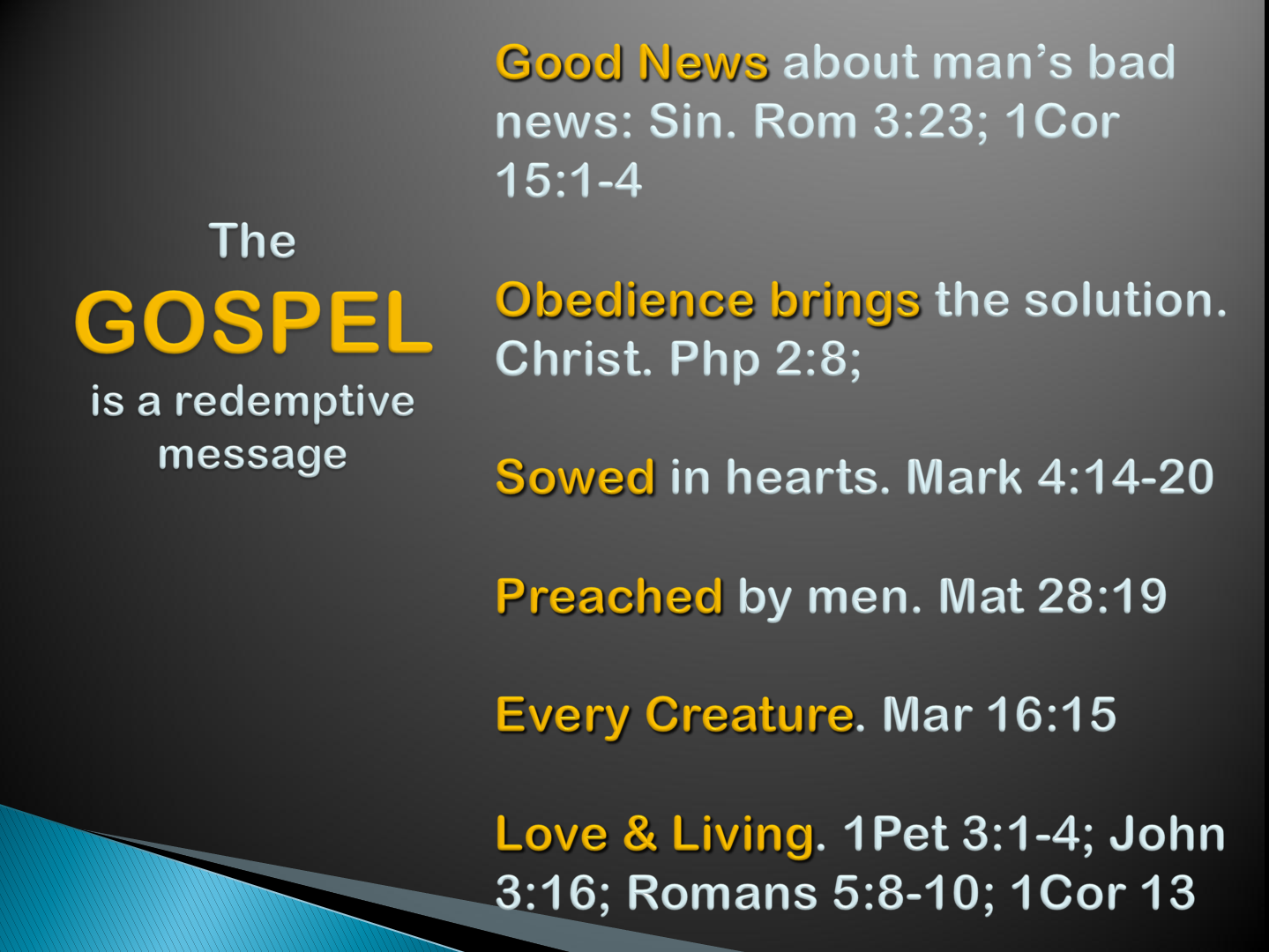
DISBELIEF is the target of the Lord’s question to Peter (v31), and is our challenge today. Belief in God is the beginning of our salvation. It’s placed first of all other commands in obeying the gospel. Works without faith is vanity. Faith is a work (John 6:29; 1Thess 1:3; 2Thess 1:11).
“But without faith it is impossible to please him: for he that cometh to God must believe that he is, and that he is a rewarder of them that diligently seek him” (Hebrews 11:6).
“He that believeth and is baptized shall be saved; but he that believeth not shall be damned” (Mark 16:16).
The type of Belief under consideration is compared to the faith of Abraham when he went to sacrifice the son of promise. “Was not Abraham our father justified by works, when he had offered Isaac his son upon the altar? Seest thou how faith wrought with his works, and by works was faith made perfect? And the scripture was fulfilled which saith, Abraham believed God, and it was imputed unto him for righteousness: and he was called the Friend of God. Ye see then how that by works a man is justified, and not by faith only” (James 2:21-24). His belief was so certain that he supposed God would raise Isaac from the dead (Heb 11:17).
However, faith is not blind. “Now faith is the substance of things hoped for, the evidence of things not seen” (Hebrews 11:1). There’s evidence to believe. Peter’s evidence was the prior miracles of Jesus (which are still evidence for us today John 20:30-31). Peter had participated in the feeding of the 5,000 just preceding his water ambulation. How many steps he made on the water we do not know, but one step out of a boat into the deep stormy waters is sufficient. He had gone out in the limited commission with powers, “against unclean spirits, to cast them out, and to heal all manner of sickness and all manner of disease” (Matthew 10:1).
Well, that was Peter you may say; what about us? We don’t see those miracles today. No, we don’t see biblical miracles today, but that’s okay. The miracles Peter saw, and those in the early church are for our belief. “And many other signs truly did Jesus in the presence of his disciples, which are not written in this book: But these are written, that ye might believe that Jesus is the Christ, the Son of God; and that believing ye might have life through his name” (John 20:30-31). But there’s more…
God’s word says that God’s creation is for belief. “Because that which may be known of God is manifest in them; for God hath shewed it unto them. For the invisible things of him from the creation of the world are clearly seen, being understood by the things that are made, even his eternal power and Godhead; so that they are without excuse” (Romans 1:19-20). God’s creation is enough to begin our belief in Him.
Paul used this same evidence for belief. “Nevertheless he left not himself without witness, in that he did good, and gave us rain from heaven, and fruitful seasons, filling our hearts with food and gladness” (Acts 14:17; 17:27-28). The evidence of creation and human life will point you in the right direction to look further. There are only 2 possibilities about creation: 1) that everything came from a thoughtless nothing, or 2) everything came from a very wise, powerful, and brilliant God.
Belief is not blind. It has evidence and there’s so much evidence inside and outside of scripture. If you doubt, perhaps a study of evidences is for you to combat that doubt. Here are a few areas to study…
I have a few resources in my library. One of my favorites is by a brother in Christ named A.O. Schnabel, “Has God Spoken?” This book references scriptures of nature that science discovered many hundreds and thousands of years later. Some discoveries as recent as the 1960’s!
There’s no need to doubt. We can know and be assured.
“He that rejecteth me, and receiveth not my words, hath one that judgeth him: the word that I have spoken, the same shall judge him in the last day.” (John 12:48)
That’s an interesting verse, at least it ought to interest us. On the day of judgment, Christ will be on His judgment seat, and will judge us by the word He has spoken to us. Yet, some say, “I don’t like to read.”
I get it, the bible can be challenging to read, but you need not go it alone. There are plenty of tools and people to help you leverage your reading.
Attend an assembly of the church of Christ where you will hear a message from the bible. Come a little early and sit in on a bible study. These studies will leverage your reading.
Better still, ask for a personal home bible study where someone will come and help you with questions directly affecting your life right now.
While some may tell you that there is nothing one must do, the bible paints a much different picture.
“Therefore whosoever heareth these sayings of mine, and doeth them, I will liken him unto a wise man, which built his house upon a rock.” (Matthew 7:24).
“And why call ye me, Lord, Lord, and do not the things which I say” (Luke 6:46)?
“But he said, Yea rather, blessed are they that hear the word of God, and keep it” (Luke 11:28).
“Little children, let no man deceive you: he that doeth righteousness is righteous, even as he is righteous” (1John 3:7).
“If any man think himself to be a prophet, or spiritual, let him acknowledge that the things that I write unto you are the commandments of the Lord” (1Corinthians 14:37).
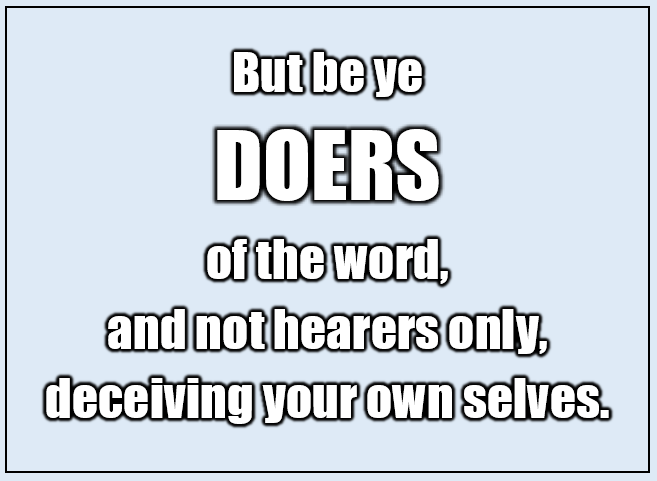
“But be ye doers of the word, and not hearers only, deceiving your own selves” (James 1:22).
Putting all of these lessons together we discover how to know what God requires of man.
By Rightly dividing the word of truth, we recognize that we are living under the New Testament covenant and are not bound to the Law of Moses.
By Examining the word, and ourselves, we learn that we all fall short of the glory of God and need to make some changes.
By recognizing that Jesus has All Authority, we are to listen to Him. No longer is anyone under the Law of Moses nor the earlier patriarchal law.
By reading the cited passages above, it’s not enough to believe (which is absolutely essential) but we are to be DOERS also of what is commanded in the New Testament.
There are 4 steps to becoming a DOER of the word of Christ.
Step one, we must DESIRE to do His will. It’s not enough to comply without having our heart involved. Faith without works is dead being alone, James wrote (James 2:17). It’s also true that works without faith (faith comes by hearing) is dead also being done in vain (cf. Matthew 7:21-23; Romans 10:17; 14:23).
Step two, after we desire to do His will, we must OBEY. Obedience to the commands of God is not legalism, it’s submitting to His will. Here’s a question; which direct commands of God can one ignore and still consider himself a follower of Christ? (read Luke 6:46 again if you have any doubt)
Step three, be an immediate Doer. The faithful child of God, upon learning of a command of God, puts it into practice immediately. We see this when they “rose EARLY” to comply as did Abraham (Gen 22:3), as we see with the Jailor upon hearing what he needed to do to be saved. “And he took them the same hour of the night, and washed their stripes; and was baptized, he and all his, straightway” (Acts 16:33). When is the best time to comply with a command of our Lord and Savior Jesus Christ?
Step four is of great importance. We will make some mistakes, but that doesn’t mean we’re lost every time we stumble. The child of God has the avenue of confessing our sins and REPENTANCE. The church at Corinth repented of their faults, and John gives us assurance of our salvation. “If we confess our sins, he is faithful and just to forgive us our sins, and to cleanse us from all unrighteousness” (1John 1:9).
God loves us. We know that He loves because He sent His Son. His Son loves us because He gave His life for us. We know about this love because the Holy Spirit was sent to reveal the will of God for us in the word.
Agape,
Spencer
Here is a link to a page with some Frequently Asked Questions.


 Borger church of Christ @ Franklin & Juniper