Why some don’t Read the Bible

Why don’t people read the Bible?

They DON’T like to read.

they’re APATHETIC & have unbelief

Not ENOUGH time to read.

They Reject it because it’s too REPULSIVE.

For a book that has shaped history, guided nations, and transformed lives, the Bible often sits unopened. The reasons are not always complex—but they are revealing.

First, some simply don’t like to read. In a fast-paced world driven by screens and short attention spans, reading itself feels like a chore. The Bible, with its length and depth, can seem especially intimidating. For those who already avoid reading, opening Scripture rarely becomes a priority.

Jesus answered and said unto them, Ye do err, not knowing the scriptures, nor the power of God. (Matthew 22:29)

Others struggle with apathy and unbelief. If someone doubts the Bible’s relevance or truth, motivation quickly fades. It becomes easy to think, “It doesn’t apply to me,” or “I don’t believe it anyway.” This quiet indifference can be more powerful than outright rejection, because it removes any urgency to explore what the Bible actually says.

He that rejecteth me, and receiveth not my words, hath one that judgeth him: the word that I have spoken, the same shall judge him in the last day.” (John 12:48)

A common excuse is lack of time. Life fills up with work, responsibilities, family, and constant distractions. Yet this reason often reveals more about priorities than availability. People tend to make time for what they value. When the Bible is seen as optional, it is often the first thing pushed aside.

And these are they which are sown among thorns; such as hear the word,
And the cares of this world, and the deceitfulness of riches, and the lusts of other things entering in, choke the word, and it becometh unfruitful
.” (Mark 4:18)

Finally, some reject the Bible because they find it repulsive. Certain passages challenge modern values, confront personal behavior, present difficult truths, and in some cases are gruesome to them. Rather than wrestle with these tensions, some choose to dismiss the message entirely. Conviction can feel uncomfortable, and avoidance becomes the easier path.

For whatsoever things were written aforetime were written for our learning, that we through patience and comfort of the scriptures might have hope.” (Romans 15:4)

These reasons—dislike of reading, apathy, busyness, and rejection—may differ on the surface, but they share a common thread: they keep people from engaging with something that has the power to shape their lives. Understanding these barriers is the first step toward overcoming them.

My people are destroyed for lack of knowledge: because thou hast rejected knowledge, I will also reject thee, that thou shalt be no priest to me: seeing thou hast forgotten the law of thy God, I will also forget thy children.” (Hosea 4:6)

What’s your reason?

agape

spencer

Blood in God’s plan

Blessed be the God and Father of our Lord Jesus Christ, who hath blessed us with all spiritual blessings in heavenly places in Christ” (Eph 1:3)

As we continue to count our spiritual blessings in Christ, today is a fitting time to talk about the blessings we have in Christ through His blood. For us to appreciate the full impact of this blessing, we need to go back and see the impact of blood in the Old Testament.

The first implied reference to blood appears in Genesis 3, when God took animal skins to cover Adam and Eve after their sin. “Unto Adam also and to his wife did the LORD God make coats of skins, and clothed them” (Gen 3:21).

The next reference we find in the scene with Cain and Abel. Abel made an offering to the Lord from the firstlings of his flock. It says, “And the LORD had respect unto Abel and to his offering” (Gen 4:4; cf. Heb 11:4). Three things stand out: first, that Abel gave the ‘firstling’; second, that it was the shedding of blood; and third, he offered it by faith (Heb 11:4).

We see animal sacrifices continue throughout Genesis, often involving the building of an altar and the offering of clean animals as burnt offerings. They emphasize faith, obedience, thanksgiving, or covenant relationship. When we get to Abraham we see another important element. Initially, his son Isaac was to be offered as a burnt offering, but God provided a ram caught in a thicket, which Abraham sacrificed in his son’s place. This event is seen as a foreshadowing of substitutionary sacrifice. “And Abraham lifted up his eyes, and looked, and behold behind him a ram caught in a thicket by his horns: and Abraham went and took the ram, and offered him up for a burnt offering in the stead of his son. And Abraham called the name of that place Jehovahjireh (the LORD will see to it [will provide]): as it is said to this day, In the mount of the LORD it shall be seen” (Gen 22:13-14).

In Exodus God turned the waters of the Nile to blood and commanded the Israelites to apply blood to the doorposts and lintel during the final plague. This Passover event powerfully foreshadows the sacrifice of Christ. Jesus Himself used the elements of the Passover meal as symbols of His body and blood: “And as they were eating, Jesus took bread… this is my body… For this is my blood of the new testament, which is shed for many for the remission of sins” (Matt 26:26-28).

Another notable instance of the use of blood is at the dedication of the tabernacle. Blood was used—along with oil—to consecrate both the tabernacle and the priests setting them apart as holy for God’s service. Moses applied blood to the horns of the altar to purify it (Lev. 8:15), and he placed blood on the right ear, thumb, and big toe of Aaron and his sons before sprinkling them and their garments with a mixture of blood and oil (Lev. 8:23–24, 30; see also Ex. 29:12, 20-21, 36–37).

Blood plays a central role in God’s plan of redemption.

Agape
spencer

BLOOD

And almost all things are by the law purged with blood; and without shedding of blood is no remission.

(Hebrews 9:22)

For the life of the flesh is in the blood: and I have given it to you upon the altar to make an atonement for your souls: for it is the blood that maketh an atonement for the soul. (Leviticus 17:11)

WALKING WORTHY

I therefore, the prisoner of the Lord, beseech you that ye walk worthy of the vocation wherewith ye are called, With all lowliness and meekness, with longsuffering, forbearing one another in love; Endeavouring to keep the unity of the Spirit in the bond of peace.” (Eph 4:1-3)

The Holy Spirit wants us to keep the unity of His Spirit in the bond of peace. In this passage He gives 3 avenues through which we are to “walk worthy of the vocation you are called.” To understand this passage, we need to understand the words.

Walk: To conduct one’s life, behave, or live in a habitual manner; the ongoing pattern of daily conduct and lifestyle as a believer (Colossians 1:10; Ephesians 5:2)

Worthy: Suitably, appropriately, or in a manner that matches or balances the value of something; living in congruence with the dignity and nature of what has been received. Philippians 1:27 — “Let your conversation be as it becometh the gospel of Christ” (worthy manner);

Vocation: The divine calling, invitation, or summons to salvation and service in Christ; the position or role to which God has invited believers. 1Corinthians 7:20 — “Let every man abide in the same calling wherein he was called”;

Called: To be summoned, invited, or effectually drawn by God into relationship with Him through the gospel. 2Thessalonians 2:14 — “Whereunto he called you by our gospel.”

Lowliness: Humility of mind, lowliness of thought about oneself; thinking soberly of self in light of God’s grace, without pride or self-exaltation. Colossians 3:12 — “Put on… humbleness of mind.”

Meekness: Gentleness, mildness, or controlled strength; a disposition that is patient and considerate, not harsh or self-assertive, even under provocation. It’s Restrained power, not weakness. Matthew 11:29 — “For I am meek and lowly in heart.”

Longsuffering: Patience, forbearance, or endurance in bearing wrongs; slow to anger and long to endure provocation or hardship. Colossians 3:12 — “Putting on… longsuffering.”

Unity: Oneness, harmony, or unanimity; the state of being one in spirit and purpose, produced by the Holy Spirit among believers. The term appears only here and in Ephesians 4:13.

Peace: Harmony, tranquility, and reconciliation; the state of concord and absence of strife, especially the bond that holds believers together. Ephesians 2:14 — “For he is our peace, who hath made both one.”

These words reveal that walking worthy involves humble, gentle, patient conduct that preserves the Spirit-given oneness among believers.

Agape
spencer

How to get All The Spiritual Blessings that are in Christ

“Blessed be the God and Father of our Lord Jesus Christ, who hath blessed us with all spiritual blessings in heavenly places in Christ” (Eph 1:3)

Last month we saw how all spiritual blessings are IN CHRIST, and none are for those OUTSIDE of Christ. This month we shall answer the all-important question, “How to be in Christ?”

Continuing in the first chapter of Ephesians, all spiritual blessings (such as election, adoption, redemption, forgiveness, inheritance, and sealing with the Holy Spirit) belong exclusively to those who are “IN CHRIST” (Ephesians 1:3–14).

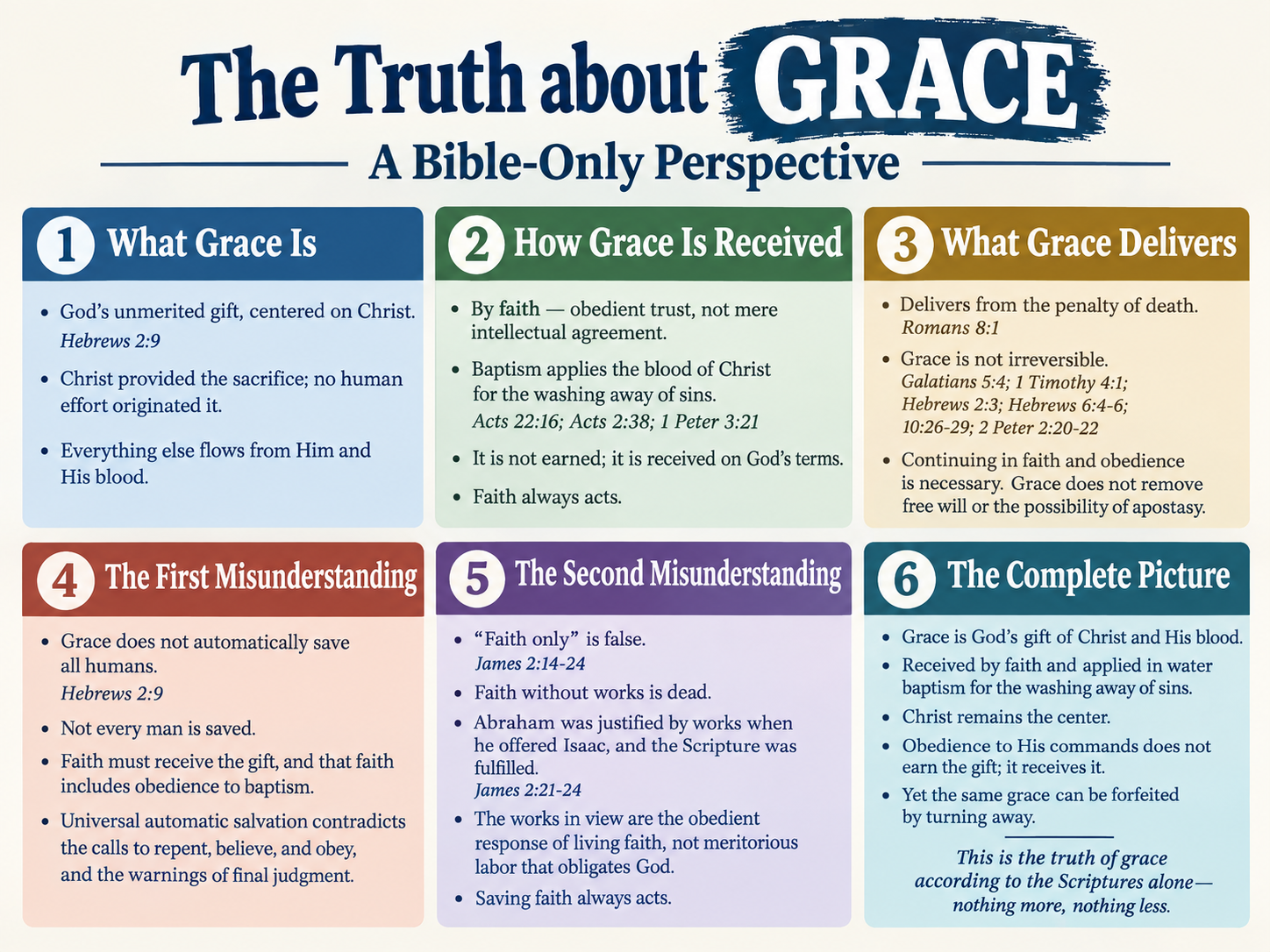
To be “IN CHRIST” means to be united with Him in His death, burial, and resurrection, then His righteousness, and blessings become yours (Romans 6:3–11; 2Cor 5:17, 21; Col 2:12; Gal 2:20).

The New Testament describes this union as happening through faith in Christ, through FAITH, REPENTANCE and BAPTISM:

Faith is the means: “Ye are all sons of God by faith in Christ Jesus” (Galatians 3:26). Believing the gospel of Jesus Christ begins our unity to Christ (Romans 10:9–10; Ephesians 2:8–9).

Repentance is inseparable from faith: Repentance was preached by Jesus at the beginning when Jesus said, “The time is fulfilled, and the kingdom of God is at hand: repent ye, and believe the gospel” (Mark 1:15). And continued to be preached after His death, burial, & resurrection, “Testifying both to the Jews, and also to the Greeks, repentance toward God, and faith toward our Lord Jesus Christ” (Acts 20:21; cf Acts 2:38).

Baptism in water is the point of inclusion: “Then they that gladly received his word were baptized: and the same day there were added unto them about three thousand souls” (Acts 2:42, 47). “For as many of you as have been baptized into Christ have put on Christ” (Galatians 3:27). “Know ye not, that so many of us as were baptized into Jesus Christ were baptized into his death” (Romans 6:3). “Buried with him in baptism, wherein also ye are risen with him through the faith of the operation of God, who hath raised him from the dead” (Colossians 2:12). Note that it is faith in God’s work as we obey the Gospel.

Thus, one becomes “IN CHRIST” by Hearing, Believing the gospel of Christ, Repentance, Confession (Romans 10:9), then being Baptized into Him (immersion in water in His name, Acts 2:38). It’s only then that a person is a new creation (2Corinthians 5:17), reconciled to God, and receives every spiritual blessing in Him.

Agape
Spencer

All Spiritual Blessings are IN CHRIST

From this verse we learn that those who are “IN CHRIST” have been given spiritual blessings. There is a very important distinction being made by this verse; those “IN CHRIST” from those who are “OUTSIDE of CHRIST.”

Paul describes those who are (or were) outside of Christ: “…who were dead in trespasses and sins; Wherein in time past ye walked according to the course of this world, according to the prince of the power of the air, the spirit that now worketh in the children of disobedience: Among whom also we all had our conversation in times past in the lusts of our flesh, fulfilling the desires of the flesh and of the mind; and were by nature the children of wrath, even as others” (Eph 2:1-3), and “That at that time ye were without Christ, being aliens from the commonwealth of Israel, and strangers from the covenants of promise, having no hope, and without God in the world” (Eph 2:12, emphasis added seb). There’s more going on in these chapters, but for our discussion we must recognize that there are NO SPIRITUAL blessings for anyone OUTSIDE OF CHRIST! This must serve as a warning for everyone. Living outside of Christ is like standing exposed in the open wilderness during a ferocious storm—far beyond the sturdy walls of a fortified city or the secure shelter of a stormproof refuge.

The winds howl, lightning cracks without mercy, torrents of rain lash, and unseen predators circle in the darkness. Every step is perilous: the ground shifts underfoot, thunder drowns out any cry for help, and the cold seeps into the bones with no warmth to counter it. There is no barrier against the elements, no refuge from judgment, no covering from the wrath to come. There’s only vulnerability, isolation, and inevitable ruin.

Jesus Himself described this danger vividly in the parable of the two builders (Matthew 7:24-27): The foolish man built his house upon the sand. When the rain descended, the floods came, and the winds blew and beat upon that house, it fell: and great was the fall of it.

Outside of Christ, life is built on shifting, unstable ground. No matter how impressive the structure appears, the inevitable storms of life, temptation, trial, and final judgment will sweep it away completely.

In stark contrast, the wise man built his house upon the rock. The same rain fell, the same floods came, the same winds blew and beat upon that house—yet it stood: for it was founded upon a rock.

Do you remember what Jesus declared to Peter in Matthew 16:18? “And I say also unto thee, That thou art Peter, and upon this rock I will build my church; and the gates of hell shall not prevail against it.” That Rock is Christ!

ALL SPIRITUAL BLESSINGS ARE IN CHRIST!

Agape
Spencer

WILL SILVER HIT $100?

But there’s something better.

Since January of 2025 silver has skyrocketed from around $30 an ounce to over $90 as of this writing. Most of the gain happening in only the last 90 days.

The 1-year chart for silver prices, spanning from early 2025 to mid-January 2026, illustrates a classic pattern of gradual, persistent upward momentum that eventually culminates in dramatic gains. The metals prices have exhibited a slow, uneven climb through much of the year, with periods of consolidation, minor pullbacks, and steady accumulation. This incremental progress—often just a few percentage points month-over-month—built the foundation for an explosive breakout in late 2025 and early 2026, propelling silver to new all-time highs. The graph resembles many long-term growth phenomena: a compounding curve where small, consistent advances compound into life changing results, turning what seems modest & boring into something extraordinary.

The silver growth chart serves as a powerful metaphor for the value of small incremental growth in any domain—whether personal development, skill-building, financial habits, or spiritual disciplines. Just as silver didn’t surge overnight but accumulated value through persistent upward pressure over time, meaningful change rarely comes from flashy, one-time efforts; it emerges from daily, seemingly minor choices that compound relentlessly. A few minutes of reading Scripture each day may feel insignificant in the moment, yet over years, these habits forge profound transformation. The Bible echoes this principle in passages like Proverbs 13:11 “Wealth gained hastily dwindles, but whoever gathers little by little will increase it,” reminding us that lasting growth often stems from patient, incremental faithfulness rather than shortcuts.

But there’s more…
While people are frantically buying (or selling) to capitalize on this phenomenal growth, there is something far greater than silver and gold combined. The Scriptures repeatedly declare that the Word of God surpasses even the most glittering earthly treasures. As Proverbs 8:19 proclaims, wisdom of God is “better than gold, yea, than fine gold,” and its revenue exceeds choice silver. Psalm 119:72 echoes this, “the law of thy mouth is better unto me than thousands of gold and silver,” while Psalm 19:10 describes God’s precepts as “more to be desired… than gold, yea, than much fine gold” and sweeter than honey. These verses remind us that no amount of precious metal—however explosive its appreciation—can match the eternal value, guidance, joy, and life-giving power found in God’s unchanging Word.

Putting it all together, as the markets frenzy over silver’s explosive growth, the Scriptures reveal an infinitely superior treasure that grows through small, faithful, daily habits of reading, meditating, and obedience to God’s word. Little by little we will gain great and precious gems that work in our hearts that compounds into spiritual riches eclipsing any earthly gain. The precious treasures of unshakable wisdom, lasting joy, eternal security, as we “…grow in grace, and in the knowledge of our Lord and Saviour Jesus Christ” (2Peter 3:18).

Agape
spencer

Happy New Year: 2026 Bible Reading Plan

BIBLE READING RESOLUTION

“For the word of God is quick, and powerful, and sharper than any twoedged sword, piercing even to the dividing asunder of soul and spirit, and of the joints and marrow, and is a discerner of the thoughts and intents of the heart” (Hebrews 4:12).

I asked a fellow one day if he knew why people read the Bible daily. He said that he didn’t really know why. It got me thinking about why we ought to read the Bible.

In a world filled with confusion, relativism, and aimless wandering, we desperately need to immerse ourselves in the Bible, God’s inspired Word. As Ephesians 5:17 urges, we must not live foolishly but understand the WILL OF THE LORD, which is revealed clearly through Scripture. John 17:17 declares that GOD’S WORD IS TRUTH ITSELF; the objective anchor in an age of shifting sand of public opinions, guarding us from deception. Moreover, 1 Peter 3:15 tells us to always BE READY TO GIVE A DEFENSE FOR THE HOPE WITHIN US, a readiness that comes only from knowing and internalizing biblical truth. Finally, recognizing that it is not in man to direct his own steps (Jeremiah 10:23), we turn to Psalm 119:105, where GOD’S WORD BECOMES A LAMP TO OUR FEET AND A LIGHT TO OUR PATH, illuminating our purpose and guiding us safely through life’s journey. Without regular reading of the Bible, we stumble in darkness; with it, we walk confidently in God’s eternal direction.

Get A Bookmark; it’s the easiest Bible Reading Plan.
A simple bookmark can be one of the most powerful tools for staying consistent in Bible reading, even without following a formal plan. Life is unpredictable with busy schedules, unexpected interruptions, and shifting priorities that can easily derail our good intentions to read Scripture daily. But a bookmark quietly solves this problem by marking exactly where we left off, so we know where to go when we pick back up the Bible again. No need to remember the last chapter or verse, no pressure to “catch up” on missed days, and no guilt over abandoning a rigid reading schedule. It allows us to resume right where we stopped, whether that was yesterday, or last week. This simple device keeps the habit alive, allowing steady progress through the Word over months and years. Over time, that humble bookmark becomes a faithful companion helping us build a lifelong rhythm of reading His Word; one verse, one chapter, one bookmark placement at a time.

I have found it most effective to set a time to read each day. In the early years I would read just before bed (a great strategy if you’re trying to avoid screen time at the end of the day). This helped me to go to sleep with God’s word on my heart. Now a days I read in the mornings (Monday – Friday) following a 5-day reading plan to read through the whole bible in one year. May God’s word be a blessing to you as you read in 2026.

Agape
spencer

Evidence for our Faith: Jesus, Right on Time

The birth of Jesus Christ stands as one of history’s most profound events, not merely because of who He is, but because of when He came. The Old Testament, written centuries before His arrival, contains precise prophecies about the timing of the Messiah’s appearance. These predictions, fulfilled in Jesus, provide compelling evidence that He is the promised Christ. As Paul declares in Galatians 4:4, “But when the fullness of the time had come, God sent forth His Son, born of a woman, born under the law.” These prophecies build unbreakable confidence in the Gospel today and obeying the gospel of the Kingdom of Christ is the right path because Jesus arrived precisely as foretold.

One of the most astonishing prophecies is Daniel’s 70 weeks (Daniel 9:24-27). Given around 538 BC, this vision outlines “seventy weeks” (or “sevens”) determined for the Jewish people to finish transgression, to make an end of sins, and anoint the Most Holy. Scholars widely interpret these as weeks of years; totaling 490 years. The prophecy begins “from the going forth of the command to restore and rebuild Jerusalem” until “Messiah the Prince.”

The clearest timing prophecy appears in Daniel 9:24–27. Daniel wrote during the Babylonian exile, yet he predicted the coming of “Messiah the Prince” with astonishing precision. He spoke of “seventy weeks” (symbolic weeks of years) counting from the decree to restore and rebuild Jerusalem. Daniel declares that after the sixty-nine weeks, “shall Messiah be cut off, but not for himself” (Daniel 9:26). This sets a specific window when the Messiah would appear and give His life as a sacrifice. History confirms that from the Persian decrees to rebuild Jerusalem to the first century AD fits Daniel’s prophetic timeline exactly; placing the arrival of the Messiah squarely at the time of Jesus of Nazareth. No other figure in history appears within that window fulfilling the works of the Messiah. That timing alone anchors our faith: God promised, and God delivered. Modern statisticians estimate 1 in 10^17 for Daniel’s Messianic prophecies alone.

Another key timing indicator is Genesis 49:10: “The scepter shall not depart from Judah, nor the lawgiver from between his feet, until Shiloh comes.” Jacob prophesied that Judah’s tribal authority would endure until the Messiah (“Shiloh,” meaning “He whose right it is”). Judah retained self-governance, including the right to execute capital punishment, until around AD 6-7, when Rome stripped the Sanhedrin of this power under Archelaus’ deposition. Jesus, from Judah’s line (Matthew 1:1-16; Luke 3:23-33), was crucified shortly after; precisely when the “scepter departed.” Had the Messiah come later, Judah would have lost its authority too soon.

The period between Malachi (c. 430 BC) and Jesus also aligns prophetically. After Haggai, Zechariah, and Malachi, a 400-year prophetic silence ensued; no major prophets arose in Israel. This “silence” heightened anticipation, as Malachi promised Elijah’s return before the great day of the Lord (Malachi 4:5-6). John the Baptist fulfilled this as the forerunner (Matthew 11:13-14; Luke 1:17), announcing Jesus. The silence ended exactly when the Messiah appeared.

These timings were no coincidence. The Roman Empire (also a predicted kingdom Dan 2:44) provided roads and peace (Pax Romana) for Gospel spread; Greek language unified communication; Jewish synagogues worldwide prepared diaspora hearts. Jesus came in the “fullness of time;” politically, culturally, and spiritually ripe.

Today, this evidence strengthens faith. If God orchestrated history with such precision (down to years and events) then Jesus is undeniably the Christ. He fulfilled not just timing prophecies, but many, many more: born in Bethlehem (Micah 5:2), of a virgin (Isaiah 7:14), from David’s line (2 Samuel 7:12-16). His life, death, and resurrection confirm the Old Testament’s promises.

Believer, take heart: Obeying the Gospel of the Kingdom of Christ is sound because history proves Jesus arrived at the predicted moment. The same God who timed the Messiah’s birth can be trusted for eternal life.

Agape

spencer

Evidence for our faith: I aint ‘fraid of no Zombies

No Ghosts, Zombies, or Draculas: The Bible’s Rejection of Wandering Spirits and Unfinished Tasks

The Bible, throughout both Old and New Testaments, offers no support for the chilling tales of disembodied spirits, zombies, demons, or Dracula-like undead haunting the earth or lingering to complete unfinished business. Pop culture, from gothic novels to Hollywood horror, profit on such fears, but Scripture is clear: human work, including obeying the gospel, must be done in life, and death leaves no room for wandering souls or monstrous transformations. The complete absence of evidence for these ideas calms our fears of death with the urgency of living faithfully now.

The Bible consistently teaches that our work, including spiritual obedience, is confined to this life. Ecclesiastes 9:10 in the Old Testament urges, “Whatsoever thy hand findeth to do, do it with thy might; for there is no work, nor device, nor knowledge, nor wisdom, in the grave, whither thou goest.” This verse shuts the door on the idea of ghosts lingering to finish unresolved tasks. The New Testament echoes this urgency, particularly in obeying the gospel. In 2Corinthians 6:2, Paul writes, “Behold, now is the accepted time; behold, now is the day of salvation.” There’s no biblical hint of posthumous chances to complete spiritual work or haunt the earth as spirits to punish the living. Ghostly tales of unresolved business are purely fictional, not rooted in Scripture.

The notion of humans becoming zombies or undead creatures like Dracula also finds no place in the Bible. Dark tales of vampires rising from graves or mindless corpses are absent from both Testaments. Instead, Scripture portrays death as final for human endeavors, under God’s authority. Psalm 146:4 states, “His breath goeth forth, he returneth to his earth; in that very day his thoughts perish.” This leaves no room for undead transformations. The language of the Bible never states, hints, nor has examples of humans becoming cursed, vampiric beings. The Bible’s silence on such horrors confirms they are literary inventions, not divine truth. There is one biblical account of a deceased man wishing someone could go back to warn his family, but they could not (Luke 16:19-31). If haunting to complete unfinished business was possible, that would have been a great time for Jesus to tell us about it.

Likewise, the idea of humans becoming demons lacks evidence. The New Testament distinguishes demons as separate spiritual entities, not transformed human souls (demon possession was limited to the time of Christ to demonstrate His deity and power, and to affirm the authority of the apostolic age in the first century). Scripture never suggests that people risk becoming demonic after death. What are called “demons” in the Bible are known to be fallen angels, distinct from humans, who followed Satan in his rebellion against God (e.g., Rev 12:9; Luke 10:18).

The Bible’s clear message is that life is the time to obey the gospel and complete our work, with no provision for ghosts, zombies, or Draculas. Death ends our work on earth, but God’s word holds no terrors if we obey the gospel and live faithfully starting today.

Agape

PS; this also means that we shouldn’t wait until death or the judgment to find out if we’re saved. We can know from God’s word today. “For we must all appear before the judgment seat of Christ; that every one may receive the things done in his body, according to that he hath done, whether it be good or bad. Knowing therefore the terror of the Lord, we persuade men;” (2Cor 5:10-11a)

Who are God’s Chosen People today?

WHO ARE GOD’S CHOSEN PEOPLE TODAY?

The Bible presents the children of Abraham, specifically the twelve tribes of Israel, as God’s chosen people, selected for a divine purpose: to bring forth the Messiah, Jesus Christ, through whom all nations would be blessed. This narrative weaves through the Old and New Testaments, showing the progression from the Law of Moses to the New Covenant in Christ, culminating in the universal call to become God’s chosen through faith and obedience to the Gospel.

The Chosen People and the Promise.
God’s covenant with Abraham (Genesis 12:1-3) established his descendants as the vehicle for His redemptive plan. Through Abraham’s seed—ultimately Christ (Galatians 3:16)—all nations would be blessed. The twelve tribes of Israel, descending from Abraham through Isaac and Jacob (Genesis 17:19; 35:10-12), were chosen to preserve God’s covenant, carry His oracles, and prepare the world for the Messiah. Deuteronomy 7:6-8 emphasizes that Israel’s election was not due to their merit but God’s love and faithfulness to His promise.

The Purpose of the Law of Moses.
The Law of Moses, given to Israel at Sinai (Exodus 19-20), served as a tutor to lead humanity to Christ (Galatians 3:24-25). It revealed God’s holiness, exposed human sinfulness (Romans 3:20), and provided a framework for Israel’s covenant relationship with God. The Law included moral, ceremonial, and civil commands, pointing to Christ through types and shadows (Hebrews 10:1). For example, the Passover lamb (Exodus 12) prefigured Christ’s sacrificial death (1 Corinthians 5:7). However, the Law was temporary, unable to justify or remove sin permanently (Hebrews 7:19; 10:4). Its purpose was to prepare Israel—and the world—for the coming of the Messiah.

Fulfillment in Christ and the New Covenant.
With Christ’s death, burial, and resurrection—the Gospel (1 Corinthians 15:1-4)—the Law of Moses was fulfilled and abrogated (Colossians 2:14; Hebrews 8:6-13). Jesus, as the promised seed of Abraham (Galatians 3:16), accomplished what the Law could not: justification and reconciliation with God (Romans 5:1-2). The New Covenant, established through His blood (Matthew 26:28), replaced the Old Covenant, making salvation accessible to all—Jew and Gentile—through faith in Christ (Romans 10:12-13). The Great Commission (Matthew 28:18-20) commands the spread of this Gospel to all nations, inviting everyone to obey Christ’s doctrine (2 John 1:9).

Paul expresses his heart for Israel’s salvation in Romans 10:1, noting their zeal for God but lack of knowledge about the righteousness that comes through faith in Christ (Romans 10:3-4). The Law’s purpose was fulfilled in Christ, and now all who believe—whether Jew or Gentile—are justified by faith (Galatians 3:26-29).

The Saints as the Chosen People.
Under the New Covenant, the “chosen people” are no longer defined by ethnicity but by faith and obedience to the Gospel. 1 Peter 2:9 describes believers—Jew & Gentile—as a “chosen generation, a royal priesthood, a holy nation,” echoing Israel’s calling in Exodus 19:5-6 but now applied universally to the church. Anyone who obeys the Gospel by faith (Romans 1:16; Acts 2:38) becomes part of this spiritual Israel, grafted into God’s family (Romans 11:17-24). The saints, through Christ, inherit the promises made to Abraham (Galatians 3:29).


The twelve tribes of Israel were chosen to bring Christ into the world, with the Law of Moses guiding them toward this purpose while exposing humanity’s need for a Savior. Christ’s Gospel fulfilled and replaced the Law, opening salvation to all who obey Him by faith. The saints, as God’s new chosen people, reflect His redemptive plan: a universal call to become His own through the New Covenant, demonstrating His grace and power to save.

HOW IS ISRAEL SAVED TODAY?

Israel (and everyone else) is saved not by the Law of Moses but by the Law of Christ under the New Covenant. The fulfillment of Jeremiah 31:31-34, as affirmed in Hebrews 8, establishes that salvation for Israel—and all people—comes through faith and obedience to the Gospel of Christ.

Salvation Through the Law of Christ.

Since Pentecost, when the New Covenant was inaugurated with the outpouring of the Holy Spirit (Acts 2:1-4), salvation for Israel (and all nations) is through the Law of Christ, which is the Gospel—the message of His death, burial, and resurrection (1 Corinthians 15:1-4).

The Bible is clear:

  • Faith and Obedience to the Gospel: Romans 10:9-13 states that salvation comes by confessing Jesus as Lord and believing in His resurrection, with “no distinction between Jew and Greek, for the same Lord over all is rich to all who call upon Him.” Acts 2:38, preached to Jews on Pentecost, commands repentance and baptism in Jesus’ name for the forgiveness of sins, resulting in 3,000 Jews being saved (Acts 2:41). This marks the beginning of salvation under the Law of Christ.
  • The New Covenant Fulfilled: Jeremiah 31:31-34 promised a new covenant with Israel, where God would write His law on their hearts and forgive their sins. Hebrews 8:6-13 declares this fulfilled in Christ, who is the “mediator of a better covenant.” His sacrifice replaced the Old Covenant (Hebrews 8:13), making the Gospel the means of salvation for all, including Israel.
  • The Law of Christ: Galatians 6:2 refers to “the law of Christ” as the guiding principle for believers. This involves faith working through love (Galatians 5:6), obedience to Christ’s commands (John 14:15), and adherence to His doctrine (2 John 1:9). For Israel, this means accepting Jesus as the Messiah and obeying His Gospel, as seen in the Jewish believers of the early church (Acts 2:41; 6:7).

The Law of Moses Abrogated.

(Abrogated: To annul by an authoritative act; to abolish by the authority of the maker or his successor; To put an end to; to do away with.)

The Law of Moses, given to Israel at Sinai (Exodus 19-20), is no longer the means of salvation:

  • Fulfilled and Replaced: Jesus fulfilled the Law (Matthew 5:17-18), and His death on the cross abolished it as a system of justification (Colossians 2:14; Ephesians 2:15). Hebrews 10:9 states that Christ “takes away the first [covenant] that He may establish the second.” The Law’s sacrifices and ordinances could not perfect or justify (Hebrews 10:1-4; Galatians 3:10-13).
  • A Tutor to Christ: Galatians 3:24-25 explains that the Law was a “tutor to bring us to Christ,” but “after faith has come, we are no longer under a tutor.” For Israel, the Law pointed to the Messiah, but since His coming, salvation is through faith in Him, not the Law’s works (Romans 10:4).
  • Inability to Save: Acts 15:10-11, in the context of Jewish believers, affirms that neither Jews nor Gentiles are saved by the Law, which was a “yoke” they could not bear. Instead, “through the grace of the Lord Jesus Christ we shall be saved.”

Israel’s Salvation Today.

Since Pentecost, Jews (Israel) are saved by:

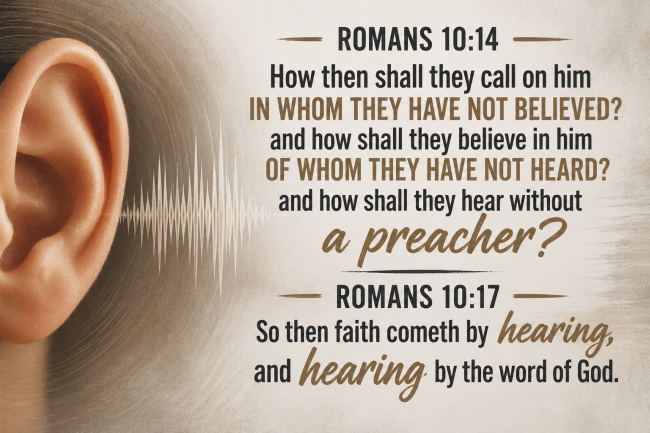
  • Hearing and Believing the Gospel: Romans 10:17 says faith comes by hearing the word of Christ. Jews must believe Jesus is the Messiah, as Peter proclaimed to Israel (Acts 2:36).
  • Repentance and Baptism: Acts 2:38 applies to Jews, as seen in the mass conversions at Pentecost. Baptism in Jesus’ name unites Jews and Gentiles with Christ (Galatians 3:27-29).
  • Ongoing Faithfulness: Like all believers, Jews must abide in Christ’s doctrine (2 John 1:9) and remain faithful (Hebrews 3:14). The remnant of Israel saved today includes Jews who obey the Gospel, such as the apostles and early disciples (Romans 11:5).

The Remnant and Future Hope.

Romans 11:5 speaks of a “remnant according to the election of grace” among Israel, saved by faith in Christ, as exemplified by Jewish believers in the New Testament (e.g., Acts 21:20). While Romans 11:26 anticipates a future time when “all Israel will be saved,” this does not imply salvation apart from the Gospel. The context (Romans 11:23-27) suggests Israel’s salvation comes through faith in Christ, aligning with the New Covenant promise of Jeremiah 31:31-34, fulfilled in Christ’s blood (Hebrews 8:8-12; Matthew 26:28).

Conclusion.

Since Pentecost, Israel is saved through the Law of Christ—the Gospel—not the Law of Moses, which was fulfilled and abrogated (Hebrews 8:13; Colossians 2:14). The New Covenant, promised in Jeremiah 31:31-34 and established through Christ (Hebrews 8:6), requires Jews to believe in Jesus as Messiah, repent, and be baptized (Acts 2:38; Romans 10:9-13). The remnant of Israel today, like all believers, enters God’s chosen people (1 Peter 2:9) by faith and obedience to the Gospel, fulfilling God’s redemptive plan through the eternal covenant of Christ.

agape