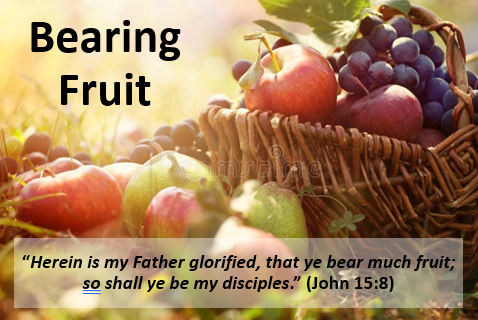
Bearing Fruit or withered Fig Tree?

Herein is my Father glorified, that ye bear much fruit; so shall ye be my disciples.” (John 15:8)

One morning Jesus felt hungry and saw a fig tree full of green leaves by the road. It looked healthy and promising. But when He got closer, there was no fruit at all. The tree had leaves but nothing to give. Jesus said to the tree, “May no one ever eat fruit from you again.” The next day the disciples saw that the whole tree had withered from the roots.

That story is not just about a tree. It is about us. Jesus wants real fruit in our lives, not just the look of it. The Father cuts off branches that do not bear fruit, and He prunes the ones that do so they bear even more. Jesus is straight with us. He expects fruit.

What does this fruit look like? The Bible shows it in how we live every day. It is love, joy, peace, patience, kindness, goodness, faithfulness, gentleness, and self-control. These are not just nice feelings. They show up in actions. When someone needs help, we give it. When anger rises, we choose peace. When people are lost, we point them to Jesus. Fruit is not just church attendance or looking spiritual on the outside. The fig tree had plenty of leaves. It looked good from far away. But up close it offered nothing. Jesus judged it for that.

Do we live like that fig tree today? We go through the motions. We say the right words and wear the right smile. From a distance we look like strong Christians. But inside there is no real fruit. No changed heart. No love that costs us something. No time spent helping others know God. Jesus notices. He still walks up close and checks for fruit. The withering of the fig tree shows us that empty religion does not last. God wants genuine life flowing from us.

The scary part is what happens when we stay empty. The fig tree withered because it had nothing to offer when the time came. Jesus expects fruit in season. Life brings moments when people around us need spiritual food. A friend loses hope. A neighbor wonders about God. A stranger feels empty inside. They look for something real. If they turn to us, what will they find? Will there be love that listens? Will there be truth from God’s word that gives life? Or will they walk away still hungry because we only had leaves?

The story of the fig tree is a warning but also a hope. Jesus did not leave His disciples confused. Right after the tree withered, He taught them about faith and prayer. He is always near for help to bear fruit. He is ready to supply what we need to bear fruit (2Cor 9:10).

Let us take this seriously. Let us stay connected to the true Vine every single day. When spiritually hungry people look our way, may they find real fruit. May they taste the goodness of God through our lives and want more of Jesus. The world is full of empty trees. Let us be different. Let us be branches full of life that feed those who need it most. This is from God’s word. The choice is ours. Will we bear fruit that lasts?

Agape
spencer

Hero of Faith: HUR

An example of Helping weary hands.

“So Joshua did as Moses had said to him, and fought with Amalek: and Moses, Aaron, and Hur went up to the top of the hill. And it came to pass, when Moses held up his hand, that Israel prevailed: and when he let down his hand, Amalek prevailed. But Moses’ hands were heavy; and they took a stone, and put it under him, and he sat thereon; and Aaron and Hur stayed up his hands, the one on the one side, and the other on the other side; and his hands were steady until the going down of the sun. And Joshua discomfited Amalek and his people with the edge of the sword.” (Exodus 17:10-13)

This scene unfolds early in the Exodus journey. Little is recorded about Hur except here and in Exodus 24, where he appears alongside Aaron. In the heat of the first battle after leaving Egypt, Hur stood faithfully on the hilltop with Moses and Aaron while Joshua fought below.

When Moses’ hands grew heavy as he lifted them (he was holding them up so Joshua would prevail), Hur and Aaron stepped in. They held his arms up, one on each side, through the entire day until sunset. Because of their support, Moses’ hands remained steady, and Israel triumphed.

Helping Weary Hands
Leaders grow tired. Even Moses, who confronted Pharaoh and parted the Red Sea, reached a point of exhaustion. Hur shows us that one meaningful way to serve is by lifting what another can no longer hold alone. In daily life, this means encouraging a weary spouse, supporting an overburdened leader, or helping a friend through a difficult season. You do not need a title or spotlight. Quiet support can help another endure through whatever battle rages.

Staying by Their Side Through the Length of the Day
Hur did not offer a quick boost and leave. He stayed until the sun went down. The battle lasted all day, and his presence remained steady and reliable. True support requires endurance and unwavering commitment. In a world quick to give temporary encouragement, Hur models consistent loyalty. Whether the season is long or the struggle intense, staying nearby can make all the difference.

Remaining Steady So the One Helped Remains Steady
The Scripture notes that Moses’ hands were steady because Aaron and Hur held them up. Their strength created stability for Moses, which brought victory for the entire nation. When we help others remain steady, the impact can multiply beyond the one being steadied. Our faithfulness can lead to greater victories.

Be a Hur in Someone’s Battle
Hur never led the army or stood in the spotlight like Moses. Yet his quiet strength proved essential. From his example we may want to ask: Whose hands can I help hold up today?

Look around. Someone near you may be growing weary. You can be the steady presence that keeps their hands and heart lifted. Let’s learn from Hur to serve humbly, stay faithfully, and hold steady until the end. Your quiet faithfulness matters in the eyes of God. Go and be a Hur.

Agape

seb

Heroes of Faith: Onesiphorus

ONESIPHORUS, AN UNUSUAL FRIEND

Few figures shine as quietly yet powerfully as ONESIPHORUS, a faithful believer from Ephesus mentioned in Paul’s final letter, 2 Timothy. Paul, imprisoned in Rome and facing execution, contrasts the desertion of many (2 Timothy 1:15) with Onesiphorus’s steadfast loyalty. In 2 Timothy 1:16-18, Paul prays, “The Lord give mercy unto the house of Onesiphorus; for he oft refreshed me, and was not ashamed of my chain: But, when he was in Rome, he sought me out very diligently, and found me. The Lord grant unto him that he may find mercy of the Lord in that day: and in how many things he ministered unto me at Ephesus, thou knowest very well.” Later, in 2 Timothy 4:19, Paul greets “the household of Onesiphorus,” underscoring the lasting impact of this man’s life. His name, meaning “bringing profit” or “help-bringer,” perfectly captures his character. Onesiphorus stands as a model for Christians to emulate in an age of fleeting commitments, (Phil 3:17).


Let’s note first of all his UNPARALLELED SUPPORT: Onesiphorus “often refreshed” Paul, a term implying revival and cooling relief amid suffering. This shows that Onesiphorus gave aid frequently to Paul and his efforts—which Timothy was well acquainted with, “and in how many things he ministered unto me at Ephesus, thou knowest very well.” This kind of commendation tells me that his work was done quietly without fanfare, but noticed, especially by those who are helped (see Prov 27:2).

Then there’s his UNABASHED EFFORTS: Paul highlights that Onesiphorus “was not ashamed of my chains.” In 2 Timothy 1:8, 12, 16, Paul urges Timothy not to be ashamed of the gospel or of Paul’s imprisonment. A Roman prison would discourage lesser men, but not ONESIPHORUS. Paul was not suffering because of his own faults, but was suffering wrongfully for the sake of the Gospel (e.g., 1Peter 4:14-16). Paul was confined in the bowels of Rome’s ancient Mamertine Prison—a place nearly devoid of light, which make modern-day prisons feel like a cheap motel room by comparison. Unlike his confinement in the final chapters of Acts, this one treated him as a condemned “evil doer” (2 Timothy 2:9), with no privileges. Roman prisons did not reliably provide sustenance; prisoners relied on external support—Paul needed help.

Then there’s his UNSTOPPABLE EFFORT: When in Rome, Onesiphorus “sought me out very diligently, and found me” (2 Timothy 1:17). In a time without cell phones, nor GPS, no obstacle deterred him; he persevered until he located and delivered the aid Paul desperately needed in the deep, dark, and dank prison.

Finally, there’s his UNSURPASSED REWARD: Paul prays, “The Lord grant unto him that he may find mercy of the Lord in that day” (2 Timothy 1:18), pointing to eternal reward. Jesus promises in Matthew 10:40-42 that whoever receives His servants receives Him, and even a cup of cold water given in His name will not lose its reward (see Matt 25:31-46).

O to have more like Onesiphorus.

Agape
spencer

who defines good fruit?

Herein is my Father glorified, that ye bear much fruit; so shall ye be my disciples.” (John 15:8)

The Bible uses agricultural metaphors to describe spiritual reality: some speak of fruitful branches connected to the true vine (Jesus), bringing glory to the Father and proving genuine discipleship (John 15:8), while others warn of land (or lives) that produce only thorns and briers—unfruitful, rejected, near cursing, and destined for burning (Heb 6:8).

Jesus teaches that true character is revealed by what we produce (e.g., Matthew 7:16–20, no grapes from thornbushes). The contrast is stark: fruitful lives reflect connection to Christ and yield good things (love, obedience, character, good works), while thorn-bearing lives show disconnection, barrenness, or harm.

Here’s a good question; who defines what is fruit and what are thorns? That’s the crucial question, isn’t it? In a world full of opinions, subjective morality, and cultural shifts, who gets to decide what counts as good fruit (fruitful, glorifying to God) versus thorns and briers (unfruitful, worthless, harmful, or rebellious)?

Before we look into bearing fruit, let’s answer the question. The Bible warns about human centered standards that lead astray, and produce unfruitful or harmful outcomes.

Who Doesn’t Define GOOD FRUIT?
TRADITIONS of men can never define good fruit (Mark 7:7). Traditions often elevate above or nullify God’s command. The danger is in the possibility of practicing vain worship that cannot honor nor glorify God.

HEART (“It feels right to me”) “The heart is deceitful above all things, and desperately wicked: who can know it?” (Jeremiah 17:9). The danger lies in self-deception; what “feels good” can justify sin or error, yielding thorns of pride and rebellion instead of humble submission to God’s revealed will. Our feelings never override God’s word.

OPINIONS of men or of the majority. Naaman is a perfect example of this. Despite his terrible condition, his opinion about how it was to be done turned him in a rage away from the cure. “I thought… Are not Abana and Pharpar, rivers of Damascus, better than all the waters of Israel? may I not wash in them, and be clean? So he turned and went away in a rage” (2Kings 5:11-12). The danger lies in following hapless & happy ignorant mobs into destruction, (Matt 7:13-14; 15:14).

RELIGIOUS performance to be seen of men. Jesus highlighted those who practiced their religion to “be seen of men” (Matt 23:5-7; 6:2,5,16). He went onto say, “Verily I say unto you, They have their reward.” The danger lies in that showmanship never produces lasting fruit. Kudos from men is a lousy reward (Galatians 1:10).

NICE in appearance masks the rotten fruit. Paul warned repeatedly about masquerade parties. “And no marvel; for Satan himself is transformed into an angel of light” (2Cor 11:14; 2Pet 2:1-3; Acts 20:29-30). The danger is in the subtle seduction of charming exteriors that hides the destructive heresies, leading souls astray.

SEASONAL TRENDS shift like winds. “That we henceforth be no more children, tossed to and fro, and carried about with every wind of doctrine” (Ephesians 4:14). Fads come and go, but the word of the Lord endures forever (1Peter 1:24-25). Chasing novelties yields fleeting, unprofitable results rather than enduring fruit rooted in Christ’s truth. The danger is immaturity and instability.

Good fruit is defined solely by God’s revealed Word. Relying on unreliable sources risks producing thorns (worthless, harmful growth) that leads to rejection. Abide in the doctrine of Christ alone for fruit that glorifies the Father.

Agape
spencer

Beware of False Teacher: 4 Lessons from Colossians 2

In Colossians 2, Paul issues a powerful warning to believers: “Stop letting people disqualify you” (Colossians 2:18). He urges the church to stand firm against deceptive influences that threaten to lead them astray from the truth of Christ. Paul identifies four types of false teachers, each with distinct tactics that remain relevant today. By understanding these dangers, we can guard our faith against those who distort the gospel.

1. Enticing Speech (Colossians 2:4-7)

False teachers often wield persuasive language to deceive. Paul warns against those who use “enticing words” to sway believers (Colossians 2:4). This tactic echoes Romans 16:18, where smooth talk and flattery manipulate the unsuspecting, and Ephesians 4:14, which describes cunning words that toss believers like waves. In our digital age, TikTok influencers, online preachers, and charismatic personalities can charm audiences with polished rhetoric, much like Satan’s subtle deception in Genesis 3 and Matthew 4. These voices may sound convincing, promising quick spiritual fixes or worldly success, but they often lead away from Christ’s sufficiency. Believers must root themselves in the truth of Scripture, as Paul encourages in Colossians 2:6-7, to discern and resist such deception.

2. Traditions of Men and the World (Colossians 2:8-10)

Another group of false teachers promotes human traditions and worldly philosophies over Christ’s authority. Paul cautions against being captivated by “philosophy and empty deceit, according to human tradition” (Colossians 2:8). Jesus confronted similar issues in Matthew 15:2, where religious leaders prioritized their traditions over God’s commands. Today, this manifests in appeals to “the way we’ve always done it” or the approval of experts, organizations, or governments. Philosophies like those Paul encountered in Acts 17 (stoicism, epicureanism, or modern ideologies) can subtly infiltrate the church. These traditions and ideas may seem appealing, but they lack the fullness of Christ, who is “the head of all rule and authority” (Colossians 2:10). Believers must test every teaching against the gospel, rejecting what elevates human wisdom over divine truth.

3. Judgments About the Old Law (Colossians 2:16-17)

Paul also warns against those who judge believers based on adherence to the Old Testament law, such as dietary rules or festivals (Colossians 2:16). Romans 14:2-3 and Galatians 4:10 highlight the danger of imposing outdated regulations, while Hebrews 8:13 declares the old covenant “obsolete.” False teachers may pressure Christians to follow Old Testament practices, claiming they are essential for righteousness (see Acts 15). Yet, Paul emphasizes that these are mere “shadows” of Christ, the true substance (Colossians 2:17). Some modern churches continue to impose the Law of Moses upon people. Why return to the shadows when the true Light has come into the world?

4. Puffed-Up Wisdom and Will Worship (Colossians 2:18-23)

The final type of false teacher Paul warns against is those who promote self-made spirituality and “puffed-up” wisdom (Colossians 2:18). These individuals boast of esoteric knowledge or mystical experiences, such as worshipping angels or embracing strange beliefs like sun gods or witchcraft. Paul describes such practices as “self-imposed worship” and “false humility” (Colossians 2:18, 23), which appear spiritual but lack true substance. Romans 6:3-6 and Ephesians 2:15 emphasize that believers are freed from such elemental principles through Christ’s death and resurrection. Paul warns against turning to weak and worthless spiritual systems. Today, this might look like New Age mysticism, occult practices, or prideful claims of exclusive spiritual insight. These teachings inflate human ego rather than exalting Christ, who alone is sufficient (Colossians 2:10). Paul urges believers to reject such distractions and cling to the gospel’s simplicity.

Guarding Against Deception

The common thread among these false teachers is their attempt to disqualify believers by shifting focus from Christ’s all-sufficient work. Whether through persuasive speech, human traditions, Old Testament practices, or puffed-up mysticism, they undermine the gospel’s power. Colossians 2 reminds us that Christ is the fullness of God, in whom all wisdom and knowledge reside (Colossians 2:3, 9-10). Believers are complete in Him, needing no additional rituals or philosophies to earn God’s favor.

In our modern context, these warnings are strikingly relevant. Social media amplifies enticing voices, from influencers peddling self-help spirituality to charismatic leaders pushing personal or mystical agendas. Cultural traditions (like prioritizing societal norms or “expert” consensus over biblical truth) can subtly erode faith. The Law of Moses persists in churches that impose Old Testament rules, while puffed-up wisdom appears in trendy spiritual fads that promise enlightenment apart from Christ.

To avoid being disqualified, believers must remain rooted in Christ (Colossians 2:6-7). This means immersing ourselves in Scripture and testing every teaching against God’s Word. Assembling with other believers provides accountability, helping us stay anchored in truth. Prayer is also vital, as we seek God’s wisdom in matters of truth.

Paul’s exhortation in Colossians 2 is a reminder for vigilance. False teachers will always arise, but we are not defenseless. By holding fast to Christ as our head, we can stand firm against enticing words, worldly traditions, Old Testament judgments, and prideful spirituality. Let us walk in the freedom and fullness of Christ, rejecting anything that seeks to disqualify us from the truth of His gospel.

agape

spencer

Evidence for our Faith: The Bible’s Influence on Western Law

The Bible’s Enduring Influence on Western Law and the U.S. Constitution

It is apparent to me that the Bible has profoundly shaped Western civilization and the U.S. Constitution, providing moral and legal principles. Its scriptural teachings influenced the cultural and intellectual society of the West and the American founding, creating a legacy evident in modern legal systems and constitutional governance.

The biblical concept of human dignity, derived from the idea that humans are created in God’s image (Genesis 1:26-27), laid the foundation for Western notions of individual rights. Historian David Landes, in The Wealth and Poverty of Nations, argues that this principle inspired accountability and fairness, influencing documents like the Magna Carta (1215), which echoes Deuteronomy 16:20’s call for justice. This idea can be seen in the Declaration of Independence’s “unalienable rights” and the Constitution’s Bill of Rights, particularly the First Amendment’s protections of speech and religion. James Madison, a key framer, drew on biblical notions of human worth, as noted by Carl Richard in The Founders and the Bible.

The Ten Commandments (Exodus 20:1-17) provided a moral framework for Western jurisprudence, with prohibitions against murder, theft, and perjury shaping legal codes from medieval Europe to colonial America. Legal scholar Harold Berman, in Law and Revolution, highlights how biblical ethics standardized justice in fragmented societies, a legacy reflected in the Constitution’s emphasis on impartiality (Leviticus 19:15). The command to “love your neighbor as yourself” (Leviticus 19:18; Matthew 22:39) further inspired Western social welfare laws and the Constitution’s reliance on civic virtue, as Benjamin Franklin emphasized in his writings.

The Bible’s warnings against unchecked power (1 Samuel 8:10-18; Deuteronomy 17:14-20) influenced the Western concept of the rule of law and the Constitution’s checks and balances. John Locke’s Two Treatises of Government, which cites scripture, argued for limited government, shaping the Constitution’s separation of powers (Articles I-III). Historian Donald Lutz, in The Origins of American Constitutionalism, notes that colonial sermons often referenced Exodus 18:21-22’s decentralized governance, influencing federalism. John Adams, in his Defence of the Constitutions, tied governance to biblical morality (Proverbs 29:2), reinforcing accountability.

The Great Awakening (1730s-1740s) embedded biblical values in colonial culture, shaping the framers’ commitment to liberty, as Daniel Dreisbach details in Reading the Bible with the Founding Fathers. While Enlightenment ideas contributed, the Bible’s influence provided a moral compass for constitutional principles like forgiveness (Colossians 3:13), evident in rehabilitative justice systems. Critics may emphasize secular influences, but the framers’ biblical worldview, as seen in their writings, brought together faith and reason.

agape

Sources:
Berman, Harold. Law and Revolution. Harvard University Press, 1983.
Dreisbach, Daniel L. Reading the Bible with the Founding Fathers. Oxford University Press, 2017.
Landes, David. The Wealth and Poverty of Nations. W.W. Norton, 1998.
Lutz, Donald S. The Origins of American Constitutionalism. LSU Press, 1988.
Richard, Carl J. The Founders and the Bible. Rowman & Littlefield, 2016.
The Bible (KJV): Genesis 1:26-27, Exodus 18:21-22, 20:1-17, Leviticus 19:15, 19:18, Deuteronomy 16:20, 17:14-20, 1 Samuel 8:10-18, Proverbs 29:2, Matthew 22:39, Colossians 3:13.

4 Things I Cannot Hide

4 Things I Cannot Hide: A Personal Reflection

As I navigate life’s winding paths, I often try to present my best self to the world, hoping to mask my flaws. Yet, there are four things I cannot hide: my speech, my assumptions about others, how I let trouble affect me, and my perseverance despite obstacles. These aspects of my character slip through the cracks of my carefully curated facade, revealing my true heart. Through the lens of Scripture, I see both my shortcomings and the path to transformation, as God’s Word guides me to align these areas with His truth.

1. My Speech: The Way I Talk to Others
My words betray my heart. Whether I speak with kindness, impatience, or cutting sarcasm, my tone and intent are laid bare for others to see. I cannot hide the impact of my speech, it lingers, shaping how others perceive me. A harsh word can wound, while a gentle one can heal. Proverbs 15:1 offers wisdom: “A soft answer turneth away wrath: but grievous words stir up anger.” When I choose words that uplift and encourage, I reflect God’s will for my life on how to interact with others. “Let no corrupt word proceed out of your mouth, but what is good for necessary edification, that it may impart grace to the hearers.” (Eph 4:29; see Col 4:6) O God, forgive me.

2. My Assumptions: Judging Without Knowing
I often catch myself forming quick judgments about others based on their appearance or actions. Someone comically said, “I can tell a judgmental person just by looking at them.” These assumptions (especially in impugning motives) creep out through my body language, a fleeting glance, a hesitant tone, or an unconscious step back. My biases betray me, revealing a heart prone to prejudging. James 2:1-4 (KJV) challenges me: “My brethren, have not the faith of our Lord Jesus Christ, the Lord of glory, with respect of persons… Have ye not then been partial in yourselves, and are become judges of evil thoughts?” By seeking to understand others, I strive to embody humility, countering my tendency to assume. (see Matt 7:1-6 Judge not…) O God, forgive me.

3. The Way I Let Trouble Bother Me
When trials come, my response reveals the depth of my faith. Too often, I grumble or slip into pessimism, broadcasting a lack of trust in God. My complaints expose a heart struggling to hold onto hope. Philippians 4:6-7 (KJV) offers a better way: “Be careful for nothing; but in every thing by prayer and supplication with thanksgiving let your requests be made known unto God. And the peace of God, which passeth all understanding, shall keep your hearts and minds through Christ Jesus.” By turning to prayer and gratitude, I can display hope, letting God’s peace shine through my troubles. “Do all things without complaining and disputing, that you may become blameless and harmless, children of God without fault in the midst of a crooked and perverse generation, among whom you shine as lights in the world,” (Phil 2:14-15) O God, Forgive me.

4. The Way I Keep On Despite Obstacles
My perseverance (or lack thereof) reveals my resilience (or lack thereof). Do I press forward when others criticize, when obstacles loom, or when doubts creep in? My response is visible to all. Galatians 6:9 (KJV) encourages me: “And let us not be weary in well doing: for in due season we shall reap, if we faint not.” This verse urges me to keep going, trusting God, no matter what stands in my way. My steadfastness displays my Hope in God. “For you have need of endurance, so that after you have done the will of God, you may receive the promise:” (Heb 10:36) O God, Forgive me.

The Problem Exemplified
When I fail to guard these areas, my flaws are exposed. Proverbs 21:23 (KJV) warns, “Whoso keepeth his mouth and his tongue keepeth his soul from troubles.” My unguarded words can spark conflict, reflecting a broader truth: when my speech, assumptions, complaints, or lack of perseverance go unchecked, I invite calamity. This verse humbles me, reminding me of the consequences of letting my heart run unrestrained.

Transforming My Life
Though I cannot hide these four aspects of myself, I can, by God’s grace, refine them to reflect His character. Proverbs 15:1 teaches me to speak with gentleness. James 2:1-4 calls me to love without prejudice. Philippians 4:6-7 guides me to replace complaints with hope. Galatians 6:9 strengthens me to persevere. Together, these scriptures shape me to live in a better way, letting my words, actions, and attitudes shine as a testimony to the transformative power of God’s word. In a world that sees what I cannot hide, I pray my life reflects Christ.

Agape,

Spencer

Titus, a fine example of service

To Titus, mine own son after the common faith: Grace, mercy, and peace, from God the Father and the Lord Jesus Christ our Saviour.” (Titus 1:4)

The New Testament offers us many exemplary figures whose lives embody the teachings and values of Christ. One such figure is Titus, a close companion of the Apostle Paul, who stands as a shining example of what it means to be a true child of God. As we strive to live out our faith, examining the life of Titus can provide us with valuable insights and inspiration.

In a world where actions speak louder than words, the life of Titus provides clear evidence of a true follower of Christ. Paul’s confidence in Titus is evident in 2 Corinthians 8:23, where he refers to Titus as “my partner and fellowhelper concerning you.” This statement alone speaks volumes about the character and dedication of Titus. He was not just a believer in name but one whose actions and commitment were evident to all who knew him.

Christians today, must continue to ensure that our lives provide similar evidence of our faith. Are we known as partners and workers for the benefit of the gospel? Do our actions consistently reflect our commitment to Christ?

Titus was entrusted with significant responsibilities within the early church. Paul sent him to various challenging assignments, including dealing with difficult issues in the church at Corinth, and “ordain elders in every city” in Crete. Such trust from Paul indicates Titus’s reliability and dedication to the work of the Lord.

Trust is built over time through consistent and faithful actions. We must also be trustworthy stewards of God. “Moreover it is required in stewards, that a man be found faithful” (1Cor 4:2). Our reliability in carrying out God’s work is a testament to our faith and commitment.

Titus demonstrated unwavering faithfulness in his service to the Lord. He faced numerous challenges and opposition but remained steadfast. “But neither Titus, who was with me, being a Greek, was compelled to be circumcised” (Gal 2:1-3). Unwavering faithfulness means holding fast to the word of God, even when it is difficult. It means standing firm in our faith amid a world that often promotes contrary values. Just as Titus remained faithful despite opposition, we too must be resolute in our commitment to Christ, trusting that our perseverance is pleasing to God.

One of the most admirable qualities of Titus was his sincerity in service. Paul speaks of Titus’s genuine care and concern for the well-being of the believers. “But thanks be to God, which put the same earnest care into the heart of Titus for you” (2Cor 8:16). He genuinely cared for the church.

Sincere service is rooted in love and genuine concern for others. This means serving without seeking personal gain or recognition, serving out of a heartfelt desire to please God, to help and uplift others. Sincere service is a powerful demonstration of God’s love at work within us (cf. 1John 4:7-8).

The example of Titus provides a powerful blueprint for how we should live as true children of God. Our faith should be evident in our actions, as we build trust through our reliability and dedication to God’s work. We must remain unwavering in our faith, standing firm against opposition.

Agape,

Spencer

What do we GAIN if we GAIN the whole world?

Matthew 16:26 says, “For what is a man profited, if he shall gain the whole world, and lose his own soul? or what shall a man give in exchange for his soul?”

The world often tells us that success is measured by our wealth, our status, our accomplishments. But Jesus flips this notion on its head. He asks us to consider the value of our soul. What good is it if we gain everything the world offers, but lose the most precious thing we have—our eternal soul?

We Give up our Soul

Our soul is so valuable that God gave His own Son that we have the opportunity to be saved. Jesus died on the cross not to make us rich or famous, but to save our souls. He paid the ultimate price so that we might have eternal life. This is the greatest treasure, far surpassing anything the world can offer. (Rom 5:8-10)

We gain the affection of the World

When we set our affections on worldly gains over our spiritual well-being, we risk losing our soul. We can become so consumed by the pursuit of success, wealth, and approval that we neglect what is pleasing to God. We might find temporary happiness, but it’s fleeting and shallow compared to the deep, abiding joy that comes from knowing Christ. Romans 12:2 tells us, “And be not conformed to this world: but be ye transformed by the renewing of your mind, that ye may prove what is that good, and acceptable, and perfect, will of God.” We are to live differently, to set our minds on things above, not on earthly things.

The Illusion of Worldly Gain

The world tells us to chase after material wealth, to seek power and fame. It tells us that the more we have, the happier we will be. But how often have we seen people who seem to have it all, yet are deeply unhappy, unfulfilled, and lost? They’ve gained the world but lost their soul’s true purpose and joy.

Jesus reminds us that our souls are eternal, while the things of this world are temporary. In 1 Timothy 6:7, we are reminded, “For we brought nothing into this world, and it is certain we can carry nothing out.” No amount of money, fame, or power can accompany us beyond this life. What truly matters is the condition of our soul.

We gain nothing except what we deserve

So, what do we win if we win the world but lose our soul? We gain nothing of true value. But when we seek first the kingdom of God and His righteousness, all these things will be added unto us (Matthew 6:33). When we focus on serving God, we find true peace, joy, and fulfillment.

Revelation 3:21 promises, “To him that overcometh will I grant to sit with me in my throne, even as I also overcame, and am set down with my Father in his throne.” This is the ultimate reward—eternity with Jesus, reigning with Him in glory. This is worth far more than anything the world can offer.

This article is part 1 of a series titled, God’s Moral Law. click here for part one.

You’re invited to attend one of our services at the church of Christ on Franklin and Juniper in Borger Texas.

Who are we? We are just CHRISTIANS.

Then Agrippa said unto Paul, Almost thou persuadest me to be a Christian. And Paul said, I would to God, that not only thou, but also all that hear me this day, were both almost, and altogether such as I am, except these bonds.” (Acts 26:28,29).

We’re often asked to show our ID’s. From getting on a plane, to buying things on credit, or to the police officer that pulled me over looking for my autograph.

We use identification to gain access to banking accounts, safety deposit boxes, and the like.

When we speak about locating the Lord’s church, we look for its identifying marks. What does it teach about salvation, assembling together for worship, morality, and eschatology.

The Christian has an identity also. It’s interesting to note that our identity is in relationship to our God and to fellow Christians.

Let us explore our multifaceted identity as outlined in God’s Word.

When viewed in relation to God we are His children. “And will be a Father unto you, and ye shall be my sons and daughters, saith the Lord Almighty.” (2Cor 6:18)

When viewed in relation of hope we are heirs. “And if children, then heirs; heirs of God, and joint-heirs with Christ; if so be that we suffer with him, that we may be also glorified together.” (Rom. 8:17)

When viewed in relation to each other we are brethren. “I beseech you therefore, brethren, by the mercies of God, that ye present your bodies a living sacrifice, holy, acceptable unto God, which is your reasonable service.” (Rom. 12:1)

When viewed in relation to character we are saints. “To all that be in Rome, beloved of God, called to be saints: Grace to you and peace from God our Father, and the Lord Jesus Christ.” (Rom. 1:7)

If viewed as fighters we are soldiers. “Thou therefore endure hardness, as a good soldier of Jesus Christ.” (2Tim. 2:3)

When viewed in relation to our abode upon earth we are pilgrims. “Dearly beloved, I beseech you as strangers and pilgrims, abstain from fleshly lusts, which war against the soul.” (1Pet. 2:11.)

When viewed as the Image of Christ we are persecuted. “But rejoice, inasmuch as ye are partakers of Christ’s sufferings; that, when his glory shall be revealed, ye may be glad also with exceeding joy.” (1Pet 4:13; cf. Matt 10:24,25; 2Tim 3:12).

When viewed as learners of Christ we are disciples (adherents). “Go ye therefore, and make disciples of all the nations, baptizing them into the name of the Father and of the Son and of the Holy Spirit” (Matt. 28:19 ASV).

When viewed in relation to Christ we have a name; we are called Christians. “And the disciples were called Christians first in Antioch.” (Acts 11:26b).

When viewed as workers for the Lord we are servants of Christ. “For, brethren, ye have been called unto liberty; only use not liberty for an occasion to the flesh, but by love serve one another.” (Gal. 5:13).

Agape,

Spencer

We are striving to be undenominational and non-sectarian. We plead for a restoration of New Testament Christianity. It is our sincere conviction that one cannot be right in the sight of God by ignoring and disregarding the teaching of God’s word. Let us strive to “do all in the name of the Lord Jesus” (Col. 3:17).