
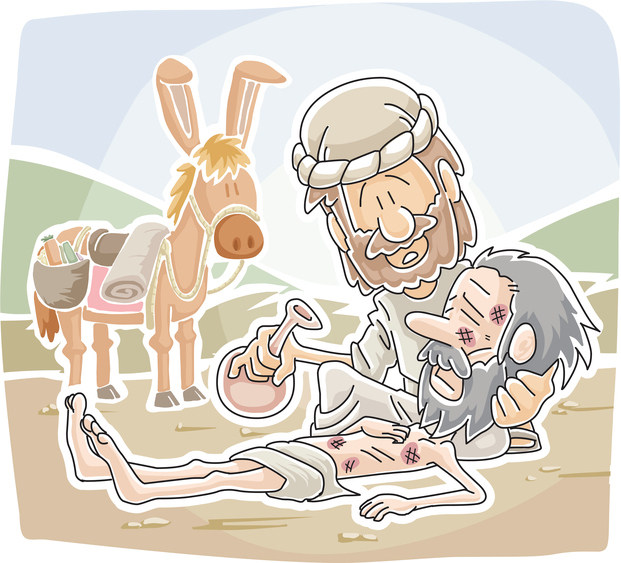
4 Views of LIFE, Luke 10:25-42.

And, behold, a certain lawyer stood up, and tempted him, saying, Master, what shall I do to inherit eternal life?” (Luke 10:25).  

The biblical passage in Luke 10:25-42 provides a rich narrative that unveils four distinct views of life, as encountered by a certain lawyer who seeks to test Jesus. As we delve into the dialogue and parables presented, we uncover profound insights into human nature and the pursuit of righteous living.

Jesus answers the initial question by asking the Lawyer about the Law, and the Lawyer answers well.

And he answering said, Thou shalt love the Lord thy God with all thy heart, and with all thy soul, and with all thy strength, and with all thy mind; and thy neighbour as thyself. And he said unto him, Thou hast answered right: this do, and thou shalt live” (Luke 10: 27-28; cf. Le 19:18; De 6:5).

The Lawyer’s response and the parable which follows give us insight into the 4 Views of Life.

The lawyer unveils the first view: Self-Righteousness. In questioning Jesus about who his neighbor is, the lawyer exposes an inclination to justify himself. “But he, willing to justify himself, said unto Jesus, And who is my neighbour?” This attitude is mirrored in Luke 18:9-14, where a Pharisee boasts of his righteousness compared to others. The message is clear – salvation is not achieved through self-righteousness, but through humility, Faithful obedience, and reliance on God.

The second view is revealed in the parable of the Good Samaritan. The narrative describes some who live in iniquity as seen in the actions of a thief, a Priest, and a Levite. This section highlights the fact that people’s actions declare what is in their hearts (Matt 7:15-20). Thieves hate to be stolen from, and their theft exposes their iniquity & hypocrisy. So also, the Priest and the Levite. “Wherefore by their fruits ye shall know them.”

The Samaritan exemplifies the third view of life. “But a certain Samaritan, as he journeyed, came where he was: and when he saw him, he had compassion on him” (33). A Samaritan would have been looked down upon by the Lawyer, the Priest, and the Levite. The Samaritans knew this, (John 4:9). Being full of compassion, the Samaritan man, “went to him, and bound up his wounds, pouring in oil and wine, and set him on his own beast, and brought him to an inn, and took care of him” (34).

After the telling of the parable, Jesus asks, “Which now of these three, thinkest thou, was neighbour unto him that fell among the thieves?  And he said, He that shewed mercy on him. Then said Jesus unto him, Go, and do thou likewise” (36, 37). Jesus takes the Lawyer back to the answer given to the original question.

We usually stop here, but there is another scene in this chapter that relates to the views of life. The short account of Martha & Mary. While Jesus is teaching, Mary sat at Jesus’ feet, and heard his word. “But Martha was cumbered about much serving, and came to him, and said, Lord, dost thou not care that my sister hath left me to serve alone? bid her therefore that she help me” (40). Jesus gives us the fourth view of Life; “Martha, Martha, thou art careful and troubled about many things: But one thing is needful: and Mary hath chosen that good part, which shall not be taken away from her” (41, 42). This view is about distractions that take us away from hearing about eternal life. Jesus warned about THORNS, the 3rd soil in the parable of the Sower. While there’s commendation in serving, we must remain mindful of the things pertaining to eternal life. “Set your affection on things above, not on things on the earth” (Col 3:2).

 Agape,

Spencer

Spencer is an evangelist for the Franklin & Juniper st church of Christ in Borger, Texas.

The Truth sets us free and makes people mad

Am I therefore become your enemy, because I tell you the truth?” (Gal 4:16).  

The New Testament recounts the life, teachings, death, and resurrection of Jesus Christ. It tells us about the love of God through the sacrifice of Christ. We also find instances where the truth elicited strong and often negative reactions from people of the time.

The Truth has the power to disturb, unsettle, and even anger those who encountered it. The stories in the NT serve as a timeless reminder that the truth, though uncomfortable, has the potential to challenge the status quo, expose hypocrisy, and disrupt ingrained power dynamics.

The reactions to the truth highlight the vehement resistance toward the truth & truth tellers. Knowing this we can be better prepared to proclaim the truth with resilience, confidence, and determination.

5 things the TRUTH does.

In today’s diverse world, where ideologies clash and beliefs vary, the concept of objective truth is often lost on many. A closer examination of scriptures reveals that the truth is both unwavering and, at times, divisive.

Paul warns us that some will turn away from the truth toward their own lusts, (2Timothy 4:3-4). Jesus’ own teaching was difficult for some and they turned away from our Lord, walking no more with Him, (John 6:60-66). We still see this same thing when people fail to understand the truth.

The exclusivity of truth is underscored in passages like John 14:6, Mark 16:15-16, and Acts 4:12. These verses assert that the path to truth is narrow and requires faithful obedience. While the gospel is open to all, (Mark 16:15), it maintains the exclusivity of salvation through faith in Christ, repentance to sin, and water baptism.

Moreover, the unchanging and unalterable nature of truth is emphasized in 1Peter 1:23-25, Psalm 119:160, and 2Timothy 1:13. The very nature of truth requires that it be unchanging. Subjectiveness is confusing, changing, and unstable. “For God is not the author of confusion, but of peace, as in all churches of the saints” (1Cor 14:33; cf Matt 7:24-29).

Yet, the unyielding nature of truth can be troubling to those who choose to believe otherwise. In Matthew 15:10-12 and Galatians 4:16, the Bible addresses the offense caused by the truth, creating tension and discomfort among those who resist its teachings. “Let them alone: they be blind leaders of the blind. And if the blind lead the blind, both shall fall into the ditch” (Mat 15:14).

Furthermore, truth can be seen as both hostile and divisive. The hostility arises from the clash of conflicting beliefs and is often directed toward truth tellers, (cf. 1Cor 22:21,22). Despite its divisive nature, truth brings joy to believers who embrace it, (Acts 13:48).

The Bible presents truth as a constant, exclusive, and unchanging entity that can be divisive and troubling to those who choose to turn away. While the truth may offend some, it remains a source of joy and happiness for those who embrace it wholeheartedly. The truth shall set you free.

Agape,

Spencer

This article is part 2 of a series titled, God’s Moral Law. click here for part one.

You’re invited to attend one of our services at the church of Christ on Franklin and Juniper in Borger Texas.

The Lord give mercy unto the house of Onesiphorus

For he oft refreshed me

The Lord give mercy unto the house of Onesiphorus; for he oft refreshed me, and was not ashamed of my chain,” (2Tim 1:16).  

Who inspires or impresses you? Take a serious moment to think about it.

Is it because they’re successful? Is it because they’re famous? Is it because they’re big shots?

After you think about that, who do you suppose inspires or impresses them? Are they impressed by more successful people, or more famous celebrities? Bigger big shots?

One more question… Who inspires or impresses true big shots? Paul is an Apostle, but he was humble and was able to see the labors of others.

Onesiphorus impressed Paul.

Impressed may not be the right word. He was Grateful, Glad, Invigorated, Renewed, Refreshed. Did Paul release an audible sigh of relief upon being found by him? The scripture is full of lesser known & unknown names of mighty heroes of faith.

Paul was in a Roman prison, (2Tim 1:8). It was about the time that Nero was blaming Christians for the burning of Rome (64AD). This is Paul’s last writing of the New Testament with the purpose to encourage the young evangelist Timothy, (1:6, 2:1, 3:14-15).

Paul was ready to die, and it looked like it was going to happen this time. “For I am now ready to be offered, and the time of my departure is at hand” (2Tim 4:6). It was no sad moment for him, because he had “fought a good fight, I have finished my course, I have kept the faith: Henceforth there is laid up for me a crown of righteousness, which the Lord, the righteous judge, shall give me at that day: and not to me only, but unto all them also that love his appearing” (2Tim 4:7,8).

Even though he had been forsaken by many, he still encouraged Timothy to come to him, for there was still work to be done. “Do thy diligence to come shortly unto me. The cloke that I left at Troas with Carpus, when thou comest, bring with thee, and the books, but especially the parchments” (2Tim 4:9,13).

In this letter we learn about ONESIPHORUS. He was a man of…

UNPARALLELED SUPPORT: “for he oft Refreshed me.” (2Tim 1:16a)

UNABASHED FRIEND: “was not ashamed of my chain.” (2Tim 1:16b)

UNSTOPPABLE EFFORT: “when he was in Rome, he sought me out very diligently, and found me.” (2Tim 1:17)

UNUSUAL SERVICE: “in how many things he ministered unto me at Ephesus, thou knowest very well.” (2Tim 1:18)

UNSURPASSED REWARD: “He that receiveth you receiveth me, and he that receiveth me receiveth him that sent me. He that receiveth a prophet in the name of a prophet shall receive a prophet’s reward; and he that receiveth a righteous man in the name of a righteous man shall receive a righteous man’s reward. And whosoever shall give to drink unto one of these little ones a cup of cold water only in the name of a disciple, verily I say unto you, he shall in no wise lose his reward” (Mat 10:40-42).

The scripture is full of lesser known & unknown names of mighty heroes of faith. God doesn’t waste ink, these examples are there for a reason. “Brethren, be followers together of me, and mark them which walk so as ye have us for an ensample” (Phil 3:17).

 Agape,

Spencer

This article is based on a sermon presented at the Franklin & Juniper st church of Christ in Borger, Texas. We invite you to visit one of our assemblies to learn more about Christ.

Mark 2, Jesus is God

Mark may be the shortest of the Gospels, but what it contains often has more detail than the other synoptic Gospels.

Mark chapter two is a great chapter because of the significant teachings from Jesus. It’s also easy to outline by looking at the 4 questions asked of Him.

  • Who can forgive sins but God alone? (2:7).
  • How is it that he eateth and drinketh with publicans and sinners? (2:16).
  • Why do the disciples of John and of the Pharisees fast, but thy disciples fast not? (2:18).
  • Why do they on the sabbath day that which is not lawful?” (2:24).

In answering these questions Jesus teaches one of the greatest lessons in the Gospels. The lesson is that Jesus is God.

The second chapter of the Gospel of Mark is a rich tapestry of events and dialogues that offer profound insights into the ministry of Jesus Christ.  

Who can forgive sins but God alone?” (2:7). The Pharisees were quick to question Jesus’ authority when He forgave the sins of a paralytic man. Their query (stated privately in their head), “Who can forgive sins but God alone?” reflects a fundamental theological concern. The forgiveness of sins is an exclusive prerogative of God, and the Pharisees were wary of any challenges to this divine authority. In answering, Jesus reveals His power to know the thoughts and intents of the heart and the power to forgive sins. By healing the paralytic He proves His deity. He directly states why He did it, “But that ye may know that the Son of man hath power on earth to forgive sins, (he saith to the sick of the palsy,) I say unto thee, Arise, and take up thy bed, and go thy way into thine house. And immediately he arose, took up the bed, and went forth before them all; insomuch that they were all amazed, and glorified God, saying, We never saw it on this fashion” (2:10-12).

How is it that he eateth and drinketh with publicans and sinners?” (2:16). In the cultural context of that time, sharing a meal signified more than a casual encounter; it symbolized acceptance. His response highlighted the core of Jesus’ mission – to seek and to save the lost, which is a demonstration of the divine Love of God that transcends social boundaries. The Pharisees wouldn’t stoop down to reach out to the lost, but God does.

Why do the disciples of John and of the Pharisees fast, but thy disciples fast not?” (2:18). Fasting was a point of contention between the Pharisees, and Jesus’ disciples. The question sought to understand the apparent disparity in their observance of this spiritual discipline. Jesus, in his response, likened himself to a bridegroom, indicating that while the bridegroom is present, it is a time of joy, not mourning. It was an early lesson about the coming end of the Old Law and the coming in of the prophetic New Testament of Christ.

Why do they on the sabbath day that which is not lawful?” (2:24). The final question revolves around Sabbath observance, a cornerstone of Jewish religious life. The Pharisees were quick to criticize Jesus and his disciples for plucking grain on the Sabbath, an action they deemed unlawful. Jesus targets the weakness of their belief system by pointing out the error of David, someone they held in high esteem. Jesus doesn’t teach situation ethics, He points out their willingness to overlook the sins of David, but unwilling to recognize the innocence of David’s Royal Divine Son. “But I say unto you, That in this place is one greater than the temple. But if ye had known what this meaneth, I will have mercy, and not sacrifice, ye would not have condemned the guiltless” (Matt 12:6,7).                                                                               

Agape,

Spencer

This is part of a series of sermons preached at the Franklin & Juniper st church of Christ in Borger, Texas. Click here for Mark 1.