
Duties of SAINTS


The letter to the Colossians, penned by the Apostle Paul, serves as a profound guide for Christian living. In Colossians 3:1-4:6, Paul outlines the duties of saints, offering a roadmap for believers to follow. These duties can be encapsulated in six main directives: Seek things above, Abolish sin, Implement virtues, Act in the Name of the Lord, Treat your family well, and Serve with steadfastness.

Seek Things Above
(Colossians 3:1-4)

Paul begins by urging believers to set their minds on things above, where Christ is seated at the right hand of God. This heavenly focus requires a shift from earthly desires to a pursuit of spiritual growth and eternal truths. As Christians, our lives are hidden with Christ in God, and our ultimate hope is in His return and our future glory with Him. This perspective not only shapes our priorities but also transforms our daily actions, aligning them with God’s eternal purposes.

Abolish Sin (Colossians 3:5-9)
The next step is to mortify, or put to death, sinful behaviors. Paul specifically mentions immorality, impurity, passion, evil desire, and greed. These vices are part of the old self, which believers are to shed. Additionally, anger, wrath, malice, slander, and obscene talk must be eradicated from our lives. By abolishing these sins, we break free from their destructive power and align ourselves with God’s holiness (cf 1Pet 1:16).

Implement Virtues
(Colossians 3:10-14)

Having discarded the old self, Paul instructs us to put on the new self, which is being renewed in knowledge after the image of its Creator. This new self is characterized by virtues such as compassion, kindness, humility, meekness, and patience. Forgiveness and love are paramount, with love binding all these virtues together in perfect harmony. These qualities reflect the character of Christ and foster a spirit of unity and peace within the church.

Act in the Name of the Lord
(Colossians 3:15-17)

In every action, whether in word or deed, believers are to do everything in the name of the Lord Jesus, giving thanks to God the Father through Him. This command underscores the importance of living a life that seeks the authority of Christ in all circumstances. The peace of Christ should rule in our hearts, and the word of Christ should dwell richly among us, teaching and admonishing one another with wisdom. Our lives become a model of God’s grace and truth when we consistently act in His name.

Treat Your Family Well
(Colossians 3:18-21)

Paul then addresses family relationships, emphasizing the importance of treating each other well. Wives are called to submit to their husbands as is fitting in the Lord, and husbands are instructed to love their wives and not be harsh with them. Children are to obey their parents in everything, as this pleases the Lord, while fathers are cautioned not to provoke their children, lest they become discouraged. These instructions promote faithfulness to God and love within the home, reflecting God’s design to lead them to heaven.

Serve with Steadfastness
(Colossians 3:22-4:6)

Finally, Paul speaks to servants and masters, urging them to serve and lead with integrity and devotion. Servants are to obey their earthly masters with sincerity of heart, as if serving the Lord, while masters are to treat their servants justly and fairly, knowing they too have a Master in heaven. This principle extends to all areas of life, encouraging believers to serve wholeheartedly, remain steadfast in prayer, and conduct themselves wisely towards outsiders, making the most of every opportunity.

Conclusion
The duties outlined in Colossians 3:1-4:6 provide a comprehensive framework for Christian living. By seeking things above, abolishing sin, implementing virtues, acting in the name of the Lord, treating our families well, and serving with steadfastness, we fulfill our calling as saints. These principles guide us to live lives that are pleasing to God, edifying to the church, and impactful to the world around us. May we, as followers of Christ, diligently pursue these duties, growing in faith and reflecting the glory of our Savior in all we do.

GOD is the Genesis, Owner, & Definer

In the beginning, God created the heavens and the earth” (Genesis 1:1).

This statement is a foundational truth that establishes God’s existence and His unparalleled power. As Creator, God brought everything into being out of nothing, speaking life and order into the void. The intricate design of the universe, from the vast galaxies to the smallest particles, testifies to His wisdom and omnipotence. This truth is said also of Jesus, “For by him were all things created, that are in heaven, and that are in earth, visible and invisible, whether they be thrones, or dominions, or principalities, or powers: all things were created by him, and for him” (Col 1:16). But some do not recognize the Creator, “Who is the LORD, that I should obey his voice to let Israel go? I know not the LORD…” (Exo 5:2_

Everything that exists owes its existence to Him. This includes not only the physical universe but also the moral and spiritual dimensions of life. Since He is the source of all life, He possesses an inherent authority over His creation.

Because God is the Creator, He is also the Owner of all that He has made. Psalm 24:1-2 proclaims, “The earth is the Lord’s, and everything in it, the world, and all who live in it; for he founded it on the seas and established it on the waters.” Ownership implies a deep and comprehensive authority. Just as an artist has rights over their masterpiece, God has the ultimate right and claim over His creation.

God’s ownership extends to every aspect of our lives. Our talents, resources, and even our very breath belong to Him. This perspective shifts our focus from self-centered living to a life that honors and glorifies Him. But some would not honor Him, “Because that, when they knew God, they glorified him not as God, neither were thankful” (Rom 1:21a).

Flowing from this truth that God is Creator and Owner, He possesses the sole right to define and decide what is right, just, and necessary for salvation. This divine prerogative is evident throughout Scripture. In Isaiah 45:9, the prophet declares, “Woe to those who quarrel with their Maker… Does the clay say to the potter, ‘What are you making?’” This rhetorical question highlights the absurdity of creation questioning its Creator.

God’s authority encompasses defining moral and ethical standards. In a world rife with moral relativism, God’s Word stands as the absolute standard. His laws and commandments, revealed through Scripture, are not arbitrary rules but reflections of His holy and righteous character.

Moreover, God’s authority extends to the realm of salvation. Throughout the Bible, He has clearly delineated the path to reconciliation with Him. The New Testament emphasizes that salvation is through Jesus Christ alone. In John 14:6, Jesus asserts, “I am the way and the truth and the life. No one comes to the Father except through me.” This exclusivity underscores God’s right to determine the means by which humanity can be saved. But some say that salvation can be found another way, “And when they heard of the resurrection of the dead, some mocked” (Acts 17:32). For some, the gospel is foolishness, (1Cor 1:18).

Understanding God as the ultimate authority challenges us to submit to His will and to obey the gospel (Mark 16:16; Acts 2:38). We trust His wisdom, even when it contradicts our limited understanding or societal norms.

Agape,

Spencer

Titus, a fine example of service

To Titus, mine own son after the common faith: Grace, mercy, and peace, from God the Father and the Lord Jesus Christ our Saviour.” (Titus 1:4)

The New Testament offers us many exemplary figures whose lives embody the teachings and values of Christ. One such figure is Titus, a close companion of the Apostle Paul, who stands as a shining example of what it means to be a true child of God. As we strive to live out our faith, examining the life of Titus can provide us with valuable insights and inspiration.

In a world where actions speak louder than words, the life of Titus provides clear evidence of a true follower of Christ. Paul’s confidence in Titus is evident in 2 Corinthians 8:23, where he refers to Titus as “my partner and fellowhelper concerning you.” This statement alone speaks volumes about the character and dedication of Titus. He was not just a believer in name but one whose actions and commitment were evident to all who knew him.

Christians today, must continue to ensure that our lives provide similar evidence of our faith. Are we known as partners and workers for the benefit of the gospel? Do our actions consistently reflect our commitment to Christ?

Titus was entrusted with significant responsibilities within the early church. Paul sent him to various challenging assignments, including dealing with difficult issues in the church at Corinth, and “ordain elders in every city” in Crete. Such trust from Paul indicates Titus’s reliability and dedication to the work of the Lord.

Trust is built over time through consistent and faithful actions. We must also be trustworthy stewards of God. “Moreover it is required in stewards, that a man be found faithful” (1Cor 4:2). Our reliability in carrying out God’s work is a testament to our faith and commitment.

Titus demonstrated unwavering faithfulness in his service to the Lord. He faced numerous challenges and opposition but remained steadfast. “But neither Titus, who was with me, being a Greek, was compelled to be circumcised” (Gal 2:1-3). Unwavering faithfulness means holding fast to the word of God, even when it is difficult. It means standing firm in our faith amid a world that often promotes contrary values. Just as Titus remained faithful despite opposition, we too must be resolute in our commitment to Christ, trusting that our perseverance is pleasing to God.

One of the most admirable qualities of Titus was his sincerity in service. Paul speaks of Titus’s genuine care and concern for the well-being of the believers. “But thanks be to God, which put the same earnest care into the heart of Titus for you” (2Cor 8:16). He genuinely cared for the church.

Sincere service is rooted in love and genuine concern for others. This means serving without seeking personal gain or recognition, serving out of a heartfelt desire to please God, to help and uplift others. Sincere service is a powerful demonstration of God’s love at work within us (cf. 1John 4:7-8).

The example of Titus provides a powerful blueprint for how we should live as true children of God. Our faith should be evident in our actions, as we build trust through our reliability and dedication to God’s work. We must remain unwavering in our faith, standing firm against opposition.

Agape,

Spencer

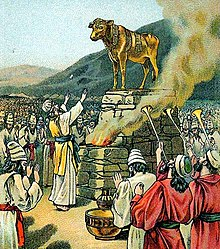
Jeroboam REPLACED the worship

“Here are your gods, Israel, who brought you up out of Egypt.” (1Kings 12:28)

Jeroboam, the first king of the northern kingdom of Israel, initiated a series of significant changes that altered the course of worship for his people. His actions were driven by political motives rather than spiritual fidelity, leading to the establishment of a false system of worship that had long-lasting ramifications.

Replacing the Place, Object, and Priests of Worship

His primary objective was to prevent his subjects from traveling to Jerusalem, in the southern kingdom of Judah, for worship. He feared that such pilgrimages would foster loyalty to the house of David and threaten his own reign. To counter this, Jeroboam replaced the central place of worship and also substituted the object of worship with idols. He also appointed non-Levitical priests to serve, undermining the divinely ordained priesthood.

The Enduring Error of Jeroboam

Jeroboam’s innovations did not end with his reign but extended into the next generations. His establishment of idolatrous practices became a stumbling block for the northern kingdom of Israel. Kings who followed Jeroboam perpetuated these errors, leading the people further away from true worship. The legacy of Jeroboam’s apostasy was so significant that it became a standard by which the sins of Israel’s kings were measured (1Kings 16:26).

The Idolatrous Practices of Ahab and Jezebel

The reign of Ahab and his queen, Jezebel, marked a further decline in the spiritual state of Israel. Jezebel introduced the worship of Baal and Asherah into Israel, practices that were abominable to the Lord. Ahab provoked the Lord more than all the kings of Israel before him (1Kings 16:31-33).

The Lord’s disapproval on Mount Carmel

The prophet Elijah emerged as a powerful voice against the rampant idolatry. In one of the most dramatic confrontations recorded in Scripture, Elijah challenged the prophets of Baal on Mount Carmel. He called upon the Lord to demonstrate His sovereignty, and God responded with fire from heaven, consuming Elijah’s sacrifice (1Kings 18:36-39). This miraculous event underscored the Lord’s disapproval of Israel’s idolatry and called the people back to genuine worship.

Prophetic Admonishment and Call for Repentance

Despite Elijah’s victory, the prophets continuously admonished Israel to repent. The persistent call for repentance echoed throughout the ministries of subsequent prophets, yet the people remained obstinate. Their refusal to abandon false worship led to their downfall (see Hos 8:4-6; Amos 4:4-5).

The Consequences of Continued Apostasy

Israel’s continued apostasy ultimately resulted in their captivity. In 722 BC, the Assyrians conquered the northern kingdom, scattering the ten tribes and bringing an end to the Northern Kingdom. The seeds of their destruction were sown by Jeroboam’s initial departure from true worship.

The Persistence of Errors in Judah

In the southern kingdom of Judah, despite periodic reforms, such as those under King Josiah, errors persisted. Josiah’s reforms were extensive, yet they could not completely eradicate the entrenched practices of idolatry.

Nehemiah’s Acknowledgment of Persistent Disobedience

Centuries later, Nehemiah reflected on Israel’s history of disobedience and idolatry. In his prayer, he acknowledged the persistent sinfulness that had plagued the nation, attributing their suffering to their unfaithfulness (Nehemiah 9:26-37). Nehemiah’s reflection underscores the long-lasting impact of Jeroboam’s initial errors, demonstrating that false worship and disobedience to God’s commands lead to severe consequences.

Conclusion

The establishment of false worship by Jeroboam in 1Kings 12:25-33 had long-lasting effects on the northern kingdom of Israel. This sin was perpetuated by subsequent kings and contributed to the spiritual decline of Israel. Prophets repeatedly condemned these practices and called for repentance, but the people’s persistence in idolatry ultimately led to their downfall and exile. The enduring influence of Jeroboam’s sin is a stark reminder of the consequences of deviating from God’s commands.

Agape,
Spencer