
Hear Him

In a world filled with a myriad of voices, opinions, and influences, it can be challenging to discern the truth. As Christians, we are to hear and follow the voice of Jesus above all others. The Bible provides the clear words of Jesus and how we should prioritize hearing Him over other voices that compete for our attention. Let’s explore why it’s essential to hear Jesus and how we can overcome the distractions that often lead us away from His teachings.

Listening to Self.
In our modern culture, self-reliance and personal wisdom are often exalted. We’re told to “trust our gut” and “follow our hearts.” However, the Bible warns against leaning on our own understanding. Proverbs 3:5-6 reminds us, “Trust in the LORD with all thine heart; and lean not unto thine own understanding. In all thy ways acknowledge him, and he shall direct thy paths.”

    Imagine a ship’s captain in the middle of the ocean who ignores his navigational charts and instruments, relying solely on his instincts. Despite his confidence, he quickly becomes lost, unable to find his way through the vast and treacherous waters. In the same way, when we rely solely on our own understanding and desires, we can easily lose our way spiritually.

    Our hearts can be deceptive, leading us into paths that seem right but ultimately end in destruction. “The heart is deceitful above all things, and desperately wicked: who can know it” (Jeremiah 17:9)? Instead of placing our trust in ourselves, we are urged to submit to God and trust in His wisdom. When we choose to hear Jesus, we are placing our confidence in the One who knows all, sees all, and loves us all. By aligning our thoughts with His teachings, we find guidance and direction that are far beyond our limited human understanding.

    Listening to Relationships Like Family & Friends.
    Family and friends often have a significant influence on our lives. While these relationships are important, they must not take precedence over our relationship with Christ. In Matthew 10:37, Jesus makes a bold statement: “Anyone who loves their father or mother more than me is not worthy of me; anyone who loves their son or daughter more than me is not worthy of me.”

      This scripture isn’t a call to neglect our loved ones but rather a reminder to keep Jesus as our primary focus. When we elevate the opinions, traditions, and desires of others above the teachings of Christ, we risk compromising our faith. When we prioritize the voices of our loved ones over God’s Word, we become confused and unfocused in our walk with Christ

      Our love for Jesus should surpass all other affections, ensuring that His voice is the loudest in our lives. By hearing Jesus first, we can love and serve our families better, rooted in the truth of the Gospel.

      Listening to Authority Figures Without Verification.
      We live in a world where authority figures—be they religious leaders, politicians, or cultural icons—can significantly shape our beliefs. However, it’s crucial to remember that no human authority is infallible. Acts 17:11 praises the Bereans for their diligence in verifying Paul’s teachings: “These were more noble than those in Thessalonica, in that they received the word with all readiness of mind, and searched the scriptures daily, whether those things were so.”

        This passage encourages us to be discerning listeners. We should respect authority but also verify their words against the ultimate authority—the Word of God. Hearing Jesus requires us to examine everything through the lens of Scripture, ensuring that we remain grounded in truth (see 1John 4:1; 1Thess 5:21).

        Listening to Evil Spirits, Tarot Cards, Mediums, Psychics, and Astrology.
        In a quest for guidance and answers, some people turn to supernatural sources like tarot cards, mediums, psychics, and astrology. However, the Bible explicitly warns against such practices. Isaiah 8:19-20 says, “And when they shall say unto you, Seek unto them that have familiar spirits, and unto wizards that peep, and that mutter: should not a people seek unto their God? for the living to the dead? To the law and to the testimony: if they speak not according to this word, it is because there is no light in them.”

          Imagine a traveler, seeking guidance, consults a broken compass, believing it will lead them to their destination. Instead, it leads them further into danger. When we turn to tarot cards, psychics, or astrology, we are like that traveler, misguided and led astray. These sources cannot truly communicate with us or guide us because they are not from God.

          These practices are dangerous because they open the door to deception and spiritual harm. Instead of seeking answers from these sources, we are called to seek God directly. Jesus is the ultimate source of truth, and when we hear Him, we receive the guidance and wisdom that leads to life.

          Hearing Jesus.
          Amidst all these competing voices, God’s command is clear: we must hear Jesus. In Matthew 17:5, during the Transfiguration, God the Father declares, “This is my beloved Son, in whom I am well pleased; hear ye him!” This directive emphasizes the authority and importance of Jesus’ teachings. When we listen to Jesus, we are hearing the voice of God Himself.

            Jesus affirms this in John 14:6, where He states, “I am the way and the truth and the life. No one comes to the Father except through me.” By hearing and following Jesus, we find the true path to salvation and eternal life. His voice leads us to the Father, guiding us through the complexities of life with divine wisdom and love. We hear Jesus through the words that have been recorded for us in the New Testament. “He that rejecteth me, and receiveth not my words, hath one that judgeth him: the word that I have spoken, the same shall judge him in the last day” (John 12:48; cf. John 20:30-31).

            Hearing Jesus above all others is not just a command; it is a necessity for every believer. By prioritizing His voice, we can navigate the challenges of life with clarity, purpose, and peace. Let us commit to tuning our ears to His teachings, allowing His words to shape our hearts and guide our steps.

            Agape,
            spencer

            Stopping the mouths of LIONS

            “My God hath sent his angel, and hath shut the lions’ mouths, that they have not hurt me.” (Daniel 6:22a).

            In the book of Daniel, we find a powerful metaphor for the trials and challenges that believers face in their spiritual journey. When Daniel was cast into the lion’s den, he faced a den of fierce, hungry lions, yet he emerged unscathed because of his unwavering faith in God. Today, we face different kinds of lions—threats that may not have sharp teeth or roar, but still seek to destroy us spiritually. Using Daniel’s story as a foundation, let us examine the lions we encounter in this life.

            The Roaring Lion.
            The Apostle Peter warned us of a fierce predator who constantly stalks us: “Be sober, be vigilant; because your adversary the devil, as a roaring lion, walketh about, seeking whom he may devour” (1 Peter 5:8). This roaring lion represents Satan, who seeks to devour souls by pulling us away from God. Though Satan has been bound and limited in power by Christ’s victory on the cross, his influence continues through false teachings and deception. As Paul wrote, “Satan himself is transformed into an angel of light” (2 Corinthians 11:15, KJV). To resist this roaring lion, we are called to “submit yourselves therefore to God. Resist the devil, and he will flee from you” (James 4:7).

            The Lion of Idolatry.
            One of the lions that seeks to devour us today is the lion of idolatry. Paul warned the Colossians to “mortify… covetousness, which is idolatry” (Colossians 3:5). Idolatry is not merely the worship of carved images or false gods; it is also the elevation of anything in our lives above God. Whether it be money, fame, power, or even ourselves, anything that takes the place of God in our hearts becomes an idol. We must guard our hearts against this lion, ensuring that God remains first and foremost in all we do.

            The Lion of Oppression.
            Living a faithful Christian life often brings us face-to-face with the lion of oppression. Paul told Timothy, “Yea, and all that will live godly in Christ Jesus shall suffer persecution” (2 Timothy 3:12). Oppression can take many forms, from direct persecution for our faith to more subtle societal pressures that tempt us to compromise our beliefs. Today, we must be prepared to endure trials and trust that God will deliver us.

            The Lion of Nationalism.
            Another lion that seeks to devour our faith is the lion of naturalism—trusting in earthly solutions and human institutions rather than in God. The role of government is ordained by God, and we are called to submit to it, as Paul explained in Romans 13:1-7. The lion of naturalism deceives us into believing that the solutions to life’s problems are found purely in this world, but as Christians, our hope is in the eternal promises of God. As Paul reminds us, “If in this life only we have hope in Christ, we are of all men most miserable” (1 Corinthians 15:19).

            The Lion of Sin.
            Finally, perhaps the most dangerous lion we face is the lion of sin. James wrote, “Every man is tempted, when he is drawn away of his own lust, and enticed. Then when lust hath conceived, it bringeth forth sin: and sin, when it is finished, bringeth forth death” (James 1:14-15). Sin crouches at the door, waiting to devour us, and often it begins with the smallest temptation. Like a lion stalking its prey, sin often sneaks up on us gradually, catching us in moments of weakness. The key to overcoming this lion is to stay alert and grounded in God’s Word.

            Agape,
            Spencer

            10 Things a Child of God Can Do

            Things Children of God Can Do:

            1. Fall from grace – Gal. 5:1-4,13

            2. Be led away with error – 2 Pet. 3:17

            3. Err from the truth – James 5:19-20

            4. Weak brother may perish – 1 Cor. 8:11

            5. Fall into condemnation – James 5:12

            6. Be moved away from the hope – Col. 1:21-23

            7. Deny the Lord who bought them – 2 Pet. 2:1

            8. Depart from the living God – Heb. 3:12

            9. Can be a castaway – 1 Cor. 9:27

            10. Can become accursed children – 2 Pet. 2:14

            Other scriptural arguments that refute “Eternal Security”

            A. The fact the Bible exhorts to faithfulness proves one can be lost
            be steadfast immovable
            : 1 Cor 15:58
            If these qualities are yours…2 Pe 1:5-11
            we will reap if we do not grow weary: Gal 6:9
            be faithful unto death and I will give crown of life: Rev 2:10
            practice these things and God will be with you: Phil 4:9

            B. Man has a free will: Josh 24:15 to argue otherwise is nonsense and is a veiled form of existentialism

            C. The Bible clearly prophesied some would fall away: Acts 20:28; 1 Ti 4:1

            D. Christians are to restore the fallen: Gal 6:1; Jas 5:19-20

            Is Once Saved Always Saved true?

            Can A Christian Sin And Be Lost?

            Several of the world’s denominations teach that Christians cannot sin so as to become lost; that is, there is no way that a true convert of Christ he cannot go to hell may sin, and thereby, receive eternal damnation – he cannot go to hell after having once been saved. This is popularly spoken of as the doctrine of “once saved, always saved”.

            On one extreme, this doctrine is expressed as, “True Christians will not sin as they lack the desire and the capability to sin, because their allegiance to Christ has changed their nature”. At its other extreme, this doctrine is expressed as, “No matter how grievous, the sins of Christians will not be held against them in the final judgement”. Those who hold this last view believe that Christians can do wrong, but they also believe that Christ will forgive them of any, and every, sin so that they will be blameless on the day of judgement.

            You researched this question to find, not what man teaches, but what the Bible teaches about the possibility of Christians falling from the way of truth, and becoming lost.

            The most clear treatment of this subject in the New Testament is found in the second chapter of II Peter. Study this entire chapter carefully. I quote now verses 20 and 21, which best summarize its teachings,

            Unquestionably the people spoken of here were once Christians, for the writer speaks of them as those who had, “(quote) escaped from the pollution of the world through the knowledge of the Lord Jesus Christ” (unquote). Unquestionably these same people were, again, entangled in worldly pollution, that is, they had fallen from the way of the truth, and had (again) become sinners. Also, unquestionably they are subject to condemnation for these sins, for the verse says that their final state is worse than their initial state, that is, they are worse off than before they were saved. Thus, the doctrine of “once saved, always saved”, is not supported by the scriptures, for the Bible here shows that Christians can sin, and that they may receive punishment for those deeds.

            All verses of the Bible agree with all other verses when the subject is the same, and when the rule, or law of God, is the same. Also, when the rule, or law, is consistent, clear verses serve to explain less clear verses about the same subject. Said in a different way, the Bible never contradicts itself, and the Bible is its own best interpreter. Remember, God cannot lie, and God is not the author of confusion. Study Hebrews 6:18, and I Corinthians 14:33. To illustrate this, we can study verses about baptism (for instance) in the New Testament books written by the apostles John, Paul, and James, and expect agreement. But, we cannot necessarily expect agreement between the Old Testament writings of Moses and the New Testament writings of Paul concerning (say) worship; Moses’ laws were in effect until Jesus’ death ended them. See Col. 2:14. Paul’s writings, however, are a part of the will of Christ, His New Testament. The New Testament is our guide today.

            In I John 3:9, we read, “Whosoever is born of God doth not commit sin; for his seed remaineth in him: and he cannot sin, because he is born of God“. If this verse teaches, “once saved, always saved”, it is contrary to II Peter 2:20 and 21 (which we read previously). Thus, a contradiction is forced into the scriptures which cannot exist. However, apparent conflict disappears when we see that the writer is stating the obvious fact that Christians cannot sin and remain faithful followers of the Lord. This is verified by the very same writer in the very same letter where the apostle, John, in I John 1:8-10 says, “If we say that we have no sin, we deceive ourselves, and the truth is not in us. If we confess our sins he is faithful and just to forgive us our sins, and to cleanse us from all unrighteousness. If we say that we have not sinned, we make him a liar, and his word is not in us“.

            Here, again, we find an inspired writer telling true believers, Christians (including himself) that they can sin, and that they can do unrighteousness. More deeply, John is here instructing Christians how they can find forgiveness for their sins; Christians are to confess their sins and they will be forgiven them. This instruction is not for sinners who have never become Christians. Christians are citizens of God’s kingdom, and must abide by its rules. People who are not citizens in the kingdom must first become so before its laws apply to them. We suggest that you find how to become a citizen of God’s kingdom through study the message, “What Must I Do To Be Saved?” and “Are We Saved By Faith Only?”.

            Belief in, “once saved, always saved” may seem justified by John 10:27-29, “My sheep hear my voice, and I know them, and they follow me: And I give unto them eternal life; and they shall never perish, neither shall any man pluck them out of my hand“. If this scripture proves, “once saved, always saved”, the scriptures contradict each other, and this, of course, is an impossibility. To harmonize the scriptures (to make them agree, one with another), we must notice that Jesus did not say that his sheep could not leave of their own accord; He said that no man could pluck them away.

            Each Christian may leave Christ, if he chooses; but unless the individual wishes to go, no one else can make him leave. Notice in verse 27, Jesus said that His sheep, “know me and follow me“, and thus, following, and continuing to follow the Savior is a condition that we must fulfill if the promise, “neither shall any man pluck them out of my hand” is to be kept.

            And so, in addition to those things necessary to become saved (namely, believing the word of God, believing that Jesus is the Christ, the Son of God, repenting of (or changing away from) a sinful life, and being baptized into Christ for the remission of sins, we have an additional requirement, that of being faithful unto death (Revelation 2:10).

            “Once saved, always saved” is a dangerous doctrine: The Christian who does fall away (upon seeing his sinful life) may conclude that he was never saved and become doubtful of the power of God; another may live a sinful life, and become lost, while believing that God is unmindful of the sins being committed. Either way can result in eternal death for the sinner’s soul, and it would be such a useless death, for (as we have seen), the doctrine of “once saved, always saved” is wrong. The Christian who sins must confess those sins to God, who will forgive them.

            from the website: https://www.bible.ca/g-eternal-security.htm

            Refutations of the false doctrine of Once saved always saved.

            Calvinism Refuted

            “Perseverance of the Saints”

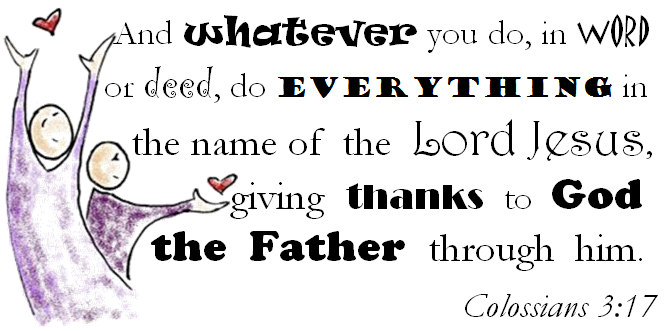
            Illustrating Colossians 3:17.

            Doing All in the NAME of the Lord.

            And whatsoever ye do in word or deed, do all in the name of the Lord Jesus, giving thanks to God and the Father by him.” (Col 3:17)

            This verse encapsulates the essence of living a life fully devoted to Christ. It means more than just offering lip service or superficial honor to God; it demands genuine obedience to His commands in every aspect of our lives. To fully understand this, let us explore scriptural examples where individuals desired to honor God but failed to keep His commandments, thus illustrating the true meaning of doing all in the name of the Lord.

            Nadab & Abihu:

            A Cautionary Tale. Leviticus 10:1-2 provides a stark example of what happens when individuals seek to honor God without adhering to His explicit instructions. Nadab and Abihu, the sons of Aaron, offered “strange fire before the Lord, which he commanded them not.” Despite their likely intentions to honor God, their offering was contrary to His command, and as a result, fire came out from the Lord and consumed them. This incident underscores the critical importance of obedience. Honoring God is not just about good intentions; it requires strict adherence to His directives.

            Saul’s Amalekite Error.

            Another poignant example is King Saul’s disobedience in 1 Samuel 15. God commanded Saul to utterly destroy the Amalekites and all their possessions. Instead, Saul spared King Agag and kept the best of the livestock, justifying his actions by claiming that the animals were preserved for sacrifice to the Lord (1Samuel 15:15). However, Saul’s partial obedience was deemed rebellion. Samuel rebuked him, stating, “Behold, to obey is better than sacrifice, and to hearken than the fat of rams” (1Samuel 15:22). Saul’s failure highlights that honoring God involves complete obedience to His commands, not selective adherence.

            Well Meaning Uzzah.

            In 2 Samuel 6, we read about Uzzah, who, in a well-meaning effort to honor God, reached out to steady the Ark of the Covenant when the oxen stumbled. Despite his intentions, he violated God’s command that no one should touch the Ark (Numbers 4:15). As a result, Uzzah was struck dead by God (2Samuel 6:7). This account demonstrates that good intentions are not enough when they lead to disobedience. Honoring God requires respecting and following His specific instructions even under extreme circumstance.

            The Errors of the Pharisees.

            The Pharisees in the New Testament provide a further illustration of misplaced honor. They meticulously followed traditions and outward rituals, believing they were honoring God. However, Jesus criticized them for neglecting the more important matters of the law—justice, mercy, and faithfulness (Matthew 23:23). Their focus on external observance rather than heartfelt obedience and adherence to God’s true commands showed that they were not truly honoring God in their actions.

            Jesus Himself addressed the importance of true worship in Matthew 15:8-9, quoting Isaiah: “This people draweth nigh unto me with their mouth, and honoureth me with their lips; but their heart is far from me. But in vain they do worship me, teaching for doctrines the commandments of men.” Here, Jesus condemns those who appear to honor God outwardly but fail to adhere to His commands, substituting human traditions for divine instructions. True worship, according to Jesus, is rooted in obedience to God’s word.

            Applying Colossians 3:17 Today.

            For believers today, Colossians 3:17 is a call to full obedience. It challenges us to ensure that every word and deed aligns with God’s will as revealed in Scripture. It is not enough to perform acts of worship or service with good intentions if those acts are not grounded in obedience to God’s commands.

            For instance, when it comes to worship practices, evangelism, or daily living, our actions must be rooted in biblical directives. Doing everything in the name of the Lord means we act under His authority and guidance, ensuring our lives reflect His teachings and commands.

            Colossians 3:17 reminds us that honoring God involves more than mere intention or lip service. It requires a heart and life fully committed to obeying His will. True honor to God is found in faithful obedience to His word. Let us strive to do all in the name of the Lord, giving thanks to God and living in full submission to His divine will.

            Agape,

            Spencer

            This is part 4 of a series of lessons on the Duties of Saints, pt1

            Here is part 4 on the Duties of Saints.

            What is the Value of your Soul?

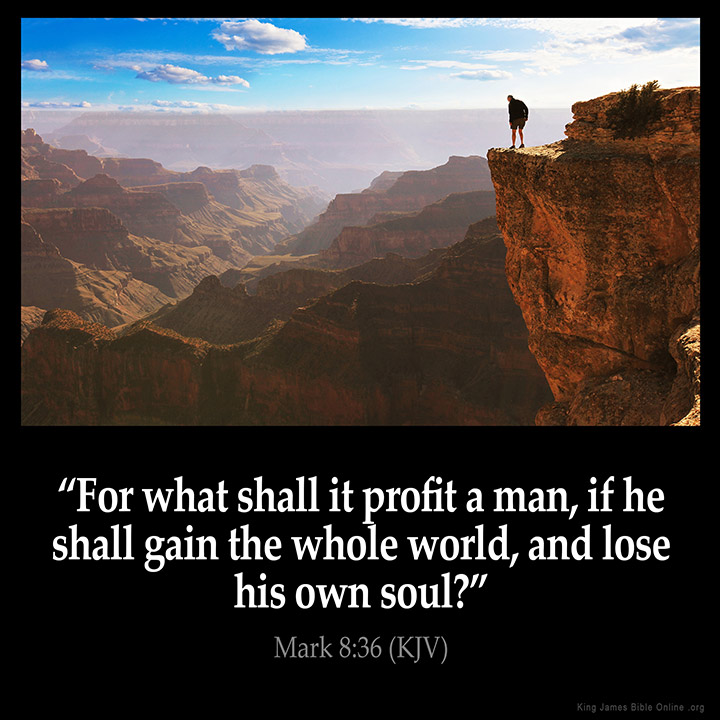
            For what shall it profit a man, if he shall gain the whole world, and lose his own soul? Or what shall a man give in exchange for his soul?” (Mark 8:36-37).

            The question of the soul’s worth is one that transcends time and culture, touching the very essence of human existence. Jesus Himself addressed this profound query in Mark 8:34-38 and Matthew 16:24-26, challenging us to consider the eternal value of our souls. Let us explore four pivotal aspects that underscore the immeasurable worth of a soul.

            As living souls, we have much greater potential than all others of God’s creation. Technology, Arts, and Mercy are unique to humans. More than these, we have the potential to become like Christ. “So also is the resurrection of the dead. It is sown in corruption; it is raised in incorruption: It is sown in dishonour; it is raised in glory: it is sown in weakness; it is raised in power: It is sown a natural body; it is raised a spiritual body. There is a natural body, and there is a spiritual body” (1Cor 15:42-44). When we obey the gospel, we look forward to eternal life with our Savior and to see Him as He is, (cf. Rev 22:4).

            In Matthew 10:28, Jesus admonishes, “And fear not them which kill the body, but are not able to kill the soul: but rather fear him which is able to destroy both soul and body in hell.” This declaration underscores the eternal nature of the soul, distinguishing it from our temporal physical bodies. The body may perish, but the soul endures beyond the grave, facing either eternal life or eternal punishment as stated in Matthew 25:46: “And these shall go away into everlasting punishment: but the righteous into life eternal.”

            The everlasting nature of the soul is a solemn reminder of its infinite value. Our earthly concerns often distract us from this reality, yet Jesus calls us to prioritize our spiritual well-being. The choices we make in this life have eternal consequences, emphasizing the need for a life aligned with God’s will.

            Jesus highlighted the incomparable worth of a soul by pointing to God’s providence over creation. In Matthew 6:26-30, He illustrates His care for the birds and the flowers, reminding us that we are of far greater value: “Are ye not much better than they?” Jesus also said that “the very hairs of your head are all numbered” (Matt 10:30). These passages underscore the unique and cherished place humanity holds in God’s creation.

            I am fearfully and wonderfully made” (Psalm 139:14). This divine craftsmanship reflects the soul’s worth, a masterpiece of God’s creative power. Unlike the rest of creation, the human soul bears a unique value.

            The soul’s worth is further magnified by its divine origin. Acts 17:29 declares, “Forasmuch then as we are the offspring of God, we ought not to think that the Godhead is like unto gold, or silver, or stone, graven by art and man’s device.” We are not merely physical beings but spiritual offspring of God, created in His image.

            Genesis 1:26-27 records God’s decision to create humanity in His likeness, endowing us with attributes that reflect His nature: “And God said, Let us make man in our image, after our likeness.” The Preacher reminds us that at death, “Then shall the dust return to the earth as it was: and the spirit shall return unto God who gave it” (Ecc 12:7). The soul’s divine origin and destiny underscore its unparalleled worth, calling us to live in a manner that honors our Creator.

            The ultimate measure of the soul’s worth is found in the sacrifice of Jesus Christ. John 3:16, perhaps the most well-known verse in the Bible, proclaims, “For God so loved the world, that he gave his only begotten Son, that whosoever believeth in him should not perish, but have everlasting life.” This profound act of love underscores the soul’s value, worthy of the highest price (cf. Rom 5:8-10).

            2Peter 3:9 emphasizes God’s desire for our salvation, stating, “The Lord is not slack concerning his promise, as some men count slackness; but is longsuffering to us-ward, not willing that any should perish, but that all should come to repentance.” The sacrificial death of Christ on the cross is the ultimate testament to the worth of our souls, offering us redemption and eternal life.

            In contemplating the worth of a soul, we must recognize its eternal nature, its unparalleled value in creation, its divine origin, and the supreme sacrifice made for its salvation. As we reflect on these truths, let us heed Jesus’ call in Mark 8:34-38 and Matthew 16:24-26 to deny ourselves, take up our cross, and follow Him. For in doing so, we affirm the immeasurable worth of our souls and align our lives with God’s eternal purpose.

            Agape,
            Spencer

            This article is from a series of sermons on the Gospel of Mark. Click here for the list of available articles on the Gospel of Mark.