
to what shall we compare the WORD?

The Bible is filled with powerful imagery to describe the Word of God, using metaphors that reflect its dynamic and life-altering nature. From being a weapon in spiritual warfare to our daily spiritual sustenance, the scriptures portray the Word as essential for life, growth, and transformation.

1. The Word as a Weapon: Sword and Hammer

The Word of God is often depicted as a tool of immense power, capable of cutting through deception and breaking down barriers. In Ephesians 6:17, the Apostle Paul describes the Word as “the sword of the Spirit,” a crucial part of the armor of God. This sword is not just any weapon but one that can pierce deeply, exposing the truth and confronting the lies and temptations of the enemy.

Similarly, Hebrews 4:12 emphasizes that “the word of God is quick, and powerful, and sharper than any twoedged sword,” underscoring its ability to discern “the thoughts and intents of the heart.” This sharpness reflects the way God’s Word penetrates to the deepest levels of human existence, challenging us, revealing sin, and guiding us toward righteousness.
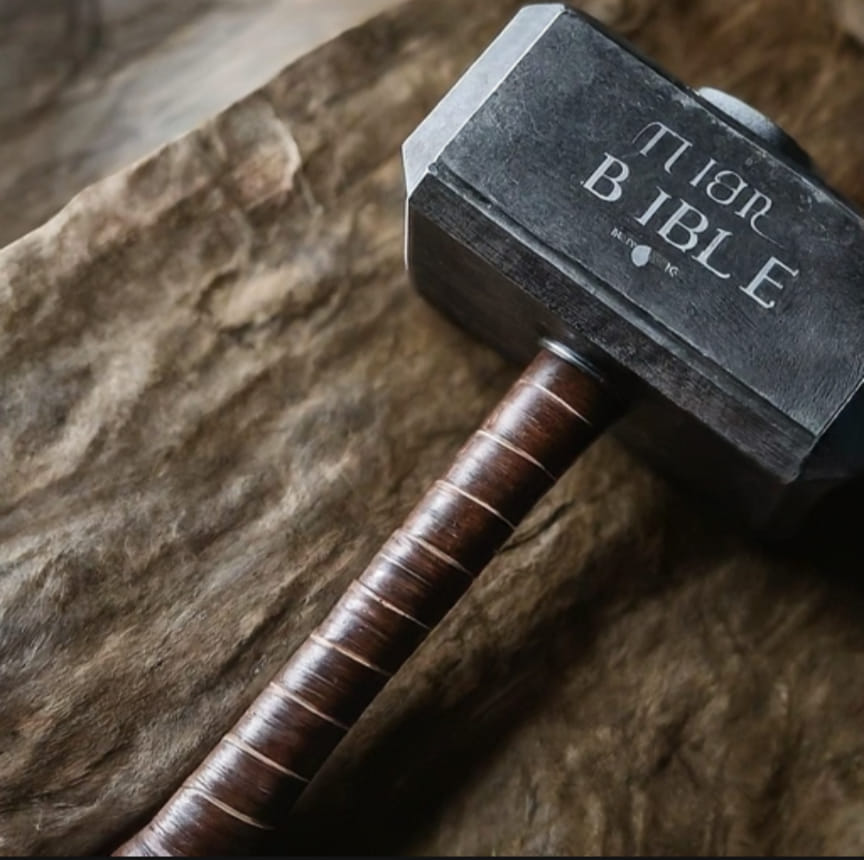
In Jeremiah 23:29, God says, “Is not my word like a fire? saith the Lord; and like a hammer that breaketh the rock in pieces?” The image of a hammer conveys the sheer strength of the Word, which can break through even the hardest heart, bringing about conviction, repentance, and transformation.

2. The Word as Our Daily Food: Bread, Milk, Meat, & Honey
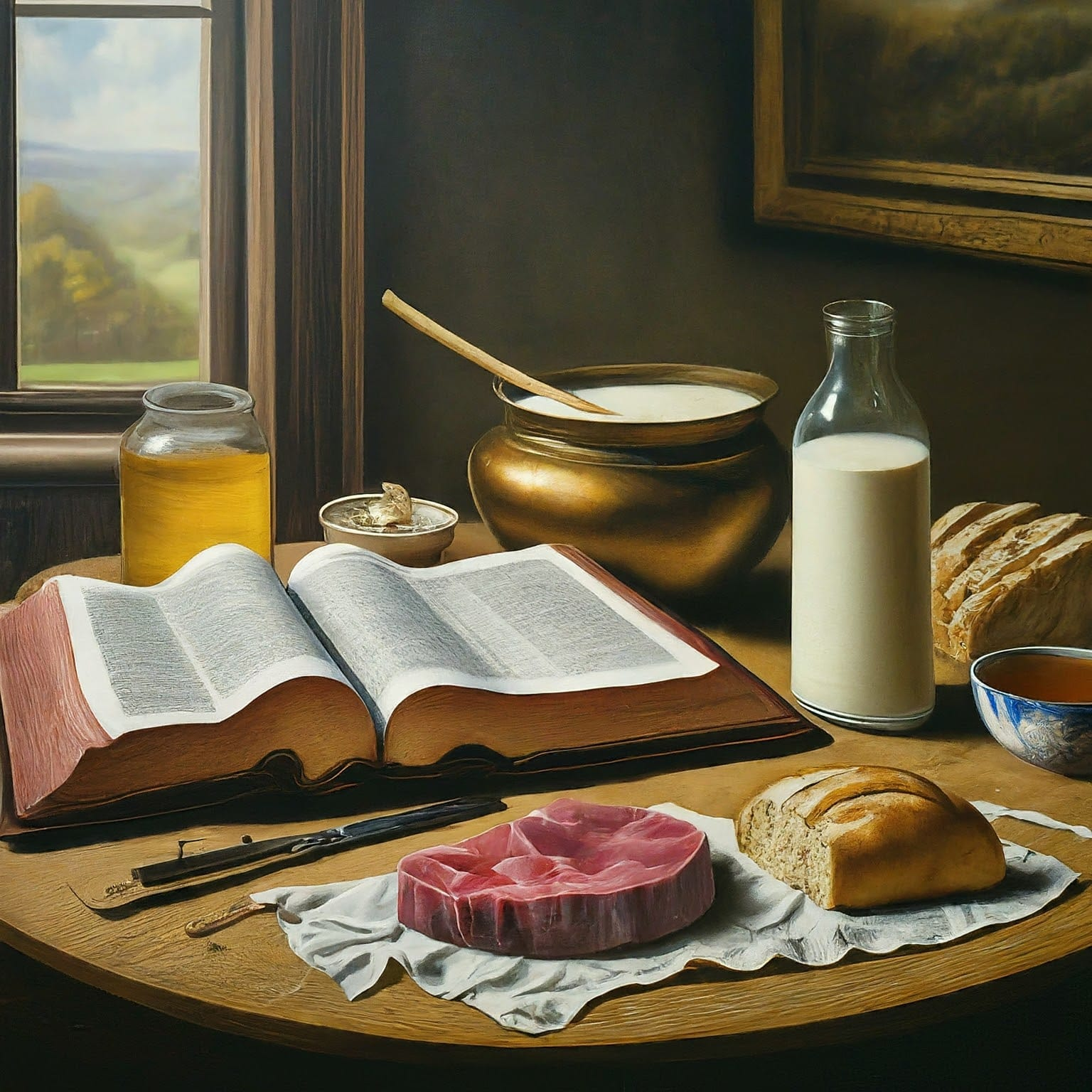
The Bible also presents the Word of God as essential nourishment for our spiritual lives. In Matthew 4:4, Jesus declares, “Man shall not live by bread alone, but by every word that proceedeth out of the mouth of God.” Here, the Word is compared to bread, the basic sustenance for life. Just as physical bread nourishes the body, the Word of God nourishes the soul, giving us the strength we need to grow and thrive spiritually.

For those new in their faith, the Bible compares the Word to milk. 1 Peter 2:2 encourages believers, “As newborn babes, desire the sincere milk of the word, that ye may grow thereby.” Just as infants need milk to grow strong and healthy, new believers need the simple truths of the Word to mature in their faith.

As we grow, the Bible encourages us to go beyond the milk of the Word to the deeper, richer truths that are compared to meat. Hebrews 5:14 says, “Strong meat belongeth to them that are of full age.” This metaphor emphasizes that the Word is not only for the spiritual beginner but also for the mature believer seeking deeper spiritual understanding.

In Psalm 19:10, the Word of God is described as “sweeter also than honey and the honeycomb.” Honey represents sweetness and pleasure, highlighting how the Word brings delight, satisfaction, and joy to those who meditate on it and apply its teachings.

3. The Word as Life-Giving Rain and Snow

The Bible uses natural cycles like rain and snow to symbolize the life-giving impact of God’s Word. In Isaiah 55:10-11, God compares His Word to rain and snow that water the earth and make it fruitful: “So shall my word be that goeth forth out of my mouth: it shall not return unto me void, but it shall accomplish that which I please.” Just as rain and snow nourish the ground, causing plants to grow and produce fruit, the Word of God accomplishes its purpose, bringing growth and fruitfulness to our spiritual lives.

4. The Word as Light in Darkness

Finally, the Word of God is described as light, providing guidance and clarity in a dark world. Psalm 119:105 declares, “Thy word is a lamp unto my feet, and a light unto my path.” Without the Word, we would stumble in spiritual darkness, unable to see the right way forward. The Word reveals the truth, showing us the path of righteousness and helping us navigate life’s challenges with wisdom and discernment.

The Word of God is a powerful weapon, an essential source of nourishment, a life-giving force, and a guiding light. Its metaphors reflect its multifaceted role as it confronts, sustains, renews, and leads us closer to God. As we embrace the Word, we experience its transforming power and its ability to equip us for every good work.

Agape

spencer
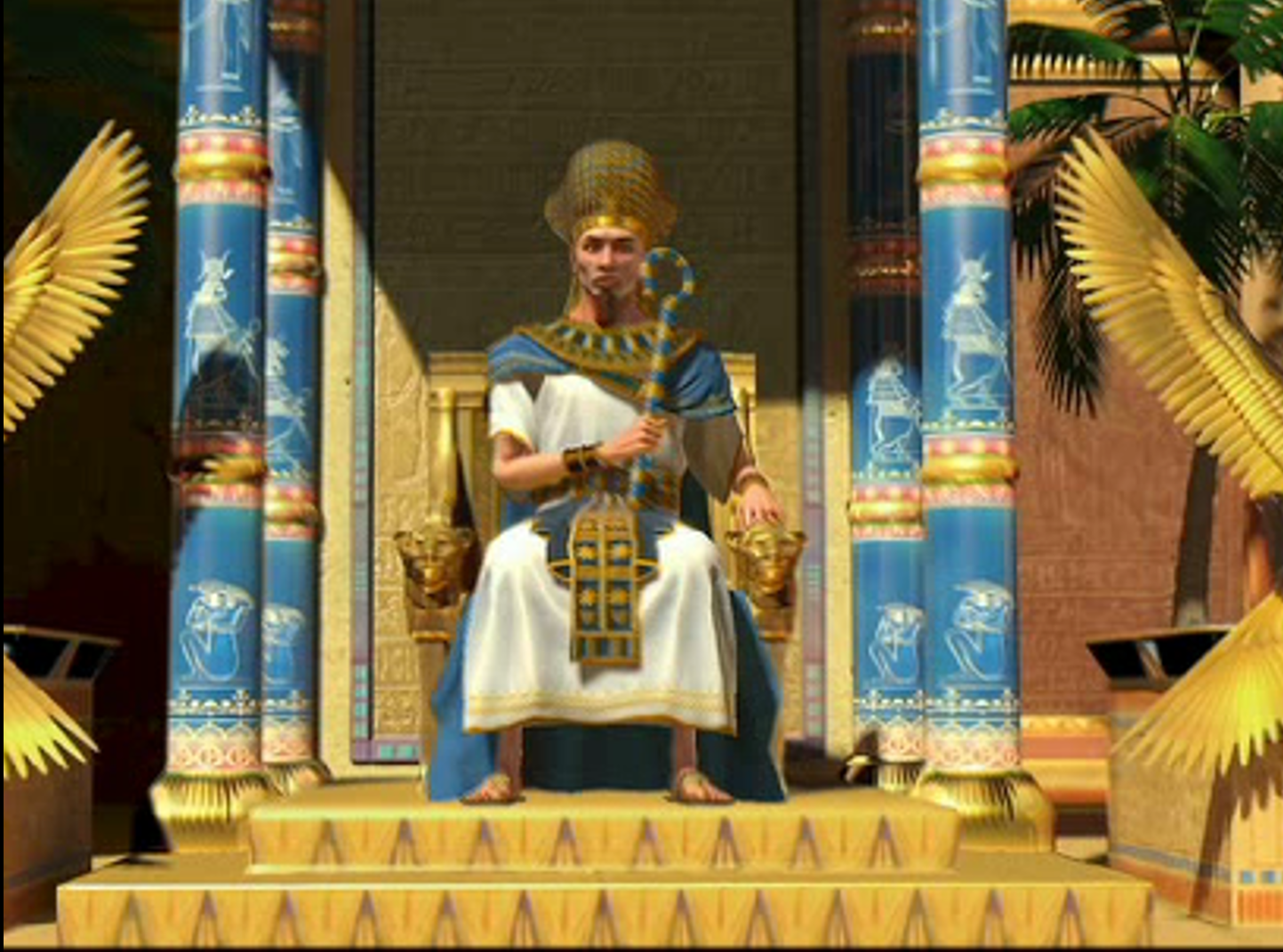
Moses Chose

When we look back at Moses, we see a man standing at the crossroads of history, faith, and destiny. He didn’t just stumble into leadership or into God’s favor. No sir, he made some mighty choices—five monumental ones that shaped the course of Israel’s future. It’s worth asking ourselves: What motivated Moses to choose the harder road? What lessons can we glean from his resolve?

1. The Motivation of Moses

Acts 7:25 tells us Moses had a sense of destiny, that he “supposed his brethren would have understood how that God by his hand would deliver them.” Hebrews 11:24-25 sheds more light on this by saying, “By faith Moses, when he was come to years, refused to be called the son of Pharaoh’s daughter; choosing rather to suffer affliction with the people of God, than to enjoy the pleasures of sin for a season.”

Moses wasn’t motivated by the luxury and ease that the Egyptian palace offered. No, he had a fire burning within him that Pharaoh’s wealth and influence couldn’t extinguish. Moses saw his people suffering, and rather than turning a blind eye, he chose to embrace their pain as his own. There’s something noble in that, isn’t there? Like a wise man once said, “It’s not what you stand on that defines you, but what you stand for.”

2. Oppression: Choosing Affliction Over Comfort

Hebrews 11:25 continues by showing that Moses chose “to suffer affliction with the people of God.” Think about that for a moment. This man had it all—prestige, power, privilege—but he willingly stepped away from the trappings of luxury to join the oppressed. Imagine leaving behind the Egyptian courts, not because you had to, but because you chose to.

Now, that’s the kind of conviction that echoes through history. We know that when oppression knocks at the door, it’s not always convenient to answer. But Moses didn’t care about convenience. He knew his place was with God’s people, not lounging in the pleasures of the palace.

3. Stood Against Pharaoh: Not a Slave, But a Servant of the Most High

When Moses went before Pharaoh, he wasn’t some lowly slave groveling for mercy. No, he stood tall as a servant of the God Most High, with the authority of heaven behind him. Exodus 5:20-23 tells us how the elders of Israel turned against Moses after Pharaoh made their labor even harder. Imagine that! He’s trying to lead his people to freedom, and the very folks he’s trying to help turn on him. If that ain’t a leadership test, I don’t know what is.

But Moses pressed on. He knew that he wasn’t doing this for himself or for the approval of man. He was on God’s mission, and that’s a lesson for us all. When the road gets rough, and even those closest to us lose faith, we’ve got to stand firm and remember who we serve.

4. Exposed as Exodus Leader: Challenges on Every Side

Leadership exposed Moses. Exodus 14:11-14 shows the people complaining when they saw no way out as Pharaoh’s army bore down on them at the Red Sea. Then, in Exodus 15:24, they grumbled again, this time over a lack of water. And if that wasn’t enough, they complained in Exodus 16:1-3 when there was no bread.

Now, it’s easy to criticize when you’re on the sidelines, but Moses was in the thick of it. No one said leading God’s people was going to be easy. It’s like that old saying: “Everybody wants to be a leader until it’s time to make decisions.” Moses made tough decisions, and though the people grumbled, God delivered—again and again.

5. Stood With Christ

Moses’ ultimate vindication came long after his earthly life ended. Mark 9:4 tells us that Moses stood with Christ on the Mount of Transfiguration. Think about that! After all the struggles, complaints, and hardships, Moses stood in glory with the Savior of the world.

And when Moses died, God Himself buried him (Deuteronomy 34:5-6). Now, if you ask me, there’s no better way to go than to have God take care of your final resting place.

What Do You Think of His Choice Now?

Looking back, I’d say Moses made the right choice, wouldn’t you? He didn’t choose comfort, wealth, or the easy road. He chose faith, suffering, and ultimately, the eternal reward of standing with Christ. Moses showed us that it’s not the temporary pleasures of this world that define our legacy, but the eternal decisions we make in the service of God.

So, when we face our own crossroads, let’s remember Moses.

Agape,

Spencer

What’s LOVE got to do with it?

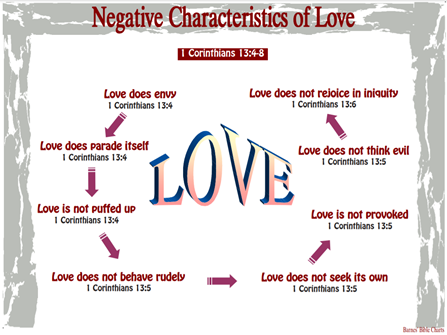
Love does not…

EVERYTHING!!

Love is the first & great commandment.

Paul calls love, “a more excellent way” [1Cor 12:31; 13:13].

“And Jesus answered him, The first of all the commandments is, Hear, O Israel; The Lord our God is one Lord: And thou shalt love the Lord thy God with all thy heart, and with all thy soul, and with all thy mind, and with all thy strength: this is the first commandment. And the second is like, namely this, Thou shalt love thy neighbour as thyself. There is none other commandment greater than these.” [Mark 12:29-31]

09-14-23 UPDATE ————————————-

In a world that has reduced love to just a feeling we need to understand Biblical love.

the culture of the day reminds me of the culture found in the book of judges; “In those days there was no king in Israel: every man did that which was right in his own eyes.” (Judges 21:25

Let’s be reminded of biblical love.

——————————————————————————–

The best commentary on Love is found in the Scriptures. Let’s see love from four perspectives.

  1. God’s Love for us
    1. God is Love – 1Jo 4:8 He that loveth not knoweth not God; for God is love. Titus 3:4-6
    2. God Gave His son – 1Jo 4:9, 10 In this was manifested the love of God toward us, because that God sent his only begotten Son into the world, John 3:16, 17; Rom 5:8; Eph 2:4,5
    3. God blesses His children – 1Jo 3:1 Behold, what manner of love the Father hath bestowed upon us, that we should be called the sons of God: Eph 1:3 every spiritual blessings
    4. Every good thing – James 1:17 – comes from above; Acts 17:28
    5. God sends sun & rain – Mt 5:45 for he maketh his sun to rise on the evil and on the good, and sendeth rain on the just and on the unjust.
  • Christ’s Love for us
    • Passes knowledge– Eph 3:19 And to know the love of Christ, which passeth knowledge, that ye might be filled with all the fulness of God.
    • As Father loved Him – Joh 15:9, 10 If ye keep my commandments, ye shall abide in my love; even as I have kept my Father’s commandments, and abide in his love.
    • He gave Himself – Joh 15:13 Greater love hath no man than this, that a man lay down his life for his friends.; Eph 5:2; 1Joh 3:16; Rev 1:5
    • His own– Joh 13:1, 34 A new commandment I give unto you, That ye love one another; as I have loved you, that ye also love one another.
    • Those who obey – Joh 14:21 He that hath my commandments, and keepeth them, he it is that loveth me: and he that loveth me shall be loved of my Father, and I will love him, and will manifest myself to him.
  • Man’s love for God & Christ
    • Great command– 1Jo 4:19 We love him, because he first loved us. Mark 12:28-30; Mt 22:36-40
    • Good thing for those that do – Ro 8:28 And we know that all things work together for good to them that love God, 1Corinthians 2:9 ings which God hath prepared for them that love him.
    • Crown of life / Kingdom – Jas 2:5 Hearken, my beloved brethren, Hath not God chosen the poor of this world rich in faith, and heirs of the kingdom which he hath promised to them that love him? [1:12]
    • Love displayed through obedience – 1Jo 5:3 For this is the love of God, that we keep his commandments:
      • 2Joh 6; John 14:15, 21, 23
    • Love for truth – 2Th 2:10-12 because they received not the love of the truth, that they might be saved.
  • Man’s love for others
    • Brethren – 1Th 4:9; 1Th 3:12 And the Lord make you to increase and abound in love one toward another, and toward all men, even as we do toward you:
      • John 13:34; 15:12; 1Pe 1:22; 2:17;
      • 1Jo 2:10, 3:11, 14, 23; 4:11, 12
      • 2Pe 1:7 And to godliness brotherly kindness; and to brotherly kindness charity.
    • Husbands & Wives – Eph 5:25, 28, 33; Col 3:19; Tit 2:3,4
    • Neighbor – Ro 13:8 Owe no man any thing, but to love one another: for he that loveth another hath fulfilled the law.
      • [Mr 12:31; James 2:8]
    • Enemies – Lu 6:35 But love ye your enemies, and do good, and lend, hoping for nothing again; and your reward shall be great, and ye shall be the children of the Highest:
      • Mt 5:43, 44 But I say unto you, Love your enemies, bless them that curse you, do good to them that hate you, and pray for them which despitefully use you, and persecute you;

Plea for Pure Christianity

“And whatsoever ye do in word or deed, do all in the name of the Lord Jesus, giving thanks to God and the Father by him.” (Colossians 3:17).

(by Jere E. Frost, via “According To The Pattern”, Medina, TN, 04/01/1990)

WE BELIEVE the Bible to be the inspired word of God, a perfect and sufficient guide (2 Timothy 3:16, 17). It does not incidentally contain some things which we teach — it is the alpha and omega of our faith and practice, and we dare not go beyond it (2 John 9).

WE COME to you with no denominational plan seeking your favor, but only in the name of Christ, desiring to help you find the truth, anxious that you obey all of God’s commandments. The obedient have a right to the tree of life and may enter in through the gates into the city (Revelation 22:14). But those who merely cry, “Lord, Lord,” shall not enter into the kingdom of heaven (Matthew 7:21).

WE SUBMIT to the matchless authority of Christ, heeding the faultless message that He and his inspired servants taught (Hebrews 2:3). His word produces faith, and faith in Him as the Son of God is the foundation of hope (Hebrews 11:1; John 8:24). Every person must repent, repentance being required of all and death being held forth as the wage of refusal (Acts 17:30; Luke 13:3). Confession of faith in Christ is unto salvation, and upon such a confession one may be baptized (Romans 10:10; Acts 8:37). Baptism was commanded by Christ Himself (Mark 16:16), puts one into Christ (Galatians 3:27) where all spiritual blessings abound (Ephesians 1:3), and is for the remission of our sins and the salvation of our souls (Acts 2:38; 1 Peter 3:21). Who dares refuse it? Faithfulness unto life’s end is promised a rich heavenly reward (Revelation 2:10).

WE PRAY for unity among all professed believers, for Christ so prayed (John 17:20-23). Paul besought the Corinthians to be “of the same mind” and to “speak the same things.” (1 Corinthians 1:10). Since human wisdom is the cause of (not the cure for) division, we must discard and abandon it in order to be true to any prayer for unity. A perfect and God-given platform for genuine unity is set forth in Ephesians 4:3-6. This is the basis for spiritual harmony and lasting peace with God. Consider: One God (unity in worship), one Lord, Jesus Christ (unity in authority), one Spirit (unity in life), one faith (unity in doctrine), one body, the church (unity in organization), one baptism (unity in practice), and one hope (unity in desire and expectation).

WE REFUSE to sectarianize ourselves by wearing man-made religious names; they are not only unauthorized, but actually foment division. We are to be Christians, nothing more and nothing less, being completely satisfied and humbly grateful to be honored with the privilege of wearing Christ’s name (1 Peter 4:16). God has placed His name above every name, and the disciples wore it (Philippians 2:9; Acts 11:26). The body (church) of Christ also wears His name, preferring none other, and thus the New Testament speaks of “the churches of Christ” (Romans 16:16).

WE ENDEAVOR to speak where the Bible speaks, and to be silent where it is silent. Christians have no creed but Christ, are to uphold no name but the divine, and have no plea but the gospel. We should mutually seek to establish and maintain unity in essentials, liberty in opinions, and love in all things.

WE INVITE you, most sincerely, to come and study the Bible with us – pure Christianity is wonderful! Embrace it! Be just a Christian!

Agape