Evidence for our faith: the Cambrian Explosion

The Cambrian Explosion presents one of the most compelling challenges to evolutionary theory and a powerful argument for sudden creation. This event, characterized by the sudden appearance of diverse and complex animal forms in the fossil record, aligns with the Cosmological Argument, suggesting a Creator’s intervention in the origins of life.

During the Cambrian Explosion, nearly all the major animal phyla appeared abruptly without clear evolutionary precursors. Trilobites, arthropods, mollusks, echinoderms, and many other complex organisms emerged fully formed with distinct body plans. This event contradicts Darwinian expectations of gradual transitions through intermediate forms over long periods. Instead, the fossil evidence supports the idea of sudden creation, where life forms were introduced in a fully functional and diverse state.

One of the most striking examples is the trilobite, which possessed highly complex compound eyes with dozens of lenses. These eyes required precise anatomical and biochemical systems to function, challenging the idea of their gradual evolution. Such sophisticated designs appearing suddenly in the fossil record point toward intelligent design rather than chance processes.

The abruptness of the Cambrian Explosion highlights the inadequacy of naturalistic explanations. Evolutionary models have struggled to account for the lack of transitional fossils leading to these diverse life forms. Attempts to explain this event, such as the “genetic toolkit” hypothesis, fail to address why the genetic information and mechanisms for such diversity appeared so suddenly and simultaneously.

From a biblical perspective, the Cambrian Explosion aligns with the narrative of creation as described in Genesis. Genesis 1:20-21 declares, “And God said, Let the waters bring forth abundantly the moving creature that hath life… And God created great whales, and every living creature that moveth, which the waters brought forth abundantly, after their kind.” This description of life appearing abundantly and fully formed mirrors the pattern observed in the Cambrian Explosion.

The Cambrian Explosion provides compelling evidence for sudden creation, challenging the gradualism central to Darwinian evolution. The abrupt appearance of complex organisms, lacking evolutionary precursors, suggests a Creator who brings forth life in abundance and complexity.

Another theory for the Cambrian explosion held by some creationists interprets it as consistent with the biblical account of a worldwide flood, as described in Genesis 6–9.

Sources:

  • Stephen C. Meyer, Darwin’s Doubt: The Explosive Origin of Animal Life and the Case for Intelligent Design

Agape, Spencer
Counting the Cost of Love

Counting the Cost in Love and Relationships: A Biblical Perspective

Love is one of the most profound and beautiful gifts given by God. However, the Bible warns against rushing into love, commitment, or covenant relationships without counting the cost and understanding the lifelong responsibility and sacrifice they require. This principle is seen in Song of Solomon 2:7, where the bride cautions against awakening love before its proper time. While this verse speaks of romantic love, its wisdom applies to marriage, relationships, and most importantly, our commitment to God.

The Weight of Love and Commitment

In a culture that often glorifies love based on emotions, attraction, and fleeting feelings, God’s design for love is rooted in commitment, responsibility, and endurance.

1. Counting the Cost in Marriage

Marriage is not just an emotional connection; it is a lifelong covenant before God (Malachi 2:14-16). Jesus affirmed this in Matthew 19:6, saying, “What therefore God hath joined together, let not man put asunder.”

Before entering into marriage, one must consider:

  • Spiritual Readiness – Am I prepared to love and lead (if a husband) or submit and support (if a wife) as Scripture commands? (Ephesians 5:22-33)
  • Shared Faith and Values – Are we both walking in obedience to God? (2 Corinthians 6:14)
  • Endurance Through Trials – Am I ready to stay committed in sickness, hardships, and challenges? (Ecclesiastes 5:4-5)
  • Godly Counsel – Have I sought wisdom from Scripture and godly advisors? (Proverbs 11:14)

When love is awakened too soon- without spiritual maturity, wisdom, and a readiness for covenant responsibility – it often leads to heartache. Love should not be rushed, but prepared for with patience and discernment.

2. Counting the Cost in Discipleship

Jesus used the same principle of counting the cost when teaching about discipleship:

For which of you, intending to build a tower, sitteth not down first, and counteth the cost, whether he have sufficient to finish it?” (Luke 14:28)

Just as marriage requires a lifelong commitment, following Christ demands full devotion and endurance. Many begin their walk with Christ without understanding the depth of obedience and sacrifice required. True discipleship means:

  • Putting Christ First – Above family, possessions, and personal desires (Luke 14:26).
  • Carrying the Cross – Willingness to suffer for Christ’s sake (Luke 14:27).
  • Persevering in Faithfulness – Remaining steadfast even when trials arise (Revelation 2:10).

A relationship with Christ is not based on emotions alone, but on a deliberate choice to obey and follow Him daily (John 14:15).

3. Counting the Cost in Obedience to the Gospel

The greatest love story is God’s love for mankind, demonstrated through Jesus Christ:

But God commendeth his love toward us, in that, while we were yet sinners, Christ died for us.” (Romans 5:8)

Christ’s love was not merely emotional- it was a sacrificial, obedient love that led Him to give His life so that we could be saved. Because of His love, we are called to respond in obedience to the gospel:

  • Hearing the Word – Faith comes by hearing (Romans 10:17).
  • Believing in Christ – Trusting in Jesus as the Son of God (John 8:24).
  • Repenting of Sin – Turning away from sin and toward God (Acts 17:30).
  • Confessing Jesus as Lord – Acknowledging Him before others (Romans 10:9-10).
  • Being Baptized into Christ – For the remission of sins (Acts 2:38; Mark 16:16).
  • Living Faithfully – Continuing in obedience and holiness (Revelation 2:10).

Many desire the blessings of Christ’s love without counting the cost of obedience. Yet Jesus said:

Not every one that saith unto me, Lord, Lord, shall enter into the kingdom of heaven; but he that doeth the will of my Father which is in heaven.” (Matthew 7:21)

True love for Christ is not just professed – it is demonstrated through action (John 14:15). Just as one should not enter marriage lightly, one should not enter into a commitment with God without full surrender to His will.

Final Application: The Greatest Love and Commitment

Love, whether in marriage or in faith, requires more than feeling – it requires obedience, sacrifice, and perseverance. Song of Solomon 2:7 reminds us not to rush into commitments without proper preparation.

  • In earthly love, we must count the cost before making a lifetime vow.
  • In discipleship, we must understand that following Christ is a lifelong commitment.
  • In salvation, we must obey the gospel fully, not just emotionally, but with full surrender to God’s commands.

The greatest love story is God’s invitation for us to be united with Him through Christ. Will you count the cost and commit fully to obedience to the gospel?

Agape

Spencer

Evidence for our Faith: The Human Eye

The Human Eye

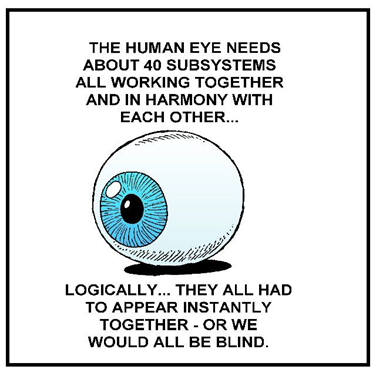
The human eye is one of the most intricate and sophisticated organs in the body, often cited as evidence of intelligent design. Its complexity and functionality defy random chance, pointing instead to purposeful creation. The eye’s ability to perceive light, distinguish colors, and adapt to varying conditions showcases an engineering marvel that naturalistic evolutionary processes struggle to explain.

The eye operates as an integrated system, relying on the coordinated function of numerous components. These include the cornea, lens, retina, optic nerve, and a network of supporting cells and tissues. The retina, for example, contains millions of photoreceptor cells—rods and cones—that convert light into electrical signals. These signals are then processed by the brain, enabling us to perceive the world in vivid detail. The cones are responsible for color vision, while rods excel in low-light conditions, allowing us to adapt to different environments.

A hallmark of the eye’s design is its irreducible complexity. Each part of the eye depends on the others to function properly. For instance, the lens focuses light onto the retina, which converts the light into signals transmitted by the optic nerve to the brain. If any of these components were absent or incomplete, the eye would be nonfunctional. This interdependence challenges the notion of gradual evolution, as intermediate stages would provide no survival advantage.

Darwin himself acknowledged this difficulty, writing in On the Origin of Species: “To suppose that the eye, with all its inimitable contrivances… could have been formed by natural selection, seems, I freely confess, absurd in the highest degree.” (Charles Darwin, On the Origin of Species.)

Biblically, the eye’s intricacy reflects God’s intentional design. Psalm 94:9 asks, “He that planted the ear, shall he not hear? He that formed the eye, shall he not see?” This rhetorical question emphasizes that the Creator, who designed the human eye, possesses perfect knowledge and wisdom. The complexity of the eye aligns with this biblical perspective, affirming a purposeful Designer.

Scientific attempts to explain the evolution of the eye, such as the idea of incremental improvements through natural selection, fail to account for the precise coordination required for its functionality. Mutations alone cannot produce the tightly integrated system observed in the human eye, further supporting the argument for intelligent design.

The human eye stands as a testament to the existence of a Creator. Its complexity, irreducible nature, and unparalleled functionality defy naturalistic explanations, pointing instead to purposeful design. As Romans 1:20 declares, “For the invisible things of him from the creation of the world are clearly seen, being understood by the things that are made.” The human eye, a marvel of engineering, is a clear manifestation of God’s creative power and wisdom.

Agape,

Spencer

Evidence for our Faith: Irreducible Complexity

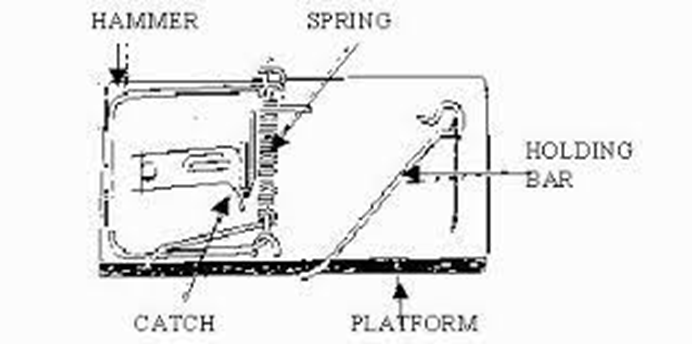
A Mousetrap represents an example of irreducible complexity

The concept of irreducible complexity presents a powerful argument for the existence of a Designer. Coined by biochemist Michael Behe, irreducible complexity refers to biological systems composed of multiple interdependent parts, all of which must function simultaneously for the system to work. Such systems cannot arise through gradual evolutionary processes, as removing even one component renders the system nonfunctional. This hallmark of intentional design points to the existence of an intelligent Creator.

One of the most cited examples of irreducible complexity is the bacterial flagellum, a microscopic rotary motor used by bacteria for propulsion. The flagellum comprises over 40 distinct protein components, including a rotor, stator, drive shaft, bushing, and propeller. Each part is precisely shaped and positioned to interact with the others, enabling the flagellum to rotate at incredible speeds—up to 100,000 revolutions per minute in some species.

The flagellum’s functionality depends on the presence of all its components working together. If even one protein is missing, the entire system fails, offering no advantage to the organism. This contradicts Darwinian evolutionary mechanisms, which propose gradual modifications and natural selection as the means of developing complex structures. As Behe argues in his book Darwin’s Black Box, such irreducible systems could not have evolved step-by-step, as intermediate stages would confer no benefit to survival.

The Bible supports the idea of intentional design in creation. Job 12:7-9 invites us to consider the evidence of God’s hand in the natural world: “But ask now the beasts, and they shall teach thee; and the fowls of the air, and they shall tell thee: Or speak to the earth, and it shall teach thee: and the fishes of the sea shall declare unto thee. Who knoweth not in all these that the hand of the Lord hath wrought this?” The intricacy of the flagellum echoes this truth, revealing the handiwork of a Creator. The bacterial flagellum, a marvel of engineering, stands as evidence of God’s power and wisdom.

Scientifically, attempts to explain the flagellum through evolutionary mechanisms remain inconclusive. Proposals like co-option, which suggest that existing proteins were repurposed for new functions, fail to account for the precise timing, positioning, and coordination required to assemble the flagellum. Such precision implies design, not chance.

Irreducible complexity in systems like the bacterial flagellum provides compelling proof of a Designer. Its intricate structure and functionality defy evolutionary explanations, aligning with biblical declarations of God’s creative work. This undeniable complexity reflects the harmony between science and faith, pointing to the Creator behind the design.

Agape,

Spencer

Jesus is the one to follow when we’re HURTING

Hope and Healing in Christ for the Hurting

Life is full of hardship. Suffering, loss, and disappointment are part of the human experience. Some struggle with grief, others with betrayal, loneliness, or physical pain. No one is immune to the trials of life. Yet, in the midst of sorrow, there is One who offers healing, hope, and peace—Jesus Christ.

Jesus understands suffering because He experienced it firsthand. Isaiah 53:3 describes Him as “a man of sorrows, and acquainted with grief.” He knew what it was like to be rejected, betrayed, and physically tormented. He endured humiliation and pain on the cross, bearing the weight of humanity’s sin. Because of this, He is uniquely qualified to comfort those who are hurting. Hebrews 4:15 assures us that we have a Savior who can sympathize with our weaknesses, for He was “tempted like as we are, yet without sin.”

Hope in Christ for the Hurt of This Life

Pain can make life feel unbearable. The world offers temporary distractions, but they cannot bring lasting peace. Only Christ provides true hope. John 16:33 reminds us of this reality: “In the world ye shall have tribulation: but be of good cheer; I have overcome the world.” The suffering of this present life is temporary, but the joy found in Christ is eternal. Paul declares in Romans 8:18, “For I reckon that the sufferings of this present time are not worthy to be compared with the glory which shall be revealed in us.” When we trust in Christ, we gain a perspective that allows us to endure, knowing that something far greater awaits.

Understanding from Christ, Who Endured Suffering

One of the most comforting truths about Jesus is that He understands human suffering. He was betrayed by a close friend (Luke 22:48; Psalm 41:9), falsely accused (Matthew 26:59-60), mocked (Matthew 27:29-31), and crucified (Luke 23:33). He knows what it feels like to be abandoned, rejected, and mistreated. This means that when we pour out our hearts to Him, we are speaking to One who truly understands. Psalm 34:18 assures us, “The Lord is nigh unto them that are of a broken heart.”

Rest and Peace in His Forgiveness and Mercy

Many suffer not only from external circumstances but also from the weight of guilt and shame. Sin leaves scars, and the burden of past mistakes can feel overwhelming. Yet, Jesus offers complete forgiveness. Matthew 11:28 invites us, “Come unto me, all ye that labour and are heavy laden, and I will give you rest.” Through His sacrifice, we are freed from sin’s condemnation. Psalm 103:12 declares, “As far as the east is from the west, so far hath he removed our transgressions from us.” In Christ, we find peace, knowing that our past does not define us.

Truth, Life, and True Joy

Many search for meaning in temporary pleasures, but Jesus alone is the source of true life. He declares in John 14:6, “I am the way, the truth, and the life.” The joy He gives is not dependent on circumstances but is rooted in a relationship with Him. John 15:11 states, “These things have I spoken unto you, that my joy might remain in you, and that your joy might be full.”

Jesus, Our Intercessor

For those who feel distant from God, Jesus bridges the gap. 1 Timothy 2:5 tells us, “For there is one God, and one mediator between God and men, the man Christ Jesus.” He intercedes for us before the Father, offering continual access to God’s grace and help.

He Never Leaves nor Forsakes Us

Loneliness is one of the deepest forms of suffering. Yet, Jesus promises, “I will never leave thee, nor forsake thee” (Hebrews 13:5). Even when we feel abandoned, He is always near.

Good Can Come Despite the Pain

While suffering is hard, God can bring blessings out of trials. Romans 8:28 reassures us, “And we know that all things work together for good to them that love God.” Even when we don’t understand, we can trust that He can bring about good despite the pain and suffering in this life.

Conclusion

No matter what pain or sorrow you carry, Jesus offers hope and healing. Turn to Him, and you will find peace, understanding, and the strength to endure. “Casting all your care upon him; for he careth for you.” (1 Peter 5:7)

Agape

Spencer

There is a way you may know if you have eternal life.

Evidence for our Faith: DNA

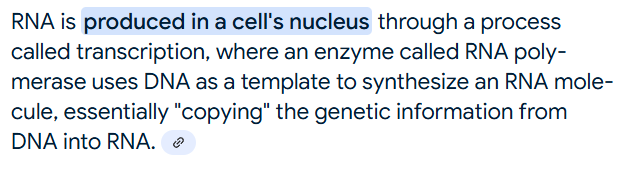
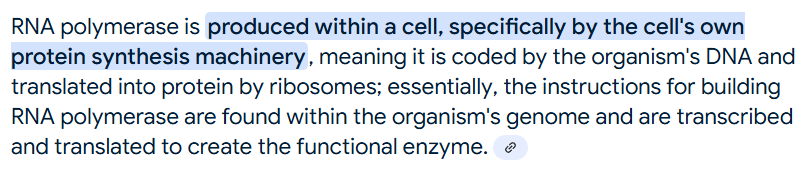
RNA is necessary to produce the proteins, like RNA polymerase, that are required to transcribe RNA from DNA, creating an interdependent system that could not function without all parts existing simultaneously.

Evidence of God in DNA

DNA, deoxyribonucleic acid, serves as the molecular basis of heredity and the blueprint for all living organisms. Within its structure lies an extraordinary amount of information encoded in sequences of nucleotide bases. This informational content directs the development, functioning, and reproduction of living beings, showcasing a complexity that defies random chance.

The intricate information stored in DNA speaks to the concept of intelligent design proposed by the Cosmological Argument. This argument posits that the order and complexity observed in the universe, including biological systems like DNA, imply a purposeful design rather than mere random processes. The information-rich nature of DNA points towards a mind behind its creation—a mind that comprehends and engineers complex systems far beyond human understanding.

Biblically, the narrative supports this idea of intentional design. Psalm 139:14 states, “I praise you, for I am fearfully and wonderfully made. Wonderful are your works; my soul knows it very well.” This verse acknowledges the intricate craftsmanship evident in human beings, echoing the complexity found in DNA. Moreover, Genesis 1:27 affirms that mankind is created in the image of God, implying a deliberate act of creation imbued with purpose and design.

Scientifically, the discovery of DNA’s structure and function has revolutionized our understanding of biology and genetics. Francis Crick and James Watson’s explanation of its double helix structure in 1953 marked a watershed moment in science, revealing the elegance and complexity of this molecule. Since then, advancements in genomic research have uncovered layers of complexity within DNA that continue to astonish scientists.

Moreover, the concept of irreducible complexity, as proposed by biochemist Michael Behe, further bolsters the argument for intelligent design in DNA. Irreducible complexity posits that certain biological systems are composed of multiple intricate parts that must all be present and functioning for the system to work. This challenges the idea of gradual evolution through natural selection alone, suggesting instead a purposeful arrangement of components.

Romans 1:20 declares, “For his invisible attributes, namely, his eternal power and divine nature, have been clearly perceived, ever since the creation of the world, in the things that have been made.” This verse emphasizes that the intricacies of creation, such as DNA, bear witness to God’s existence and creative power.

The study of DNA provides compelling evidence for the Cosmological Argument, pointing towards an intelligent designer behind the complexity of life.

Agape,

Spencer