
Evidence for our Faith: Natural Law

The Role of Natural Law in Pointing to a Lawgiver

Look at the world around you; the way the stars hang in perfect balance or how a seed knows to become a towering oak. It’s not chaos; it’s order, governed by natural law, the consistent rules that keep the universe humming. These laws, from gravity’s pull to the intricate code in DNA, don’t just happen, they point to a purposeful intelligent design, a Lawgiver who crafted it all with intention. As a believer in the Bible’s account of a six-day creation, I see this order as evidence of God’s deliberate handiwork, not a cosmic accident.

Natural law is the framework of predictable principles that make life possible. The sun rises on schedule (Jeremiah 31:35-36), seasons shift like clockwork, and the laws of physics keep planets spinning. Romans 1:20 says God’s “eternal power and Godhead” are clear in what He made. The universe’s fine-tuning (like the precise gravitational constant that allows stars to form) is no fluke. Scientists estimate the odds of a life-sustaining universe by chance are 1 in 10^229 (Hugh Ross, The Creator and the Cosmos). That’s not luck; it’s design, echoing Genesis 1, where God spoke order into existence over six days.

Then there’s the moral side of natural law. Humans share a sense of justice, love, and truth across cultures. We see this in the oft asked questions about why is there evil in the world. Without God’s moral law, there is no such thing as good nor evil. Ecclesiastes 3:11 says God “set eternity in their heart,” (ASV) hinting at a universal compass. Psalm 19:1-4 adds that the heavens “declare the glory of God,” revealing Him through their silent order. This moral awareness sets us apart from animals. A lion’s instinct drives it to hunt, not to ponder fairness. Animal instincts are about survival (eat, mate, flee) void of elevated human traits like justice, compassion, or self-sacrifice. A dog might show loyalty, but it doesn’t wrestle with ethical dilemmas or seek meaning. This gap points to a Lawgiver who gave humans a unique moral capacity, reflecting His character.

Skeptics might say natural laws are just “there,” needing no explanation. But why do they exist, and why are they so perfectly balanced? Randomness can’t account for a universe where laws align to support life and human consciousness. It’s like expecting a hurricane to build a skyscraper. The Bible’s account of creation (God forming light, land, and life in Genesis 1) shows a purposeful design, not a cosmic roll of the dice.

Natural law, from the orbits of galaxies to the moral stirrings in our souls, is a testament to a Creator’s wisdom. It’s a quiet invitation to see His fingerprints everywhere. Natural law’s order and humanity’s unique moral spark reveal a Lawgiver who designed the universe and us with purpose and love.

agape

Sources:

Ross, Hugh. The Creator and the Cosmos. Reasons to Believe, 2018.

Beware of False Teacher: 4 Lessons from Colossians 2

In Colossians 2, Paul issues a powerful warning to believers: “Stop letting people disqualify you” (Colossians 2:18). He urges the church to stand firm against deceptive influences that threaten to lead them astray from the truth of Christ. Paul identifies four types of false teachers, each with distinct tactics that remain relevant today. By understanding these dangers, we can guard our faith against those who distort the gospel.

1. Enticing Speech (Colossians 2:4-7)

False teachers often wield persuasive language to deceive. Paul warns against those who use “enticing words” to sway believers (Colossians 2:4). This tactic echoes Romans 16:18, where smooth talk and flattery manipulate the unsuspecting, and Ephesians 4:14, which describes cunning words that toss believers like waves. In our digital age, TikTok influencers, online preachers, and charismatic personalities can charm audiences with polished rhetoric, much like Satan’s subtle deception in Genesis 3 and Matthew 4. These voices may sound convincing, promising quick spiritual fixes or worldly success, but they often lead away from Christ’s sufficiency. Believers must root themselves in the truth of Scripture, as Paul encourages in Colossians 2:6-7, to discern and resist such deception.

2. Traditions of Men and the World (Colossians 2:8-10)

Another group of false teachers promotes human traditions and worldly philosophies over Christ’s authority. Paul cautions against being captivated by “philosophy and empty deceit, according to human tradition” (Colossians 2:8). Jesus confronted similar issues in Matthew 15:2, where religious leaders prioritized their traditions over God’s commands. Today, this manifests in appeals to “the way we’ve always done it” or the approval of experts, organizations, or governments. Philosophies like those Paul encountered in Acts 17 (stoicism, epicureanism, or modern ideologies) can subtly infiltrate the church. These traditions and ideas may seem appealing, but they lack the fullness of Christ, who is “the head of all rule and authority” (Colossians 2:10). Believers must test every teaching against the gospel, rejecting what elevates human wisdom over divine truth.

3. Judgments About the Old Law (Colossians 2:16-17)

Paul also warns against those who judge believers based on adherence to the Old Testament law, such as dietary rules or festivals (Colossians 2:16). Romans 14:2-3 and Galatians 4:10 highlight the danger of imposing outdated regulations, while Hebrews 8:13 declares the old covenant “obsolete.” False teachers may pressure Christians to follow Old Testament practices, claiming they are essential for righteousness (see Acts 15). Yet, Paul emphasizes that these are mere “shadows” of Christ, the true substance (Colossians 2:17). Some modern churches continue to impose the Law of Moses upon people. Why return to the shadows when the true Light has come into the world?

4. Puffed-Up Wisdom and Will Worship (Colossians 2:18-23)

The final type of false teacher Paul warns against is those who promote self-made spirituality and “puffed-up” wisdom (Colossians 2:18). These individuals boast of esoteric knowledge or mystical experiences, such as worshipping angels or embracing strange beliefs like sun gods or witchcraft. Paul describes such practices as “self-imposed worship” and “false humility” (Colossians 2:18, 23), which appear spiritual but lack true substance. Romans 6:3-6 and Ephesians 2:15 emphasize that believers are freed from such elemental principles through Christ’s death and resurrection. Paul warns against turning to weak and worthless spiritual systems. Today, this might look like New Age mysticism, occult practices, or prideful claims of exclusive spiritual insight. These teachings inflate human ego rather than exalting Christ, who alone is sufficient (Colossians 2:10). Paul urges believers to reject such distractions and cling to the gospel’s simplicity.

Guarding Against Deception

The common thread among these false teachers is their attempt to disqualify believers by shifting focus from Christ’s all-sufficient work. Whether through persuasive speech, human traditions, Old Testament practices, or puffed-up mysticism, they undermine the gospel’s power. Colossians 2 reminds us that Christ is the fullness of God, in whom all wisdom and knowledge reside (Colossians 2:3, 9-10). Believers are complete in Him, needing no additional rituals or philosophies to earn God’s favor.

In our modern context, these warnings are strikingly relevant. Social media amplifies enticing voices, from influencers peddling self-help spirituality to charismatic leaders pushing personal or mystical agendas. Cultural traditions (like prioritizing societal norms or “expert” consensus over biblical truth) can subtly erode faith. The Law of Moses persists in churches that impose Old Testament rules, while puffed-up wisdom appears in trendy spiritual fads that promise enlightenment apart from Christ.

To avoid being disqualified, believers must remain rooted in Christ (Colossians 2:6-7). This means immersing ourselves in Scripture and testing every teaching against God’s Word. Assembling with other believers provides accountability, helping us stay anchored in truth. Prayer is also vital, as we seek God’s wisdom in matters of truth.

Paul’s exhortation in Colossians 2 is a reminder for vigilance. False teachers will always arise, but we are not defenseless. By holding fast to Christ as our head, we can stand firm against enticing words, worldly traditions, Old Testament judgments, and prideful spirituality. Let us walk in the freedom and fullness of Christ, rejecting anything that seeks to disqualify us from the truth of His gospel.

agape

spencer

Benefits of a REAL Physical Bible

The Benefits of Reading a Physical Bible: Why REAL Matters

In an age where smartphones dominate, many turn to digital Bible apps for convenience. While these apps are valuable and not sinful, there are unique benefits to reading a physical Bible.

Read Without Pop-Up Distractions from our phones.
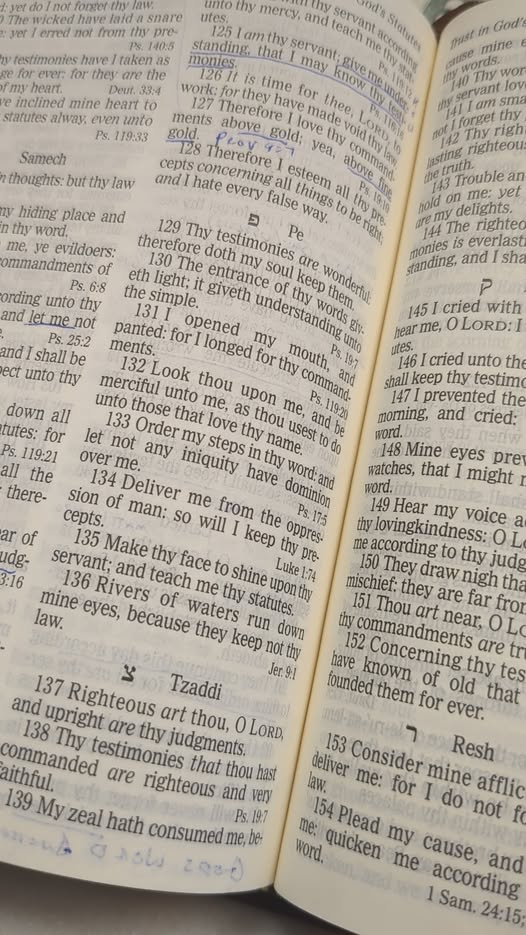
A physical Bible offers a focused reading experience free from the interruptions of notifications, pop-up ads, or tempting app switches. When you open a physical Bible, you immerse yourself in the text without the risk of a text message or social media alert pulling you away. This uninterrupted time fosters deeper reflection and connection with the Word, allowing for a more contemplative and distraction-free engagement with Scripture.

Evangelism Effectiveness
There’s a powerful psychological impact when sharing the Gospel using a physical Bible. Flipping to a passage and showing someone the words on a page carries a tangible weight that a phone screen often lacks. The physical act of turning pages and pointing to verses can make the message feel more authoritative and personal, enhancing evangelism efforts. It signals reverence for the text and invites others to engage with it in a meaningful way.

Annotate, Highlight, & Underline.
A physical Bible becomes a personal treasure through annotation. Underlining, highlighting, and jotting notes in the margins allow readers to mark insights, prayers, or revelations directly on the page. These annotations create a unique record of one’s spiritual journey, something a digital Bible struggles to replicate with the same tactile intimacy. A well-worn, marked-up Bible tells a story of growth and connection that’s deeply personal.

Look Up, & Look at Multiple Passages at one time.
Comparing passages or cross-references is seamless with a physical Bible. You can flip between pages, bookmark multiple sections, or even lay the book open to view two passages side by side. Digital apps often make it cumbersome to switch between two, three, or four passages, requiring multiple taps or split screens that disrupt the flow. A physical Bible’s layout makes it easier to explore connections across Scriptures, enriching study and understanding.

While digital Bibles are practical and accessible, the tactile and focused nature of a physical Bible offers distinct advantages. By embracing the REAL benefits we can deepen our engagement with God’s Word in a way that feels timeless and profound.

agape

spencer

Evidence for our Faith: the Politarch

The Politarch Inscription

For years, critics of the Bible pointed to the Greek word politarch, used in Acts 17:6-8 to describe Thessalonian city officials, as evidence of scriptural inaccuracy. This term, unique to Luke’s account and absent from classical Greek literature, led some 19th-century scholars to argue that Luke fabricated details, casting doubt on the New Testament’s historical reliability. They claimed politarch was an anachronism or error, undermining Luke’s credibility as a historian.

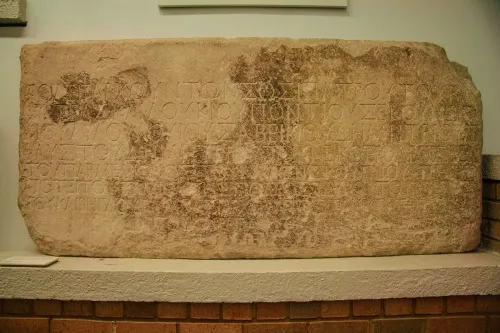
However, the discovery of the Thessalonian Politarch Inscription1 in the 19th century, which explicitly lists “politarchs” as civic leaders in Thessaloniki, silenced these objections. As noted by historians like F.F. Bruce, this archaeological find confirmed Luke’s precision, showing that politarch was a legitimate title in first-century Macedonia. This turnaround highlights how critics’ challenges, when met with evidence, can strengthen faith in the Bible’s trustworthiness, echoing Psalm 119:160’s assurance that God’s Word is true.

Thessaloniki was a bustling Roman city, and the politarchs were civic leaders navigating the tensions of a diverse, often skeptical society. Acts 17:4-5 tells of locals and converts stirred by Paul’s preaching, clashing with those loyal to Roman order. The inscription, studied by scholars like N.T. Wright, reveals a city governed by these politarchs, who faced real pressures from crowds opposing the gospel. This context makes Paul’s courage, and the Thessalonians’ faith, more vivid. It reminds us that the Gospel continued to spread in a complex, real-world setting, encouraging us to live boldly for Christ today, as Paul urged in 1 Thessalonians 5:16-18, to “rejoice always” despite challenges.

The Politarch Inscription strengthens our confidence in scripture’s reliability. If Luke accurately recorded a minor detail like a local title (which was for centuries thought to be inaccurate until archaeological discovery), we can trust his accounts of greater events (like Jesus’ resurrection or Paul’s missionary journeys). Archaeological finds consistently show the Bible’s alignment with history. This harmony between faith and evidence invites us to approach scripture with confidence, not blind belief, knowing it withstands scrutiny. As John 17:17 reminds us, God’s Word is truth, a foundation that discovery affirms rather than contradicts.

The Thessalonian Politarch Inscription is more than a dusty relic; it’s a testament to the Bible’s trustworthiness. It encourages us to dig deeper into scripture, marvel at its accuracy, and live out our faith with boldness. Let this ancient stone inspire you to trust God’s Word, knowing it stands firm both then and now.

agape

1. The Thessalonian Politarch Inscription, discovered in Thessaloniki, Greece, in the 19th century, is a fragmented stone artifact from the first century AD, likely part of a public monument or building. This stone tablet discovered in Thessalonica (modern-day Thessaloniki, Greece) that dates to the second century A.D.  lists six officials known as “politarchs,”.

The Inscription on the Politarch as much as is possible due to its fragmented condition.

“In the time of [name of a Roman official or emperor, possibly missing], the politarchs of Thessaloniki, [names such as Sosipatros, Lucius, Sextus, Gaius, Secundus, as typical in Macedonian inscriptions], [served or dedicated this] to [a deity, civic institution, or event, possibly Zeus or the city], in the year [specific dating, often tied to a Roman or local calendar].”

INTERESTING NAMES ON THE STONE

Sosipater: A common Greek name, possibly linked to the biblical Sosipater in Romans 16:21.

C. (Gaius): another name that echoes biblical figures like the Gaius mentioned in Acts 20:4.

Secundus: A Roman name, similar to the Thessalonian Secundus in Acts 20:4.

Evidence for our Faith: Free Will

Let’s talk about this Calvinist idea of predestination. Basically, that God pulls every string, deciding who’s in and who’s out, with free will just a side note because God’s Sovereignty demands it. Sounds tidy, right? But the Bible keeps pushing back, shouting from the rooftops that we’ve got real choices to make. It’s not some robotic rerun; it’s a dynamic story where God hands us the reins and says, “Your move.”

God repeatedly tells individuals to make choices, implying free will. In Joshua 24:15, Joshua exhorts the Israelites, “Choose this day whom you will serve,” presenting a clear decision between serving God or idols. This command assumes the ability to choose freely, not a predetermined outcome. Similarly, Deuteronomy 30:19 declares, “I have set before you life and death, blessing and curse. Therefore choose life.” The imperative to “choose” underscores human responsibility to respond to God’s call, incompatible with a view where every decision is divinely dictated.

In the New Testament, Jesus’ invitations affirm free will. Matthew 11:28 says, “Come to me, all you who are weary and heavy laden, and I will give you rest.” This open invite requires a voluntary response, suggesting individuals can accept or reject it. Likewise, John 7:17 states, “If any man will do his will, he shall know of the doctrine, whether it be of God, or whether I speak of myself.” Jesus emphasizes choice as central to faith, countering the idea that God irresistibly determines belief.

Calvinists often cite Romans 9:16-18, which highlights God’s sovereignty in showing mercy, to support predestination. However, Paul’s broader argument in Romans emphasizes human responsibility. Romans 10:9 declares, “If you declare with your mouth, ‘Jesus is Lord,’ and believe in your heart… you will be saved.” (Paul will continue on in the text pointing to baptism & faith). The conditional “if” implies that salvation hinges on personal choice, not divine coercion. Furthermore, 2 Peter 3:9 reveals God’s desire that “not willing that any should perish, but that all should come to repentance,” suggesting universal opportunity for salvation through free response, not selective predetermination.

Ephesians 1:4-5, another Calvinist cornerstone, states God chose believers “before the foundation of the world.” Yet, this should be understood corporately; God predestining the church as a body for salvation, while individuals freely choose to obey the Gospel and are added to the church through faith (Ephesians 2:8-9; Acts 2:38,41,47). This harmonizes with passages like Revelation 3:20, where Jesus says, “I stand at the door and knock. If anyone hears my voice and opens the door, I will come in.” The imagery of opening the door underscores human agency in responding to divine initiative.

Moreover, Calvinism’s strict determinism raises concerns about God’s character. If God ordains all actions, including sin, it conflicts with James 1:13, which states, “God cannot be tempted by evil, nor does he tempt anyone.” Free will allows humans to bear responsibility for sin, preserving God’s holiness and justice. Neither the devil nor God made us do it. Scripture consistently portrays God as inviting, not compelling, human response. Scripture paints God as the ultimate pursuer, not puppet-master. Free will aligns with a God who desires genuine relationship over robotic obedience.

agape

spencer

Evidence for our Faith: the Faithful Word

Evidence for Our Bible Today

The Bible we hold today is a treasure, a book that has shaped lives for centuries. But how can we trust it’s the real deal, faithfully passed down through time? The early believers (often called church fathers) from the first few centuries after Christ give us compelling evidence that our Bible is reliable, rooted in their lives, writings, and devotion.

To begin with, people like Ignatius of Antioch and Polycarp, were taught by the apostles or their immediate followers. They didn’t just read about Jesus; they learned from those who walked with Him. Their writings, like Ignatius’ letters (circa 110 AD), echo the New Testament teachings, quoting books like Matthew, John, and Paul’s epistles as Scripture. For example, Ignatius references Jesus’ death and resurrection (Letter to the Smyrnaeans 1:1-2), aligning with 1 Corinthians 15:3-4. This shows the New Testament was already revered as God’s Word within a generation of the apostles, not some later invention.

Also, 2nd century believers defended the Bible’s truth against heresies. Irenaeus, in his Against Heresies (circa 180 AD), argued that the four Gospels (Matthew, Mark, Luke, and John) were uniquely authoritative, handed down through apostolic tradition. He tied their reliability to the Old Testament prophecies fulfilled in Christ, like Isaiah 53:5, which speaks of the Messiah’s suffering. Irenaeus’ work shows the early Church carefully preserved the Scriptures, ensuring no random texts slipped in. Their vigilance gives us confidence that our Bible matches what they held sacred.

Additionally, they sealed their trust in Scripture. Polycarp, martyred around 155 AD, faced death boldly, quoting Jesus’ words from Matthew 10:28: “Do not fear those who kill the body but cannot kill the soul.” His courage, recorded in The Martyrdom of Polycarp, proves he didn’t just believe the Bible, he staked his life on it. Countless others, like Justin Martyr, died for their faith, showing the Scriptures weren’t myths but truths worth everything. Their sacrifices declare to us: this Book is trustworthy. (BTW: their willingness to die wasn’t related in any way to a desire to kill as many folks as possible, as some religions do)

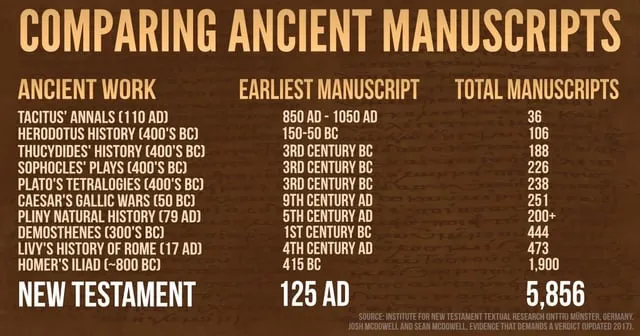
Finally, their meticulous copying and sharing of Scriptures ensured accuracy. Clement of Alexandria (c.150-c.215) and Origen (c.185-c.254) cataloged and taught from texts that match our modern Bible (long before the claims of the catholic church to have brought us the Bible), as seen in surviving manuscripts like the Codex Sinaiticus (4th century). Their efforts preserved God’s Word through persecution and time, a demonstration of faithfulness.

The early believers weren’t perfect, but their writings, lives, and love for Scripture shine as evidence: the Bible we have is the same one they cherished. They bridge the gap between us and the apostles, inviting us to trust God’s Word with the same fire they did.

The Bible stands firm because the early Church Fathers lived and died for it, passing down the truth we hold today.

agape

Sources:

Ignatius, Letter to the Smyrnaeans (Early Christian Writings, http://www.earlychristianwritings.com)

Irenaeus, Against Heresies (Book III, Christian Classics Ethereal Library, http://www.ccel.org)

The Martyrdom of Polycarp (Early Christian Writings) Codex Sinaiticus (www.codexsinaiticus.org) (www.codexsinaiticus.org)

the Amazing WORD

The Amazing Power of God’s Word

You know, the Word of God is like a hidden gem for all of us believers. It’s more than just pages filled with text; it’s our go-to guide, a wellspring of truth, and an incredible tool for our spiritual journey. Seriously, if you really pay attention to its teachings, you’ll uncover so many benefits! When we dig into the scriptures, we see how God shows us His will, gives us solid truth, helps us stand strong in our faith, and lights up our paths. How cool is that?

Knowing the Will of the Lord (Ephesians 5:17)

Ephesians 5:17 exhorts, “Wherefore be ye not unwise, but understanding what the will of the Lord is.” In a world clouded by confusion, the Bible unveils God’s will for humanity. It reveals His universal desires, such as salvation for all (2 Peter 3:9, KJV: “not willing that any should perish, but that all should come to repentance”) and holy living (1 Thessalonians 4:3). By meditating on Scripture, as Psalm 119:11 (KJV) states, “Thy word have I hid in mine heart, that I might not sin against thee,” believers align their lives with God’s purposes. The Word acts as a divine compass, guiding us to avoid folly and live according to His eternal plan.

Objective Truth in a Deceptive World (John 17:17)

In John 17:17, Jesus prays, “Sanctify them through thy truth: thy word is truth.” The Bible stands as the unchanging standard of truth in an age of shifting values. As 2 Timothy 3:16 (KJV) declares, “All scripture is given by inspiration of God,” it is a reliable foundation for faith and practice. This truth sanctifies believers, setting them apart for God’s service by renewing their minds (Romans 12:2). It also guards against deception, as Jesus used Scripture to defeat Satan’s lies (Matthew 4:4-10). In a world prone to error, the Word anchors us in divine truth, enabling us to live with understanding.

A Ready Answer for Our Faith (1 Peter 3:15)

The Word equips believers to share their hope in Christ. 1 Peter 3:15 instructs, “Be ready always to give an answer to every man that asketh you a reason of the hope that is in you with meekness and fear.” Scripture strengthens our faith (Romans 10:17, KJV: “faith cometh by hearing, and hearing by the word of God”) and prepares us to share the gospel with humility and reverence. Whether answering skeptics or encouraging seekers, the Bible provides the foundation for our testimony, ensuring our words reflect God’s truth and grace (Colossians 4:6).

Direction for Our Lives (Jeremiah 10:23; Psalm 119:105)

Jeremiah 10:23 acknowledges, “The way of man is not in himself: it is not in man that walketh to direct his steps.” Paired with Psalm 119:105, “Thy word is a lamp unto my feet, and a light unto my path,” this reveals the Bible’s role as a guide. Human wisdom falters (Proverbs 16:9), but Scripture illuminates both immediate decisions and long-term goals. Whether facing trials or choices, the Word offers wisdom (Joshua 1:8) and warnings (Proverbs 14:12). By following it, believers walk confidently in God’s purposes.

The Word is “quick, and powerful” (Hebrews 4:12, KJV), transforming hearts, comforting in affliction (Psalm 119:92), and fostering intimacy with God (John 15:7). It equips us for every good work (2 Timothy 3:17), enabling us to live with purpose, anchored in the truth and guidance of God’s Word.

agape

spencer