Let’s talk Legalism

Do not ADD to God’s Word.

The principles governing the handling of God’s Word can be framed through three pairs of terms: add (legalism), diminish (Illegal-ism), and distort (Perversion-ism).

Ye shall not add unto the word which I command you, neither shall ye diminish ought from it, that ye may keep the commandments of the LORD your God which I command you.” (Deuteronomy 4:2)

Add thou not unto his words, lest he reprove thee, and thou be found a liar.” (Proverbs 30:6)

Add (Legalism) To add to God’s Word, known as legalism, involves imposing human rules or traditions as divine mandates, distorting Scripture’s intent (Deuteronomy 4:2, Proverbs 30:6). Legalism burdens believers with extra-biblical requirements, as seen in the Pharisees’ elevation of oral traditions, which Jesus rebuked (Mark 7:8-13). This practice fosters self-righteousness, shifting focus from God’s grace to man-made standards.

Legalism risks idolatry by prioritizing human additions over divine authority, creating confusion and division. Believers must discern between God’s commands and cultural preferences, ensuring worship remains rooted in Scripture’s sufficiency. Adding to God’s Word undermines its purity, leading to a faith that exalts human effort over divine truth. The antidote is humility, trusting Scripture’s completeness without supplementation. By avoiding legalism, believers honor God’s Word as the sole guide, fostering genuine faith free from the weight of unnecessary rules. Doing what God commands by faith is never legalism.

Diminish (Illegal-ism) To diminish God’s Word, termed Illegal-ism, involves selectively ignoring or downplaying Scripture to suit personal or cultural preferences (Deuteronomy 4:2, Revelation 22:19). Illegal-ism manifests when believers dismiss challenging teachings, such as those on baptism, to avoid obedience. This practice dilutes faith, creating a superficial spirituality that lacks trust in God. Scripture declares all its contents inspired and profitable (2 Timothy 3:16), demanding adherence to its entirety. Illegal-ism risks spiritual malnourishment, as believers miss God’s full counsel, and opens the door to moral relativism, where truth bends to human desires. Unlike legalism’s excess, Illegal-ism subtracts from divine revelation, equally undermining its authority. Faithfulness requires embracing both comforting and convicting passages, trusting God’s wisdom. By rejecting Illegal-ism, believers uphold the whole counsel of God (acts 20:27), ensuring a balanced faith that honors God’s perfect Word without selective omission.

Distort (Perversion-ism) To distort God’s Word, I call Perversion-ism, means twisting or misrepresenting its intended meaning to align with human agendas, cultural trends, or personal biases (Galatians 1:7, 2 Peter 3:16). “…in which are some things hard to be understood, which they that are unlearned and unstable wrest, as they do also the other scriptures, unto their own destruction.” Perversion-ism occurs when Scripture is reinterpreted to justify sin or compromise, as when Israel blended idolatry with worship (1 Kings 12:28-33). Unlike legalism’s additions or illegal-ism’s subtractions, Perversion-ism corrupts the text’s essence, altering its truth. This distortion undermines God’s authority, leading believers astray into false teachings or worldly conformity. Combatting Perversion-ism requires discernment to preserve Scripture’s intended message and courage to resist pressures to conform. It’s a subtle yet grave error, as it masquerades as faithfulness while perverting divine truth. By rejecting perversion-ism, believers stay aligned with God’s unchanging Word, ensuring obedience reflects His heart. This principle completes the framework: legalism adds, illegal-ism diminishes, and Perversion-ism distorts, guiding believers to honor Scripture faithfully.

AGAPE

SPENCER

Evidence for our Faith: The Historical Reality of the Crucifixion

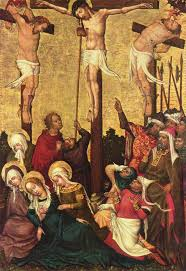
The crucifixion of Jesus Christ stands as one of the most pivotal events in human history, yet its reality is occasionally questioned. However, a careful analysis of historical evidence, both biblical and secular, reveals compelling and logical arguments supporting its occurrence. Far from being a mere theological construct, the crucifixion aligns with the historical context of Roman governance, is corroborated by non-Christian sources, and is consistently detailed in early Christian writings.

First, the Roman practice of crucifixion provides a strong foundation for its historical plausibility. Crucifixion was a well-documented method of execution in the Roman Empire, reserved for slaves, rebels, and those deemed threats to imperial authority. Historian Tacitus, in his Annals (15.44), references the execution of Jesus under Pontius Pilate during Tiberius’ reign, aligning with the biblical timeline. The Gospel of Matthew (27:31-37) describes Jesus’ crucifixion in detail, including Roman soldiers, a cross, and a public spectacle, elements consistent with Roman punitive customs as noted by scholars like Martin Hengel in Crucifixion in the Ancient World. This convergence of Roman practice and biblical narrative anchors the event in historical reality.

Second, multiple independent sources outside the Bible affirm the crucifixion. Alongside Tacitus, Jewish historian Josephus, in Antiquities of the Jews (18.3.3), mentions Jesus’ death by crucifixion, though some debate the text’s authenticity due to later Christian edits. Even skeptical scholars, such as Bart Ehrman in Did Jesus Exist?, concede that the core reference to Jesus’ execution is likely genuine. Additionally, the Roman satirist Lucian, in The Death of Peregrinus (circa 165 CE), mocks Christians for worshiping a “crucified sage,” indicating that Jesus’ death was widely known beyond Christian circles. These secular testimonies provide external validation of the biblical accounts in Mark 15:24-32 and John 19:16-18.

Third, the coherence and early attestation of the New Testament writings bolster the argument. The Gospels (Matthew, Mark, Luke, and John) were composed within decades of Jesus’ life. Paul’s letters, such as 1 Corinthians 15:3-4 (written circa 55 CE), affirm the crucifixion as a foundational belief among early Christians, predating the Gospels. This rapid documentation, combined with the lack of contemporary refutations from Jesus’ opponents, suggests the event was an accepted fact. As historian N.T. Wright argues in The Resurrection of the Son of God, the crucifixion’s prominence in such early texts reflects a historical memory too vivid to dismiss.

Critics might argue that the accounts are biased or mythologized, yet the consistency across sources, the embarrassment of a crucified messiah (contrary to Jewish expectations, as in Deuteronomy 21:23), and the absence of alternative narratives strengthen the case. The crucifixion’s historical reality emerges not from blind faith but from a convergence of evidence that withstands scrutiny.

In the end, the crucifixion of Jesus is not a fable spun by devotees but a stark historical event etched into the annals of time. Its truth pierces through centuries, demanding we confront its weight.

Agape,

Evidence for our Faith: The Historical Reality of the Crucifixion

The crucifixion of Jesus Christ stands as one of the most pivotal events in human history, yet its reality is occasionally questioned. However, a careful analysis of historical evidence, both biblical and secular, reveals compelling and logical arguments supporting its occurrence. Far from being a mere theological construct, the crucifixion aligns with the historical context of Roman governance, is corroborated by non-Christian sources, and is consistently detailed in early Christian writings.

First, the Roman practice of crucifixion provides a strong foundation for its historical plausibility. Crucifixion was a well-documented method of execution in the Roman Empire, reserved for slaves, rebels, and those deemed threats to imperial authority. Historian Tacitus, in his Annals (15.44), references the execution of Jesus under Pontius Pilate during Tiberius’ reign, aligning with the biblical timeline. The Gospel of Matthew (27:31-37) describes Jesus’ crucifixion in detail, including Roman soldiers, a cross, and a public spectacle, elements consistent with Roman punitive customs as noted by scholars like Martin Hengel in Crucifixion in the Ancient World. This convergence of Roman practice and biblical narrative anchors the event in historical reality.

Second, multiple independent sources outside the Bible affirm the crucifixion. Alongside Tacitus, Jewish historian Josephus, in Antiquities of the Jews (18.3.3), mentions Jesus’ death by crucifixion, though some debate the text’s authenticity due to later Christian edits. Even skeptical scholars, such as Bart Ehrman in Did Jesus Exist?, concede that the core reference to Jesus’ execution is likely genuine. Additionally, the Roman satirist Lucian, in The Death of Peregrinus (circa 165 CE), mocks Christians for worshiping a “crucified sage,” indicating that Jesus’ death was widely known beyond Christian circles. These secular testimonies provide external validation of the biblical accounts in Mark 15:24-32 and John 19:16-18.

Third, the coherence and early attestation of the New Testament writings bolster the argument. The Gospels (Matthew, Mark, Luke, and John) were composed within decades of Jesus’ life. Paul’s letters, such as 1 Corinthians 15:3-4 (written circa 55 CE), affirm the crucifixion as a foundational belief among early Christians, predating the Gospels. This rapid documentation, combined with the lack of contemporary refutations from Jesus’ opponents, suggests the event was an accepted fact. As historian N.T. Wright argues in The Resurrection of the Son of God, the crucifixion’s prominence in such early texts reflects a historical memory too vivid to dismiss.

Critics might argue that the accounts are biased or mythologized, yet the consistency across sources, the embarrassment of a crucified messiah (contrary to Jewish expectations, as in Deuteronomy 21:23), and the absence of alternative narratives strengthen the case. The crucifixion’s historical reality emerges not from blind faith but from a convergence of evidence that withstands scrutiny.

In the end, the crucifixion of Jesus is not a fable spun by devotees but a stark historical event etched into the annals of time. Its truth pierces through centuries, demanding we confront its weight.

Agape,

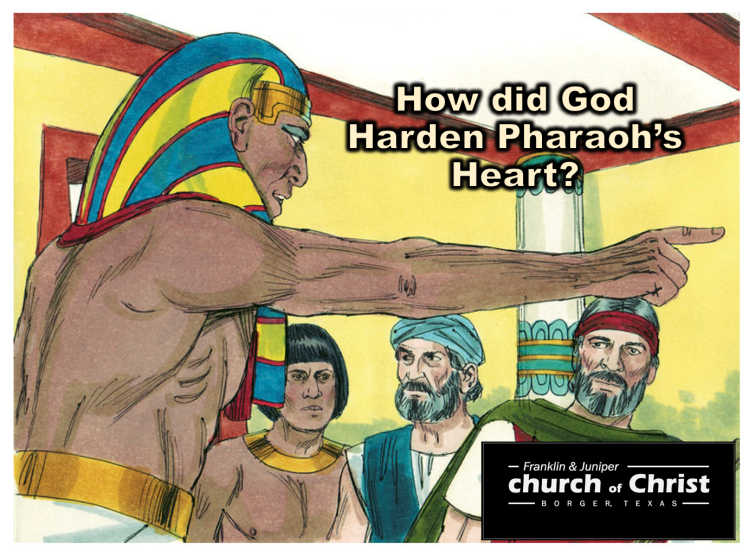
What Do I Say When They Say; God Hardened Pharaoh’s Heart?

God Hardened Pharaoh’s Heart
For the Scripture says to Pharaoh, “For this very purpose I have raised you up, that I may show My power in you, and that My name may be declared in all the earth.” (Rom 9:17)

This objection sounds like this; Calvinists might say that Pharaoh’s hardening is evidence of predestination separate from free will:

“God hardened Pharaoh’s heart to display His sovereign power, showing that human will is subject to His eternal decree.”

“Pharaoh’s hardening proves that God chooses whom to have mercy on and whom to harden, independent of human action.”

“God raised Pharaoh up to be a vessel of wrath, predestined to resist Him, to magnify divine glory.”

“Pharaoh had no free will to resist God’s hardening, as his rebellion was ordained to serve God’s redemptive plan.”

At the end of the day, this error makes God out to be a monster, and that He is a respecter of persons. “Then Peter opened his mouth, and said, Of a truth I perceive that God is no respecter of persons.” (Acts 9:34)

How can we answer this objection?
We Harden Our Own Hearts

The Bible repeatedly warns against hardening our hearts, emphasizing that this is a choice we make by disregarding God’s word. Hebrews 3:15 urges, “To day if ye will hear his voice, harden not your hearts, as in the provocation.” Similarly, Hebrews 4:7 echoes, “To day, after so long a time; as it is said, To day if ye will hear his voice, harden not your hearts.” These verses, rooted in Psalm 95:7–8, recall Israel’s rebellion in the wilderness, where they hardened their hearts by refusing to trust God. Proverbs 28:14 warns, “He that hardeneth his heart shall fall into mischief,” while Zechariah 7:12 describes those who “made their hearts as an adamant stone, lest they should hear the law.” When we ignore God, we actively choose to harden our hearts, shutting out God’s truth. The responsibility lies with us, not with God overriding our will.

God Allows Rebellion to Accomplish His Purpose
God permitted Pharaoh to exalt himself in pride, using his defiance to demonstrate His power. Exodus 7:3–5 declares, “I will harden Pharaoh’s heart, and multiply my signs… that the Egyptians may know that I am the Lord.” Similarly, Exodus 10:1–2 explains that God hardened Pharaoh’s heart “that ye may tell in the hearing of thy son… what I have wrought in Egypt.” Exodus 14:4 adds, “I will harden Pharaoh’s heart, and he will pursue them, and I will get glory over Pharaoh.” This purpose is echoed in Romans 9:17: “For the scripture saith unto Pharaoh, Even for this same purpose have I raised thee up, that I might shew my power in thee.” Like Judas, chosen yet betraying Jesus (John 6:70–71: “Have not I chosen you twelve, and one of you is a devil?”), Pharaoh’s rebellion serves God’s plan without excusing his guilt. God allows human pride to run its course, turning it to His glory.

Rebellion Is to Harden Our Own Heart
Pharaoh’s story vividly illustrates this truth. In Exodus 5:2, he defiantly declares, “Who is the Lord, that I should obey his voice and let Israel go? I do not know the Lord.” This rejection of God’s authority marks the beginning of his heart’s hardening. The Bible shows Pharaoh repeatedly choosing to disregard God’s word through Moses. In Exodus 7:13, after Aaron’s staff becomes a serpent, “Pharaoh’s heart was hardened, and he did not listen to them.” Again, in Exodus 8:15, after the plague of frogs, “he hardened his heart and would not listen to them.” These passages highlight Pharaoh’s active role in hardening his heart by failing to regard God’s signs and commands.

Yet, God’s sovereignty is also at work. Exodus 4:21 states, “I will harden his heart, so that he will not let the people go,” and Exodus 9:12 confirms, “The Lord hardened the heart of Pharaoh.” Does this mean God forced Pharaoh to sin? No. The text consistently shows Pharaoh’s rebellion preceding God’s hardening, as in Exodus 9:27, where Pharaoh admits, “I have sinned this time: the Lord is righteous, and I and my people are in the wrong.” God does not cause Pharaoh’s sin but uses his rebellion to fulfill divine purposes, as Exodus 10:1 explains: “I have hardened his heart… that I may show these signs of mine among them.” Pharaoh remains accountable for his choices, while God sovereignly works through them.

“The Devil Made Me Do It”?
Some might claim, like the old saying, “The devil made me do it,” to shift blame for their sin. But Scripture places responsibility squarely on us. Pharaoh’s pride in Exodus 5:2 mirrors the rebellion of Israel in Judges 17:6 and 21:25: “Every man did that which was right in his own eyes.” This self-rule leads to a hardened heart. James 1:14–15 clarifies, “Every man is tempted, when he is drawn away of his own lust… when lust hath conceived, it bringeth forth sin.” Our deceitful hearts (Jeremiah 17:9: “The heart is deceitful above all things”) and evil thoughts (Mark 7:21–22: “From within, out of the heart of men, proceed evil thoughts… pride”) drive rebellion, not God or the devil. Like Pharaoh, we harden our hearts when we prioritize our own desires over God’s truth.

We are to Soften Our Hearts by God’s word.
The hardening of Pharaoh’s heart teaches us a profound lesson: We harden our hearts by disregarding God’s word, but God uses even our rebellion to fulfill His purposes. The Bible warns us to choose differently. Hebrews 3:15 pleads, “To day if ye will hear his voice, harden not your hearts.” Unlike Pharaoh, who persisted in pride, we must repent and seek a soft heart, as David prayed in Psalm 51:10: “Create in me a clean heart, O God.” Have you ignored God’s voice through Scripture? Choose to obey, for the responsibility to heed the Gospel call is ours.

Agape

What about the Thief on the cross. #3

“And Jesus said unto him, Verily I say unto thee, To day shalt thou be with me in paradise.” (Luke 23:43)

This Objection sounds like this; “What about The Thief on the cross? He wasn’t baptized.”

You’re right, he wasn’t. He didn’t become a Christian either! You see, the Thief was a Jew (context bears that out) who lived and died under the Law of Moses, the Old Testament system. The New Testament command to be baptized came only after the death of Jesus. (Heb 9:15-17; Luke 23:32-43).

First, The TESTATOR was still alive. A will is not in force while the Testator lives. Jesus is the Testator of the New Covenant. Jesus had power to forgive sins while He was on earth (Mark 2:10). Now that He has died and rose from the dead, we are subject to His Will & Testament. “For where a testament is, there must also of necessity be the death of the testator. For a testament is of force after men are dead: otherwise it is of no strength at all while the testator liveth” (Heb 9:16-17).

The Thief HOPED in the future resurrection of Jesus, whereas we HOPE in a risen Savior’s return. He HOPED that Jesus would finish His prophetic work. We know that it is finished. “When Jesus therefore had received the vinegar, he said, It is finished: and he bowed his head, and gave up the ghost” (John 19:30).

He lived before the completed work of Jesus; we live on this side of the cross. “Moreover, brethren, I declare unto you the gospel which I preached unto you, which also ye have received, and wherein ye stand; By which also ye are saved, if ye keep in memory what I preached unto you, unless ye have believed in vain. For I delivered unto you first of all that which I also received, how that Christ died for our sins according to the scriptures; And that he was buried, and that he rose again the third day according to the scriptures” (1Cor 15:1-4).

Folks that ask about the Thief IGNORE the other times Jesus offered salvation with conditions. I often ask, “why pick the thief, why not be saved in the same way as the rich young ruler?” He asked for eternal life and was told to sell all that he had and give to the poor (Mark 10:17-25). When’s your garage sale? (Matthew 19:16-22, go, sell all, and give away)?

How come nobody asks to be saved like the woman “caught in adultery” (John 8:1-11, GO AND SIN NO MORE)? How come nobody asks to be saved like the laborers in the vineyard (Matthew 20:1-16,)? GO TO WORK. And, in truth, no one could be “saved like the thief,” unless they were crucified with Jesus!

How come folks overlook the multiple EXAMPLES of conversions in the book of Acts? When I ask a denominational person about how to be saved, they appeal to the thief or a verse in Romans. Why not appeal to the EXAMPLES in Acts where preachers went to the lost and baptized them into Christ? We need to ask about everyone that made this same request in the New Testament AFTER the Death, Burial, & Resurrection of Christ, (Acts 2:38; Acts 8:36; Acts 16:30). WHAT DID THEY DO? These were all baptized in water through faith for the remission of sins.

o The first of these conversions were 3,000 Jews on Pentecost to when the church was established. The text (Acts 2:14) shows that they had the Gospel preached to them; they heard (vv. 36-37); they repented of their sins (v. 38); and they were baptized into Christ (v. 38). The result was they had their sins washed away.
o In Acts 8:4-5, Phillip preached to the people of Samaria; they heard (v. 6); they believed (v.13); they were baptized (v. 12).
o Phillip also preached to Simon (Acts 8:4-5); he heard the Gospel (v. 6); he believed (v.13); and he was baptized (v. 13).
o Phillip preached to the Eunuch (Acts 8:35-39); he made the good confession (v. 37); he was baptized (v. 38) and rejoiced in the forgiveness of his sins (v. 39). If a denominational pastor preaches Jesus (as Phillip did) would their audience respond with the same question as the Eunuch? “See, here is water; what doth hinder me to be baptized?”

o Ananias preached to Saul, later called Paul (Acts 9:17); he was baptized (Acts 22:16), and the rest of his life he taught others to do the same (1Cor. 12:13).
o Peter preached to Cornelius (Acts 10:34-35); he and his family heard (v. 44); they repented of their sins (Acts 11:18); they were baptized (v. 48). They were saved (Acts 11:14).
o Paul preached the saving message to Lydia (Acts 16:13); she heard (v. 14); she was baptized (v. 15).
o Paul preached to the Philippian Jailor (Acts 16:32); he repented and he was baptized (v. 33).
o Paul preached to and converted souls at Corinth (Acts 18:5); they heard and they were baptized (v. 8).
o Paul preached to Crispus (Acts 18:5); when we turn to the letter to the Corinthians, we find that Crispus and others were baptized (1Cor. 1:14).
o The Ephesians had the Gospel preached to them (Acts 19:8); they heard the message of salvation (Eph. 1:13). They were baptized (Acts 19:5) and it is in this way that they were saved by grace (Eph. 2:8-10).

Another response to the question, “what about the Thief on the cross” is found in a similar question asked of Jesus by Peter. Jesus indicates to Peter by what death he would glorify Christ (John 21:18-19). Then Peter, gesturing toward John, asks, “what shall this man do?” The Lord’s response to Peter is the same one I give to people who ask about the Thief; “what is that to thee? FOLLOW thou me” (v. 22b emphasis mine seb). The Thief found forgiveness while Jesus lived on earth, but he was not the first one, he is just the last one. There was the man Sick with a palsy (Mark 2:1-12), and the woman that anointed His feet with Oil. (Luke 7:36-50). Christ gave forgiveness during His earthly ministry as a proof that He is God. “Why doth this man thus speak blasphemies? who can forgive sins but God only” (Mark 2:7)?

These received forgiveness before Jesus died (Matt 23:46), before He was buried (Luke 23:53), before He rose again (Luke 24:6), before the command to be baptized for the remission of sins was given (Matt 28:19), and before the church was built (Matt 16:18). Nobody today can be saved like the Thief on the Cross. We live AFTER all these things; therefore, we cannot be saved like the Thief on the cross. Therefore, what’s that to you? you FOLLOW Jesus.

Evidence for our Faith: The Mathematical Improbability of fulfilled Prophecy

The Astonishing Mathematical Probability of Jesus Fulfilling the Full Scope of Old Testament Prophecies

The historical existence of Jesus Christ gains unparalleled logical support when we consider the sheer mathematical improbability of any individual fulfilling the entirety of Old Testament prophecies attributed to him. These predictions, numbering over 300 by some counts, spanning centuries and covering his lineage, birth, ministry, death, and legacy, converge on Jesus with a precision that defies random chance. Calculating the cumulative probability of this alignment offers a compelling case that Jesus was not a myth but a figure uniquely embedded in a prophetic framework, as recorded in the New Testament.

Scholars like J. Barton Payne (The Encyclopedia of Biblical Prophecy, 1973) identify approximately 333 messianic prophecies across the Old Testament, written between 1500 BC and 400 BC. These range from broad themes (e.g., a savior from David’s line, 2 Samuel 7:12-13) to precise details (e.g., born in Bethlehem, Micah 5:2; betrayed for 30 pieces of silver, Zechariah 11:12). Jesus’ life, as documented in Matthew, Mark, Luke, and John, fulfills these with remarkable consistency, his genealogy (Matthew 1:1-16), virgin birth (Matthew 1:22-23), crucifixion (John 19:18), and resurrection (1 Corinthians 15:4). To assess this logically, we must estimate the odds of one person matching this vast array by chance.

Mathematician Peter Stoner (Science Speaks, 1958), peer-reviewed by the American Scientific Affiliation, analyzed just eight specific prophecies, e.g., Bethlehem birth (1 in 2,000), virgin birth (1 in 10,000), crucifixion details (1 in 10,000), and burial with the rich (1 in 1,000). He calculated a combined probability of 1 in 10^17 (1 followed by 17 zeros), akin to picking one marked coin from a pile covering Texas two feet deep. Scaling this to all 333 prophecies is daunting, but let’s conservatively assign an average probability of 1 in 1,000 per prophecy—far more generous than Stoner’s estimates for specific ones. The cumulative odds become 1 in 10^999 (1,000 raised to the 333rd power), a number so vast it exceeds the atoms in the observable universe (estimated at 10^80).

Consider key examples: Genesis 49:10 ties the Messiah to Judah’s tribe before its sovereignty ends, fulfilled as Jesus’ lineage traces to Judah (Luke 3:33) before Rome’s dominance. Daniel 9:25-26 predicts the Messiah’s death 483 years after a decree to rebuild Jerusalem (circa 445 BC), aligning with Jesus’ crucifixion around AD 30-33, a 1 in 100,000 earthly precision. Psalm 16:10’s promise of no decay (Acts 2:31) adds another layer, rare for executed figures. Each prophecy compounds the improbability exponentially.

Critics might argue some prophecies are vague or retrofitted, but the Dead Sea Scrolls (e.g., 4Q521, pre-100 BC) confirm their antiquity, and many, like Zechariah 9:9’s humble king on a donkey (Matthew 21:5), are too specific to stretch. Scholar John Lennox (God’s Undertaker, 2009) notes that this convergence surpasses statistical fluke, pointing to intentional fulfillment.

Agape,

Evidence for our Faith: The Unique Sacrifice of Christ

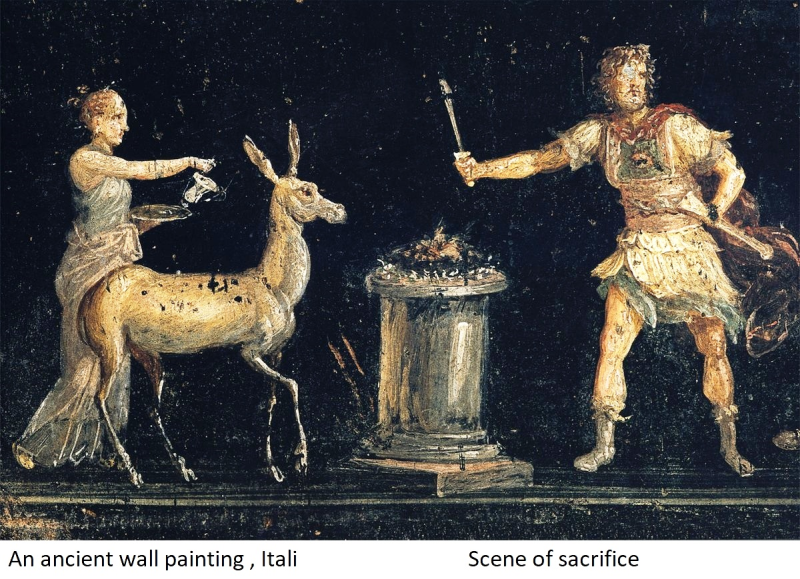
People from all over the world, in different cultures and religions, have practiced some form of sacrifice. Whether it was to please a god, seek forgiveness, or keep some kind of cosmic balance, it’s something humanity has been doing for thousands of years. But when we look at Jesus’ death on the cross, we see something that really stands out from the rest.

What makes it so different? Well, there are three big reasons: it was intentional, it was for everyone, and it was once and for all.

One of the most powerful things about Jesus’ death is that He wasn’t forced into it. In John 10:17-18, He says, “I lay down my life… No one takes it from me, but I lay it down of my own accord.” That’s huge. He didn’t get caught in the wrong place at the wrong time or die just for the sake of being a hero. He chose to die for a purpose.

Now, other traditions talk about noble deaths too. Think of Socrates, the Greek philosopher who drank poison rather than run away from what he believed in (Plato, Apology). That’s admirable, but it was more about personal honor. Similarly, in Hinduism, animal sacrifices in Vedic rituals (Rigveda, 10.91) aim to sustain cosmic order, not to personally bridge a gap between humanity and the divine. Jesus’ death, on the other hand, was meant to bring people back to God. He wasn’t just a martyr, He was both the priest and the sacrifice.

Another thing that makes Jesus’ sacrifice unique is that it wasn’t limited to just one group of people. Hebrews 10:10 says, “We have been made holy through the sacrifice of the body of Jesus Christ once for all.” That means it wasn’t just for the Jews, or for a certain tribe, or people from a certain time, it was for all of us.

Other religions had sacrifices too, but they were often done just for a specific community or to honor a local god. For example, the ancient Israelites had the Day of Atonement once a year, and only the high priest could do it, for Israel. And in some cultures like the Aztecs, sacrifices were made to specific gods in hopes of things like rain or victory in battle (Florentine Codex, Book 2). But Jesus’ sacrifice reached across time, culture, and race. It was global.

Most ancient sacrifices had to be repeated year after year, or even more often. It was never-ending. But Jesus’ death was different. Hebrews 9:26 says He “appeared once for all… to do away with sin by the sacrifice of himself.” That means it was complete. Done. No do-overs needed.

This stands in stark contrast to the cyclical sacrifices of ancient pagan religions, such as Rome’s suovetaurilia (Livy, History of Rome, 1.7), or even Buddhism’s karmic atonements, which rely on ongoing personal effort rather than a singular, completed act.

When you step back and look at the big picture, Jesus’ sacrifice isn’t just a church teaching, it’s something totally unique in all of history. Religious scholar Mircea Eliade, who studied sacrifice across many cultures, found sacrifice everywhere, but nothing quite like what Jesus did.

He wasn’t just another teacher or martyr. He was God in the flesh, choosing to give His life, for everyone, forever. And that’s what makes His sacrifice so different, and so deeply personal for each of us.

Agape,

Evidence for our Faith: External Evidence for Jesus

Whether you’re a believer or just curious, the question of whether Jesus of Nazareth really lived is something that gets people talking. While the Bible gives the main story of His life, it’s not the only place we hear about Him. In fact, several ancient Roman and Jewish writers, people who weren’t Christians, also mentioned Jesus. And what they said actually backs up the Bible in some powerful ways.

One of the best-known Roman historians, Tacitus, wrote about Christians in his work Annals around the year 116 AD. In Book 15, Chapter 44, he talks about how Emperor Nero blamed Christians for a fire in Rome and punished them. He even mentions their founder, “Christus” (Christ), who was executed by Pontius Pilate during the reign of Emperor Tiberius. That lines up perfectly with what we read in Matthew 27:2. What’s especially interesting is that Tacitus wasn’t a fan of Christians at all. He was just reporting what he knew, likely from official Roman records. That makes his words a strong, unbiased confirmation that Jesus really was crucified.

Another Roman writer, Pliny the Younger, gives us a peek into what early Christians were up to. Around the year 112 AD, he wrote a letter to the Emperor Trajan asking how to deal with this growing group of Jesus-followers. He said they worshiped Christ “as a god” and were spreading quickly. This matches what we see in Acts 2:41, where thousands started following Jesus shortly after His resurrection. Pliny wasn’t trying to preach, he was just doing his job as a governor, which makes his report even more valuable.

Then there’s Flavius Josephus, a Jewish historian who lived in the first century. In his book Antiquities of the Jews, he refers to Jesus as a wise man who did amazing things, was crucified by Pilate, and had followers who didn’t give up on Him. This section, called the “Testimonium Flavianum,” has sparked debate because it may have been edited by Christian scribes later on. But most scholars believe the basic facts, like Jesus’ crucifixion, are authentic. It’s a fascinating link to what we see in Mark 15:15.

Even the Babylonian Talmud, a collection of Jewish writings compiled later on, has something to say. In Sanhedrin 43a, it talks about a man named Yeshu who was executed on the eve of Passover for leading people astray. It’s a negative take on Jesus, but oddly enough, it lines up with John 19:14 and Matthew 26:65-66. Even though the tone is critical, it still confirms key parts of the story—Jesus’ existence, His influence, and His death.

So, what do all these sources have in common? They come from people who weren’t trying to promote Christianity. In some cases, they were even hostile to it. And yet, they confirm important details from the Gospels, like Jesus being crucified under Pilate and the rapid rise of His followers.

When you put it all together, these outside voices create a strong picture: Jesus wasn’t just a religious figure made up later. He was a real person who made a real impact—so much so that even His critics couldn’t ignore Him.

Agape,

Evidence for our faith: Scientific Discoveries

Scientific Insights in the Bible Before Their Discovery

The Bible, often seen as a spiritual guide, harbors scientific insights that predate their modern discovery, hinting at a wisdom beyond its ancient writers. While not a scientific treatise, its casual mentions of natural phenomena (later validated by research) present a compelling case for its inspired nature. From lightning’s path to Earth’s form, these glimpses into the physical world challenge assumptions of a purely primitive text.

One remarkable example is the Bible’s reference to lightning’s path. Job 28:26 states, “When He made a law for the rain and a path for the thunderstorm,” while Job 38:25 asks, “Who has divided a channel for the overflowing water, or a path for the lightning of thunder?” Written around 2000 BC, these verses suggest lightning follows a guided route, a concept unknown to ancient meteorology. Not until the 1960s, with advancements in high-speed photography and electrical studies, did scientists like Martin Uman confirm that lightning indeed traces a predictable plasma channel. This discovery, detailed in The Lightning Discharge (1987), aligns with Job’s imagery, predating it by nearly 4,000 years. This example is absolutely compelling; it’s a precise, testable phenomenon described millennia before the tools existed to verify it, making it a standout among biblical insights.

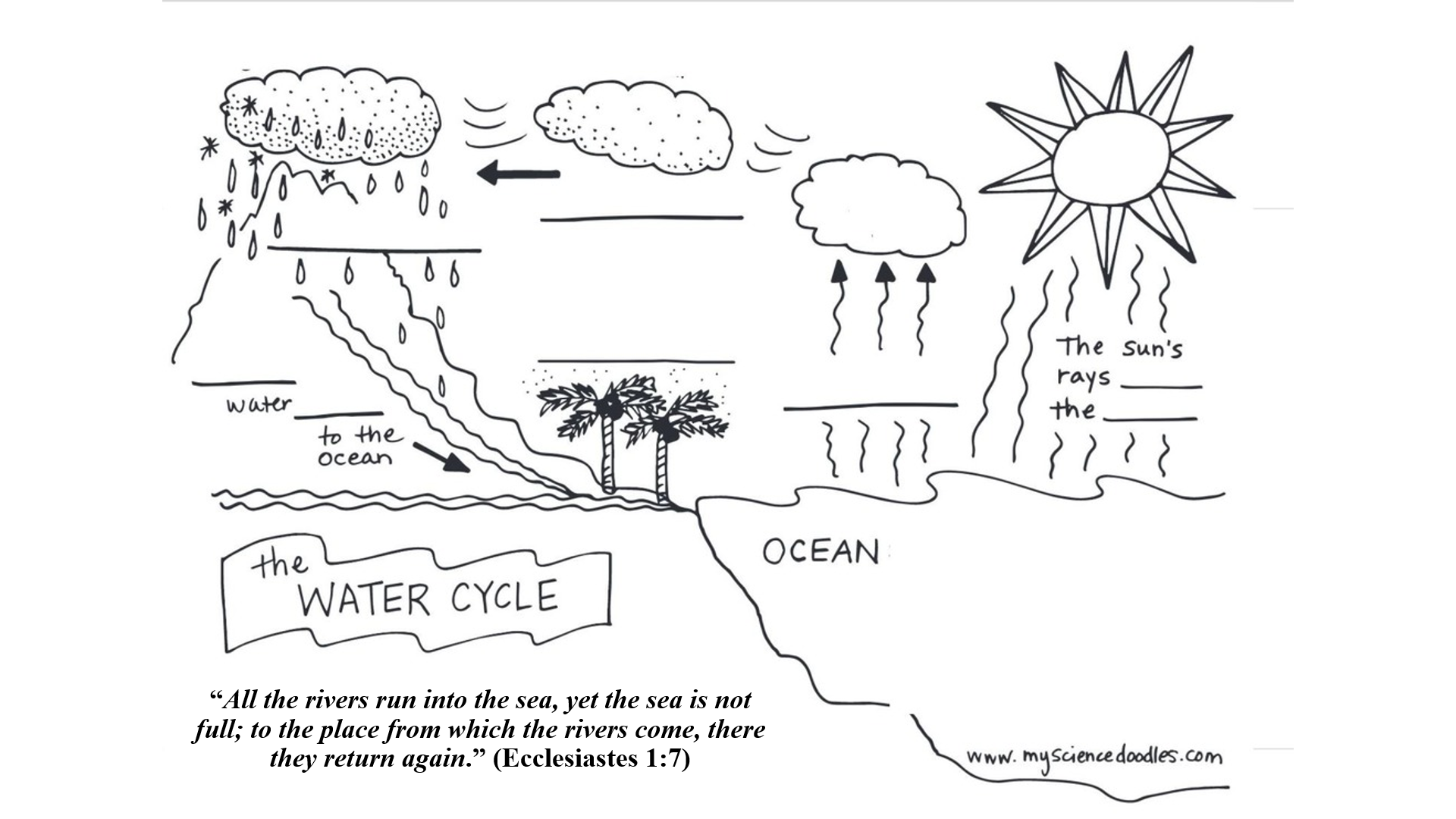
The hydrologic cycle also emerges in Scripture long before its scientific mapping. Ecclesiastes 1:7 observes, “All the rivers run into the sea, yet the sea is not full; to the place from which the rivers come, there they return again.” This encapsulates evaporation and precipitation, a process not formalized until Bernard Palissy’s 16th-century work. Job 36:27-28 reinforces this: “He draws up the drops of water, which distill as rain from the mist,” revealing an understanding absent in contemporary cultures.

Biologically, Leviticus 17:11 declares, “For the life of the flesh is in the blood,” a truth central to modern medicine. Penned circa 1400 BC, it precedes William Harvey’s 1628 circulation discovery by over two millennia. Henry Morris, in The Biblical Basis for Modern Science (1984), argues this reflects knowledge beyond ancient observation, tying blood to vitality in a way science later confirmed.

Cosmologically, Job 26:7 asserts, “He hangs the earth on nothing,” portraying Earth as suspended in space—a view not widely accepted until Copernicus. This contrasts with ancient myths of a supported Earth, aligning with modern astronomy’s findings. John W. Montgomery’s Evidence for Faith (1991) notes such insights suggest a source transcending human limits.

These instances don’t prove divinity but defy coincidence, bridging faith and reason.

Agape

Sources:

Morris, Henry M. The Biblical Basis for Modern Science. Baker Books, 1984.

Montgomery, John W. Evidence for Faith. Probe Books, 1991. Uman, Martin A. The Lightning Discharge. Academic Press, 1987.

Evidence for our Faith: The Manuscript Evidence for the Bible’s Preservation

The Manuscript Evidence for the Bible’s Preservation

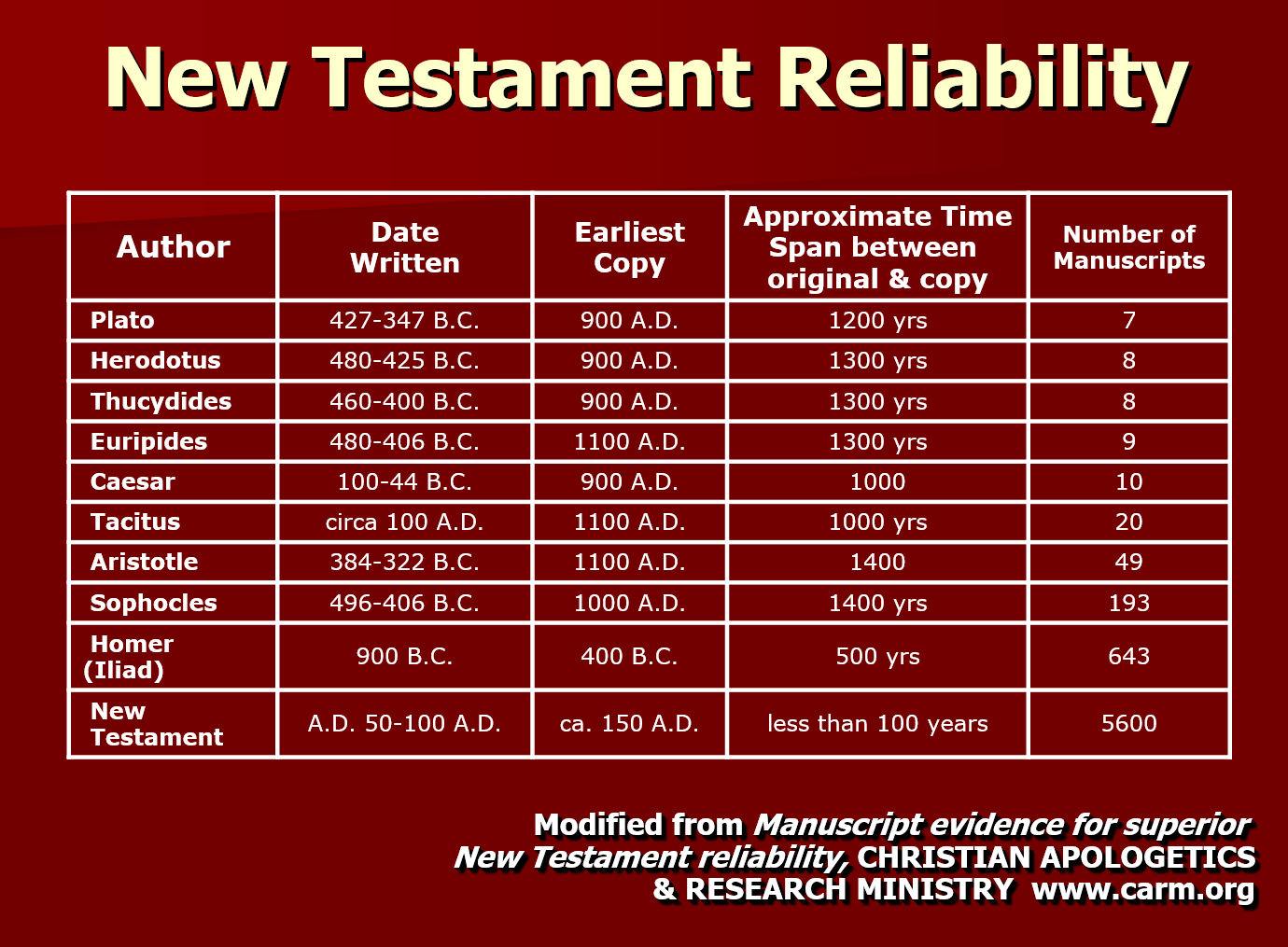
The Bible’s preservation across millennia stands as a testament to its enduring reliability, backed by an unmatched trove of manuscript evidence. With over 5,800 Greek New Testament manuscripts and more than 19,000 in other languages, the Bible dwarfs all other ancient texts in sheer volume. This vast collection, paired with its textual consistency, builds a logical and compelling case that today’s Scriptures faithfully echo their original form.

Take the New Testament: The Rylands Papyrus (P52), dated to around AD 125, preserves John 18:31-33, penned just decades after the Gospel’s origin. Contrast this with Caesar’s Gallic Wars, where the earliest copies lag 900 years behind the original, yet face little skepticism. The Bible’s early manuscripts, hundreds before AD 300, shrink the window for distortion. F.F. Bruce, in The New Testament Documents: Are They Reliable? (1943), asserts this abundance yields a text 99.5% accurate, with variants largely trivial (e.g., spelling in John 1:1).

For the Old Testament, the Dead Sea Scrolls, like the Great Isaiah Scroll (1QIsa^a) from 125 BC, showcase precision. Isaiah 7:14, foretelling a virgin birth, aligns almost perfectly with the 10th-century Masoretic Text across 66 chapters. Minor shifts, like phrasing in Isaiah 40:3, leave meaning intact. Daniel B. Wallace’s Revisiting the Corruption of the New Testament (2011) praises the scribes’ meticulousness, reflecting their obedience to Deuteronomy 4:2’s command against altering God’s Word.

This consistency holds across key doctrines. Christ’s divinity (John 1:14), God’s covenant (Genesis 17:7), and salvation through faith and baptism (Acts 2:38, preserved in Codex Vaticanus, 4th century AD) remain unshaken. In Acts 2:38, Peter’s call to “repent and be baptized… for the remission of your sins” mirrors countless manuscripts, showing no doctrinal drift despite centuries of copying. The volume of texts enables rigorous comparison, a privilege rare among ancient works like Homer’s Iliad (643 copies).

Such preservation stems from deliberate effort, not chance. Jewish scribes counted letters per line, while early Christians, under persecution, shared copies widely—Paul even instructed in 1 Thessalonians 5:27, “I charge you by the Lord that this letter be read to all the brethren,” fostering circulation among congregations. This dedication ensured texts endured, as urged in 2 Timothy 2:15 to handle truth diligently. The Codex Sinaiticus (4th century AD) and later Byzantine manuscripts align closely, bridging continents and eras.

Skeptics may doubt miracles, but the manuscript evidence refutes claims of textual unreliability. From desert caves to medieval scriptoriums, the Bible’s words have weathered time, emerging intact. In a sea of ancient literature, Scripture stands as a rock—its message preserved not by chance, but by a legacy of care that echoes its own call to endure.

Agape

Sources:
Bruce, F.F. The New Testament Documents: Are They Reliable? Eerdmans, 1943.
Wallace, Daniel B. Revisiting the Corruption of the New Testament. Kregel Academic, 2011.