The existence of beauty in the world presents a profound question: why does beauty exist at all, and why are humans uniquely capable of perceiving and appreciating it? From awe-inspiring sunsets to masterful works of art, beauty seems unnecessary for survival, challenging purely naturalistic explanations and pointing to a Creator who values aesthetics.
Beauty in Nature Nature abounds with intricate and breathtaking beauty. The symmetry of snowflakes, the vibrant colors of a coral reef, and the majesty of mountain ranges go far beyond what is required for survival. Evolutionary theory might explain functional traits aiding survival and reproduction, but beauty often serves no such purpose. For example, the iridescence of a butterfly’s wing or the intricate design of a seashell does not directly contribute to the organism’s fitness. These examples suggest an artist behind the canvas of creation.
The Human Appreciation of Beauty Human beings uniquely recognize and create beauty. Unlike animals, which may engage in utilitarian behaviors related to survival, humans produce art, music, and poetry with no direct survival benefit. Neuroscientists have identified regions of the brain that respond to beauty, regardless of its form—visual, auditory, or conceptual. This capacity for aesthetic appreciation suggests that humans are made in the image of a Creator who delights in beauty. The Bible affirms this in Genesis 1:27, where it states, “God created man in his own image.”
Universality of Beauty Across cultures and times, humans have consistently found certain patterns, colors, and sounds beautiful. The golden ratio, found in natural phenomena and human art, is a prime example. This universality suggests an objective standard of beauty woven into the fabric of creation. Ecclesiastes 3:11 notes, “He hath made every thing beautiful in his time,” affirming that beauty reflects the order and intention of God.
Beauty and Purpose If the universe were purely a product of random chance, beauty would be an inexplicable anomaly. However, the Bible reveals that creation declares the glory of God: “The heavens declare the glory of God; and the firmament sheweth his handywork” (Psalm 19:1). Beauty serves a purpose in pointing humanity to its Creator, inspiring wonder and gratitude.
Conclusion The existence and appreciation of beauty challenge naturalistic explanations and align with the biblical worldview of a Creator who delights in aesthetics. Beauty is not accidental but purposeful, reflecting God’s nature and inviting us to seek Him. As Romans 1:20 states, “For the invisible things of him from the creation of the world are clearly seen, being understood by the things that are made.” Beauty, in all its forms, is a testament to the divine Artist behind the universe.
Sources: • D’Souza, D. What’s So Great About Christianity? • Lennox, J. God’s Undertaker: Has Science Buried God? • Genesis 1:27, Psalm 19:1, Ecclesiastes 3:11, Romans 1:20 (KJV).
The biblical account of a global flood is detailed in Genesis 6–9, describing Noah’s ark, the catastrophic deluge, and the repopulation of the earth. This narrative has parallels in ancient cultures worldwide, suggesting a shared memory of a catastrophic event. Scientific evidence also lends credibility to this account, providing compelling data that aligns with the possibility of a global flood.
Sedimentary Layers and Fossil Evidence
Sedimentary rock layers, found across the earth, contain fossils of marine and land organisms, often in unexpected locations. For instance, marine fossils have been discovered atop the Himalayas and other high-altitude regions. This suggests that these areas were once submerged under water. Rapid burial of organisms during a massive flood could explain the fossilization of soft-bodied creatures and the preservation of delicate features, such as jellyfish imprints, which would decay under normal conditions.
Polystrate Fossils
Polystrate fossils, or fossils that extend vertically through multiple sedimentary layers, challenge the standard geological timeline that attributes these layers to slow accumulation over millions of years. A rapid deposition of sediment, such as during a global flood, provides a more plausible explanation for how these fossils formed without significant decay.
Large-Scale Erosion and Canyon Formation
The formation of canyons, such as the Grand Canyon, shows evidence of rapid water erosion rather than slow geological processes. Experiments following events like the eruption of Mount St. Helens in 1980 showed how massive volumes of water can carve canyons in a short period, mirroring what a global flood might accomplish on a larger scale.
Flood Legends Across Cultures
Over 200 flood legends exist among ancient cultures worldwide, including those of the Sumerians, Babylonians, and Native Americans. Many of these accounts include a large vessel, a remnant of humanity and animals, and a divine reason for the flood. Such widespread narratives suggest a historical basis for the biblical account of Noah’s flood.
Biblical Consistency with Science
Genesis describes “the fountains of the great deep” breaking open and “the windows of heaven” releasing water (Genesis 7:11). Modern geology acknowledges subterranean water reserves and their role in catastrophic events. Furthermore, the ark’s dimensions (Genesis 6:15) align with the proportions needed for stability and capacity, as confirmed by naval architects.
Conclusion
While interpretations of evidence vary, the sedimentary layers, polystrate fossils, rapid erosion patterns, and global flood legends align with the Genesis narrative. These findings challenge the notion of slow geological processes and suggest that a catastrophic event, consistent with the biblical flood, is plausible.
Agape,
Spencer
Sources:
Morris, J. “The Global Flood.” Institute for Creation Research.
Snelling, A. “Flood Evidences.” Answers in Genesis.
The story of the man of God in 1Kings 13:1-26 is one of the Bible’s most sobering narratives about obedience. This account teaches timeless lessons about the seriousness of following God’s Word without compromise. Let us examine these lessons in light of Scripture.
God gave the man of God specific instructions (1Kings 13:9): not to eat, drink, or return by the same way. These commands were obvious, straightforward, and easy to understand. God’s Word consistently provides clear guidance for those who seek it. “For this commandment which I command thee this day, it is not hidden from thee, neither is it far off. It is not in heaven, that thou shouldest say, Who shall go up for us to heaven, and bring it unto us, that we may hear it, and do it? Neither is it beyond the sea, that thou shouldest say, Who shall go over the sea for us, and bring it unto us, that we may hear it, and do it? But the word is very nigh unto thee, in thy mouth, and in thy heart, that thou mayest do it.” (Deut 30:11-14).
In the example of the flood story, Noah’s adherence to God’s precise instructions for building the ark (Genesis 6:14-22) saved his family from the flood. Ignoring or altering God’s commands would have led to disaster.
The man of God told Jeroboam that there would be no variation to God’s command (v8-10). “And the man of God said unto the king, If thou wilt give me half thine house, I will not go in with thee, neither will I eat bread nor drink water in this place.” Galatians 1:8-9 warns that even an angel preaching a different gospel is accursed. Nadab and Abihu’s offering of “strange fire” resulted in their immediate death (Leviticus 10:1-2). Their unauthorized act highlights the danger of altering God’s instructions.
No matter how sincere or convincing, error cannot produce righteousness. The old prophet’s lie (v18-19) did not excuse the man of God’s disobedience. King Saul’s partial obedience when sparing Amalekite spoils led to his rejection by God (1Samuel 15:22-23). Obedience requires following God’s commands completely.
The man of God believed the old prophet’s lie, and it led to his death. Sincerity alone cannot excuse disobedience to God’s truth. 2Thessalonians 2:10-12 teaches that those who reject the truth and believe lies will be condemned. “In flaming fire taking vengeance on them that know not God, and that obey not the gospel of our Lord Jesus Christ:”
The man of God’s failure to obey all of God’s instructions cost him his life. Every command of God is significant and deserves our attention. Luke 16:10 emphasizes that faithfulness in small matters reflects overall faithfulness. Uzzah’s touching the Ark of the Covenant (2 Samuel 6:6-7) highlights that even seemingly minor acts of disobedience are significant to God.
The account of the man of God from Judah serves as a solemn reminder: God’s way is clear, unchanging, and demands our full obedience. We must respect His commands, rejecting lies and half-truths. By adhering to His Word, we honor Him and secure our eternal reward. Believing lies or compromising His commands leads to spiritual ruin. Let us resolve to honor God by faithfully following His Word in every aspect of our lives.
The Bible is God’s communication to us, written to guide, instruct, and equip His people. In Ephesians 3:1-5, Paul reminds Christians that God revealed His mystery to the Apostles and prophets by the Holy Spirit, ensuring that all can now understand it through what has been written. This truth highlights the sufficiency and authority of Scripture for every generation.
It was Written for Us Today: No Continuing Revelation
Paul’s words affirm that the Scriptures are complete. In Ephesians 3:3-5, he explains that the mystery of Christ has been fully revealed and recorded for our understanding. This aligns with Jude 3, which tells us the faith was once delivered to the saints. There is no need for additional revelations. Galatians 1:8-9 warns against anyone who would add to or alter the gospel, emphasizing that God’s Word is final and unchanging. Likewise, 2 Peter 1:3 assures us that God has given us everything necessary for life and godliness through His Word. Scripture alone contains the truth we need to live faithfully (2Tim 3:15-17).
It was written to be obeyed
Jesus asked, “Why call ye me, Lord, Lord, and do not the things which I say?” (Luke 6:46). His question emphasizes the necessity of obeying His commands. The written Word is not merely for information but for transformation and obedience. Paul reinforced this in 2 Thessalonians 3:14, urging discipline for those who disregard the apostles’ writings. The Great Commission (Matthew 28:20) reminds us to observe all Christ has commanded, and John 12:48 warns that His Word will be the standard by which we are judged.
It was Revealed to a Select Few, Confirmed by Miracles and Signs
Scripture’s authority is rooted in its divine inspiration. As Paul explains in Ephesians 3:5, the Holy Spirit revealed God’s truth to him and other select Apostles and prophets. Miracles and signs confirmed their message (Mark 16:20). Paul highlights these “signs of an apostle” in 2 Corinthians 12:12, showing their role in validating God’s Word. However, these miraculous gifts ceased with the completion of divine revelation (1 Corinthians 13:8-10), leaving us the written Word as the enduring foundation of faith.
Diligence is Required to Study and Apply the Word
Understanding God’s will requires effort. Paul instructs Timothy to “study (give diligence) to shew thyself approved unto God” (2 Timothy 2:15). The Bereans, commended in Acts 17:11, exemplify this diligence by examining the Scriptures daily. Abiding in the doctrine of Christ, as emphasized in 2 John 1:9, is essential for fellowship with God.
The Bible is God’s sufficient and final revelation. Let us treasure it, study it, and obey its commands to walk in His will and receive eternal life.
“Whereby, when ye read, ye may understand my knowledge in the mystery of Christ).” (Eph 3:4)
In a world filled with a myriad of voices, opinions, and influences, it can be challenging to discern the truth. As Christians, we are to hear and follow the voice of Jesus above all others. The Bible provides the clear words of Jesus and how we should prioritize hearing Him over other voices that compete for our attention. Let’s explore why it’s essential to hear Jesus and how we can overcome the distractions that often lead us away from His teachings.
Listening to Self. In our modern culture, self-reliance and personal wisdom are often exalted. We’re told to “trust our gut” and “follow our hearts.” However, the Bible warns against leaning on our own understanding. Proverbs 3:5-6 reminds us, “Trust in the LORD with all thine heart; and lean not unto thine own understanding. In all thy ways acknowledge him, and he shall direct thy paths.”
Imagine a ship’s captain in the middle of the ocean who ignores his navigational charts and instruments, relying solely on his instincts. Despite his confidence, he quickly becomes lost, unable to find his way through the vast and treacherous waters. In the same way, when we rely solely on our own understanding and desires, we can easily lose our way spiritually.
Our hearts can be deceptive, leading us into paths that seem right but ultimately end in destruction. “The heart is deceitful above all things, and desperately wicked: who can know it” (Jeremiah 17:9)? Instead of placing our trust in ourselves, we are urged to submit to God and trust in His wisdom. When we choose to hear Jesus, we are placing our confidence in the One who knows all, sees all, and loves us all. By aligning our thoughts with His teachings, we find guidance and direction that are far beyond our limited human understanding.
Listening to Relationships Like Family & Friends. Family and friends often have a significant influence on our lives. While these relationships are important, they must not take precedence over our relationship with Christ. In Matthew 10:37, Jesus makes a bold statement: “Anyone who loves their father or mother more than me is not worthy of me; anyone who loves their son or daughter more than me is not worthy of me.”
This scripture isn’t a call to neglect our loved ones but rather a reminder to keep Jesus as our primary focus. When we elevate the opinions, traditions, and desires of others above the teachings of Christ, we risk compromising our faith. When we prioritize the voices of our loved ones over God’s Word, we become confused and unfocused in our walk with Christ
Our love for Jesus should surpass all other affections, ensuring that His voice is the loudest in our lives. By hearing Jesus first, we can love and serve our families better, rooted in the truth of the Gospel.
Listening to Authority Figures Without Verification. We live in a world where authority figures—be they religious leaders, politicians, or cultural icons—can significantly shape our beliefs. However, it’s crucial to remember that no human authority is infallible. Acts 17:11 praises the Bereans for their diligence in verifying Paul’s teachings: “These were more noble than those in Thessalonica, in that they received the word with all readiness of mind, and searched the scriptures daily, whether those things were so.”
This passage encourages us to be discerning listeners. We should respect authority but also verify their words against the ultimate authority—the Word of God. Hearing Jesus requires us to examine everything through the lens of Scripture, ensuring that we remain grounded in truth (see 1John 4:1; 1Thess 5:21).
Listening to Evil Spirits, Tarot Cards, Mediums, Psychics, and Astrology. In a quest for guidance and answers, some people turn to supernatural sources like tarot cards, mediums, psychics, and astrology. However, the Bible explicitly warns against such practices. Isaiah 8:19-20 says, “And when they shall say unto you, Seek unto them that have familiar spirits, and unto wizards that peep, and that mutter: should not a people seek unto their God? for the living to the dead? To the law and to the testimony: if they speak not according to this word, it is because there is no light in them.”
Imagine a traveler, seeking guidance, consults a broken compass, believing it will lead them to their destination. Instead, it leads them further into danger. When we turn to tarot cards, psychics, or astrology, we are like that traveler, misguided and led astray. These sources cannot truly communicate with us or guide us because they are not from God.
These practices are dangerous because they open the door to deception and spiritual harm. Instead of seeking answers from these sources, we are called to seek God directly. Jesus is the ultimate source of truth, and when we hear Him, we receive the guidance and wisdom that leads to life.
Hearing Jesus. Amidst all these competing voices, God’s command is clear: we must hear Jesus. In Matthew 17:5, during the Transfiguration, God the Father declares, “This is my beloved Son, in whom I am well pleased; hear ye him!” This directive emphasizes the authority and importance of Jesus’ teachings. When we listen to Jesus, we are hearing the voice of God Himself.
Jesus affirms this in John 14:6, where He states, “I am the way and the truth and the life. No one comes to the Father except through me.” By hearing and following Jesus, we find the true path to salvation and eternal life. His voice leads us to the Father, guiding us through the complexities of life with divine wisdom and love. We hear Jesus through the words that have been recorded for us in the New Testament. “He that rejecteth me, and receiveth not my words, hath one that judgeth him: the word that I have spoken, the same shall judge him in the last day” (John 12:48; cf. John 20:30-31).
Hearing Jesus above all others is not just a command; it is a necessity for every believer. By prioritizing His voice, we can navigate the challenges of life with clarity, purpose, and peace. Let us commit to tuning our ears to His teachings, allowing His words to shape our hearts and guide our steps.
“If any man think himself to be a prophet, or spiritual, let him acknowledge that the things that I write unto you are the commandments of the Lord”
Other scriptural arguments that refute “Eternal Security”
A. The fact the Bible exhorts to faithfulness proves one can be lost be steadfast immovable: 1 Cor 15:58 If these qualities are yours…2 Pe 1:5-11 we will reap if we do not grow weary: Gal 6:9 be faithful unto death and I will give crown of life: Rev 2:10 practice these things and God will be with you: Phil 4:9
B. Man has a free will: Josh 24:15 to argue otherwise is nonsense and is a veiled form of existentialism
C. The Bible clearly prophesied some would fall away: Acts 20:28; 1 Ti 4:1
D. Christians are to restore the fallen: Gal 6:1; Jas 5:19-20
Several of the world’s denominations teach that Christians cannot sin so as to become lost; that is, there is no way that a true convert of Christ he cannot go to hell may sin, and thereby, receive eternal damnation – he cannot go to hell after having once been saved. This is popularly spoken of as the doctrine of “once saved, always saved”.
On one extreme, this doctrine is expressed as, “True Christians will not sin as they lack the desire and the capability to sin, because their allegiance to Christ has changed their nature”. At its other extreme, this doctrine is expressed as, “No matter how grievous, the sins of Christians will not be held against them in the final judgement”. Those who hold this last view believe that Christians can do wrong, but they also believe that Christ will forgive them of any, and every, sin so that they will be blameless on the day of judgement.
You researched this question to find, not what man teaches, but what the Bible teaches about the possibility of Christians falling from the way of truth, and becoming lost.
The most clear treatment of this subject in the New Testament is found in the second chapter of II Peter. Study this entire chapter carefully. I quote now verses 20 and 21, which best summarize its teachings,
“For if after they have escaped the pollution of the world through the knowledge of the Lord and Saviour Jesus Christ, they are again entangled therein, and overcome, the latter end is worse with them than the beginning. For it had been better for them not to have known the way of righteousness, than, after they have known it to turn from the holy commandment delivered unto them“.
Unquestionably the people spoken of here were once Christians, for the writer speaks of them as those who had, “(quote) escaped from the pollution of the world through the knowledge of the Lord Jesus Christ” (unquote). Unquestionably these same people were, again, entangled in worldly pollution, that is, they had fallen from the way of the truth, and had (again) become sinners. Also, unquestionably they are subject to condemnation for these sins, for the verse says that their final state is worse than their initial state, that is, they are worse off than before they were saved. Thus, the doctrine of “once saved, always saved”, is not supported by the scriptures, for the Bible here shows that Christians can sin, and that they may receive punishment for those deeds.
All verses of the Bible agree with all other verses when the subject is the same, and when the rule, or law of God, is the same. Also, when the rule, or law, is consistent, clear verses serve to explain less clear verses about the same subject. Said in a different way, the Bible never contradicts itself, and the Bible is its own best interpreter. Remember, God cannot lie, and God is not the author of confusion. Study Hebrews 6:18, and I Corinthians 14:33. To illustrate this, we can study verses about baptism (for instance) in the New Testament books written by the apostles John, Paul, and James, and expect agreement. But, we cannot necessarily expect agreement between the Old Testament writings of Moses and the New Testament writings of Paul concerning (say) worship; Moses’ laws were in effect until Jesus’ death ended them. See Col. 2:14. Paul’s writings, however, are a part of the will of Christ, His New Testament. The New Testament is our guide today.
In I John 3:9, we read, “Whosoever is born of God doth not commit sin; for his seed remaineth in him: and he cannot sin, because he is born of God“. If this verse teaches, “once saved, always saved”, it is contrary to II Peter 2:20 and 21 (which we read previously). Thus, a contradiction is forced into the scriptures which cannot exist. However, apparent conflict disappears when we see that the writer is stating the obvious fact that Christians cannot sin and remain faithful followers of the Lord. This is verified by the very same writer in the very same letter where the apostle, John, in I John 1:8-10 says, “If we say that we have no sin, we deceive ourselves, and the truth is not in us. If we confess our sins he is faithful and just to forgive us our sins, and to cleanse us from all unrighteousness. If we say that we have not sinned, we make him a liar, and his word is not in us“.
Here, again, we find an inspired writer telling true believers, Christians (including himself) that they can sin, and that they can do unrighteousness. More deeply, John is here instructing Christians how they can find forgiveness for their sins; Christians are to confess their sins and they will be forgiven them. This instruction is not for sinners who have never become Christians. Christians are citizens of God’s kingdom, and must abide by its rules. People who are not citizens in the kingdom must first become so before its laws apply to them. We suggest that you find how to become a citizen of God’s kingdom through study the message, “What Must I Do To Be Saved?” and “Are We Saved By Faith Only?”.
Belief in, “once saved, always saved” may seem justified by John 10:27-29, “My sheep hear my voice, and I know them, and they follow me: And I give unto them eternal life; and they shall never perish, neither shall any man pluck them out of my hand“. If this scripture proves, “once saved, always saved”, the scriptures contradict each other, and this, of course, is an impossibility. To harmonize the scriptures (to make them agree, one with another), we must notice that Jesus did not say that his sheep could not leave of their own accord; He said that no man could pluck them away.
Each Christian may leave Christ, if he chooses; but unless the individual wishes to go, no one else can make him leave. Notice in verse 27, Jesus said that His sheep, “know me and follow me“, and thus, following, and continuing to follow the Savior is a condition that we must fulfill if the promise, “neither shall any man pluck them out of my hand” is to be kept.
And so, in addition to those things necessary to become saved (namely, believing the word of God, believing that Jesus is the Christ, the Son of God, repenting of (or changing away from) a sinful life, and being baptized into Christ for the remission of sins, we have an additional requirement, that of being faithful unto death (Revelation 2:10).
“Once saved, always saved” is a dangerous doctrine: The Christian who does fall away (upon seeing his sinful life) may conclude that he was never saved and become doubtful of the power of God; another may live a sinful life, and become lost, while believing that God is unmindful of the sins being committed. Either way can result in eternal death for the sinner’s soul, and it would be such a useless death, for (as we have seen), the doctrine of “once saved, always saved” is wrong. The Christian who sins must confess those sins to God, who will forgive them.
“And whatsoever ye do in word or deed, do all in the name of the Lord Jesus, giving thanks to God and the Father by him.” (Col 3:17)
This verse encapsulates the essence of living a life fully devoted to Christ. It means more than just offering lip service or superficial honor to God; it demands genuine obedience to His commands in every aspect of our lives. To fully understand this, let us explore scriptural examples where individuals desired to honor God but failed to keep His commandments, thus illustrating the true meaning of doing all in the name of the Lord.
Nadab & Abihu:
A Cautionary Tale. Leviticus 10:1-2 provides a stark example of what happens when individuals seek to honor God without adhering to His explicit instructions. Nadab and Abihu, the sons of Aaron, offered “strange fire before the Lord, which he commanded them not.” Despite their likely intentions to honor God, their offering was contrary to His command, and as a result, fire came out from the Lord and consumed them. This incident underscores the critical importance of obedience. Honoring God is not just about good intentions; it requires strict adherence to His directives.
Saul’s Amalekite Error.
Another poignant example is King Saul’s disobedience in 1 Samuel 15. God commanded Saul to utterly destroy the Amalekites and all their possessions. Instead, Saul spared King Agag and kept the best of the livestock, justifying his actions by claiming that the animals were preserved for sacrifice to the Lord (1Samuel 15:15). However, Saul’s partial obedience was deemed rebellion. Samuel rebuked him, stating, “Behold, to obey is better than sacrifice, and to hearken than the fat of rams” (1Samuel 15:22). Saul’s failure highlights that honoring God involves complete obedience to His commands, not selective adherence.
Well Meaning Uzzah.
In 2 Samuel 6, we read about Uzzah, who, in a well-meaning effort to honor God, reached out to steady the Ark of the Covenant when the oxen stumbled. Despite his intentions, he violated God’s command that no one should touch the Ark (Numbers 4:15). As a result, Uzzah was struck dead by God (2Samuel 6:7). This account demonstrates that good intentions are not enough when they lead to disobedience. Honoring God requires respecting and following His specific instructions even under extreme circumstance.
The Errors of the Pharisees.
The Pharisees in the New Testament provide a further illustration of misplaced honor. They meticulously followed traditions and outward rituals, believing they were honoring God. However, Jesus criticized them for neglecting the more important matters of the law—justice, mercy, and faithfulness (Matthew 23:23). Their focus on external observance rather than heartfelt obedience and adherence to God’s true commands showed that they were not truly honoring God in their actions.
Jesus Himself addressed the importance of true worship in Matthew 15:8-9, quoting Isaiah: “This people draweth nigh unto me with their mouth, and honoureth me with their lips; but their heart is far from me. But in vain they do worship me, teaching for doctrines the commandments of men.” Here, Jesus condemns those who appear to honor God outwardly but fail to adhere to His commands, substituting human traditions for divine instructions. True worship, according to Jesus, is rooted in obedience to God’s word.
Applying Colossians 3:17 Today.
For believers today, Colossians 3:17 is a call to full obedience. It challenges us to ensure that every word and deed aligns with God’s will as revealed in Scripture. It is not enough to perform acts of worship or service with good intentions if those acts are not grounded in obedience to God’s commands.
For instance, when it comes to worship practices, evangelism, or daily living, our actions must be rooted in biblical directives. Doing everything in the name of the Lord means we act under His authority and guidance, ensuring our lives reflect His teachings and commands.
Colossians 3:17 reminds us that honoring God involves more than mere intention or lip service. It requires a heart and life fully committed to obeying His will. True honor to God is found in faithful obedience to His word. Let us strive to do all in the name of the Lord, giving thanks to God and living in full submission to His divine will.
Agape,
Spencer
This is part 4 of a series of lessons on the Duties of Saints, pt1
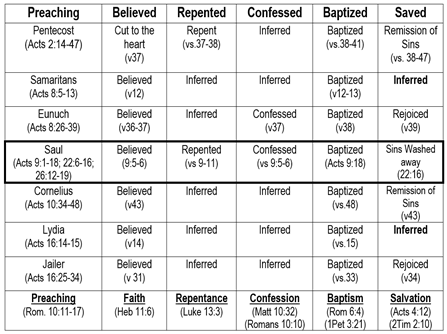
People often appeal to single passages on how to be saved, but ignore an entire book in the New Testament that shows people going from a lost condition to being saved. That book is called ACTS. It contains the founding of the church of Christ at Pentecost, and the conversion of the lost to salvation in Christ Jesus.
Cases of Conversion in the book of Acts.
1. The first of these conversions happened on the notable day of Pentecost when the church was established. The text (Acts 2:14) shows that they had the Gospel preached to them; they heard (vv. 36-37); they repented of their sins (v. 38); and they were baptized into Christ (v. 38). The result was that they had their sins washed away.
2. In Acts 8:4-5, Phillip preached to the people of Samaria; they heard (v. 6); they were baptized (v. 12).
3. Phillip also preached to Simon (Acts 8:4-5); he heard the Gospel (v. 6); he was baptized (v. 13).
4. Phillip preached to the Eunuch (Acts 8:35-39); he made the good confession (v. 37); he was baptized (v. 38) and rejoiced in the forgiveness of his sins (v. 39).
5. Ananias preached to Saul, later called Paul (Acts 9:17); he was baptized (Acts 22:16), and the rest of his life he taught others to do the same (I Cor. 12:13).
6. Peter preached to Cornelius (Acts 10:34-35); he and his family heard (v. 44); they repented of their sins (Acts 11:18); they were baptized (v. 48). They were saved (Acts 11:14).
7. Paul preached the saving message to Lydia on his second missionary journey (Acts 16:13); she heard (v. 14); she was baptized (v. 15).
8. Paul preached to the Jailor (Acts 16:32); he repented (v. 33); he was baptized (v. 33).
9. Paul preached to and converted souls at Corinth (Acts 18:5); they heard (v. 8); they were baptized (v. 8).
10. Paul preached to Crispus (Acts 18:5); though it is not recorded in the book of Acts that he was baptized, he was baptized according to Paul’s writing to the Corinthian church (1Cor. 1:14).
11. The Ephesians had the Gospel preached to them (Acts 19:8); they heard the message of salvation (Eph. 1:13). They were baptized (Acts 19:5) and were in this way saved by grace (Eph. 2:8-10).
agape,
spencer
Here is a link to another article on the conversions in Acts.
“Ye ask, and receive not, because ye ask amiss, that ye may consume it upon your lusts.” (James 4:3)
If one can pray AMISS, then it stands to reason that we can do other commands of God in a manner that He won’t accept. There are examples of people…
Preaching a different Gospel: “But though we, or an angel from heaven, preach any other gospel unto you than that which we have preached unto you, let him be accursed.” (Gal 1:8)
Following a different Jesus: “For if he that cometh preacheth another Jesus, whom we have not preached, or if ye receive another spirit, which ye have not received, or another gospel, which ye have not accepted, ye might well bear with him.” (2Cor 11:4)
Obeying the Law of Moses: “And certain men which came down from Judaea taught the brethren, and said, Except ye be circumcised after the manner of Moses, ye cannot be saved.” (Acts 15:1)
“Stand fast therefore in the liberty wherewith Christ hath made us free, and be not entangled again with the yoke of bondage. Behold, I Paul say unto you, that if ye be circumcised, Christ shall profit you nothing. For I testify again to every man that is circumcised, that he is a debtor to do the whole law. Christ is become of no effect unto you, whosoever of you are justified by the law; ye are fallen from grace.” (Gal 5:1-4)
Practicing vain worship: “Howbeit in vain do they worship me, teaching for doctrines the commandments of men.” (Mark 7:7)
From these few examples it’s clear that we can appear to be obeying God, but in reality, we’re disobedient. How can we know?
Can we be Baptized AMISS?
If you’ve been baptized to be ADDED to a denomination, then you’ve been baptized AMISS.
The Lord adds to the church, and never to a denomination. “Then they that gladly received his word were baptized: and the same day there were added unto them about three thousand souls.” (Acts 2:41).
Getting baptized solely as a requirement to join a specific denomination or church, rather than for the biblical purpose of remission of sins and entrance into the body of Christ (Galatians 3:27), misses the true purpose (cf. 1Cor 1:10-13).
Some might get baptized to gain favor in a political or social context, which is not a biblical reason. Some might seek baptism to gain prestige or authority within a religious community, which is not a biblical reason.
If you’ve been baptized as a MERITORIOUS work, then you’ve been baptized AMISS.
Some believe that baptism is a meritorious work that earns salvation, whereas the New Testament teaches that baptism is an act of faith and obedience (Ephesians 2:8-9; Colossians 2:12). It is not legalism to comply with the conditions of salvation given by God.
Any reason for baptism except to obey the gospel through faith in Jesus Christ for the remission of sins is no reason at all. It’s possible to outwardly comply with a command of God, but inwardly. “This people draweth nigh unto me with their mouth, and honoureth me with their lips; but their heart is far from me. But in vain they do worship me, teaching for doctrines the commandments of men.” (Matt 15:8,9)
Believing that baptism will bring material or physical blessings, such as health, wealth, or prosperity, is not a biblical reason for baptism. Repentance is a prerequisite for baptism (Acts 2:38).
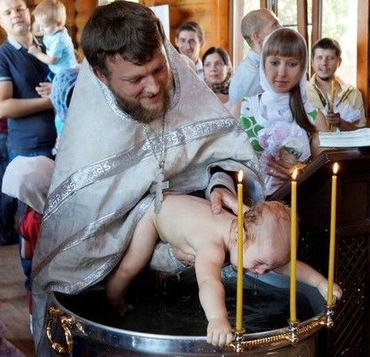
If you’ve been baptized as an INFANT or by any mode other than IMMERSION, then you’ve been baptized AMISS.
Infant baptism is contrary to the doctrine of Christ. “Suffer the little children to come unto me, and forbid them not: for of such is the kingdom of God. Verily I say unto you, Whosoever shall not receive the kingdom of God as a little child, he shall not enter therein.” (Mark 10:14,15). To Cleanse from Original Sin is not a doctrine taught in the New Testament. The doctrine of original sin and its cleansing through infant baptism is not supported by the Bible, which teaches that baptism is for the remission of personal sins (Acts 2:38).
Baptism is a burial (immersion in water) for those that believe. “Buried with him in baptism, wherein also ye are risen with him through the faith of the operation of God, who hath raised him from the dead.” (Col 2:12). Getting baptized without personal faith and understanding, possibly under coercion or pressure, is not scriptural. Baptism requires belief.
“And as they went on their way, they came unto a certain water: and the eunuch said, See, here is water; what doth hinder me to be baptized? And Philip said, If thou believest with all thine heart, thou mayest. And he answered and said, I believe that Jesus Christ is the Son of God.” (Acts 8:36,37)
If you’ve been baptized after you think you were SAVED, then you’ve been baptized AMISS.
The bible teaches that a person is baptized to be saved. “The like figure whereunto even baptism doth also now save us (not the putting away of the filth of the flesh, but the answer of a good conscience toward God,) by the resurrection of Jesus Christ:” (1Peter 3:21).
Saul of Tarsus (later to become Paul the Apostle), was baptized to wash away his sins. How can one be saved then have their sins washed away? “And now why tarriest thou? arise, and be baptized, and wash away thy sins, calling on the name of the Lord.” (Acts 22:16)
The idea that baptism is merely a symbolic public declaration of faith without any salvific purpose contradicts the biblical teaching that it is essential for the forgiveness of sins (Acts 2:38).
Viewing baptism as merely a religious tradition or ritual without understanding its significance in salvation contradicts the New Testament teaching (Romans 6:3-4).
If you’ve been baptized for SOCIAL acceptance, then you’ve been baptized AMISS.
There are some who are baptized for social acceptance among their Family or friends, or to fit in. Some have been baptized to make their parents happy. Some are baptized so they can make a future spouse happy. If we’re baptized to please a person and not for the remission of sins, then we’ve been baptized amiss. It’s a very nervous thing for parents who desire that their children obey the gospel, but they want it to be on the child’s own volition and not just to please their parents.
Jesus taught about counting the cost of discipleship (Luke 14:28-33). Baptism should not be entered into lightly or without understanding its lifelong commitment. The concept of being baptized because one has already been saved through a prior “decision” for Christ overlooks the New Testament’s connection of baptism with the forgiveness of sins and new birth (Acts 22:16; John 3:5).
I know of several young people who get baptized because their older peers had obeyed the gospel, rather than out of personal conviction and obedience to Christ. because they didn’t want to feel left out.
“He that believeth and is baptized shall be saved; but he that believeth not shall be damned.”
(Mark 16:16)
There are other reasons people give for baptism. The practice of baptism for the dead, as practiced in some religious groups, is not supported by New Testament teaching and is mentioned only ambiguously in 1 Corinthians 15:29 without endorsement.
The idea that baptism is an emergency ritual to be performed in dire circumstances, without the individual’s faith and understanding, does not align with the New Testament teaching.
Any reason for baptism that does not align with the biblical teaching that it is for the remission of sins, to receive the gift of the Holy Spirit, and to be added to the body of Christ (Acts 2:38; 1Corinthians 12:13) is not according to the Bible.
It is crucial to emphasize that baptism, according to the New Testament, is an act of faith and obedience, necessary for the forgiveness of sins, the gift of the Holy Spirit, and entrance into the body of Christ (Acts 2:38; Romans 6:3-4; Galatians 3:27).







 Borger church of Christ @ Franklin & Juniper