
“And now why tarriest thou? Arise, and be baptized, and wash away thy sins, calling on the name of the Lord.”
This verse records Ananias’ instructions to Saul (later Paul) regarding his conversion. To understand what it means to “call on the name of the Lord,” we must look at how the Bible defines and uses this phrase.
1. Calling on the Name of the Lord Involves Obedience
Acts 22:16 ties “calling on the name of the Lord” directly to baptism, which is the moment when Saul’s sins were washed away. This aligns with Jesus’ own words in Mark 16:16:
“He that believeth and is baptized shall be saved; but he that believeth not shall be damned.”
Calling on the name of the Lord, then, is not merely a verbal plea but involves obedient action. This is further clarified by Romans 10:13-14:
“For whosoever shall call upon the name of the Lord shall be saved. How then shall they call on him in whom they have not believed? and how shall they believe in him of whom they have not heard? and how shall they hear without a preacher?”
Paul, writing later, shows that calling on the Lord’s name requires hearing the gospel, believing, and responding in obedience.
2. Calling on the Name of the Lord Is Not Just Prayer
Some assume that calling on the Lord’s name is merely saying a prayer for salvation, but Scripture does not support this idea. Consider Jesus’ words in Matthew 7:21:
“Not every one that saith unto me, Lord, Lord, shall enter into the kingdom of heaven; but he that doeth the will of my Father which is in heaven.”
Merely addressing Jesus as Lord does not save—doing His will does. This is consistent with Acts 22:16, where Paul had already been praying (Acts 9:11), yet he still needed to be baptized to wash away his sins.
3. Biblical Examples of Calling on the Name of the Lord
The phrase “call on the name of the Lord” is used throughout Scripture in connection with worship and obedience.
• Genesis 4:26 – “Then began men to call upon the name of the LORD.” This refers to worship and devotion to God.
• Joel 2:32 (quoted in Acts 2:21) – “Whosoever shall call on the name of the Lord shall be delivered.” This was fulfilled in Acts 2, where Peter preached that repentance and baptism in Jesus’ name were necessary for salvation (Acts 2:38).
In Acts 2, the people called upon the Lord by obeying Peter’s command to repent and be baptized. This directly parallels Acts 22:16, where Paul was instructed to do the same.
So what now?
To “call on the name of the Lord” is to appeal to Him for salvation by faithful obedience to His commands. Acts 22:16 shows that Saul (Paul) did this when he was baptized, at which point his sins were washed away. This is consistent with how the phrase is used throughout the Bible—faith in action, not merely words.
The story of the man of God in 1Kings 13:1-26 is one of the Bible’s most sobering narratives about obedience. This account teaches timeless lessons about the seriousness of following God’s Word without compromise. Let us examine these lessons in light of Scripture.
God gave the man of God specific instructions (1Kings 13:9): not to eat, drink, or return by the same way. These commands were obvious, straightforward, and easy to understand. God’s Word consistently provides clear guidance for those who seek it. “For this commandment which I command thee this day, it is not hidden from thee, neither is it far off. It is not in heaven, that thou shouldest say, Who shall go up for us to heaven, and bring it unto us, that we may hear it, and do it? Neither is it beyond the sea, that thou shouldest say, Who shall go over the sea for us, and bring it unto us, that we may hear it, and do it? But the word is very nigh unto thee, in thy mouth, and in thy heart, that thou mayest do it.” (Deut 30:11-14).
In the example of the flood story, Noah’s adherence to God’s precise instructions for building the ark (Genesis 6:14-22) saved his family from the flood. Ignoring or altering God’s commands would have led to disaster.
The man of God told Jeroboam that there would be no variation to God’s command (v8-10). “And the man of God said unto the king, If thou wilt give me half thine house, I will not go in with thee, neither will I eat bread nor drink water in this place.” Galatians 1:8-9 warns that even an angel preaching a different gospel is accursed. Nadab and Abihu’s offering of “strange fire” resulted in their immediate death (Leviticus 10:1-2). Their unauthorized act highlights the danger of altering God’s instructions.
No matter how sincere or convincing, error cannot produce righteousness. The old prophet’s lie (v18-19) did not excuse the man of God’s disobedience. King Saul’s partial obedience when sparing Amalekite spoils led to his rejection by God (1Samuel 15:22-23). Obedience requires following God’s commands completely.
The man of God believed the old prophet’s lie, and it led to his death. Sincerity alone cannot excuse disobedience to God’s truth. 2Thessalonians 2:10-12 teaches that those who reject the truth and believe lies will be condemned. “In flaming fire taking vengeance on them that know not God, and that obey not the gospel of our Lord Jesus Christ:”
The man of God’s failure to obey all of God’s instructions cost him his life. Every command of God is significant and deserves our attention. Luke 16:10 emphasizes that faithfulness in small matters reflects overall faithfulness. Uzzah’s touching the Ark of the Covenant (2 Samuel 6:6-7) highlights that even seemingly minor acts of disobedience are significant to God.
The account of the man of God from Judah serves as a solemn reminder: God’s way is clear, unchanging, and demands our full obedience. We must respect His commands, rejecting lies and half-truths. By adhering to His Word, we honor Him and secure our eternal reward. Believing lies or compromising His commands leads to spiritual ruin. Let us resolve to honor God by faithfully following His Word in every aspect of our lives.
In a world filled with a myriad of voices, opinions, and influences, it can be challenging to discern the truth. As Christians, we are to hear and follow the voice of Jesus above all others. The Bible provides the clear words of Jesus and how we should prioritize hearing Him over other voices that compete for our attention. Let’s explore why it’s essential to hear Jesus and how we can overcome the distractions that often lead us away from His teachings.
Listening to Self. In our modern culture, self-reliance and personal wisdom are often exalted. We’re told to “trust our gut” and “follow our hearts.” However, the Bible warns against leaning on our own understanding. Proverbs 3:5-6 reminds us, “Trust in the LORD with all thine heart; and lean not unto thine own understanding. In all thy ways acknowledge him, and he shall direct thy paths.”
Imagine a ship’s captain in the middle of the ocean who ignores his navigational charts and instruments, relying solely on his instincts. Despite his confidence, he quickly becomes lost, unable to find his way through the vast and treacherous waters. In the same way, when we rely solely on our own understanding and desires, we can easily lose our way spiritually.
Our hearts can be deceptive, leading us into paths that seem right but ultimately end in destruction. “The heart is deceitful above all things, and desperately wicked: who can know it” (Jeremiah 17:9)? Instead of placing our trust in ourselves, we are urged to submit to God and trust in His wisdom. When we choose to hear Jesus, we are placing our confidence in the One who knows all, sees all, and loves us all. By aligning our thoughts with His teachings, we find guidance and direction that are far beyond our limited human understanding.
Listening to Relationships Like Family & Friends. Family and friends often have a significant influence on our lives. While these relationships are important, they must not take precedence over our relationship with Christ. In Matthew 10:37, Jesus makes a bold statement: “Anyone who loves their father or mother more than me is not worthy of me; anyone who loves their son or daughter more than me is not worthy of me.”
This scripture isn’t a call to neglect our loved ones but rather a reminder to keep Jesus as our primary focus. When we elevate the opinions, traditions, and desires of others above the teachings of Christ, we risk compromising our faith. When we prioritize the voices of our loved ones over God’s Word, we become confused and unfocused in our walk with Christ
Our love for Jesus should surpass all other affections, ensuring that His voice is the loudest in our lives. By hearing Jesus first, we can love and serve our families better, rooted in the truth of the Gospel.
Listening to Authority Figures Without Verification. We live in a world where authority figures—be they religious leaders, politicians, or cultural icons—can significantly shape our beliefs. However, it’s crucial to remember that no human authority is infallible. Acts 17:11 praises the Bereans for their diligence in verifying Paul’s teachings: “These were more noble than those in Thessalonica, in that they received the word with all readiness of mind, and searched the scriptures daily, whether those things were so.”
This passage encourages us to be discerning listeners. We should respect authority but also verify their words against the ultimate authority—the Word of God. Hearing Jesus requires us to examine everything through the lens of Scripture, ensuring that we remain grounded in truth (see 1John 4:1; 1Thess 5:21).
Listening to Evil Spirits, Tarot Cards, Mediums, Psychics, and Astrology. In a quest for guidance and answers, some people turn to supernatural sources like tarot cards, mediums, psychics, and astrology. However, the Bible explicitly warns against such practices. Isaiah 8:19-20 says, “And when they shall say unto you, Seek unto them that have familiar spirits, and unto wizards that peep, and that mutter: should not a people seek unto their God? for the living to the dead? To the law and to the testimony: if they speak not according to this word, it is because there is no light in them.”
Imagine a traveler, seeking guidance, consults a broken compass, believing it will lead them to their destination. Instead, it leads them further into danger. When we turn to tarot cards, psychics, or astrology, we are like that traveler, misguided and led astray. These sources cannot truly communicate with us or guide us because they are not from God.
These practices are dangerous because they open the door to deception and spiritual harm. Instead of seeking answers from these sources, we are called to seek God directly. Jesus is the ultimate source of truth, and when we hear Him, we receive the guidance and wisdom that leads to life.
Hearing Jesus. Amidst all these competing voices, God’s command is clear: we must hear Jesus. In Matthew 17:5, during the Transfiguration, God the Father declares, “This is my beloved Son, in whom I am well pleased; hear ye him!” This directive emphasizes the authority and importance of Jesus’ teachings. When we listen to Jesus, we are hearing the voice of God Himself.
Jesus affirms this in John 14:6, where He states, “I am the way and the truth and the life. No one comes to the Father except through me.” By hearing and following Jesus, we find the true path to salvation and eternal life. His voice leads us to the Father, guiding us through the complexities of life with divine wisdom and love. We hear Jesus through the words that have been recorded for us in the New Testament. “He that rejecteth me, and receiveth not my words, hath one that judgeth him: the word that I have spoken, the same shall judge him in the last day” (John 12:48; cf. John 20:30-31).
Hearing Jesus above all others is not just a command; it is a necessity for every believer. By prioritizing His voice, we can navigate the challenges of life with clarity, purpose, and peace. Let us commit to tuning our ears to His teachings, allowing His words to shape our hearts and guide our steps.
“If any man think himself to be a prophet, or spiritual, let him acknowledge that the things that I write unto you are the commandments of the Lord”
“And whatsoever ye do in word or deed, do all in the name of the Lord Jesus, giving thanks to God and the Father by him.” (Col 3:17)
This verse encapsulates the essence of living a life fully devoted to Christ. It means more than just offering lip service or superficial honor to God; it demands genuine obedience to His commands in every aspect of our lives. To fully understand this, let us explore scriptural examples where individuals desired to honor God but failed to keep His commandments, thus illustrating the true meaning of doing all in the name of the Lord.
Nadab & Abihu:
A Cautionary Tale. Leviticus 10:1-2 provides a stark example of what happens when individuals seek to honor God without adhering to His explicit instructions. Nadab and Abihu, the sons of Aaron, offered “strange fire before the Lord, which he commanded them not.” Despite their likely intentions to honor God, their offering was contrary to His command, and as a result, fire came out from the Lord and consumed them. This incident underscores the critical importance of obedience. Honoring God is not just about good intentions; it requires strict adherence to His directives.
Saul’s Amalekite Error.
Another poignant example is King Saul’s disobedience in 1 Samuel 15. God commanded Saul to utterly destroy the Amalekites and all their possessions. Instead, Saul spared King Agag and kept the best of the livestock, justifying his actions by claiming that the animals were preserved for sacrifice to the Lord (1Samuel 15:15). However, Saul’s partial obedience was deemed rebellion. Samuel rebuked him, stating, “Behold, to obey is better than sacrifice, and to hearken than the fat of rams” (1Samuel 15:22). Saul’s failure highlights that honoring God involves complete obedience to His commands, not selective adherence.
Well Meaning Uzzah.
In 2 Samuel 6, we read about Uzzah, who, in a well-meaning effort to honor God, reached out to steady the Ark of the Covenant when the oxen stumbled. Despite his intentions, he violated God’s command that no one should touch the Ark (Numbers 4:15). As a result, Uzzah was struck dead by God (2Samuel 6:7). This account demonstrates that good intentions are not enough when they lead to disobedience. Honoring God requires respecting and following His specific instructions even under extreme circumstance.
The Errors of the Pharisees.
The Pharisees in the New Testament provide a further illustration of misplaced honor. They meticulously followed traditions and outward rituals, believing they were honoring God. However, Jesus criticized them for neglecting the more important matters of the law—justice, mercy, and faithfulness (Matthew 23:23). Their focus on external observance rather than heartfelt obedience and adherence to God’s true commands showed that they were not truly honoring God in their actions.
Jesus Himself addressed the importance of true worship in Matthew 15:8-9, quoting Isaiah: “This people draweth nigh unto me with their mouth, and honoureth me with their lips; but their heart is far from me. But in vain they do worship me, teaching for doctrines the commandments of men.” Here, Jesus condemns those who appear to honor God outwardly but fail to adhere to His commands, substituting human traditions for divine instructions. True worship, according to Jesus, is rooted in obedience to God’s word.
Applying Colossians 3:17 Today.
For believers today, Colossians 3:17 is a call to full obedience. It challenges us to ensure that every word and deed aligns with God’s will as revealed in Scripture. It is not enough to perform acts of worship or service with good intentions if those acts are not grounded in obedience to God’s commands.
For instance, when it comes to worship practices, evangelism, or daily living, our actions must be rooted in biblical directives. Doing everything in the name of the Lord means we act under His authority and guidance, ensuring our lives reflect His teachings and commands.
Colossians 3:17 reminds us that honoring God involves more than mere intention or lip service. It requires a heart and life fully committed to obeying His will. True honor to God is found in faithful obedience to His word. Let us strive to do all in the name of the Lord, giving thanks to God and living in full submission to His divine will.
Agape,
Spencer
This is part 4 of a series of lessons on the Duties of Saints, pt1
“Ye ask, and receive not, because ye ask amiss, that ye may consume it upon your lusts.” (James 4:3)
If one can pray AMISS, then it stands to reason that we can do other commands of God in a manner that He won’t accept. There are examples of people…
Preaching a different Gospel: “But though we, or an angel from heaven, preach any other gospel unto you than that which we have preached unto you, let him be accursed.” (Gal 1:8)
Following a different Jesus: “For if he that cometh preacheth another Jesus, whom we have not preached, or if ye receive another spirit, which ye have not received, or another gospel, which ye have not accepted, ye might well bear with him.” (2Cor 11:4)
Obeying the Law of Moses: “And certain men which came down from Judaea taught the brethren, and said, Except ye be circumcised after the manner of Moses, ye cannot be saved.” (Acts 15:1)
“Stand fast therefore in the liberty wherewith Christ hath made us free, and be not entangled again with the yoke of bondage. Behold, I Paul say unto you, that if ye be circumcised, Christ shall profit you nothing. For I testify again to every man that is circumcised, that he is a debtor to do the whole law. Christ is become of no effect unto you, whosoever of you are justified by the law; ye are fallen from grace.” (Gal 5:1-4)
Practicing vain worship: “Howbeit in vain do they worship me, teaching for doctrines the commandments of men.” (Mark 7:7)
From these few examples it’s clear that we can appear to be obeying God, but in reality, we’re disobedient. How can we know?
Can we be Baptized AMISS?
If you’ve been baptized to be ADDED to a denomination, then you’ve been baptized AMISS.
The Lord adds to the church, and never to a denomination. “Then they that gladly received his word were baptized: and the same day there were added unto them about three thousand souls.” (Acts 2:41).
Getting baptized solely as a requirement to join a specific denomination or church, rather than for the biblical purpose of remission of sins and entrance into the body of Christ (Galatians 3:27), misses the true purpose (cf. 1Cor 1:10-13).
Some might get baptized to gain favor in a political or social context, which is not a biblical reason. Some might seek baptism to gain prestige or authority within a religious community, which is not a biblical reason.
If you’ve been baptized as a MERITORIOUS work, then you’ve been baptized AMISS.
Some believe that baptism is a meritorious work that earns salvation, whereas the New Testament teaches that baptism is an act of faith and obedience (Ephesians 2:8-9; Colossians 2:12). It is not legalism to comply with the conditions of salvation given by God.
Any reason for baptism except to obey the gospel through faith in Jesus Christ for the remission of sins is no reason at all. It’s possible to outwardly comply with a command of God, but inwardly. “This people draweth nigh unto me with their mouth, and honoureth me with their lips; but their heart is far from me. But in vain they do worship me, teaching for doctrines the commandments of men.” (Matt 15:8,9)
Believing that baptism will bring material or physical blessings, such as health, wealth, or prosperity, is not a biblical reason for baptism. Repentance is a prerequisite for baptism (Acts 2:38).
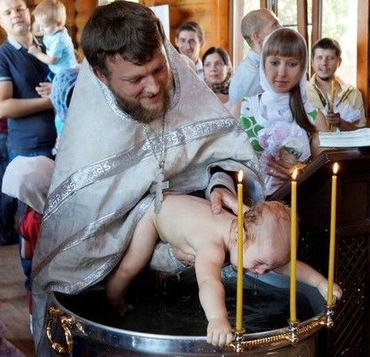
If you’ve been baptized as an INFANT or by any mode other than IMMERSION, then you’ve been baptized AMISS.
Infant baptism is contrary to the doctrine of Christ. “Suffer the little children to come unto me, and forbid them not: for of such is the kingdom of God. Verily I say unto you, Whosoever shall not receive the kingdom of God as a little child, he shall not enter therein.” (Mark 10:14,15). To Cleanse from Original Sin is not a doctrine taught in the New Testament. The doctrine of original sin and its cleansing through infant baptism is not supported by the Bible, which teaches that baptism is for the remission of personal sins (Acts 2:38).
Baptism is a burial (immersion in water) for those that believe. “Buried with him in baptism, wherein also ye are risen with him through the faith of the operation of God, who hath raised him from the dead.” (Col 2:12). Getting baptized without personal faith and understanding, possibly under coercion or pressure, is not scriptural. Baptism requires belief.
“And as they went on their way, they came unto a certain water: and the eunuch said, See, here is water; what doth hinder me to be baptized? And Philip said, If thou believest with all thine heart, thou mayest. And he answered and said, I believe that Jesus Christ is the Son of God.” (Acts 8:36,37)
If you’ve been baptized after you think you were SAVED, then you’ve been baptized AMISS.
The bible teaches that a person is baptized to be saved. “The like figure whereunto even baptism doth also now save us (not the putting away of the filth of the flesh, but the answer of a good conscience toward God,) by the resurrection of Jesus Christ:” (1Peter 3:21).
Saul of Tarsus (later to become Paul the Apostle), was baptized to wash away his sins. How can one be saved then have their sins washed away? “And now why tarriest thou? arise, and be baptized, and wash away thy sins, calling on the name of the Lord.” (Acts 22:16)
The idea that baptism is merely a symbolic public declaration of faith without any salvific purpose contradicts the biblical teaching that it is essential for the forgiveness of sins (Acts 2:38).
Viewing baptism as merely a religious tradition or ritual without understanding its significance in salvation contradicts the New Testament teaching (Romans 6:3-4).
If you’ve been baptized for SOCIAL acceptance, then you’ve been baptized AMISS.
There are some who are baptized for social acceptance among their Family or friends, or to fit in. Some have been baptized to make their parents happy. Some are baptized so they can make a future spouse happy. If we’re baptized to please a person and not for the remission of sins, then we’ve been baptized amiss. It’s a very nervous thing for parents who desire that their children obey the gospel, but they want it to be on the child’s own volition and not just to please their parents.
Jesus taught about counting the cost of discipleship (Luke 14:28-33). Baptism should not be entered into lightly or without understanding its lifelong commitment. The concept of being baptized because one has already been saved through a prior “decision” for Christ overlooks the New Testament’s connection of baptism with the forgiveness of sins and new birth (Acts 22:16; John 3:5).
I know of several young people who get baptized because their older peers had obeyed the gospel, rather than out of personal conviction and obedience to Christ. because they didn’t want to feel left out.
“He that believeth and is baptized shall be saved; but he that believeth not shall be damned.”
(Mark 16:16)
There are other reasons people give for baptism. The practice of baptism for the dead, as practiced in some religious groups, is not supported by New Testament teaching and is mentioned only ambiguously in 1 Corinthians 15:29 without endorsement.
The idea that baptism is an emergency ritual to be performed in dire circumstances, without the individual’s faith and understanding, does not align with the New Testament teaching.
Any reason for baptism that does not align with the biblical teaching that it is for the remission of sins, to receive the gift of the Holy Spirit, and to be added to the body of Christ (Acts 2:38; 1Corinthians 12:13) is not according to the Bible.
It is crucial to emphasize that baptism, according to the New Testament, is an act of faith and obedience, necessary for the forgiveness of sins, the gift of the Holy Spirit, and entrance into the body of Christ (Acts 2:38; Romans 6:3-4; Galatians 3:27).
Brothers and sisters, let me take you on a journey through the ages, a journey marked by error! We’re going to examine some of the grandest missteps in the Good Book, and I pray you’ll learn and love the Lord all the more by the time we’re done. Now, let’s start in the Garden of Eden.
GARDEN: And when the woman saw that the tree was good for food… Genesis 3:6 Eve, sweet Eve, saw that forbidden fruit and thought it looked mighty tasty. You know what they say, “Forbidden fruit is the sweetest.” But oh, how wrong she was! That bite led to the fall of man. When you think you know better than God, you’re just about to trip over your own pride. Brothers and sisters, remember this: the snake in the grass often has the best sales pitch, but his product never delivers what it promises!
CAIN: And Cain was very wroth, and his countenance fell. Genesis 4:5 Then we have Cain. Cain got madder than a hornet because God liked Abel’s offering better. His face was longer than a wet week! Instead of asking, “Lord, how can I do better?” he chose murder. Remember, when jealousy gets your goat, it’s just a short walk to the sin pasture. God’s ways aren’t always our ways, but they are always right.
PHARAOH: Who is the LORD, that I should obey his voice to let Israel go? I know not the LORD, neither will I let Israel go. Exodus 5:2 Pharaoh—now there was a man who thought he was all that and a bag of chips. He thought he could stand toe-to-toe with the Almighty. “Who is the Lord?” he scoffed. Let me tell you, when you hear someone ask that, you better stand. Pharaoh found out the hard way with ten plagues and a parted sea. Friends, when God says, “Let my people go,” you better step aside!
The more we know of God, the more we will obey Him. Conversely, the less we know of God, the less we will obey Him. Jesus himself pointed out the mystery of man’s error: “Ye do err, not knowing the scriptures, nor the power of God” (Matthew 22:29). This is a profound truth, my friends.
Sadducees and the Resurrection Errors The Sadducees were trying to stump Jesus with riddles. They concocted a story about a woman who married seven brothers, each one dying in turn. “Whose wife will she be in the resurrection?” they asked, thinking they’d outsmarted Him. Jesus set them straight, reminding them that God’s word and His power transcends their earthly imaginations. Folks are still tying themselves in knots over theological riddles instead of trusting God’s word.
READING REQUIREMENTS in the OT law In ancient Israel, God commanded His people to write His laws on stones and read them aloud. Deuteronomy 6:6-9 and 31:10-13 remind us that these words should be in our hearts, taught diligently to our children, spoken of at home and on the road. Yet Israel neglected this command.
We are also to read the word in the New Covenant, (John 20:30-31; Eph 3:3-4; 2Tim 3:15-17).
OT EXAMPLES of ERROR. In the periods of Judges and Kings, they fell into cycles of forgetting, repenting, and deliverance. Not once do we read of the Israelites gathering to hear the law read, except under Jehoshaphat (2 Chronicles 17:7-9). When the word is neglected, the people perish!
David’s mishandling of the Ark of the Covenant, resulting in Uzzah’s death (1 Chronicles 13:5, 15:11-15), serves as a stern reminder of the importance of knowing and obeying God’s instructions. The failure to follow God’s law led to Israel’s captivity (Isaiah 5:13, Hosea 4:6).
REJECTING JESUS, Then and Now Even in Jesus’ time, ignorance led to His rejection. The rulers didn’t recognize Him as the Lord of glory (1 Corinthians 2:6-8). Today, many still cling to errors—whether it’s misunderstanding salvation (Acts 15), mixing law and grace (Colossians 2:10), or holding onto traditions that contradict Scripture. From infant baptism to unnecessary church hierarchies, people err because they do not know the Scriptures nor the power of God.
So, do you value your soul? Jesus asked, “For what is a man profited, if he shall gain the whole world, and lose his own soul?” (Matthew 16:26). If we value our souls, we must study God’s word reverently, with fear, love, and care, and apply it daily.
Let’s avoid the errors of the past by immersing ourselves in God’s holy word. Read it, teach it, live it! And remember, when in doubt, God’s way is always the best way! Amen!
Agape, Spencer
you’re invited to one of our services at the Franklin and Juniper st church of Christ.
What’s a DEVO book? DEVO is short for “DEVOTIONAL.”
A devotional book is a text, often religious in nature, designed to inspire and guide individuals in their spiritual practices. These books typically contain daily readings, reflections, prayers, or meditations aimed at fostering a deeper connection with one’s faith or spiritual beliefs. They can cover a wide range of topics, from personal growth and introspection to theological teachings and biblical passages.
While devotional books can be valuable tools for spiritual growth and contemplation, they can also potentially lead individuals into a false sense of godliness or spirituality for several reasons:
One. Verse. Every. Day.
What’s wrong with reading a DEVO?
DEVO’s…
They DON’T TEACH the Whole Bible, and often Don’t teach it accurately. It’s really just a commentary of man on one or a few verses.
Surface-Level Engagement: Some devotional books offer quick, easily digestible readings that may encourage a superficial understanding of faith or spirituality. Readers may mistake this cursory engagement for genuine spiritual depth.
Acts 20:27 KJV. For I have not shunned to declare unto you all the counsel of God.
They’re usually full of EMOTIONALISM without the whole truth. They often have highly charged stories that can make one believe something that’s not true.
Emotional Appeal: Devotional books often appeal to readers’ emotions, offering comforting words or inspiring stories. While emotional resonance can be a powerful aspect of spiritual experience, it can also lead individuals to prioritize feelings over critical thinking or authentic spiritual growth.
Romans 10:2 KJV. For I bear them record that they have a zeal of God, but not according to knowledge.
They VIOLATE basic Bible authority by not handling the word correctly. They often ignore who’s speaking, who’s being spoken to, and ignore the covenant that is in place.
2 Timothy 2:15 KJV. Study to shew thyself approved unto God, a workman that needeth not to be ashamed, rightly dividing the word of truth.
Lack of Covenant context: Many devotional books are written from a particular Old Covenant, potentially limiting readers’ exposure to the New Testament covenant. This lack of diversity can reinforce existing biases and prevent individuals from engaging with more accurate and applicable viewpoints.
Hebrews 8:13 In that he saith, A new covenant, he hath made the first old. Now that which decayeth and waxeth old is ready to vanish away.
They’re usually OUT OF CONTEXT Joel Osteen style of reading the Bible. Not everything in the Bible is written about you. Everything in the Bible is for us, but not necessarily about us.
For example, do we need to do animal sacrifices? Nope! Look at this verse. Are we to continue to make animal sacrifices now that Christ has sacricfied Himself?
Psalm 66:15 KJV. I will offer unto thee burnt sacrifices of fatlings, with the incense of rams; I will offer bullocks with goats. Selah.
Hebrews 10:11 And every priest standeth daily ministering and offering oftentimes the same sacrifices, which can never take away sins:
There are 31,102 verses in the Bible. At that pace of One. Verse. Every. Day. It would take 85 years to read through the Bible.
I don’t have that kind of time left.
Agape,
Spencer
Here is a link to printable bookmarks to help you read through the bible in an organized fashion.
The way most use the word “FELLOWSHIP” is in connection to a common meal. While having something in common is the meaning of fellowship, BIBLICAL FELLOWSHIP is far more. To reduce it to a common meal is to miss it altogether.
What does the bible say about FELLOWSHIP? Here are all the words for fellowship, beginning with the English word, then a breakdown of its various Greek forms.
FELLOWSHIP in English.
Le 6:2 If a soul sin, and commit a trespass against the LORD, and lie unto his neighbour in that which was delivered him to keep, or in fellowship, or in a thing taken away by violence, or hath deceived his neighbour;
Ps 94:20 Shall the throne of iniquity have fellowship with thee, which frameth mischief by a law?
Ac 2:42 And they continued stedfastly in the apostles’ doctrine and fellowship, and in breaking of bread, and in prayers.
1Co 1:9 God is faithful, by whom ye were called unto the fellowship of his Son Jesus Christ our Lord.
1Co 10:20 But I say, that the things which the Gentiles sacrifice, they sacrifice to devils, and not to God: and I would not that ye should have fellowship with devils.
2Co 6:14 Be ye not unequally yoked together with unbelievers: for what fellowship hath righteousness with unrighteousness? and what communion (same word) hath light with darkness?
2Co 8:4 Praying us with much intreaty that we would receive the gift, and take upon us the fellowship of the ministering to the saints.
Ga 2:9 And when James, Cephas, and John, who seemed to be pillars, perceived the grace that was given unto me, they gave to me and Barnabas the right hands of fellowship; that we should go unto the heathen, and they unto the circumcision.
Eph 3:9 And to make all men see what is the fellowship of the mystery, which from the beginning of the world hath been hid in God, who created all things by Jesus Christ:
Eph 5:11 And have no fellowship with the unfruitful works of darkness, but rather reprove them.
Php 1:5 For your fellowship in the gospel from the first day until now;
Php 2:1 If there be therefore any consolation in Christ, if any comfort of love, if any fellowship of the Spirit, if any bowels and mercies,
Php 3:10 That I may know him, and the power of his resurrection, and the fellowship of his sufferings, being made conformable unto his death;
1Jo 1:3 That which we have seen and heard declare we unto you, that ye also may have fellowship with us: and truly our fellowship is with the Father, and with his Son Jesus Christ.
1Jo 1:6 If we say that we have fellowship with him, and walk in darkness, we lie, and do not the truth:
1Jo 1:7 But if we walk in the light, as he is in the light, we have fellowship one with another, and the blood of Jesus Christ his Son cleanseth us from all sin.
KOINONIA. using a different English word than above.
Rom 15:26 For it hath pleased them of Macedonia and Achaia to make a certain contribution for the poor saints which are at Jerusalem.
1Cor 10:16 The cup of blessing which we bless, is it not the communion of the blood of Christ? The bread which we break, is it not the communion of the body of Christ?
2Co 9:13 Whiles by the experiment of this ministration they glorify God for your professed subjection unto the gospel of Christ, and for your liberal distribution unto them, and unto all men;
2Co 13:14 The grace of the Lord Jesus Christ, and the love of God, and the communion of the Holy Ghost, be with you all. Amen.
Phm 1:6 That the communication of thy faith may become effectual by the acknowledging of every good thing which is in you in Christ Jesus.
Heb 13:16 But to do good and to communicate forget not: for with such sacrifices God is well pleased.
KOINONOS, koy-no-nos’
Mt 23:30 And say, If we had been in the days of our fathers, we would not have been partakers with them in the blood of the prophets.
Lu 5:10 And so was also James, and John, the sons of Zebedee, which were partners with Simon.
1Co 10:18 Behold Israel after the flesh: are not they which eat of the sacrifices partakers of the altar?
1Co 10:20 But I say, that the things which the Gentiles sacrifice, they sacrifice to devils, and not to God: and I would not that ye should have fellowship with devils.
2Co 1:7 And our hope of you is stedfast, knowing, that as ye are partakers of the sufferings, so shall ye be also of the consolation.
2Co 8:23 Whether any do enquire of Titus, he is my partner and fellowhelper concerning you:
Phm 1:17 If thou count me therefore a partner, receive him as myself.
Heb 10:33 Partly, whilst ye were made a gazingstock both by reproaches and afflictions; and partly, whilst ye became companions of them that were so used.
1Pe 5:1 ¶ The elders which are among you I exhort, who am also an elder, and a witness of the sufferings of Christ, and also a partaker of the glory that shall be revealed:
2Pe 1:4 Whereby are given unto us exceeding great and precious promises: that by these ye might be partakers of the divine nature, having escaped the corruption that is in the world through lust.
KOINOS, koy-nos’ COMMON / UNCLEAN.
Jude 1:3 Beloved, when I gave all diligence to write unto you of the common salvation,
Titus 1:4 To Titus, mine own son after the common faith: Grace, mercy, and peace, from God the Father and the Lord Jesus Christ our Saviour.
There are other verses using this root word, all mean common or unclean.
Mark 7:2; Acts 2:42; 4:32; 10:14,28; 11:8; Rom 14:14; Heb 10:29;
A clear picture emerges about SPIRITUAL FELLOWSHIP.
And they continued stedfastly in the apostles’ doctrine and fellowship, and in breaking of bread, and in prayers.
fellowship of his Son Jesus Christ our Lord.
partakers of the sufferings,
the right hands of fellowship;
the fellowship of the mystery,
your fellowship in the gospel
any fellowship of the Spirit
the fellowship of his sufferings,
partaker of the glory that shall be revealed
partakers of the divine nature,
common salvation,
common faith:
contribution for the poor saints
the fellowship of the ministering to the saints.
liberal distribution unto them,
the communication of thy faith
do good and to communicate
communion of the blood of Christ?
communion of the body of Christ?
the communion of the Holy Ghost,
But if we walk in the light, as he is in the light, we have fellowship one with another
that ye also may have fellowship with us: and truly our fellowship is with the Father, and with his Son Jesus Christ.
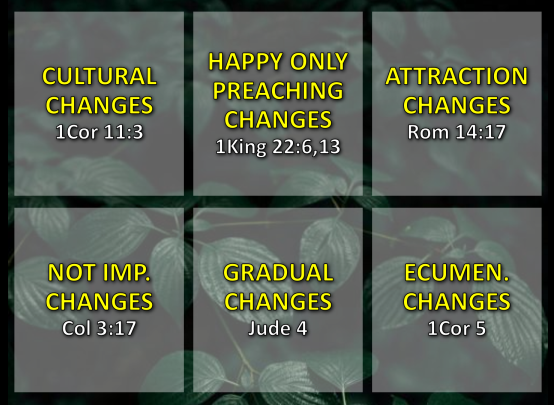
The denominational world is trying to CHANGE the church, which means they’re trying to CHANGE the doctrine of Christ.
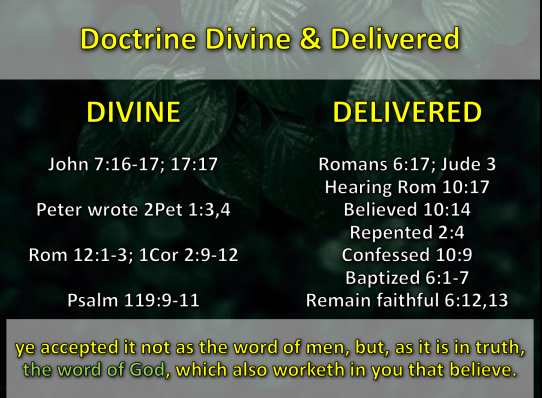
DOCTRINE DEFINED. Doctrine is Teaching.
DOCTRINE DIVINE & DOCTRINE DELIVERED.
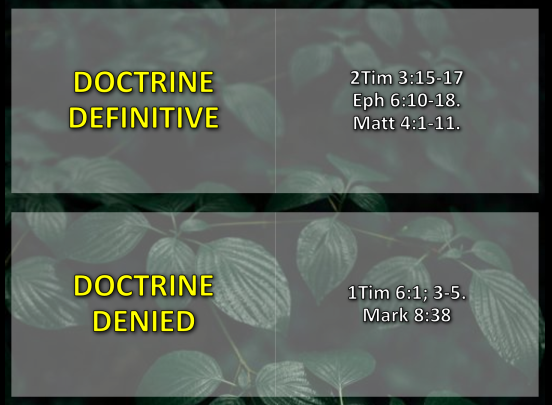
DOCTRINE that is DIFINITIVE, and DOCTRINE that is DENIED.
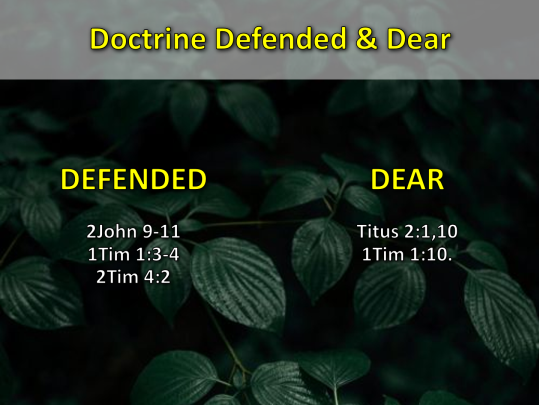
DOCTRINE to be DEFENDED, and a DOCTRINE so DEAR.
Why so urgent about the Doctrine of Christ? Because heaven is at stake. Fellowship with God and His Son Christ Jesus demand it.
Agape,
Spencer
Spencer is an evangelist for the church of Christ at Franklin & Juniper st. in Borger Texas. You’re invited to visit one of our services to learn more about the doctrine of Christ.