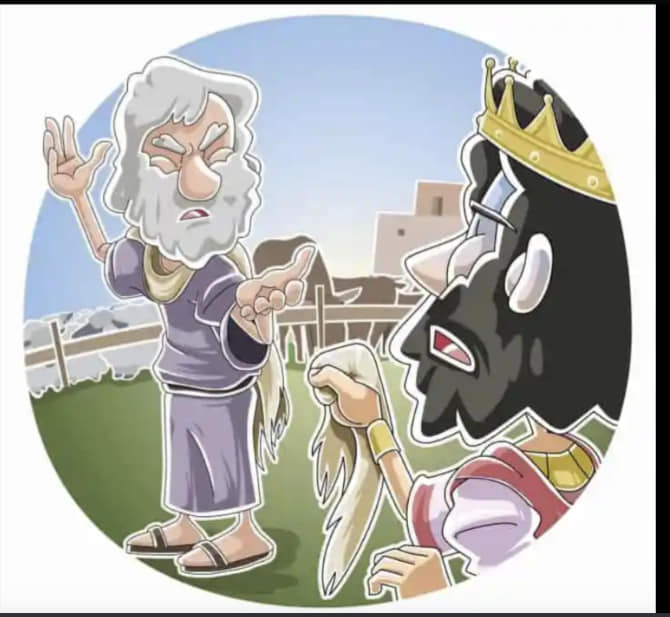
Learning from King SAUL’s Mistakes

But now thy kingdom shall not continue: the LORD hath sought him a man after his own heart, and the LORD hath commanded him to be captain over his people, because thou hast not kept that which the LORD commanded thee.”  (1Sam 13:14)

After King Saul’s first mistake, the tearing of the kingdom away from him had begun.

We need to learn the lessons from Saul’s mistakes so that we will avoid having the kingdom of Christ torn from us.

And hath made us kings and priests unto God and his Father; to him be glory and dominion for ever and ever. Amen

(Rev 1:6; cf. 1Pet 2:9).

While Saul started out strong, the 4 mistakes in this article describe why the kingdom was torn from him so dramatically. Saul made other errors after these, but these are the reasons given by Samuel for the kingdom being given to David.

SACRIFICING without AUTHORITY: “And he tarried seven days, according to the set time that Samuel had appointed: but Samuel came not to Gilgal; and the people were scattered from him. And Saul said, Bring hither a burnt offering to me, and peace offerings. And he offered the burnt offering. And it came to pass, that as soon as he had made an end of offering the burnt offering, behold, Samuel came; and Saul went out to meet him, that he might salute him” (1Sam 13:8-10).

One of the key mistakes of King Saul, as seen in 1 Samuel 13, was his impatience and failure to wait for the prophet Samuel before offering a burnt sacrifice. Saul allowed fear and pressure from his army to push him into taking matters into his own hands, disregarding the authority of God’s chosen servant. This act revealed Saul’s lack of trust in God’s timing and his failure to follow divine instructions.

ARROGANCE and PRESUMPTION: “And Samuel came to Saul: and Saul said unto him, Blessed be thou of the LORD: I have performed the commandment of the LORD. And Samuel said, What meaneth then this bleating of the sheep in mine ears, and the lowing of the oxen which I hear? And Saul said, They have brought them from the Amalekites: for the people spared the best of the sheep and of the oxen, to sacrifice unto the LORD thy God; and the rest we have utterly destroyed” (1Sam 15:13-15).

In 1 Samuel 15, we witness another critical mistake of Saul: his arrogance and presumption in disobeying God’s explicit command. God commanded Saul to completely destroy the Amalekites and everything that belonged to them. However, Saul decided to spare King Agag and some of the best livestock. Saul’s presumptuous act displayed his prideful attitude, thinking that his own judgment and desires were superior to God’s commandments.

UNWILLINGNESS to Accept Responsibility: “And Samuel said, What hast thou done? And Saul said, Because I saw that the people were scattered from me, and that thou camest not within the days appointed, and that the Philistines gathered themselves together at Michmash; Therefore said I, The Philistines will come down now upon me to Gilgal, and I have not made supplication unto the LORD: I forced myself therefore, and offered a burnt offering. And Samuel said to Saul, Thou hast done foolishly: thou hast not kept the commandment of the LORD thy God, which he commanded thee: for now would the LORD have established thy kingdom upon Israel for ever” (1Sam 13:11-13).

Saul’s inability to take responsibility for his actions was evident in his response when confronted by Samuel. Instead of acknowledging his mistake and seeking repentance, Saul shifted blame onto others, making excuses for his disobedience. He attempted to justify his actions rather than humbly admitting his wrongdoing. This lack of accountability demonstrated a failure in Saul’s character as a leader.

LACK OF OBEDIENCE and Submission: “And Saul said unto Samuel, Yea, I have obeyed the voice of the LORD, and have gone the way which the LORD sent me, and have brought Agag the king of Amalek, and have utterly destroyed the Amalekites. But the people took of the spoil, sheep and oxen, the chief of the things which should have been utterly destroyed, to sacrifice unto the LORD thy God in Gilgal. And Samuel said, Hath the LORD as great delight in burnt offerings and sacrifices, as in obeying the voice of the LORD? Behold, to obey is better than sacrifice, and to hearken than the fat of rams. For rebellion is as the sin of witchcraft, and stubbornness is as iniquity and idolatry. Because thou hast rejected the word of the LORD, he hath also rejected thee from being king” (1Sam 15:20-23).

Overall, Saul’s mistakes can be summarized by his consistent failure to obey and submit to God’s authority. Whether it was sacrificing without Samuel’s presence, sparing King Agag, or not fully carrying out God’s command, Saul demonstrated a pattern of rebellion and disobedience. His lack of reverence for God’s instructions ultimately led to his downfall and the loss of his kingship.

In summary, Saul’s mistakes were: 

  1. Sacrificing without Authority, 
  2. Arrogance and Presumption, 
  3. Unwillingness to Accept Responsibility, and 
  4. Lack of Obedience and Submission.

 These lessons from Saul’s life serve as a reminder for us to humbly follow God’s commands, trust in His timing, and accept responsibility for our actions as we strive to be obedient servants.

Agape,

Spencer
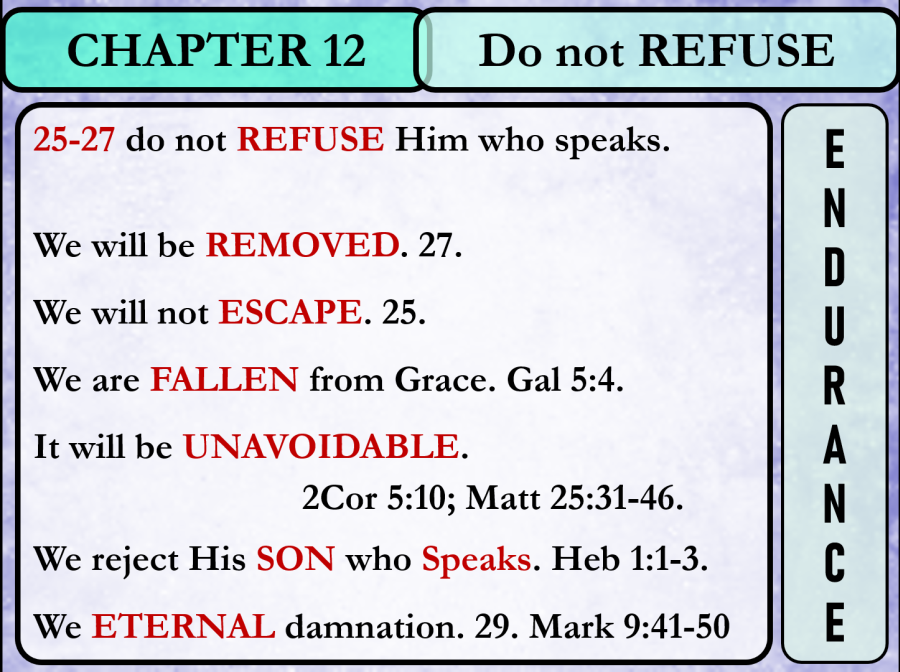
Hebrews 12; do not REFUSE Him who speaks

Hebrews 12:25-27

25-27 do not REFUSE Him who speaks.

  1. We will be REMOVED. 27.
  2. We will not ESCAPE. 25.
  3. We are FALLEN from Grace. Gal 5:4.
  4. It will be UNAVOIDABLE.
    1. 2Cor 5:10; Matt 25:31-46.
  5. We reject His SON who Speaks. Heb 1:1-3.
  6. We ETERNAL damnation. 29. Mark 9:41-50

Click here for the Outline of Hebrews.

We study the bible weekly at the Franklin & Juniper st. church of Christ in Borger texas.

spencer

The book of JUDE overview

I: the EMERGENCY. [1-4]

(1-2) DESIGNATION of author & Readers.

(3-4) DANGER of apostates.

II: the EXAMPLES. [5-16]

(5-7) DESTINY of apostates.

(8-16) DESCRIPTION of apostates.

III: the EXHORTATION. [17-25]

(17-23) DUTY of believers.

(24-25) DOXOLOGY.

the Franklin & Juniper st church of Christ in Borger provides multiple bible study opportunities weekly.

Sunday morning at 9:30 followed by congregational worship at 10:30.

Wednesday night at 6:30.

We also provide individual private bible studies locally upon request.

Let us know how we can help you to know Christ through knowing His word.

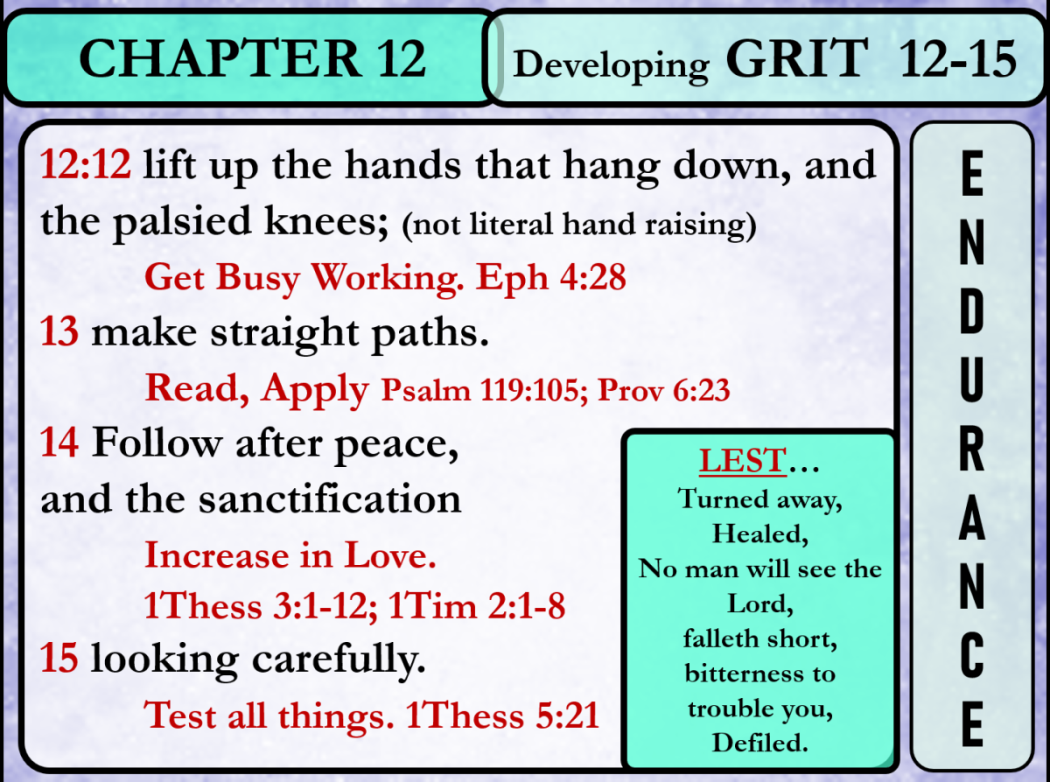
Hebrews 12; developing GRIT

Hebrews 12:12-15 provides a great formula for developing Endurance (GRIT).

Heb 12:12 Wherefore lift up the hands that hang down, and the palsied knees;

Get Busy Working. cf. Eph 4:28

13 and make straight paths for your feet, that that which is lame be not turned out of the way, but rather be healed.

Read, Apply Psalm 119:105; Prov 6:23

14 Follow after peace with all men, and the sanctification without which no man shall see the Lord:

Increase in Love. 1Thess 3:1-12; 1Tim 2:1-8

15 looking carefully lest there be any man that falleth short of the grace of God; lest any root of bitterness springing up trouble you, and thereby the many be defiled;

Test all things. 1Thess 5:21

Along with it the writer provides a warner for lacking endurance.

LEST

Turned away,

Healed,

No man will see the Lord,

falleth short,

bitterness to trouble you,

Defiled.

for an overview of the book of Hebrews.

Going MAD trying to test Jesus

in Matt 22:15-46 The Pharisees, Sadducees, and lawyers tried to Test & Trap Jesus with some difficult questions, but instead they became MAD.

They MARVELLED. Matt 22:15-22

Mt 22:15 Then went the Pharisees, and took counsel how they might entangle him in his talk.
16 And they sent out unto him their disciples with the Herodians, saying, Master, we know that thou art true, and teachest the way of God in truth, neither carest thou for any man: for thou regardest not the person of men.
17 Tell us therefore, What thinkest thou? Is it lawful to give tribute unto Caesar, or not?
18 But Jesus perceived their wickedness, and said, Why tempt ye me, ye hypocrites?
19 Shew me the tribute money. And they brought unto him a penny.
20 And he saith unto them, Whose is this image and superscription?
21 They say unto him, Caesar’s. Then saith he unto them, Render therefore unto Caesar the things which are Caesar’s; and unto God the things that are God’s.
22 When they had heard these words, they MARVELLED, and left him, and went their way.

They were ASTONISHED. 33

Mt 22:23 The same day came to him the Sadducees, which say that there is no resurrection, and asked him,
24 Saying, Master, Moses said, If a man die, having no children, his brother shall marry his wife, and raise up seed unto his brother.
25 Now there were with us seven brethren: and the first, when he had married a wife, deceased, and, having no issue, left his wife unto his brother:
26 Likewise the second also, and the third, unto the seventh.
27 And last of all the woman died also.
28 Therefore in the resurrection whose wife shall she be of the seven? for they all had her.
29 Jesus answered and said unto them, Ye do err, not knowing the scriptures, nor the power of God.
30 For in the resurrection they neither marry, nor are given in marriage, but are as the angels of God in heaven.
31 But as touching the resurrection of the dead, have ye not read that which was spoken unto you by God, saying,
32 I am the God of Abraham, and the God of Isaac, and the God of Jacob? God is not the God of the dead, but of the living.
33 And when the multitude heard this, they were ASTONISHED at his doctrine.

They DARED not ask any more questions. 46

Mt 22:34 But when the Pharisees had heard that he had put the Sadducees to silence, they were gathered together.
35 Then one of them, which was a lawyer, asked him a question, tempting him, and saying,
36 Master, which is the great commandment in the law?
37 Jesus said unto him, Thou shalt love the Lord thy God with all thy heart, and with all thy soul, and with all thy mind.
38 This is the first and great commandment.
39 And the second is like unto it, Thou shalt love thy neighbour as thyself.
40 On these two commandments hang all the law and the prophets.
41 While the Pharisees were gathered together, Jesus asked them,
42 Saying, What think ye of Christ? whose son is he? They say unto him, The Son of David.
43 He saith unto them, How then doth David in spirit call him Lord, saying,
44 The LORD said unto my Lord, Sit thou on my right hand, till I make thine enemies thy footstool?
45 If David then call him Lord, how is he his son?
46 And no man was able to answer him a word, neither DARED any man from that day forth ask him any more questions.

What Think Ye of Christ?

SHADOWS of good things to come

Which are a shadow of things to come; but the body is of Christ.”        (Col 2:17)

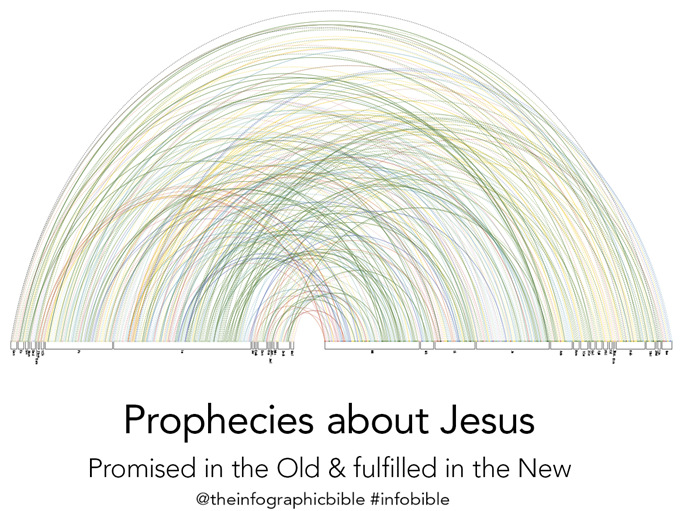
Jesus the Christ, is the main point of the bible which was in the mind of God before the foundation of the world. “Who verily was foreordained before the foundation of the world, but was manifest in these last times for you” (1Pet 1:20).

This means that the things written before in the Old Testament point to the things in the New Testament. This concept gives us better understanding of what Paul wrote in Rom 15:4, “For whatsoever things were written aforetime were written for our learning, that we through patience and comfort of the scriptures might have hope.”

While we cannot use the commands of the OT for doctrine today, we can look into the OT for the message of Christ. These messages are contained in Types and Shadows. “For the law having a shadow of good things to come, and not the very image of the things, can never with those sacrifices which they offered year by year continually make the comers thereunto perfect” (Heb 10:1).

Types and shadows are Old Testament people, events, or ceremony the foreshadow the coming Messiah and His church. We often use the terms “Type” and “Antitype. For some this can be confusing. The “TYPE” is the shadow of the real thing. The “ANTITYPE” is the real thing.

There are three kinds of SHADOWS.

  1. PERSONS, like Adam, Cain, Abel, Melchizedek, Abraham, Isaac, Joseph, Moses, Joshua, David, Jonah.
  2. EVENTS, like the Flood, the Plagues of Egypt, the Passover, the Brazen Serpent, Crossing the Jordan, Cities of Refuge.
  3. CEREMONIES, like the Offerings, Ceremonial Cleansing, Feasts, Year of Jubilee, Day of Atonement. To this could be added STRUCTURES, like the Ark, the Tabernacle, the Temple, and the furnishings in the temple. We would also include COLORS & NUMBERS.

Another way to describe these 3 types is as Historical, Legal, and Prophetic types.

The purpose of the SHADOWS.

The first purpose of the SHADOWS was to give a picture and outline representing something in the future. Especially the Scheme of Redemption. Such were the point of the SACRIFICES from patriarchal to Jewish age. (Heb 9, 10:18)

Another purpose of the type or shadow was as proof and as a demonstration of the Divine origin of the antitype. “And Moses verily was faithful in all his house, as a servant, for a testimony of those things which were to be spoken after; But Christ as a son over his own house; whose house are we, if we hold fast the confidence and the rejoicing of the hope firm unto the end” (Heb 3:5-6).

Here’s what is of powerful interest to us. The TYPES & SHADOWS must have originated by ONE who perfectly understood the antitype toward which the type or shadow pointed. God alone understood them from before, and could author them perfectly.   

The Patriarchs and the Jews engaging in the events, setting up and writing on the types, could not understand them. Hence, they are not the originators of them. The Bible is all of God!!! This is another evidence for the validity of the Bible as being the Inspired Word of God.

The System of Sacrifices serve as a Shadow for the sacrifice of Christ.

Which was a figure for the time then present, in which were offered both gifts and sacrifices, that could not make him that did the service perfect, as pertaining to the conscience; Which stood only in meats and drinks, and divers washings, and carnal ordinances, imposed on them until the time of reformation. But Christ being come an high priest of good things to come, by a greater and more perfect tabernacle, not made with hands, that is to say, not of this building; Neither by the blood of goats and calves, but by his own blood he entered in once into the holy place, having obtained eternal redemption for us. For if the blood of bulls and of goats, and the ashes of an heifer sprinkling the unclean, sanctifieth to the purifying of the flesh: How much more shall the blood of Christ, who through the eternal Spirit offered himself without spot to God, purge your conscience from dead works to serve the living God?” (Heb 9:9-14)

If you find reading the Old Testament boring, or you are unable to see its relevance, looking for the Types & Shadows may help you develop an excitement to read those things written before. The Old Testament is about Jesus. “Search the scriptures; for in them ye think ye have eternal life: and they are they which testify of me” (John 5:39).

spencer

the Fear of the Lord

Men and brethren, children of the stock of Abraham, and whosoever among you feareth God, to you is the word of this salvation sent.”                  (Acts 13:26)

We don’t talk enough about the Fear of the Lord. Even when we do talk about it, some will complain that we say too much.

We do need to talk about it, and we need to talk about it with understanding. Once you see the phrase in your regular reading, you’ll begin to see it everywhere. One of my favorite Psalms includes a discussion on Fear of the Lord. (Psalm 34)

There are 2 main categories of Fear.

  • Fear that Motivates us into action.
  • Fear that Hibernates (freezes us from action).

The Fear of the Lord that motivates is the right kind of fear. Fear that causes us to turn away from God and away from action is the wrong kind of fear.

To help us define the Fear of the Lord, let’s look at its appearing in Proverbs.

The FEAR of the LORD. (From Proverbs)

Pr 1:7 The fear of the LORD is the beginning of knowledge: but fools despise wisdom and instruction.

Pr 1:29 For that they hated knowledge, and did not choose the fear of the LORD:

Pr 2:4 If thou seekest her as silver, and searchest for her as for hid treasures; 5 Then shalt thou understand the fear of the LORD, and find the knowledge of God.

Pr 3:7 Be not wise in thine own eyes: fear the LORD, and depart from evil.

Pr 8:13 The fear of the LORD is to hate evil: pride, and arrogancy, and the evil way, and the froward mouth, do I hate.

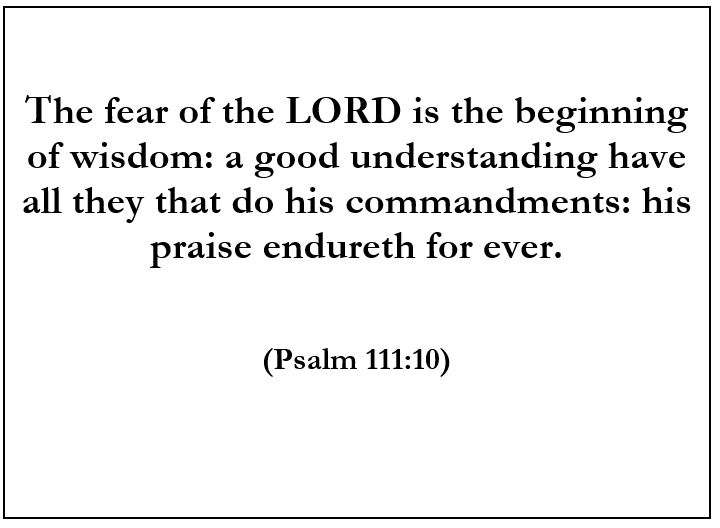
Pr 9:10 The fear of the LORD is the beginning of wisdom: and the knowledge of the holy is understanding.

Pr 10:27 The fear of the LORD prolongeth days: but the years of the wicked shall be shortened.

Pr 14:2 He that walketh in his uprightness feareth the LORD: but he that is perverse in his ways despiseth him.

Pr 14:26 In the fear of the LORD is strong confidence: and his children shall have a place of refuge.

Pr 14:27 The fear of the LORD is a fountain of life, to depart from the snares of death.

Pr 15:16 Better is little with the fear of the LORD than great treasure and trouble therewith.

Pr 15:33 The fear of the LORD is the instruction of wisdom; and before honour is humility.

Pr 16:6 By mercy and truth iniquity is purged: and by the fear of the LORD men depart from evil.

Pr 19:23 The fear of the LORD tendeth to life: and he that hath it shall abide satisfied; he shall not be visited with evil.

Pr 22:4 By humility and the fear of the LORD are riches, and honour, and life.

Pr 23:17 Let not thine heart envy sinners: but be thou in the fear of the LORD all the day long.

Pr 24:21 My son, fear thou the LORD and the king: and meddle not with them that are given to change:

Pr 29:25 The fear of man bringeth a snare: but whoso putteth his trust in the LORD shall be safe.

Pr 31:30 Favour is deceitful, and beauty is vain: but a woman that feareth the LORD, she shall be praised.

As you can see from this reading that the Fear of the Lord is much deeper than being afraid of Him, or afraid of His punishment. There’s a comfort found in the Fear of the Lord. There is a motivation into godly action.

The good FEAR is the fear which an obedient child has for a loving father; the attitude of respect or reverence. It prompts godly action that is pleasing to God. It brings assurance, comfort, confidence, and joy. It produces peace in our minds.

The wrong kind of FEAR is: The painful emotion marked by alarm, dread, or disquiet. It is anxious concern, fright, terror, timidity, and apprehension. It prompts cowardly actions. It produces confused and frantic minds. It results in sleepless, restless nights. It expresses itself in selfishness, thoughtlessness, and greed. It destroys inner unity and peace.

Jesus describes the two types of fear this way: “And fear not them which kill the body, but are not able to kill the soul: but rather fear him which is able to destroy both soul and body in hell” (Matt 10:28). In this context, there is a fear that is wrong; the fear of man. The fear of man prevents us from godly action.

God is able to destroy, but He is also able to save. He saved Noah because of his godly fear. “By faith Noah, being warned of God of things not seen as yet, moved with fear, prepared an ark to the saving of his house; by the which he condemned the world, and became heir of the righteousness which is by faith” (Heb 11:7; Ge 6:13,22).

spencer

Where’s your passage?

In all the places wherein I have walked with all the children of Israel spake I a word with any of the tribes of Israel, whom I commanded to feed my people Israel, saying, Why build ye not me an house of cedar?” (2Sam 7:7)

Do you understand what this verse is saying? David had come up with what appeared to be a good idea to build a permanent temple out of cedar. The prophet Nathan agreed that this indeed appeared to be a good idea, even telling him that the LORD agreed that it was a good idea.

Go, do all that is in thine heart; for the LORD is with thee” (2Sam 7:3).

So, here we have this mighty king, a man after God’s own heart, with what appeared to be a good idea, to build God a permanent dwelling place. Reasoning thusly, “I dwell in an house of cedar, but the ark of God dwelleth within curtains” (2Sam 7:2).

We also have a prophet of God in agreement with the King, even asserting that God is also in agreement. However,

…God DID NOT agree that it was a good idea for David to build Him a house of cedar. The way He says it to them is very interesting. He doesn’t say, “No, do not build me a house of Cedar.” Neither does He say, “I didn’t want you to do that, but since you’re very sincere, go ahead anyway.” Some will argue this same way, “where does it say He forbids it?” They also say, “We don’t have a command, but God will accept it because it’s from the sincerity of our heart.”

Here’s how God answers David. “In all the places wherein I have walked with all the children of Israel spake I a word with any of the tribes of Israel, whom I commanded to feed my people Israel, saying, Why build ye not me an house of cedar?

In effect, God asks, “Where is your scripture for your good idea?”

When I ask this question of folks, they respond with some version that they don’t need a scripture. “Look at the results,” they say. “Look at how much good we’ve done.” If 2Samuel 7:7 did not exist, I may have to agree with them. But it does exist, and there are other such passages.

Look at this example in Acts 15. “Forasmuch as we have heard, that certain which went out from us have troubled you with words, subverting your souls, saying, Ye must be circumcised, and keep the law: to whom we gave no such commandment” (Act 15:24).

Here we see the same type of discussion. The converted Jews had the “good idea” that gentiles must become circumcised, and keep the Law of Moses to become Christians. The problem with that “good idea” was that there was no command for it. Both David, and the Christian Jews of the 1st century had come up with “good ideas” from the SILENCE of God. James points out to them that the SILENCE of God prohibits action, not allow it.

Another example in Hebrews says, “For it is evident that our Lord sprang out of Juda; of which tribe Moses spake nothing concerning priesthood” (Heb 7:14).

The SILENCE on a matter prohibited an action. In this case, the LORD had commanded that the Priests under the Law of Moses were to be taken from the tribe of Levi (Ex 28:1-4). Since Jesus was to be a Priest and a King (Heb 5:6), He could not hold that position, for the Law Prohibited it, and Jesus was from the tribe of Judah, something the Law spoke nothing concerning priesthood. Thus, the Law was changed because Christ is both Priest and King (Heb 7:12-13).

From these passages we learn that silence prohibits. When we receive a specific command from God, it prohibits any alteration, addition, or abatement. From these examples we learn 6 things when God is SILENT on a matter.

We are limited to what has been revealed in SCRIPTURE. This is how God communicates to us, through His divine written word (Deut 29:29).

We learn that without a command, there can be no INFERENCES, necessary or otherwise. God’s silence does not IMPLY His permission, it prohibits it.

In Hebrews we learn that we are under the will and testament of Christ. In the LAWS of Contracts & Wills, we are LIMITED to what it says, not given permission by what it does not say (cf. Heb 9:15-17). Think about how difficult it would be to defend a Will if we could change it based on things that are not in it. Could I claim a right to Bill Gates’ will, though I’m not in it? He didn’t say not to include me.

This brings us to the fourth point. If Silence doesn’t limit, then it creates a condition where EVERYTHING is permitted. All we would have to do is say, “God never said I can’t, so I’m going to do it.” It would lead to chaos and confusion. Oh wait, that’s exactly what we see in the denomination realm (cf. 1Cor 14:33).

The reality is, and we understand in other areas, that Silence is NO PERMISSION at all. For example, if you were to order a pepperoni pizza, what does your silence about smoked oysters say? (smoked oysters were a common ingredient in Fairbanks, AK back when I worked in a pizza joint in high school). You would never accept a pizza with smoked oysters when you ordered a pepperoni pizza. Your specific statement and your silence prohibit additional toppings.

Which brings me to the fifth point. We are limited in action when we have a “THUS SAITH THE LORD.” When God specifies something, He need not list all the aberrations. Specific is terrific. We know what He wants. There is another form of His command called Generic commands, in which He gives us liberty to take action He hasn’t specified, but that’s for another article. When we have a specific “Thus saith the LORD” we are limited to the specific statements and commands and cannot alter, add, nor abate His command. Silence prohibits.

–Spencer

“Is it less dishonest to do what is wrong because it is not expressly prohibited by written law? Let us hope our moral principles are not yet in that stage of degeneracy.”

— Thomas Jefferson

Spencer is an evangelist for the church of Christ on Franklin & Juniper in Borger Texas.

Hearing the Voice of Jesus, Pt2

My sheep hear my voice, and I know them, and they follow me” (John 10:27)

Last week we began the discussion about hearing the VOICE of Jesus. The previous article included the first 3 of 5 points.

This article will touch on the next 2 points in this series.

What does it mean to hear the VOICE of Jesus? Some claim He will speak directly, personally, and miraculously to us. What is the truth?

Hearing the VOICE of Jesus.

The voice of Jesus (through the study of His Word) is a source of comfort for us in our pains, sorrows, and hurts. The letters of the New Testament are also the commands of Jesus; “If any man think himself to be a prophet, or spiritual, let him acknowledge that the things that I write unto you are the commandments of the Lord” (1Cor 14:37), The truths contained therein contain comfort. One example is in 1Thess 4.

But I would not have you to be ignorant, brethren, concerning them which are asleep, that ye sorrow not, even as others which have no hope. For if we believe that Jesus died and rose again, even so them also which sleep in Jesus will God bring with him. For this we say unto you by the word of the Lord, that we which are alive and remain unto the coming of the Lord shall not prevent them which are asleep. For the Lord himself shall descend from heaven with a shout, with the voice of the archangel, and with the trump of God: and the dead in Christ shall rise first: Then we which are alive and remain shall be caught up together with them in the clouds, to meet the Lord in the air: and so shall we ever be with the Lord. Wherefore comfort one another with these words” (1Thess 4:13-18).

We can find comfort through the words of Jesus. “Blessed be God, even the Father of our Lord Jesus Christ, the Father of mercies, and the God of all comfort; Who comforteth us in all our tribulation, that we may be able to comfort them which are in any trouble, by the comfort wherewith we ourselves are comforted of God” (2Cor 1:3-4)

Another one of the ways His word comforts us is through the assurance we have from His promises. “That by two immutable things, in which it was impossible for God to lie, we might have a strong consolation, who have fled for refuge to lay hold upon the hope set before us: Which hope we have as an anchor of the soul, both sure and stedfast, and which entereth into that within the veil” (Heb 6:18-19). “But without faith it is impossible to please him: for he that cometh to God must believe that he is, and that he is a rewarder of them that diligently seek him” (Heb 11:6).

Paul wrote; “I have fought a good fight, I have finished my course, I have kept the faith: Henceforth there is laid up for me a crown of righteousness, which the Lord, the righteous judge, shall give me at that day: and not to me only, but unto all them also that love his appearing” (2Tim 4:7-8).

When we seek His voice through the reading & study of His inspired word, and we Obey it, we can have the assurance that He will reward us.

Finally, His voice has the words of ETERNAL Life.

My sheep hear my voice, and I know them, and they follow me: And I give unto them eternal life; and they shall never perish, neither shall any man pluck them out of my hand” (John 10:27-28).

Sadly, some will hear it & turn from it. “From that time many of his disciples went back, and walked no more with him. Then said Jesus unto the twelve, Will ye also go away? Then Simon Peter answered him, Lord, to whom shall we go? thou hast the words of eternal life” (John 6:66-68).

Jesus said, “He that rejecteth me, and receiveth not my words, hath one that judgeth him: the word that I have spoken, the same shall judge him in the last day” (John 12:48). “It is the spirit that quickeneth; the flesh profiteth nothing: the words that I speak unto you, they are spirit, and they are life” (John 6:63).

The writer of Hebrew was inspired to write, “And being made perfect, he became the author of eternal salvation unto all them that obey him” (Heb 5:9). Cornelius was told he needed to hear words, so he sent for Peter who came to tell him words and they were ready to, “hear all things that are commanded thee of God” (Acts 10:6, 22, 33).

When we read, we can believe that we might have life, “But these are written, that ye might believe that Jesus is the Christ, the Son of God; and that believing ye might have life through his name” (John 20:31). When we read, we can understand the mystery, “Whereby, when ye read, ye may understand my knowledge in the mystery of Christ” (Eph 3:4).

The VOICE of Jesus is represented as a sword in the imagery seen by John in Revelation 1:16. The Hebrew writer said, “For the word of God is quick, and powerful, and sharper than any twoedged sword, piercing even to the dividing asunder of soul and spirit, and of the joints and marrow, and is a discerner of the thoughts and intents of the heart” (Heb 4:12).

The sheep will find comfort, peace, assurance, and salvation through the words of the Good Shepherd, Christ Jesus.

–Spencer

Hearing the VOICE of Jesus pt1

Hearing the VOICE of Jesus?

My sheep hear my voice, and I know them, and they follow me” (John 10:27)

The Hebrew writer wrote, “God, who at sundry times and in divers manners spake in time past unto the fathers by the prophets, Hath in these last days spoken unto us by his Son, whom he hath appointed heir of all things, by whom also he made the worlds” (Heb 1:1-2).

We now live under the New Testament of Jesus Christ. The Old Covenant was nailed to the cross and is obsolete (Col 2:14; Heb 8:13).

Any who desire to go back to do one part of the Old Law of Moses is obligated to do the whole; “For I testify again to every man that is circumcised, that he is a debtor to do the whole law. Christ is become of no effect unto you, whosoever of you are justified by the law; ye are fallen from grace” (Gal 5:3-4).

But that is not good, for that Law was a shadow of the good things we have in Christ now (Heb 10:1; Col 2:17).

God Himself said, “This is my beloved Son: hear him” (Mark 9:7). Seeing that all this is true, believers are to hear Jesus. What does it mean to hear the VOICE of Jesus? Some claim He will speak directly, personally, and miraculously to us. What is the truth?

Hearing the VOICE of Jesus.

Contrary to mainstream belief, the sheep that follow Jesus do so of their own volition. God is seeking those that seek Him. “But seek ye first the kingdom of God, and his righteousness; and all these things shall be added unto you” (Matt 6:33). God’s desire that all to come to repentance and be saved (2Pet 3:9) is evidence that we have free choice. We voluntarily seek Him, listen to His voice, and it’s His voice (words) that will judge us in the last day. “He that rejecteth me, and receiveth not my words, hath one that judgeth him: the word that I have spoken, the same shall judge him in the last day” (John 12:48).

Therefore, all are invited to follow the Good Shepherd of our own free will.

Those that choose to follow Jesus also Obey His VOICE. “If ye love me, keep my commandments” (John 14:15; 15:14). “And why call ye me, Lord, Lord, and do not the things which I say” (Luke 6:46)? “Not every one that saith unto me, Lord, Lord, shall enter into the kingdom of heaven; but he that doeth the will of my Father which is in heaven. Many will say to me in that day, Lord, Lord, have we not prophesied in thy name? and in thy name have cast out devils? and in thy name done many wonderful works? And then will I profess unto them, I never knew you: depart from me, ye that work iniquity” (Matt 7:21-23).

It makes zero sense to call oneself a “follower” of Christ, and not actually follow Him in obedience to His word. People keep using that word “follower” without doing anything He says. I constantly hear folks living in sin claiming also to be a follower of Jesus. Paul warned; “Know ye not that the unrighteous shall not inherit the kingdom of God? Be not deceived: neither fornicators, nor idolaters, nor adulterers, nor effeminate, nor abusers of themselves with mankind, Nor thieves, nor covetous, nor drunkards, nor revilers, nor extortioners, shall inherit the kingdom of God. And such were some of you: but ye are washed, but ye are sanctified, but ye are justified in the name of the Lord Jesus, and by the Spirit of our God” (1Cor 6:9-11). If these cannot inherit the kingdom of God, how can we say at the same time that we are followers of Christ while continuing in them?

Therefore, all true followers of Jesus are obedient to His voice.

This next point is vital to understand. Some also claim that Jesus will speak to us personally, miraculously, and separately from the Inspired word. Jesus never made this claim.

In His prayer in the garden, while praying for His Apostles, He then prayed for folks that would believe in Him after His death. He said, “Neither pray I for these alone, but for them also which shall believe on me THROUGH THEIR WORD; That they all may be one; as thou, Father, art in me, and I in thee, that they also may be one in us: that the world may believe that thou hast sent me” (John 17:20-21). We who come to Jesus after His death will believe based on the words of the Apostles. The Apostles were given the promise of divine Holy Spirit Inspiration (John 16:13; cf, 14:26; 15:26), not us.

We hear the voice of the Chief Shepherd in as much as we read His inspired word delivered through the Inspired writers. Paul wrote through inspiration; “If any man think himself to be a prophet, or spiritual, let him acknowledge that the things that I write unto you are the commandments of the Lord” (1Cor 14:37). He also wrote; “How that by revelation he made known unto me the mystery; (as I wrote afore in few words, Whereby, when ye read, ye may understand my knowledge in the mystery of Christ)” (Eph 3:3-4; cf 2Tim 3:15-17).

The Apostle John wrote, “And many other signs truly did Jesus in the presence of his disciples, which are not written in this book: But these are written, that ye might believe that Jesus is the Christ, the Son of God; and that believing ye might have life through his name” (John 20:30-31). He also wrote, “These things have I written unto you that believe on the name of the Son of God; that ye may know that ye have eternal life, and that ye may believe on the name of the Son of God” (1John 5:13; emph mine seb).

Therefore, all true followers of Jesus hear His VOICE through the reading, studying, and memorizing His written inspired word.

Next week we’ll look at a few more points regarding the VOICE of Jesus. To recap; we Voluntarily hear His voice. We who hear it will Obey His voice. Those that hear, and obey are Informed of His will through the reading, study, and memorizing of His Inspired word.

–Spencer