Speaking the truth in Love

Demonstrating Love Through Our Speech

The way we speak reveals the condition of our hearts and serves as a powerful expression of love. Scripture, particularly Ephesians, provides a blueprint for how our words can reflect Christ’s love, fostering unity, encouragement, and grace. By aligning our speech with biblical principles, we demonstrate love that honors God and uplifts others.

Seasoned with Salt; Colossians 4:6 urges believers to let their speech be “always full of grace, seasoned with salt,” so that they know how to answer everyone (“seasoned with salt” suggesting speech that is gracious, wise, and impactful, enhancing conversations like salt enhances food). Similarly, James 3:17 describes wisdom from above as pure, peace-loving, and gentle. Words seasoned with salt are purposeful, preserving truth and adding value to conversations. They avoid blandness or harshness, striking a balance that reflects thoughtfulness and care. When our speech is seasoned with grace, it becomes a tool to point others to Christ, making our interactions meaningful and impactful.

Pleasant, Not Profane; Ephesians 5:4 warns against “filthiness, foolish talk, or crude joking,” which are out of place for those who follow Christ. Instead, our words should be pleasant, reflecting gratitude and reverence. Filthy or foolish speech tears down, while pleasant words build up and create an atmosphere of love. Avoiding foul language doesn’t mean stifling humor or joy but choosing words that align with God’s holiness. Pleasant speech invites others into a space of dignity and respect, mirroring the love Christ shows us.

Edifying, Empathetic, & Encouraging; Ephesians 4:29 instructs, “Let no corrupting talk come out of your mouths, but only such as is good for building up, as fits the occasion, that it may give grace to those who hear” (Edifying means Building up or strengthening others spiritually). Romans 14:19 tells us to pursue peace and mutual edification, while Colossians 3:16 encourages teaching and admonishing one another with wisdom. Hebrews 10:24-25 emphasizes spurring one another toward love and good works. Empathetic and encouraging speech listens deeply, validates feelings, and inspires growth. It puts others’ needs above our own, fostering community and reflecting Christ’s sacrificial love.

Speaking Truth in Love; Ephesians 4:15 and 4:25 highlight the importance of speaking truth in love, rooted in agape type (love selfless, unconditional love). Truth without love can wound, while love without truth can enable. Speaking truth in love requires humility and courage, ensuring our words are honest yet delivered with kindness. This balance builds trust and strengthens relationships, as we lovingly correct or guide others toward God’s truth. Loving speech prioritizes the other person’s spiritual growth, even when it’s uncomfortable, because it seeks their ultimate good.

Kindness in Speech; Ephesians 4:32 tells us to be kind and compassionate, forgiving one another as God forgave us. James 1:26 warns that those who fail to bridle their tongues deceive themselves, and Colossians 3:12-13 emphasizes clothing ourselves with kindness and patience. Kind words diffuse conflict, heal wounds, and demonstrate grace. They reflect a heart transformed by Christ, choosing gentleness over harshness and forgiveness over bitterness. Kindness in speech is a daily practice of love, creating a ripple effect of grace in our interactions.

agape

Timothy, a beloved son

Timothy’s Faithful Heart – A Teachable, Ready, and Strong Servant
Timothy’s life offers us an inspiring example of Christian service. He was young, but he was full of wisdom, strength, and dedication. The New Testament paints a picture of a man who was willing to be taught, always ready to serve, and strong in the face of adversity. These qualities made Timothy a powerful servant of God and a true blessing to others.

A Teachable Teacher
One of Timothy’s most admirable traits was his teachability. From childhood, he was taught the Holy Scriptures which are able to save. As Paul wrote, “And that from a child thou hast known the holy scriptures, which are able to make thee wise unto salvation through faith which is in Christ Jesus” (2Timothy 3:15). Timothy shared this knowledge with others, training up faithful believers to teach in turn (2 Timothy 2:2). As Proverbs 1:5 says, “A wise man will hear and will increase learning.”

God wants us to be teachers. As Jesus commanded in the Great Commission, we’re not only to be taught but to teach others, “teaching them to observe all things whatsoever I have commanded you” (Matthew 28:20). Like Timothy, as we grow in wisdom, we can pass it on to those around us (see Hebrews 5:12).

Ready in Season and Out
Timothy was ready to serve at all times. In 2Timothy 4:2, Paul urges him to “preach the word; be instant in season, out of season.” To be instant means being prepared to share the gospel, whether the timing seems favorable or not. Timothy didn’t wait for ideal conditions or worry about convenience. His faithfulness kept him ready, and he served wherever there was need. 1Peter 3:15 reminds us of this same readiness: “But sanctify the Lord God in your hearts: and be ready always to give an answer to every man that asketh you a reason of the hope that is in you.”

When we live in readiness, we are better able to respond to the needs of those around us. Romans 12:11 says, “Not slothful in business; fervent in spirit; serving the Lord.” May we, like Timothy, respond eagerly to God’s work, not allowing any situation to keep us from sharing the gospel.

Strong and Courageous
Timothy’s strength in the face of trials is yet another remarkable example for us. Paul reminds us of his courage in Hebrews 13:23, showing that Timothy was steadfast and faithful despite challenges. the challenges of bondage.

The Bible encourages all believers to be strong. “Watch ye, stand fast in the faith, quit you like men, be strong” (1 Corinthians 16:13). God wants us to face the obstacles in life, just as Timothy did, with confidence and faith. Our strength isn’t in ourselves but in God. We see this echoed in Philippians 4:13: “I can do all things through Christ which strengtheneth me.”

Conclusion
Timothy’s life is an example for us to be teachable, ready, and strong in faith. He shows us that when we’re open to learning, prepared to serve, and firm in our strength from God, we can fulfill our calling and make a difference in others’ lives. His example encourages us to seek wisdom, stay prepared, and find our courage in the Lord.

As we grow in these qualities, we can serve like Timothy did, with a willing spirit and a heart full of faith, trusting that God can use us wherever we are. Just as Timothy’s legacy continues to inspire us, may our lives reflect a commitment to serving the Lord faithfully in all seasons.

Agape

Spencer

What Can We Say Shen We Don’t Know What to Say?

And if it seem evil unto you to serve the LORD, choose you this day whom ye will serve; whether the gods which your fathers served that were on the other side of the flood, or the gods of the Amorites, in whose land ye dwell: but as for me and my house, we will serve the LORD.” (Joshua 24:15).

Being a personal worker is hard. Not only does the personal worker need to be able to present the truth with love, we must also combat error. I’ll admit it, I’ve often taken the “you’re wrong here’s why” approach to evangelism.

 Almost on a daily basis, especially Since I started preaching in Borger, I am told fantastic stories of how folks claim to have been saved. At no point is there ever a “thus saith the Lord” with a bible book, chapter, verse reference.

What do we say after those kinds of tales? It’s too easy to shake your head and close off the conversation because we don’t know how to respond.

I’ve discovered a better way, and I want to share it with you. Instead of running away, I see it as an opportunity to share the true Gospel, (Romans 1:16).

It’s called the “As for me…” principle as found in Joshua 24:15. The Apostle Paul used a similar tactic on Mars Hill. “Then Paul stood in the midst of Mars’ hill, and said, Ye men of Athens, I perceive that in all things ye are too superstitious. For as I passed by, and beheld your devotions, I found an altar with this inscription, TO THE UNKNOWN GOD. Whom therefore ye ignorantly worship, him declare I unto you. God that made the world and all things therein, seeing that he is Lord of heaven and earth, dwelleth not in temples made with hands” (Acts 17:22-24).

Here’s how it works. First, I ASK if I can open up to them about my own salvation. I then tell them how I was SAVED according to the commands of God. I had to Hear the gospel (Matt 7:23-29). I Believe that Jesus is the Christ (John 8:24). I Repented and continue to live a penitent life (Luke 13:3). I have Confessed and continue to Confess Jesus before all (Matt 10:32). I was Baptized in Water, just as the Lord commands to have my sins washed away (Mar 16:16; Acts 2:38), and I strive to be Faithful to the Lord all the days of my life even if doing so causes me hurt (Mat 28:20; Rev 2:10). “I know whom I have believed, and am persuaded that he is able to keep that which I have committed unto him against that day” (2Tim 1:12).       

Sometimes there are questions about what I’ve said. I answer by saying, “I’ve FOUND that there are many discrepancies between what people say and what God teaches in His word. This next part is important. I ask if I can show them what I did. Then OPEN an actual printed bible for them to see and read for themselves.

I READ to them, (or let them read) those passages that I saw when I first learned the truth. Sometimes I need a few MARGIN notes to remind me where they are. I let the gospel be the power of God unto salvation and not myself for the converting of the soul. Whenever I’ve relied on my own ability to quote scripture, I’ve been met with resistance. One person said, “Satan quoted scripture too.” That push back was helpful because it revealed to me what people are thinking whenever I have quoted verses (even if accurately). It’s hard for people to argue against the Word. They’ll try, but they’ll fail.

Finally, I have no EXPECTATIONS of them. Certainly, my desire is that they come to the knowledge of the truth and be saved, but that’s God’s work. My job is to scatter the seed on the ground of the heart (see Mark 4:14-20). “I have planted, Apollos watered; but God gave the increase” (1Cor 3:6).

Agape,

Spencer

Go here For some helps with scripture when sharing the gospel.

Remembering the Example of the Thessalonians

Remembering without ceasing your work of faith, and labour of love, and patience of hope in our Lord Jesus Christ, in the sight of God and our Father.” (1Thessalonians 1:3).

The book of 1 Thessalonians, nestled in the New Testament, provides a profound and insightful guide for living a faithful life. In its five chapters, this epistle imparts at least five principles that resonates through the ages.

From turning away from idols to seeking to do good, 1 Thessalonians offers a roadmap for spiritual growth.

It is the first Epistle of the New Testament (after the letter in Acts 15), and is recommended to be read by all the Saints, and especially those new to the faith.

Let us delve into each principle, exploring their depth and relevance, while drawing inspiration from additional New Testament scriptures.

The first principle emphasizes a decisive turning point in the lives of the Thessalonian believers — the abandonment of idols in favor of embracing the one true God (1Thess 1:9). This echoes the broader biblical theme of avoiding false gods and worshiping the Almighty. In Matthew 4:10, Jesus reiterates this, stating, “Worship the Lord your God, and serve him only.” Thus, turning away from idols is not merely a historical narrative but a timeless call to prioritize God in our lives.

The second principle underscores the importance of not just hearing the Word but receiving it as divine revelation (1Thess 2:13). This aligns with the New Testament teachings in 1 Corinthians 2:9-13.

The third principle involves how our example of faithfulness edifies and encourages fellow believers (1Thess 3:6). 2 & 3John reinforces this concept of encouragement coming from hearing of others’ faithfulness to the truth. The Thessalonians’ faithfulness not only strengthened their personal connection with God but also served as a source of inspiration and support for their brothers and sisters in Christ.

The fourth principle addresses the Christian hope of seeing the Lord someday (1Thess 4:13-18). This passage has provided comfort to believers through centuries, assuring them of the reunion with loved ones who have passed away in Christ. It resonates with Paul’s words in 1Corinthians 15:51-52, where he describes the transformation that will occur at the last trumpet, emphasizing the victory over death through Jesus Christ.

The final principle encapsulates the essence of Christian living – the continuous pursuit of goodness (1Thess 5:15). Galatians 5:22-23 lists the fruits of the Spirit, with goodness being a key element. In a world marred by strife and discord, seeking to do good stands as a testament to a transformed heart. It echoes Jesus’ teaching in Matthew 5:16, encouraging believers to let their light shine through good deeds, glorifying God.

Conclusion:
The principles outlined in 1 Thessalonians offer a comprehensive guide for living a faithful and purposeful life. As we navigate the complexities of life, let us draw inspiration from these principles, anchoring our faith in the unchanging truths found in the Word of God.

Agape,
Spencer

STEPHEN’S Face

When I first read the account of Stephen in Acts 7, I thought he had brought it upon himself, because he had said, “Ye stiffnecked and uncircumcised in heart and ears, ye do always resist the Holy Ghost: as your fathers did, so do ye” (Acts 7:51). If you’re going to call someone stiffnecked, you ought to expect them to be angry.

As the years went by, and I continued to read and study, it became apparent that Stephen did not deserve death for what he said. He told them the truth. The blame lies on those who heard him. Here’s how I came to that conclusion.

The account actually begins in Acts 6, not 7. Before we even hear of Stephen, a description is given of those who should serve the Grecian widows. “men of honest report, full of the Holy Ghost and wisdom” (Acts 7:3). In verse 8 it says that Stephen was full of faith and power.

Then, as he spoke of Jesus, those that heard could not resist the wisdom and the spirit by which he spoke, (v10).

There was one more description of Stephen in verse 15.

And all that sat in the council, looking stedfastly on him, saw his face as it had been the face of an angel” (Acts 6:15).

These three verses about Stephen show us that all that he spoke were inspired by the HOLY SPIRIT, even those final hard words of truth about the hearts of his hearers. We cannot know the hearts of men, but God does. Stephen spoke the TRUTH as revealed by the Spirit.

Therefore, his execution by stoning of the mob was a persecution for righteousness’ sake, even as the Lord spoke about in the sermon on the mount, (Matt 5:10-12).

Stephen wasn’t speaking erratically, but with PURPOSE. He had shown himself to be a defender of the faith (Jude 3), and a deliverer of truth (Acts 7:2-53).

 We can see the beginning of his reward in the next verses, “But he, being full of the Holy Ghost, looked up stedfastly into heaven, and saw the glory of God, and Jesus standing on the right hand of God, And said, Behold, I see the heavens opened, and the Son of man standing on the right hand of God” (Acts 7:55-56). This speaks of reward. The view of Stephen’s heavenward gaze reveals God’s approval.

As we continue to look closely at his speech, this next statement reveals his heart about those who are stoning him. “And he kneeled down, and cried with a loud voice, Lord, lay not this sin to their charge” (Acts 7:60). This is what truth loving people say, and are not the words of hatred. His last words are words of forgiveness to seek EXONERATION for his attackers.

Stephen became for us an example of one living for Jesus with NO FEAR, No flinching, No whining, and No doubt. His boldness is an answer to the prayer of the Apostles, “And now, Lord, behold their threatenings: and grant unto thy servants, that with all boldness they may speak thy word” (Acts 4:29).

The final chapter of Stephen’s story is the beginning of another man’s story, the young man named SAUL. “…and the witnesses laid down their clothes at a young man’s feet, whose name was Saul” (Acts 7:58). But that is a story for another day.

Agape,

Spencer

Spencer is an evangelist for the Franklin & Juniper st church of Christ in Borger Texas.

Why I PREACH

Recently, someone asked me why I got into preaching. I gave an answer that had two main motivations. Afterward, I got to thinking about why we preach at all. From this study I came up with 4 more reasons why we preach.

Why do we PREACH?

HEARING requires preaching. Rom 10:14) How then shall they call on him in whom they have not believed? and how shall they believe in him of whom they have not heard? and how shall they hear without a preacher? Hearing is the first step in God’s plan to save mankind. There will be no “zapping” of the Holy Spirit to save us. We must Seek Him through a study of His word.

CHRIST commanded preaching. Mark 16:15) And he said unto them, Go ye into all the world, and preach the gospel to every creature. Before He ascended into heaven, Christ commanded that the Gospel be preached. Who am I to go against a command of Christ?

Luke 6:46) And why call ye me, Lord, Lord, and do not the things which I say?

ANGELS are looking into it. 1Pet 1:10-2) Of which salvation the prophets have enquired and searched diligently, who prophesied of the grace that should come unto you: 11 Searching what, or what manner of time the Spirit of Christ which was in them did signify, when it testified beforehand the sufferings of Christ, and the glory that should follow. 12 Unto whom it was revealed, that not unto themselves, but unto us they did minister the things, which are now reported unto you by them that have preached the gospel unto you with the Holy Ghost sent down from heaven; which things the angels desire to look into. The gospel that was preached by the Apostles, then recorded for us in the written word, was searched out by Angels. That’s amazing to me. Yet we often don’t read it, much less to search through it diligently.

EVERYONE I know needs it. Matt 28:19; Col 1:27-28) To whom God would make known what is the riches of the glory of this mystery among the Gentiles; which is Christ in you, the hope of glory: 28 Whom we preach, warning every man, and teaching every man in all wisdom; that we may present every man perfect in Christ Jesus: Every person needs Christ and to obey His gospel. The gospel is about the death, burial, and resurrection of Jesus. (cf 2Thess 1:7-8; 2Pet 3:9)

I’m REQUIRED to preach. 1Cor 9:16) For though I preach the gospel, I have nothing to glory of: for necessity is laid upon me; yea, woe is unto me, if I preach not the gospel! Now it gets a little more personal. Since I’ve become an evangelist, one who’s main work is to preach the gospel, woe unto me if I don’t. This is what I do, spread the gospel. I’ve become that guy who needs to talk about Jesus anytime I’m in the presence of another person.

PERSONAL REASONS Luke 16:19-31) And it came to pass, that the beggar died, and was carried by the angels into Abraham’s bosom: the rich man also died, and was buried; 23 And in hell he lift up his eyes, being in torments, and seeth Abraham afar off, and Lazarus in his bosom. The last reason, and maybe the most emotional reason, is that those that I love the most are dying OUTSIDE of Christ. They have not all obeyed the Gospel and are in jeopardy of their souls. All of us need to take this seriously. In the story of the Rich man & Lazarus, the Rich man became very evangelistic upon discovery of his fate. This motivates me to be evangelistic in life!!

This is why I PREACH the Gospel.

Agape,

Spencer

Spencer is a gospel preacher for the church of Christ at Franklin & Juniper in Borger, Texas.

5 Things the SAVED do. pt 2

Moreover, brethren, I declare unto you the gospel which I preached unto you, which also ye have received, and wherein ye stand; By which also ye are saved, if ye keep in memory what I preached unto you, unless ye have believed in vain.”  (1Cor 15:1-2)

In part one we noted that those that are SAVED go out SPREADING the Gospel. “Therefore they that were scattered abroad went every where preaching the word” (Acts 8:4). Their changed behavior is just one of the ways they Spread the tidings round (cf. 1Pet 3:1-6).

They also ASSEMBLE with the Saints in person on the first day of the week to worship. “And let us consider one another to provoke unto love and to good works: Not forsaking the assembling of ourselves together, as the manner of some is; but exhorting one another: and so much the more, as ye see the day approaching” (Hebrews 10:24-25; cf. 1Cor 11:17-34; 16:1-2; Acts 2:42).

In part two we will notice 3 more things the SAVED do.

The saved VISIT the Saints. We use VISIT today to mean meeting with each other in a social setting. While Saints do get together socially (Acts 2:46), the word VISIT in the New Testament deals with giving aid to other needy saints or their orphaned children. “Pure religion and undefiled before God and the Father is this, To visit the fatherless and widows in their affliction, and to keep himself unspotted from the world” (James 1:27).

In the beginning of the church, the Saints gave generously to aid the needy Saints. “Neither was there any among them that lacked: for as many as were possessors of lands or houses sold them, and brought the prices of the things that were sold, And laid them down at the apostles’ feet: and distribution was made unto every man according as he had need” (Acts 4:34-35; cf. 11:29; 1Cor 16:1-2).

The SAVED are very generous. They help needy Saints* (individually or through the local church; 1Tim 5:8-10; Matt 25:36), and they, from their own personal treasure, help those outside of the church among their family, friends, and neighbors (cf. Gal 6:10; Eph 4:28). *the funds collected in the local church (1Cor 16:1-2) are limited to Saints only for Making Saints, Teaching Saints, and Helping Saints.

The saved also spend time in self-EXAMINATION. “Examine yourselves, whether ye be in the faith; prove your own selves. Know ye not your own selves, how that Jesus Christ is in you, except ye be reprobates” (2Cor 13:5)? Another way of saying this is we JUDGE ourselves. “For if we would judge ourselves, we should not be judged” (1Cor 11:31). When we are proactive about looking within ourselves first, we will have no worry about those looking at us from outside.

We do this EXAMINATION of ourselves through studying the New Testament. “All scripture is given by inspiration of God, and is profitable for doctrine, for reproof, for correction, for instruction in righteousness: That the man of God may be perfect, throughly furnished unto all good works” (2Tim 3:16-17). It’s this way we find assurance of our salvation (cf 1John 2:12-14). If there is any doubt about ourselves, we will learn from the Bible what to change.

John gave the purpose of the written word, which requires us to read it, and examine ourselves with it to know whether we’re following it. “My little children, these things write I unto you, that ye sin not” (1John 2:1).

Emphasis mine seb.

Lastly (in our list), the saved are DILIGENT to present themselves approved into God. “Be DILIGENT to present yourself approved to God, a worker who does not need to be ashamed, rightly dividing the word of truth” (2Tim 2:15). The word “diligent” (study in the KJV) means that the Saints endeavor, or labor to be well pleasing to God by keeping His commands.

Jesus said, “Therefore whosoever heareth these sayings of mine, and doeth them, I will liken him unto a wise man, which built his house upon a rock: And the rain descended, and the floods came, and the winds blew, and beat upon that house; and it fell not: for it was founded upon a rock” (Matt 7:24-25).

Jesus did the same. “And he that sent me is with me: the Father hath not left me alone; for I do always those things that please him” (John 8:29). He gave us an example in Himself of the thing He commands. At the Judgment, Jesus will ask about our faithfulness, “And why call ye me, Lord, Lord, and do not the things which I say” (Luke 6:46)?

One of the areas that DILIGENCE shows up is when we discover an area of error from which we must repent (see EXAMINATION in the previous point). “For observe this very thing, that you sorrowed in a godly manner: What DILIGENCE it produced in you, what clearing of yourselves, what indignation, what fear, what vehement desire, what zeal, what vindication! In all things you proved yourselves to be clear in this matter” (2Cor 7:11).

Back to John’s writing in 1John 2, we have hope in repentance because we have an Advocate in Christ. “And if any man sin, we have an advocate with the Father, Jesus Christ the righteous: And he is the propitiation for our sins: and not for ours only, but also for the sins of the whole world. And hereby we do know that we know him, if we keep his commandments. He that saith, I know him, and keepeth not his commandments, is a liar, and the truth is not in him. But whoso keepeth his word, in him verily is the love of God perfected: hereby know we that we are in him. He that saith he abideth in him ought himself also so to walk, even as he walked” (1John 2:2-6).

Becoming one of the SAVED in hope is the beginning of our eternal life. It’s no wonder that the saved Spread the word, Assemble with other Saints, Visit the needs of the poor, Examine themselves, and are Diligent to show themselves approved to God. The Saints are saved by grace, and they exemplify salvation by living a life of Grace.

Agape,

Spencer

5 things the SAVED do

Moreover, brethren, I declare unto you the gospel which I preached unto you, which also ye have received, and wherein ye stand; By which also ye are saved, if ye keep in memory what I preached unto you, unless ye have believed in vain.”  (1Cor 15:1-2)

Whereas mainstream denominations teach that salvation is the end of the matter through their false doctrine of Once Saved Always Saved, the Bible teaches that it’s the beginning of our New Life in Christ.

Therefore we are buried with him by baptism into death: that like as Christ was raised up from the dead by the glory of the Father, even so we also should walk in newness of life. 15 What then? shall we sin, because we are not under the law, but under grace? God forbid. 16 Know ye not, that to whom ye yield yourselves servants to obey, his servants ye are to whom ye obey; whether of sin unto death, or of obedience unto righteousness? 17 But God be thanked, that ye were the servants of sin, but ye have obeyed from the heart that form of doctrine which was delivered you.” (Rom 6:3,15-16).

Those that have OBEYED the gospel are among the saved. They have…

  1. Heard the word. (Matt 7:24)
  2. Believed that Jesus is the Christ. (John 8:24)
  3. Repented of their sins. (Luke 13:3)
  4. Confessed before men that Jesus is the Christ. (Matt 10:32)
  5. Baptized in water for the washing away of their sins. (Acts 2:38)
  6. And they begin their new life of faithfulness. (Matt 28:20)

Now that we’ve obeyed the Gospel, what do we do next? While there may be some details an individual must do in their new life as it deals with the fruits of repentance, this article will address 5 general actions every Christian must do all the days of their life in Christ. 

It’s well known that one of the first things that new converts do is they go out SPREADING the gospel. “Therefore they that were scattered abroad went every where preaching the word” (Acts 8:4). The gospel is the good news and it is how they were SAVED and they want to tell their loved ones about this Good News. “[1] Moreover, brethren, I declare unto you the gospel which I preached unto you, which also ye have received, and wherein ye stand; [2] By which also ye are saved, if ye keep in memory what I preached unto you, unless ye have believed in vain. [3] For I delivered unto you first of all that which I also received, how that Christ died for our sins according to the scriptures; [4] And that he was buried, and that he rose again the third day according to the scriptures” (1 Corinthians 15:1-4).

They change their behavior, and they change the way they talk to the point that those most familiar with them recognize a dramatic change. “For the time past of our life may suffice us to have wrought the will of the Gentiles, when we walked in lasciviousness, lusts, excess of wine, revellings, banquetings, and abominable idolatries; Wherein they think it strange that ye run not with them to the same excess of riot, speaking evil of you” (1Peter 4:3-4). Some of their friends and family won’t like it, but they’ve been converted and they’re determined to remain faithful to the One that saved them. (Mat 10:22; 24:13; Jas 1:12; Rev 2:10)

Another one of the major changes the newly converted SAVED makes is that they ASSEMBLE with the saints on Sunday (and usually mid-week for bible study). “And let us consider one another to provoke unto love and to good works: Not forsaking the assembling of ourselves together, as the manner of some is ; but exhorting one another : and so much the more, as ye see the day approaching” (Hebrews 10:24-25).

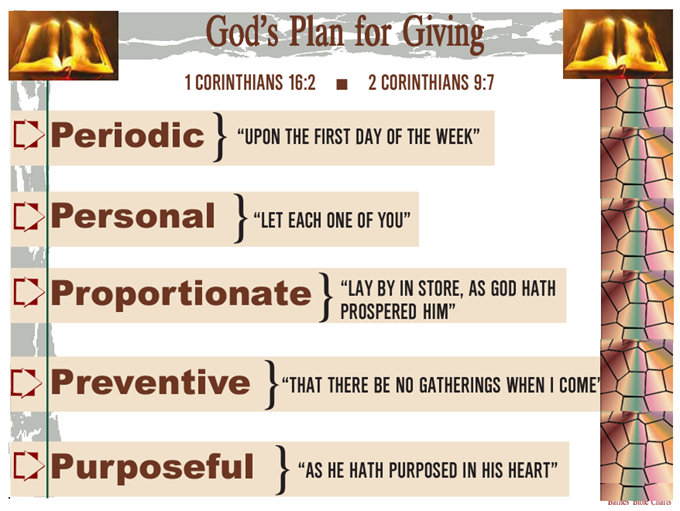
And upon the first day of the week, when the disciples came together to break bread, Paul preached unto them, ready to depart on the morrow; and continued his speech until midnight” (Acts 20:7). They ASSEMBLE together IN PERSON (1Cor 11:17-34) to worship, and to fellowship in the work of the church. “Upon the first day of the week let every one of you lay by him in store, as God hath prospered him, that there be no gatherings when I come” (1 Corinthians 16:2).

They ASSEMBLE together to learn of Him, and pray through Him who saved them; “And they continued stedfastly in the apostles’ doctrine and fellowship, and in breaking of bread, and in prayers (Acts 2:42).

From these verses (Acts 2:42; 20:7; 1Cor 11:17-34; 16:1-2; Eph 5:19; Col 3:16; Heb 10:24-25), the SAVED will ASSEMBLE with the church in person to do these 5 things.

  1. They will have COMMUNION in the observation of the Lord’s Supper, proclaiming the Lord’s death till He comes. (1Cor 11:17-34).
  2. They will HEAR a message from God’s word that was once for all delivered to the saints through the Apostles, who spoke and wrote them for us today. (Acts 2:42; John 16:13; 20:30-31; 1Cor 2:9-13; Eph 3:1-4; 4:11-12; Jude 3).
  3. They will sing with UNDERSTANDING to one another, “teaching and admonishing one another in psalms and hymns and spiritual songs, singing with grace in your hearts to the Lord.” (1Cor 14:15; Eph 5:19; Col 3:16).
  4. They will make REQUESTS to God in Prayer for one another. They will pray for boldness to spread the gospel (Acts 4:29). They will pray for one another (Phil 4:6). They will pray giving thanks to God (1Thess 5:17-18). They will pray and watching in anticipation of the Lord’s return (Rom 12:12; Eph 6:18; Col 4:2; 1Pet 4:7).
  5. They will CONTRIBUTE to the work of the local church through the giving of their means which is true biblical fellowship. (Acts 2:42; 1Cor 16:1-2; 2Cor 8-9; Phil 1:5, 4:14-15).
  6. They will provoke one another’s HEART to love and good works. (Heb 10:24-25). This is accomplished in person through their songs, their prayers, the teaching, the Lord’s supper and their contributions.

These are the first two of the five things the SAVED do. Next article will be 3 more things the saved do.

Agape,

Spencer

You’re invited to visit with us and check out one of the assemblies at the Franklin and Juniper St church of Christ.

Public Conversations

Therefore disputed he in the synagogue with the Jews, and with the devout persons, and in the market daily with them that met with him.”  (Acts 17:17)

For several years it has been my custom to carry my bible into the public and to read privately, but openly. Many folks will comment, or be complimentary. Many more will walk on by. A few will stop to talk about their faith.

This article is a blending of several of those conversations. These two examples are representative of almost all of them. Most of these folks have the identical objections to the Bible. The objections are so common that I’ve actually made a list of the top 10 most common ones along with scriptural answers.

I have not raised my voice, become angry (Jas 1:20), and have avoided any rudeness on my part. I wish it could be said of the other part. Some have been very pleasant and have resulted in a few conversions.

May these be of aid in your efforts. 

A conversation on baptism.

(A blending of several actual conversations)

Person A: You don’t have to be baptized to be saved? You just need to ask Jesus into your heart.

Person B: So, you believe this version of Mark 16:16? “He that believeth and is (NOT) baptized shall be saved.”

Person A: My grandma was a wonderful woman. She never went to church, never had religion, but she was so kind to all.

Person B: So, you believe this version of Mark 16:16? “He that believeth (NOT) and is (NOT) baptized shall be saved.” Are you suggesting a works-based salvation?

Person A: I have a friend whose baby was baptized (sprinkled).

Person B: So, they believe this version of Mark 16:16? “He that believeth (NOT) and is baptized (sprinkled) shall be saved.” Babies are incapable of faith, so they’re safe according to Jesus (Mark 10:13-15).

Person A: I have heard that there’s only heaven and not eternal hell.

Person B: So, you believe this version of Mark 16:16? “He that believeth and is baptized shall (NOT) be saved.” Jesus said, “And these shall go away into everlasting punishment: but the righteous into life eternal.” (Matt 25:46). Jesus uses the same word (aiōnion) to describe both. Jesus said, “He that believeth and is baptized shall be saved; but he that believeth not shall be damned.” It’s so simple, let’s just do what Jesus said.

Person A: you’re going to hell if you believe baptism saves you.

Person B: “The like figure whereunto even baptism doth also now save us (not the putting away of the filth of the flesh, but the answer of a good conscience toward God,) by the resurrection of Jesus Christ:” (1Pet 3:21)

Person A: what about the thief on the cross? Ha! Gotcha.

Person B: The thief received his inheritance before the testator died. (Think about how WILLS work). Now that the Testator (Jesus) has died (and rose again to heaven), we are bound to follow His will. “For where a testament is, there must also of necessity be the death of the testator. [17] For a testament is of force after men are dead: otherwise it is of no strength at all while the testator liveth.” (Heb 9:16-17)

Person A: (screaming) YOU DON’T HAVE TO BE BAPTIZED TO BE SAVED!!!!!

Person B: I see that you’re upset. I’ll not talk to you about it anymore. (Matt 15:14)

Person A: Satan quoted scripture too.

Person B: have a nice day.

“That’s just your opinion”

(Based on an actual conversation)

Person B is handing out religious tracks at the fair.

Person A: (using person B’s personal pocket Bible they used to show scripture) the Bible says; “He that believeth and is baptized shall be saved; but he that believeth not shall be damned.” (Mark 16:16)

Person B: That’s just your opinion.

Person A: wait, what? I just read the scripture directly.

Person B: That’s just your interpretation.

Person A: I didn’t interpret nor did I comment. I just quoted the passage. We could read the whole chapter (Bible) and it wouldn’t change it.

Person B: You’re just a legalist.

Person A: How’s that? I’m reading the words of Jesus. Are you saying Jesus is a legalist too?

Person B: We’re saved by grace alone, through faith alone, in Christ alone.

Person A: Are you interested in reading the only passage in all of the Bible that says “by faith alone?”

Person B: (closes their pocket New Testament & places it in back pocket) “nope.”

Person A: I’m sorry to have bothered you. Have a nice day.

Person B: ☹

Agape,

Spencer is an evangelist for the church of Christ at Franklin & Juniper in Borger Texas.

Lessons from 1 Peter: how to be READY

but sanctify in your hearts Christ as Lord: being ready always to give answer to every man that asketh you a reason concerning the hope that is in you, yet with meekness and fear: (1Peter 3:15

READ. 1Tim 4:13; 2Tim 3:14-17; Act 17:11

EAGER. Acts 26:2

ALWAYS. See Paul, Acts 23:1; 26:2

DEFENSE, not defensive. 2Tim 3:15-16.

YOU can do it. Eph 3:3-4; Titus 1:11