Gratitude Rejoices at Repentance

Gratitude; Rejoicing in Restoration.
(Luke 15:25–32)

The music was already swelling when the elder brother approached the house. Rejoicing drifted through the air along with the scent of roasted calf. Inside, the father had opened the storeroom of joy. A son once dead was alive, once lost was found. Yet one voice refused to join in the chorus: the brother who had never left.

Ingratitude begins as a whisper: “I’ve been overlooked.” The elder son could not restrain himself. “This son of yours came, who has devoured thy living with harlots, thou hast killed for him the fatted calf!” (v. 30). Notice the language: this son of yours. In one breath, ingratitude severed the tie of brotherhood. The repentant prodigal became a stranger, and the elder brother became judge.

Restoration requires rejoicing with those who rejoice (Romans 12:15), but ingratitude demands a ledger: What have I received? What has he lost? The father’s answer should have been enough: “Son, thou art ever with me, and all that I have is thine” (v. 31). But ingratitude counts deficits.

He overlooked existing blessings the way a man starves beside a banquet. Every day he had walked the fields that were already his, and had eaten from tables never denied him. Yet ingratitude rewrote history: “these many years do I serve thee, neither transgressed I at any time thy commandment: and yet thou never gavest me a kid…” (v. 29). The lie is breathtaking. He had not been a slave but a son. He had not been denied but entrusted. Ingratitude turned sonship into servitude and generosity into grudge.

The elder brother’s complaint was not about goats or calves; it was about merit. I stayed. I worked. I deserved. The prodigal’s return exposed the elder’s idolatry. Bitterness judges repentance and finds it wanting (cf. Hebrews 12:15). The father’s feast became an offense because it celebrated restoration without recognition for himself.

Worst of all, his ingratitude led to a self-imposed separation from the repentant. The prodigal had come home repentant, rehearsing confession. The father had run, embraced, restored. But the elder brother refused to cross the threshold. His ingratitude built a wall where none existed. The repentant son was inside, clothed in the best robe, ring on his finger, sandals on his feet. The unrepentant brother stood outside, arms crossed, heart closed. The father left the rejoicing to plead with him; a heartbreaking moment of reversal. His prodigal son was inside, but his faithful son was now outside.

We never learn if the elder brother ever softened, we’re left to examine ourselves. When someone returns, when someone repents, when someone is restored, will we stand outside, cataloging slights? Or will we hear the music, remember the blessings, and join the rejoicing (Luke 15:7)?

Agape
spencer

6 things Christ has for us

All Those Spiritual Blessings | The Heaton File

The Abundant Blessings We Have in Christ

As faithful believers, our union with Jesus Christ grants us a treasure trove of spiritual riches, transforming our lives and securing our eternal destiny. The Bible reveals many profound blessings we receive through Christ. Here are 6 amazing blessings we have through Christ.

First, we experience cleansing from sin through Christ’s atoning work. The Bible declares, “But if we walk in the light, as he is in the light, we have fellowship one with another, and the blood of Jesus Christ his Son cleanseth us from all sin” (1 John 1:7, KJV). Additionally, Hebrews 9:14 assures us, “How much more shall the blood of Christ, who through the eternal Spirit offered himself without spot to God, purge your conscience from dead works to serve the living God?” Through Christ, our sins are washed away (in baptism, see Acts 22:16), freeing us from guilt and enabling us to live in righteousness.

Second, we are given the hope of heaven, a confident expectation of eternal life with God. Colossians 1:5 speaks of “the hope which is laid up for you in heaven, whereof ye heard before in the word of the truth of the gospel.” Titus 1:2 further confirms, “In hope of eternal life, which God, that cannot lie, promised before the world began.” This hope anchors our souls, giving us peace and purpose as we await our heavenly home.

Third, we receive redemption in His blood, the price paid for our freedom from sin’s penalty. Ephesians 1:7 states, “In whom we have redemption through his blood, the forgiveness of sins, according to the riches of his grace.” Likewise, 1 Peter 1:18-19 reminds us, “Ye were not redeemed with corruptible things, as silver and gold… but with the precious blood of Christ, as of a lamb without blemish and without spot.” Christ’s sacrifice secures our salvation, a gift we could never earn.

Fourth, Christ serves as our intercessor between God and man, bridging the gap sin created. Hebrews 7:25 proclaims, “Wherefore he is able also to save them to the uttermost that come unto God by him, seeing he ever liveth to make intercession for them.” 1 Timothy 2:5 adds, “For there is one God, and one mediator between God and men, the man Christ Jesus.” Through His intercession, we have constant access to God’s throne.

Fifth, we are blessed with all spiritual blessings in Christ. Ephesians 1:3 declares, “Blessed be the God and Father of our Lord Jesus Christ, who hath blessed us with all spiritual blessings in heavenly places in Christ.” 2 Peter 1:3 echoes, “His divine power hath given unto us all things that pertain unto life and godliness.” These blessings equip us for a life of faith and service.

Finally, we are reconciled to God through Christ, restored to a right relationship with Him. Romans 5:10 assures, “For if, when we were enemies, we were reconciled to God by the death of his Son, much more, being reconciled, we shall be saved by his life.” Colossians 1:20 reinforces, “And, having made peace through the blood of his cross, by him to reconcile all things unto himself.” Reconciliation brings us back to God’s embrace, healing the divide caused by sin (Isaiah 59:2).

These six blessings in Christ reveal the depth of God’s love and the sufficiency of Christ’s work. They are ours by obedient faith in Him, offering joy and security for this life and eternity.

agape

Jesus is the one to follow when we’re HURTING

Hope and Healing in Christ for the Hurting

Life is full of hardship. Suffering, loss, and disappointment are part of the human experience. Some struggle with grief, others with betrayal, loneliness, or physical pain. No one is immune to the trials of life. Yet, in the midst of sorrow, there is One who offers healing, hope, and peace—Jesus Christ.

Jesus understands suffering because He experienced it firsthand. Isaiah 53:3 describes Him as “a man of sorrows, and acquainted with grief.” He knew what it was like to be rejected, betrayed, and physically tormented. He endured humiliation and pain on the cross, bearing the weight of humanity’s sin. Because of this, He is uniquely qualified to comfort those who are hurting. Hebrews 4:15 assures us that we have a Savior who can sympathize with our weaknesses, for He was “tempted like as we are, yet without sin.”

Hope in Christ for the Hurt of This Life

Pain can make life feel unbearable. The world offers temporary distractions, but they cannot bring lasting peace. Only Christ provides true hope. John 16:33 reminds us of this reality: “In the world ye shall have tribulation: but be of good cheer; I have overcome the world.” The suffering of this present life is temporary, but the joy found in Christ is eternal. Paul declares in Romans 8:18, “For I reckon that the sufferings of this present time are not worthy to be compared with the glory which shall be revealed in us.” When we trust in Christ, we gain a perspective that allows us to endure, knowing that something far greater awaits.

Understanding from Christ, Who Endured Suffering

One of the most comforting truths about Jesus is that He understands human suffering. He was betrayed by a close friend (Luke 22:48; Psalm 41:9), falsely accused (Matthew 26:59-60), mocked (Matthew 27:29-31), and crucified (Luke 23:33). He knows what it feels like to be abandoned, rejected, and mistreated. This means that when we pour out our hearts to Him, we are speaking to One who truly understands. Psalm 34:18 assures us, “The Lord is nigh unto them that are of a broken heart.”

Rest and Peace in His Forgiveness and Mercy

Many suffer not only from external circumstances but also from the weight of guilt and shame. Sin leaves scars, and the burden of past mistakes can feel overwhelming. Yet, Jesus offers complete forgiveness. Matthew 11:28 invites us, “Come unto me, all ye that labour and are heavy laden, and I will give you rest.” Through His sacrifice, we are freed from sin’s condemnation. Psalm 103:12 declares, “As far as the east is from the west, so far hath he removed our transgressions from us.” In Christ, we find peace, knowing that our past does not define us.

Truth, Life, and True Joy

Many search for meaning in temporary pleasures, but Jesus alone is the source of true life. He declares in John 14:6, “I am the way, the truth, and the life.” The joy He gives is not dependent on circumstances but is rooted in a relationship with Him. John 15:11 states, “These things have I spoken unto you, that my joy might remain in you, and that your joy might be full.”

Jesus, Our Intercessor

For those who feel distant from God, Jesus bridges the gap. 1 Timothy 2:5 tells us, “For there is one God, and one mediator between God and men, the man Christ Jesus.” He intercedes for us before the Father, offering continual access to God’s grace and help.

He Never Leaves nor Forsakes Us

Loneliness is one of the deepest forms of suffering. Yet, Jesus promises, “I will never leave thee, nor forsake thee” (Hebrews 13:5). Even when we feel abandoned, He is always near.

Good Can Come Despite the Pain

While suffering is hard, God can bring blessings out of trials. Romans 8:28 reassures us, “And we know that all things work together for good to them that love God.” Even when we don’t understand, we can trust that He can bring about good despite the pain and suffering in this life.

Conclusion

No matter what pain or sorrow you carry, Jesus offers hope and healing. Turn to Him, and you will find peace, understanding, and the strength to endure. “Casting all your care upon him; for he careth for you.” (1 Peter 5:7)

Agape

Spencer

There is a way you may know if you have eternal life.

Let’s talk about Jesus #5; He FORGIVES sin

Copyright Rob Baker, used with permission.

When Jesus saw their faith, he said unto the sick of the palsy, Son, thy sins be forgiven thee.

(Mark 2:5).

When speaking about Jesus, we must remember that He is able to forgive us our SINS. “And he is the propitiation for our sins: and not for ours only, but also for the sins of the whole world” (1John 2:2).

Some see license to sin in the above verse, but when carefully reading the context they’ll see the exact opposite. “My little children, these things write I unto you, that ye sin not. And if any man sin, we have an advocate with the Father, Jesus Christ the righteous” (1John 2:1).

For all have sinned, and come short of the glory of God” (Rom 3:23). We all sin, but what is that? Sin Separates us from God and is against Him, (Isa 59:2). It Imprisons us, (Rom 6:16; 23), and we have Nothing to pay the cost (Rom 3:23).

We need the forgiveness of Christ.

Sadly, some say their sin is so bad that Jesus can’t forgive them, or still feel guilt even after having faithfully obeying the gospel. Maybe we need a reminder of the sins Jesus FORGIVES for those that obey Him. We have a couple of lists of sins that Saints can have forgiven through Christ.

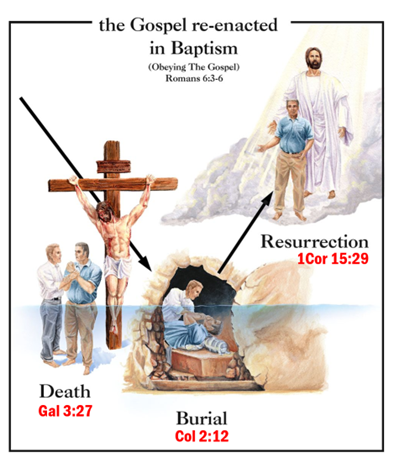
Jesus forgives Fornicators and all manner of sexual sins. “Know ye not that the unrighteous shall not inherit the kingdom of God? Be not deceived: neither fornicators, nor idolaters, nor adulterers, nor effeminate, nor abusers of themselves with mankind, Nor thieves, nor covetous, nor drunkards, nor revilers, nor extortioners, shall inherit the kingdom of God. And such were some of you: but ye are washed, but ye are sanctified, but ye are justified in the name of the Lord Jesus, and by the Spirit of our God” (1Cor 6:9-11). Notice that it says, “such WERE some of you.” They had repented and been forgiven, but how? It says, “ye are WASHED.” How were they washed? Look to what the writer said had happened to him when he obeyed the gospel. “And now why tarriest thou? arise, and be baptized, and wash away thy sins, calling on the name of the Lord” (Acts 22:16). Paul had his sins washed away through his faithful baptism in water.

Jesus forgives Outbursts of wrath, Drunkenness and Revelries which are works of the flesh. “Now the works of the flesh are manifest, which are these; Adultery, fornication, uncleanness, lasciviousness, Idolatry, witchcraft, hatred, variance, emulations, outbursts of wrath, strife, seditions, heresies, Envyings, murders, drunkenness, revellings, and such like: of the which I tell you before, as I have also told you in time past, that they which do such things shall not inherit the kingdom of God” (Gal 5:19-21). This passage shows that Jesus also forgives our Greed, Idolatry, theft, strife, and seditions. 

Jesus even forgives Violent & Murderous crimes as seen in the forgiveness of Paul. As Saul of Tarsus, he once persecuted the church of Christ. “I verily thought with myself, that I ought to do many things contrary to the name of Jesus of Nazareth. Which thing I also did in Jerusalem: and many of the saints did I shut up in prison, having received authority from the chief priests; and when they were put to death, I gave my voice against them. And I punished them oft in every synagogue, and compelled them to blaspheme; and being exceedingly mad against them, I persecuted them even unto strange cities” (Acts 26:9-11).

 He too found forgiveness in Christ; “This is a faithful saying, and worthy of all acceptation, that Christ Jesus came into the world to save sinners; of whom I am chief. Howbeit for this cause I obtained mercy, that in me first Jesus Christ might shew forth all longsuffering, for a pattern to them which should hereafter believe on him to life everlasting. Now unto the King eternal, immortal, invisible, the only wise God, be honour and glory for ever and ever. Amen.” (1Tim 1:15).

As noted above, we know how he obtained mercy; by obeying the Gospel, “And now why tarriest thou? arise, and be baptized, and wash away thy sins, calling on the name of the Lord” (Acts 22:16). It is what he taught everyone, “Know ye not, that so many of us as were baptized into Jesus Christ were baptized into his death? Therefore we are buried with him by baptism into death: that like as Christ was raised up from the dead by the glory of the Father, even so we also should walk in newness of life. For if we have been planted together in the likeness of his death, we shall be also in the likeness of his resurrection: Knowing this, that our old man is crucified with him, that the body of sin might be destroyed, that henceforth we should not serve sin” (Romans 6:3-6).

Jesus also forgives all manner of Evil, Envy, “and Such like” (Gal 5:21b).

Jesus FORGIVES sin. He has the power and the authority to forgive us of all unrighteousness, but we must obey the gospel and be faithful to Him. “Though he were a Son, yet learned he obedience by the things which he suffered; And being made perfect, he became the author of eternal salvation unto all them that obey him” (Hebrews 5:8-9).

There is only one sin that never has forgiveness. “Verily I say unto you, All sins shall be forgiven unto the sons of men, and blasphemies wherewith soever they shall blaspheme: But he that shall blaspheme against the Holy Ghost hath never forgiveness, but is in danger of eternal damnation” (Mark 3:28-29).

What is this unforgiveable sin? It is any unrepentant sin that a person is unwilling to put away before death or the return of Christ. This is the blasphemy of the Holy Spirit. Disobedience to the gospel is blaspheme of the Spirit, for it was the Holy Spirit that has revealed to us the commands of God through the inspired word. If we are unwilling to repent, we are committing the “sin leading to death” (1John 5:16).

This is the confidence we have in Christ, the forgiveness of sins. “My little children, these things write I unto you, that ye sin not. And if any man sin, we have an advocate with the Father, Jesus Christ the righteous: And he is the propitiation for our sins: and not for ours only, but also for the sins of the whole world. And hereby we do know that we know him, if we keep his commandments” (1John 2:1-3).

Jesus has power to FORGIVE sins.

Agape,

Spencer

Spencer is an evangelist for the Franklin & Juniper st church of Christ in Borger, Tx.

This is part of a series of articles about reasons to Talk About Jesus.

Why did you Doubt? pt4

The previous articles looked at doubt from Disbelief, Obstacles, Untruths, and now we look at doubt that comes from strife & divisive behavior.

Casting doubt is the next on our list of reasons why we doubt. There are some outside of the church that cast doubt, but there are also some inside the church.

The church is wonderful. Jesus said this about the church, “I will build my church; and the gates of hell shall not prevail against it” (Matt 16:18b). He built it, and it’s indestructible, but that doesn’t mean some won’t try.

For the most part, folks aren’t necessarily trying to wreck the church, but we can be casting doubt upon it through certain attitudes and actions. This leads to some leaving the church.

People do not like conflict. When we fail to resolve issues in kind, loving and truthful ways it leads to disappointment and division. Some leave to another congregation. Others leave the church for a denomination.

To ward off doubt, we need to identify our negative behaviors without casting more doubt!

5 things we do to cast doubt upon others in the church.

The first negative behavior that casts doubt on others is BACKBITING. “A froward man soweth strife: and a whisperer separateth chief friends” (Prov 16:28). In Romans, backbiting is in the list of the unrighteous (Rom 1:30. It’s among the list of thing Paul hoped to find missing when he visited the church at Corinth (2Cor 12:20). Backbiting is defaming speech to attack the good name or reputation of a person by uttering anything false or injurious. This can cast doubt on the faith of some by tearing down those who teach, aid, or example for others. This kind of doubt leads to trust issues and divisions.

The next way we could cause doubt is through RIVALRIES. The church at Corinth had this problem. “For ye are yet carnal: for whereas there is among you envying, and strife, and divisions, are ye not carnal, and walk as men” (1Cor 3:3)? The first chapter shows the root of this rivalry was about who baptized who. In chapter six there was rivalry caused by doing wrong to one another and they were taking their grievances before unbelievers (6:1-6). This causes doubt about the church inside and outside the church. “For where envying and strife is, there is confusion and every evil work” (James 3:16). This sort of doubt causing gives occasion for the enemies of God to blaspheme.

EVIL Speaking is another area when we might cast doubt. I recall a friend telling me about when he was a kid riding home with his parents from worship. They began to speak about something a brother in Christ had done when his father stopped the conversation. His father told him that he didn’t want to talk poorly about a brother in front of the kids. Perhaps the brother would repent, but if they had poisoned the mind of the children about this brother, they may harbor ill feelings toward him into adulthood. “Wherefore laying aside all malice, and all guile, and hypocrisies, and envies, and all evil speakings, As newborn babes, desire the sincere milk of the word, that ye may grow thereby” (1Pet 2:1-2). “A false witness that speaketh lies, and he that soweth discord among brethren” (Prov 6:12-14; 19). This kind of doubt leads to division between brethren and ultimately a weaker congregation.

The next attitude is ANGER toward others in the church. “But now ye also put off all these; anger, wrath, malice, blasphemy, filthy communication out of your mouth.” (Col 3:8, 21; Eph 4:31, 26). Animosity is in opposition to loving kindness. “Put on therefore, as the elect of God, holy and beloved, bowels of mercies, kindness, humbleness of mind, meekness, longsuffering. (Col 3:12). When people come together there may times when we disappoint each other, but we must not allow this to develop into anger and cause division and doubt about our brethren or doubt about the church. “Beloved, let us love one another: for love is of God; and every one that loveth is born of God, and knoweth God. He that loveth not knoweth not God; for God is love” (1John 4:7-8).

Lastly, there is doubt cast on another when someone lays claim to special KNOWLEDGE that others lack. Paul warned Timothy about these people. “But foolish and unlearned questions avoid, knowing that they do gender strifes” (2Tim 2:23). “He is proud, knowing nothing, but doting about questions and strifes of words, whereof cometh envy, strife, railings, evil surmisings” (1Tim 6:4). When people engage in doubtful disputations (Rom 14:2) it may cause a weaker brother to stumble. Paul also wrote about KNOWLEDGE that a strong brother has that a weaker brother does not have. In these cases, the stronger brother is to forebear so as not to cause stumbling in the weaker.

But take heed lest by any means this liberty of yours become a stumblingblock to them that are weak. For if any man see thee which hast knowledge sit at meat in the idol’s temple, shall not the conscience of him which is weak be emboldened to eat those things which are offered to idols; And through thy knowledge shall the weak brother perish, for whom Christ died” (1Cor 8:9-11)?

Casting doubt about brethren casts doubt about the church for the church is the brethren. There will be disagreements, disappointments, and differences in understanding. However, these can be overcome through Love for God, Love for His word and Love for one another.

Agape,

Spencer

This is part 4 of a series on Overcoming Doubt.

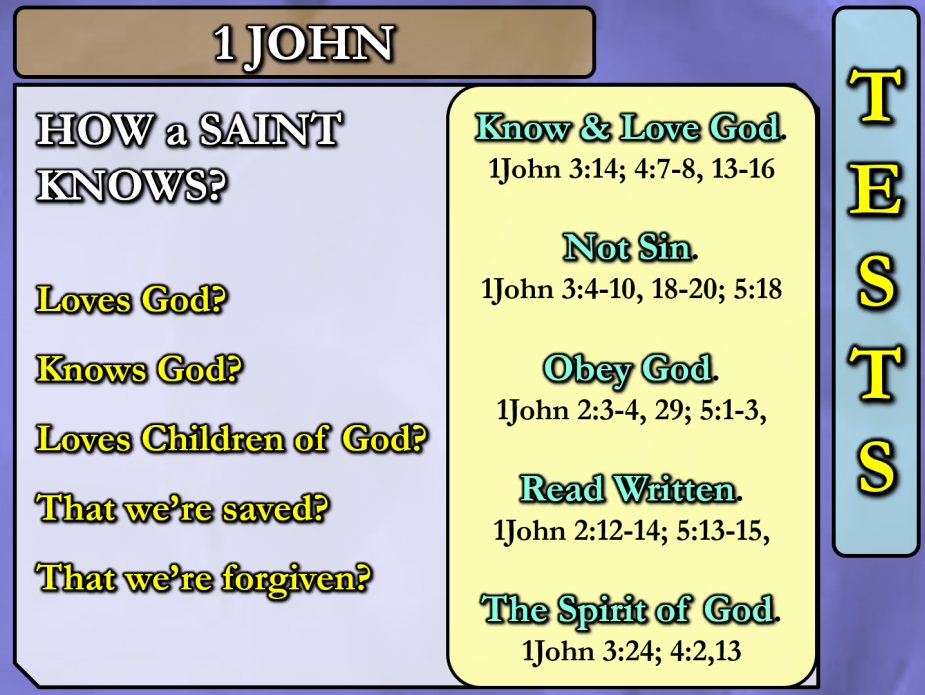
What a Saint KNOWS in 1John

The Letter of 1John is an outline of the things the Saint KNOWS about salvation, love, sin, the Holy Spirit and Obedience.

When we read it, we can use it as a personal Test or examination of ourselves.

2Co 13:5 Examine yourselves, whether ye be in the faith; prove your own selves. Know ye not your own selves, how that Jesus Christ is in you, except ye be reprobates?

Here are ALL the verses in 1John about knowing.

KNOW. 31 verses.

1Jo 2:3 And hereby we do know that we know him, if we keep his commandments.

 1Jo 2:4 He that saith, I know him, and keepeth not his commandments, is a liar, and the truth is not in him.

 1Jo 2:5 But whoso keepeth his word, in him verily is the love of God perfected: hereby know we that we are in him.

 1Jo 2:11 But he that hateth his brother is in darkness, and walketh in darkness, and knoweth not whither he goeth, because that darkness hath blinded his eyes.

 1Jo 2:13 I write unto you, fathers, because ye have known him that is from the beginning. I write unto you, young men, because ye have overcome the wicked one. I write unto you, little children, because ye have known the Father.

 1Jo 2:14 I have written unto you, fathers, because ye have known him that is from the beginning. I have written unto you, young men, because ye are strong, and the word of God abideth in you, and ye have overcome the wicked one.

 1Jo 2:18 Little children, it is the last time: and as ye have heard that antichrist shall come, even now are there many antichrists; whereby we know that it is the last time.

 1Jo 2:20 But ye have an unction from the Holy One, and ye know all things.

 1Jo 2:21 I have not written unto you because ye know not the truth, but because ye know it, and that no lie is of the truth.

 1Jo 2:29 If ye know that he is righteous, ye know that every one that doeth righteousness is born of him.

 1Jo 3:1 Behold, what manner of love the Father hath bestowed upon us, that we should be called the sons of God: therefore the world knoweth us not, because it knew him not.

 1Jo 3:2 Beloved, now are we the sons of God, and it doth not yet appear what we shall be: but we know that, when he shall appear, we shall be like him; for we shall see him as he is.

 1Jo 3:5 And ye know that he was manifested to take away our sins; and in him is no sin.

 1Jo 3:6 Whosoever abideth in him sinneth not: whosoever sinneth hath not seen him, neither known him.

 1Jo 3:14 We know that we have passed from death unto life, because we love the brethren. He that loveth not his brother abideth in death.

 1Jo 3:15 Whosoever hateth his brother is a murderer: and ye know that no murderer hath eternal life abiding in him.

 1Jo 3:19 And hereby we know that we are of the truth, and shall assure our hearts before him.

 1Jo 3:20 For if our heart condemn us, God is greater than our heart, and knoweth all things.

 1Jo 3:24 And he that keepeth his commandments dwelleth in him, and he in him. And hereby we know that he abideth in us, by the Spirit which he hath given us.

 1Jo 4:2 Hereby know ye the Spirit of God: Every spirit that confesseth that Jesus Christ is come in the flesh is of God:

 1Jo 4:6 We are of God: he that knoweth God heareth us; he that is not of God heareth not us. Hereby know we the spirit of truth, and the spirit of error.

 1Jo 4:7 Beloved, let us love one another: for love is of God; and every one that loveth is born of God, and knoweth God.

 1Jo 4:8 He that loveth not knoweth not God; for God is love.

 1Jo 4:13 Hereby know we that we dwell in him, and he in us, because he hath given us of his Spirit.

 1Jo 4:16 And we have known and believed the love that God hath to us. God is love; and he that dwelleth in love dwelleth in God, and God in him.

 1Jo 5:2 By this we know that we love the children of God, when we love God, and keep his commandments.

 1Jo 5:13 These things have I written unto you that believe on the name of the Son of God; that ye may know that ye have eternal life, and that ye may believe on the name of the Son of God.

 1Jo 5:15 And if we know that he hear us, whatsoever we ask, we know that we have the petitions that we desired of him.

 1Jo 5:18 We know that whosoever is born of God sinneth not; but he that is begotten of God keepeth himself, and that wicked one toucheth him not.

 1Jo 5:19 And we know that we are of God, and the whole world lieth in wickedness.

 1Jo 5:20 And we know that the Son of God is come, and hath given us an understanding, that we may know him that is true, and we are in him that is true, even in his Son Jesus Christ. This is the true God, and eternal life.

If you live in the Borger area, We invite you to join us at 9:30am each Sunday Morning for Bible Study on 1John.

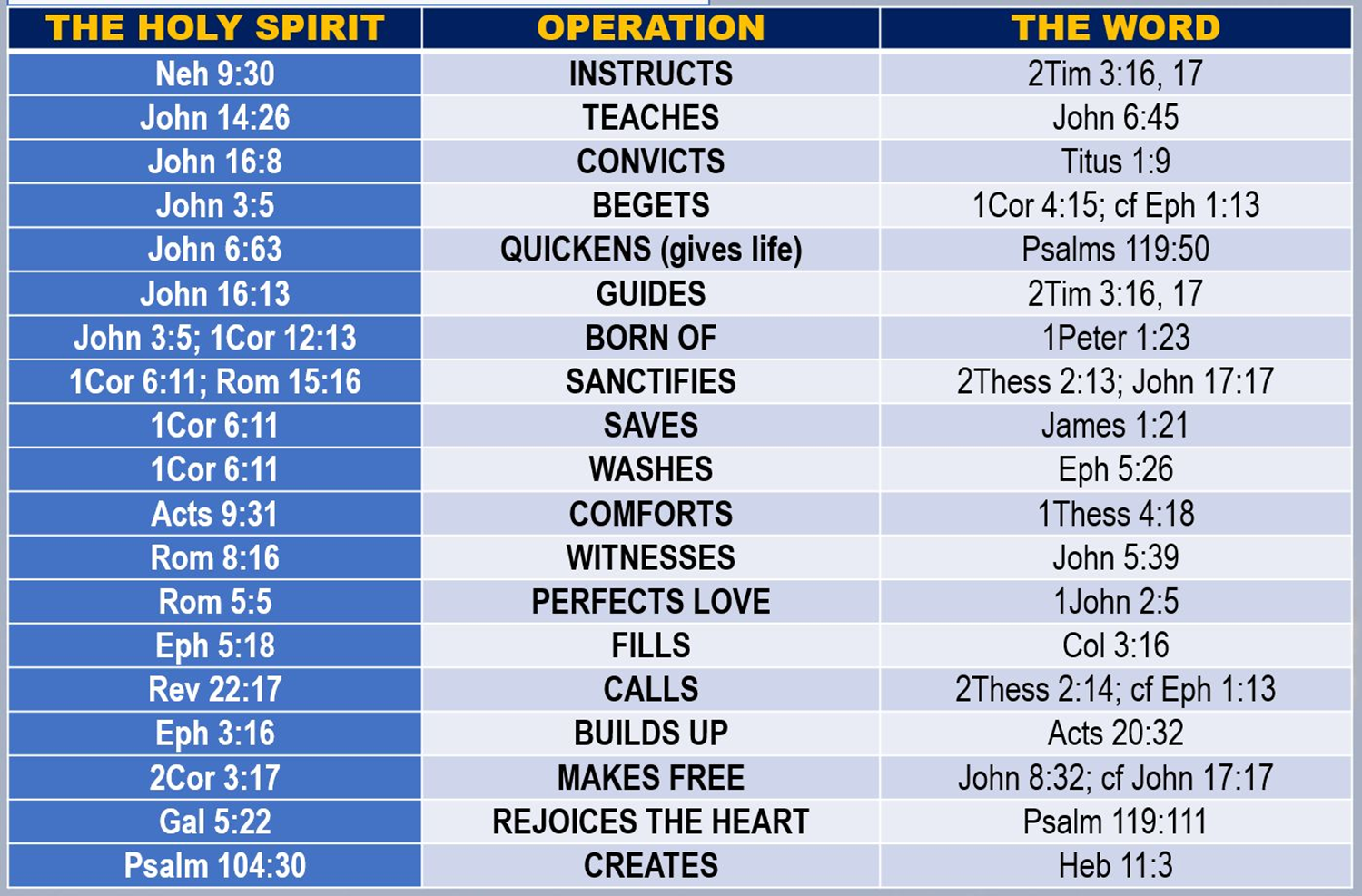
The Holy Spirit and the Written Word of God are said to do the same thing.

When a Person uses a tool, we know it was the Person that does the work through the use of the tool.

What can the 7 Sayings of Jesus on the Cross teach us about our pain?

Jesus said, “Take up your cross and follow me” (Matt 16:24). We are to die to self and live for Him.

The Gospels reveal 7 sayings of Jesus when He was on His cross. These sayings have important meaning for themselves, but they also leave an example for us who are suffering on our crosses.

What can the 7 sayings of Jesus on the cross teach us about handling our own pain, suffering, & earthly hurting?

Father, forgive them; for they know not what they do.” (Luke 23:34)

We often suffer at the hands of those close to us. Jesus suffered at the hands of God’s chosen people. We will often complain about what they should do, but didn’t do. Yes, they shoulda, and coulda, but didn’t. This powerful example of Jesus teaches us to be a forgiving people. We need to complain with grace, ready to Forgive, or Forebear, or Forget (release from our heart). Forgive those that are hurting you…

But Stay on the cross.

To day shalt thou be with me in paradise.” (Luke 23:43)

When others fail, remember that God doesn’t fail. There’s hope in the midst of our pain. There’s even hope when our pain is self induced. The thief admitted his guilt, and was a mocker along with the other one, but later he had a change of heart. It’s then he looked to the only one that could help, Jesus. Sometimes our suffering is self induced, but the Lord is faithful to forgive those that are in Him (1John 1:9). Repent…

But Stay on the cross.

Woman, behold, thy son! Behold, thy mother!” (John 19:26-27)

Your friends may have turned their back on you. I hate that. However, If you’ll look, you’ll see that not everyone has left you. Some are nearby unable to take away your pain, But they can take some of your responsibilities. Just ask them for help. Some of us just don’t know what to do, but we’re willing if you’ll let us know.

When you’re overwhelmed with your main priority, let go of some of the other important, but lesser stuff.

But Stay on the cross.

My God, my God, why hast thou forsaken me?” (Mat 27:46)

People will let you down at your lowest point. The disciples left Jesus. It will also APPEAR that God has left you too. He hasn’t. He’s with you. While this saying has prophetic significance, it is a reminder of how lonely we can feel in our darkest moments. We need to remember that Jesus said, “I will never leave thee, nor forsake thee” (Heb 13:5).

But Stay on the cross.

I thirst.” (John 19:28-29)

Life is a dry, and thirsty struggle, metaphorically speaking. Jesus asked the woman at the well for a drink. He received a bit of a rebuke (John 4:7-9). Isn’t that the way it goes sometimes? Jesus said, “I thirst,” and He received sour wine. When we need help we sometimes receive a sour response. Ask anyway…

But Stay on the cross.

It is finished.” (John 19:30)

Jesus stayed on that cross to the very end because He knew that what He was doing was essential for salvation for the world. (cf. Matt 16:21-23; 26:52-55). Keep on pushing through the pain until you complete your duty as a child of God. It’s important that we stay the course of faithfulness. We may not see the benefits until much later (Rev 2:10),

But Stay on the cross.

Father, into thy hands I commend my spirit.” (Luke 23:46)

Even when all others fail you, God never does. Trust God. “For the which cause I also suffer these things: nevertheless I am not ashamed: for I know whom I have believed, and am persuaded that he is able to keep that which I have committed unto him against that day.” (2Tim 1:12). Whatever happens to you…

Stay on the cross.

Agape,

Spencer

let’s talk about how to FORGIVE

FORGIVE.

FAILURE to Forgive will jeopardize our salvation. “For if ye forgive men their trespasses, your heavenly Father will also forgive you: But if ye forgive not men their trespasses, neither will your Father forgive your trespasses” (Matt 6:14-15).

OFFENDED party is the one that OFFERS the OPPORTUNITY. Without forgiveness, the repentant party has no opportunity to be restored. “Then the lord of that servant was moved with compassion, and loosed him, and forgave him the debt” (Matt 18:27).

RELEASE is the form of forgiveness you can practice when the offending party can’t (death or absence) or won’t ask for forgiveness. “Then said Jesus, Father, forgive them; for they know not what they do” (Luke 23:34; cf Acts 2:36-38).

GOD can forgive, will forgive, and practices forgiveness. “Son, thy sins be forgiven thee” (Mark 2:5).

IDOLATRY is a form of being unforgiving. You’re elevating self above God. “And he was angry, and would not go in: therefore came his father out, and intreated him. And he answering said to his father, Lo, these many years do I serve thee, neither transgressed I at any time thy commandment: and yet thou never gavest me a kid, that I might make merry with my friends: But as soon as this thy son was come, which hath devoured thy living with harlots, thou hast killed for him the fatted calf” (Luke 15:28-30).

VENGEANCE is the Lords. We won’t forgive for the lack of justice. “Dearly beloved, avenge not yourselves, but rather give place unto wrath: for it is written, Vengeance is mine; I will repay, saith the Lord” (Rom 12:19).

EXONERATION is what we need and the ultimate goal. “And when they had nothing to pay, he frankly forgave them both” (Luke 7:42; cf Rom 5:8-10).

From the mouth of Babes

“When it’s thundering, that’s just God bowling.”

“When it’s lightening, that’s God taking pictures.”

“When it’s raining, that’s God crying.”

Perhaps many of us have heard these as children from our parents trying to comfort us. While their intentions were good, the doors were opened for more errors.

I remember hearing a little girl refer to spirits, witches, demons, devils & ghosts to explain sickness, troubles and strange events in her young life. She said, “that’s what my mom told me.”

And this mom is a church goer!!

This little person continued to describe other things she was taught from her parents. “The devil has horns, a red face and a long tale.” Truly sad.

You think that these lies will leave the heart of an imaginative child and not follow them into adulthood? Nay, Nay. An acquaintance of mine spoke about the loss of an adult son; “he had demons.” They weren’t speaking figuratively. Truly sad.

These lies continue to be taught through movies, songs, and YouTube videos. All of which our children are given unfettered and unsupervised access without giving them access to the truth, God’s word.

These stories illustrate a problem we have, people know more that isn’t so than they know about the comfort from the truth. They don’t know the truth, because they are too busy to read it.

A LITTLE MAID.

In second Kings, we hear of a little maid who offers comforting hope to the man that had stolen her from her home in Israel [2King 5:1-4]. What can we learn from a little girl, a little MAID?

The story begins with the description of a MIGHTY MAN of Valor that had stolen a little maid during a raid on Israel. He is not a friend; he is an enemy to the little maid. However, he had a problem, he was a leper.

Rather than withhold from her enemy the hope of a cure, she ADVISED her mistress, Naaman’s wife, who then told Naaman. Naaman believed and was willing to go to the land from which he stole, and went to the land for help! This all began because of the faith of a little maid. This speaks volumes about her more than it does of the others.

What was it about her that she was willing to tell of a cure to her enemy? Perhaps it was the teaching about love for an enemy… “Thou shalt not avenge, nor bear any grudge against the children of thy people, but thou shalt love thy neighbour as thyself: I am the LORD.” [Lev 19:18; cf. Mat 22:35-39] This command is connected to Loving God Himself! When a person has love for their enemy, the desire for vengeance will evaporate. Love changes our actions toward another, even toward an enemy.

But I say unto you which hear, Love your enemies, do good to them which hate you, Bless them that curse you, and pray for them which despitefully use you.” [Luke 6:27-28]

What Advice did she give her captor?

IF ONLY my master were with the prophet who is in Samaria! For he would heal him of his leprosy.” She told of a cure, not half-truths or falsehoods. She told of actual hope, not the mythological fairy tales we tell children to give them false hope. AND THEY BELIEVED HER.

We have to turn to hear Jesus to complete the story

And many lepers were in Israel in the time of Elisha the prophet; and none of them was cleansed, saving Naaman the Syrian.” [Luke 4:27] Did you catch it? She told them of a cure that She DID NOT HERSELF SEE!! She knew it because of her faith in God, her trust in the Almighty. She had more faith than the king of Israel [2King 5:7]. Jesus uses her example to illustrate Himself being rejected by his own people.

What’s the moral to the story? Children can learn the truth and be comforted by it during their time of need. They don’t need to be told myths. They can handle the truth. The truth will make them free from fear [John 8:32]. And not only that, they can grow in the grace and knowledge of the Lord Jesus Christ and share their faith with others in their time of need.

Hold My Mule

Image result for farm mule plow

Robert F. Turner wrote a story that tells of an old Farmer, who couldn’t carry a tune in a bucket.

Many of the members thought the old Farmer compensated for his inability to sing by singing loud. His singing disrupted those who sat nearby and disturbed those that sat on the other side.

The looks of disapproval didn’t seem to catch the notice of the man’s joyful noise.

The men of the congregation talked amongst themselves and appointed 3 men to make the long drive to the old man’s farm and have a chat with him about his obnoxious behavior in the assembly. “Didn’t he know that we don’t act like that during worship? Didn’t he know that there are dignitaries and all sorts of important people hearing his off tune, off key, off tempo singing?” they reasoned among themselves.

Dressing in their suits and shiny shoes, which meant to make a statement about their importance, they trekked out to the old man’s farm.

As they pulled up to his run-down house, they saw him out back plowing a dusty field ‘Jeeing & Hawing” a tired old mule. They honked the horn hoping to gain his attention to avoid having to get out and mess up their nice suits. However, the old Farmer was busy wrestling that old mule.

After some time, they reluctantly pulled themselves out of their air-conditioned car and walked out to talk to him.

As they approached, the Farmer excitedly said, “Well looky here, what a pleasant surprise. It’s so wonderful you made the trip out to this old farm. What brings you ‘round?”

One of the men replied, “We’ve come to talk to you about your singing…” Before he could finish his prepared speech, the farmer interrupted. “I know what you mean. When we start singing those songs about heaven, I can’t help but think about my ramshackle house and the MANSION Jesus has gone to prepare for me.”

In my Father’s house are many mansions: if it were not so, I would have told you. I go to prepare a place for you.”

[John 14:2]

“When we sing those songs about heaven, I can’t help but think about this dusty field, the sweat and toil. Then I’m reminded about how God promised there’d be no more sorrow.”

“When we start to sing those songs about heaven, I can’t help but be reminded of how much sin and sadness there is in this world. I think about my wife and son and how they died together at his birth and I’m reminded how the good book says that God will wipe away all tears. I’m reminded how we’re to meet our loved ones in the air when Jesus comes back to get those that are His.”

And God shall wipe away all tears from their eyes; and there shall be no more death, neither sorrow, nor crying, neither shall there be any more pain: for the former things are passed away.” [Rev 21:4]

Then we which are alive and remain shall be caught up together with them in the clouds, to meet the Lord in the air: and so shall we ever be with the Lord.” [1Thess 4:17]

He kept on, “I just get so excited about God’s promises that I can’t help but sing praises to our King. As a matter of fact, I feel like singing right now. HOLD MY MULE.” Then the Farmer handed the reins of his old mule to the men and began to sing (perhaps he sang “No Tears in Heaven”) as the men just stood there in the middle of that dusty field.

After a few moments, the men tied up the mule and somberly walked back to their shiny new car. After several quiet minutes of the long drive back to town one of them said, “You know, I didn’t realize how beautiful that man’s voice really sounds.”

“Yes indeed,” replied another. The third man said, “If I get to heaven, I hope that God will see to it that I get to sing with that good man.”

—Spencer