Living in the world without becoming part of this world is difficult. Yet, we need to live among them so we can reach them. Paul said,
“I wrote unto you in an epistle not to company with fornicators: Yet not altogether with the fornicators of this world, or with the covetous, or extortioners, or with idolaters; for then must ye needs go out of the world” (1Cor 5:9-10).
He also wrote, “If it be possible, as much as lieth in you, live peaceably with all men” (Rom 12:18).
here are 4 ways we can LIVE in the world peacefully:
LOVE Always. (Luke 6:27-36; cf; John 3:16; Rom 5:8-10)
be INDEBTED to them to love, which requires being grateful. “Owe no man any thing, but to love one another: for he that loveth another hath fulfilled the law.” (Rom 13:8)
live VIRTUOUSLY among them. “I will therefore that men pray every where, lifting up holy hands, without wrath and doubting.” (1Tim 2:1-8; cf. 1Peter 3:1-6; 2Pet 1:5-10; Romans 12:14-21)
EXPECT less from people, Except Christ and Him crucified. “For I determined not to know any thing among you, save Jesus Christ, and him crucified.” (1Cor 1:2)
“I beseech you therefore, brethren, by the mercies of God, that ye present your bodies a living sacrifice, holy, acceptable unto God, which is your reasonable service. And be not conformed to this world: but be ye transformed by the renewing of your mind, that ye may prove what is that good, and acceptable, and perfect, will of God.” (Romans 12:1-2)
Spencer is an evangelist for the church of Christ in Borger Texas.
FAILURE to Forgive will jeopardize our salvation. “For if ye forgive men their trespasses, your heavenly Father will also forgive you: But if ye forgive not men their trespasses, neither will your Father forgive your trespasses” (Matt 6:14-15).
OFFENDED party is the one that OFFERS the OPPORTUNITY. Without forgiveness, the repentant party has no opportunity to be restored. “Then the lord of that servant was moved with compassion, and loosed him, and forgave him the debt” (Matt 18:27).
RELEASE is the form of forgiveness you can practice when the offending party can’t (death or absence) or won’t ask for forgiveness. “Then said Jesus, Father, forgive them; for they know not what they do” (Luke 23:34; cf Acts 2:36-38).
GOD can forgive, will forgive, and practices forgiveness. “Son, thy sins be forgiven thee” (Mark 2:5).
IDOLATRY is a form of being unforgiving. You’re elevating self above God. “And he was angry, and would not go in: therefore came his father out, and intreated him. And he answering said to his father, Lo, these many years do I serve thee, neither transgressed I at any time thy commandment: and yet thou never gavest me a kid, that I might make merry with my friends: But as soon as this thy son was come, which hath devoured thy living with harlots, thou hast killed for him the fatted calf” (Luke 15:28-30).
VENGEANCE is the Lords. We won’t forgive for the lack of justice. “Dearly beloved, avenge not yourselves, but rather give place unto wrath: for it is written, Vengeance is mine; I will repay, saith the Lord” (Rom 12:19).
EXONERATION is what we need and the ultimate goal. “And when they had nothing to pay, he frankly forgave them both” (Luke 7:42; cf Rom 5:8-10).
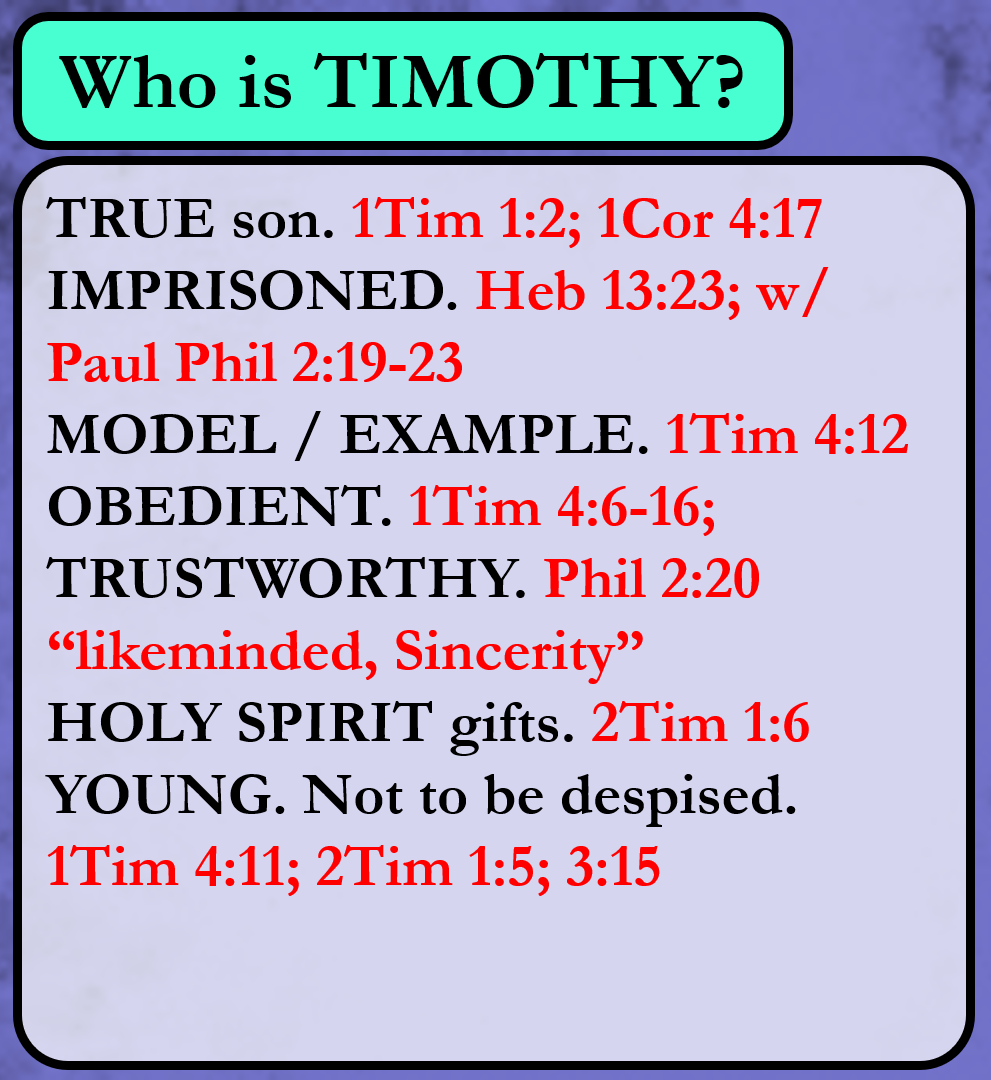
“O Timothy! keep that which is committed to thy trust,” (1Tim 6:20).
We’ve been taking a closer look at the 7 things we ought to protect.
This next one is about protecting our eyes. Jesus said,
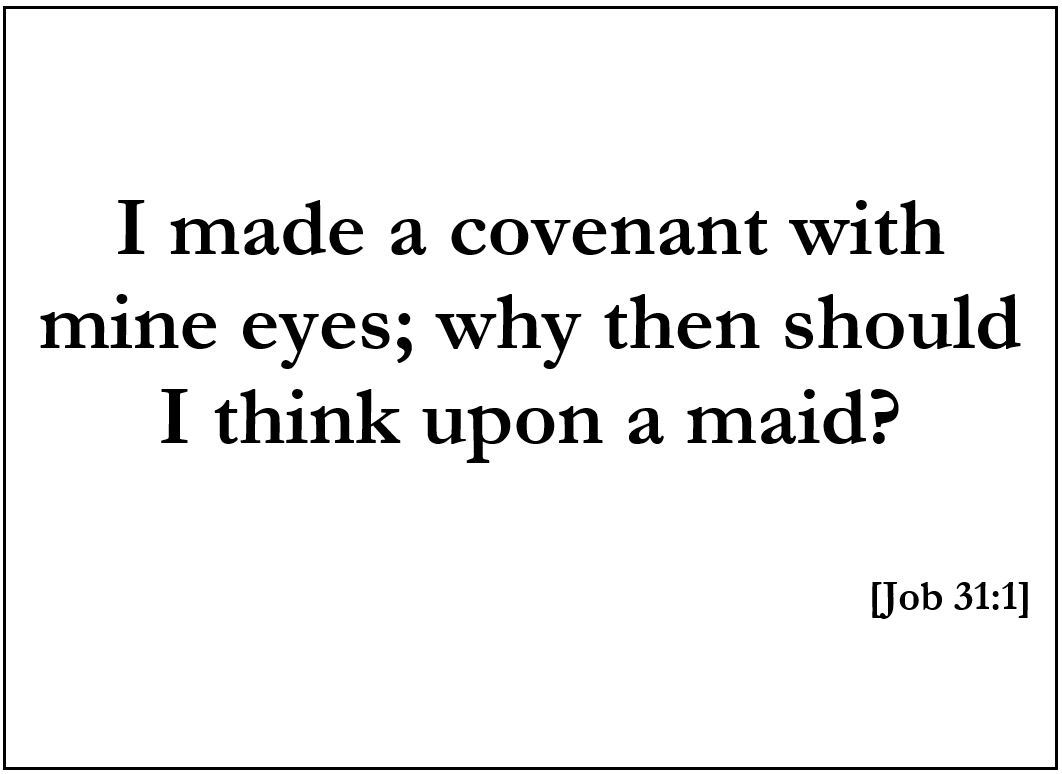
“But I say unto you, That whosoever looketh on a woman to lust after her hath committed adultery with her already in his heart” (Matt 5:28). In the Old Testament, JOB said, “I made a covenant with mineeyes; why then should I think upon a maid” (Job 31:1)?
Theeyes are said to be windows to the soul. I’m not sure about that, but I do know that the things of the heart defile a person. “For from within, out of the heart of men, proceed evil thoughts…” (Mark 7:21-23).
Things enter our hearts through oureyes, and ears. So, let’s guard oureyes.
The EYES have it.
Pr 3:7 Be not wise in thine own EYES: fear the LORD, and depart from evil.
Pr 3:21My son, let not them depart from thine EYES: keep sound wisdom and discretion:
Pr 4:21 Let them not depart from thine EYES; keep them in the midst of thine heart.
Pr 4:25 Let thine EYES look right on, and let thine EYELIDS look straight before thee.
Pr 5:21 For the ways of man are before the EYES of the LORD, and he pondereth all his goings.
Pr 6:4 Give not sleep to thine EYES, nor slumber to thine EYELIDS.
Pr 6:13 He winketh with his EYES, he speaketh with his feet, he teacheth with his fingers;
Pr 6:25 Lust not after her beauty in thine heart; neither let her take thee with her EYELIDS.
Pr 7:2 Keep my commandments, and live; and my law as the apple of thine EYE.
Pr 10:10 He that winketh with the EYE causeth sorrow: but a prating fool shall fall.
Pr 10:26 As vinegar to the teeth, and as smoke to the EYES, so is the sluggard to them that send him.
Pr 12:15 The way of a fool is right in his own EYES: but he that hearkeneth unto counsel is wise.
Pr 15:3 The EYES of the LORD are in every place, beholding the evil and the good.
Pr 15:30 he light of the EYES rejoiceth the heart: and a good report maketh the bones fat.
Pr 16:2All the ways of a man are clean in his own EYES; but the LORD weigheth the spirits.
Pr 16:30 He shutteth his EYES to devise froward things: moving his lips he bringeth evil to pass.
Pr 17:8 A gift is as a precious stone in the EYES of him that hath it: whithersoever it turneth, it prospereth.
Pr 17:24 Wisdom is before him that hath understanding; but the EYES of a fool are in the ends of the earth.
Pr 20:8 A king that sitteth in the throne of judgment scattereth away all evil with his EYES.
Pr 20:12 The hearing ear, and the seeing EYE, the LORD hath made even both of them.
Pr 20:13 Love not sleep, lest thou come to poverty; open thine EYES, and thou shalt be satisfied with bread.
Pr 21:2Every way of a man is right in his own EYES: but the LORD pondereth the hearts.
Pr 21:10 The soul of the wicked desireth evil: his neighbour findeth no favour in his EYES.
Pr 22:9 He that hath a bountiful EYE shall be blessed; for he giveth of his bread to the poor.
Pr 22:12The EYES of the LORD preserve knowledge, and he overthroweth the words of the transgressor.
Pr 23:5 Wilt thou set thine EYES upon that which is not? for riches certainly make themselves wings; they fly away as an eagle toward heaven.
Pr 23:6 Eat thou not the bread of him that hath an evil EYE, neither desire thou his dainty meats:
Pr 23:26 My son, give me thine heart, and let thine EYES observe my ways.
Pr 23:29 Who hath woe? who hath sorrow? who hath contentions? who hath babbling? who hath wounds without cause? who hath redness of EYES?
Pr 25:7 For better it is that it be said unto thee, Come up hither; than that thou shouldest be put lower in the presence of the prince whom thine EYES have seen.
Pr 27:20 Hell and destruction are never full; so the EYES of man are never satisfied.
Pr 28:22 He that hasteth to be rich hath an evil EYE, and considereth not that poverty shall come upon him.
Pr 28:27 He that giveth unto the poor shall not lack: but he that hideth his EYES shall have many a curse.
Pr 29:13 The poor and the deceitful man meet together: the LORD lighteneth both their EYES.
Pr 30:12 There is a generation that are pure in their own EYES, and yet is not washed from their filthiness.
Pr 30:13 There is a generation, O how lofty are their EYES! and their EYElids are lifted up. Pr 30:17 The EYE that mocketh at his father, and despiseth to obey his mother, the ravens of the valley shall pick it out, and the young eagles shall eat it.
“O Timothy! keep that which is committed to thy trust,” (1Tim 6:20).
We’ve been taking a closer look at the 7 things we ought to protect.
This next one is about protecting our TIME. We won’t be talking about the extending of our lives, rather that we must act promptly because of the uncertainty of longevity. There’s a major reason to be concerned about TIME.
NOBODY knows how much time we have left before the Lord’s return, nor how long we will live.
“Whereas ye know not what shall be on the morrow. For what is your life? It is even a vapour, that appeareth for a little time, and then vanisheth away” (James 4:14).
Due to the certainty of this fact, we shall look at Paul’s discussion of time in the letter to the Ephesians. “Redeeming the time, because the days are evil” (Eph 5:15-16). He gives a list of 4 things the Saint does in Redeeming the TIME.
“Wherefore be ye not unwise, but understanding what the will of the Lord is” (Eph 5:17). The first thing Paul tells us to do in redeeming the time is to be wise, (to THINK, to Study) so we may know what God wants. This is so important because Jesus will be using His word at the judgment. “He that rejecteth me, and receiveth not my words, hath one that judgeth him: the word that I have spoken, the same shall judge him in the last day” (John 12:48; cf. Matt 7:21-23; Luke 6:46). Since this is true, it’s imperative that we spend some time learning of Him through His word.
“And be not drunk with wine, wherein is excess; but be filled with the Spirit” (Eph 5:18) The next thing is a don’t which is very much related to the first. Don’t get drunk, distracted, INTOXICATED with excesses. It’s impossible to do the first if we’re interfering with our minds ability to think. Other things that do the same are the myriad of distractions that occupy our time. The opposite of this “do not” is to “be filled with the Spirit” which points back to the first point. How is one filled with the Spirit? In as much as they are filled with the word delivered through inspiration of the Holy Spirit. Note what Paul wrote earlier through inspiration of the Holy Spirit; “How that by revelation he made known unto me the mystery; as I wrote afore in few words, Whereby, when ye read, ye may understand my knowledge in the mystery of Christ” (Eph 3:3-4; cf. John 20:30-31;).
“Speaking to yourselves in psalms and hymns and spiritual songs, singing and making melody in your heart to the Lord” (Eph 5:19); Continuing on in the discussion of redeeming the time, Paul tells the Saint to MAKE MELODY in your heart to the Lord. In the letter to the Colossians he also says, “Let the word of Christ dwell in you richly in all wisdom; teaching and admonishing one another in psalms and hymns and spiritual songs, singing with grace in your hearts to the Lord” (Col 3:16). Do you see a connection to the first part of redeeming the time? It’s about the word of Christ. In addition to knowing it ourselves, we are to teach it to other Saints. One way this is done is through song, in particular, during the time we gather together on the first day of the week. “Not forsaking the assembling of ourselves together, as the manner of some is; but exhorting one another: and so much the more, as ye see the day approaching” (Heb 10:25).
“Giving thanks always for all things unto God and the Father in the name of our Lord Jesus Christ” (Eph 5:20). At all times the Saint is to live their lives in EXPRESSING Thanks to God for EVERY THING. “In every thing give thanks: for this is the will of God in Christ Jesus concerning you” (1Thess 5:18). Joy is impossible without gratitude. It is essential for the Saints to remember; “Every good gift and every perfect gift is from above, and cometh down from the Father of lights, with whom is no variableness, neither shadow of turning” (James 1:17). This knowing that all that desire to live godly in Christ Jesus will suffer persecution, and we’re to count it all joy when we face various temptations (cf. 2Tim 3:12; Jas 1:2-4). In the passage from James, he reconnects it to THINKING on God’s word, acquiring His wisdom. “If any of you lack wisdom, let him ask of God, that giveth to all men liberally, and upbraideth not; and it shall be given him” (Jas 1:4; cf. Jas 3:17). Right back at the beginning of Redeeming the Time.
At no point have we concerned ourselves with extending our time, not that there’s anything wrong with that. The Saint is to primarily be concerned with redeeming the TIME because the days are evil. None of us wants to be caught off guard should the Lord return in our lifetime, nor be unprepared to face the Lord when our time on earth is over (cf. Luke 12:16-21).
“And, behold, there met him a woman with the attire of an harlot, and subtil of heart.”
Attire of a harlot. Warning, noticeable, identifiable. 10
“And, behold, there met him a woman with the attire of an harlot, and subtil of heart.”
Ruthless. 11-13
“(She is loud and stubborn; her feet abide not in her house: Now is she without, now in the streets, and lieth in wait at every corner.) So she caught him, and kissed him, and with an impudent (RUDE / Shameless) face said unto him,”
Lies, Lies in wait. 12
“Now is she without, now in the streets, and lieth in wait at every corner.)”
Our fill of Love. 18
“Come, let us take our fill of love until the morning: let us solace ourselves with loves.”
Takes one down to Sheol, death 23, 27
“Till a dart strike through his liver; as a bird hasteth to the snare, and knoweth not that it is for his life…. Her house is the way to hell, going down to the chambers of death.”
It may seem axiomatic to provide for the needs of one’s own household and family, but that is not self-evident to all.
We’re charged to guard our own family.
“If any man or woman that believeth have widows, let them relieve them, and let not the church be charged; that it may relieve them that are widows indeed” (1Tim 5:16).
Beginning with the passage in Timothy, we’re to provide for the older members of our own family. These may or may not be members of our immediate household, meaning they may or may not be living under the same roof.
“House” in the bible could refer to family as well as those living within your home (cf. 1Tim 3:4-5). We as individual members of the church have a responsibility to care for our aged parents.
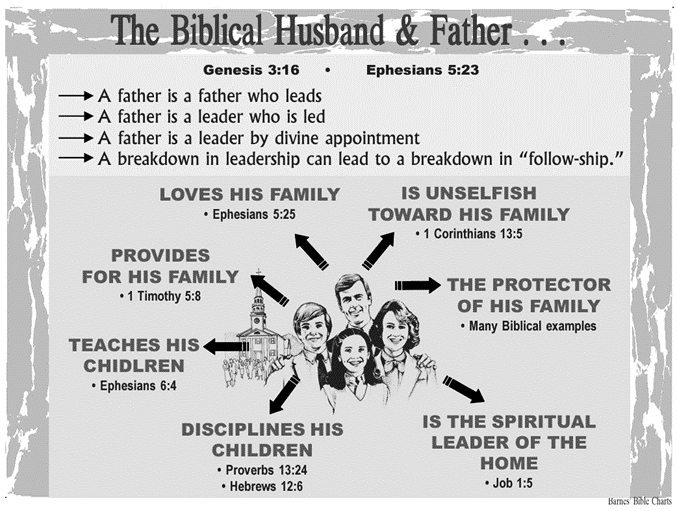
Next, we see that Husbands, as leader of the home (1Cor 11:3), have a responsibility to care for his wife. For this we’ll read all of Ephesians 5:23-33.
“23 For the husband is the head of the wife, even as Christ is the head of the church: and he is the saviour of the body.
24 Therefore as the church is subject unto Christ, so let the wives be to their own husbands in every thing.
25 Husbands, love your wives, even as Christ also loved the church, and gave himself for it;
26 That he might sanctify and cleanse it with the washing of water by the word,
27 That he might present it to himself a glorious church, not having spot, or wrinkle, or any such thing; but that it should be holy and without blemish.
28 So ought men to love their wives as their own bodies. He that loveth his wife loveth himself.
29 For no man ever yet hated his own flesh; but nourisheth and cherisheth it, even as the Lord the church:
30 For we are members of his body, of his flesh, and of his bones.
31 For this cause shall a man leave his father and mother, and shall be joined unto his wife, and they two shall be one flesh.
32 This is a great mystery: but I speak concerning Christ and the church.
33 Nevertheless let every one of you in particular so love his wife even as himself; and the wife see that she reverence her husband.
The two main take aways from this passage is first, that the husband is to care for His wife as Christ does the church. Second, this marriage relationship is a physical symbol of Christ and the church. If you’ve ever wondered why God is so concerned about who can marry, this is why.
“And, ye fathers, provoke not your children to wrath: but bring them up in the nurture and admonition of the Lord” (Eph 6:4; cf. Pr 19:18; 22:6; 29:17).
Additionally, we have a responsibility toward the children who are our own. While it’s certain that we are to care, feed, and provide for our children’s physical needs, it is vital that we especially provide for their spiritual growth and nourishment.
A word about widows and orphans. It’s presumed that the local church collective has a responsibility to care for ALL Widows and Orphans. That is a mistake. The church collective in a location can only provide for the needs of saints (Making Saints Mat 28:19, Teaching Saints Matt 28:20, and helping needy Saints 1Tim 5:5-16; Acts 11:29; 1Cor 16:1,2; 2Cor 8, 9).
Individual members of the church can help out the worlds needy as they have opportunity as discussed in a previous article (Luke 10:33). Even here in 1Tim 5:16 we see the distinction made between the collective group of Christians in a location and the individual member of the church. “Let not the church be charged.”
Parents, you ought to pay careful attention to provide for your children in the event you should pass away before your children are grown. It would be a great shame if our children are moved to live and be raised by non-Christians because of the laws of the state. In this way, the church can care for orphans of Christians who’ve died, leaving behind their children.






 Borger church of Christ @ Franklin & Juniper