Sinning against the Holy Spirit

Let the word of Christ dwell in you richly in all wisdom” (Colossians 3:16).

The concept of blasphemy against the Holy Spirit has long intrigued and, at times, perplexed believers. In Mark 3:29, Jesus warns about an unforgiveable sin called blasphemy against the Holy Spirit. Some have said that it’s saying a certain phrase. That view doesn’t fit with the rest of the scriptures on this matter.

It makes sense that this blasphemy involves disobeying the written word of God and remaining unrepentant unto death. It is the Holy Spirit that reveals God’s will to man. This is true for the Old and the New Testaments.

For the prophecy came not in old time by the will of man: but holy men of God spake as they were moved by the Holy Ghost

(2Pet 1:21; Acts 1:16; Heb 9:8; 2Tim 3:16-17).

To better understand this ultimate sin, let’s explore the many ways we sin against the Holy Spirit as revealed in the written word.

Ephesians 4:30 implores believers not to grieve the Holy Spirit. Sorrowing the Spirit occurs when we engage in actions contrary to God’s commands. Look at what Isaiah wrote; “But they rebelled, and vexed his holy Spirit: therefore he was turned to be their enemy, and he fought against them” (Isaiah 63:10). This grief is a result of our disobedience and disregard for His word. When we knowingly choose sin over righteousness, we grieve the Spirit.

In 1 Thessalonians 5:19, we are warned not to quench the Spirit. The Holy Spirit is often symbolized as a flame or fire (Acts 2:3-4). To quench the Spirit is to suppress His influence in our lives through the word. When we ignore His revealed word, or neglect the pursuit of spiritual growth, we extinguish the flame of the Spirit that should cause a burning within us. “Did not our heart burn within us, while he talked with us by the way, and while he opened to us the scriptures?” (cf. Luke 24:32).

Acts 5:1-11 recounts the tragic tale of Ananias and Sapphira, who lied to God the Holy Spirit. Deception never draws us closer to God. They chose to lie to be seen as being more generous than they were. We can fake out men, but we’ll never pull the wool over the all-seeing eyes of God.

In Acts 7:51, Stephen accuses the religious leaders of resisting the Holy Spirit. Resistance involves actively opposing the Spirit’s instructions in the revealed word. When we resist the Holy Spirit, we interfere with the saving power of the Gospel (Romans 1:16).

The account of Simon the sorcerer in Acts 8:17-24 illustrates the danger of insulting the Holy Spirit. Simon sought to purchase the power of the Holy Spirit, demonstrating a profound misunderstanding of the Spirit’s purpose. This sin lies in attempting to commercialize the divine. When we seek to use the Word for personal gain, we insult His sovereignty and it seeks to take advantage (cf. 2Pet 2:3).

Mark 3:22-30 warns against turning away from the Holy Spirit in an unrepentant state. Turning away involves a deliberate rejection of the Spirit’s convicting work and a refusal to acknowledge our need for repentance. If this form of rebellion continues until death, it closes the door to God’s mercy and forgiveness. Unrepentance signifies a hardened heart that resists the transformative power of the Gospel leading to eternal death.

 Agape,

Spencer

Here’s a link for additional reading on how we’re led by the Holy Spirit.

This is part 3 of a series “Preaching through Mark.” Click here for the complete series.

4 Views of LIFE, Luke 10:25-42.

And, behold, a certain lawyer stood up, and tempted him, saying, Master, what shall I do to inherit eternal life?” (Luke 10:25).  

The biblical passage in Luke 10:25-42 provides a rich narrative that unveils four distinct views of life, as encountered by a certain lawyer who seeks to test Jesus. As we delve into the dialogue and parables presented, we uncover profound insights into human nature and the pursuit of righteous living.

Jesus answers the initial question by asking the Lawyer about the Law, and the Lawyer answers well.

And he answering said, Thou shalt love the Lord thy God with all thy heart, and with all thy soul, and with all thy strength, and with all thy mind; and thy neighbour as thyself. And he said unto him, Thou hast answered right: this do, and thou shalt live” (Luke 10: 27-28; cf. Le 19:18; De 6:5).

The Lawyer’s response and the parable which follows give us insight into the 4 Views of Life.

The lawyer unveils the first view: Self-Righteousness. In questioning Jesus about who his neighbor is, the lawyer exposes an inclination to justify himself. “But he, willing to justify himself, said unto Jesus, And who is my neighbour?” This attitude is mirrored in Luke 18:9-14, where a Pharisee boasts of his righteousness compared to others. The message is clear – salvation is not achieved through self-righteousness, but through humility, Faithful obedience, and reliance on God.

The second view is revealed in the parable of the Good Samaritan. The narrative describes some who live in iniquity as seen in the actions of a thief, a Priest, and a Levite. This section highlights the fact that people’s actions declare what is in their hearts (Matt 7:15-20). Thieves hate to be stolen from, and their theft exposes their iniquity & hypocrisy. So also, the Priest and the Levite. “Wherefore by their fruits ye shall know them.”

The Samaritan exemplifies the third view of life. “But a certain Samaritan, as he journeyed, came where he was: and when he saw him, he had compassion on him” (33). A Samaritan would have been looked down upon by the Lawyer, the Priest, and the Levite. The Samaritans knew this, (John 4:9). Being full of compassion, the Samaritan man, “went to him, and bound up his wounds, pouring in oil and wine, and set him on his own beast, and brought him to an inn, and took care of him” (34).

After the telling of the parable, Jesus asks, “Which now of these three, thinkest thou, was neighbour unto him that fell among the thieves?  And he said, He that shewed mercy on him. Then said Jesus unto him, Go, and do thou likewise” (36, 37). Jesus takes the Lawyer back to the answer given to the original question.

We usually stop here, but there is another scene in this chapter that relates to the views of life. The short account of Martha & Mary. While Jesus is teaching, Mary sat at Jesus’ feet, and heard his word. “But Martha was cumbered about much serving, and came to him, and said, Lord, dost thou not care that my sister hath left me to serve alone? bid her therefore that she help me” (40). Jesus gives us the fourth view of Life; “Martha, Martha, thou art careful and troubled about many things: But one thing is needful: and Mary hath chosen that good part, which shall not be taken away from her” (41, 42). This view is about distractions that take us away from hearing about eternal life. Jesus warned about THORNS, the 3rd soil in the parable of the Sower. While there’s commendation in serving, we must remain mindful of the things pertaining to eternal life. “Set your affection on things above, not on things on the earth” (Col 3:2).

 Agape,

Spencer

Spencer is an evangelist for the Franklin & Juniper st church of Christ in Borger, Texas.

The Lord give mercy unto the house of Onesiphorus

For he oft refreshed me

The Lord give mercy unto the house of Onesiphorus; for he oft refreshed me, and was not ashamed of my chain,” (2Tim 1:16).  

Who inspires or impresses you? Take a serious moment to think about it.

Is it because they’re successful? Is it because they’re famous? Is it because they’re big shots?

After you think about that, who do you suppose inspires or impresses them? Are they impressed by more successful people, or more famous celebrities? Bigger big shots?

One more question… Who inspires or impresses true big shots? Paul is an Apostle, but he was humble and was able to see the labors of others.

Onesiphorus impressed Paul.

Impressed may not be the right word. He was Grateful, Glad, Invigorated, Renewed, Refreshed. Did Paul release an audible sigh of relief upon being found by him? The scripture is full of lesser known & unknown names of mighty heroes of faith.

Paul was in a Roman prison, (2Tim 1:8). It was about the time that Nero was blaming Christians for the burning of Rome (64AD). This is Paul’s last writing of the New Testament with the purpose to encourage the young evangelist Timothy, (1:6, 2:1, 3:14-15).

Paul was ready to die, and it looked like it was going to happen this time. “For I am now ready to be offered, and the time of my departure is at hand” (2Tim 4:6). It was no sad moment for him, because he had “fought a good fight, I have finished my course, I have kept the faith: Henceforth there is laid up for me a crown of righteousness, which the Lord, the righteous judge, shall give me at that day: and not to me only, but unto all them also that love his appearing” (2Tim 4:7,8).

Even though he had been forsaken by many, he still encouraged Timothy to come to him, for there was still work to be done. “Do thy diligence to come shortly unto me. The cloke that I left at Troas with Carpus, when thou comest, bring with thee, and the books, but especially the parchments” (2Tim 4:9,13).

In this letter we learn about ONESIPHORUS. He was a man of…

UNPARALLELED SUPPORT: “for he oft Refreshed me.” (2Tim 1:16a)

UNABASHED FRIEND: “was not ashamed of my chain.” (2Tim 1:16b)

UNSTOPPABLE EFFORT: “when he was in Rome, he sought me out very diligently, and found me.” (2Tim 1:17)

UNUSUAL SERVICE: “in how many things he ministered unto me at Ephesus, thou knowest very well.” (2Tim 1:18)

UNSURPASSED REWARD: “He that receiveth you receiveth me, and he that receiveth me receiveth him that sent me. He that receiveth a prophet in the name of a prophet shall receive a prophet’s reward; and he that receiveth a righteous man in the name of a righteous man shall receive a righteous man’s reward. And whosoever shall give to drink unto one of these little ones a cup of cold water only in the name of a disciple, verily I say unto you, he shall in no wise lose his reward” (Mat 10:40-42).

The scripture is full of lesser known & unknown names of mighty heroes of faith. God doesn’t waste ink, these examples are there for a reason. “Brethren, be followers together of me, and mark them which walk so as ye have us for an ensample” (Phil 3:17).

 Agape,

Spencer

This article is based on a sermon presented at the Franklin & Juniper st church of Christ in Borger, Texas. We invite you to visit one of our assemblies to learn more about Christ.

God Gave them Up

Wherefore God also gave them up to uncleanness through the lusts of their own hearts, to dishonour their own bodies between themselves” (Rom 1:24).

People often cite the Letter to the Romans for their erroneous view on election and predestination. While these concepts are here, their view that God preselects individuals to be lost or saved before they were born and without any reason is error.

We can answer this erroneous view beginning with chapter one where we are told why God gave them up to their sin. People are not lost because God randomly chose them to be lost. People are lost because of their disobedience to Him (sin), neither does He cause them to sin.

Note verse 26, “For this cause God gave them up.” Paul is telling us WHY God gave them up, and the reason is not because God just didn’t want them to be saved. There are reasons.

For God to give someone up to sin, there must be some standard by which the guilt is determined.

God gave them up to their sins because they gave Him up. Notice what people had done BEFORE God gave them up.

Because that which may be known of God is manifest in them; for God hath shewed it unto them. For the invisible things of him from the creation of the world are clearly seen, being understood by the things that are made, even his eternal power and Godhead; so that they are without excuse: Because that, when they knew God, they glorified him not as God, neither were thankful; but became vain in their imaginations, and their foolish heart was darkened. Professing themselves to be wise, they became fools, And changed the glory of the uncorruptible God into an image made like to corruptible man, and to birds, and fourfooted beasts, and creeping things. Wherefore God also gave them up to uncleanness through the lusts of their own hearts, to dishonour their own bodies between themselves” (Rom 1:19-24 emphasis mine seb).

God had revealed to mankind His existence through His creation. Instead of glorifying Him, they were ungrateful, turned to their own wisdom, and then to idolatry. They took a piece of creation and worshiped it.

Jeremiah described their foolishness this way; “For the customs of the people are vain: for one cutteth a tree out of the forest, the work of the hands of the workman, with the axe. They deck it with silver and with gold; they fasten it with nails and with hammers, that it move not. They are upright as the palm tree, but speak not: they must needs be borne, because they cannot go. Be not afraid of them; for they cannot do evil, neither also is it in them to do good” (Jer 10:3-5). Jeremiah then warns them, “Every man is brutish in his knowledge: every founder is confounded by the graven image: for his molten image is falsehood, and there is no breath in them. They are vanity, and the work of errors: in the time of their visitation they shall perish” (10:14-15; cf, Isa 44:9-20).

Think about it. Created humans rejected their creator, then created a wooden image to worship, and did not give the God of Heaven thanks nor glory for His great might. Do we see anything different happening today? The only difference is the object of worship.

For many walk, of whom I have told you often, and now tell you even weeping, that they are the enemies of the cross of Christ: Whose end is destruction, whose God is their belly, and whose glory is in their shame, who mind earthly things” (Phil 3:18-19).

Agape,

Spencer

This article is part 1 of a series titled, God’s Moral Law. click here for part two.

You’re invited to attend one of our services at the church of Christ on Franklin and Juniper in Borger Texas.

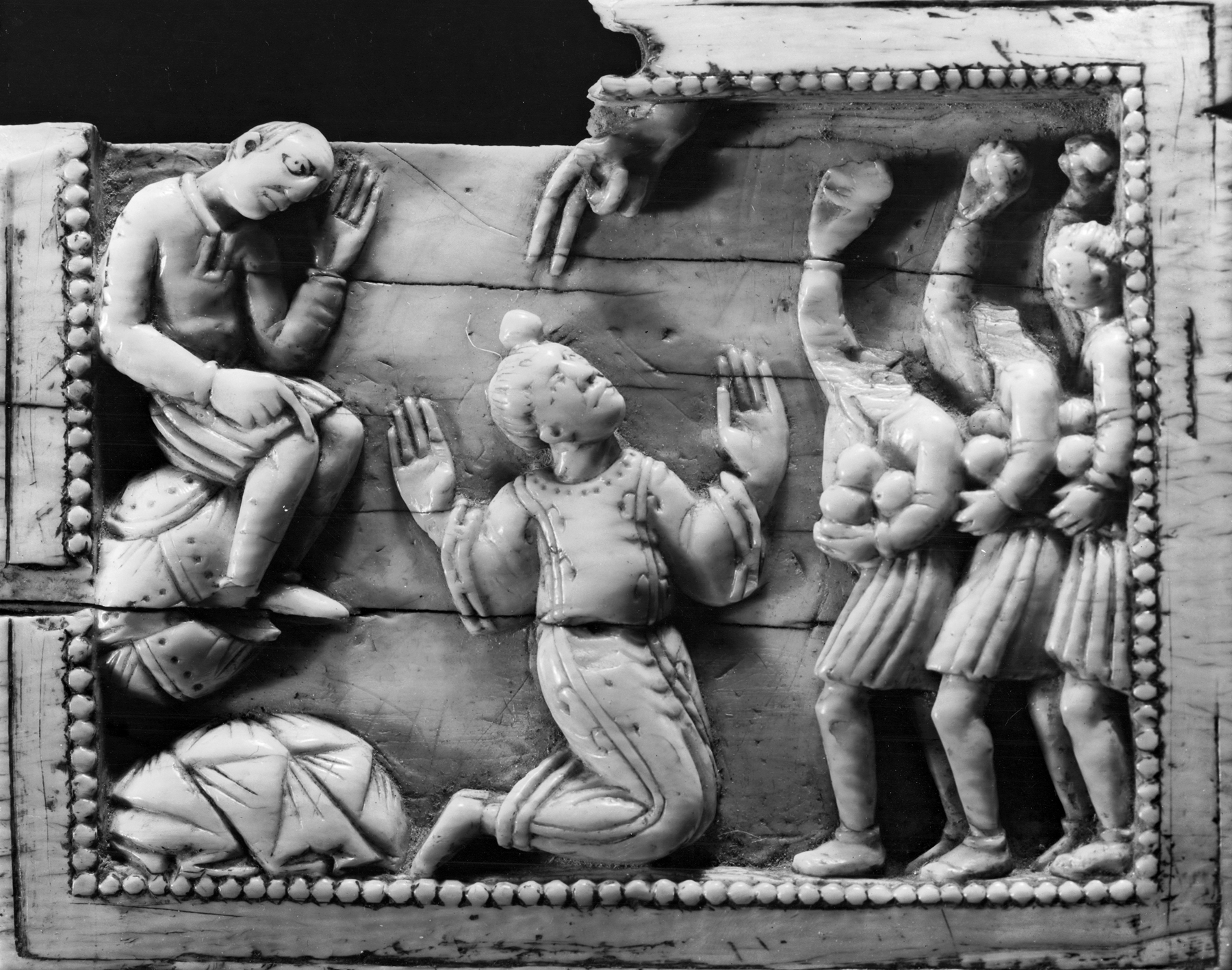
STEPHEN’S Face

When I first read the account of Stephen in Acts 7, I thought he had brought it upon himself, because he had said, “Ye stiffnecked and uncircumcised in heart and ears, ye do always resist the Holy Ghost: as your fathers did, so do ye” (Acts 7:51). If you’re going to call someone stiffnecked, you ought to expect them to be angry.

As the years went by, and I continued to read and study, it became apparent that Stephen did not deserve death for what he said. He told them the truth. The blame lies on those who heard him. Here’s how I came to that conclusion.

The account actually begins in Acts 6, not 7. Before we even hear of Stephen, a description is given of those who should serve the Grecian widows. “men of honest report, full of the Holy Ghost and wisdom” (Acts 7:3). In verse 8 it says that Stephen was full of faith and power.

Then, as he spoke of Jesus, those that heard could not resist the wisdom and the spirit by which he spoke, (v10).

There was one more description of Stephen in verse 15.

And all that sat in the council, looking stedfastly on him, saw his face as it had been the face of an angel” (Acts 6:15).

These three verses about Stephen show us that all that he spoke were inspired by the HOLY SPIRIT, even those final hard words of truth about the hearts of his hearers. We cannot know the hearts of men, but God does. Stephen spoke the TRUTH as revealed by the Spirit.

Therefore, his execution by stoning of the mob was a persecution for righteousness’ sake, even as the Lord spoke about in the sermon on the mount, (Matt 5:10-12).

Stephen wasn’t speaking erratically, but with PURPOSE. He had shown himself to be a defender of the faith (Jude 3), and a deliverer of truth (Acts 7:2-53).

 We can see the beginning of his reward in the next verses, “But he, being full of the Holy Ghost, looked up stedfastly into heaven, and saw the glory of God, and Jesus standing on the right hand of God, And said, Behold, I see the heavens opened, and the Son of man standing on the right hand of God” (Acts 7:55-56). This speaks of reward. The view of Stephen’s heavenward gaze reveals God’s approval.

As we continue to look closely at his speech, this next statement reveals his heart about those who are stoning him. “And he kneeled down, and cried with a loud voice, Lord, lay not this sin to their charge” (Acts 7:60). This is what truth loving people say, and are not the words of hatred. His last words are words of forgiveness to seek EXONERATION for his attackers.

Stephen became for us an example of one living for Jesus with NO FEAR, No flinching, No whining, and No doubt. His boldness is an answer to the prayer of the Apostles, “And now, Lord, behold their threatenings: and grant unto thy servants, that with all boldness they may speak thy word” (Acts 4:29).

The final chapter of Stephen’s story is the beginning of another man’s story, the young man named SAUL. “…and the witnesses laid down their clothes at a young man’s feet, whose name was Saul” (Acts 7:58). But that is a story for another day.

Agape,

Spencer

Spencer is an evangelist for the Franklin & Juniper st church of Christ in Borger Texas.

What to EXPECT in the New Year

Bible Reading Bookmarks for the Old & New Testament

The thing that hath been, it is that which shall be; and that which is done is that which shall be done: and there is no new thing under the sun.” (Ecclesiastes 1:9).

A large corporation brought in a consultant to give them a forecast about the next 5 years. As they surrounded the conference table awaiting his prognostication, the consultant said, “everything will be about the way it’s always been.”

There will be weather, seasons, traffic, births, deaths, holidays, elections, etc. There will be good times and low ones. That is the record of history. The sad condition of mankind is that many live expecting it always to be different, to always be better, and are unhappy and bitter when it’s not.

The preacher wrote, “there is no new thing under the sun.” We can reasonably predict what life will be like next year.

We will never predict the details, but we can reasonably expect certain things.

We all should be expecting to pile up a TREASURE. We need money & stuff for our earthly needs, and to share with those in need (Eph 4:28). We should expect those things if we’re doing those things God has prescribed in His word. A word of caution, we may become distracted from serving God and will be heaping up treasure against ourselves in judgment. “Your gold and silver is cankered; and the rust of them shall be a witness against you, and shall eat your flesh as it were fire. Ye have heaped treasure together for the last days” (James 5:3; cf. Matt 6:19-21).

We as Christians ought to expect to bear our Cross. “Whosoever will come after me, let him deny himself, and take up his cross, and follow me” (Mark 8:34). This is about commitment to the Cause of Christ and not about some personal pain or shortcoming.

We also ought to expect more wisdom, but we must seek it. Education is one thing nobody can take away from us. Divine wisdom is the most precious of all (Prov 8:1-11).

Christians ought to expect Persecution, but we think it strange even though the Holy Spirit said to expect it (2Tim 3:12).

Everyone ought to expect High & Low eXtremes (Ecc 3:1-10). Sadly, folks expect things to always be better than they are with no pain whatsoever. That condition is in Heaven, and we ought to see the pain in this life as motivation to qualify for the next.

Finally, we all ought to expect Eternity to begin for us. Whether we meet Jesus after our death, or we remain alive when he returns, there is an Eternal hereafter. Where do you want to spend your ETERNITY? “Then we which are alive and remain shall be caught up together with them in the clouds, to meet the Lord in the air: and so shall we ever be with the Lord” (1Thess 4:17).

Agape, Spencer

We invite you to visit one of our services at the Franklin & Juniper st church of Christ in Borger, Texas.

Let’s talk about Jesus #5; He FORGIVES sin

Copyright Rob Baker, used with permission.

When Jesus saw their faith, he said unto the sick of the palsy, Son, thy sins be forgiven thee.

(Mark 2:5).

When speaking about Jesus, we must remember that He is able to forgive us our SINS. “And he is the propitiation for our sins: and not for ours only, but also for the sins of the whole world” (1John 2:2).

Some see license to sin in the above verse, but when carefully reading the context they’ll see the exact opposite. “My little children, these things write I unto you, that ye sin not. And if any man sin, we have an advocate with the Father, Jesus Christ the righteous” (1John 2:1).

For all have sinned, and come short of the glory of God” (Rom 3:23). We all sin, but what is that? Sin Separates us from God and is against Him, (Isa 59:2). It Imprisons us, (Rom 6:16; 23), and we have Nothing to pay the cost (Rom 3:23).

We need the forgiveness of Christ.

Sadly, some say their sin is so bad that Jesus can’t forgive them, or still feel guilt even after having faithfully obeying the gospel. Maybe we need a reminder of the sins Jesus FORGIVES for those that obey Him. We have a couple of lists of sins that Saints can have forgiven through Christ.

Jesus forgives Fornicators and all manner of sexual sins. “Know ye not that the unrighteous shall not inherit the kingdom of God? Be not deceived: neither fornicators, nor idolaters, nor adulterers, nor effeminate, nor abusers of themselves with mankind, Nor thieves, nor covetous, nor drunkards, nor revilers, nor extortioners, shall inherit the kingdom of God. And such were some of you: but ye are washed, but ye are sanctified, but ye are justified in the name of the Lord Jesus, and by the Spirit of our God” (1Cor 6:9-11). Notice that it says, “such WERE some of you.” They had repented and been forgiven, but how? It says, “ye are WASHED.” How were they washed? Look to what the writer said had happened to him when he obeyed the gospel. “And now why tarriest thou? arise, and be baptized, and wash away thy sins, calling on the name of the Lord” (Acts 22:16). Paul had his sins washed away through his faithful baptism in water.

Jesus forgives Outbursts of wrath, Drunkenness and Revelries which are works of the flesh. “Now the works of the flesh are manifest, which are these; Adultery, fornication, uncleanness, lasciviousness, Idolatry, witchcraft, hatred, variance, emulations, outbursts of wrath, strife, seditions, heresies, Envyings, murders, drunkenness, revellings, and such like: of the which I tell you before, as I have also told you in time past, that they which do such things shall not inherit the kingdom of God” (Gal 5:19-21). This passage shows that Jesus also forgives our Greed, Idolatry, theft, strife, and seditions. 

Jesus even forgives Violent & Murderous crimes as seen in the forgiveness of Paul. As Saul of Tarsus, he once persecuted the church of Christ. “I verily thought with myself, that I ought to do many things contrary to the name of Jesus of Nazareth. Which thing I also did in Jerusalem: and many of the saints did I shut up in prison, having received authority from the chief priests; and when they were put to death, I gave my voice against them. And I punished them oft in every synagogue, and compelled them to blaspheme; and being exceedingly mad against them, I persecuted them even unto strange cities” (Acts 26:9-11).

 He too found forgiveness in Christ; “This is a faithful saying, and worthy of all acceptation, that Christ Jesus came into the world to save sinners; of whom I am chief. Howbeit for this cause I obtained mercy, that in me first Jesus Christ might shew forth all longsuffering, for a pattern to them which should hereafter believe on him to life everlasting. Now unto the King eternal, immortal, invisible, the only wise God, be honour and glory for ever and ever. Amen.” (1Tim 1:15).

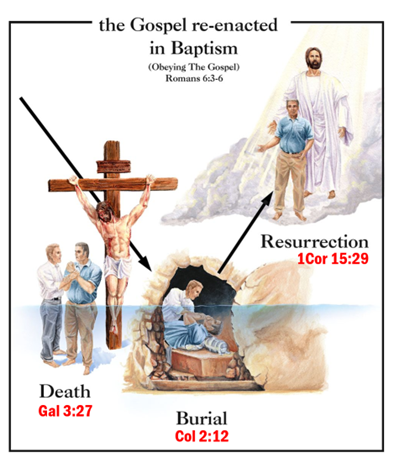
As noted above, we know how he obtained mercy; by obeying the Gospel, “And now why tarriest thou? arise, and be baptized, and wash away thy sins, calling on the name of the Lord” (Acts 22:16). It is what he taught everyone, “Know ye not, that so many of us as were baptized into Jesus Christ were baptized into his death? Therefore we are buried with him by baptism into death: that like as Christ was raised up from the dead by the glory of the Father, even so we also should walk in newness of life. For if we have been planted together in the likeness of his death, we shall be also in the likeness of his resurrection: Knowing this, that our old man is crucified with him, that the body of sin might be destroyed, that henceforth we should not serve sin” (Romans 6:3-6).

Jesus also forgives all manner of Evil, Envy, “and Such like” (Gal 5:21b).

Jesus FORGIVES sin. He has the power and the authority to forgive us of all unrighteousness, but we must obey the gospel and be faithful to Him. “Though he were a Son, yet learned he obedience by the things which he suffered; And being made perfect, he became the author of eternal salvation unto all them that obey him” (Hebrews 5:8-9).

There is only one sin that never has forgiveness. “Verily I say unto you, All sins shall be forgiven unto the sons of men, and blasphemies wherewith soever they shall blaspheme: But he that shall blaspheme against the Holy Ghost hath never forgiveness, but is in danger of eternal damnation” (Mark 3:28-29).

What is this unforgiveable sin? It is any unrepentant sin that a person is unwilling to put away before death or the return of Christ. This is the blasphemy of the Holy Spirit. Disobedience to the gospel is blaspheme of the Spirit, for it was the Holy Spirit that has revealed to us the commands of God through the inspired word. If we are unwilling to repent, we are committing the “sin leading to death” (1John 5:16).

This is the confidence we have in Christ, the forgiveness of sins. “My little children, these things write I unto you, that ye sin not. And if any man sin, we have an advocate with the Father, Jesus Christ the righteous: And he is the propitiation for our sins: and not for ours only, but also for the sins of the whole world. And hereby we do know that we know him, if we keep his commandments” (1John 2:1-3).

Jesus has power to FORGIVE sins.

Agape,

Spencer

Spencer is an evangelist for the Franklin & Juniper st church of Christ in Borger, Tx.

This is part of a series of articles about reasons to Talk About Jesus.

Let’s Talk about Jesus the Strength Giver

I can do all things through Christ which strengtheneth me” (Philippians 4:13).

People are talking about Jesus. Let us be ready to talk about Him also, but with purpose and power.

We have seen in the last two articles that Jesus gives JOY, and ETERNAL LIFE, the above verse shows that He also gives us strength.

While this verse doesn’t explicitly tell how He strengthens us, there is scriptural evidence within the New Testament that teach us how and when we can be STRONG in the Lord.

All of us could use a little more strength in this life, but the true strength we need is only in Christ.

In what ways is the Saint made STRONG in the Lord.


Christ makes us SPIRITUALLY STRONG. Eph 3:16 “That he would grant you, according to the riches of his glory, to be strengthened with might by his Spirit in the inner man; That Christ may dwell in your hearts by faith; that ye, being rooted and grounded in love” (Eph 3:16-17). How can we be strong, and how does He dwell in our hearts? If you read the comparable passage in Colossians 3, you’ll see that it’s through scripture. “Let the word of Christ dwell in you richly in all wisdom” (Colossians 3:16a). Paul would continue to reveal to the Ephesians how to be strong; “Finally, my brethren, be strong in the Lord, and in the power of his might, Put on the whole armour of God, that ye may be able to stand against the wiles of the devil. For we wrestle not against flesh and blood, but against principalities, against powers, against the rulers of the darkness of this world, against spiritual wickedness in high places. Wherefore take unto you the whole armour of God, that ye may be able to withstand in the evil day, and having done all, to stand.” (Eph 6:10-12; cf. 13-18).

Jesus gives us strength to TRANSFORM us by the renewing of our mind. I beseech you therefore, brethren, by the mercies of God, that ye present your bodies a living sacrifice, holy, acceptable unto God, which is your reasonable service. And be not conformed to this world: but be ye transformed by the renewing of your mind, that ye may prove what is that good, and acceptable, and perfect, will of God” (Rom 12:1-2). This transformation gives us the strength to change our character as seen in the fruit of the Spirit. “But the fruit of the Spirit is love, joy, peace, longsuffering, gentleness, goodness, faith, Meekness, temperance: against such there is no law” (Gal 5:22-23).

Christ gives us strength to rise up in the face of persecution. “Blessed are they which are persecuted for righteousness’ sake: for theirs is the kingdom of heaven. Blessed are ye, when men shall revile you, and persecute you, and shall say all manner of evil against you falsely, for my sake. Rejoice, and be exceeding glad: for great is your reward in heaven: for so persecuted they the prophets which were before you” (Matt 5:10-12). We can have the Resilience to endure this life knowing that He sees, and that we have a reward in heaven.

This strength gives us Hope and Optimism in the face of death. Paul said, “According to my earnest expectation and my hope, that in nothing I shall be ashamed, but that with all boldness, as always, so now also Christ shall be magnified in my body, whether it be by life, or by death. For to me to live is Christ, and to die is gain” (Philippians 1:20-21). This optimism gives us peace of mind instead of vexation because we know that a better place awaits the faithful in Christ (cf. John 14:27). “Be careful for nothing; but in every thing by prayer and supplication with thanksgiving let your requests be made known unto God. And the peace of God, which passeth all understanding, shall keep your hearts and minds through Christ Jesus” (Philippians 4:6-7). This optimism can be seen in personal contentment with our needs, (Phil 4:11-12).

He gives us the strength to be bold in preaching the gospel of Jesus Christ. The Apostles prayed for this strength of courage when they faced physical violence against their preaching (cf. Acts 4:29). “There is no fear in love; but perfect love casteth out fear: because fear hath torment” (1John 4:18). When we commit to and look to Jesus with our whole heart in love, we shall have the nerve to speak the truth in love to our family, friends, and neighbors.

Ultimately, we have the strength of Christ through His Grace. “And he said unto me, My grace is sufficient for thee: for my strength is made perfect in weakness. Most gladly therefore will I rather glory in my infirmities, that the power of Christ may rest upon me.  Therefore I take pleasure in infirmities, in reproaches, in necessities, in persecutions, in distresses for Christ’s sake: for when I am weak, then am I strong” (2Cor 12:9-10). Paul had an immediate empowerment from a change of perspective of his “thorn in the flesh.” Instead of viewing it as a weakness that hinders, it became a weakness that empowers! The thorn never changed, the pain never lessened, but the Power of Christ was displayed.

Agape,

Spencer

Spencer is an evangelist for the Franklin & Juniper st church of Christ in Borger, Tx.

This is part of a series of articles about reasons to Talk About Jesus.

Let’s Talk about Jesus, the Eternal Life Giver

“Thou hast the words of eternal life.”

The statement above is one of the most significant realizations a person can make. (John 6:68)

There are 3 life questions that many folks ask about life…

Where are we from?

Why are we here?

Where are we going?

To answer these questions, one needs a divine source. Jesus is the answer to these questions, and His written word is where we will find His answers.

Let’s see how Jesus is the answer to the question of where we are going.

He has the words of ETERNAL LIFE.

There are some 30 specific references in the New Testament to “ETERNAL LIFE.” It seems to this writer that this holds some significance.

Jesus said, “Take my yoke upon you, and LEARN OF ME; for I am meek and lowly in heart: and ye shall find rest unto your souls.” (Matt 11:29) The context of this verse is about learning. “HEARING” is another way the Bible says the same thing. “Therefore whosoever heareth these sayings of mine, and doeth them, I will liken him unto a wise man, which built his house upon a rock:” (Mat 7:24). These verses clearly teach there is individual responsibility to Hear & LEARN. Some would have you believe that we’re unable to do either except miraculously. UNTRUE! We are all called by the Gospel message. “Whereunto he called you by our gospel, to the obtaining of the glory of our Lord Jesus Christ.” (2Thess 2:14).

Paul wrote to Timothy to remind Saints to “Give diligence to present thyself approved unto God, a workman that needeth not to be ashamed, handling aright the word of truth” (2Tim 2:15 ASV). The discourse of Jesus in John 6:26-68 is all about believing and learning of Christ. “I am the living bread which came down out of heaven” (John 6:51). Compare this to what Jesus said to the Devil, “It is written, Man shall not live by bread alone, but by every word that proceedeth out of the mouth of God” (Matt 4:4).

The beginning of attaining Eternal Life is LEARNING.

—-

Matthew 7:24-29 is a link in the chain connecting the first action with the next; we must be INVOLVED in doing the things that we’ve LEARNED. We’re involved by obeying the commands of God. “Therefore whosoever heareth these sayings of mine, and doeth them, I will liken him unto a wise man, which built his house upon a rock: And the rain descended, and the floods came, and the winds blew, and beat upon that house; and it fell not: for it was founded upon a rock. And every one that heareth these sayings of mine, and doeth them not, shall be likened unto a foolish man, which built his house upon the sand: And the rain descended, and the floods came, and the winds blew, and beat upon that house; and it fell: and great was the fall of it.”

The clear teaching by Jesus here, and in other places (cf. Phil 2:12), is that the INDIVIDUAL is responsible to LEARN & get INVOLVED in his own salvation. “Save yourselves from this untoward generation.” (Acts 2:40b). In the immediate context of this verse, they LEARNED to be baptized in the name of Jesus. “Then they that gladly received his word were baptized: and the same day there were added unto them about three thousand souls. (Acts 2:41).

James wrote under the influence of the Holy Spirit, “But be ye doers of the word, and not hearers only, deluding your own selves. For if any one is a hearer of the word and not a doer, he is like unto a man beholding his natural face in a mirror: for he beholdeth himself, and goeth away, and straightway forgetteth what manner of man he was. But he that looketh into the perfect law, the law of liberty, and so continueth, being not a hearer that forgetteth but a doer that worketh, this man shall be blessed in his doing” (James 1:22-25).

Eternal Life is for those INVOLVED people that obey.

—-

When we write articles like this some will often decry “LEGALISM” or say that we’re working our way into heaven. Nothing of the sort is being said. Obedience to the will of God is FAITH (Heb 11:6). We trust that God will do what He promises for those that obey Him. God works through our faith. “Buried with him in baptism, wherein also ye are risen with him through the faith of the operation of God, who hath raised him from the dead.” (Col 2:12). Eternal Life is for those who are emotionally engaged.

Therefore, that the person striving for Eternal Life must have FAITH from the heart and is not just checking boxes on a list. Jesus said, “Thou shalt love the Lord thy God with all thy heart, and with all thy soul, and with all thy mind.” (Mat 22:37). He said in another place, “If ye love me, keep my commandments” (John 14:15). And also, “This people honoureth me with their lips, but their heart is far from me.” (Mark 7:6). Those that have Eternal Life in Christ have their whole heart, mind, and soul engaged.

Eternal Life is for those that have FAITH.

—-

It then stands to reason that as a person LEARNS, is INVOLVED, this person must FINISH what he began. “For which of you, intending to build a tower, sitteth not down first, and counteth the cost, whether he have sufficient to finish it?” (Luke 14:28) The clear teaching here, and other places (cf. John 15:1-6; Rom 11:21), is that there’s no such thing as “once saved, always saved.” The Hebrew writer warned, “but Christ as a son, over his house; whose house are we, if we hold fast our boldness and the glorying of our hope firm unto the end” (Hebrews 3:6).

Eternal Life is for those that ENDURE to the end.

Agape,

Spencer is an evangelist for the Franklin & Juniper st church of Christ in Borger, Tx.

This is part of a series of articles about reasons to Talk About Jesus.

Let’s Talk about Jesus, the Joy Giver

We have no need of a season to talk about our Lord. Let it be continually on the tip of our tongue. While everyone around us is scurrying to find a reason for the season, we already have reason to rejoice.

Let’s talk about Jesus” will be the theme of the next several articles. It’s not because I desire to put Christ back into Christmas, He never really was part of that holiday. I write about things that are already on people’s minds, and perhaps we can persuade them to look into the True Jesus of the Bible (2Cor 11:4).

Since this is the season of giving and joy, in this first article Let’s talk about Jesus as being the Real Joy Giver. To do that we will look at the JOYS in Jesus from the book of Philippians.

This book is described as the book of Joy. Over and over, we can see the words “Joy” & “rejoice.”  This book is also one of the “prison epistles” of Paul, which makes those words even more astounding.

Let’s talk about the JOYS of Jesus.

JESUS IS PREACHED. While Paul was imprisoned for the cause of Christ (1:13), he found joy because JESUS was being preached. “What then? notwithstanding, every way, whether in pretence, or in truth, Christ is preached; and I therein do rejoice, yea, and will rejoice” (1:18). Some preached Christ out of insincerely, and out of contention, seeking to add to Paul’s bonds. While others preached Jesus out of Love and Good will. Paul rejoiced that Jesus is preached, and that many brethren had grown bolder. They preached boldly the word of Jesus without fear (1:14).

We can rejoice today knowing that Jesus is being preached. Certainly, many preach from error, but I see it as an opportunity to preach boldly the word of Jesus from sincerity and truth. Instead of taking the negative nelly approach, we can ask friendly questions to help folks think accurately about the truth. One was is to ask about the birth story of Christ. Here are a couple of ice-breaker questions to Preach Jesus more accurately (cf. Acts 8:26).

How many wise men are listed in the nativity story (Matt 2:1-12)?

How old was Jesus when the wise men came to Him (Matt 2:11-16)?

Open up your bible and show the answers to these questions. Perhaps a deeper discussion will occur because we were bold to preach Jesus.

ONE MIND IN CHRIST. Paul called for the Joy of having unity, ONE MIND in CHRIST. “If there be therefore any consolation in Christ, if any comfort of love, if any fellowship of the Spirit, if any bowels and mercies, Fulfil ye my joy, that ye be likeminded, having the same love, being of one accord, of one mind. Let nothing be done through strife or vainglory; but in lowliness of mind let each esteem other better than themselves” (Phil 2:1-3). Joy would be made complete when we have the same LOVE, being of one ACCORD (harmony), and of one MIND.

Does it bring you Joy to know that there are others out there who have come to the same conclusions when they read and study the truth for themselves? While the world is on a mission to have contrarian view points on everything, there is Joy in the church when folks from different backgrounds and walks of life come together in Unity having learned the truth and obey it. “Endeavouring to keep the unity of the Spirit in the bond of peace. There is one body, and one Spirit, even as ye are called in one hope of your calling; One Lord, one faith, one baptism, One God and Father of all, who is above all, and through all, and in you all” (Eph 4:2-6).

When we talk with folks about our faith with joy, we might meet someone who is coming to the same conclusions. Part of my evangelism is around seeking seekers. I’ve met several folks (pray for the seed to grow) who have started to question the practices in their religion. 

YOU AND I ARE TO REJOICE IN THE LORD. Paul continued to write about joy even as he gave warning about false teachers. “Finally, my brethren, rejoice in the Lord. To write the same things to you, to me indeed is not grievous, but for you it is safe. Beware of dogs, beware of evil workers, beware of the concision” (Phil 3:1-2). It seems a bit odd to rejoice in the midst of false teachers, but as you read you will see that it makes perfect sense. Because we know the truth, and how to recognize error, we can have Joy and Rejoice knowing that we have a home in heaven! “For our conversation is in heaven; from whence also we look for the Saviour, the Lord Jesus Christ: Who shall change our vile body, that it may be fashioned like unto his glorious body, according to the working whereby he is able even to subdue all things unto himself” (Phil 3:20-21).

While we still have the same problem today, let us rejoice in the fact we have the wisdom to recognize it, and that we have God’s word available to show the truth to others.

STRENGTHENED BY CHRIST. Paul could rejoice in all of these seemingly difficult obstacles to the cause of Christ because he drew his strength from Christ. “I can do all things through Christ which strengtheneth me” (4:13). He wasn’t saying that he could do whatever he wanted through Christ. He was saying that he could be strengthened to endure all the hardships of preaching Jesus as an Apostle and evangelist through Christ.

While we’re surrounded by a vexing world (2Pet 2:7-9), we can have the same joy and strength through the truth of God’s word. We can have joy because we have heard the truth, believed the truth, and obeyed the truth. We can have joy knowing that our names are written above in the Lamb’s book of life.

And I intreat thee also, true yokefellow, help those women which laboured with me in the gospel, with Clement also, and with other my fellowlabourers, whose names are in the book of life. Rejoice in the Lord alway: and again I say, Rejoice (Phil 3:3-4).

Agape,

Spencer is an evangelist for the Franklin & Juniper st church of Christ in Borger, Tx.

This is part of a series of articles about reasons to Talk About Jesus.