Responding to PAIN

Responding to Pain with Faith: A Biblical Perspective

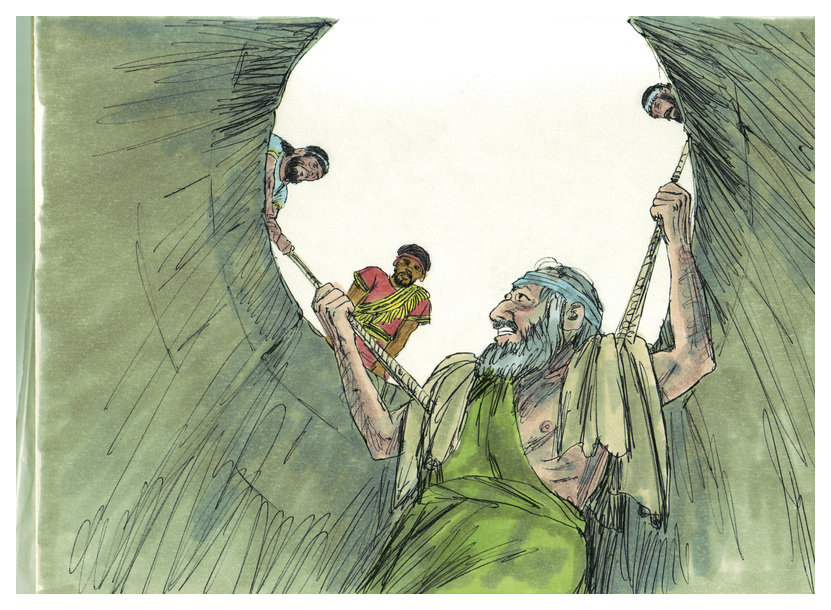
Pain is an inevitable part of the human experience, whether it stems from physical suffering, emotional turmoil, or spiritual trials. The Bible offers timeless guidance on how to navigate pain with faith, resilience, and trust in God. Four key principles emerge from Scripture to guide believers in responding to pain: never forsaking God, maintaining integrity, acting on God’s will, and praying without ceasing. These principles, rooted in the Word, provide a framework for enduring suffering while remaining anchored in faith.

First, irrespective of our trials, we ought never forsake God, trusting that He never forsakes His people. Deuteronomy 31:6 declares, “Be strong and courageous. Do not be afraid… for the Lord your God goes with you; he will never leave you nor forsake you.” This promise assures us that God’s presence is constant, even in our darkest moments. Similarly, Hebrews 13:5 reinforces this truth: “…Never will I leave you; never will I forsake you.” When pain threatens to overwhelm, these verses remind us that God is our refuge. Clinging to Him, rather than turning away in bitterness, strengthens our faith and provides hope. Pain may obscure our view of God, but His faithfulness remains unwavering, a steady anchor through life’s storms. God is not the source of our pain, but He can use it for our growth (Rom 8:28).

Second, maintaining integrity in the face of pain is essential. Persecution, betrayal, or injustice can tempt us to retaliate or compromise our values, but Scripture teaches us to maintain a higher standard. Romans 12:17-19 instructs, “Do not repay anyone evil for evil… Do not take revenge, my dear friends, but leave room for God’s wrath.” Likewise, 1 Peter 3:9 urges, “Do not repay evil with evil… but with blessing.” Integrity means reflecting God’s character, even when wronged. By refusing to curse our enemies or seek vengeance, we demonstrate trust in God’s justice and exemplify His love. Proverbs 20:22 echoes this: “Do not say, ‘I’ll pay you back for this wrong!’ Wait for the Lord, and he will avenge you.” Integrity in pain glorifies God and guards our hearts against resentment. Christ could have called 12 legions of angels (Matt 26:53; 1Pet 2:23)

Third, acting on God’s will by doing good is a powerful response to suffering. Pain can lead to self-focus, but Scripture calls us to persevere in righteousness. Galatians 6:9 encourages, “Let us not become weary in doing good, for at the proper time we will reap a harvest if we do not give up.” James 4:17 adds, “If anyone, then, knows the good they ought to do and doesn’t do it, it is sin for them.” Doing good (whether through kindness, service, or forgiveness) aligns us with God’s purposes and transforms pain into opportunities for service. By acting in obedience, we reflect Christ’s example, who endured suffering to accomplish God’s redemptive plan.

Finally, prayer is the lifeline of a believer in pain. 1 Thessalonians 5:17 commands, “Pray continually.” Philippians 4:6 further instructs, “Do not be anxious about anything, but in every situation, by prayer and petition, with thanksgiving, present your requests to God.” Colossians 4:2 adds, “Devote yourselves to prayer, being watchful and thankful.” Prayer connects us to God’s strength, aligns our hearts with His will, and brings peace that surpasses understanding. In pain, persistent prayer becomes a conduit for God’s comfort.

Responding to pain with faith involves trusting God’s presence, upholding integrity, doing good, and praying without ceasing. These biblical principles anchor us in God’s truth, enabling us to endure suffering with hope and purpose. By clinging to Scripture, we find the strength to navigate pain while glorifying God.

agape

6 things Christ has for us

All Those Spiritual Blessings | The Heaton File

The Abundant Blessings We Have in Christ

As faithful believers, our union with Jesus Christ grants us a treasure trove of spiritual riches, transforming our lives and securing our eternal destiny. The Bible reveals many profound blessings we receive through Christ. Here are 6 amazing blessings we have through Christ.

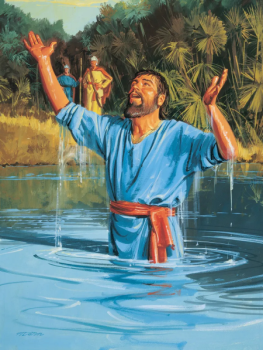
First, we experience cleansing from sin through Christ’s atoning work. The Bible declares, “But if we walk in the light, as he is in the light, we have fellowship one with another, and the blood of Jesus Christ his Son cleanseth us from all sin” (1 John 1:7, KJV). Additionally, Hebrews 9:14 assures us, “How much more shall the blood of Christ, who through the eternal Spirit offered himself without spot to God, purge your conscience from dead works to serve the living God?” Through Christ, our sins are washed away (in baptism, see Acts 22:16), freeing us from guilt and enabling us to live in righteousness.

Second, we are given the hope of heaven, a confident expectation of eternal life with God. Colossians 1:5 speaks of “the hope which is laid up for you in heaven, whereof ye heard before in the word of the truth of the gospel.” Titus 1:2 further confirms, “In hope of eternal life, which God, that cannot lie, promised before the world began.” This hope anchors our souls, giving us peace and purpose as we await our heavenly home.

Third, we receive redemption in His blood, the price paid for our freedom from sin’s penalty. Ephesians 1:7 states, “In whom we have redemption through his blood, the forgiveness of sins, according to the riches of his grace.” Likewise, 1 Peter 1:18-19 reminds us, “Ye were not redeemed with corruptible things, as silver and gold… but with the precious blood of Christ, as of a lamb without blemish and without spot.” Christ’s sacrifice secures our salvation, a gift we could never earn.

Fourth, Christ serves as our intercessor between God and man, bridging the gap sin created. Hebrews 7:25 proclaims, “Wherefore he is able also to save them to the uttermost that come unto God by him, seeing he ever liveth to make intercession for them.” 1 Timothy 2:5 adds, “For there is one God, and one mediator between God and men, the man Christ Jesus.” Through His intercession, we have constant access to God’s throne.

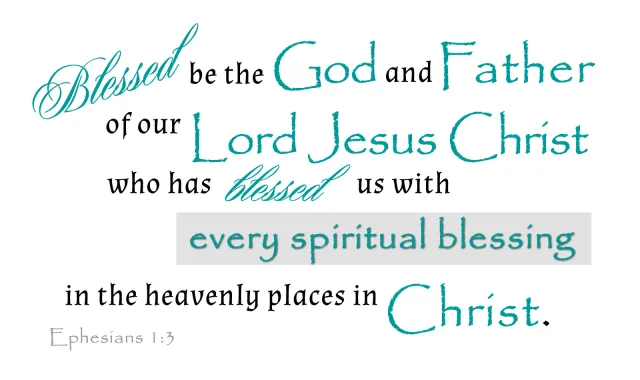
Fifth, we are blessed with all spiritual blessings in Christ. Ephesians 1:3 declares, “Blessed be the God and Father of our Lord Jesus Christ, who hath blessed us with all spiritual blessings in heavenly places in Christ.” 2 Peter 1:3 echoes, “His divine power hath given unto us all things that pertain unto life and godliness.” These blessings equip us for a life of faith and service.

Finally, we are reconciled to God through Christ, restored to a right relationship with Him. Romans 5:10 assures, “For if, when we were enemies, we were reconciled to God by the death of his Son, much more, being reconciled, we shall be saved by his life.” Colossians 1:20 reinforces, “And, having made peace through the blood of his cross, by him to reconcile all things unto himself.” Reconciliation brings us back to God’s embrace, healing the divide caused by sin (Isaiah 59:2).

These six blessings in Christ reveal the depth of God’s love and the sufficiency of Christ’s work. They are ours by obedient faith in Him, offering joy and security for this life and eternity.

agape

the Amazing WORD

The Amazing Power of God’s Word

You know, the Word of God is like a hidden gem for all of us believers. It’s more than just pages filled with text; it’s our go-to guide, a wellspring of truth, and an incredible tool for our spiritual journey. Seriously, if you really pay attention to its teachings, you’ll uncover so many benefits! When we dig into the scriptures, we see how God shows us His will, gives us solid truth, helps us stand strong in our faith, and lights up our paths. How cool is that?

Knowing the Will of the Lord (Ephesians 5:17)

Ephesians 5:17 exhorts, “Wherefore be ye not unwise, but understanding what the will of the Lord is.” In a world clouded by confusion, the Bible unveils God’s will for humanity. It reveals His universal desires, such as salvation for all (2 Peter 3:9, KJV: “not willing that any should perish, but that all should come to repentance”) and holy living (1 Thessalonians 4:3). By meditating on Scripture, as Psalm 119:11 (KJV) states, “Thy word have I hid in mine heart, that I might not sin against thee,” believers align their lives with God’s purposes. The Word acts as a divine compass, guiding us to avoid folly and live according to His eternal plan.

Objective Truth in a Deceptive World (John 17:17)

In John 17:17, Jesus prays, “Sanctify them through thy truth: thy word is truth.” The Bible stands as the unchanging standard of truth in an age of shifting values. As 2 Timothy 3:16 (KJV) declares, “All scripture is given by inspiration of God,” it is a reliable foundation for faith and practice. This truth sanctifies believers, setting them apart for God’s service by renewing their minds (Romans 12:2). It also guards against deception, as Jesus used Scripture to defeat Satan’s lies (Matthew 4:4-10). In a world prone to error, the Word anchors us in divine truth, enabling us to live with understanding.

A Ready Answer for Our Faith (1 Peter 3:15)

The Word equips believers to share their hope in Christ. 1 Peter 3:15 instructs, “Be ready always to give an answer to every man that asketh you a reason of the hope that is in you with meekness and fear.” Scripture strengthens our faith (Romans 10:17, KJV: “faith cometh by hearing, and hearing by the word of God”) and prepares us to share the gospel with humility and reverence. Whether answering skeptics or encouraging seekers, the Bible provides the foundation for our testimony, ensuring our words reflect God’s truth and grace (Colossians 4:6).

Direction for Our Lives (Jeremiah 10:23; Psalm 119:105)

Jeremiah 10:23 acknowledges, “The way of man is not in himself: it is not in man that walketh to direct his steps.” Paired with Psalm 119:105, “Thy word is a lamp unto my feet, and a light unto my path,” this reveals the Bible’s role as a guide. Human wisdom falters (Proverbs 16:9), but Scripture illuminates both immediate decisions and long-term goals. Whether facing trials or choices, the Word offers wisdom (Joshua 1:8) and warnings (Proverbs 14:12). By following it, believers walk confidently in God’s purposes.

The Word is “quick, and powerful” (Hebrews 4:12, KJV), transforming hearts, comforting in affliction (Psalm 119:92), and fostering intimacy with God (John 15:7). It equips us for every good work (2 Timothy 3:17), enabling us to live with purpose, anchored in the truth and guidance of God’s Word.

agape

spencer

Evidence for our Faith: Why Atheism Fails to Explain the Universe’s Origin

Atheism, as a worldview, suggests that the universe exists without a purposeful intelligent design, relying instead on naturalistic explanations for its origin. Sadly, this perspective struggles to provide a coherent and comprehensive account of the universe’s beginning, leaving critical questions unanswered. In contrast, the Bible offers a logically compelling framework for understanding the universe.

One of atheism’s primary challenges is the question of what caused the beginning of the universe. The universe, according to modern cosmology, began with the Big Bang approximately 13.8 billion years ago (Hawking, 1988). Atheism often leans on theories like quantum fluctuations or multiverse hypotheses to explain this event without invoking a cause. Yet, these explanations falter, only pushing back the question without answering it. Quantum mechanics operates within the framework of space-time, which itself began at the Big Bang. To suggest quantum fluctuations caused the universe requires a pre-existing framework, which doesn’t answer but only blurs the discussion. The multiverse theory, while speculative, lacks any real evidence and merely shifts the question of origin to an unobservable realm (Krauss, 2012). Atheism’s reliance on such theories often feels like an attempt to avoid the question rather than answer it, and requires lots of faith.

In contrast, the Bible presents a clear cause: “In the beginning, God created the heavens and the earth” (Genesis 1:1). This aligns with the philosophical principle of sufficient reason, which argues that everything must have a reason or cause. A transcendent (beyond Time, Space, & Matter), purposeful intelligent design provides a logically consistent explanation for why the universe exists rather than nothing. As Psalm 19:1 states, “The heavens declare the glory of God; and the firmament sheweth his handywork,” suggesting a purposeful order to creation.

Another issue is the fine-tuning of the universe. The physical constants governing gravity, electromagnetism, and nuclear forces are precisely calibrated to allow life (Barrow & Tipler, 1986). Even slight deviations would render the universe inhospitable. Atheism attributes this to chance or necessity, but the odds of such precision arising randomly are astronomically low; it’s like winning a cosmic lottery trillions of times over. Theistic arguments, supported by Romans 1:20, assert that the universe’s order reflects a purposeful design: “For the invisible things of him from the creation of the world are clearly seen, being understood by the things that are made, even his eternal power and Godhead; so that they are without excuse.”

Atheism also struggles with the origin of consciousness and morality. Naturalistic processes like evolution falter in accounting for subjective experiences or objective moral standards as well as biological development. If humans are merely products of matter, why do we possess self-awareness or universal moral intuitions? John 1:3 suggests a divine source for all things: “All things were made by him; and without him was not any thing made that was made.” This implies a purposeful intelligent design behind both the physical and metaphysical aspects of existence.

While atheism offers skepticism, it lacks a robust explanation for the universe’s origin, fine-tuning, and the emergence of consciousness. Theistic arguments, grounded in biblical revelation, provide a coherent narrative that aligns with both reason and observation. Ultimately, atheism’s failure to explain why there is something rather than nothing points to a truth the Bible boldly declares: the universe exists because a purposeful God willed it into being.

The basic question for me is; did everything come from nothing, or did it come from someone who is outside of Time, Space, and Matter? To me, atheism is the least logical belief system (Atheism is the lack of belief in the existence of God). We as humans are currently unable to scan the known universe, let alone the unknown universe, let alone the bottom of our own oceans. How that can one state with confidence, “there is no God.”

AGAPE

Sources:
Barrow, J. D., & Tipler, F. J. (1986). The Anthropic Cosmological Principle. Oxford University Press.
Hawking, S. (1988). A Brief History of Time. Bantam Books.
Krauss, L. M. (2012). A Universe from Nothing. Free Press.
The Bible (KJV): Genesis 1:1, Psalm 19:1, Romans 1:20, John 1:3.

Seeking God; Aspiring to Excel

Aspiring to Excellence (Godliness and Holiness)

In my walk with Christ, I’m learning to aspire to excellence through godliness and holiness, though I often feel unworthy of such a high calling. 1 Timothy 6:11 urges me to pursue godliness, a life of devotion to God, while Hebrews 12:14 calls me to “pursue… holiness, without which no one will see the Lord.” These virtues connect to the righteousness and faith in 1 Timothy 6:11 and 2 Timothy 2:22, and they echo the call to seek “things above” in Colossians 3:1-2. I’m far from perfect, but I long to reflect God’s character more each day.

This pursuit is crucial because it draws me closer to God Himself. Godliness means living with reverence, seeking His will in every decision, but I often get distracted by worldly concerns. Holiness, too, challenges me to stand apart from sin and selfishness, as Hebrews 12:14 warns that without it, I won’t see God. This sobers me, reminding me that my efforts matter, not to earn salvation but to honor the One who saved me. These virtues shape my heart, teaching me to love what God loves and hate what He hates, aligning with the righteousness of both Timothy passages.

Aspiring to godliness and holiness is a humbling journey. I need the support of other saint, as 2 Timothy 2:22 suggests, pursuing these virtues “with those who call on the Lord.” Through prayer, Scripture, and accountability, I’m slowly growing, learning to forgive quickly, speak truthfully, and serve humbly. Each step feels like a battle, but it’s worth it to become more like Christ. As a saint, I seek this treasure of excellence, trusting God to refine me into His image, one faltering step at a time.

Evidence for our Faith: The Dead Sea Scrolls: Evidence for the Bible’s Reliability

The discovery of the Dead Sea Scrolls in 1947 ranks among the most significant archaeological finds in history, offering a profound window into the reliability of the Bible. Hidden in caves near Qumran, these ancient manuscripts, dating from the 3rd century BC to the 1st century AD, include fragments of nearly every Old Testament book. Their remarkable preservation and textual consistency with later biblical manuscripts provide compelling evidence that the Scriptures we read today faithfully reflect their ancient origins.

One of the most striking finds is the Great Isaiah Scroll (1QIsa^a), a nearly complete copy of the Book of Isaiah dating to around 125 BC. When compared to the Masoretic Text, the standard Hebrew Bible from the 10th century AD, the scroll shows astonishing fidelity. For instance, Isaiah 53, a messianic prophecy central to both Jewish and Christian theology (Isaiah 53:5-6), differs only in minor spelling or stylistic variations—none altering the meaning. This consistency across a millennium demonstrates that scribes meticulously preserved the text, countering claims of rampant corruption over time.

The scrolls also include fragments of Deuteronomy, such as 4QDeut^j, which preserves Deuteronomy 32:43. This passage, part of Moses’ song, aligns closely with the Septuagint (Greek translation) suggesting a textual tradition predating later standardization. Yet, its core message—God’s covenant with Israel—remains intact, as seen in Deuteronomy 32:8-9. Such findings reveal a diversity of ancient texts but affirm their essential unity, reinforcing the Bible’s reliability as a transmitted document.

Beyond specific books, the scrolls reflect a broader cultural and religious context matching biblical accounts. The Community Rule (1QS) and other sectarian writings echo the ascetic lifestyle of groups like the Essenes, resonating with descriptions of John the Baptist’s wilderness ministry (Matthew 3:1-4). While not direct proof of New Testament events, this alignment anchors the biblical world in historical reality, showing that its narratives were not invented centuries later.

Critics once argued that the Bible’s text evolved significantly over time, but the Dead Sea Scrolls challenge that notion. Scholarly analysis, such as Millar Burrows’ The Dead Sea Scrolls (1955), notes that discrepancies are minimal—often mere scribal errors—while Frank Moore Cross’s The Ancient Library of Qumran (1995) highlights the scrolls’ role in tracing textual transmission. These manuscripts predate the Masoretic Text by over a thousand years, yet their agreement is uncanny, suggesting a disciplined copying tradition rooted in reverence for the Word.

The Dead Sea Scrolls do not prove every biblical claim, but they powerfully affirm the Old Testament’s textual integrity. They bridge centuries, showing that what was written in antiquity endures today with remarkable accuracy. In an age of skepticism, these fragile fragments whisper a timeless truth: the Bible’s words have been guarded through the ages, as if etched in stone and sealed in clay.

Agape

Sources:
Burrows, Millar. The Dead Sea Scrolls. Viking Press, 1955.
Cross, Frank Moore. The Ancient Library of Qumran. Sheffield Academic Press, 1995.

Evidence for our Faith: The Spread of Christianity Despite Persecution

A Logical Case for Jesus’ Resurrection

The rapid spread of Christianity in its early years, despite relentless persecution, offers a compelling and logical argument for the resurrection of Jesus Christ. In the first century, followers of Jesus faced hostility from both Jewish authorities and the Roman Empire, yet their movement not only survived but flourished. This phenomenon defies natural explanation unless the resurrection, a transformative event, provided the catalyst for such resilience and growth.

First, consider the historical context. Early Christians endured brutal persecution, including detention, affliction, and execution. The Roman historian Tacitus records that under Emperor Nero, Christians were blamed for the Great Fire of Rome in 64 AD and subjected to horrific deaths (Tacitus, Annals 15.44). Despite this, Christianity grew from a small sect in Judea to a dominant force across the empire within three centuries. Sociologically, movements based on fabricated claims typically collapse under such pressure, as followers abandon a cause that offers no tangible reward. Yet, the unwavering commitment of Jesus’ disciples suggests they witnessed something extraordinary—something worth dying for.

This leads to the second point: the transformation of the disciples. The New Testament describes them as fearful and scattered after Jesus’ crucifixion (John 20:19), yet post-resurrection, they boldly proclaimed His rising, even at the cost of their lives. Peter, who denied Jesus three times (Luke 22:54-62), later preached fearlessly in Jerusalem (Acts 2:14-36). Tradition holds that most disciples faced martyrdom—Peter crucified upside-down, James beheaded—yet none recanted their testimony. Psychologically, people do not die for a known lie. The resurrection, as recorded in all four Gospels (Matthew 28:1-10, Mark 16:1-8, Luke 24:1-12, John 20:1-18), provides a logical explanation: they saw the risen Christ.

Third, the conversion of skeptics like Paul strengthens the case. Initially a persecutor of Christians (Acts 8:1-3), Paul’s dramatic turnaround after encountering the risen Jesus on the road to Damascus (Acts 9:1-19) turned him into the faith’s greatest missionary. His epistles, such as 1 Corinthians 15:3-8, affirm the resurrection as a historical event witnessed by over 500 people. Paul’s shift from enemy to advocate, risking death himself (2 Corinthians 11:23-27), underscores the event’s credibility. A fabricated story would hardly sway a hostile intellectual like Paul without overwhelming evidence.

Finally, the empty tomb, acknowledged even by Jesus’ opponents (Matthew 28:11-15), poses a challenge. If the body remained, producing it would have crushed the movement. Instead, the claim of resurrection fueled Christianity’s expansion, despite every effort to suppress it. The Jewish and Roman authorities, with motive and means to disprove it, could not.

The spread of Christianity under persecution defies logic unless anchored in a real event. The resurrection, attested by transformed lives, historical records, and an empty tomb, emerges as the most reasonable explanation. In a world bent on silencing them, early Christians didn’t just survive—they thrived, because a dead man walked out of His grave.

Agape
Spencer

Sources:
Morris, Henry M. The Biblical Basis for Modern Science. Baker Books, 1984.
Montgomery, John W. Evidence for Faith. Probe Books, 1991.
Uman, Martin A. The Lightning Discharge. Academic Press, 1987.

Evidence for our Faith: the Moral Argument

The Moral Argument: Why Morality Points to a Creator. God’s Revealed Word as the Source of Objective Morality

The Moral Argument for God’s existence rests on the premise that objective moral values—universal standards of right and wrong—exist and are best explained by a purposeful design from a Creator. While science highlights our innate moral instincts, the Bible provides a unique and compelling case that humanity learns these objective standards through God’s revealed word. This interplay of divine revelation and human conscience offers a profound clue to the existence of a moral lawgiver.

Objective moral values, such as the inherent wrongness of betrayal or the goodness of self-sacrifice, transcend personal opinion or cultural trends. Psychological research, like that of Paul Bloom, shows even infants exhibit rudimentary moral judgments—preferring kindness over cruelty—suggesting an inborn moral sense (Bloom, Just Babies, 2013). Yet, this alone doesn’t explain how we refine and understand these principles. The Bible steps in, asserting that God’s revealed word clarifies and establishes these standards for humanity. Without this guidance, our moral intuitions might remain vague or misdirected.

Scripture presents God as the ultimate source of morality, with His word providing the definitive moral framework. In Exodus 20:1-17, the Ten Commandments are delivered directly from God to Moses, offering unambiguous directives: “You shall not murder,” “You shall not steal.” These laws aren’t mere suggestions but objective truths, reflecting God’s character and intended for all people. This revelation transforms abstract moral instincts into concrete duties, shaping human understanding of right and wrong.

Further, Deuteronomy 6:6-7 instructs, “These commandments that I give you today are to be on your hearts. Impress them on your children.” This emphasizes that morality isn’t left to human guesswork—God’s word is taught, learned, and passed down, refining our natural inclinations. The Psalms reinforce this: Psalm 119:105 declares, “Your word is a lamp to my feet and a light to my path,” portraying divine revelation as the guide that illuminates moral living.

Romans 2:14-15 offers a striking insight: “When Gentiles, who do not have the law, do by nature things required by the law… they show that the requirements of the law are written on their hearts.” This suggests an innate moral awareness, yet the passage implies it aligns with God’s law, revealed fully in Scripture. The Bible bridges the gap between our God-given conscience and the precise standards we’re meant to follow. For instance, Micah 6:8 summarizes divine expectation: “To act justly and to love mercy and to walk humbly with your God”—a standard humanity learns through God’s word, not intuition alone.

Naturalists might argue morality evolves socially, but this fails to explain its objective weight. Cultures differ on specifics, yet core values—like justice—persist universally, echoing biblical principles. God’s revealed word provides the anchor, ensuring morality isn’t arbitrary. As Isaiah 55:8-9 notes, God’s ways are higher than ours, suggesting His revelation elevates human understanding beyond what nature alone could teach.

The Moral Argument, enriched by biblical evidence, posits that objective morality points to a Creator who reveals it through His word. Science hints at our moral wiring, but Scripture—through commandments, teachings, and declarations—grounds it in God’s eternal truth, offering humanity a clear path to righteousness.


Agape,
Spencer

Sources:
o Bloom, Paul. Just Babies: The Origins of Good and Evil. Crown, 2013.
o The Holy Bible, New International Version. Zondervan, 2011 (Exodus 20:1-17, Deuteronomy 6:6-7, Psalm 119:105, Romans 2:14-15, Micah 6:8, Isaiah 55:8-9).

Lest we DRIFT away, Heb 2:1-3

Therefore we ought to give the more earnest heed to the things that were heard, lest haply we drift away from them. For if the word spoken through angels proved stedfast, and every transgression and disobedience received a just recompense of reward; how shall we escape, if we neglect so great a salvation?” (Heb 2:1-3a ASV)

In the swiftly changing currents of life, it is all too easy to drift away from the secure anchor of hope, “which we have as an anchor of the soul, a hope both sure and stedfast and entering into that which is within the veil” (Heb 6:19).

Let us explore five guiding principles from the book of Hebrews that can help us avoid spiritual drift and ensure our steadfastness in the faith.

The first one is found in Hebrews 6:11, “And we desire that each one of you may show the same diligence unto the fulness of hope even to the end.”

Think of diligence as the steady hand guiding the helm of a ship through treacherous waters. It is not enough to start well; we must persist, with our eyes fixed on the horizon of God’s promises.

Hebrews 4:11 exhorts us, “Let us labour therefore to enter into that rest, lest any man fall after the same example of unbelief.” The necessity of constant effort to avoid spiritual shipwreck is a recurring theme (Hebrews 10:22; 12:1). Are we laboring earnestly, or merely drifting along?

Reading and studying the Bible is the second way we will be able to remain on course, avoiding drift. The writer reminds us, “For the word of God is quick, and powerful, and sharper than any twoedged sword” (Heb 4:12). To avoid drift we must become skilled in the word. Hebrews 5:12-6:8 reveals the peril of spiritual immaturity and the dire consequences of neglecting the deeper teachings of Christ. Is our Bible a well-worn map or an unused artifact?

Another aid in avoiding drift is imitation which calls us to follow the examples of those who have walked the path of faith before us. Hebrews 6:12 instructs us to be “followers of them who through faith and patience inherit the promises.” We should emulate the faithful who have demonstrated unwavering trust in God. Consider the heroes of faith outlined in Hebrews 11. Their lives serve as beacons, illuminating the way for us to follow. By imitating their faith and perseverance, we reinforce our commitment to Christ. Whose shipping lane are we following today? (1Cor 11:1; 3John 11)

A healthy reverence for God is the fourth in our efforts to maintain our spiritual course. Hebrews 4:1 warns, “Let us therefore fear, lest, a promise being left us of entering into his rest, any of you should seem to come short of it.” Godly fear keeps us vigilant. It reminds us of the gravity of our salvation and the importance of living in a manner worthy of our calling. Does our reverence for God inspire vigilance or apathy?

Finally, we ought to take heed. Taking heed requires self-awareness and caution. Hebrews 3:12 cautions, “Take heed, brethren, lest there be in any of you an evil heart of unbelief, in departing from the living God.” The vigilance of the watchman who stands in the crow’s nest of the ship is akin to the spiritual alertness we must maintain to remain on course. By taking heed, we guard against the drift caused by doubt and sin. Are we watchful or wandering?

Let us heed the wisdom of Hebrews and apply these principles diligently. Through our earnest efforts we anchor our souls firmly in Christ, avoiding the perilous drift that leads away from so great a salvation.

Agape,

Spencer

John 3:16, the greatest verse

The Greatest Being

The verse begins with “FOR GOD.” The verse begins with the greatest being in existence. In Genesis 1:1, we read, “In the beginning, God created the heavens and the earth.” God is the Creator, the Alpha and the Omega, the beginning and the end. John 1:1-3 tells us, “In the beginning was the Word, and the Word was with God, and the Word was God. The same was in the beginning with God. All things were made by him; and without him was not any thing made that was made.” Job 38-41 presents a majestic depiction of God’s power and wisdom. Our faith rests upon the foundation of this greatest being, who is sovereign over all creation.

The Greatest Thing

Next, we see the greatest thing: “SO LOVED.” God is love. In 1Corinthians 13:13, we learn that “the greatest of these is love.” 1John 4:8 declares, “He that loveth not knoweth not God; for God is love.” God’s love is unparalleled and incomprehensible. It is a love that is willing to sacrifice, a love that seeks the well-being of others. It is the greatest thing because it defines the actions of the greatest being.

The Greatest Number

“THE WORLD.” This phrase encompasses the greatest number: the entire world. God’s love is not limited to a select few but extends to every person on this earth. 2Peter 3:9 states, “The Lord is not slack concerning his promise, as some men count slackness; but is longsuffering to us-ward, not willing that any should perish, but that all should come to repentance.” 1Timothy 2:4-6 reinforces this by saying, “Who will have all men to be saved, and to come unto the knowledge of the truth.” 1John 2:2 confirms that “And he is the propitiation for our sins: and not for ours only, but also for the sins of the whole world.” The greatest number shows the expanse of God’s love. God is not a respecter of persons (Rom 2:11).

The Greatest Gift

“THAT HE GAVE HIS ONLY BEGOTTEN SON.” In this we see the greatest gift. Ephesians 2:8 reminds us that “For by grace are ye saved through faith; and that not of yourselves: it is the gift of God.” Hebrews 2:9 tells us, “But we see Jesus, who was made a little lower than the angels for the suffering of death, crowned with glory and honour; that he by the grace of God should taste death for every man.” 2Corinthians 9:15 exclaims, “Thanks be unto God for his indescribable gift!” The greatest gift (grace) is God’s own Son, given for the redemption of mankind.

The Greatest Faith

“THAT WHOSOEVER BELIEVETH IN HIM.” This phrase highlights the greatest faith. Jesus declares in John 8:24, “I said therefore unto you, that ye shall die in your sins: for if ye believe not that I am he, ye shall die in your sins.” Hebrews 3:18-19 warns of the consequences of unbelief as seen through disobedience, while Hebrews 11:6 teaches that “without faith it is impossible to please God.” The greatest faith is an active belief in Jesus Christ as the Son of God and the Savior of the world (James 2:14-26).

The Greatest Loss

“SHOULD NOT PERISH.” The greatest loss is the eternal separation from God. While any can be saved, the bible tells us that not all will obey the Gospel (Matt 7:24-29; 2Thess 1:8-9). Matthew 25:46 warns of “everlasting punishment,” and John 5:29 speaks of those who will “resurrection of damnation.” The story of the rich man and Lazarus in Luke 16:19-31 vividly portrays the torment of those who perish. 2Corinthians 5:10 reminds us that “we must all appear before the judgment seat of Christ.” The greatest loss is the eternal consequence of rejecting God’s gift of salvation.

The Greatest Difference

“BUT.” While all may be saved, some won’t obey the gospel. “And being made perfect, he became the author of eternal salvation unto all them that obey him” (Heb 5:9). Some will hear, but not do; “Therefore whosoever heareth these sayings of mine, and doeth them, I will liken him unto a wise man, which built his house upon a rock: And the rain descended, and the floods came, and the winds blew, and beat upon that house; and it fell not: for it was founded upon a rock. And every one that heareth these sayings of mine, and doeth them not, shall be likened unto a foolish man, which built his house upon the sand: And the rain descended, and the floods came, and the winds blew, and beat upon that house; and it fell: and great was the fall of it.” (Matt 7:24-27). Many may confess Jesus as Lord and Savior, but not do what He says, “And why call ye me, Lord, Lord, and do not the things which I say” (Luke 6:46)?

The Greatest Blessing

“HAVE EVERLASTING LIFE.” Finally, we come to the greatest blessing. 1Thessalonians 4:13-18 describes the hope of the resurrection and the promise of eternal life with Christ. Everlasting life is the ultimate blessing, the fulfillment of God’s promise to those who believe.

John 3:16 is a verse that reveals to us the greatest being, the greatest thing, the greatest number, the greatest gift, the greatest faith, the greatest loss, and the greatest blessing. Let us hold fast to this truth, share it with others, and walk in the light of God’s incredible love and grace.

Agape, Spencer