
Evidence for our Faith: O Little Town of Bethlehem

Jesus Was Born in the Exact Town God Named 700 Years Earlier

Imagine you’re trying to prove to a friend that the Bible isn’t just a religious book, but something that actually predicts the future with crazy detail. One of the strongest pieces of evidence is the prophecy about where the Messiah would be born. It’s not vague like a horoscope; it’s specific, and it came true in a way nobody could have staged.

About 700 years before Jesus was born, a prophet named Micah stood up and said something wild: “But you, Bethlehem Ephrathah, though you are small among the thousands of Judah, yet out of you shall come forth to Me the One to be Ruler in Israel, whose goings forth are from of old, from everlasting.” (Micah 5:2)

Notice three things that make this jaw-dropping:

It names a tiny, no-name village. Bethlehem wasn’t Jerusalem, the capital. It wasn’t even a big town. In Micah’s day there were thousands of villages in Judah; picking Bethlehem is like saying “the Savior of the world will be born in Mayberry or some random small town nobody’s heard of.” There were maybe a couple hundred people living there. The odds of guessing the exact birthplace centuries ahead are ridiculous.

It says this Ruler existed “from of old, from everlasting.” That phrase in Hebrew literally means “from ancient days” or “from eternity.” In plain English: this isn’t just some future king who starts existing when he’s born; He already existed forever. Christians look at that and immediately think of John 1:1; “In the beginning was the Word, and the Word was with God, and the Word was God.” Same eternal person.

The prophecy says the promised Ruler will come out of Bethlehem. Not raised there, not crowned there; BORN THERE. Fast-forward 700 years. Mary and Joseph are living up north in Nazareth. Mary is nine months pregnant. There is zero reason for them to travel 90 miles south to Bethlehem. NONE. Except Caesar Augustus decides he wants a census and everybody has to go back to their ancestral hometown. Joseph’s family line goes back to King David… who is also from Bethlehem. So, a Roman emperor unknowingly forces a very pregnant woman to travel to the exact village Micah named centuries earlier. (Luke 2:1-7). God’s Son would be born in the precise delivery room He announced 700 years before.

Why is this one prophecy so powerful for our faith?

First, nobody could fake it. Joseph and Mary weren’t powerful people who could bribe officials or choose their birthplace. They were poor, ordinary, and obeying an inconvenient government order. The timing and location were completely out of their control.

Second, the Jewish leaders in Jesus’ day knew this prophecy very well. That’s why when the wise men showed up in Jerusalem asking, “Where is He who’s born King of the Jews?” the priests answered, “In Bethlehem of Judea, for thus it is written by the prophet” and quoted Micah 5:2 (Matthew 2:5-6). Even the people who rejected Jesus admitted the Messiah had to come from there.

Third, it shows Jesus is the Messiah promised of old. Seven centuries before it happened, God put the street address on record. Then His Son came into the world in that exact little town.

When you stack up details like this (tiny village named, eternal origin stated, Roman census forcing the trip), it’s not lucky guessing. It’s evidence that Someone outside of time knew the future and told us ahead of time so we’d recognize His Son when He showed up.

Bethlehem isn’t just a cute Christmas-card detail. It’s God saying, “I told you exactly where I was sending My Son; watch Me deliver.” And He did. That’s why this one prophecy still shuts down skeptics and strengthens believers two thousand years later. God kept His 700-year-old appointment to the very town He promised.

This is just one reason why the Bible can be trusted. The its fulfillment of this prophecy is just one rock in the mountain of evidence for our faith.

Agape

spencer
God is not for CALVINISM

God Is Not a Calvinist

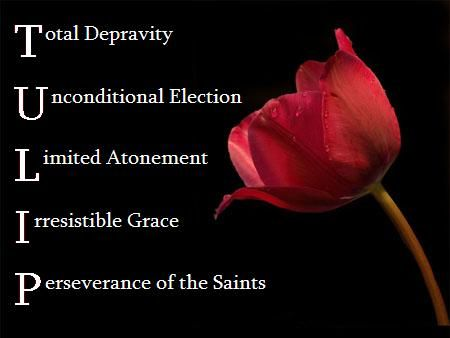
The Bible presents a God of boundless love, genuine invitation, and impartial justice. Yet Calvinism (through its doctrines of unconditional election, limited atonement, and irresistible grace) paints a different portrait: a God who sovereignly chooses some for heaven and others for hell, apart from their response. This article examines nine biblical truths that directly contradict core Calvinist claims. God is not a Calvinist because…

1. He Teaches Man Is Free to CHOOSE

God does not mock His creatures with illusory commands. Joshua’s charge assumes real moral ability to choose between serving God or idols. Calvinism’s unconditional election denies this freedom, claiming the unelect cannot choose God. But Scripture places responsibility squarely on human shoulders.

2. He Desires ALL to Be Saved

Paul roots evangelism in God’s universal salvific will. Calvinism redefines “all” as “all kinds of people” (i.e., the elect from every nation). But the Greek pantas anthrōpous means every human without exception. God’s desire conflicts with their decree that guarantees most will perish.

3. He LOVES the Whole World

Calvinism limits Christ’s death to the elect. Yet “world” (kosmos) here is all-encompassing (every sinner, not a pre-selected subset). Salvation hinges on whoever believes, not whoever was chosen before time.

4. Jesus Is the Propitiation for the Whole World

John destroys limited atonement in one sentence. Christ’s blood satisfies God’s wrath for every sin of every person. The offer of forgiveness is universal and sufficient—though not universally applied (due to unbelief, not divine decree; see Romans 1:20-32).

5. Jesus Was Willing, but ISRAEL Was Not

Jesus’ lament exposes the myth of irresistible grace. Divine will (“I would”) clashes with human refusal (“you were not willing”). Grace woos, but does not compel. The same crowd that rejected Christ could have repented; if they had been willing.

6. He Is NOT Willing That Any Should Perish

Peter ties God’s patience to a universal hope for repentance. Calvinism inserts “any of the elect” and “all of the elect,” but the text says any and all—period. God delays judgment to give every sinner opportunity (2Peter 3:15).

7. He Warns Believers of the Possibility of Falling

Calvinism’s perseverance of the saints teaches true believers cannot fall away. Yet Paul warns the Corinthian church—regenerate Christians—of real spiritual danger. Apostasy is possible; perseverance is commanded, not guaranteed. The Bible is full of warnings against apostasy.

8. He Says Baptism Saves

Calvinism often treats baptism as a mere symbol with no saving efficacy. Peter disagrees: baptism saves—not magically, but as the God-ordained moment of calling on the name of the Lord (cf. Acts 2:38; 22:16; Romans 10:13; Mark 16:16). It is the normative entry into Christ’s death and resurrection (Rom 6:3–4; Colossians 2:11-12).

9. He Teaches Babies Are Safe—We Do Not Inherit Adam’s Guilt

Calvinism’s total depravity includes inherited guilt—infants are “vipers in diapers,” born condemned. But:

  • David said of his dead infant, “I shall go to him, but he will not return to me” (2 Sam 12:23)—implying the child was saved.
  • Jesus held up children as models of the kingdom, not objects of wrath.
  • Ezekiel rejects transgenerational punishment.

Sin’s consequence is death (Rom 5:12), but guilt is personal. Babies are safe until the age of accountability.

Conclusion: A God Worth Proclaiming

The God of Scripture loves every sinner, died for every sin, and pleads with every heart. He does not play favorites (Acts 10:34–35). He does not mock with insincere offers. He does not damn the innocent.

Calvinism’s God decrees reprobation before birth of certain individuals and spares selected individuals.


The Bible’s God says, “Choose this day… Turn to me and be saved, all the ends of the earth!” (Isa 45:22)

agape

spencer

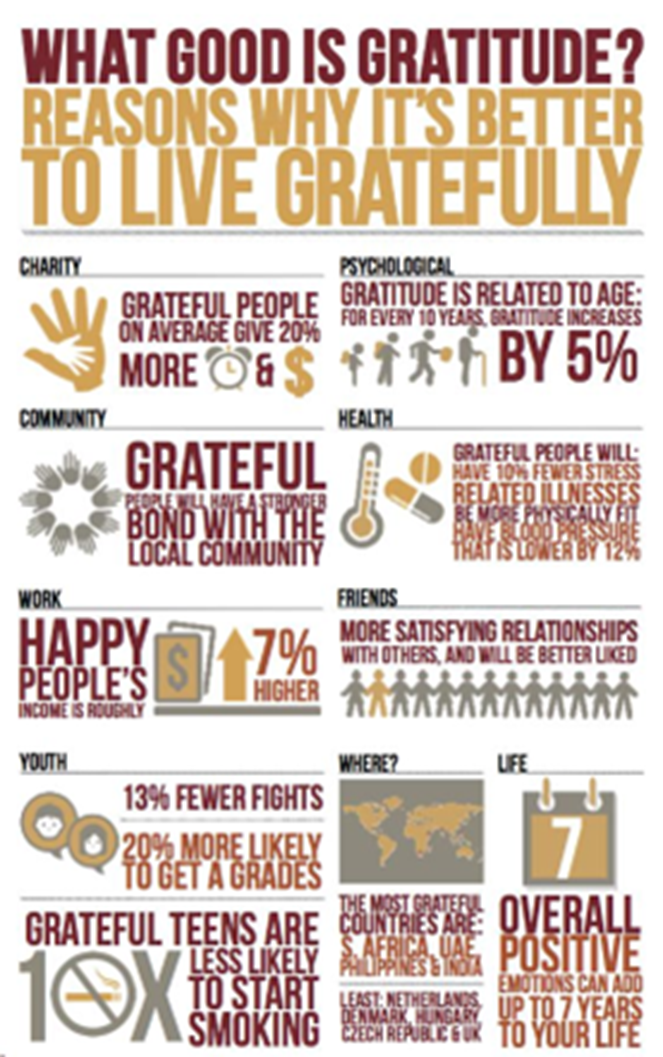
Evidence for our Faith: Gratitude

Gratitude and Happiness: Science Catches Up to the Bible

Picture waking up with a heart brimming with thanks, even when life feels like a storm. It’s like a quiet spark of joy, isn’t it? The Bible has long championed gratitude as a way of life, and now science is unveiling its power, showing how this practice transforms our minds, relationships, and faith. Gratitude isn’t just a passing feeling; it’s a powerful attitude that fits God’s design, blending biblical wisdom with modern discoveries in a way that is both timeless and exciting.

Gratitude reshapes our mental health, anchoring us in hope. Research by psychologist Robert Emmons, a leading gratitude scholar, shows that keeping a daily journal of things you’re thankful for can reduce stress and boost well-being. In a 2003 study from the Journal of Personality and Social Psychology, Emmons found that participants who reflected on gratitude reported less depression and greater optimism after just weeks. This resonates with Psalm 40:5 which proclaims, “Many, O Lord my God, are thy wonderful works which thou hast done, and thy thoughts which are to us-ward: they cannot be reckoned up in order unto thee: if I would declare and speak of them, they are more than can be numbered.” The psalmist knew that gratitude expands our perspective on life, filling our hearts with God’s countless blessings. Science confirms this, revealing how gratitude rewires our brains to seek the good, even in tough times.

Gratitude can strengthen relationships, bringing us closer in ways that reflect God’s love. A 2014 study in Emotion by Sara Algoe showed that expressing thanks fosters trust and deepens connections. When we voice gratitude, it sparks a cycle of kindness, making both giver and receiver feel valued. This echoes 1Thessalonians 5:18 in the KJV, where Paul exhorts, “In every thing give thanks: for this is the will of God in Christ Jesus concerning you.” By thanking others, we build connections with others rooted in love. A heartfelt “thank you” can transform a moment into a lasting bond, mirroring the relational heart of the Gospel (see Luke 17:11-19).

Finally, gratitude fuels spiritual growth, drawing us nearer to God. When we practice thankfulness, we train our hearts to remember that He is with us in every moment, deepening our trust. Philippians 4:6 in the KJV urges, “Be careful for nothing; but in every thing by prayer and supplication with thanksgiving let your requests be made known unto God.” This isn’t mere advice; it’s a roadmap for a joy-filled life. Gratitude shifts our focus from what’s missing to trusting in God’s promises. Science supports this: studies show gratitude fosters a sense of purpose and connection to something greater, aligning with the biblical summons to live in awe of God’s goodness.

In a chaotic world, gratitude is a quiet revolution. The Bible, written centuries ago, aligns beautifully with what science now reveals. Researchers like Emmons and Algoe highlight gratitude’s benefits, while scriptures like Psalm 40:5, 1Thessalonians 5:18, and Philippians 4:6 proclaim its already revealed eternal truth. God’s word beckons us to embrace gratitude daily, not as a task, but as a strategy that changes our minds, relationships, and faith. So, let’s begin today: pause, give thanks, and see how God’s wisdom, that science finally realizes, illuminates your life.

agape Sources: Studies by Robert Emmons (Journal of Personality and Social Psychology, 2003) and Sara Algoe (Emotion, 2014). Biblical references from Psalm 40:5, 1 Thessalonians 5:18, and Philippians 4:6 (KJV).

Speaking the truth in Love

Demonstrating Love Through Our Speech

The way we speak reveals the condition of our hearts and serves as a powerful expression of love. Scripture, particularly Ephesians, provides a blueprint for how our words can reflect Christ’s love, fostering unity, encouragement, and grace. By aligning our speech with biblical principles, we demonstrate love that honors God and uplifts others.

Seasoned with Salt; Colossians 4:6 urges believers to let their speech be “always full of grace, seasoned with salt,” so that they know how to answer everyone (“seasoned with salt” suggesting speech that is gracious, wise, and impactful, enhancing conversations like salt enhances food). Similarly, James 3:17 describes wisdom from above as pure, peace-loving, and gentle. Words seasoned with salt are purposeful, preserving truth and adding value to conversations. They avoid blandness or harshness, striking a balance that reflects thoughtfulness and care. When our speech is seasoned with grace, it becomes a tool to point others to Christ, making our interactions meaningful and impactful.

Pleasant, Not Profane; Ephesians 5:4 warns against “filthiness, foolish talk, or crude joking,” which are out of place for those who follow Christ. Instead, our words should be pleasant, reflecting gratitude and reverence. Filthy or foolish speech tears down, while pleasant words build up and create an atmosphere of love. Avoiding foul language doesn’t mean stifling humor or joy but choosing words that align with God’s holiness. Pleasant speech invites others into a space of dignity and respect, mirroring the love Christ shows us.

Edifying, Empathetic, & Encouraging; Ephesians 4:29 instructs, “Let no corrupting talk come out of your mouths, but only such as is good for building up, as fits the occasion, that it may give grace to those who hear” (Edifying means Building up or strengthening others spiritually). Romans 14:19 tells us to pursue peace and mutual edification, while Colossians 3:16 encourages teaching and admonishing one another with wisdom. Hebrews 10:24-25 emphasizes spurring one another toward love and good works. Empathetic and encouraging speech listens deeply, validates feelings, and inspires growth. It puts others’ needs above our own, fostering community and reflecting Christ’s sacrificial love.

Speaking Truth in Love; Ephesians 4:15 and 4:25 highlight the importance of speaking truth in love, rooted in agape type (love selfless, unconditional love). Truth without love can wound, while love without truth can enable. Speaking truth in love requires humility and courage, ensuring our words are honest yet delivered with kindness. This balance builds trust and strengthens relationships, as we lovingly correct or guide others toward God’s truth. Loving speech prioritizes the other person’s spiritual growth, even when it’s uncomfortable, because it seeks their ultimate good.

Kindness in Speech; Ephesians 4:32 tells us to be kind and compassionate, forgiving one another as God forgave us. James 1:26 warns that those who fail to bridle their tongues deceive themselves, and Colossians 3:12-13 emphasizes clothing ourselves with kindness and patience. Kind words diffuse conflict, heal wounds, and demonstrate grace. They reflect a heart transformed by Christ, choosing gentleness over harshness and forgiveness over bitterness. Kindness in speech is a daily practice of love, creating a ripple effect of grace in our interactions.

agape

Seeking God; Selfless Love

Striving for Selfless Love

As I walk this journey of faith, I’m learning that selfless love is the heartbeat of what it means to follow Christ. The New Testament tells me to pursue love (agape, the kind of love that puts others first) as Paul urges in 1 Corinthians 14:1, “Pursue love,” and 1 Corinthians 10:24, “Let no one seek his own, but each one the other’s well-being.” I see this love woven into the virtues of 1 Timothy 6:11 and 2 Timothy 2:22, where love stands alongside righteousness, faith, and peace. Yet, I confess, loving selflessly doesn’t come naturally to me. It’s a daily choice to set aside my own desires and seek the good of those around me.

This pursuit matters deeply because love is the foundation of God’s kingdom. Paul says in 1 Corinthians 13:13 that love is greater than faith or hope, and I’m beginning to understand why. When I choose to love others (whether through a kind word, a listening ear, or an act of hospitality like Romans 12:13 encourages) I reflect Christ’s heart. Every effort to encourage others flows from this love. But I stumble often. My selfishness creeps in, and I need God’s grace to soften my heart, to help me embody the gentleness of 1 Timothy 6:11 or the peace of 2 Timothy 2:22 in my relationships.

Striving for selfless love is transforming me. It pushes me to forgive when I’d rather hold a grudge, to serve when I’m tired, and to prioritize others’ needs over my own comfort. It’s humbling to realize how far I fall short, yet I find joy in small steps, like a kind word to a neighbor or praying for a struggling friend. This pursuit brightens the light of Christ in my heart, showing the world a glimpse of Jesus’ love through my imperfect efforts. As a saint, I am to keep chasing this treasure, trusting God to make my love more like His.

agape,

spencer

Faith, Hope, and Love: The Keys to Overcoming Troubles and Troublers

Life can throw some heavy punches, can’t it? For the believers in Thessalonica, those punches came in the form of persecutions, false teachings, and even some within their own community slacking off and stirring up trouble. Yet, in his second letter to them, Paul points to three timeless virtues (faith, hope, and love) as the keys to standing firm, no matter what others say or do. Rooted in knowing God’s word, these qualities enabled the Thessalonians to rise above their troubles and the “lowness” of their troublers.

Chapter 1: Enduring Through Faith, Hope, and Love

The Thessalonian church was under fire, literally and figuratively. They faced “persecutions and tribulations” (2 Thessalonians 1:4, KJV), likely from hostile neighbors or authorities who opposed their faith. Yet Paul couldn’t stop bragging about them: “We ourselves glory in you in the churches of God for your patience and faith in all your persecutions and tribulations that ye endure” (1:4). Their faith wasn’t just a Sunday morning nod to God; it was a steadfast trust in His promises, even when the world seemed against them. That faith, Paul says, was “growing exceedingly” (1:3), and their love for one another was increasing right alongside it.

But what kept them going? HOPE. Paul paints a vivid picture of hope tied to God’s justice and Christ’s return: “Seeing it is a righteous thing with God to recompense tribulation to them that trouble you; And to you who are troubled rest with us, when the Lord Jesus shall be revealed from heaven with his mighty angels” (1:6-7). The promise that God would deal with their troublers and grant them relief gave them a reason to hold on. This hope wasn’t wishful thinking, it was grounded in God’s word, which assured them that their suffering was “a manifest token of the righteous judgment of God” (1:5). Knowing God’s word fueled their faith to endure, their hope to look forward, and their love to care for one another, even under pressure. Paul prayed for this to continue, asking God to “fulfil all the good pleasure of his goodness, and the work of faith with power” (1:11).

So, what’s the lesson? When trouble comes (whether it’s people attacking your faith or life’s hardships piling up) lean into faith, hope, and love. Trust God’s word, hold fast to the promise of Christ’s return, and keep loving those around you. That’s how you stay faithful, no matter what others do.

Chapter 2: Standing Firm Against Deception

The troubles didn’t stop with persecution. Someone was spreading lies, maybe even claiming Paul’s authority, saying the day of the Lord had already come. This shook the Thessalonians, leaving them “troubled” and “shaken in mind” (2 Thessalonians 2:2). Imagine the confusion, thinking you missed the biggest event in history! But Paul steps in with clarity, urging them not to be “soon shaken in mind, or be troubled, neither by spirit, nor by word, nor by letter as from us” (2:2). He reminds them of God’s word, which he’d already taught: the day of the Lord won’t come until the “man of lawlessness” is revealed (2:3-4) and destroyed by Christ’s return (2:8).

Here’s where faith, hope, and love shine again. Their faith in the truth (God’s word) kept them from falling for deception. Paul calls them “brethren beloved of the Lord” (2:13), chosen for salvation “through sanctification of the Spirit and belief of the truth” (2:13; see John 17:17). That belief anchored them. Hope came from knowing Christ would return to set things right: “The Lord Jesus Christ… shall destroy with the brightness of his coming” (2:8). This hope steadied them against false alarms. And love? Paul prays for their hearts to be comforted and established “in every good word and work” (2:16-17), a call to keep loving and serving each other despite the chaos.

The troublers spreading lies were low, trying to unsettle God’s people. But Paul’s answer is clear: “Therefore, brethren, stand fast, and hold the traditions which ye have been taught, whether by word, or our epistle” (2:15). Stay rooted in God’s word. Let faith keep you grounded, hope keep you looking up, and love keep you moving forward. That’s how you abound, no matter what others say.

Chapter 3: Overcoming Internal Troubles

If external persecution and false teachings weren’t enough, the Thessalonians had trouble within their own ranks. Some believers were “walking disorderly,” refusing to work and meddling as busybodies (2 Thessalonians 3:6, 11). This idleness wasn’t just laziness, it disrupted the work of the church. Paul doesn’t mince words: “If any would not work, neither should he eat” (3:10). Yet even this discipline is rooted in love, as he urges the church to correct the idle “as a brother” (3:15), not an enemy.

Faith shows up in Paul’s confidence that the Thessalonians would stay faithful: “We have confidence in the Lord touching you, that ye both do and will do the things which we command you” (3:4). Their hope was tied to God’s word, which provided clear instructions for living, and to the promise of God’s peace: “Now the Lord of peace himself give you peace always by all means” (3:16). Love guided their response to the troublers within, balancing discipline with care, and Paul prayed that “the Lord direct your hearts into the love of God, and into the patient waiting for Christ” (3:5).

The idle were acting low, causing trouble by neglecting their responsibilities. But Paul calls the church to a higher standard: “Be not weary in well doing” (3:13). By staying faithful to God’s word (working diligently, loving one another, and holding fast to His commands) they could overcome even internal challenges.

Tying It All Together

What do we learn from the Thessalonians? Troubles and troublers come in many forms: persecutors who mock your faith, deceivers who twist the truth, or even fellow believers who let you down. But faith, hope, and love, rooted in knowing God’s word, are your strength. Faith keeps you trusting God’s truth, like the Thessalonians’ belief in the gospel (2:13) and obedience to Paul’s teaching (3:4). Hope lifts your eyes to God’s vengeance (1:6-9, 2:8) and Christ’s return (1:7, 2:8), assuring you that troubles won’t have the last word. Love binds you to your brothers and sisters, growing even in tough times (1:3) and guiding how you correct the wayward (3:15).

Knowing God’s word is the thread that ties it all together. It’s the foundation for faith, the source of hope, and the guide for love. The Thessalonians’ troubles didn’t define them, their faithfulness did. They stayed abounding, growing in faith and love (1:3), standing firm against lies (2:15), and doing good despite setbacks (3:13). So, when others try to drag you down with their words or actions, don’t stoop to their level. Hold fast to God’s word. Let faith, hope, and love keep you faithful and abounding, just as they did for the Thessalonians.

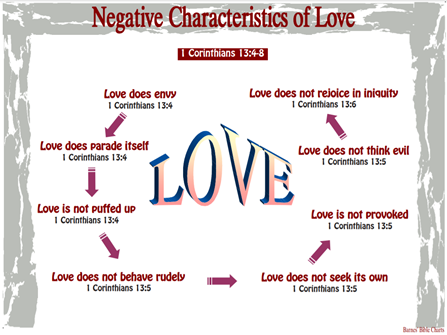
What’s LOVE got to do with it?

Love does not…

EVERYTHING!!

Love is the first & great commandment.

Paul calls love, “a more excellent way” [1Cor 12:31; 13:13].

“And Jesus answered him, The first of all the commandments is, Hear, O Israel; The Lord our God is one Lord: And thou shalt love the Lord thy God with all thy heart, and with all thy soul, and with all thy mind, and with all thy strength: this is the first commandment. And the second is like, namely this, Thou shalt love thy neighbour as thyself. There is none other commandment greater than these.” [Mark 12:29-31]

09-14-23 UPDATE ————————————-

In a world that has reduced love to just a feeling we need to understand Biblical love.

the culture of the day reminds me of the culture found in the book of judges; “In those days there was no king in Israel: every man did that which was right in his own eyes.” (Judges 21:25

Let’s be reminded of biblical love.

——————————————————————————–

The best commentary on Love is found in the Scriptures. Let’s see love from four perspectives.

  1. God’s Love for us
    1. God is Love – 1Jo 4:8 He that loveth not knoweth not God; for God is love. Titus 3:4-6
    2. God Gave His son – 1Jo 4:9, 10 In this was manifested the love of God toward us, because that God sent his only begotten Son into the world, John 3:16, 17; Rom 5:8; Eph 2:4,5
    3. God blesses His children – 1Jo 3:1 Behold, what manner of love the Father hath bestowed upon us, that we should be called the sons of God: Eph 1:3 every spiritual blessings
    4. Every good thing – James 1:17 – comes from above; Acts 17:28
    5. God sends sun & rain – Mt 5:45 for he maketh his sun to rise on the evil and on the good, and sendeth rain on the just and on the unjust.
  • Christ’s Love for us
    • Passes knowledge– Eph 3:19 And to know the love of Christ, which passeth knowledge, that ye might be filled with all the fulness of God.
    • As Father loved Him – Joh 15:9, 10 If ye keep my commandments, ye shall abide in my love; even as I have kept my Father’s commandments, and abide in his love.
    • He gave Himself – Joh 15:13 Greater love hath no man than this, that a man lay down his life for his friends.; Eph 5:2; 1Joh 3:16; Rev 1:5
    • His own– Joh 13:1, 34 A new commandment I give unto you, That ye love one another; as I have loved you, that ye also love one another.
    • Those who obey – Joh 14:21 He that hath my commandments, and keepeth them, he it is that loveth me: and he that loveth me shall be loved of my Father, and I will love him, and will manifest myself to him.
  • Man’s love for God & Christ
    • Great command– 1Jo 4:19 We love him, because he first loved us. Mark 12:28-30; Mt 22:36-40
    • Good thing for those that do – Ro 8:28 And we know that all things work together for good to them that love God, 1Corinthians 2:9 ings which God hath prepared for them that love him.
    • Crown of life / Kingdom – Jas 2:5 Hearken, my beloved brethren, Hath not God chosen the poor of this world rich in faith, and heirs of the kingdom which he hath promised to them that love him? [1:12]
    • Love displayed through obedience – 1Jo 5:3 For this is the love of God, that we keep his commandments:
      • 2Joh 6; John 14:15, 21, 23
    • Love for truth – 2Th 2:10-12 because they received not the love of the truth, that they might be saved.
  • Man’s love for others
    • Brethren – 1Th 4:9; 1Th 3:12 And the Lord make you to increase and abound in love one toward another, and toward all men, even as we do toward you:
      • John 13:34; 15:12; 1Pe 1:22; 2:17;
      • 1Jo 2:10, 3:11, 14, 23; 4:11, 12
      • 2Pe 1:7 And to godliness brotherly kindness; and to brotherly kindness charity.
    • Husbands & Wives – Eph 5:25, 28, 33; Col 3:19; Tit 2:3,4
    • Neighbor – Ro 13:8 Owe no man any thing, but to love one another: for he that loveth another hath fulfilled the law.
      • [Mr 12:31; James 2:8]
    • Enemies – Lu 6:35 But love ye your enemies, and do good, and lend, hoping for nothing again; and your reward shall be great, and ye shall be the children of the Highest:
      • Mt 5:43, 44 But I say unto you, Love your enemies, bless them that curse you, do good to them that hate you, and pray for them which despitefully use you, and persecute you;

What do we GAIN if we GAIN the whole world?

Matthew 16:26 says, “For what is a man profited, if he shall gain the whole world, and lose his own soul? or what shall a man give in exchange for his soul?”

The world often tells us that success is measured by our wealth, our status, our accomplishments. But Jesus flips this notion on its head. He asks us to consider the value of our soul. What good is it if we gain everything the world offers, but lose the most precious thing we have—our eternal soul?

We Give up our Soul

Our soul is so valuable that God gave His own Son that we have the opportunity to be saved. Jesus died on the cross not to make us rich or famous, but to save our souls. He paid the ultimate price so that we might have eternal life. This is the greatest treasure, far surpassing anything the world can offer. (Rom 5:8-10)

We gain the affection of the World

When we set our affections on worldly gains over our spiritual well-being, we risk losing our soul. We can become so consumed by the pursuit of success, wealth, and approval that we neglect what is pleasing to God. We might find temporary happiness, but it’s fleeting and shallow compared to the deep, abiding joy that comes from knowing Christ. Romans 12:2 tells us, “And be not conformed to this world: but be ye transformed by the renewing of your mind, that ye may prove what is that good, and acceptable, and perfect, will of God.” We are to live differently, to set our minds on things above, not on earthly things.

The Illusion of Worldly Gain

The world tells us to chase after material wealth, to seek power and fame. It tells us that the more we have, the happier we will be. But how often have we seen people who seem to have it all, yet are deeply unhappy, unfulfilled, and lost? They’ve gained the world but lost their soul’s true purpose and joy.

Jesus reminds us that our souls are eternal, while the things of this world are temporary. In 1 Timothy 6:7, we are reminded, “For we brought nothing into this world, and it is certain we can carry nothing out.” No amount of money, fame, or power can accompany us beyond this life. What truly matters is the condition of our soul.

We gain nothing except what we deserve

So, what do we win if we win the world but lose our soul? We gain nothing of true value. But when we seek first the kingdom of God and His righteousness, all these things will be added unto us (Matthew 6:33). When we focus on serving God, we find true peace, joy, and fulfillment.

Revelation 3:21 promises, “To him that overcometh will I grant to sit with me in my throne, even as I also overcame, and am set down with my Father in his throne.” This is the ultimate reward—eternity with Jesus, reigning with Him in glory. This is worth far more than anything the world can offer.

This article is part 1 of a series titled, God’s Moral Law. click here for part one.

You’re invited to attend one of our services at the church of Christ on Franklin and Juniper in Borger Texas.

Let’s Talk about Jesus, the Eternal Life Giver

“Thou hast the words of eternal life.”

The statement above is one of the most significant realizations a person can make. (John 6:68)

There are 3 life questions that many folks ask about life…

Where are we from?

Why are we here?

Where are we going?

To answer these questions, one needs a divine source. Jesus is the answer to these questions, and His written word is where we will find His answers.

Let’s see how Jesus is the answer to the question of where we are going.

He has the words of ETERNAL LIFE.

There are some 30 specific references in the New Testament to “ETERNAL LIFE.” It seems to this writer that this holds some significance.

Jesus said, “Take my yoke upon you, and LEARN OF ME; for I am meek and lowly in heart: and ye shall find rest unto your souls.” (Matt 11:29) The context of this verse is about learning. “HEARING” is another way the Bible says the same thing. “Therefore whosoever heareth these sayings of mine, and doeth them, I will liken him unto a wise man, which built his house upon a rock:” (Mat 7:24). These verses clearly teach there is individual responsibility to Hear & LEARN. Some would have you believe that we’re unable to do either except miraculously. UNTRUE! We are all called by the Gospel message. “Whereunto he called you by our gospel, to the obtaining of the glory of our Lord Jesus Christ.” (2Thess 2:14).

Paul wrote to Timothy to remind Saints to “Give diligence to present thyself approved unto God, a workman that needeth not to be ashamed, handling aright the word of truth” (2Tim 2:15 ASV). The discourse of Jesus in John 6:26-68 is all about believing and learning of Christ. “I am the living bread which came down out of heaven” (John 6:51). Compare this to what Jesus said to the Devil, “It is written, Man shall not live by bread alone, but by every word that proceedeth out of the mouth of God” (Matt 4:4).

The beginning of attaining Eternal Life is LEARNING.

—-

Matthew 7:24-29 is a link in the chain connecting the first action with the next; we must be INVOLVED in doing the things that we’ve LEARNED. We’re involved by obeying the commands of God. “Therefore whosoever heareth these sayings of mine, and doeth them, I will liken him unto a wise man, which built his house upon a rock: And the rain descended, and the floods came, and the winds blew, and beat upon that house; and it fell not: for it was founded upon a rock. And every one that heareth these sayings of mine, and doeth them not, shall be likened unto a foolish man, which built his house upon the sand: And the rain descended, and the floods came, and the winds blew, and beat upon that house; and it fell: and great was the fall of it.”

The clear teaching by Jesus here, and in other places (cf. Phil 2:12), is that the INDIVIDUAL is responsible to LEARN & get INVOLVED in his own salvation. “Save yourselves from this untoward generation.” (Acts 2:40b). In the immediate context of this verse, they LEARNED to be baptized in the name of Jesus. “Then they that gladly received his word were baptized: and the same day there were added unto them about three thousand souls. (Acts 2:41).

James wrote under the influence of the Holy Spirit, “But be ye doers of the word, and not hearers only, deluding your own selves. For if any one is a hearer of the word and not a doer, he is like unto a man beholding his natural face in a mirror: for he beholdeth himself, and goeth away, and straightway forgetteth what manner of man he was. But he that looketh into the perfect law, the law of liberty, and so continueth, being not a hearer that forgetteth but a doer that worketh, this man shall be blessed in his doing” (James 1:22-25).

Eternal Life is for those INVOLVED people that obey.

—-

When we write articles like this some will often decry “LEGALISM” or say that we’re working our way into heaven. Nothing of the sort is being said. Obedience to the will of God is FAITH (Heb 11:6). We trust that God will do what He promises for those that obey Him. God works through our faith. “Buried with him in baptism, wherein also ye are risen with him through the faith of the operation of God, who hath raised him from the dead.” (Col 2:12). Eternal Life is for those who are emotionally engaged.

Therefore, that the person striving for Eternal Life must have FAITH from the heart and is not just checking boxes on a list. Jesus said, “Thou shalt love the Lord thy God with all thy heart, and with all thy soul, and with all thy mind.” (Mat 22:37). He said in another place, “If ye love me, keep my commandments” (John 14:15). And also, “This people honoureth me with their lips, but their heart is far from me.” (Mark 7:6). Those that have Eternal Life in Christ have their whole heart, mind, and soul engaged.

Eternal Life is for those that have FAITH.

—-

It then stands to reason that as a person LEARNS, is INVOLVED, this person must FINISH what he began. “For which of you, intending to build a tower, sitteth not down first, and counteth the cost, whether he have sufficient to finish it?” (Luke 14:28) The clear teaching here, and other places (cf. John 15:1-6; Rom 11:21), is that there’s no such thing as “once saved, always saved.” The Hebrew writer warned, “but Christ as a son, over his house; whose house are we, if we hold fast our boldness and the glorying of our hope firm unto the end” (Hebrews 3:6).

Eternal Life is for those that ENDURE to the end.

Agape,

Spencer is an evangelist for the Franklin & Juniper st church of Christ in Borger, Tx.

This is part of a series of articles about reasons to Talk About Jesus.

Love CASTS out fear. 1John 4:17

4:17-18 There is no fear in love; but perfect love casteth out fear.

With the Love of God we can have Confidence to approach Christ. Heb 4:16.

God’s love gives us Assurance in knowing when doing His will. John 14:15.

The Love of God makes Salvation is certain when we remain faithful. 1John 1-2:2.

Because of His Love we are Trusting in His working. Col 2:11-12.

His love gave us Scriptural Support. 2Tim 3:15-17.

Additional outlines from 1John can be found here.