
Evidence for our Faith

The Cosmological Argument: Why the Universe Needs a Cause

The cosmological argument, one of the oldest and most compelling proofs for the existence of God, asserts that the universe must have a cause. Its foundation lies in the principle of causality: everything that begins to exist has a cause. Scientific discoveries and philosophical reasoning bolster this argument, making a strong case for a Creator.

The Universe Had a Beginning. One of the most significant discoveries of modern science is that the universe had a beginning. The Big Bang theory, widely accepted among cosmologists, posits that all matter, energy, space, and time originated from a singular event approximately 13.8 billion years ago. Before this point, there was no time, space, or physical reality. This supports the biblical assertion that the universe is not eternal but was created, as described in Genesis 1:1: “In the beginning, God created the heaven and the earth.” (other evidence supports the Biblical narrative for the age of the Earth)

The Second Law of Thermodynamics also supports this conclusion. The universe is moving toward a state of increased entropy, or disorder, which implies that it had an initial highly ordered state. If the universe were eternal, it would have already reached maximum entropy, contradicting observable reality.

Causality and the Need for a Cause. The principle of causality states that everything that begins to exist has a cause. Since the universe began to exist, it must have a cause. However, this cause cannot be part of the physical universe because time, space, and matter only came into existence at the universe’s origin. Therefore, the cause must be timeless, spaceless, and immaterial—qualities that align with the biblical description of God.

Hebrews 11:3 affirms this: “Through faith, we understand that the worlds were framed by the word of God so that things which are seen were not made of things which do appear.” This aligns with the cosmological argument, as it emphasizes that the universe was caused by something outside itself.

The Impossibility of Infinite Regress. An infinite regress of causes—where every cause has a prior cause—leads to logical contradictions. If there were no first cause, the chain of causes could never begin, and the universe could not exist. This necessitates a first, uncaused cause, which philosophers and theologians identify as God.

The cosmological argument is reinforced by scientific evidence that the universe had a beginning, philosophical reasoning on causality, and the impossibility of infinite regress. These findings point to a timeless, spaceless, immaterial, and powerful Creator—attributes consistent with the God of the Bible. As Psalm 33:6 declares, “By the word of the Lord were the heavens made; and all the host of them by the breath of his mouth.”

Sources:
• Craig, W.L. Reasonable Faith: Christian Truth and Apologetics.
• Hawking, S., and Mlodinow, L. The Grand Design.
• Genesis 1:1, Hebrews 11:3, Psalm 33:6 (KJV).

Agape,
Spencer

Evidence for our faith: the problem of beauty

The existence of beauty in the world presents a profound question: why does beauty exist at all, and why are humans uniquely capable of perceiving and appreciating it? From awe-inspiring sunsets to masterful works of art, beauty seems unnecessary for survival, challenging purely naturalistic explanations and pointing to a Creator who values aesthetics.

  1. Beauty in Nature
    Nature abounds with intricate and breathtaking beauty. The symmetry of snowflakes, the vibrant colors of a coral reef, and the majesty of mountain ranges go far beyond what is required for survival. Evolutionary theory might explain functional traits aiding survival and reproduction, but beauty often serves no such purpose. For example, the iridescence of a butterfly’s wing or the intricate design of a seashell does not directly contribute to the organism’s fitness. These examples suggest an artist behind the canvas of creation.
  2. The Human Appreciation of Beauty
    Human beings uniquely recognize and create beauty. Unlike animals, which may engage in utilitarian behaviors related to survival, humans produce art, music, and poetry with no direct survival benefit. Neuroscientists have identified regions of the brain that respond to beauty, regardless of its form—visual, auditory, or conceptual. This capacity for aesthetic appreciation suggests that humans are made in the image of a Creator who delights in beauty. The Bible affirms this in Genesis 1:27, where it states, “God created man in his own image.”
  3. Universality of Beauty
    Across cultures and times, humans have consistently found certain patterns, colors, and sounds beautiful. The golden ratio, found in natural phenomena and human art, is a prime example. This universality suggests an objective standard of beauty woven into the fabric of creation. Ecclesiastes 3:11 notes, “He hath made every thing beautiful in his time,” affirming that beauty reflects the order and intention of God.
  4. Beauty and Purpose
    If the universe were purely a product of random chance, beauty would be an inexplicable anomaly. However, the Bible reveals that creation declares the glory of God: “The heavens declare the glory of God; and the firmament sheweth his handywork” (Psalm 19:1). Beauty serves a purpose in pointing humanity to its Creator, inspiring wonder and gratitude.

Conclusion
The existence and appreciation of beauty challenge naturalistic explanations and align with the biblical worldview of a Creator who delights in aesthetics. Beauty is not accidental but purposeful, reflecting God’s nature and inviting us to seek Him. As Romans 1:20 states, “For the invisible things of him from the creation of the world are clearly seen, being understood by the things that are made.” Beauty, in all its forms, is a testament to the divine Artist behind the universe.

Sources:
• D’Souza, D. What’s So Great About Christianity?
• Lennox, J. God’s Undertaker: Has Science Buried God?
• Genesis 1:27, Psalm 19:1, Ecclesiastes 3:11, Romans 1:20 (KJV).

Agape,
Spencer

Evidence for our Faith, the Flood

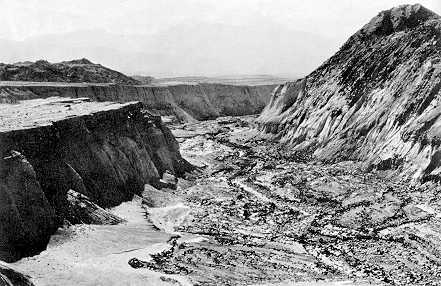
RAPID EROSION AT MOUNT ST. HELENS

Scientific Evidence for the Global Flood

The biblical account of a global flood is detailed in Genesis 6–9, describing Noah’s ark, the catastrophic deluge, and the repopulation of the earth. This narrative has parallels in ancient cultures worldwide, suggesting a shared memory of a catastrophic event. Scientific evidence also lends credibility to this account, providing compelling data that aligns with the possibility of a global flood.

Sedimentary Layers and Fossil Evidence

Sedimentary rock layers, found across the earth, contain fossils of marine and land organisms, often in unexpected locations. For instance, marine fossils have been discovered atop the Himalayas and other high-altitude regions. This suggests that these areas were once submerged under water. Rapid burial of organisms during a massive flood could explain the fossilization of soft-bodied creatures and the preservation of delicate features, such as jellyfish imprints, which would decay under normal conditions.

Polystrate Fossils

Polystrate fossils, or fossils that extend vertically through multiple sedimentary layers, challenge the standard geological timeline that attributes these layers to slow accumulation over millions of years. A rapid deposition of sediment, such as during a global flood, provides a more plausible explanation for how these fossils formed without significant decay.

Large-Scale Erosion and Canyon Formation

The formation of canyons, such as the Grand Canyon, shows evidence of rapid water erosion rather than slow geological processes. Experiments following events like the eruption of Mount St. Helens in 1980 showed how massive volumes of water can carve canyons in a short period, mirroring what a global flood might accomplish on a larger scale.

Flood Legends Across Cultures

Over 200 flood legends exist among ancient cultures worldwide, including those of the Sumerians, Babylonians, and Native Americans. Many of these accounts include a large vessel, a remnant of humanity and animals, and a divine reason for the flood. Such widespread narratives suggest a historical basis for the biblical account of Noah’s flood.

Biblical Consistency with Science

Genesis describes “the fountains of the great deep” breaking open and “the windows of heaven” releasing water (Genesis 7:11). Modern geology acknowledges subterranean water reserves and their role in catastrophic events. Furthermore, the ark’s dimensions (Genesis 6:15) align with the proportions needed for stability and capacity, as confirmed by naval architects.

Conclusion

While interpretations of evidence vary, the sedimentary layers, polystrate fossils, rapid erosion patterns, and global flood legends align with the Genesis narrative. These findings challenge the notion of slow geological processes and suggest that a catastrophic event, consistent with the biblical flood, is plausible.

Agape,

Spencer

Sources:

Morris, J. “The Global Flood.” Institute for Creation Research.

Snelling, A. “Flood Evidences.” Answers in Genesis.

Genesis 6–9, KJV.

Bible Reading Plan 2025

Not Just another Bible Reading plan you won’t finish.

It’s that time of year again when we encourage folks to find the right Bible reading plan that works for them. If you’ve ever struggled to read the Bible consistently, having a structured plan can make all the difference.

Before we introduce the 2025 plan, let’s take a moment to reflect on why a regular approach to Bible reading is so valuable.

The Word of God is our spiritual nourishment (Matthew 4:4), and regular reading allows us to grow in knowledge, faith, and obedience. A well thought out plan provides consistency and focus, ensuring that we engage with the whole counsel of God (Acts 20:27). It also helps us build a daily habit of spending time in God’s Word, which strengthens our walk with Him and equips us for every good work (2 Timothy 3:16-17).

Following is a simplified version of the Bible Reading Plan I’ve followed for the last few years. This plan is both simple and engaging. By breaking up the reading between the Old and New Testaments it helps to break up any monotony that keeps many folks from finishing.


The Monday Through Friday 5-day Reading Plan
This year’s plan has us reading the New Testament twice while incorporating the Old Testament and Poetry/Wisdom books. It is structured to give variety and balance:

• Mondays: Read 4 chapters from the Gospels (Matthew, Mark, Luke, and John – 89 chapters twice).

• Tuesdays: Read 4 chapters from Paul’s letters (Romans through Philemon – 87 chapters twice).

• Wednesdays: Read 4 chapters from the General Letters and Acts (Hebrews through Revelation and Acts – 84 chapters twice).

• Thursdays & Fridays: Read 7 chapters each on these two days from the Old Testament History & prophets (728 chapters total).

• Monday–Friday: Add 1 chapter each morning or evening from the Poetry and Wisdom books (Psalms, Proverbs, Ecclesiastes, Song of Solomon – 201 chapters total). With the 59 days to spare I’ll usually read Proverbs, Ecclesiastes, & Song of Solomon again.

By following this plan, you will read through the entire Bible in a year, with the New Testament covered twice.

Why This Plan Works
As New Testament Christians, the focus on the New Covenant is especially meaningful. By reading the New Testament twice in a year—just 4 chapters a day—you’ll gain a deeper understanding of Jesus’ life and teachings, as well as learning about the Lord’s church. In about 15–20 minutes each day, you can reflect on God’s grace and truth revealed through His Word.

The plan also ensures exposure to the Old Testament, grounding us in God’s purpose, and wisdom. With its organized structure, each day brings fresh motivation and variety, helping you stay engaged.

Imagine this time next year, having read about the life of Jesus twice and journeyed through the entire Bible. You’ll gain not just knowledge, but also a richer, deeper relationship with God through His Word. Start your journey today, and see how consistent Bible reading transforms your life in 2025!.

Agape,
Spencer

Who was in the MANGER?

Who Was in the Manger?
The question, “Who was in the manger?” directs our thoughts to a singular event in human history: the birth of Jesus Christ. The identity of the One lying in that humble setting reveals profound truths about God’s plan for mankind.

The Messiah
The child in the manger was the long-awaited Messiah, the Anointed One sent to save humanity. Andrew declared in John 1:41, “We have found the Messiah.” The angels echoed this truth to shepherds, proclaiming, “Unto you is born this day in the city of David a Saviour, which is Christ the Lord” (Luke 2:11). This Messiah came not just for Israel but for all mankind, as Matthew 1:21 reveals: “He shall save his people from their sins.” Paul emphasized in 1 Timothy 1:15 that Christ’s purpose was to save sinners.

Alpha and Omega
The baby in the manger was more than just the Savior; He was the eternal God, the Alpha and the Omega, the beginning and the end (Revelation 1:8). While the world saw a helpless infant, in Him dwelled the fullness of deity. His coming was the intersection of the Creator stepping into His creation.

Name Above All Names
The child born in Bethlehem carried the name above all names, one that is unequaled in power and significance. Acts 4:12 declares, “There is none other name under heaven given among men, whereby we must be saved.” Philippians 2:9 states that God exalted Jesus and gave Him a name above every name.

God’s Only and Beloved Son
This infant was God’s only begotten and beloved Son, sent to fulfill His divine mission. Mark 9:7 records God’s declaration: “This is my beloved Son: hear him.” Peter confessed in Matthew 16:16, “Thou art the Christ, the Son of the living God.” As God’s Son, Jesus was uniquely qualified to reconcile humanity to the Father, demonstrating both God’s love and His justice.

Eternal Life Giver
In the manger lay the giver of eternal life. John 1 portrays Him as the Word, the source of life and light for all. Jesus Himself said, “The words that I speak unto you, they are spirit, and they are life” (John 6:63). This eternal life is not only a future promise but a present reality for those who believe in Hime and obey the Gospel.

The Root and Offspring of David
Finally, the child in the manger was both the root and offspring of David, fulfilling prophecy and confirming His rightful place as King. Revelation 22:16 proclaims, “I am the root and the offspring of David, and the bright and morning star.” He is the Lion of the tribe of Judah, worthy to reign forever (Revelation 5:5).

The one in the manger was no ordinary child. He was the Messiah, the Alpha and Omega, the name above all names, God’s beloved Son, the eternal life giver, and the root and offspring of David. While we don’t know when Jesus was born, we take this time of year as an opportunity to talk to folks because many are already thinking about Him. It’s an opportunity to remind the world of who Jesus truly is and why He came: to offer salvation and eternal hope to all who believe. Let’s use this season and every season to share the good news of the Savior who changed everything.

Agape,

Spencer

the Way of the Lord

The story of the man of God in 1Kings 13:1-26 is one of the Bible’s most sobering narratives about obedience. This account teaches timeless lessons about the seriousness of following God’s Word without compromise. Let us examine these lessons in light of Scripture.

God gave the man of God specific instructions (1Kings 13:9): not to eat, drink, or return by the same way. These commands were obvious, straightforward, and easy to understand. God’s Word consistently provides clear guidance for those who seek it. “For this commandment which I command thee this day, it is not hidden from thee, neither is it far off. It is not in heaven, that thou shouldest say, Who shall go up for us to heaven, and bring it unto us, that we may hear it, and do it? Neither is it beyond the sea, that thou shouldest say, Who shall go over the sea for us, and bring it unto us, that we may hear it, and do it? But the word is very nigh unto thee, in thy mouth, and in thy heart, that thou mayest do it.” (Deut 30:11-14).

In the example of the flood story, Noah’s adherence to God’s precise instructions for building the ark (Genesis 6:14-22) saved his family from the flood. Ignoring or altering God’s commands would have led to disaster.

The man of God told Jeroboam that there would be no variation to God’s command (v8-10). “And the man of God said unto the king, If thou wilt give me half thine house, I will not go in with thee, neither will I eat bread nor drink water in this place.” Galatians 1:8-9 warns that even an angel preaching a different gospel is accursed. Nadab and Abihu’s offering of “strange fire” resulted in their immediate death (Leviticus 10:1-2). Their unauthorized act highlights the danger of altering God’s instructions.

No matter how sincere or convincing, error cannot produce righteousness. The old prophet’s lie (v18-19) did not excuse the man of God’s disobedience. King Saul’s partial obedience when sparing Amalekite spoils led to his rejection by God (1Samuel 15:22-23). Obedience requires following God’s commands completely.

The man of God believed the old prophet’s lie, and it led to his death. Sincerity alone cannot excuse disobedience to God’s truth. 2Thessalonians 2:10-12 teaches that those who reject the truth and believe lies will be condemned. “In flaming fire taking vengeance on them that know not God, and that obey not the gospel of our Lord Jesus Christ:”

The man of God’s failure to obey all of God’s instructions cost him his life. Every command of God is significant and deserves our attention. Luke 16:10 emphasizes that faithfulness in small matters reflects overall faithfulness. Uzzah’s touching the Ark of the Covenant (2 Samuel 6:6-7) highlights that even seemingly minor acts of disobedience are significant to God.

The account of the man of God from Judah serves as a solemn reminder: God’s way is clear, unchanging, and demands our full obedience. We must respect His commands, rejecting lies and half-truths. By adhering to His Word, we honor Him and secure our eternal reward. Believing lies or compromising His commands leads to spiritual ruin. Let us resolve to honor God by faithfully following His Word in every aspect of our lives.

Agape,
Spencer

The Necessity of Hearing and Obeying the Written Word of God

The Bible is God’s communication to us, written to guide, instruct, and equip His people. In Ephesians 3:1-5, Paul reminds Christians that God revealed His mystery to the Apostles and prophets by the Holy Spirit, ensuring that all can now understand it through what has been written. This truth highlights the sufficiency and authority of Scripture for every generation.

It was Written for Us Today: No Continuing Revelation

Paul’s words affirm that the Scriptures are complete. In Ephesians 3:3-5, he explains that the mystery of Christ has been fully revealed and recorded for our understanding. This aligns with Jude 3, which tells us the faith was once delivered to the saints. There is no need for additional revelations. Galatians 1:8-9 warns against anyone who would add to or alter the gospel, emphasizing that God’s Word is final and unchanging. Likewise, 2 Peter 1:3 assures us that God has given us everything necessary for life and godliness through His Word. Scripture alone contains the truth we need to live faithfully (2Tim 3:15-17).

It was written to be obeyed

Jesus asked, “Why call ye me, Lord, Lord, and do not the things which I say?” (Luke 6:46). His question emphasizes the necessity of obeying His commands. The written Word is not merely for information but for transformation and obedience. Paul reinforced this in 2 Thessalonians 3:14, urging discipline for those who disregard the apostles’ writings. The Great Commission (Matthew 28:20) reminds us to observe all Christ has commanded, and John 12:48 warns that His Word will be the standard by which we are judged.

It was Revealed to a Select Few, Confirmed by Miracles and Signs

Scripture’s authority is rooted in its divine inspiration. As Paul explains in Ephesians 3:5, the Holy Spirit revealed God’s truth to him and other select Apostles and prophets. Miracles and signs confirmed their message (Mark 16:20). Paul highlights these “signs of an apostle” in 2 Corinthians 12:12, showing their role in validating God’s Word. However, these miraculous gifts ceased with the completion of divine revelation (1 Corinthians 13:8-10), leaving us the written Word as the enduring foundation of faith.

Diligence is Required to Study and Apply the Word

Understanding God’s will requires effort. Paul instructs Timothy to “study (give diligence) to shew thyself approved unto God” (2 Timothy 2:15). The Bereans, commended in Acts 17:11, exemplify this diligence by examining the Scriptures daily. Abiding in the doctrine of Christ, as emphasized in 2 John 1:9, is essential for fellowship with God.

The Bible is God’s sufficient and final revelation. Let us treasure it, study it, and obey its commands to walk in His will and receive eternal life.

Whereby, when ye read, ye may understand my knowledge in the mystery of Christ).” (Eph 3:4)

Agape, Spencer

What did Judas bring to the garden?

When Jesus had spoken these words, He went forth with His disciples over the brook Cedron, where was a garden, into the which He entered, and His disciples. And Judas also, which betrayed Him, knew the place: for Jesus oftentimes resorted thither with His disciples (John 18:1-2).

And while He yet spake, lo, Judas, one of the twelve, came, and with him a great multitude with swords and staves, from the chief priests and elders of the people (Matthew 26:47). And Judas received a band of men and officers from the chief priests and Pharisees, and cometh thither with lanterns and torches and weapons (John 18:3).

Jesus therefore, knowing all things that should come upon Him, went forth, and said unto them, “Whom seek ye?”
They answered Him, “Jesus of Nazareth.”
Jesus saith unto them, “I am He.” And Judas also, which betrayed Him, stood with them. As soon then as He had said unto them, “I am He,” they went backward, and fell to the ground (John 18:4-6).

Then asked He them again, “Whom seek ye?”
And they said, “Jesus of Nazareth.”
Jesus answered, “I have told you that I am He: if therefore ye seek Me, let these go their way:” that the saying might be fulfilled, which He spake, “Of them which Thou gavest Me have I lost none” (John 18:7-9).

Now he that betrayed Him gave them a sign, saying, “Whomsoever I shall kiss, that same is He: hold Him fast, and lead Him away safely” (Mark 14:44). And forthwith he came to Jesus, and said, “Hail, Master;” and kissed Him (Matthew 26:49).

And Jesus said unto him, “Friend, wherefore art thou come? Betrayest thou the Son of man with a kiss?” (Matthew 26:50, Luke 22:48).
When they which were about Him saw what would follow, they said unto Him, “Lord, shall we smite with the sword?” (Luke 22:49). Then Simon Peter having a sword drew it, and smote the high priest’s servant, and cut off his right ear. The servant’s name was Malchus (John 18:10).

Then said Jesus unto Peter, “Put up thy sword into the sheath: for all they that take the sword shall perish with the sword. The cup which My Father hath given Me, shall I not drink it?” (John 18:11, Matthew 26:52). And He touched his ear, and healed him (Luke 22:51).

In that same hour said Jesus to the multitudes, “Are ye come out as against a thief with swords and staves for to take Me? I sat daily with you teaching in the temple, and ye laid no hold on Me. But this is your hour, and the power of darkness” (Matthew 26:55, Luke 22:53).
All this was done, that the scriptures of the prophets might be fulfilled (Matthew 26:56).

Then all the disciples forsook Him, and fled (Matthew 26:56, Mark 14:50).


Agape,
Spencer

THANKSGIVING JOY

Gratitude isn’t just a seasonal practice—it’s a lifestyle. The Bible teaches us that thanksgiving can shift our perspective and strengthens our faith.

Thanksgiving in Trouble: Jehoshaphat’s Singers
Imagine being in King Jehoshaphat’s position: three armies are marching toward you, and the situation looks hopeless. Instead of panicking, Jehoshaphat sought the Lord, and the strategy God gave him was extraordinary—send singers ahead of the army to praise Him! The singers declared, “Praise the LORD, for His mercy endureth forever” (2 Chronicles 20:21).

When the singers began to praise, God set ambushes against their enemies, causing them to destroy one another. Victory was won, not with weapons, but with thanksgiving and faith.
When we face challenges today, we are called to respond in a similar way. Paul reminds us in Philippians 4:6-7, “Be careful for nothing; but in every thing by prayer and supplication with thanksgiving let your requests be made known unto God. And the peace of God, which passeth all understanding, shall keep your hearts and minds through Christ Jesus.”

Thanksgiving in Loneliness: The Psalmist’s Cry
Loneliness is a reality many of us face, and the psalmist captures this struggle in Psalm 42: “Why art thou cast down, O my soul? And why art thou disquieted in me? Hope thou in God: for I shall yet praise Him for the help of His countenance” (Psalm 42:5).

The psalmist’s honesty about his emotions is relatable, but his decision to praise God despite his feelings is inspiring. Thanksgiving shifts our focus from our emptiness to God’s fullness..

Jesus Himself assures us of His abiding presence in Matthew 28:20: “And, lo, I am with you alway, even unto the end of the world.” Gratitude for God’s unchanging presence can anchor our hearts when we feel alone. Instead of dwelling on what’s missing, we can thank Him for His faithfulness where we’ll find comfort and strength to keep going.

Thanksgiving for Christ’s Goodness: The One Thankful Leper
In Luke 17, ten lepers cried out to Jesus for mercy, and He healed them all. However, only one returned to give thanks. He fell at Jesus’ feet and praised Him, and Jesus said, “Thy faith hath made thee whole” (Luke 17:16-19).

This Samaritan’s gratitude set him apart. While the other nine received physical healing, he recognized and remembered the one from whom all blessings flow. Thanksgiving acknowledges that everything good in our lives comes from above.

This reminder in Colossians helps, “And let the peace of God rule in your hearts, to the which also ye are called in one body; and be ye thankful… And whatsoever ye do in word or deed, do all in the name of the Lord Jesus, giving thanks to God and the Father by Him.” (Col 3:15-17). Thanksgiving is a daily recognition of Christ’s goodness, shaping our actions and attitudes through His word.

A Challenge for Thanksgiving
This week, take time to reflect on your own heart of thanksgiving. Are you thanking God in the midst of your troubles, trusting Him to bring victory? Are you finding reasons to praise Him, even in seasons of loneliness? And are you remembering to give thanks for all the blessings you’ve received through Christ?

As we cultivate a grateful heart, we’ll find that thanksgiving doesn’t just change our circumstances—it changes us. Let our thanksgiving be a reflection of our faith, a reminder of God’s presence, and a response to His abundant goodness.

In every thing give thanks: for this is the will of God in Christ Jesus concerning you” (1 Thessalonians 5:18).

Unshakable Sovereignty: How God’s Will and Human Will Coexist

The basic error in the Calvinist understanding of God’s sovereignty lies in their assumption that God’s sovereignty means He must exercise absolute, irresistible control over every aspect of human will.

Calvinism argues that because God is sovereign, no created being could truly have the option to reject Him, as this would supposedly compromise His power. As a result, Calvinism teaches that God must first miraculously regenerate a person’s heart to make them capable of seeking Him, thus removing the genuine exercise of free will in the process of coming to faith.

However, this view misunderstands the nature of sovereignty. True sovereignty means God possesses ultimate authority and power, including the authority to grant His creation the freedom to choose, even if that choice involves rejection. By equating sovereignty with strict determinism, Calvinism limits God, suggesting He cannot be truly sovereign unless He exercises control in a particular way. But as seen in Scripture, God’s sovereignty encompasses the ability to bring about His purposes despite human choices, even when those choices oppose Him. This view implies God’s sovereignty cannot accommodate human freedom without being diminished. Biblically, God’s sovereignty is displayed in His supreme ability to accomplish His purposes through or in spite of human decisions.

The sovereignty of God is neither dependent on human response nor diminished by human rejection. To assert that God’s sovereignty is undermined if someone rejects Him is to misunderstand what sovereignty means. Sovereignty refers to supreme authority and power over all things, independent of external influence or acceptance. Here are key points to help understand this:

God’s Sovereignty as Absolute: Scripture portrays God’s sovereignty as all-encompassing and unchanging. In passages like Isaiah 46:9-10, God declares, “I am God, and there is none like me… My counsel shall stand, and I will do all my pleasure.” God’s authority and purpose are not contingent on human acceptance but are established solely by His will.

God Permits Free Will without Diminishing His Sovereignty: Sovereignty includes the authority to grant free will to humanity. In His omnipotence, God has chosen to allow individuals the freedom to accept or reject Him, but this choice does not lessen His power. In Acts 17:30-31, Paul speaks of God’s patient desire for repentance, showing that God’s authority remains, even as He allows humanity space for choice. “And the times of this ignorance God winked at; but now commandeth all men every where to repent: Because he hath appointed a day, in the which he will judge the world in righteousness by that man whom he hath ordained; whereof he hath given assurance unto all men, in that he hath raised him from the dead.”

Judgment Demonstrates Sovereign Authority: When humans reject God, it doesn’t affect His sovereignty but rather reveals it. God’s authority is demonstrated through judgment as well as mercy. 2 Thessalonians 1:8-9 describes that those who “know not God” or “obey not the gospel” will face His judgment. This action affirms His authority over all creation, holding all accountable whether or not they choose to honor Him.

Christ’s Rejection Does Not Diminish God’s Power: Jesus Himself faced widespread rejection, yet God’s plan of salvation was fulfilled, displaying His sovereignty. John 1:11 says, “He came unto his own, and his own received him not,” yet the mission was accomplished by God’s power, demonstrating that rejection by some does not disrupt God’s overarching purpose.

Free Will Does Not Thwart God’s Sovereignty: God’s sovereignty is not threatened by human opposition or rejection, as He is fully capable of bringing His plans to fruition regardless of human response. In Luke 3:8, John the Baptist tells the crowds, “Bring forth therefore fruits worthy of repentance, and begin not to say within yourselves, We have Abraham to our father: for I say unto you, That God is able of these stones to raise up children unto Abraham.” This statement underscores that God’s purposes are not dependent on human lineage, acceptance, or compliance; if one avenue is closed, He has countless ways to fulfill His plan. God’s authority and ability remain supreme, unaffected by human resistance.

Therefore, God’s sovereignty is upheld through His supreme authority, His allowance of free will, and His ultimate judgment. Human rejection of God does not weaken His sovereignty but instead highlights the greatness of His rule over a world in which He allows choice, yet remains in complete control.

“For the grace of God that bringeth salvation hath appeared to all men, Teaching us that, denying ungodliness and worldly lusts, we should live soberly, righteously, and godly, in this present world; Looking for that blessed hope, and the glorious appearing of the great God and our Saviour Jesus Christ;”

Agape,
Spencer