John 3:16, the greatest verse

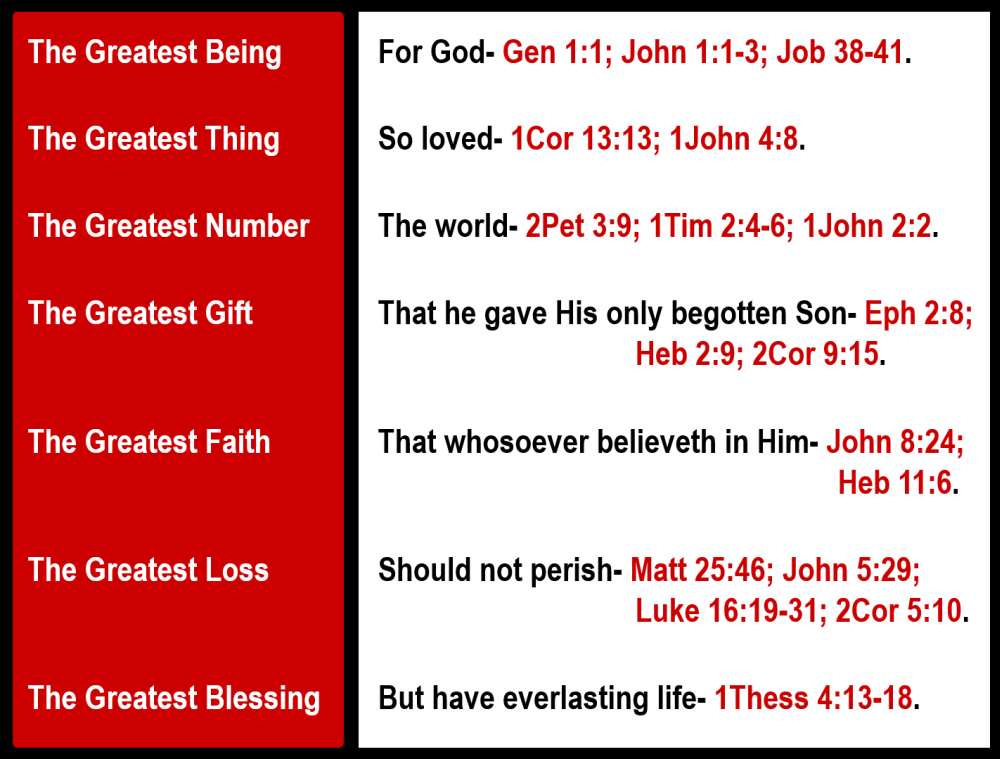
The Greatest Being

The verse begins with “FOR GOD.” The verse begins with the greatest being in existence. In Genesis 1:1, we read, “In the beginning, God created the heavens and the earth.” God is the Creator, the Alpha and the Omega, the beginning and the end. John 1:1-3 tells us, “In the beginning was the Word, and the Word was with God, and the Word was God. The same was in the beginning with God. All things were made by him; and without him was not any thing made that was made.” Job 38-41 presents a majestic depiction of God’s power and wisdom. Our faith rests upon the foundation of this greatest being, who is sovereign over all creation.

The Greatest Thing

Next, we see the greatest thing: “SO LOVED.” God is love. In 1Corinthians 13:13, we learn that “the greatest of these is love.” 1John 4:8 declares, “He that loveth not knoweth not God; for God is love.” God’s love is unparalleled and incomprehensible. It is a love that is willing to sacrifice, a love that seeks the well-being of others. It is the greatest thing because it defines the actions of the greatest being.

The Greatest Number

“THE WORLD.” This phrase encompasses the greatest number: the entire world. God’s love is not limited to a select few but extends to every person on this earth. 2Peter 3:9 states, “The Lord is not slack concerning his promise, as some men count slackness; but is longsuffering to us-ward, not willing that any should perish, but that all should come to repentance.” 1Timothy 2:4-6 reinforces this by saying, “Who will have all men to be saved, and to come unto the knowledge of the truth.” 1John 2:2 confirms that “And he is the propitiation for our sins: and not for ours only, but also for the sins of the whole world.” The greatest number shows the expanse of God’s love. God is not a respecter of persons (Rom 2:11).

The Greatest Gift

“THAT HE GAVE HIS ONLY BEGOTTEN SON.” In this we see the greatest gift. Ephesians 2:8 reminds us that “For by grace are ye saved through faith; and that not of yourselves: it is the gift of God.” Hebrews 2:9 tells us, “But we see Jesus, who was made a little lower than the angels for the suffering of death, crowned with glory and honour; that he by the grace of God should taste death for every man.” 2Corinthians 9:15 exclaims, “Thanks be unto God for his indescribable gift!” The greatest gift (grace) is God’s own Son, given for the redemption of mankind.

The Greatest Faith

“THAT WHOSOEVER BELIEVETH IN HIM.” This phrase highlights the greatest faith. Jesus declares in John 8:24, “I said therefore unto you, that ye shall die in your sins: for if ye believe not that I am he, ye shall die in your sins.” Hebrews 3:18-19 warns of the consequences of unbelief as seen through disobedience, while Hebrews 11:6 teaches that “without faith it is impossible to please God.” The greatest faith is an active belief in Jesus Christ as the Son of God and the Savior of the world (James 2:14-26).

The Greatest Loss

“SHOULD NOT PERISH.” The greatest loss is the eternal separation from God. While any can be saved, the bible tells us that not all will obey the Gospel (Matt 7:24-29; 2Thess 1:8-9). Matthew 25:46 warns of “everlasting punishment,” and John 5:29 speaks of those who will “resurrection of damnation.” The story of the rich man and Lazarus in Luke 16:19-31 vividly portrays the torment of those who perish. 2Corinthians 5:10 reminds us that “we must all appear before the judgment seat of Christ.” The greatest loss is the eternal consequence of rejecting God’s gift of salvation.

The Greatest Difference

“BUT.” While all may be saved, some won’t obey the gospel. “And being made perfect, he became the author of eternal salvation unto all them that obey him” (Heb 5:9). Some will hear, but not do; “Therefore whosoever heareth these sayings of mine, and doeth them, I will liken him unto a wise man, which built his house upon a rock: And the rain descended, and the floods came, and the winds blew, and beat upon that house; and it fell not: for it was founded upon a rock. And every one that heareth these sayings of mine, and doeth them not, shall be likened unto a foolish man, which built his house upon the sand: And the rain descended, and the floods came, and the winds blew, and beat upon that house; and it fell: and great was the fall of it.” (Matt 7:24-27). Many may confess Jesus as Lord and Savior, but not do what He says, “And why call ye me, Lord, Lord, and do not the things which I say” (Luke 6:46)?

The Greatest Blessing

“HAVE EVERLASTING LIFE.” Finally, we come to the greatest blessing. 1Thessalonians 4:13-18 describes the hope of the resurrection and the promise of eternal life with Christ. Everlasting life is the ultimate blessing, the fulfillment of God’s promise to those who believe.

John 3:16 is a verse that reveals to us the greatest being, the greatest thing, the greatest number, the greatest gift, the greatest faith, the greatest loss, and the greatest blessing. Let us hold fast to this truth, share it with others, and walk in the light of God’s incredible love and grace.

Agape, Spencer
How to be saved according to the Bible

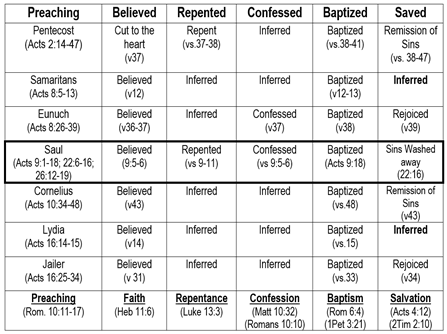
People often appeal to single passages on how to be saved, but ignore an entire book in the New Testament that shows people going from a lost condition to being saved. That book is called ACTS. It contains the founding of the church of Christ at Pentecost, and the conversion of the lost to salvation in Christ Jesus.

1. The first of these conversions happened on the notable day of Pentecost when the church was established. The text (Acts 2:14) shows that they had the Gospel preached to them; they heard (vv. 36-37); they repented of their sins (v. 38); and they were baptized into Christ (v. 38). The result was that they had their sins washed away. 

2. In Acts 8:4-5, Phillip preached to the people of Samaria; they heard (v. 6); they were baptized (v. 12).

3. Phillip also preached to Simon (Acts 8:4-5); he heard the Gospel (v. 6); he was baptized (v. 13).

4. Phillip preached to the Eunuch (Acts 8:35-39); he made the good confession (v. 37); he was baptized (v. 38) and rejoiced in the forgiveness of his sins (v. 39).

5. Ananias preached to Saul, later called Paul (Acts 9:17); he was baptized (Acts 22:16), and the rest of his life he taught others to do the same (I Cor. 12:13).

6. Peter preached to Cornelius (Acts 10:34-35); he and his family heard (v. 44); they repented of their sins (Acts 11:18); they were baptized (v. 48). They were saved (Acts 11:14).

7. Paul preached the saving message to Lydia on his second missionary journey (Acts 16:13); she heard (v. 14); she was baptized (v. 15).

8. Paul preached to the Jailor (Acts 16:32); he repented (v. 33); he was baptized (v. 33).

9. Paul preached to and converted souls at Corinth (Acts 18:5); they heard (v. 8); they were baptized (v. 8).

10. Paul preached to Crispus (Acts 18:5); though it is not recorded in the book of Acts that he was baptized, he was baptized according to Paul’s writing to the Corinthian church (1Cor. 1:14).

11. The Ephesians had the Gospel preached to them (Acts 19:8); they heard the message of salvation (Eph. 1:13). They were baptized (Acts 19:5) and were in this way saved by grace (Eph. 2:8-10).

agape,

spencer

Here is a link to another article on the conversions in Acts.

Joseph: the man God chose to raise His Son.

The Man God chose to Raise His Son.

Joseph’s life and actions, as depicted in the Gospels, offer an example of virtue and obedience, qualities that emphasize his critical role in the life of Jesus.

Described in the Gospel of Matthew as a “just man” (Matthew 1:19), Joseph’s character is first revealed through his merciful reaction to Mary’s unexpected pregnancy. Engaged to Mary, he discovers she is pregnant before they have come together, and knowing the child is not his, he faces a societal and personal crossroad. He chooses a path of kindness, intending to spare Mary from possible humiliation or harm, which alone sets a significant tone for his character.

Later, He is visited by an angel in a dream, instructing him to not fear taking Mary as his wife because the child conceived in her is from the Holy Spirit (Matthew 1:20). His response to this divine intervention highlights another of his virtues: obedience. Matthew 1:24-25 tells us that Joseph did as the angel of the Lord commanded; he took Mary as his wife and named the child Jesus. This act of faith and submission to God’s will shows him as a man deeply committed to following God’s direction without hesitation.

Later, he and Mary bring Jesus to the temple to present Him to the Lord as prescribed in the Law of Moses (Luke 2:22-24), and they make the annual pilgrimage to Jerusalem for Passover, demonstrating his commitment to his faith and his role as a spiritual guide to his family (Luke 2:41-43).

Joseph’s profession as a carpenter, mentioned in Matthew 13:55, underscores his role as a provider who earns a living for his family. Moreover, the offering described in Luke 2:24, “a pair of doves or two young pigeons,” which was allowed for those who could not afford a lamb, indicates that Joseph’s means were limited, yet he did what was necessary within his resources to fulfill his service to God (cf. 1Tim 5:8).

When Herod seeks to kill the newborn Jesus in Matthew 2:13-23, Joseph again heeds an angelic warning in a dream, this time to flee to Egypt, and later, to return to Nazareth, safeguarding his family from harm. These episodes not only portray him as a decisive protector but also as a man of action who places the safety and well-being of Mary and Jesus above his own comfort and security.

Lastly, Joseph’s honorable acceptance to adopt Jesus as his own son seals his legacy as a man of immense faith and virtue. This act of adoption was not merely a legal formality but a wholehearted acceptance of Jesus into his life, treating Him as his own and providing for Him as any father would, so that all knew Jesus as the son of Joseph and Mary. “And they said, Is not this Joseph’s son” (Luke 4:22; cf; John 6:42)?

Joseph’s life, therefore, offers a remarkable model of justice, obedience, scriptural fidelity, diligent earning, protection, and honor. In the grand narrative of Christianity, Joseph might often be seen in the background, but his influence and guidance were surely foreground in the early life of Jesus, the Savior of mankind. Through Joseph’s exemplary character, we see the qualities that God values in those He chooses.

Agape,

Spencer

What do we GAIN if we GAIN the whole world?

Matthew 16:26 says, “For what is a man profited, if he shall gain the whole world, and lose his own soul? or what shall a man give in exchange for his soul?”

The world often tells us that success is measured by our wealth, our status, our accomplishments. But Jesus flips this notion on its head. He asks us to consider the value of our soul. What good is it if we gain everything the world offers, but lose the most precious thing we have—our eternal soul?

We Give up our Soul

Our soul is so valuable that God gave His own Son that we have the opportunity to be saved. Jesus died on the cross not to make us rich or famous, but to save our souls. He paid the ultimate price so that we might have eternal life. This is the greatest treasure, far surpassing anything the world can offer. (Rom 5:8-10)

We gain the affection of the World

When we set our affections on worldly gains over our spiritual well-being, we risk losing our soul. We can become so consumed by the pursuit of success, wealth, and approval that we neglect what is pleasing to God. We might find temporary happiness, but it’s fleeting and shallow compared to the deep, abiding joy that comes from knowing Christ. Romans 12:2 tells us, “And be not conformed to this world: but be ye transformed by the renewing of your mind, that ye may prove what is that good, and acceptable, and perfect, will of God.” We are to live differently, to set our minds on things above, not on earthly things.

The Illusion of Worldly Gain

The world tells us to chase after material wealth, to seek power and fame. It tells us that the more we have, the happier we will be. But how often have we seen people who seem to have it all, yet are deeply unhappy, unfulfilled, and lost? They’ve gained the world but lost their soul’s true purpose and joy.

Jesus reminds us that our souls are eternal, while the things of this world are temporary. In 1 Timothy 6:7, we are reminded, “For we brought nothing into this world, and it is certain we can carry nothing out.” No amount of money, fame, or power can accompany us beyond this life. What truly matters is the condition of our soul.

We gain nothing except what we deserve

So, what do we win if we win the world but lose our soul? We gain nothing of true value. But when we seek first the kingdom of God and His righteousness, all these things will be added unto us (Matthew 6:33). When we focus on serving God, we find true peace, joy, and fulfillment.

Revelation 3:21 promises, “To him that overcometh will I grant to sit with me in my throne, even as I also overcame, and am set down with my Father in his throne.” This is the ultimate reward—eternity with Jesus, reigning with Him in glory. This is worth far more than anything the world can offer.

This article is part 1 of a series titled, God’s Moral Law. click here for part one.

You’re invited to attend one of our services at the church of Christ on Franklin and Juniper in Borger Texas.

Can one be baptized AMISS?

“Ye ask, and receive not, because ye ask amiss, that ye may consume it upon your lusts.” (James 4:3)

If one can pray AMISS, then it stands to reason that we can do other commands of God in a manner that He won’t accept. There are examples of people…

Preaching a different Gospel: “But though we, or an angel from heaven, preach any other gospel unto you than that which we have preached unto you, let him be accursed.” (Gal 1:8)

Following a different Jesus: “For if he that cometh preacheth another Jesus, whom we have not preached, or if ye receive another spirit, which ye have not received, or another gospel, which ye have not accepted, ye might well bear with him.” (2Cor 11:4)

Obeying the Law of Moses: “And certain men which came down from Judaea taught the brethren, and said, Except ye be circumcised after the manner of Moses, ye cannot be saved.” (Acts 15:1)

Stand fast therefore in the liberty wherewith Christ hath made us free, and be not entangled again with the yoke of bondage. Behold, I Paul say unto you, that if ye be circumcised, Christ shall profit you nothing. For I testify again to every man that is circumcised, that he is a debtor to do the whole law. Christ is become of no effect unto you, whosoever of you are justified by the law; ye are fallen from grace.” (Gal 5:1-4)

Practicing vain worship: “Howbeit in vain do they worship me, teaching for doctrines the commandments of men.” (Mark 7:7)

From these few examples it’s clear that we can appear to be obeying God, but in reality, we’re disobedient. How can we know?

Can we be Baptized AMISS?

If you’ve been baptized to be ADDED to a denomination, then you’ve been baptized AMISS.

The Lord adds to the church, and never to a denomination. “Then they that gladly received his word were baptized: and the same day there were added unto them about three thousand souls.” (Acts 2:41).

Getting baptized solely as a requirement to join a specific denomination or church, rather than for the biblical purpose of remission of sins and entrance into the body of Christ (Galatians 3:27), misses the true purpose (cf. 1Cor 1:10-13).

Some might get baptized to gain favor in a political or social context, which is not a biblical reason. Some might seek baptism to gain prestige or authority within a religious community, which is not a biblical reason.

If you’ve been baptized as a MERITORIOUS work, then you’ve been baptized AMISS.

Some believe that baptism is a meritorious work that earns salvation, whereas the New Testament teaches that baptism is an act of faith and obedience (Ephesians 2:8-9; Colossians 2:12). It is not legalism to comply with the conditions of salvation given by God.

Any reason for baptism except to obey the gospel through faith in Jesus Christ for the remission of sins is no reason at all. It’s possible to outwardly comply with a command of God, but inwardly. “This people draweth nigh unto me with their mouth, and honoureth me with their lips; but their heart is far from me. But in vain they do worship me, teaching for doctrines the commandments of men.” (Matt 15:8,9)

Believing that baptism will bring material or physical blessings, such as health, wealth, or prosperity, is not a biblical reason for baptism. Repentance is a prerequisite for baptism (Acts 2:38).

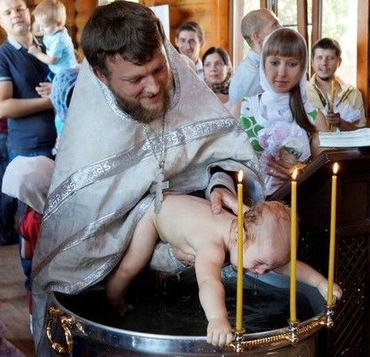
If you’ve been baptized as an INFANT or by any mode other than IMMERSION, then you’ve been baptized AMISS.

Infant baptism is contrary to the doctrine of Christ. “Suffer the little children to come unto me, and forbid them not: for of such is the kingdom of God. Verily I say unto you, Whosoever shall not receive the kingdom of God as a little child, he shall not enter therein.” (Mark 10:14,15). To Cleanse from Original Sin is not a doctrine taught in the New Testament. The doctrine of original sin and its cleansing through infant baptism is not supported by the Bible, which teaches that baptism is for the remission of personal sins (Acts 2:38).

Baptism is a burial (immersion in water) for those that believe. “Buried with him in baptism, wherein also ye are risen with him through the faith of the operation of God, who hath raised him from the dead.” (Col 2:12). Getting baptized without personal faith and understanding, possibly under coercion or pressure, is not scriptural. Baptism requires belief.

And as they went on their way, they came unto a certain water: and the eunuch said, See, here is water; what doth hinder me to be baptized? And Philip said, If thou believest with all thine heart, thou mayest. And he answered and said, I believe that Jesus Christ is the Son of God.” (Acts 8:36,37)

If you’ve been baptized after you think you were SAVED, then you’ve been baptized AMISS.

The bible teaches that a person is baptized to be saved. “The like figure whereunto even baptism doth also now save us (not the putting away of the filth of the flesh, but the answer of a good conscience toward God,) by the resurrection of Jesus Christ:” (1Peter 3:21).

Saul of Tarsus (later to become Paul the Apostle), was baptized to wash away his sins. How can one be saved then have their sins washed away? “And now why tarriest thou? arise, and be baptized, and wash away thy sins, calling on the name of the Lord.” (Acts 22:16)

The idea that baptism is merely a symbolic public declaration of faith without any salvific purpose contradicts the biblical teaching that it is essential for the forgiveness of sins (Acts 2:38).

Viewing baptism as merely a religious tradition or ritual without understanding its significance in salvation contradicts the New Testament teaching (Romans 6:3-4).

If you’ve been baptized for SOCIAL acceptance, then you’ve been baptized AMISS.

There are some who are baptized for social acceptance among their Family or friends, or to fit in. Some have been baptized to make their parents happy. Some are baptized so they can make a future spouse happy. If we’re baptized to please a person and not for the remission of sins, then we’ve been baptized amiss. It’s a very nervous thing for parents who desire that their children obey the gospel, but they want it to be on the child’s own volition and not just to please their parents.

Jesus taught about counting the cost of discipleship (Luke 14:28-33). Baptism should not be entered into lightly or without understanding its lifelong commitment. The concept of being baptized because one has already been saved through a prior “decision” for Christ overlooks the New Testament’s connection of baptism with the forgiveness of sins and new birth (Acts 22:16; John 3:5).

I know of several young people who get baptized because their older peers had obeyed the gospel, rather than out of personal conviction and obedience to Christ. because they didn’t want to feel left out.

“He that believeth and is baptized shall be saved; but he that believeth not shall be damned.”

(Mark 16:16)

There are other reasons people give for baptism. The practice of baptism for the dead, as practiced in some religious groups, is not supported by New Testament teaching and is mentioned only ambiguously in 1 Corinthians 15:29 without endorsement.

The idea that baptism is an emergency ritual to be performed in dire circumstances, without the individual’s faith and understanding, does not align with the New Testament teaching.

Any reason for baptism that does not align with the biblical teaching that it is for the remission of sins, to receive the gift of the Holy Spirit, and to be added to the body of Christ (Acts 2:38; 1Corinthians 12:13) is not according to the Bible.

It is crucial to emphasize that baptism, according to the New Testament, is an act of faith and obedience, necessary for the forgiveness of sins, the gift of the Holy Spirit, and entrance into the body of Christ (Acts 2:38; Romans 6:3-4; Galatians 3:27).

If you have been baptized

to be ADDED to a denomination…

as a MERITORIOUS work…

as an INFANT or by any mode other than IMMERSION

after you think you were SAVED

for SOCIAL acceptance…

…then you’ve been baptized AMISS.

Agape,

Spencer

Do we TRUST Jesus?

But Jesus said unto them, A prophet is not without honour, but in his own country, and among his own kin, and in his own house.” (Mark 6:4).

In Mark chapter six we see several scenes of varying levels of faith. Part of faith involves trust.

Jesus Rejected in Nazareth                               (Mark 6:1-6)

Sending Out the Twelve Apostles                    (Mark 6:7-13)

Herod’s Perplexity about Jesus                        (Mark 6:14-16)

John the Baptist Beheaded                               (Mark 6:17-29)

Feeding the Five Thousand                             (Mark 6:30-44)

Jesus Walks on Water                                      (Mark 6:45-52)

Healing in Gennesaret                                     (Mark 6:53-56)

Mark’s gospel may be the shortest of the four, but what it contains is of great help to us in our faith.

Let us take a glimpse at these scenes of trust.

In the first scene we find Jesus teaching in His own country and among His own people. Although many were astonished at His teaching, His wisdom, and His mighty works, they were offended at Him. His own people rejected Him. Now that’s astonishing!

But Jesus said unto them, A prophet is not without honour, but in his own country, and among his own kin, and in his own house. And he could there do no mighty work, save that he laid his hands upon a few sick folk, and healed them. And he marvelled because of their unbelief. And he went round about the villages, teaching” (Mark 6:4-6).

The next 3 scenes show differing levels of faith during times of uncertainty. The 12 apostles being sent out to preach, “And commanded them that they should take nothing for their journey, save a staff only; no scrip, no bread, no money in their purse” (v8). Then we see Herod’s perplexity about the identity Jesus, (14-17). The third is in the events leading to the death of John the baptizer at the birthday banquet for Herod, (18-29). From these we see faith, uncertain faith, and great faith.

Following these we come to another kind of banquet called the feeding of the 5,000 (30-44). This began with banquet of spiritual food because of the compassion of Jesus. Faith involves knowledge. Then Jesus is urged to send them away to go find physical food. He tells the 12, “Give ye them to eat.” Here we see another side of their faith when they say, “Shall we go and buy two hundred pennyworth of bread, and give them to eat?” Remember, they had just returned excitedly from preaching without any provisions.

The last scenes of faith are times of trouble. One a storm, the last the sick of Gennesaret (45-56; cf Matt 14:27-33). In the storm, after Jesus had sent the 12 away in boats, He comes to them walking on the water. It’s here that Peter wants confirmation by being allowed to walk on the water also. Peter indeed is able to walk on the water, but places his eyes on the storm, starts to fear, and begins to sink. “O thou of little faith, wherefore didst thou doubt?”

When they arrive at the shore we see an exact opposite response from the first of this chapter. “And when they were come out of the ship, straightway they knew him, And ran through that whole region round about, and began to carry about in beds those that were sick, where they heard he was. And whithersoever he entered, into villages, or cities, or country, they laid the sick in the streets, and besought him that they might touch if it were but the border of his garment: and as many as touched him were made whole.”

Agape,

Spencer

This is part 6 of a series called Preaching through Mark.

the mystery of all religious error

Brothers and sisters, let me take you on a journey through the ages, a journey marked by error! We’re going to examine some of the grandest missteps in the Good Book, and I pray you’ll learn and love the Lord all the more by the time we’re done. Now, let’s start in the Garden of Eden.

GARDEN: And when the woman saw that the tree was good for food… Genesis 3:6
Eve, sweet Eve, saw that forbidden fruit and thought it looked mighty tasty. You know what they say, “Forbidden fruit is the sweetest.” But oh, how wrong she was! That bite led to the fall of man. When you think you know better than God, you’re just about to trip over your own pride. Brothers and sisters, remember this: the snake in the grass often has the best sales pitch, but his product never delivers what it promises!

CAIN: And Cain was very wroth, and his countenance fell. Genesis 4:5
Then we have Cain. Cain got madder than a hornet because God liked Abel’s offering better. His face was longer than a wet week! Instead of asking, “Lord, how can I do better?” he chose murder. Remember, when jealousy gets your goat, it’s just a short walk to the sin pasture. God’s ways aren’t always our ways, but they are always right.

PHARAOH: Who is the LORD, that I should obey his voice to let Israel go? I know not the LORD, neither will I let Israel go. Exodus 5:2
Pharaoh—now there was a man who thought he was all that and a bag of chips. He thought he could stand toe-to-toe with the Almighty. “Who is the Lord?” he scoffed. Let me tell you, when you hear someone ask that, you better stand. Pharaoh found out the hard way with ten plagues and a parted sea. Friends, when God says, “Let my people go,” you better step aside!

The more we know of God, the more we will obey Him. Conversely, the less we know of God, the less we will obey Him. Jesus himself pointed out the mystery of man’s error: “Ye do err, not knowing the scriptures, nor the power of God” (Matthew 22:29). This is a profound truth, my friends.

Sadducees and the Resurrection Errors
The Sadducees were trying to stump Jesus with riddles. They concocted a story about a woman who married seven brothers, each one dying in turn. “Whose wife will she be in the resurrection?” they asked, thinking they’d outsmarted Him. Jesus set them straight, reminding them that God’s word and His power transcends their earthly imaginations. Folks are still tying themselves in knots over theological riddles instead of trusting God’s word.

READING REQUIREMENTS in the OT law
In ancient Israel, God commanded His people to write His laws on stones and read them aloud. Deuteronomy 6:6-9 and 31:10-13 remind us that these words should be in our hearts, taught diligently to our children, spoken of at home and on the road. Yet Israel neglected this command.

We are also to read the word in the New Covenant, (John 20:30-31; Eph 3:3-4; 2Tim 3:15-17).

OT EXAMPLES of ERROR.
In the periods of Judges and Kings, they fell into cycles of forgetting, repenting, and deliverance. Not once do we read of the Israelites gathering to hear the law read, except under Jehoshaphat (2 Chronicles 17:7-9). When the word is neglected, the people perish!

David’s mishandling of the Ark of the Covenant, resulting in Uzzah’s death (1 Chronicles 13:5, 15:11-15), serves as a stern reminder of the importance of knowing and obeying God’s instructions. The failure to follow God’s law led to Israel’s captivity (Isaiah 5:13, Hosea 4:6).

REJECTING JESUS, Then and Now
Even in Jesus’ time, ignorance led to His rejection. The rulers didn’t recognize Him as the Lord of glory (1 Corinthians 2:6-8). Today, many still cling to errors—whether it’s misunderstanding salvation (Acts 15), mixing law and grace (Colossians 2:10), or holding onto traditions that contradict Scripture. From infant baptism to unnecessary church hierarchies, people err because they do not know the Scriptures nor the power of God.

So, do you value your soul? Jesus asked, “For what is a man profited, if he shall gain the whole world, and lose his own soul?” (Matthew 16:26). If we value our souls, we must study God’s word reverently, with fear, love, and care, and apply it daily.

Let’s avoid the errors of the past by immersing ourselves in God’s holy word. Read it, teach it, live it! And remember, when in doubt, God’s way is always the best way! Amen!

Agape, Spencer

you’re invited to one of our services at the Franklin and Juniper st church of Christ.

Do MORALS Matter? Not according to the WORLD.

For the time past of our life may suffice us to have wrought the will of the Gentiles, when we walked in lasciviousness, lusts, excess of wine, revellings, banquetings, and abominable idolatries: Wherein they think it strange that ye run not with them to the same excess of riot, speaking evil of you.” (1Peter 4:3,4).

This passage highlights the contrast between the behaviors of Christians and those of the secular world.

It describes a past life indulged in excesses and immoral activities such as lust, drunkenness, revelry, and idolatry.

Upon turning to a Christian way of life, believers abstain from these practices, leading to a stark difference in conduct.

This transformation often confounds non-believers, who find it strange that Christians no longer join in their excessive and riotous behaviors. As a result, Christians might face criticism or slander for their newfound restraint and moral discipline.

In our secular society, there is a growing trend to sideline morality, with the world often asserting that ethical standards are subjective and unimportant. The Bible warns against this destructive philosophy.

The idea that wrong is relative is exemplified by the biblical account of Pharaoh’s defiance in Exodus 5:2: “And Pharaoh said, Who is the LORD, that I should obey his voice to let Israel go? I know not the LORD, neither will I let Israel go.” Pharaoh’s stance reflects a broader modern sentiment that moral obligations are negotiable based on personal belief systems or the lack thereof. This relativism undermines the concept of an absolute moral authority.

The pursuit of personal gain often overrides moral considerations. In Luke 12:13-21, Jesus tells the parable of the rich fool, who hoards wealth without regard for others or his spiritual well-being. This story highlights how the quest for material success can eclipse ethical responsibilities, leading individuals to prioritize self-interest over faithfulness to God.

Doing what is “right in one’s own eyes” epitomizes the relativistic approach to morality. Judges 21:25 states, “In those days there was no king in Israel: every man did that which was right in his own eyes.” This verse illustrates the chaos and moral decay that arise when subjective judgments replace universal ethical standards.

Contemporary society often masks moral deviations under the guise of love. This rationalization can be seen in the acceptance of various forms of relationships, such as living together, polyamory, and other more controversial issues. By framing these practices as expressions of love, societal norms shift, challenging biblical moral frameworks.

The belief that death is the end and therefore morality is inconsequential is a profound reflection of nihilistic thought. If life has no ultimate purpose beyond physical existence, ethical considerations may seem futile. This outlook fosters a disregard for moral behavior, as the finality of death negates the perceived need for a moral compass.

The world’s dismissal of morality poses significant contrast to sound ethical standards. This is why we must be on guard against such flawed reasoning.

Agape,

Spencer

The Problem of SUGAR

Howdy, brothers and sisters! Today, I want to talk to you about a little thing called “SUGAR.” Now, I know what you’re thinking – sugar is sweet and delightful, a treat for the taste buds. But what if I told you that sugar can be a grave and serious danger to our health?

Sugar is Sneaky

Sugar has a sneaky way of creeping into almost everything we eat. Even when we’re not expecting it, there it is, hidden in plain sight. eating and drinking too many added sugars, which can contribute to health problems such as weight gain and obesity, type 2 diabetes, and heart disease.

We must always be on guard, and watchful, to recognize and resist its sneaky influences.

Sugar is Ubiquitous

Sugar is everywhere. It’s in our breakfast cereals, our sauces, and even our bread. We find it all around us in our daily lives – at work, in our homes, and even in our health food! Sugar often sneaks up on us when we’re not looking. It can be found in the most unexpected places, subtly influencing our health and wellbeing. It’s an omnipresent problem that we must be constantly alert.

Sugar is Gradual

The effects of consuming too much sugar aren’t immediate. It’s a gradual process where we might not notice the damage until it’s too late – the extra pounds, the sluggishness, or the health issues. This gradual erosion, small compromises, and seemingly insignificant choices can lead us far from our intended path over time. We must be diligent and committed, recognizing that small steps lead to poor health and tooth decay.

Sugar is Addictive

Sugar can be highly addictive. The more we consume, the more our bodies crave it. It creates a cycle that’s hard to break. This little treat is harmful to our bodies and we love killing ourselves with it. Some studies have suggested that sugar is as addictive as Cocaine. People often enjoy the dopamine release that sugar brings. But due to the addictive nature of sugar, it’s difficult to quit.

Recognizing this addictive nature is the first step in breaking free from its hold.

Sugar is Ruinous

Over time, excessive sugar can ruin our health, leading to diabetes, heart disease, and other serious conditions. It affects our relationships, our personal well-being, and our ability to interact with others, in particular, our children and grandchildren.

The ultimate ruin comes when we let these challenges dominate our lives, but there’s hope through changing habits, eating real food, and regular activity.

The Sweet Deception of Sin.

Friends, you’ve probably guessed by now that SUGAR is a metaphor for sin. Just as sugar sneaks into our diet, sin sneaks into our lives. It’s ubiquitous, gradual, addictive, and ultimately ruinous. But here’s the good news: we have a Savior who offers us freedom from this cycle.

By recognizing and addressing these issues head-on, we can live a life that truly honors God. Let’s be vigilant, stay rooted in scripture, and support one another in our walk of faith.

Sin is Sneaky

Remember what Jesus said in Matthew 26:41: “Watch and pray so that you will not fall into temptation. The spirit is willing, but the flesh is weak.” We must always be on guard, watchful and prayerful, to recognize and resist these sneaky influences.

Sin is Ubiquitous

In 1Peter 5:8, we are warned, “Be alert and of sober mind. Your enemy the devil prowls around like a roaring lion looking for someone to devour.” Just like sugar is found in the most unexpected places, so are the snares that can lead us astray.

Sin is Gradual

James 1:14-15 explains this well: “But each person is tempted when they are dragged away by their own evil desire and enticed. Then, after desire has conceived, it gives birth to sin; and sin, when it is full-grown, gives birth to death.” We must stay diligent and committed, recognizing that small, faithful steps lead to a righteous life, just as small missteps can lead to spiritual decay.

Sin is Addictive

In Hebrews 11:24-26 we see the powerful pull of sin. “By faith Moses, when he was come to years, refused to be called the son of Pharaoh’s daughter; Choosing rather to suffer affliction with the people of God, than to enjoy the pleasures of sin for a season; Esteeming the reproach of Christ greater riches than the treasures in Egypt: for he had respect unto the recompence of the reward.” Recognizing this addictive nature and having a desire to be with Christ is the first step in breaking free from its hold.

Sin is Ruinous

Romans 6:23 warns us, “For the wages of sin is death, but the gift of God is eternal life in Christ Jesus our Lord.” None are immune, all fall short. The ultimate ruin comes when we let these challenges dominate our lives, but there’s hope and redemption through Christ.

If we say that we have no sin, we deceive ourselves, and the truth is not in us. If we confess our sins, he is faithful and just to forgive us our sins, and to cleanse us from all unrighteousness. If we say that we have not sinned, we make him a liar, and his word is not in us. My little children, these things write I unto you, that ye sin not. And if any man sin, we have an advocate with the Father, Jesus Christ the righteous: And he is the propitiation for our sins: and not for ours only, but also for the sins of the whole world. And hereby we do know that we know him, if we keep his commandments.” (1John 1:8-2:3).

Stay sweet in the spirit, but mindful of the pitfalls, dear ones!

Agape,

spencer is an evangelist for the church of Christ on Franklin and Juniper in Borger Texas. If you’re in the Borger area, stop in a see us at one of our regular services.

Seeking Jesus in Mark 5

In Mark chapter 5, we read about several encounters of those seeing Jesus. Amidst the miracles and interactions, these folks stand out, each exhibiting varying degrees of fear or awe towards Jesus. Let’s look at a few of their stories and see if their fear was justified, or why they ought to have no fear.

The Legion: The first in Mark 5, is a man possessed by a legion of demons. This legion, fearing Jesus, pleads not to be tormented. Their fear stems from the recognition of Jesus’ authority over the spiritual realm. They understand His power to cast them out and disrupt their malevolent activities. Their fear is justified, for Jesus indeed removes them from the man, demonstrating His supremacy over darkness.

The Citizens: Following the exorcism of the legion, the citizens of the region witness the transformation of the possessed man. Instead of rejoicing at this miraculous deliverance, they are gripped by fear and beg Jesus to leave their region. Their fear is rooted in the disruption caused by His power. They show no concern for the one who has been restored from his torments. Their fear is misplaced by priorities that lead them to reject Jesus, despite this miraculous deed.

The Exorcised Man: The man formerly possessed by is now clothed and in his right mind, sitting at Jesus’ feet. He has no fear of Jesus, but rather a desire to go with Him wherever He goes. He is instead told to “go home and tell,” where he boldly proclaims all that Jesus had done for him; and they marveled.  

Jairus: a synagogue leader, approaches Jesus in desperation, pleading for his daughter’s healing. Despite his high status in society, Jairus humbles himself before Jesus, acknowledging His power to heal. His fear is one of urgency and desperation, fueled by the impending death of his beloved daughter. Jairus’ faith outweighs his fear as he trusts in Jesus’ ability to perform the impossible. Unlike the denizens of the region who rejected Jesus, Jairus pleads with Him to come to his house.

The Woman with the Issue of Blood: Amidst the crowd pressing around Jesus, a woman suffering from a twelve-year hemorrhage reaches out in faith, believing that merely touching His garment would bring healing. Her fear is one of vulnerability and shame, as she has endured societal separation due to her condition. However, her faith overcomes her fear, and Jesus commends her for her courage and belief, declaring her healed.

In reflecting on these characters from Mark chapter 5, it becomes evident that fear can manifest in various ways when confronted with the divine presence of Jesus Christ. Some respond with reverence and faith, while others react with skepticism and rejection. Ultimately, those who approached Jesus with humility and trust found freedom, and healing, while those who allowed fear to hinder their faith miss out on the abundant blessings He offers.

Agape,

Spencer

This is part 6 of a series called Preaching through Mark.