Sinning against the Holy Spirit

Let the word of Christ dwell in you richly in all wisdom” (Colossians 3:16).

The concept of blasphemy against the Holy Spirit has long intrigued and, at times, perplexed believers. In Mark 3:29, Jesus warns about an unforgiveable sin called blasphemy against the Holy Spirit. Some have said that it’s saying a certain phrase. That view doesn’t fit with the rest of the scriptures on this matter.

It makes sense that this blasphemy involves disobeying the written word of God and remaining unrepentant unto death. It is the Holy Spirit that reveals God’s will to man. This is true for the Old and the New Testaments.

For the prophecy came not in old time by the will of man: but holy men of God spake as they were moved by the Holy Ghost

(2Pet 1:21; Acts 1:16; Heb 9:8; 2Tim 3:16-17).

To better understand this ultimate sin, let’s explore the many ways we sin against the Holy Spirit as revealed in the written word.

Ephesians 4:30 implores believers not to grieve the Holy Spirit. Sorrowing the Spirit occurs when we engage in actions contrary to God’s commands. Look at what Isaiah wrote; “But they rebelled, and vexed his holy Spirit: therefore he was turned to be their enemy, and he fought against them” (Isaiah 63:10). This grief is a result of our disobedience and disregard for His word. When we knowingly choose sin over righteousness, we grieve the Spirit.

In 1 Thessalonians 5:19, we are warned not to quench the Spirit. The Holy Spirit is often symbolized as a flame or fire (Acts 2:3-4). To quench the Spirit is to suppress His influence in our lives through the word. When we ignore His revealed word, or neglect the pursuit of spiritual growth, we extinguish the flame of the Spirit that should cause a burning within us. “Did not our heart burn within us, while he talked with us by the way, and while he opened to us the scriptures?” (cf. Luke 24:32).

Acts 5:1-11 recounts the tragic tale of Ananias and Sapphira, who lied to God the Holy Spirit. Deception never draws us closer to God. They chose to lie to be seen as being more generous than they were. We can fake out men, but we’ll never pull the wool over the all-seeing eyes of God.

In Acts 7:51, Stephen accuses the religious leaders of resisting the Holy Spirit. Resistance involves actively opposing the Spirit’s instructions in the revealed word. When we resist the Holy Spirit, we interfere with the saving power of the Gospel (Romans 1:16).

The account of Simon the sorcerer in Acts 8:17-24 illustrates the danger of insulting the Holy Spirit. Simon sought to purchase the power of the Holy Spirit, demonstrating a profound misunderstanding of the Spirit’s purpose. This sin lies in attempting to commercialize the divine. When we seek to use the Word for personal gain, we insult His sovereignty and it seeks to take advantage (cf. 2Pet 2:3).

Mark 3:22-30 warns against turning away from the Holy Spirit in an unrepentant state. Turning away involves a deliberate rejection of the Spirit’s convicting work and a refusal to acknowledge our need for repentance. If this form of rebellion continues until death, it closes the door to God’s mercy and forgiveness. Unrepentance signifies a hardened heart that resists the transformative power of the Gospel leading to eternal death.

 Agape,

Spencer

Here’s a link for additional reading on how we’re led by the Holy Spirit.

This is part 3 of a series “Preaching through Mark.” Click here for the complete series.
4 Views of LIFE, Luke 10:25-42.

And, behold, a certain lawyer stood up, and tempted him, saying, Master, what shall I do to inherit eternal life?” (Luke 10:25).  

The biblical passage in Luke 10:25-42 provides a rich narrative that unveils four distinct views of life, as encountered by a certain lawyer who seeks to test Jesus. As we delve into the dialogue and parables presented, we uncover profound insights into human nature and the pursuit of righteous living.

Jesus answers the initial question by asking the Lawyer about the Law, and the Lawyer answers well.

And he answering said, Thou shalt love the Lord thy God with all thy heart, and with all thy soul, and with all thy strength, and with all thy mind; and thy neighbour as thyself. And he said unto him, Thou hast answered right: this do, and thou shalt live” (Luke 10: 27-28; cf. Le 19:18; De 6:5).

The Lawyer’s response and the parable which follows give us insight into the 4 Views of Life.

The lawyer unveils the first view: Self-Righteousness. In questioning Jesus about who his neighbor is, the lawyer exposes an inclination to justify himself. “But he, willing to justify himself, said unto Jesus, And who is my neighbour?” This attitude is mirrored in Luke 18:9-14, where a Pharisee boasts of his righteousness compared to others. The message is clear – salvation is not achieved through self-righteousness, but through humility, Faithful obedience, and reliance on God.

The second view is revealed in the parable of the Good Samaritan. The narrative describes some who live in iniquity as seen in the actions of a thief, a Priest, and a Levite. This section highlights the fact that people’s actions declare what is in their hearts (Matt 7:15-20). Thieves hate to be stolen from, and their theft exposes their iniquity & hypocrisy. So also, the Priest and the Levite. “Wherefore by their fruits ye shall know them.”

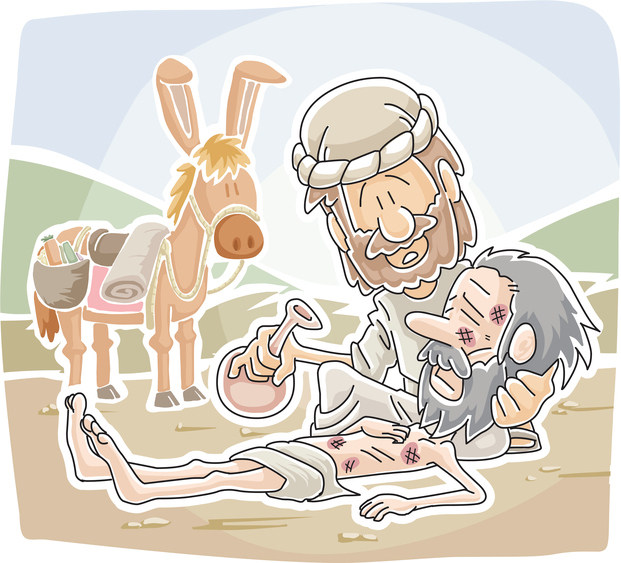
The Samaritan exemplifies the third view of life. “But a certain Samaritan, as he journeyed, came where he was: and when he saw him, he had compassion on him” (33). A Samaritan would have been looked down upon by the Lawyer, the Priest, and the Levite. The Samaritans knew this, (John 4:9). Being full of compassion, the Samaritan man, “went to him, and bound up his wounds, pouring in oil and wine, and set him on his own beast, and brought him to an inn, and took care of him” (34).

After the telling of the parable, Jesus asks, “Which now of these three, thinkest thou, was neighbour unto him that fell among the thieves?  And he said, He that shewed mercy on him. Then said Jesus unto him, Go, and do thou likewise” (36, 37). Jesus takes the Lawyer back to the answer given to the original question.

We usually stop here, but there is another scene in this chapter that relates to the views of life. The short account of Martha & Mary. While Jesus is teaching, Mary sat at Jesus’ feet, and heard his word. “But Martha was cumbered about much serving, and came to him, and said, Lord, dost thou not care that my sister hath left me to serve alone? bid her therefore that she help me” (40). Jesus gives us the fourth view of Life; “Martha, Martha, thou art careful and troubled about many things: But one thing is needful: and Mary hath chosen that good part, which shall not be taken away from her” (41, 42). This view is about distractions that take us away from hearing about eternal life. Jesus warned about THORNS, the 3rd soil in the parable of the Sower. While there’s commendation in serving, we must remain mindful of the things pertaining to eternal life. “Set your affection on things above, not on things on the earth” (Col 3:2).

 Agape,

Spencer

Spencer is an evangelist for the Franklin & Juniper st church of Christ in Borger, Texas.

The Truth sets us free and makes people mad

Am I therefore become your enemy, because I tell you the truth?” (Gal 4:16).  

The New Testament recounts the life, teachings, death, and resurrection of Jesus Christ. It tells us about the love of God through the sacrifice of Christ. We also find instances where the truth elicited strong and often negative reactions from people of the time.

The Truth has the power to disturb, unsettle, and even anger those who encountered it. The stories in the NT serve as a timeless reminder that the truth, though uncomfortable, has the potential to challenge the status quo, expose hypocrisy, and disrupt ingrained power dynamics.

The reactions to the truth highlight the vehement resistance toward the truth & truth tellers. Knowing this we can be better prepared to proclaim the truth with resilience, confidence, and determination.

5 things the TRUTH does.

In today’s diverse world, where ideologies clash and beliefs vary, the concept of objective truth is often lost on many. A closer examination of scriptures reveals that the truth is both unwavering and, at times, divisive.

Paul warns us that some will turn away from the truth toward their own lusts, (2Timothy 4:3-4). Jesus’ own teaching was difficult for some and they turned away from our Lord, walking no more with Him, (John 6:60-66). We still see this same thing when people fail to understand the truth.

The exclusivity of truth is underscored in passages like John 14:6, Mark 16:15-16, and Acts 4:12. These verses assert that the path to truth is narrow and requires faithful obedience. While the gospel is open to all, (Mark 16:15), it maintains the exclusivity of salvation through faith in Christ, repentance to sin, and water baptism.

Moreover, the unchanging and unalterable nature of truth is emphasized in 1Peter 1:23-25, Psalm 119:160, and 2Timothy 1:13. The very nature of truth requires that it be unchanging. Subjectiveness is confusing, changing, and unstable. “For God is not the author of confusion, but of peace, as in all churches of the saints” (1Cor 14:33; cf Matt 7:24-29).

Yet, the unyielding nature of truth can be troubling to those who choose to believe otherwise. In Matthew 15:10-12 and Galatians 4:16, the Bible addresses the offense caused by the truth, creating tension and discomfort among those who resist its teachings. “Let them alone: they be blind leaders of the blind. And if the blind lead the blind, both shall fall into the ditch” (Mat 15:14).

Furthermore, truth can be seen as both hostile and divisive. The hostility arises from the clash of conflicting beliefs and is often directed toward truth tellers, (cf. 1Cor 22:21,22). Despite its divisive nature, truth brings joy to believers who embrace it, (Acts 13:48).

The Bible presents truth as a constant, exclusive, and unchanging entity that can be divisive and troubling to those who choose to turn away. While the truth may offend some, it remains a source of joy and happiness for those who embrace it wholeheartedly. The truth shall set you free.

Agape,

Spencer

This article is part 2 of a series titled, God’s Moral Law. click here for part one.

You’re invited to attend one of our services at the church of Christ on Franklin and Juniper in Borger Texas.

The Lord give mercy unto the house of Onesiphorus

For he oft refreshed me

The Lord give mercy unto the house of Onesiphorus; for he oft refreshed me, and was not ashamed of my chain,” (2Tim 1:16).  

Who inspires or impresses you? Take a serious moment to think about it.

Is it because they’re successful? Is it because they’re famous? Is it because they’re big shots?

After you think about that, who do you suppose inspires or impresses them? Are they impressed by more successful people, or more famous celebrities? Bigger big shots?

One more question… Who inspires or impresses true big shots? Paul is an Apostle, but he was humble and was able to see the labors of others.

Onesiphorus impressed Paul.

Impressed may not be the right word. He was Grateful, Glad, Invigorated, Renewed, Refreshed. Did Paul release an audible sigh of relief upon being found by him? The scripture is full of lesser known & unknown names of mighty heroes of faith.

Paul was in a Roman prison, (2Tim 1:8). It was about the time that Nero was blaming Christians for the burning of Rome (64AD). This is Paul’s last writing of the New Testament with the purpose to encourage the young evangelist Timothy, (1:6, 2:1, 3:14-15).

Paul was ready to die, and it looked like it was going to happen this time. “For I am now ready to be offered, and the time of my departure is at hand” (2Tim 4:6). It was no sad moment for him, because he had “fought a good fight, I have finished my course, I have kept the faith: Henceforth there is laid up for me a crown of righteousness, which the Lord, the righteous judge, shall give me at that day: and not to me only, but unto all them also that love his appearing” (2Tim 4:7,8).

Even though he had been forsaken by many, he still encouraged Timothy to come to him, for there was still work to be done. “Do thy diligence to come shortly unto me. The cloke that I left at Troas with Carpus, when thou comest, bring with thee, and the books, but especially the parchments” (2Tim 4:9,13).

In this letter we learn about ONESIPHORUS. He was a man of…

UNPARALLELED SUPPORT: “for he oft Refreshed me.” (2Tim 1:16a)

UNABASHED FRIEND: “was not ashamed of my chain.” (2Tim 1:16b)

UNSTOPPABLE EFFORT: “when he was in Rome, he sought me out very diligently, and found me.” (2Tim 1:17)

UNUSUAL SERVICE: “in how many things he ministered unto me at Ephesus, thou knowest very well.” (2Tim 1:18)

UNSURPASSED REWARD: “He that receiveth you receiveth me, and he that receiveth me receiveth him that sent me. He that receiveth a prophet in the name of a prophet shall receive a prophet’s reward; and he that receiveth a righteous man in the name of a righteous man shall receive a righteous man’s reward. And whosoever shall give to drink unto one of these little ones a cup of cold water only in the name of a disciple, verily I say unto you, he shall in no wise lose his reward” (Mat 10:40-42).

The scripture is full of lesser known & unknown names of mighty heroes of faith. God doesn’t waste ink, these examples are there for a reason. “Brethren, be followers together of me, and mark them which walk so as ye have us for an ensample” (Phil 3:17).

 Agape,

Spencer

This article is based on a sermon presented at the Franklin & Juniper st church of Christ in Borger, Texas. We invite you to visit one of our assemblies to learn more about Christ.

Mark 2, Jesus is God

Mark may be the shortest of the Gospels, but what it contains often has more detail than the other synoptic Gospels.

Mark chapter two is a great chapter because of the significant teachings from Jesus. It’s also easy to outline by looking at the 4 questions asked of Him.

  • Who can forgive sins but God alone? (2:7).
  • How is it that he eateth and drinketh with publicans and sinners? (2:16).
  • Why do the disciples of John and of the Pharisees fast, but thy disciples fast not? (2:18).
  • Why do they on the sabbath day that which is not lawful?” (2:24).

In answering these questions Jesus teaches one of the greatest lessons in the Gospels. The lesson is that Jesus is God.

The second chapter of the Gospel of Mark is a rich tapestry of events and dialogues that offer profound insights into the ministry of Jesus Christ.  

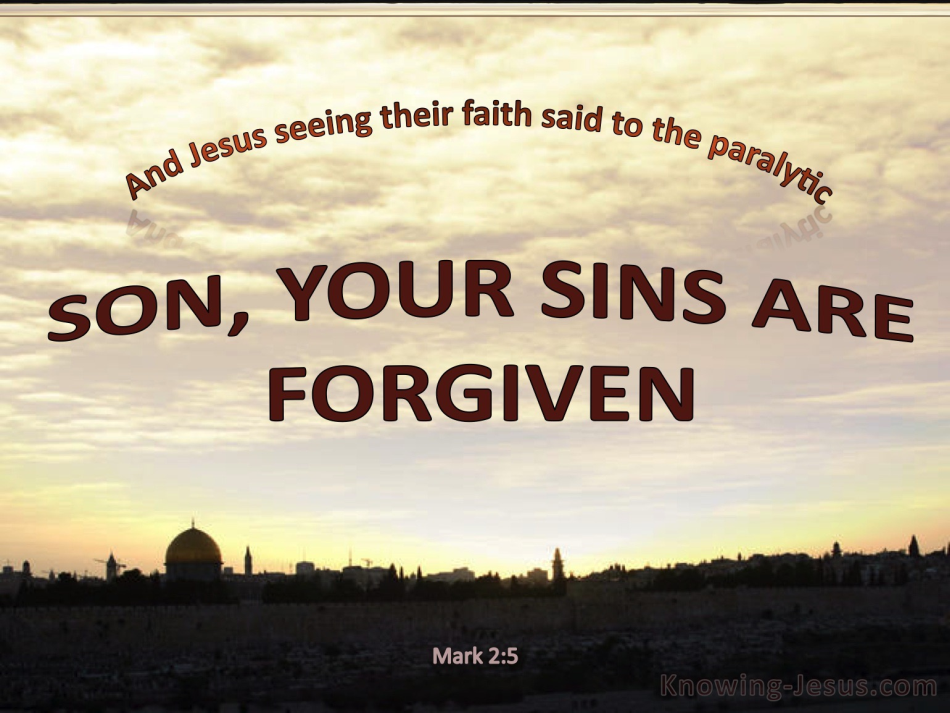
Who can forgive sins but God alone?” (2:7). The Pharisees were quick to question Jesus’ authority when He forgave the sins of a paralytic man. Their query (stated privately in their head), “Who can forgive sins but God alone?” reflects a fundamental theological concern. The forgiveness of sins is an exclusive prerogative of God, and the Pharisees were wary of any challenges to this divine authority. In answering, Jesus reveals His power to know the thoughts and intents of the heart and the power to forgive sins. By healing the paralytic He proves His deity. He directly states why He did it, “But that ye may know that the Son of man hath power on earth to forgive sins, (he saith to the sick of the palsy,) I say unto thee, Arise, and take up thy bed, and go thy way into thine house. And immediately he arose, took up the bed, and went forth before them all; insomuch that they were all amazed, and glorified God, saying, We never saw it on this fashion” (2:10-12).

How is it that he eateth and drinketh with publicans and sinners?” (2:16). In the cultural context of that time, sharing a meal signified more than a casual encounter; it symbolized acceptance. His response highlighted the core of Jesus’ mission – to seek and to save the lost, which is a demonstration of the divine Love of God that transcends social boundaries. The Pharisees wouldn’t stoop down to reach out to the lost, but God does.

Why do the disciples of John and of the Pharisees fast, but thy disciples fast not?” (2:18). Fasting was a point of contention between the Pharisees, and Jesus’ disciples. The question sought to understand the apparent disparity in their observance of this spiritual discipline. Jesus, in his response, likened himself to a bridegroom, indicating that while the bridegroom is present, it is a time of joy, not mourning. It was an early lesson about the coming end of the Old Law and the coming in of the prophetic New Testament of Christ.

Why do they on the sabbath day that which is not lawful?” (2:24). The final question revolves around Sabbath observance, a cornerstone of Jewish religious life. The Pharisees were quick to criticize Jesus and his disciples for plucking grain on the Sabbath, an action they deemed unlawful. Jesus targets the weakness of their belief system by pointing out the error of David, someone they held in high esteem. Jesus doesn’t teach situation ethics, He points out their willingness to overlook the sins of David, but unwilling to recognize the innocence of David’s Royal Divine Son. “But I say unto you, That in this place is one greater than the temple. But if ye had known what this meaneth, I will have mercy, and not sacrifice, ye would not have condemned the guiltless” (Matt 12:6,7).                                                                               

Agape,

Spencer

This is part of a series of sermons preached at the Franklin & Juniper st church of Christ in Borger, Texas. Click here for Mark 1.

The Sure STONE

Therefore thus saith the Lord GOD, Behold, I lay in Zion for a foundation a stone, a tried stone, a precious corner stone, a sure foundation: he that believeth shall not make haste.” (Isaiah 28:16).

In this language we hear the voice of God predicting the coming of the Messiah who is described as a “sure foundation.”

God has used this language of building before. “And when thy days be fulfilled, and thou shalt sleep with thy fathers, I will set up thy seed after thee, which shall proceed out of thy bowels, and I will establish his kingdom. He shall build an house for my name, and I will stablish the throne of his kingdom for ever” (2Sam 7:12, 13).

It’s axiomatic that before building of any structure one must begin with a foundation that is strong, level, and sure. Every other building block will be aligned to the foundation.

We’re speaking about a spiritual building which is divine in origin, and therefore worthy to be built upon.

The OT prophecies identify Jerusalem as the place of the building, also called SION (ZION). “I lay in Zion.” This is a Synonym for the Jewish nation, Jerusalem in particular. Jesus was a Jew, of the family of David (Matt 1). In Jerusalem He was crucified, Buried, and raised. In Jerusalem the gospel was 1st preached. (Acts 2). “And he shall be for a sanctuary; but for a stone of stumbling and for a rock of offence to both the houses of Israel, for a gin and for a snare to the inhabitants of Jerusalem” (Isaiah 8:14). Many at that time expected a physical building, but God laid the foundation to a spiritual building in Jerusalem. This continues to be a common error of denominationalism.

Jesus said, “I will build my church.” and “My kingdom is not of this world.” (Matt 16:18; John 18:36). Jerusalem (Zion / Sion) is the place where the spiritual kingdom of God would begin. Prophecy prevents Jesus from having a physical building & throne in Jerusalem. “Thus saith the LORD, Write ye this man childless, a man that shall not prosper in his days: for no man of his seed shall prosper, sitting upon the throne of David, and ruling any more in Judah” (Jer 22:30).

Isaiah says that this would be a TRIED Stone. A tried stone is a stone for solidarity, for strength, for duration. Jesus was tried by Satan, by men, and by God. “For we have not an high priest which cannot be touched with the feeling of our infirmities; but was in all points tempted like as we are, yet without sin” (Heb 3:15).

While there are many stones in a building, there is only ONE foundation stone. It is of Precious value to God, the Father. The ONLY begotten Son, (John 1:14; 3:16; Mark 1:11). Precious to Man, the believer (1Pet 2:7). The ONLY sufficient sacrifice, (1Pet 1:18,19). The ONLY hope of salvation. “This is the stone which was set at nought of you builders, which is become the head of the corner” (Acts 4:11,12).

Christ is the chief cornerstone. The cornerstone is the NUMBER ONE stone. His position is chief (Col 1:18). He has the Preeminence. The chief cornerstone unites both sides of the edifice. He is Deity & Humanity, the old and the new dispensations. He brings together both Jew & Gentile united in HIM (Eph 2:19,20).

We are warned about how we build. “Except the LORD build the house, they labour in vain that build it: except the LORD keep the city, the watchman waketh but in vain” (Psalm 127:1). We must be careful to build on this stone.

Agape,

Spencer

God Gave them Up

Wherefore God also gave them up to uncleanness through the lusts of their own hearts, to dishonour their own bodies between themselves” (Rom 1:24).

People often cite the Letter to the Romans for their erroneous view on election and predestination. While these concepts are here, their view that God preselects individuals to be lost or saved before they were born and without any reason is error.

We can answer this erroneous view beginning with chapter one where we are told why God gave them up to their sin. People are not lost because God randomly chose them to be lost. People are lost because of their disobedience to Him (sin), neither does He cause them to sin.

Note verse 26, “For this cause God gave them up.” Paul is telling us WHY God gave them up, and the reason is not because God just didn’t want them to be saved. There are reasons.

For God to give someone up to sin, there must be some standard by which the guilt is determined.

God gave them up to their sins because they gave Him up. Notice what people had done BEFORE God gave them up.

Because that which may be known of God is manifest in them; for God hath shewed it unto them. For the invisible things of him from the creation of the world are clearly seen, being understood by the things that are made, even his eternal power and Godhead; so that they are without excuse: Because that, when they knew God, they glorified him not as God, neither were thankful; but became vain in their imaginations, and their foolish heart was darkened. Professing themselves to be wise, they became fools, And changed the glory of the uncorruptible God into an image made like to corruptible man, and to birds, and fourfooted beasts, and creeping things. Wherefore God also gave them up to uncleanness through the lusts of their own hearts, to dishonour their own bodies between themselves” (Rom 1:19-24 emphasis mine seb).

God had revealed to mankind His existence through His creation. Instead of glorifying Him, they were ungrateful, turned to their own wisdom, and then to idolatry. They took a piece of creation and worshiped it.

Jeremiah described their foolishness this way; “For the customs of the people are vain: for one cutteth a tree out of the forest, the work of the hands of the workman, with the axe. They deck it with silver and with gold; they fasten it with nails and with hammers, that it move not. They are upright as the palm tree, but speak not: they must needs be borne, because they cannot go. Be not afraid of them; for they cannot do evil, neither also is it in them to do good” (Jer 10:3-5). Jeremiah then warns them, “Every man is brutish in his knowledge: every founder is confounded by the graven image: for his molten image is falsehood, and there is no breath in them. They are vanity, and the work of errors: in the time of their visitation they shall perish” (10:14-15; cf, Isa 44:9-20).

Think about it. Created humans rejected their creator, then created a wooden image to worship, and did not give the God of Heaven thanks nor glory for His great might. Do we see anything different happening today? The only difference is the object of worship.

For many walk, of whom I have told you often, and now tell you even weeping, that they are the enemies of the cross of Christ: Whose end is destruction, whose God is their belly, and whose glory is in their shame, who mind earthly things” (Phil 3:18-19).

Agape,

Spencer

This article is part 1 of a series titled, God’s Moral Law. click here for part two.

You’re invited to attend one of our services at the church of Christ on Franklin and Juniper in Borger Texas.

STEPHEN’S Face

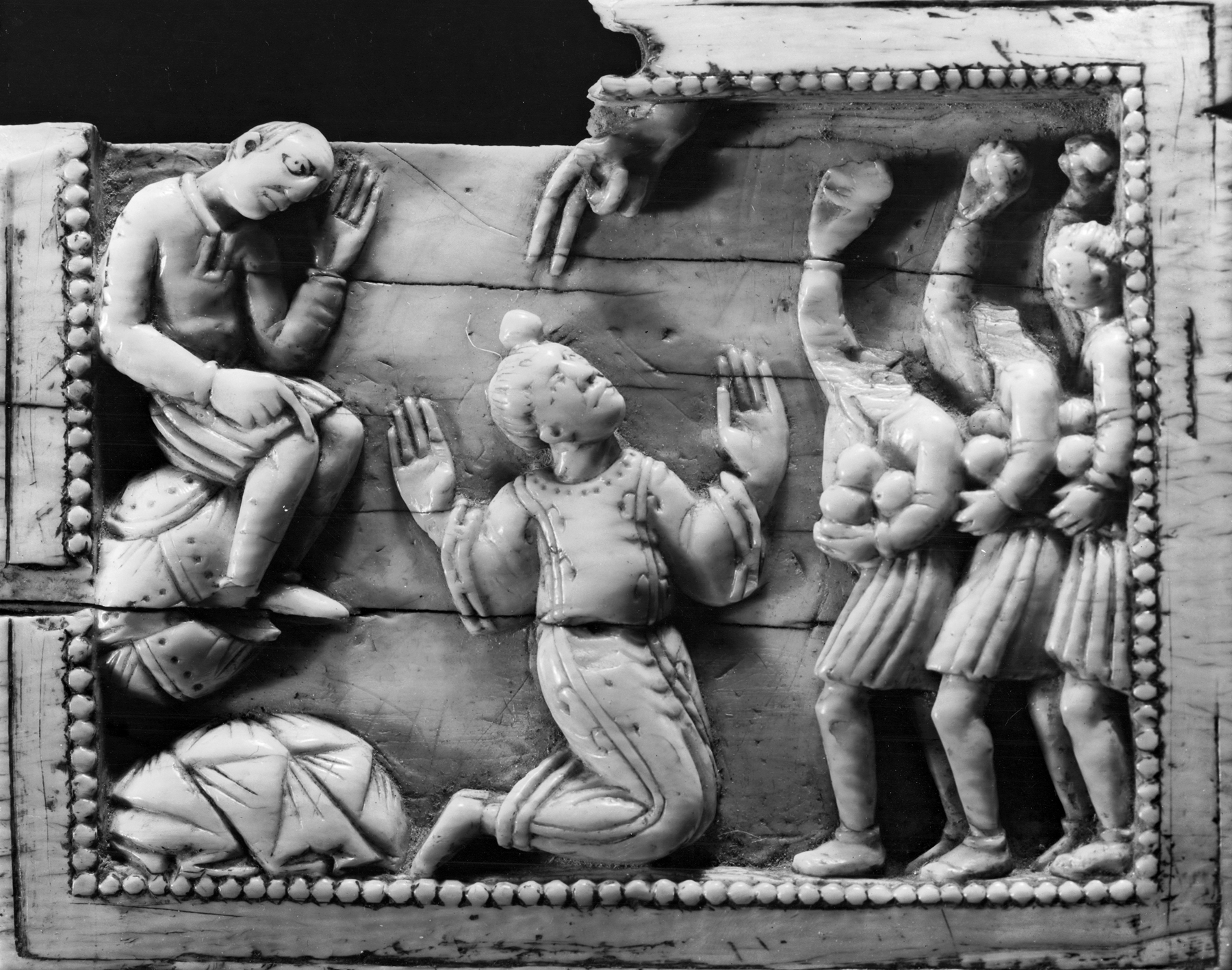
When I first read the account of Stephen in Acts 7, I thought he had brought it upon himself, because he had said, “Ye stiffnecked and uncircumcised in heart and ears, ye do always resist the Holy Ghost: as your fathers did, so do ye” (Acts 7:51). If you’re going to call someone stiffnecked, you ought to expect them to be angry.

As the years went by, and I continued to read and study, it became apparent that Stephen did not deserve death for what he said. He told them the truth. The blame lies on those who heard him. Here’s how I came to that conclusion.

The account actually begins in Acts 6, not 7. Before we even hear of Stephen, a description is given of those who should serve the Grecian widows. “men of honest report, full of the Holy Ghost and wisdom” (Acts 7:3). In verse 8 it says that Stephen was full of faith and power.

Then, as he spoke of Jesus, those that heard could not resist the wisdom and the spirit by which he spoke, (v10).

There was one more description of Stephen in verse 15.

And all that sat in the council, looking stedfastly on him, saw his face as it had been the face of an angel” (Acts 6:15).

These three verses about Stephen show us that all that he spoke were inspired by the HOLY SPIRIT, even those final hard words of truth about the hearts of his hearers. We cannot know the hearts of men, but God does. Stephen spoke the TRUTH as revealed by the Spirit.

Therefore, his execution by stoning of the mob was a persecution for righteousness’ sake, even as the Lord spoke about in the sermon on the mount, (Matt 5:10-12).

Stephen wasn’t speaking erratically, but with PURPOSE. He had shown himself to be a defender of the faith (Jude 3), and a deliverer of truth (Acts 7:2-53).

 We can see the beginning of his reward in the next verses, “But he, being full of the Holy Ghost, looked up stedfastly into heaven, and saw the glory of God, and Jesus standing on the right hand of God, And said, Behold, I see the heavens opened, and the Son of man standing on the right hand of God” (Acts 7:55-56). This speaks of reward. The view of Stephen’s heavenward gaze reveals God’s approval.

As we continue to look closely at his speech, this next statement reveals his heart about those who are stoning him. “And he kneeled down, and cried with a loud voice, Lord, lay not this sin to their charge” (Acts 7:60). This is what truth loving people say, and are not the words of hatred. His last words are words of forgiveness to seek EXONERATION for his attackers.

Stephen became for us an example of one living for Jesus with NO FEAR, No flinching, No whining, and No doubt. His boldness is an answer to the prayer of the Apostles, “And now, Lord, behold their threatenings: and grant unto thy servants, that with all boldness they may speak thy word” (Acts 4:29).

The final chapter of Stephen’s story is the beginning of another man’s story, the young man named SAUL. “…and the witnesses laid down their clothes at a young man’s feet, whose name was Saul” (Acts 7:58). But that is a story for another day.

Agape,

Spencer

Spencer is an evangelist for the Franklin & Juniper st church of Christ in Borger Texas.

Mark 1, My Beloved SON.

Chapter one of the Gospel of Mark may be concise, but it is full of information.

One could read this chapter as if it was the announcement and coronation of a King.

A New King has an announcement, “The beginning of the gospel of Jesus Christ, the Son of God” (Mark 1:1). To Romans and Jews, it would communicate the coming of a King.

A New King has a herald or a forerunner that announces the New King. In the Roman world, when someone took the throne, a messenger would go to all the villages announcing the good news of the King. John the Baptist serves as the forerunner of Jesus. “As it is written in the prophets, Behold, I send my messenger before thy face, which shall prepare thy way before thee. The voice of one crying in the wilderness, Prepare ye the way of the Lord, make his paths straight” (Mark 1:2-3).

John declares he is not the King. “There cometh one mightier than I after me, the latchet of whose shoes I am not worthy to stoop down and unloose” (Mark 1:7).

A New King has a coronation. This is when a King is anointed before all the people to identify the New King. When Jesus is baptized, the Holy Spirit comes upon Him. This was the sign given to John to identify the Christ. “And straightway coming up out of the water, he saw the heavens opened, and the Spirit like a dove descending upon him: And there came a voice from heaven, saying, Thou art my beloved Son, in whom I am well pleased” (Mark 1:10-11). “And I knew him not: but he that sent me to baptize with water, the same said unto me, Upon whom thou shalt see the Spirit descending, and remaining on him, the same is he which baptizeth with the Holy Ghost” (John 1:33).

A New King has an enemy to face. The New King brings peace by battling an enemy causing problems for the people. Jesus goes into the wilderness to battle against Satan. “And immediately the Spirit driveth him into the wilderness. And he was there in the wilderness forty days, tempted of Satan; and was with the wild beasts; and the angels ministered unto him” (Mark 1:12-13).

A New King has servants. We make note from above that Jesus has angels that ministered to Him. They didn’t come to prevent nor rescue Him from the battle against Satan. Consider the angels that brought Elijah food in the OT, (1Kings 19:5-8). It makes sense that these angels brought food for Jesus after having fasted 40 days in the wilderness.

A New King has a message. Jesus begins preaching; “Now after that John was put in prison, Jesus came into Galilee, preaching the gospel of the kingdom of God, And saying, The time is fulfilled, and the kingdom of God is at hand: repent ye, and believe the gospel” (Mark 1:14-15). This verse is significant in that it declares the prophecy from the Old Testament is fulfilled in Christ (cf. Dan 2:44; 7:14; 9:25)

A New King has followers and citizens. The first people called are four fishermen. The number will grow, but the text reveals that King Jesus has followers. “Now as he walked by the sea of Galilee, he saw Simon and Andrew his brother casting a net into the sea: for they were fishers. And Jesus said unto them, Come ye after me, and I will make you to become fishers of men. And straightway they forsook their nets, and followed him. And when he had gone a little further thence, he saw James the son of Zebedee, and John his brother, who also were in the ship mending their nets. And straightway he called them: and they left their father Zebedee in the ship with the hired servants, and went after him” (Mark 1:16-20).

Mark Chapter One is the announcing, coronation, and the beginning reign of our King.

Agape,

Spencer

This is part of a series of sermons preached at the Franklin & Juniper st church of Christ in Borger, Texas. Click here for Mark 2.

Preaching through the Gospel of Mark in 2024

Lord Willing, Each first Sunday of the month in 2024 will come from the Gospel of Mark. While there are 16 chapters in Mark and only 12 first Sundays, we will follow each chapter until chapter 12-16 which will have one sermon in December.

January: Mark 1. My Beloved SON.

February: Mark 2. Jesus is GOD.

March: Mark 3. Sinning against the Holy Spirit.

April: Mark 4. What Kind of SOIL am I?

May: Mark 5. Fearing Jesus, Mocking Jesus, Seeing Jesus.

June: Mark 6. How well do we TRUST Jesus?

July: Mark 7. LIP Service toward God.

August: Mark 8. The Value of a SOUL.

September: Mark 9. HEAR Him.

October: Mark 10. What do you WANT me to do?

November: Mark 11. From Heaven for from Men?

December: Mark 12-16. What did Judas BRING to the garden?

We invite you to attend one of our services at the Franklin & Juniper St church of Christ in Borger Texas.