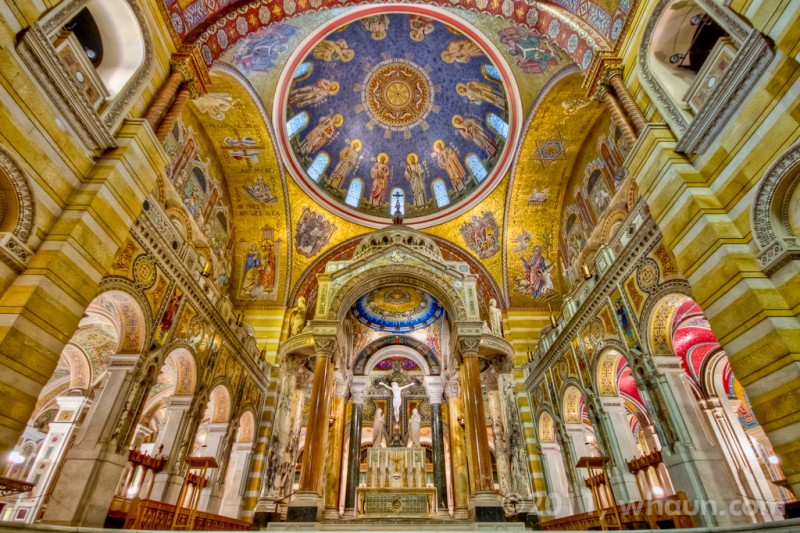
A Plea to Our Catholic Friends

A Passionate Plea to My Catholic Friends: Turn to the True Gospel

MY DEAR CATHOLIC FRIENDS, I come to you with a heart overflowing with love and urgency, pleading with you to hear the truth about the dangers of the Catholic faith. As your friend, I cannot stay silent when I see you entangled in a system that strays from the pure gospel of Christ. With Scripture as our guide, here are five critical warnings, praying they will open your eyes to the truth and lead you to the freedom found in Jesus alone.

FIRST, Jesus Himself warned us in Matthew 23:9, “Call no man your father on earth, for you have one Father, who is in heaven.” Yet the Catholic Church exalts the Pope, calling him “Holy Father” or “Papa,” a title reserved for God alone. This is no minor mistake—it elevates a man to a position that belongs only to our Heavenly Father. Paul referenced himself “as a father” but never took on the title as “Holy Father.” He often used humbling language and pleaded with people not to bow down to him. “Sirs, why do ye these things? We also are men of like passions with you, and preach unto you that ye should turn from these vanities unto the living God, which made heaven, and earth, and the sea, and all things that are therein:” (Acts 14:15). I implore you to reject this practice and honor God alone as your Father.

SECOND, the organization of the Catholic Church, with its hierarchy of popes, cardinals, and priests, contradicts the biblical model for the church. In 1 Timothy 3:1-10, Paul outlines the qualifications for elders and deacons—humble, local leaders who serve the local body of Christ, not a global institution with supreme rulers. The Catholic structure, centered in the Vatican, adds layers of human authority that Scripture never endorses. The largest organization of the Lord’s church on earth is the local church with autonomy from any other. Please, compare this to God’s Word and see the difference for yourselves!

THIRD, the Catholic religion preaches a perverted gospel, which Paul condemns in Galatians 1:6-10. The Catholic Church distorts the biblical gospel by adding human inventions like infant baptism, the granting of indulgences, an infallible Pope, and purgatory, which obscure the truth of salvation. Scripture teaches that salvation comes through faith in Christ, expressed in obedience to His commands, such as believing and being baptized, as Jesus declared in Mark 16:16: “Whoever believes and is baptized will be saved.” In Acts 19:1-5, Paul taught the Ephesians to believe and be baptized, and they demonstrated repentance by burning their magic books, showing fruits worthy of their faith. While Ephesians 2:8-9 affirms salvation is by grace through faith, not by works of human merit, this faith is active and obedient, not a mere mental assent. By contrast, Catholicism’s reliance on sacraments, human mediators to forgive sins, and man-made doctrines perverts the gospel’s simplicity. Paul warns, “If anyone is preaching to you a gospel contrary to the one you received, let him be accursed!” My friends, this is a matter of eternal life—reject these false teachings and embrace the true gospel of Christ’s grace and obedient faith!

FOURTH, the Catholic Church elevates men above what is proper, violating 1 Corinthians 4:6, which warns us “not to think of men above that which is written.” The veneration of Mary, the canonization of saints, and the authority given to priests and popes place mere humans on pedestals that belong to God alone. Mary was a humble servant, not a co-redeemer; saints are all believers, not an elite class; and no man can stand between you and Christ as your mediator (1 Timothy 2:5). I plead with you to humble yourselves before God and reject these man-made traditions!

FINALLY, the Catholic Church promotes false signs and a misunderstanding of saints, contradicting 1 Corinthians 1:2 and 13:8-11. In 1 Corinthians 1:2, Paul calls all Christians saints, not just those canonized by the Church. The Catholic obsession with miracles, apparitions, and relics often borders on idolatry, and 1 Corinthians 13:8-11 tells us that miraculous signs were temporary, meant to confirm the gospel in the early church, not to be sought after today. Turn away from these deceptive signs and embrace the sufficiency of Christ and His Word!

MY FRIENDS, I know these words may be hard to hear, but they come from a heart that loves you and longs for you to know the freedom of the true gospel. The traditions of Catholicism may feel comforting, but they are a trap, leading you away from the simplicity and purity of Christ. I beg you, search the Scriptures for yourselves, test what I’ve said, and turn to Jesus alone for salvation. He is enough! May God open your eyes and draw you to His truth. With all my love, I pray for you.

—Anon
If I met the Pope

Evidence for our Faith: Logical evidence for the Resurrection of Christ

Logical Evidence for the Resurrection of Christ

The resurrection of Jesus Christ, as recounted in the New Testament, is a cornerstone of Christian faith, yet its historical plausibility rests on compelling logical evidence that withstands scrutiny. Unlike myths or fabrications, the resurrection narrative is supported by the rapid transformation of disciples, the empty tomb, and the inability of contemporary authorities to disprove it—details that align with human behavior, historical context, and rational inference. When examined alongside biblical accounts and extra-biblical corroboration, these elements form a persuasive case for its occurrence.

First, the dramatic shift in the disciples’ behavior provides strong circumstantial evidence. Before Jesus’ crucifixion, they were fearful and scattered—Peter denying him thrice (John 18:17-27) and others fleeing (Matthew 26:56). Yet, post-resurrection, these same men boldly proclaimed his rising, risking death (Acts 4:19-20). Psychologist J.P. Moreland (Scaling the Secular City, 1987) argues that such a psychological reversal, from despair to unwavering conviction, demands an extraordinary catalyst. The resurrection appearances (1 Corinthians 15:5-8) offer a logical explanation, as no mere hallucination or fraud could sustain their lifelong commitment, evidenced by martyrdoms like Peter’s (Eusebius, Ecclesiastical History, 2.25).

Second, the empty tomb stands as a physical anchor for the resurrection claim. All four Gospels (Matthew 28:6, Mark 16:6, Luke 24:3, John 20:6-7) report the tomb vacant, a detail corroborated by the inability of Jewish and Roman authorities to produce Jesus’ body despite their incentive to quash the nascent Christian movement. Historian Gary Habermas (The Case for the Resurrection of Jesus, 2004) notes that the Sanhedrin’s accusation of body theft by disciples (Matthew 28:13) implicitly concedes the tomb was empty. Logically, if the body remained, displaying it would have been the simplest rebuttal, yet no such counterevidence emerged—a silence that speaks volumes.

Third, the rapid rise and spread of Christianity in a hostile environment defy naturalistic explanations. Within decades, a movement rooted in a crucified leader—deemed a failure by Roman and Jewish standards—flourished, as attested by Tacitus (Annals, 15.44) and Pliny the Younger (Letters, 10.96). The resurrection provided the ideological fuel, transforming a shameful death into a triumph (1 Corinthians 15:54-55). Sociologist Rodney Stark (The Rise of Christianity, 1996) calculates that Christianity grew at 40% per decade, a rate inexplicable without a galvanizing event like the resurrection, which offered hope and empirical testimony (Acts 2:32).

Critics propose alternatives—swoon theory, theft, or mass hallucination—but these falter under scrutiny. A half-dead Jesus (swoon) couldn’t inspire worship, theft lacks motive given the disciples’ initial disbelief (Luke 24:11), and hallucinations don’t align with group encounters over 40 days (Acts 1:3). The Journal of the American Academy of Religion (Vol. 74, 2006) notes that the resurrection hypothesis best accounts for the data’s coherence.

The resurrection’s logical strength lies in its explanatory power—uniting transformed lives, an empty grave, and a movement’s improbable rise into a singular, rational narrative. Jesus didn’t just defy death; he redefined history, leaving evidence too robust to dismiss.

Agape,

spencer

The DOOR was shut, Matthew 25:10

In Matthew 25:10, within the parable of the ten virgins, Jesus declares, “And while they were going to buy, the bridegroom came, and those who were ready went in with him to the marriage feast, and the door was shut.” This vivid imagery underscores a sobering truth: opportunities for salvation and readiness have limits. The shutting of the door represents finality, a point of no return in our spiritual journey. How, then, is this door shut in practical application? Scripture reveals four key ways that the door becomes shut.

First, death is a closed door. Hebrews 9:27 states, “It is appointed for man to die once, and after that comes judgment.” Life is the season for repentance and faith, but death ends that opportunity, once life ends, the opportunity for repentance ceases. The parable’s foolish virgins, unprepared when the bridegroom arrived, mirror those who delay repentance, assuming time remains. Death seals our choices, shutting the door to further chances to accept God’s grace by obeying the gospel. This urges us to live ready, embracing salvation now, as tomorrow is not promised (2 Corinthians 6:2). Like the foolish virgins who scrambled too late to prepare, those who postpone turning to Christ risk facing eternity unprepared. This reality presses us to act now, (by obeying the gospel through baptism by through faith, Colossians 2:11-12) because no one knows their final hour (James 4:14). Death’s finality demands we live ready.

Second, obstinance toward the Holy Spirit shuts the door. Acts 7:51 warns against resisting the Spirit, who convicts us of sin and guides us to truth (John 16:8). Rejecting the revealed Word (God’s plan for salvation through Christ and call to godliness) hardens the heart. Like Pharaoh, who ignored God’s signs (Exodus 8:15), persistent refusal to heed Scripture’s clear path (John 3:16; Acts 2:38) closes the door to grace. Jesus warned of blasphemy against the Spirit as an unforgivable sin (Matthew 12:31-32), reflecting a willful, persistent refusal to accept God’s way. The foolish virgins’ lack of oil mirrors this neglect, choosing self-reliance over surrender. The foolish virgins’ neglect of oil symbolizes this willful unpreparedness, choosing self over surrender to God’s Spirit. To keep the door open, we must heed the Spirit’s prompting today through the revealed word in scripture.

Third, refusing to open the door Jesus knocks upon seals our exclusion. Revelation 3:20 declares, “Behold, I stand at the door and knock. If anyone hears my voice and opens the door, I will come in.” Salvation is a personal choice; Jesus invites, but we must respond. Ignoring His call (through apathy, pride, or worldly distractions) leaves us outside the feast, as the virgins discovered. Scripture laments those who reject God’s invitation (Luke 14:24), underscoring that an unopened heart shuts the door to eternal life. There are several examples of those who turned away from Jesus. The Rich Young Ruler (Matthew 19:16-22). Some of Jesus’ Disciples (John 6:60-66). Answering Jesus now ensures entry.

Fourth, Christ’s return will shut the door finally for all. Matthew 25:31-46 describes the judgment day, when Christ separates the ready from the unprepared. The bridegroom’s arrival in the parable foreshadows this moment, when “the Son of Man comes” unexpectedly (Matthew 24:44). No further chances remain; every soul will account for their faith and deeds (2 Corinthians 5:10). As God shut the ark’s door before the flood (Genesis 7:16), Christ’s return will close salvation’s offer, finalizing destinies. On that day, “But the day of the Lord will come as a thief in the night; in the which the heavens shall pass away with a great noise, and the elements shall melt with fervent heat, the earth also and the works that are therein shall be burned up.” (2Peter 3:10). This compels us to live in readiness, clothed in Christ (Galatians 3:27), faith and obedience.

Matthew 25:10 is a call to vigilance. Death’s certainty, the Spirit’s voice, Jesus’ knock, and Christ’s return all remind us: the door is open now, but not forever. Like the wise virgins, we must prepare (embracing salvation, yielding to God’s Spirit, welcoming Christ, and awaiting His return). Let us act before the door is shut, securing our place at the eternal feast.

Evidence for our faith: conversion of Skeptics

Skeptics Turned Believers

The resurrection of Jesus Christ stands as a pivotal claim of Christianity, and its credibility is bolstered by the transformations of skeptics like Simon Greenleaf and Frank Morison, who, through rigorous examination of evidence, became convinced of its truth. These non-biblical figures—initially doubters—offer compelling, logical arguments rooted in historical and legal scrutiny, making their conclusions a powerful case for the resurrection.

Simon Greenleaf, a 19th-century Harvard law professor and co-founder of its law school, was a skeptic of Christianity. Known for his work A Treatise on the Law of Evidence, Greenleaf applied legal standards to the Gospel accounts. He argued that the testimonies of Matthew, Mark, Luke, and John (e.g., Matthew 28:1-10, John 20:1-18) hold up as credible eyewitness reports. In his book The Testimony of the Evangelists (1874), Greenleaf noted the consistency of the resurrection narratives despite minor variations, a hallmark of authentic, uncoached testimony. He emphasized that the disciples’ willingness to die for their claims, as tradition records (e.g., Peter’s crucifixion), defies the behavior of liars protecting a hoax. Greenleaf concluded that the resurrection met the burden of proof beyond reasonable doubt, converting him from skeptic to believer.

Similarly, Frank Morison, a 20th-century British journalist, set out to disprove the resurrection in his book Who Moved the Stone? (1930). Initially viewing the story as myth, Morison approached it with a detective’s mindset, analyzing historical context and psychological plausibility. He found the empty tomb (Matthew 28:11-15) particularly persuasive—Roman and Jewish authorities, with every incentive to produce Jesus’ body, failed to do so. Morison also grappled with the transformation of the disciples, from despairing cowards (John 20:19) to bold proclaimers (Acts 2:14-36), a shift he deemed inexplicable without a real event. The sudden conversion of Paul, a former persecutor (Acts 9:1-19), further convinced Morison that only a tangible encounter with the risen Christ could account for such a reversal. His investigation led him to faith.

Both men highlight the resurrection’s evidential strength outside biblical bias. Greenleaf’s legal lens underscores the reliability of the Gospel witnesses, while Morison’s historical probe reveals the improbability of alternative explanations (like theft or hallucination) given the cultural and political pressures of the time. The rapid spread of Christianity, despite persecution, aligns with their findings: a fabricated tale wouldn’t inspire such conviction. Paul’s own testimony in 1 Corinthians 15:3-8, listing over 500 witnesses, adds weight, as Greenleaf and Morison noted its early circulation, too soon for legend to distort fact.

These skeptics-turned-believers demonstrate that the resurrection withstands intellectual scrutiny. Their journeys from doubt to conviction rest on evidence (eyewitness accounts, an empty tomb, and transformed lives) that defies dismissal.

Agape

spencer

Evidence for our Faith: The Spread of Christianity Despite Persecution

A Logical Case for Jesus’ Resurrection

The rapid spread of Christianity in its early years, despite relentless persecution, offers a compelling and logical argument for the resurrection of Jesus Christ. In the first century, followers of Jesus faced hostility from both Jewish authorities and the Roman Empire, yet their movement not only survived but flourished. This phenomenon defies natural explanation unless the resurrection, a transformative event, provided the catalyst for such resilience and growth.

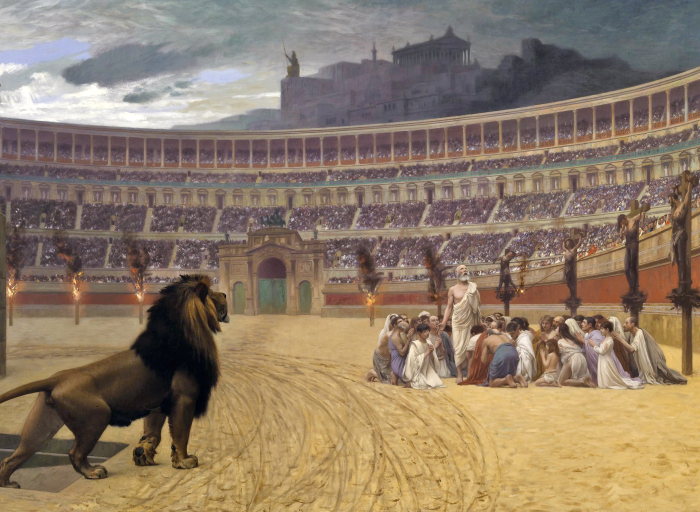
First, consider the historical context. Early Christians endured brutal persecution, including detention, affliction, and execution. The Roman historian Tacitus records that under Emperor Nero, Christians were blamed for the Great Fire of Rome in 64 AD and subjected to horrific deaths (Tacitus, Annals 15.44). Despite this, Christianity grew from a small sect in Judea to a dominant force across the empire within three centuries. Sociologically, movements based on fabricated claims typically collapse under such pressure, as followers abandon a cause that offers no tangible reward. Yet, the unwavering commitment of Jesus’ disciples suggests they witnessed something extraordinary—something worth dying for.

This leads to the second point: the transformation of the disciples. The New Testament describes them as fearful and scattered after Jesus’ crucifixion (John 20:19), yet post-resurrection, they boldly proclaimed His rising, even at the cost of their lives. Peter, who denied Jesus three times (Luke 22:54-62), later preached fearlessly in Jerusalem (Acts 2:14-36). Tradition holds that most disciples faced martyrdom—Peter crucified upside-down, James beheaded—yet none recanted their testimony. Psychologically, people do not die for a known lie. The resurrection, as recorded in all four Gospels (Matthew 28:1-10, Mark 16:1-8, Luke 24:1-12, John 20:1-18), provides a logical explanation: they saw the risen Christ.

Third, the conversion of skeptics like Paul strengthens the case. Initially a persecutor of Christians (Acts 8:1-3), Paul’s dramatic turnaround after encountering the risen Jesus on the road to Damascus (Acts 9:1-19) turned him into the faith’s greatest missionary. His epistles, such as 1 Corinthians 15:3-8, affirm the resurrection as a historical event witnessed by over 500 people. Paul’s shift from enemy to advocate, risking death himself (2 Corinthians 11:23-27), underscores the event’s credibility. A fabricated story would hardly sway a hostile intellectual like Paul without overwhelming evidence.

Finally, the empty tomb, acknowledged even by Jesus’ opponents (Matthew 28:11-15), poses a challenge. If the body remained, producing it would have crushed the movement. Instead, the claim of resurrection fueled Christianity’s expansion, despite every effort to suppress it. The Jewish and Roman authorities, with motive and means to disprove it, could not.

The spread of Christianity under persecution defies logic unless anchored in a real event. The resurrection, attested by transformed lives, historical records, and an empty tomb, emerges as the most reasonable explanation. In a world bent on silencing them, early Christians didn’t just survive—they thrived, because a dead man walked out of His grave.

Agape
Spencer

Sources:
Morris, Henry M. The Biblical Basis for Modern Science. Baker Books, 1984.
Montgomery, John W. Evidence for Faith. Probe Books, 1991.
Uman, Martin A. The Lightning Discharge. Academic Press, 1987.

Evidence for our faith: Biological similarities

Vertebrate eye

Biological Similarities: Evidence for God in a Six-Day Creation

The remarkable biological similarities between species—too intricate and precise to be explained by evolution—provide powerful scientific evidence for God’s existence as the Creator of all life. These shared features across diverse organisms defy the idea of gradual, naturalistic development, pointing instead to a purposeful design as recounted in the Bible’s six-day creation narrative.

Take the camera-like eye found in both humans and octopuses. Despite no evolutionary link close enough to explain it, both possess retinas, lenses, and optic nerves in stunningly similar arrangements. Evolution suggests these complex structures emerged separately by chance, but the odds of such identical designs arising independently are astronomical.

Biologist Simon Conway Morris notes that these similarities occur too frequently to be random, hinting at a deliberate pattern (Morris, 2015, The Runes of Evolution). Genesis 1:20-21 tells us God created sea creatures and birds on the fifth day, suggesting He crafted these eyes intentionally, not through eons of trial and error.

Then there’s the universal genetic code and protein-building systems—DNA and ribosomes—shared by all life, from bacteria to mankind. Evolution claims this arose once and persisted unchanged, but the complexity of these systems resists explanation as a fluke of nature. Biochemist Michael Denton calls them “primal patterns,” more akin to a master plan than a cosmic accident (Denton, 1986, Evolution: A Theory in Crisis). Genesis 1:26-27 reveals God made man in His image on the sixth day, implying a purposeful design woven into all life from the start.

Enzymes like cytochrome c, vital for energy production, further challenge evolutionary logic. Found in yeast and horses alike, their near-identical structure across vast species gaps suggests a fixed design, not random divergence. Why would such precision hold steady unless crafted by intent? Genesis 1:11-12 describes God creating plants on the third day, each “according to its kind,” hinting at a blueprint for life’s consistency. Psalm 139:14 praises His “wonderful works,” reflecting this meticulous handiwork.

Critics might argue that similarities reflect adaptation or convergence, but this overlooks the sheer complexity and specificity involved. The odds of unrelated organisms independently developing identical genetic and metabolic systems strain credulity without invoking a creator. Psalm 104:24 celebrates this: “How many are your works, Lord! In wisdom you made them all; the earth is full of your creatures.” Biological similarities, then, are not accidents but fingerprints of a Creator who, in six days, crafted a coherent, interconnected world.

Evolution’s tale of chance and time crumbles under these biological marvels. The six-day creation offers a clearer answer: God designed life’s similarities as a signature of His power. From eyes to enzymes, the evidence aligns with Scripture’s bold claim of a purposeful beginning.

Agape,
spencer

Sources:
Denton, M. (1986). Evolution: A Theory in Crisis. Adler & Adler.
Meyer, S. C. (2013). Darwin’s Doubt. HarperOne.
Morris, S. C. (2015). The Runes of Evolution. Templeton Press.

Evidence for our Faith: the Population Problem

The Population Problem: A Case for a Young Earth

One of the most intriguing arguments for a young Earth comes from an analysis of human population growth. If humans have existed for 300,000 years or more, as conventional science suggests, the number of humans alive today—or even in recorded history—presents a logical conundrum when viewed through the lens of population dynamics. By examining reasonable growth rates and historical data, the evidence aligns more closely with a young Earth timeline, consistent with a biblical framework of roughly 6,000 to 10,000 years.

By looking at how quickly people multiply and comparing ancient survival rates to today’s, the current 8 billion population supports a short history rooted in reason and scripture.

Picture the biblical Flood 4,500 years ago, leaving just Noah’s family of eight (Genesis 7:13). With a small, steady growth rate—much lower than today’s because fewer babies survived back then—the population could climb to 8 billion in that time. It’s a straightforward buildup: start small, grow consistently, and hit today’s number without any wild leaps. This fits the tough conditions of ancient life, where disease and hardship kept survival rates low, with studies showing only about half of kids made it to adulthood (Volk & Atkinson, 2013, Historical Biology).

Now imagine humans starting 200,000 to 300,000 years ago, as some claim. Even with a tiny growth rate, the numbers explode way past 8 billion—think hundreds of billions or more in just a fraction of that time. To stay at today’s population, growth would have to stall almost completely for centuries, suggesting endless disasters like plagues or wars. But history shows humans thriving and spreading since about 10,000 years ago, not stuck in a rut. And where are all the graves from those supposed billions of extra people?

Today’s faster growth—around 0.8% a year—comes from better medicine and food, things ancient people didn’t have. Apply that rate backward over thousands of years, and you’d get ridiculous numbers, far beyond what Earth could hold. The Bible’s call to “be fruitful and multiply” (Genesis 9:1) and the spread of nations (Genesis 10) match a 4,500-year rise to 8 billion, backed by genetic hints of a recent common ancestor (Carter, 2007, Journal of Creation). A 200,000–300,000-year story, though, needs constant excuses to explain why we’re not overrun with people.

In short, a young Earth makes sense: a steady climb from a handful to 8 billion in a few thousand years, no tricks needed. The longer timeline buckles under its own logic, leaving too many questions and not enough bones!


Agape,
spencer

Sources:
o Carter, R. (2007). “Mitochondrial Diversity within Modern Humans.” Journal of Creation, 21(2).
o Volk, A. A., & Atkinson, J. A. (2013). “Infant and Child Death in the Human Environment of Evolutionary Adaptation.” Historical Biology, 25(5).
o Genesis 5, 7:13, 9:1, 10 (KJV).

10 Traps Even Believers are Falling—Are You Next?

The Pitfalls of False Authority: A New Testament Perspective

In a world brimming with voices vying for influence, Christians must discern the true source of authority for faith and practice. The New Testament insists that all authority rests in Jesus Christ, who declared, “All authority in heaven and on earth has been given to me” (Matthew 28:18). Yet, both in Scripture and today, people frequently turn to counterfeit sources. These false authorities—ranging from human tradition to misapplied Scripture—promise guidance but lead astray. Let’s explore ten common wrong sources, grounded in biblical examples and reasoned insight, to sharpen our reliance on Christ alone.

First, human tradition often masquerades as authority. The Pharisees clung to their customs, prompting Jesus to rebuke them: “You leave the commandment of God and hold to the tradition of men” (Mark 7:8-9). Their rituals felt sacred, but without divine sanction, they were hollow. Today, churches may elevate practices—like specific holidays or dress codes—beyond Scripture, clouding God’s clear will.

Second, personal feelings or intuition can deceive. The sons of Sceva, zealous to cast out demons, assumed sincerity sufficed, only to be overpowered (Acts 19:13-16). Emotions sway us, especially in worship or moral choices, but they lack stability apart from God’s Word. A “gut feeling” might feel right yet contradict truth.

Third, religious leaders’ opinions tempt reliance. The Jewish leaders opposed Jesus, leaning on their titles, yet He exposed their hypocrisy (Matthew 23:2-7, 13). Charismatic pastors or scholars may inspire, but their words hold no weight unless tethered to Christ’s authority. Blind trust in human figures risks error.

Fourth, cultural norms exert subtle pressure. The Corinthians mirrored their society’s idolatry, needing Paul’s correction (1 Corinthians 10:14-21). Modern trends—materialism, relativism—shape morality or worship, but culture’s shifting sands lack divine permanence. What’s popular rarely aligns with God’s eternal standard.

Fifth, human reason or philosophy appeals to intellect. The Greeks mocked Paul’s resurrection message, trusting their logic (Acts 17:32). Today, skepticism dismisses miracles or grace when reason reigns alone. Without revelation, philosophy builds on a flawed foundation.

Sixth, false revelations or visions mislead. Paul warned against altered gospels, cursing their preachers (Galatians 1:8-9). False prophets then and now claim divine insight, but if it contradicts Scripture, it’s a lie. Modern “prophecies” must bow to the Bible’s completed authority.

Seventh, majority opinion sways the unwary. The crowd chose Barabbas over Jesus, driven by mob sentiment (Matthew 27:20-23). Polls or social consensus feel authoritative, yet they’re fickle. Truth isn’t a democracy; it stands with Christ, not the masses.

Eighth, wealth or power seduces. Simon the Sorcerer thought money could buy spiritual authority, earning Peter’s condemnation (Acts 8:18-23). Today, influential donors or leaders may dictate doctrine, but earthly clout holds no heavenly warrant.

Ninth, self-appointed authority usurps Christ’s place. Diotrephes craved control, rejecting apostolic guidance (3 John 1:9-10). Cults or lone wolves claim divine calling, but without Christ’s commission, their rule is baseless. True authority is delegated, not seized.

Finally, misapplied Scripture distorts truth. Satan twisted verses to tempt Jesus, who countered with proper context (Matthew 4:5-7). Quoting the Bible out of alignment—like the prosperity gospel—creates a false authority. God’s Word, rightly handled, is the only sure guide.

These false sources recur because they mimic legitimacy, exploiting human weakness. Yet, each fails the test of Christ’s mandate. The New Testament calls us to reject them, anchoring in Him who holds “all authority.”

Which of these do we lean on? How do we confront them? What’s the danger of feelings or crowds over Scripture? How does Satan’s tactic warn us? What steps ensure we follow Christ alone? In a world of counterfeits, only His Word endures.

agape

Spencer

This is the first part of a series of lessons on How to Determine Biblical Authority, or more simply, What does God want?

Evidence for our Faith: the Moral Argument

The Moral Argument: Why Morality Points to a Creator. God’s Revealed Word as the Source of Objective Morality

The Moral Argument for God’s existence rests on the premise that objective moral values—universal standards of right and wrong—exist and are best explained by a purposeful design from a Creator. While science highlights our innate moral instincts, the Bible provides a unique and compelling case that humanity learns these objective standards through God’s revealed word. This interplay of divine revelation and human conscience offers a profound clue to the existence of a moral lawgiver.

Objective moral values, such as the inherent wrongness of betrayal or the goodness of self-sacrifice, transcend personal opinion or cultural trends. Psychological research, like that of Paul Bloom, shows even infants exhibit rudimentary moral judgments—preferring kindness over cruelty—suggesting an inborn moral sense (Bloom, Just Babies, 2013). Yet, this alone doesn’t explain how we refine and understand these principles. The Bible steps in, asserting that God’s revealed word clarifies and establishes these standards for humanity. Without this guidance, our moral intuitions might remain vague or misdirected.

Scripture presents God as the ultimate source of morality, with His word providing the definitive moral framework. In Exodus 20:1-17, the Ten Commandments are delivered directly from God to Moses, offering unambiguous directives: “You shall not murder,” “You shall not steal.” These laws aren’t mere suggestions but objective truths, reflecting God’s character and intended for all people. This revelation transforms abstract moral instincts into concrete duties, shaping human understanding of right and wrong.

Further, Deuteronomy 6:6-7 instructs, “These commandments that I give you today are to be on your hearts. Impress them on your children.” This emphasizes that morality isn’t left to human guesswork—God’s word is taught, learned, and passed down, refining our natural inclinations. The Psalms reinforce this: Psalm 119:105 declares, “Your word is a lamp to my feet and a light to my path,” portraying divine revelation as the guide that illuminates moral living.

Romans 2:14-15 offers a striking insight: “When Gentiles, who do not have the law, do by nature things required by the law… they show that the requirements of the law are written on their hearts.” This suggests an innate moral awareness, yet the passage implies it aligns with God’s law, revealed fully in Scripture. The Bible bridges the gap between our God-given conscience and the precise standards we’re meant to follow. For instance, Micah 6:8 summarizes divine expectation: “To act justly and to love mercy and to walk humbly with your God”—a standard humanity learns through God’s word, not intuition alone.

Naturalists might argue morality evolves socially, but this fails to explain its objective weight. Cultures differ on specifics, yet core values—like justice—persist universally, echoing biblical principles. God’s revealed word provides the anchor, ensuring morality isn’t arbitrary. As Isaiah 55:8-9 notes, God’s ways are higher than ours, suggesting His revelation elevates human understanding beyond what nature alone could teach.

The Moral Argument, enriched by biblical evidence, posits that objective morality points to a Creator who reveals it through His word. Science hints at our moral wiring, but Scripture—through commandments, teachings, and declarations—grounds it in God’s eternal truth, offering humanity a clear path to righteousness.


Agape,
Spencer

Sources:
o Bloom, Paul. Just Babies: The Origins of Good and Evil. Crown, 2013.
o The Holy Bible, New International Version. Zondervan, 2011 (Exodus 20:1-17, Deuteronomy 6:6-7, Psalm 119:105, Romans 2:14-15, Micah 6:8, Isaiah 55:8-9).

The Myth of “God is in Control” That’s shipwrecking Your Faith

The Myth of “God is in Control” That’s shipwrecking Your Faith and what it really means!

GOD IS IN CONTROL, but how?

Is God really behind every move you make? This short article will dive into Scripture and shatter the illusion and unveil a sovereignty you’ll wish you’d known sooner.

The notion that “God is in control” meaning He’s some cosmic puppeteer pulling every string of human thought and action is unscriptural. That idea is a theological shipwreck, and we’re going to sink it with Scripture and logic. (Isa 1:18)

First off, the misunderstanding assumes God micromanages every detail—every fleeting thought, every stubbed toe, every word spoken. It’s as if He’s sitting on a throne with a joystick, forcing people to act like robots. One fellow told me, “I’m thankful to God that there’s no free will.” Who made him say that; is God thanking himself? LoL.

That’s not sovereignty; that’s slavery. The Bible paints a vastly different picture of God’s control. He’s the supreme authority with infinite options, unstoppable in His purpose, yet He doesn’t trample human freedom.

Take Esther 4:14. Mordecai tells Esther, “If you remain silent at this time, relief and deliverance will arise for the Jews from another place, but you and your father’s house will perish.”

Notice the implication: God’s plan to save His people will happen—with or without Esther. He’s not dependent on her choice, but He invites her to participate. If she opts out, He’s got a backup plan. That’s not manipulation; that’s a God with a myriad of ways to achieve His will. He’s not sweating bullets hoping Esther complies—He’s in control because nothing can thwart Him, not because He’s forcing her hand. It shows God’s providential ability not manipulation free will.

Then there’s Luke 3:8, where John the Baptist tells the Pharisees, “God is able from these stones to raise up children for Abraham.” Think about that. God doesn’t need the Pharisees’ cooperation to fulfill His promise to Abraham. He could turn rocks into covenant heirs if He wanted. (Remember that He made a man originally from dust Gen 2:7). This is not hyperbole, God can do it! His control isn’t about puppeteering people; it’s about His limitless power, infinite wisdom and options. The Pharisees could repent or not—free will intact—but God’s plan marches on.

Now, Romans 8:28-39 is the knockout punch. “We know that for those who love God all things work together for good.” Does that mean God orchestrates every sin, every tragedy, every dumb decision? No! It means He’s so sovereign that He can take the mess we make—our free choices, good or bad—and weave it into His redemptive tapestry. Verses 38-39 list every possible obstacle: death, life, angels, rulers, powers, height, depth, anything in creation. None can stop Him. That’s control; not meticulous domination, but unconquerable ability to save. No faithful Saint will be accidentally lost, and no person will be saved against their will.

The Old Testament backs this up. Genesis 12:3 says God will bless all nations through Abraham’s offspring. Fast forward to Galatians 3:13-16, and Paul clarifies this points to Christ. God’s plan was to bring the Messiah and reveal sin and His nature (the Law showing us our need for grace). Did He force Pharaoh to harden his heart? No—Exodus says Pharaoh hardened it first, and God used that rebellion to display His power. Did He make Judas betray Jesus? No—Judas chose greed (John 12:6), and God turned it into the pivot of salvation. The OT isn’t a script God forced on people; it’s a story of Him working through their free actions to unveil Christ.

The New Testament shifts focus: it’s about spreading the gospel until Christ returns. 2 Peter 3:9 says God is “not willing that any should perish, but that all should come to repentance.” If He controlled every thought, why the delay? Why the plea for repentance? Because He’s patient, letting humans choose while His plan—salvation through faith—remains fixed (2 Peter 3:15). Predestination isn’t about God picking who sins or believes; it’s about His unshakeable decision to save through the gospel of Christ. Ephesians 1:3-5 ties it to salvation through obedience to the Gospel (Gal 3:13-27).

Think about it; if God controls every action, free will is a sham, and so is accountability. Why judge sin if God made us do it, or won’t allow us to repent?! That’s nonsense and makes God out to be a monster not a loving savior. Is it any wonder why people reject the gospel after hearing this?

Deuteronomy 30:19 says, “I have set before you life and death… choose life.” Choice is real. God’s control isn’t a straitjacket—it’s His ability to say, “My will stands, no matter what you do.” Think of Joseph’s brothers selling him into slavery (Genesis 50:20): they meant evil, but God meant it for good. He didn’t make them hate Joseph; He used their free will as a step toward His promises.

The “God as micromanager” view is sad because it shrinks Him into a control freak who needs to fiddle with every detail. Tragically, people are being hurt by this error and think it’s God who’s causing their pain for some divine purpose. Not so!

The Bible shows a God so vast, so ingenious, that He doesn’t need to manipulate. He’s got a million roads to His destination, and none of us can block the way. That’s sovereignty worth worshipping—not a petty tyrant, but a King who reigns supreme over chaos without breaking a sweat. Anything less is a caricature, not the God of Scripture.

God does have a plan for you, it’s to trust and obey Him. “I have fought a good fight, I have finished my course, I have kept the faith: Henceforth there is laid up for me a crown of righteousness, which the Lord, the righteous judge, shall give me at that day: and not to me only, but unto all them also that love his appearing.” (2Tim 4:7-8)

For this is the love of God, that we keep his commandments: and his commandments are not grievous.” (1John 5:3)

God Does Have a PLAN for You…

God’s plan isn’t a cold, cosmic checklist or a tangled web of fate pulling you along. It’s a heartfelt invitation, a steady hand reaching out and guiding you with His word through life’s messiness toward something real and lasting.

  • PURPOSE: It starts with a tug at your soul—to obey the Gospel, to lean into the quiet rhythms of life and godliness that God’s laid out for us all in His word (2 Pet 3:9; 1:3-10; Gal 6:7; Ecc 12:13). He’s not dangling a secret script; He’s offering a path lit by His love and truth revealed in scripture.
  • LOVE: Then there’s this ache to love one another, a call that echoes deep within (1 John 4:7; John 14:15). It’s not forced—it’s the warm pulse of obedience, a choice to reflect the One who first loved us.
  • ABOUND: He stirs you to grow, to stretch beyond where you stand today being equipped by His word (2 Pet 3:18; Heb 5:12; 2 Cor 8; Matt 25:15-30; 2 Tim 3:15-17). There’s a quiet thrill in using what He’s given you—your gifts, your grit—to bloom where you’re planted.
  • NEVER GIVE UP: And through it all, there’s His constant urging: Never quit. Never give up. Never let go of the hope that’s yours (Heb 2:3; Rev 2:10). It’s a fight worth fighting, a race worth running, because what’s waiting at the end is too precious to abandon.

This isn’t about God puppeteering your every step. It’s His tender, unshakable call to live with purpose, to rise up, and to hold fast—because you’re worth it to Him.

Share this with your neighbors who are being tortured by this false teaching.

And ye shall know the truth, and the truth shall make you free.” John 8:32 KJV

Spencer