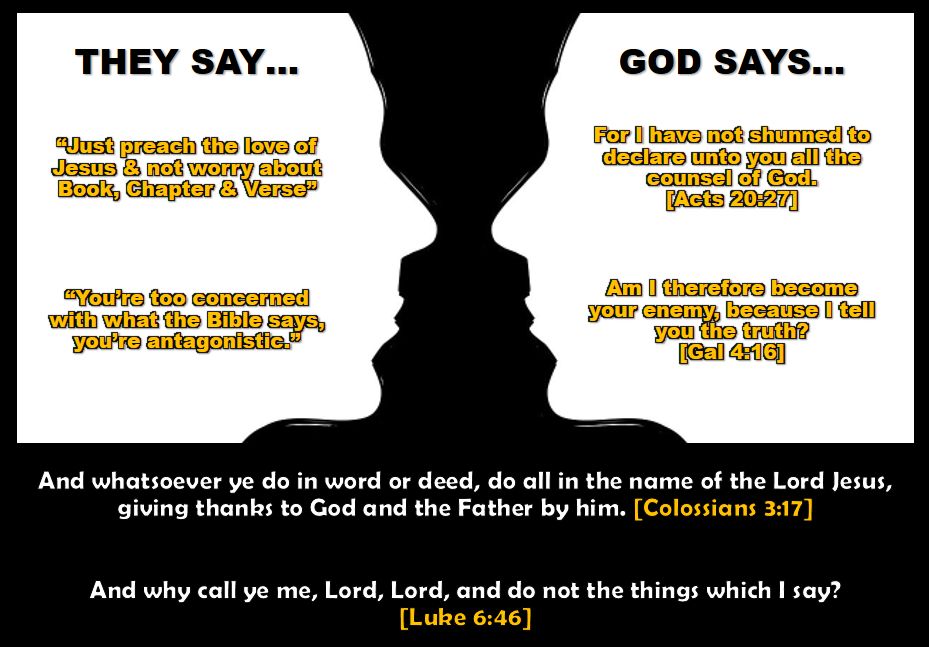

Why do we DOUBT?

Jesus asked this question of Peter when he began to sink after walking on the water.

And in the fourth watch of the night Jesus went unto them, walking on the sea. And when the disciples saw him walking on the sea, they were troubled, saying, It is a spirit; and they cried out for fear. But straightway Jesus spake unto them, saying, Be of good cheer; it is I; be not afraid. And Peter answered him and said, Lord, if it be thou, bid me come unto thee on the water. And he said, Come. And when Peter was come down out of the ship, he walked on the water, to go to Jesus. But when he saw the wind boisterous, he was afraid; and beginning to sink, he cried, saying, Lord, save me. And immediately Jesus stretched forth his hand, and caught him, and said unto him, O thou of little faith, wherefore didst thou doubt? And when they were come into the ship, the wind ceased. Then they that were in the ship came and worshipped him, saying, Of a truth thou art the Son of God

(Matthew 14:25-23).

You may wonder why the Lord was so critical of Peter’s doubt, because walking on water is not normal. But that was not the Lord’s rebuke. Peter was walking on water. Jesus was walking on water. They both walked on water together in the storm.

Do we also doubt in the storms of life?
Why do we doubt? What is the source of doubt? This series of articles will seek to search the scriptures for the answer, and to learn how to combat, or to Overcome Doubt.

The first thing we ought to do is to make certain we know what it means. Jesus asked Peter, “why did you doubt (duplicate, i.e. mentally to waver in opinion) [Strong’s Greek dictionary; distazo]. The dictionary defines doubt as; “to be uncertain about; consider questionable or unlikely; hesitate to believe.” DOUBT is the opposite of BELIEF. Therefore, our first source of DOUBT is DISBELIEF. This will be the ultimate root of all the sources.

DISBELIEF is the target of the Lord’s question to Peter (v31), and is our challenge today. Belief in God is the beginning of our salvation. It’s placed first of all other commands in obeying the gospel. Works without faith is vanity. Faith is a work (John 6:29; 1Thess 1:3; 2Thess 1:11).

But without faith it is impossible to please him: for he that cometh to God must believe that he is, and that he is a rewarder of them that diligently seek him” (Hebrews 11:6).

He that believeth and is baptized shall be saved; but he that believeth not shall be damned” (Mark 16:16).

The type of Belief under consideration is compared to the faith of Abraham when he went to sacrifice the son of promise. “Was not Abraham our father justified by works, when he had offered Isaac his son upon the altar? Seest thou how faith wrought with his works, and by works was faith made perfect? And the scripture was fulfilled which saith, Abraham believed God, and it was imputed unto him for righteousness: and he was called the Friend of God. Ye see then how that by works a man is justified, and not by faith only” (James 2:21-24). His belief was so certain that he supposed God would raise Isaac from the dead (Heb 11:17).

However, faith is not blind. “Now faith is the substance of things hoped for, the evidence of things not seen” (Hebrews 11:1). There’s evidence to believe. Peter’s evidence was the prior miracles of Jesus (which are still evidence for us today John 20:30-31). Peter had participated in the feeding of the 5,000 just preceding his water ambulation. How many steps he made on the water we do not know, but one step out of a boat into the deep stormy waters is sufficient. He had gone out in the limited commission with powers, “against unclean spirits, to cast them out, and to heal all manner of sickness and all manner of disease” (Matthew 10:1).

Well, that was Peter you may say; what about us? We don’t see those miracles today. No, we don’t see biblical miracles today, but that’s okay. The miracles Peter saw, and those in the early church are for our belief. “And many other signs truly did Jesus in the presence of his disciples, which are not written in this book: But these are written, that ye might believe that Jesus is the Christ, the Son of God; and that believing ye might have life through his name” (John 20:30-31). But there’s more…

God’s word says that God’s creation is for belief. “Because that which may be known of God is manifest in them; for God hath shewed it unto them. For the invisible things of him from the creation of the world are clearly seen, being understood by the things that are made, even his eternal power and Godhead; so that they are without excuse” (Romans 1:19-20). God’s creation is enough to begin our belief in Him.

Paul used this same evidence for belief. “Nevertheless he left not himself without witness, in that he did good, and gave us rain from heaven, and fruitful seasons, filling our hearts with food and gladness” (Acts 14:17; 17:27-28). The evidence of creation and human life will point you in the right direction to look further. There are only 2 possibilities about creation: 1) that everything came from a thoughtless nothing, or 2) everything came from a very wise, powerful, and brilliant God.

Belief is not blind. It has evidence and there’s so much evidence inside and outside of scripture. If you doubt, perhaps a study of evidences is for you to combat that doubt. Here are a few areas to study…

I have a few resources in my library. One of my favorites is by a brother in Christ named A.O. Schnabel, “Has God Spoken?” This book references scriptures of nature that science discovered many hundreds and thousands of years later. Some discoveries as recent as the 1960’s!

There’s no need to doubt. We can know and be assured.

(to be continued)

Agape,

Spencer
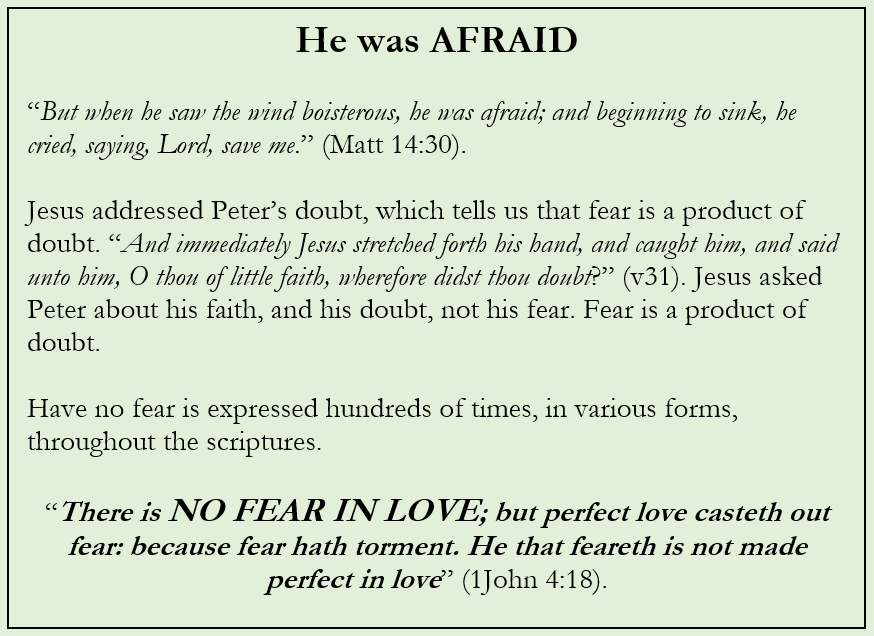
How many times?

How many times did God impute Abraham’s faith unto righteousness?

1) Genesis 15:5-6 KJV

And he brought him forth abroad, and said, Look now toward heaven, and tell the stars, if thou be able to number them: and he said unto him, So shall thy seed be. [6] And he believed in the Lord ; and he counted it to him for righteousness.

2) Genesis 17:16-17 KJV

And I will bless her, and give thee a son also of her: yea, I will bless her, and she shall be a mother of nations; kings of people shall be of her. [17] Then Abraham fell upon his face, and laughed, and said in his heart, Shall a child be born unto him that is an hundred years old? and shall Sarah, that is ninety years old, bear?

Paul tells us this time also that God imputed to him for righteousness.

Romans 4:18-22 KJV

Who against hope believed in hope, that he might become the father of many nations; according to that which was spoken, So shall thy seed be. [19] And being not weak in faith, he considered not his own body now dead, when he was about an hundred years old, neither yet the deadness of Sara’s womb: [20] He staggered not at the promise of God through unbelief; but was strong in faith, giving glory to God; [21] And being fully persuaded that, what he had promised, he was able also to perform. [22] And therefore it was imputed to him for righteousness.

3) Gen 22, the (attempted) sacrifice of Isaac. Genesis 22:12 KJV

And he said, Lay not thine hand upon the lad, neither do thou any thing unto him: for now I know that thou fearest God, seeing thou hast not withheld thy son, thine only son from me.

James in the New Testament tells us at this event also, God imputed unto him for righteousness.

James 2:21-24 KJV

Was not Abraham our father justified by works, when he had offered Isaac his son upon the altar? [22] Seest thou how faith wrought with his works, and by works was faith made perfect? [23] And the scripture was fulfilled which saith, Abraham believed God, and it was imputed unto him for righteousness: and he was called the Friend of God. [24] Ye see then how that by works a man is justified, and not by faith only.

ANSWER: 3 recorded times.

When you view Abraham’s life of faith, then you’ll realize it wasn’t imputed at one even as some suppose, but it was imputed because of a lifetime of faithfulness.

Hebrews 11:8 KJV

By faith Abraham, when he was called to go out into a place which he should after receive for an inheritance, obeyed; and he went out, not knowing whither he went.

Agape,

Spencer

If you live in the Borger area and would like a personal bible study, please reach out & let us know how we can help you know more of God’s word.

Just Preach Jesus

I met a fellow this week who during his conversation with me said, “instead of looking at what we’re doing differently, we ought to be celebrating what the denominations are doing right.” He then cited the example of a denomination’s sound finances. As the conversation went on, he repeated this sentiment, the idea of “celebrating what’s right and ignoring what’s wrong. This has mass appeal in our ecumenical society.

When shown the passage; “Now I beseech you, brethren, by the name of our Lord Jesus Christ, that ye all speak the SAME thing, and that there be no divisions among you; but that ye be perfectly joined together in the SAME mind and in the SAME judgment.” 1 Corinthians 1:10 (emphasis mine), he swept it away as just a request Paul had and not a requirement of the Lord. [cf. 1Cor 14:37]. He said, “I’m not about logic and reasoning.” Then the conversation was over.

They tell us to JUST preach Jesus, His love and His grace. The thing is…we are preaching Jesus, His love and His grace, we’re just including the parts that they have left out. Leaving out key parts of the information is not to tell the truth, the whole truth and nothing but the truth.

Abram’s HALF TRUTH

Before we go on, let’s take a small detour back to the time when Abram (later changed to Abraham) was in Egypt [Genesis 12:10-20] when he was afraid the Egyptians would kill him to take his wife. He told the Egyptians the truth, that Sarai (later changed to Sarah) was his sister. Scripture tells us that she is the “daughter of my father, but not the daughter of my mother; and she became my wife” [Genesis 20:12]. Abraham and his brother had married sisters. This made Sarah both Abraham’s wife AND his sister in law. So technically, he didn’t lie. However, we all know that the whole truth wasn’t conveyed. He told a story to protect his life but didn’t identify her as his wife. With that before us, let’s return to the main point.

JUST PREACH JESUS

When they say, “JUST preach Jesus,” they are saying to focus ONLY on His love and His grace which is to preach ONLY half of the truth. Just as Abraham told the partial truth about his wife Sarah, to preach JUST Jesus love, is to preach a partial truth about Jesus, that is, to preach faith only. James, using another example of Abraham, points out that no justification is by ‘faith only’. “Ye see then how that by works a man is justified, and not by faith only.” [James 2:24]

God IS love, and we are saved by grace, but that’s only half of the story. [cr. John 3:16; Ephesians 2:8] There should be no doubt in anyone’s mind that Salvation is a gift of God, something none of us can earn. [cr. Romans 5:8-10] But we are not allowed to declare only half the truth, we must declare the “whole counsel of God.”

For I have not shunned to declare unto you all the counsel of God. [Acts 20:27]

PREACHING JESUS

What does it mean to “preach Jesus?” To learn that answer we turn to Acts 8:26-40, the story of Philip and the Ethiopian eunuch. Philip approached the eunuch who was reading Isaiah while returning from Jerusalem. Philip asked him, “Do you understand what you are reading?” The eunuch invited Philip up into the chariot to guide him in the text. Philip then, beginning at the same scripture, opened his mouth and “preached unto him Jesus.”  [v35]

This next part is extremely important, please pay close attention and notice who speaks in the very next verse. “And as they went on their way, they came unto a certain water: and the eunuch said, See, here is water; what doth hinder me to be baptized?” [Acts 8:36] The eunuch spoke and asked about BEING BAPTIZED!!! How did he learn about baptism? How did he learn about water being the type of baptism? How did he learn that baptism was immersion? How did he learn that it was a requirement of salvation? Where did he learn the answer to each of these questions? The answer is simple, and we already read it in verse 35, Philip “preached unto him Jesus.” To preach Jesus it to “declare the whole counsel of God.”

To preach the Love of Christ is to talk about how to love Him…

If ye love me, keep my commandments.

John 14:15; cf. 1John 5:3

To preach the Gospel is to tell about obeying the Gospel…

In flaming fire taking vengeance on them that know not God, and that obey not the gospel of our Lord Jesus Christ:

2Thessalonians 1:8; cf. 1Cor 15:1-4; Rom 6:1-4

To preach the Grace of God is to include how one can fall from it…

Christ is become of no effect unto you, whosoever of you are justified by the law; ye are fallen from grace.

Galatians 5:4

Preaching anything less is to come short of salvation. Let us speak the truth about Jesus, His love and His grace and let’s do it with LOVE.

But speaking the truth in love, may grow up into him in all things, which is the head, even Christ: Ephesians 4:15

The one oar Christian

THERE’S A STORY TOLD OF an old wise man of God who was continually criticized for his motto, “pray and work.” A young pupil, struggling with the mounting problems of life, asked the wise man, “If God is so powerful, why then do you teach us also to work?” The wise man of God invited this youth to go fishing. As they entered the boat, the youth noticed that the old man only used one oar and said, “If you don’t use both, we’ll just go around in circles and you won’t get anywhere.” “That’s right, my son,” the elder man replied. “One oar is called prayer and the other is called work. Unless you use both at the same time, you just go in circles and you don’t get anywhere.”

Over the years I’ve learned that prayer alone, or work alone, is just like trying to row a boat using only one oar. All you ever seem to do is just go around in circles.

There is no doubt that prayer ought to be a part of every Christians day. Jesus taught this on several occasion, exemplifying it in His own life [Mat 14:23; 26:36,39; Mark 1:35; Luke 9:18,29].

_____________________________

And he spake a parable unto them to this end, that men ought always to pray, and not to faint;
Luke 18:1

_____________________________

Unfortunately, that is where many of us stop. We pray and pray and pray, wondering why nothing ever changes. What we forget is that God has also required us to act. Let us consider two Godly men Abraham, and Moses, men who are noted for how God spoke to them as a friend [Gen 18:17; Ex 33:11].

In reading Hebrews 11, we see that these two men had a great faith. Was their faith only seen in their prayer life? Are these men remembered for their inactive faith only? Do you recall reading about these men sitting in their easy chair, lifting up praise and prayers to God and softly drifting off to sleep comforted with the thought that God would take care of their troubles? No, never. What we DO READ is that these men of faith prayed and worked.

_____________________________

By faith Abraham, when he was called to go out into a place which he should after receive for an inheritance, obeyed; and he went out, not knowing whither he went. Heb 11:8

By faith Abraham, when he was tried, offered up Isaac: and he that had received the promises offered up his only begotten son, Heb 11:7

_____________________________

When Abraham heard God, he acted upon those commands. In the case of offering up Isaac, it is said that he “rose early” that morning to fulfill the commands of God [Gen 22:3].

Moses also acted upon the commands of God.

_____________________________

By faith Moses, when he was come to years, refused to be called the son of Pharaoh’s daughter; Choosing rather to suffer affliction with the people of God, than to enjoy the pleasures of sin for a season; Esteeming the reproach of Christ greater riches than the treasures in Egypt: for he had respect unto the recompence of the reward. Heb 11:24-26

_____________________________

Did either of these men think that they were accomplishing anything out of their own power? No, they had placed their trust in God, but this trust was manifested by a remarkable demonstration of action.

When we pray according to God’s will, we’re praying having sought to know His will through the study of His word [2Tim 2:15]. Then after we pray, we get up and apply that knowledge to our lives. We act, not because we think highly about ourselves, rather, because we are trusting God to bless our godly activities.

_____________________________

But be ye doers of the word, and not hearers only, deceiving your own selves. James 1:22

_____________________________

For if any be a hearer of the word, and not a doer, he is like unto a man beholding his natural face in a glass: 24 For he beholdeth himself, and goeth his way, and straightway forgetteth what manner of man he was. But whoso looketh into the perfect law of liberty, and continueth therein, he being not a forgetful hearer, but a doer of the work, this man shall be blessed in his deed.”  (KJV) [Jam 1:23-25]

The faith of Abraham


The scriptures say, “For what saith the scripture? Abraham believed God, and it was counted unto him for righteousness.” Ro 4:3

Have you ever wondered what it was about Abraham to receive such praise? I have, so I looked into the Bible to see about this wonderful man. As I studied his life, I came across the story of God’s demand of Abraham…..

And it came to pass after these things, that God did tempt Abraham, and said unto him, Abraham: and he said, Behold, here I am. 2 And he said, Take now thy son, thine only son Isaac, whom thou lovest, and get thee into the land of Moriah; and offer him there for a burnt offering upon one of the mountains which I will tell thee of. 3 And Abraham rose up early in the morning, and saddled his ass, and took two of his young men with him, and Isaac his son, and clave the wood for the burnt offering, and rose up, and went unto the place of which God had told him. Gen 22:1 KJV

You’ve heard the story before, but perhaps you have yet to notice one little part. It’s found in vs 3, after God commands him to take his only son and offer him as a burnt offering it says, “And Abraham ROSE UP EARLY..”

HE ROSE UP EARLY….

I have no idea about you, but ME, would I get up early to go and sacrifice my only son. I have 3 sons, would I rise early to sacrifice any of them? Abraham did. I wonder how well he actually slept that night. Was he worried, was he afraid, did he have any doubts?

To find the answer, we need to continue to study our bibles. As we do a word search, we would find this scripture;

By faith Abraham, when he was tried, offered up Isaac: and he that had received the promises offered up his only begotten son, 8 Of whom it was said, That in Isaac shall thy seed be called: 19 Accounting that God was able to raise him up, even from the dead; from whence also he received him in a figure. Heb 11:17 KJV

I believe that Abraham had no worries, no doubt, no tossing and turning that night. He had non of these troubles because he knew, “…that God was able to raise him up, even from the dead;” NOW THAT’S FAITH!

He believed God, and then ROSE EARLY. I have a question; Would he have gotten the label as a man of faith had he failed to take Isaac to that mountain? Consider this verse and tell me if it has any bearing on the answer…

Even so faith, if it hath not works, is dead, being alone. 18 Yea, a man may say, Thou hast faith, and I have works: shew me thy faith without thy works, and I will shew thee my faith by my works. 19 Thou believest that there is one God; thou doest well: the devils also believe, and tremble. 20 But wilt thou know, O vain man, that faith without works is dead? 21 Was not Abraham our father justified by works, WHEN he had offered Isaac his son upon the altar? 22 Seest thou how faith wrought with his works, and by works was faith made perfect? 23 And the scripture was fulfilled which saith, Abraham believed God, and it was imputed unto him for righteousness: and he was called the Friend of God. 24 Ye see then how that by works a man is justified, and not by faith only. 25 Likewise also was not Rahab the harlot justified by works, when she had received the messengers, and had sent them out another way? 26 For as the body without the spirit is dead, so faith without works is dead also. Jas 2:17

I emphasized one of the words in that passage to point it out to you, WHEN. Abraham was justified WHEN he had offered Isaac. Abraham was fully convinced that God was able to do what He promised, just as he was fully convinced in Gen 15. (Rom 4:21) Are we in any different a position? We’re told to have faith, Heb 11:6, but how do we know that we have a faith like Abraham?

WHEN we do whatever God says.

  • Lu 6:46 And why call ye me, Lord, Lord, and do not the things which I say?
  • Joh 14:15 If ye love me, keep my commandments.
  • Joh 15:10 If ye keep my commandments, ye shall abide in my love; even as I have kept my Father’s commandments, and abide in his love.


spencer

Borger, Tx
806/274-5021

Ask me how to make your calling and election sure. 2Pet 1:10