“Blessed be the God and Father of our Lord Jesus Christ, who hath blessed us with all spiritual blessings in heavenly places in Christ” (Eph 1:3)
Last month we saw how all spiritual blessings are IN CHRIST, and none are for those OUTSIDE of Christ. This month we shall answer the all-important question, “How to be in Christ?”
Continuing in the first chapter of Ephesians, all spiritual blessings (such as election, adoption, redemption, forgiveness, inheritance, and sealing with the Holy Spirit) belong exclusively to those who are “IN CHRIST” (Ephesians 1:3–14).
To be “IN CHRIST” means to be united with Him in His death, burial, and resurrection, then His righteousness, and blessings become yours (Romans 6:3–11; 2Cor 5:17, 21; Col 2:12; Gal 2:20).
The New Testament describes this union as happening through faith in Christ, through FAITH, REPENTANCE and BAPTISM:
Faith is the means: “Ye are all sons of God by faith in Christ Jesus” (Galatians 3:26). Believing the gospel of Jesus Christ begins our unity to Christ (Romans 10:9–10; Ephesians 2:8–9).
Repentance is inseparable from faith: Repentance was preached by Jesus at the beginning when Jesus said, “The time is fulfilled, and the kingdom of God is at hand: repent ye, and believe the gospel” (Mark 1:15). And continued to be preached after His death, burial, & resurrection, “Testifying both to the Jews, and also to the Greeks, repentance toward God, and faith toward our Lord Jesus Christ” (Acts 20:21; cf Acts 2:38).
Baptism in water is the point of inclusion: “Then they that gladly received his word were baptized: and the same day there were added unto them about three thousand souls” (Acts 2:42, 47). “For as many of you as have been baptized into Christ have put on Christ” (Galatians 3:27). “Know ye not, that so many of us as were baptized into Jesus Christ were baptized into his death” (Romans 6:3). “Buried with him in baptism, wherein also ye are risen with him through the faith of the operation of God, who hath raised him from the dead” (Colossians 2:12). Note that it is faith in God’s work as we obey the Gospel.
Thus, one becomes “IN CHRIST” by Hearing, Believing the gospel of Christ, Repentance, Confession (Romans 10:9), then being Baptized into Him (immersion in water in His name, Acts 2:38). It’s only then that a person is a new creation (2Corinthians 5:17), reconciled to God, and receives every spiritual blessing in Him.
The Bible presents the children of Abraham, specifically the twelve tribes of Israel, as God’s chosen people, selected for a divine purpose: to bring forth the Messiah, Jesus Christ, through whom all nations would be blessed. This narrative weaves through the Old and New Testaments, showing the progression from the Law of Moses to the New Covenant in Christ, culminating in the universal call to become God’s chosen through faith and obedience to the Gospel.
The Chosen People and the Promise. God’s covenant with Abraham (Genesis 12:1-3) established his descendants as the vehicle for His redemptive plan. Through Abraham’s seed—ultimately Christ (Galatians 3:16)—all nations would be blessed. The twelve tribes of Israel, descending from Abraham through Isaac and Jacob (Genesis 17:19; 35:10-12), were chosen to preserve God’s covenant, carry His oracles, and prepare the world for the Messiah. Deuteronomy 7:6-8 emphasizes that Israel’s election was not due to their merit but God’s love and faithfulness to His promise.
The Purpose of the Law of Moses. The Law of Moses, given to Israel at Sinai (Exodus 19-20), served as a tutor to lead humanity to Christ (Galatians 3:24-25). It revealed God’s holiness, exposed human sinfulness (Romans 3:20), and provided a framework for Israel’s covenant relationship with God. The Law included moral, ceremonial, and civil commands, pointing to Christ through types and shadows (Hebrews 10:1). For example, the Passover lamb (Exodus 12) prefigured Christ’s sacrificial death (1 Corinthians 5:7). However, the Law was temporary, unable to justify or remove sin permanently (Hebrews 7:19; 10:4). Its purpose was to prepare Israel—and the world—for the coming of the Messiah.
Fulfillment in Christ and the New Covenant. With Christ’s death, burial, and resurrection—the Gospel (1 Corinthians 15:1-4)—the Law of Moses was fulfilled and abrogated (Colossians 2:14; Hebrews 8:6-13). Jesus, as the promised seed of Abraham (Galatians 3:16), accomplished what the Law could not: justification and reconciliation with God (Romans 5:1-2). The New Covenant, established through His blood (Matthew 26:28), replaced the Old Covenant, making salvation accessible to all—Jew and Gentile—through faith in Christ (Romans 10:12-13). The Great Commission (Matthew 28:18-20) commands the spread of this Gospel to all nations, inviting everyone to obey Christ’s doctrine (2 John 1:9).
Paul expresses his heart for Israel’s salvation in Romans 10:1, noting their zeal for God but lack of knowledge about the righteousness that comes through faith in Christ (Romans 10:3-4). The Law’s purpose was fulfilled in Christ, and now all who believe—whether Jew or Gentile—are justified by faith (Galatians 3:26-29).
The Saints as the Chosen People. Under the New Covenant, the “chosen people” are no longer defined by ethnicity but by faith and obedience to the Gospel. 1 Peter 2:9 describes believers—Jew & Gentile—as a “chosen generation, a royal priesthood, a holy nation,” echoing Israel’s calling in Exodus 19:5-6 but now applied universally to the church. Anyone who obeys the Gospel by faith (Romans 1:16; Acts 2:38) becomes part of this spiritual Israel, grafted into God’s family (Romans 11:17-24). The saints, through Christ, inherit the promises made to Abraham (Galatians 3:29).
The twelve tribes of Israel were chosen to bring Christ into the world, with the Law of Moses guiding them toward this purpose while exposing humanity’s need for a Savior. Christ’s Gospel fulfilled and replaced the Law, opening salvation to all who obey Him by faith. The saints, as God’s new chosen people, reflect His redemptive plan: a universal call to become His own through the New Covenant, demonstrating His grace and power to save.
HOW IS ISRAEL SAVED TODAY?
Israel (and everyone else) is saved not by the Law of Moses but by the Law of Christ under the New Covenant. The fulfillment of Jeremiah 31:31-34, as affirmed in Hebrews 8, establishes that salvation for Israel—and all people—comes through faith and obedience to the Gospel of Christ.
Salvation Through the Law of Christ.
Since Pentecost, when the New Covenant was inaugurated with the outpouring of the Holy Spirit (Acts 2:1-4), salvation for Israel (and all nations) is through the Law of Christ, which is the Gospel—the message of His death, burial, and resurrection (1 Corinthians 15:1-4).
The Bible is clear:
Faith and Obedience to the Gospel: Romans 10:9-13 states that salvation comes by confessing Jesus as Lord and believing in His resurrection, with “no distinction between Jew and Greek, for the same Lord over all is rich to all who call upon Him.” Acts 2:38, preached to Jews on Pentecost, commands repentance and baptism in Jesus’ name for the forgiveness of sins, resulting in 3,000 Jews being saved (Acts 2:41). This marks the beginning of salvation under the Law of Christ.
The New Covenant Fulfilled: Jeremiah 31:31-34 promised a new covenant with Israel, where God would write His law on their hearts and forgive their sins. Hebrews 8:6-13 declares this fulfilled in Christ, who is the “mediator of a better covenant.” His sacrifice replaced the Old Covenant (Hebrews 8:13), making the Gospel the means of salvation for all, including Israel.
The Law of Christ: Galatians 6:2 refers to “the law of Christ” as the guiding principle for believers. This involves faith working through love (Galatians 5:6), obedience to Christ’s commands (John 14:15), and adherence to His doctrine (2 John 1:9). For Israel, this means accepting Jesus as the Messiah and obeying His Gospel, as seen in the Jewish believers of the early church (Acts 2:41; 6:7).
The Law of Moses Abrogated.
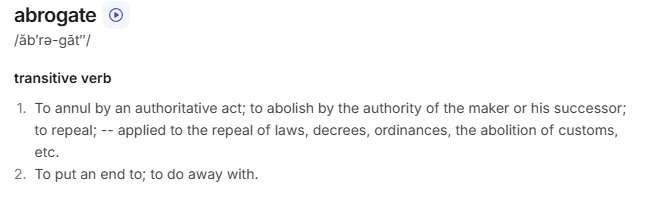
(Abrogated: To annul by an authoritative act; to abolish by the authority of the maker or his successor; To put an end to; to do away with.)
The Law of Moses, given to Israel at Sinai (Exodus 19-20), is no longer the means of salvation:
Fulfilled and Replaced: Jesus fulfilled the Law (Matthew 5:17-18), and His death on the cross abolished it as a system of justification (Colossians 2:14; Ephesians 2:15). Hebrews 10:9 states that Christ “takes away the first [covenant] that He may establish the second.” The Law’s sacrifices and ordinances could not perfect or justify (Hebrews 10:1-4; Galatians 3:10-13).
A Tutor to Christ: Galatians 3:24-25 explains that the Law was a “tutor to bring us to Christ,” but “after faith has come, we are no longer under a tutor.” For Israel, the Law pointed to the Messiah, but since His coming, salvation is through faith in Him, not the Law’s works (Romans 10:4).
Inability to Save: Acts 15:10-11, in the context of Jewish believers, affirms that neither Jews nor Gentiles are saved by the Law, which was a “yoke” they could not bear. Instead, “through the grace of the Lord Jesus Christ we shall be saved.”
Israel’s Salvation Today.
Since Pentecost, Jews (Israel) are saved by:
Hearing and Believing the Gospel: Romans 10:17 says faith comes by hearing the word of Christ. Jews must believe Jesus is the Messiah, as Peter proclaimed to Israel (Acts 2:36).
Repentance and Baptism: Acts 2:38 applies to Jews, as seen in the mass conversions at Pentecost. Baptism in Jesus’ name unites Jews and Gentiles with Christ (Galatians 3:27-29).
Ongoing Faithfulness: Like all believers, Jews must abide in Christ’s doctrine (2 John 1:9) and remain faithful (Hebrews 3:14). The remnant of Israel saved today includes Jews who obey the Gospel, such as the apostles and early disciples (Romans 11:5).
The Remnant and Future Hope.
Romans 11:5 speaks of a “remnant according to the election of grace” among Israel, saved by faith in Christ, as exemplified by Jewish believers in the New Testament (e.g., Acts 21:20). While Romans 11:26 anticipates a future time when “all Israel will be saved,” this does not imply salvation apart from the Gospel. The context (Romans 11:23-27) suggests Israel’s salvation comes through faith in Christ, aligning with the New Covenant promise of Jeremiah 31:31-34, fulfilled in Christ’s blood (Hebrews 8:8-12; Matthew 26:28).
Conclusion.
Since Pentecost, Israel is saved through the Law of Christ—the Gospel—not the Law of Moses, which was fulfilled and abrogated (Hebrews 8:13; Colossians 2:14). The New Covenant, promised in Jeremiah 31:31-34 and established through Christ (Hebrews 8:6), requires Jews to believe in Jesus as Messiah, repent, and be baptized (Acts 2:38; Romans 10:9-13). The remnant of Israel today, like all believers, enters God’s chosen people (1 Peter 2:9) by faith and obedience to the Gospel, fulfilling God’s redemptive plan through the eternal covenant of Christ.
We need to know enough to be able to speak the SAME things.
Now I beseech you, brethren, by the name of our Lord Jesus Christ, that ye all speak the SAME thing, and that there be no divisions among you; but that ye be perfectly joined together in the SAME mind and in the SAME judgment. (1Cor1:10)
Can you know too much about SALVATION? Are all churches teaching the SAME thing as The Bible? Are we teaching the SAME thing as Jesus.
What did Jesus say about SALVATION?
Matthew 7:24 KJV
Therefore whosoever HEARS these sayings of mine, and doeth them, I will liken him unto a wise man, which built his house upon a rock:
John 8:24 KJV
I said therefore unto you, that ye shall die in your sins: for if ye BELIEVE not that I am he, ye shall die in your sins.
Luke 13:3,5 KJV
I tell you, Nay: but, except ye REPENT, ye shall all likewise perish. [5] I tell you, Nay: but, except ye REPENT, ye shall all likewise perish.
Matthew 10:32-33 KJV
Whosoever therefore shall CONFESS me before men, him will I CONFESS also before my Father which is in heaven. [33] But whosoever shall deny me before men, him will I also deny before my Father which is in heaven.
Mark 16:16 KJV
He that believeth and is BAPTIZED shall be saved; but he that believeth not shall be damned.
It’s water baptism. Notice what the first Christian evangelists taught.
Acts 8:35-36 KJV
Then Philip opened his mouth, and began at the same scripture, and preached unto him JESUS. [36] And as they went on their way, they came unto a certain WATER: and the eunuch said, See, here is WATER; what doth hinder me to be BAPTIZED?
Baptism is a burial in water.
Colossians 2:12 KJV
BURIED with him in BAPTISM, wherein also ye are risen with him through the faith of the operation of God, who hath raised him from the dead.
Matthew 28:20 KJV
Teaching them to OBSERVE ALL THINGS whatsoever I have COMMANDED you: and, lo, I am with you alway, even unto the end of the world. Amen.
Does your church teach the SAME as Jesus about how to be saved? Does it teach the SAME purpose?
Hear, Believe, Repent, Confess, water Baptism, & Faithfulness.
Which can you add, change, or remove and still be speaking the SAME thing as Jesus, Peter, Philip, Paul & the rest of the NT?
Evangelism is a “can you find the differences” game
The difference between…
Your church vs the Lord’s church.
Gal 1:6 I marvel that ye are so soon removed from him that called you into the grace of Christ unto another gospel: 7 Which is not another; but there be some that trouble you, and would pervert the gospel of Christ.
2Cor 11:4 For if he that cometh preacheth another Jesus, whom we have not preached, or if ye receive another spirit, which ye have not received, or another gospel, which ye have not accepted, ye might well bear with him.
What you believe vs what the Bible teaches.
Acts 26:27 King Agrippa, believest thou the prophets? I know that thou believest. 28 Then Agrippa said unto Paul, Almost thou persuadest me to be a Christian.
What you did to be “saved” vs what the Bible says to be saved.
Mark 16:16 He that believeth and is baptized shall be saved; but he that believeth not shall be damned.
How you worship vs what the Bible teaches about worship.
Joh 4:24 God is a Spirit: and they that worship him must worship him in spirit and in truth.
Mark 7:6 He answered and said unto them, Well hath Esaias prophesied of you hypocrites, as it is written, This people honoureth me with their lips, but their heart is far from me. 7 Howbeit in vain do they worship me, teaching for doctrines the commandments of men.
CAN YOU SPOT THE DIFFERENCES?
The difference between what your pastor SAYS vs what the SCRIPTURE SAYS?
2Peter 2:1 But there were false prophets also among the people, even as there shall be false teachers among you, who privily shall bring in damnable heresies, even denying the Lord that bought them, and bring upon themselves swift destruction.
Acts 8:35 Then Philip opened his mouth, and began at the same scripture, and preached unto him Jesus. 36 And as they went on their way, they came unto a certain water: and the eunuch said, See, here is water; what doth hinder me to be baptized?
(when your pastor “preaches Jesus” would the listeners respond in the same way as the Eunuch?)
The difference between what you PRACTICE vs what the Bible says to PRACTICE?
1Cor 11:17 Now in this that I declare unto you I praise you not, that ye come together not for the better, but for the worse. 18 For first of all, when ye come together in the church, I hear that there be divisions among you; and I partly believe it.
The difference between not OBEYING the gospel vs OBEYING the Gospel?
2Thess 1:8 In flaming fire taking vengeance on them that know not God, and that obey not the gospel of our Lord Jesus Christ:
The difference between false TEACHING of me vs the TEACHING (doctrine) of Christ?
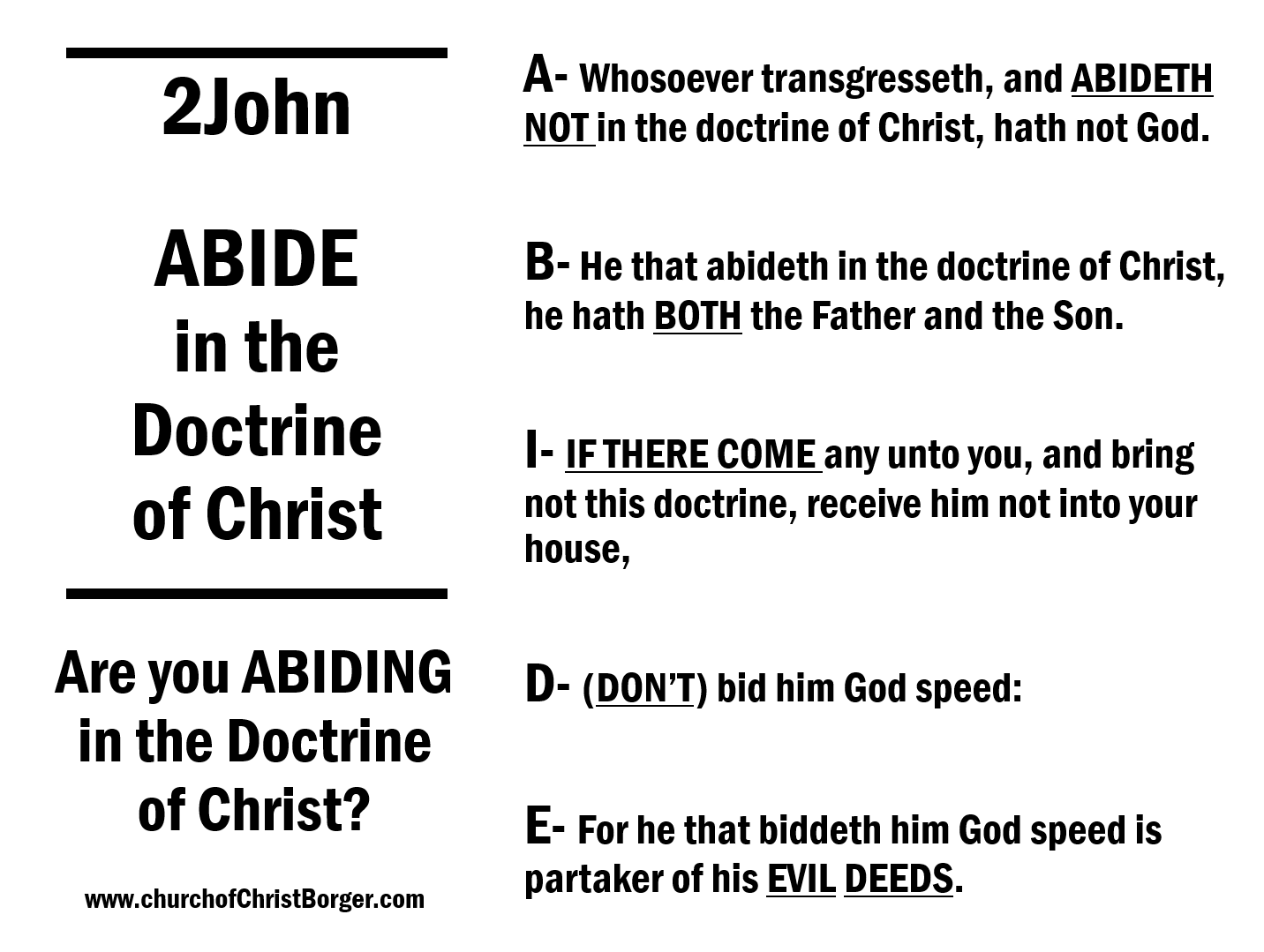
2John 1:10 If there come any unto you, and bring not this doctrine, receive him not into your house, neither bid him God speed: 11 For he that biddeth him God speed is partaker of his evil deeds.
For more study on this topic, click the link to the “we are different” page.
If you live in the Borger area, Would you like help to SPOT the differences and learn about true faith? Contact us and let us know.
Spencer is an evangelist for the Franklin & Juniper St church of Christ in Borger Texas.
After miraculously feeding 5,000+ people, Jesus crosses the sea of Galilee, and those having eaten, follow Him.
Jesus, knowing what is in the heart of a person said, “Verily, verily, I say unto you, Ye seek me, not because ye saw the miracles, but because ye did eat of the loaves, and were filled. Labour not for the meat which perisheth, but for that meat which endureth unto everlasting life, which the Son of man shall give unto you: for him hath God the Father sealed.” (John 6:26-27)
He then preaches to them where he says, “I am the living bread which came down from heaven: if any man eat of this bread, he shall live for ever: and the bread that I will give is my flesh, which I will give for the life of the world.” (John 3:51)
Those hearing this statement were confused, so too many today. How are we to understand this statement about Jesus being the BREAD of life and the necessity of eating it? This is a figurative statement with a major lesson behind it. Here are 5 clues to help us understand its meaning and how to comply.
The first clue, Jesus said in verse 35, “I am the bread of life: he that cometh to me shall never hunger; and he that believeth on me shall never thirst.” Two things are discovered; 1) whoever is to have the blessing of the Bread of Life must come to Him, and 2) they must BELIEVE on Him. In this same book of John, we learn that BELIEF comes from reading about Him. “But these are written, that ye might believe that Jesus is the Christ, the Son of God; and that believing ye might have life through his name.” (John 20:31; cf. Rom 10:17) So, the first clue teaches us that to eat His flesh is a figure for reading His word.
Next, Jesus continues by comparing Himself to the manna that came down from heaven (6:31-34). He then says, “For I came down from heaven, not to do mine own will, but the will of him that sent me. And this is the Father’s will which hath sent me, that of all which he hath given me I should lose nothing, but should raise it up again at the last day.” (38-39). From this we learn that He, as the Bread of Life, came down from heaven to RAISE up certain people. The Bread of Life is related to being RAISED up to heaven.
Related to this is the next clue found in verse 40. “And this is the will of him that sent me, that every one which seeth the Son, and believeth on him, may have everlasting life: and I will raise him up at the last day.” (47,54) Speaking again about ‘belief,’ Jesus relates the raising up to those same people having EVERLASTING LIFE. Remember, Belief comes from reading about Jesus.
The fourth clue is found in verse 62. Many of the disciples began to murmur, wondering who could hear it. In response Jesus said, “What and if ye shall see the Son of man ascend up where he was before?” It’s interesting that He now speaks of ASCENDING into heaven after telling them He came down. This Bread of Life came down, like the manna, but this Bread will ASCEND back into heaven. In our time, we know what happens later. Jesus will ASCEND into heaven, but not before instructing the Apostles in Matt 28:19-20, where we read; “Go ye therefore, and teach all nations, baptizing them in the name of the Father, and of the Son, and of the Holy Ghost: Teaching them to observe all things whatsoever I have commanded you: and, lo, I am with you alway, even unto the end of the world.” (Matt 28:19-20). Once again, we see the repeated theme of teaching, learning, and obeying.
The commentary of scripture is telling us that the eating of the Bread of Life is related to learning, reading, and obeying the instructions from Jesus. In John 1 He is also called The Word.
However, some of the DISCIPLES turned. “From that time many of his disciples went back, and walked no more with him. The last clue is found in Peter’s statement. “Then said Jesus unto the twelve, Will ye also go away? Then Simon Peter answered him, Lord, to whom shall we go? thou hast the words of eternal life.” (John 6:66-68)
While they may not have fully appreciated the depth of Jesus’ words, Peter seems to recognize something. Eternal Life is related to the teaching of Jesus. He would fully understand later; “Howbeit when he, the Spirit of truth, is come, he will guide you into all truth:” (John 16:13). So, being a DISCIPLE, (a learner, i.e. pupil), is our fifth clue. It’s not enough to just believe, we must do.
Eating His flesh and drinking His blood is not literal. Neither is it related to the Lord’s Supper, which is not literal either. What it means is to be a Hearing, believing, obedient follower of Christ.
— spencer
Spencer is an evangelist for the Franklin & Juniper St church of Christ in Borger Texas. If you live in the Borger area and would like a personal bible study, please reach out & let us know how we can help you know more of God’s word.
Toward the end of nearly every discussion about the divisive state of the religious world, one will usually say something like this…
“You can’t tell me my sweet grandma (could be neighbor, friend or relative), who never went to church (or did go to a denomination ‘religiously’), who was kind to people and animals, who never said a bad word or did a bad thing, who helped anyone that asked, is lost. She was so very sincere in what she believed.”
Instead of approaching the idea of whether sincerity saves, let’s ask the question:
Does it MATTER what one believes?
Usually in these discussions we can agree that certain very wicked people are lost (the Hitlers and the pedophiles of the world). Are the kind and the sincere who didn’t follow the bible totally saved because of their sincerity and goodness?
We’ll set aside the fact that those who say this are suggesting a ‘works based’ salvation, which they would normally condemn. We will just look at the Bible and ask, does it MATTER?
Does it MATTER what we believe?
Most would agree that we ought to obey GOD rather than MAN. (Acts 5:29). Jesus was critical of those that created doctrines contrary to the doctrine of God.
“Howbeit in vain do they worship me, teaching for doctrines the commandments of men. For laying aside the commandment of God, ye hold the tradition of men…” (Mark 7:7-8a)
Usually, they will agree with this point that you have to believe in God, in Christ and in the Bible. But when it comes to saying that the non-Christian religious people are lost, they stop short saying; “I’m not the judge.” This is the fallacy of equivocation. We’re not judging their hearts, we’re making righteous judgment with the Word of God. (cf. Mat 7:1-2)
Paul had ‘judged’ that the Jews of his day were not saved; “Brethren, my heart’s desire and prayer to God for Israel is, that they might be saved. For I bear them record that they have a zeal of God, but not according to knowledge.” (Rom 10:1-2). He had discerned from the Truth of God’s word that they had not obeyed the gospel and therefore were not saved.
Which brings us to our next point about “does it MATTER,” does your belief AGREE with the Doctrine of Christ?
In both Old and the New Testaments, one had to have a ‘thus saith the Lord’ for their beliefs and actions. “So then faith cometh by hearing, and hearing by the word of God.” (Rom 10:17) When King David desired to build a Permanent Temple for God, he was prohibited because he didn’t have a command from God, there was no scriptural command to do this good thing. Therefore, it was a wrong thing. (2Sam 7:1-7)
Here’s the point, God’s word is Objective Truth. It is transparent, researchable, universal to all, for the thinking person, and it is heavenly (cf. James 3:17). Compare the objective Word of God to the subjective, shifting sand of a person’s heart. (Mat 7:24-29) “That we henceforth be no more children, tossed to and fro, and carried about with every wind of doctrine, by the sleight of men, and cunning craftiness, whereby they lie in wait to deceive;” (Eph 4:14)
David appealed to the subjective standard of his feelings. He was pointed toward the OBJECTIVE, fixed standard of God’s Word. We’re told not to go beyond what is written (2Cor 4:13), speak as the oracles of God (1Pet 4:11), the commandments of the Lord (1Cor 14:37), the inspired Scriptures (2Tim 3:16-17), using the words chosen by the Holy Spirit (1Cor 2:9-13), and not to add to nor take away from the Word (Rev 22:18-19).
Then, in this 3rd point, when we have an objective standard, called the TRUTH (John 17:17), we have an ability to search the scripture to find out if what we feel is true (Acts 17:11).
Did you know it’s possible to feel secure and not know the Lord has departed from you? (Judges 16:20) Did you know it’s possible to believe a lie? (1Kings 13:18; cf. 2Thess 2:9-12)
By reading & studying God’s word, we can Know the truth and be set free from the bondage of lies, sin, and the corruption of this life. (John 8:32; 12:48; cf. James 1:25; 2:12)
Many will cite the above verse as proof that baptism is unnecessary for salvation. Does it really mean that? Not if you understand the context of the passage and the problem of sectarianism that existed in the church at Corinth.
Another point can be drawn out of this passage; preaching the gospel of Christ out of order. Because denominations reject baptism so vehemently, we often place baptism at the front of preaching of the Gospel.
It reminds me of a preacher trying to reach a denominational group. He said, “I think I’m only making them better Lutherans.”
Here’s an illustration of what I am saying. Before a child can run, they must first build strength to crawl, then stand, and then walk.
Another illustration is the building a house. We never begin to build with the roof! We begin with pouring a foundation, then the walls, and then the roof.
Much of our preaching emphasizes baptism without laying first the foundation of the Authority of Christ. We rightfully understand that the ‘steps’ of salvation are; Hear, then Believe, then Repent, then Confess, and then be Baptized. Once we become Christians we Grow and Endure. Unfortunately, we get caught up cramming faithfulness and baptism verses down the throats of those who haven’t truly yet believed in the Preeminence of Christ. [Col 1:18]
Jesus gave us the order when He gave what is commonly called “the Great Commission.” “All authority hath been given unto me in heaven and on earth. Go ye therefore, and make disciples of all the nations, baptizing them into the name of the Father and of the Son and of the Holy Spirit: teaching them to observe all things whatsoever I commanded you: and lo, I am with you always, even unto the end of the world.” [Matt 28:18-20]
An evangelist named Philip met up with a Eunuch where we read that he “preached unto him Jesus.” [Acts 8:35]. While nothing else is revealed about his preaching, we can necessarily infer that ‘preaching Jesus’ included submission to His authority.
How can we preach Jesus?
Philip…preached unto him…
JESUS, Acts 8:35; Matt 28:18-20 ‘Go ye…’
We begin with showing that…
JESUS is the Christ, and He has all authority.
Mat 28:18 “All authority hath been given unto me in heaven and on earth.”
Hebrews 1; Mark 9:7 ‘Hear ye Him.’
Hearing is first, and hearing leads to Believing. [Rom 10:17; John 20:30-31]
Preaching Jesus must include the…
EXAMPLE of His life leading to His Death, Burial, and Resurrection.
This is the GOSPEL. 1Cor 15:1-4
Preaching Jesus must include teaching that we must…
SUBMIT to His will,
Luke 6:46 And why call ye me, Lord, Lord, and do not the things which I say? [Mat 7:21-23; John 14:15; 15:14; 1John 5:3]
“And whatsoever ye do, in word or in deed, do all in the name of the Lord Jesus, giving thanks to God the Father through him.” [Col 3:17]
This teaches us about Repentance from sins and Confessing Him.
Preaching Jesus must include teaching that we must go…
UNDER the water to come in contact with His blood,
The Eunuch, upon hearing the preaching of Jesus, concluded baptism was necessary for Salvation. [Acts 8:35-38]
Matt 26:28; Rom 6:3-4
Only after laying the foundation of Hearing, Believing, Repenting, Confessing, will we have laid the foundation for scriptural Baptism. Mat 28:19
With a foundation in the Authority of Jesus, they’ll also believe they’re…
SAVED if they Grow and Endure until the end.
“But grow in the grace and knowledge of our Lord and Saviour Jesus Christ.” 2Peter 3:18
“But he that endureth to the end, the same shall be saved.” Matt 24:13
One of the criticisms against the Lord’s church and against His gospel preachers is that we emphasize baptism so much.
There’s a very simple and reasonable answer. To answer it, let’s look at what we have in common with the denominational world.
We BELIEVE in Jesus. They acknowledge Jesus as God & already know about Him, that He died, was buried and was resurrected. There are unbelievers, & for those I begin with HEARING God’s word.
We both agree that WORSHIP is found in the scriptures. We disagree about how to worship [in spirit & truth John 4:24], but we generally agree that Sunday worship is a part of the Christian life.
We agree that a person ought to be PENITENT, meaning that a person has to REPENT of sins. This is only denied by some denominational people.
We definitely agree that CONFESSING Jesus as the Christ is essential to salvation. The scriptures make confession essential. [Romans 10:9].
WHAT ABOUT BAPTISM?
This is where we divide widely. Actually, they’re not dividing from us as much as they’re dividing from the Scriptures. (see chart next page) We emphasize BAPTISM, because they don’t emphasize it at all regarding it being ESSENTIAL to salvation. They will baptize, even by immersion, but that is the end of the similarities. Here’s how I know they’re not following God’s word on baptism…
They SCHEDULE According to the word, folks who come to the knowledge of Jesus, are baptized immediately.
“And he took them the same hour of the night, and washed their stripes; and was baptized, he and all his, straightway.” [Acts 16:33]
They say, “BAPTISM DOESN’T SAVE.” This is a direct contradiction to the Apostle Peter, to Paul and certainly against Christ.
“He that believeth and is baptized shall be saved;”








 Borger church of Christ @ Franklin & Juniper