Evidence for our Faith: How 66 Books, 40 Authors, and 1,500 Years Create One Unified Bible Story!

The Bible’s 66 books, penned across millennia, weave a seamless tapestry of truth, revealing a divine hand guiding its every word.
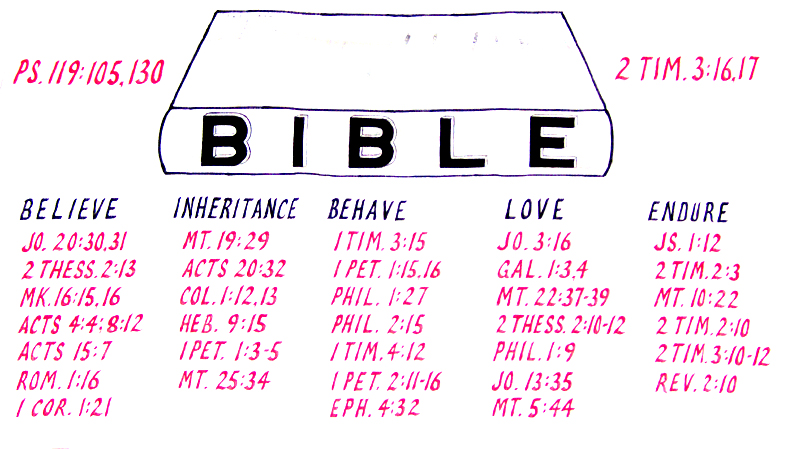
The Internal Consistency of the Bible Across 66 Books

The Bible, a collection of 66 books written by over 40 authors across 1,500 years, displays remarkable internal consistency, weaving a unified narrative despite its diverse origins. This coherence is evident in its thematic unity, fulfilled prophecies, and consistent theological principles, offering compelling evidence of its divine inspiration.

First, the Bible’s thematic unity binds its books into a cohesive story. From Genesis to Revelation, the narrative centers on God’s relationship with humanity, His redemptive plan, and the promise of a Messiah. Genesis 3:15 introduces the first mention of the gospel or “good news” in the Bible, the first hint of a savior who will crush the serpent’s head, a theme that culminates in Christ’s victory in Revelation 20:10.

The Old Testament’s covenants (with Abraham (Genesis 12:3), Moses (Exodus 19:5-6), and David (2 Samuel 7:12-16)) find fulfillment in the New Testament through Jesus, who establishes the New Covenant (Luke 22:20; Heb 8:8-11). This continuity across centuries and authors suggests a purposeful design.

Second, fulfilled prophecies demonstrate the Bible’s reliability. Over 300 Old Testament prophecies, such as Isaiah 7:14 (the virgin birth) and Micah 5:2 (Bethlehem as the Messiah’s birthplace), are fulfilled in Jesus’ life, as recorded in the Gospels (Matthew 1:22-23; 2:5-6). The precision of these predictions, written centuries earlier, defies coincidence and human invention. For example, Psalm 22:16-18, written long before crucifixion was practiced, vividly describes Jesus’ death, including pierced hands and feet and divided garments (John 19:23-24). The consistency between prophecy and fulfillment across books reinforces the Bible’s unified message.

Third, the Bible maintains consistent theological principles despite its diverse cultural and historical contexts. The concept of God’s holiness, justice, and mercy remains constant. Leviticus 19:2 calls Israel to be holy because God is holy, a principle echoed in 1 Peter 1:15-16 for New Testament believers. Similarly, the emphasis on active faith as the basis for righteousness spans from Abraham (Genesis 15:6) to Paul’s teachings (Romans 4:3). These shared doctrines, articulated by authors from shepherds to kings, suggest a singular guiding intelligence.

Skeptics might argue that apparent contradictions, such as differing Gospel accounts, undermine this consistency. However, these variations often reflect complementary perspectives rather than errors. For instance, the number of women at Jesus’ tomb varies across Gospels (John 20:1 vs. Luke 24:10), but this reflects selective emphasis, not contradiction, as ancient biographies prioritized thematic truth over exhaustive detail (Carson, The Gospel According to John, 1991). Harmonizing these accounts reveals a coherent resurrection narrative.

The Bible’s internal consistency is not merely literary but points to a divine author orchestrating its message. As 2Timothy 3:16 states, “All Scripture is God-breathed,” suggesting a supernatural unity that transcends human effort. This coherence gives its readers confidence to explore its claims.

Sources:
Carson, D.A. The Gospel According to John. Eerdmans, 1991.

The Courage to Stand in our Modern Challenges to Christian Faith

In the pages of Scripture, we find heroes like Esther, Daniel, Abigail, and Paul, who faced imprisonment, death, and danger with unwavering faith in God. Their resolve to remain faithful, even at the cost of their lives, inspires us. Yet, for most Christians today, the threats to faith are subtler but no less real. We may not face lions’ dens or executioners, but we encounter pressures that test our determination to live for Christ. This article explores four modern challenges Christians face in keeping faith and how God’s Word compels us to respond with active, courageous faith.

The Weight of Shame: Proclaiming the Gospel Boldly

I am not ashamed of the gospel, for it is the power of God for salvation to everyone who believes” (Romans 1:16). Yet, in a world that often dismisses or derides Christianity, many believers feel guilt or embarrassment when sharing their faith. Whether it’s hesitating to mention Jesus in a workplace conversation or softening biblical truths to avoid conflict at a family gathering, the fear of being labeled judgmental or outdated can silence us. Paul, who faced beatings and imprisonment for preaching, urges us not to be “ashamed of the testimony about our Lord” (2 Timothy 1:8) but to handle God’s Word rightly, unashamed (2 Timothy 2:15).

Like Daniel, who prayed openly despite a death decree (Daniel 6:10), Christians today must anchor their identity in Christ. The gospel’s power to save outweighs fleeting social discomfort. When a young professional risks awkwardness by inviting a colleague to church or a parent teaches their child biblical values in a skeptical culture, they echo Esther’s resolve: “If I perish, I perish” (Esther 4:16). Faith compels action, speaking boldly, trusting God’s Spirit to work through his word.

The Cost of Reputation and Relationships: Choosing Christ First

Have I become your enemy by telling you the truth?” Paul asked the Galatians (Galatians 4:16). Jesus warned that loving family more than Him makes us unworthy of discipleship (Matthew 10:37). These verses strike at a deep fear: losing reputation or relationships for our faith. In a hyper-connected world, taking a stand on biblical issues (whether on morality, justice, or salvation) can lead to social ostracism, canceled friendships, or strained family ties. A student defending creationism in a classroom or a friend confronting a loved one’s sin risks becoming an outcast.

Abigail’s example shines here. She risked her relationship and safety to mediate peace, aligning with God’s will despite potential backlash (1 Samuel 25:24). Christians today must prioritize allegiance to Christ, even when it costs social capital. This doesn’t mean being harsh but speaking truth in love, trusting God to mend or redeem relationships. Like Esther, who risked her life for her people, we show faith by valuing God’s approval over human esteem, knowing our ultimate family is eternal (Galatians 1:10).

The Risk of Resources: Trusting God’s Provision

Revelation 13:17 paints a stark picture: those without the “mark of the beast” cannot buy or sell. This passage shows a time when some faced economic exclusion for faithfulness, a challenge Christians continue to face. Refusing to compromise ethics in business, prioritizing assembling with the saints for overtime, or declining opportunities that conflict with faith can lead to lost income or career setbacks. A graphic designer who turns down a lucrative but morally questionable project or a doctor who risks her job by objecting to unethical practices feels this pressure.

Daniel’s refusal to bow to Darius’ decree, despite the lion’s den, shows trust in God’s provision (Daniel 6:23). Jesus promised that seeking God’s kingdom first ensures our needs are met (Matthew 6:33). Christians today must act on this promise, choosing integrity over wealth. Like Esther, who faced death to save her people, we demonstrate faith when we sacrifice financial security for God’s principles, confident in His care.

The Choke of Distractions: Persevering Through Trouble

In the parable of the sower, Jesus describes faith shrivel away when trouble comes or choked by “the cares of the world, the deceitfulness of riches, and the desires for other things” (Mark 4:16-19). Modern life bombards us with distractions (endless notifications, career pressures, personal crises) that threaten to erode our spiritual vitality. A single mother juggling work and parenting may skip prayer time; a student consumed by social media may neglect Scripture. Troubles like health issues or financial stress can further crowd out faith, leaving us fruitless.

Paul’s relentless focus on his mission, despite shipwrecks and imprisonments (Acts 20:24), inspires us to stay rooted. Like Abigail, who acted decisively amidst chaos (1 Samuel 25:18), we must discipline ourselves to prioritize God. Regular prayer, Scripture study, and congregational worship act as anchors, ensuring our faith bears fruit. Esther’s focused intercession, fasting amidst a genocidal threat, reminds us that faith thrives when we cling to God’s Word, not the world’s noise.

A Faith That Works: Compelled by God’s Word

The courage of Esther, Daniel, Abigail, and Paul was no blind leap but a response to God’s Word. Daniel obeyed the command to worship God alone (Exodus 20:3); Abigail acted on principles of justice (Proverbs 31:9); Paul preached Christ’s mandate (Matthew 28:19). Their faith produced works (prayer, mediation, proclamation) proving it was alive (James 2:17). Similarly, God’s Word compels us today:

  • Based on Scripture: Romans 1:16 gives confidence in the gospel’s power; Matthew 10:37 prioritizes Christ; Revelation 13:17 trusts God’s provision; Mark 4:19 warns against distractions.
  • Compelled to Action: These truths drive us to share the gospel unashamed, stand for truth despite relational loss, choose integrity over wealth, and persevere through distractions.
  • Their integrity Inspires Others: Their courage became a testimony, encouraging future generations (e.g., Daniel’s influence in Jewish tradition, Paul’s letters, Abigail’s role in David’s story). Esther’s legacy similarly inspired Jewish resilience.
  • Trust in God that Transcends Circumstances: Their actions show that faithfulness is not contingent on safety or success but on God’s unchanging nature.
  • Hope in God that Anticipates Eternity: Their willingness to die reflects hope in God’s promises, whether immediate deliverance or eternal resurrection (Hebrews 11:35). This aligns with Esther’s implied trust in God’s salvation for the Jews.

Living the Courageous Faith Today

While we may not face death, the challenges of shame, relational loss, financial risk, and distractions test our faith as surely as the lion’s den tested Daniel’s. Yet, God’s Word equips us. When we feel shame, we proclaim Christ boldly, trusting His power. When we fear losing reputation, we choose Jesus, knowing His approval lasts. When income is at stake, we trust God’s provision. When distractions overwhelm, we root ourselves in Scripture.

Every Christian is called to this courageous faith. The parent teaching biblical values, the worker refusing unethical shortcuts, the student sharing Christ despite mockery, all reflect Esther’s resolve. Our faith, like hers, is not passive but active, producing works that glorify God. As Paul wrote, “I am not ashamed… for I know whom I have believed” (2 Timothy 1:12). Let us stand firm, compelled by God’s Word, trusting Him through every challenge, for His glory and our eternal hope.

agape

any OTHER gospel? Galatians 1:6-9

The Uncompromising Gospel: A Warning Against Deviation

The Apostle Paul’s words in Galatians 1:8 are a thunderous declaration of the exclusivity and purity of the gospel: “But though we, or an angel from heaven, preach any other gospel unto you than that which we have preached unto you, let him be accursed.” This verse is not merely a caution but a divine boundary, safeguarding the truth of Christ’s gospel against distortion. Paul’s warning underscores the danger of deviating from the apostolic teaching, structure, and practice of the church as revealed in Scripture. Any alteration, whether in organization, doctrine, hierarchy, mission, or worship, risks leading souls astray. Let us explore this verse through the lens of biblical fidelity, examining why deviations are perilous and why Paul’s response is so severe.

No Other Centralized Organization Beyond the Local Church
Scripture establishes the local church as the sole earthly organization for God’s people, with Christ as the head and heaven as its headquarters (1 Corinthians 11:3). The New Testament knows no centralized authority—such as denominations, synods, or councils—beyond the autonomous local congregation. Each church, under the oversight of its elders, answers directly to Christ, who reigns from heaven. Introducing hierarchical structures or external governing bodies usurps Christ’s authority and distorts the simplicity of His design. Paul’s warning in Galatians 1:8 condemns such innovations as a departure from the gospel, for they shift allegiance from Christ to human institutions.

No Other Doctrine of Christ
The gospel is singular and unchangeable, rooted in the teachings of Christ and His apostles. Second John 9 warns, “Whosoever transgresseth, and abideth not in the doctrine of Christ, hath not God.” To preach “another gospel” is to introduce teachings foreign to the New Testament—whether adding human traditions, altering the plan of salvation, or diluting the truth with cultural compromises. The doctrine of Christ encompasses His deity, His sacrifice, His resurrection, and His commands for obedience (e.g., faith, repentance, baptism, and perseverance). Any deviation risks severing fellowship with God, making Paul’s curse a necessary defense of eternal truth.

No Other Hierarchy Beyond Elders, Deacons, and Saints
The New Testament prescribes a simple leadership structure for the church: elders (overseers), deacons, and saints (Philippians 1:1; 1 Timothy 3:1-10). Elders shepherd the flock, deacons serve practical needs, and all members are saints, called to holiness. No additional offices—such as popes, cardinals, or regional bishops—are authorized. Introducing such hierarchies elevates human authority above Scripture and undermines the priesthood of all believers. Paul’s anathema in Galatians 1:8 applies to those who impose unbiblical structures, as they distort the gospel’s call to humility and submission to Christ alone.

No Other Work Beyond Making, Teaching, and Helping Saints
The mission of the church is clear: make disciples, teach them, and provide limited benevolence to saints in need (Matthew 28:18-20). The church is not a social club, political organization, or community activity center. Its work is spiritual—evangelizing the lost, edifying believers, and assisting struggling Christians (e.g., widows, as in 1 Timothy 5:16). Romans 16:16 identifies congregations as “churches of Christ,” not entertainment hubs or welfare agencies. When churches prioritize secular goals over spiritual ones, they preach “another gospel” by redefining the church’s purpose, incurring Paul’s curse.

No Other Worship Practices
True worship is regulated by Scripture, limited to specific acts that honor God and edify the church. Acts 2:42, Ephesians 5:19, Colossians 3:16, and 1 Corinthians 16:1-2 outline these practices: partaking in Communion, hearing biblical preaching, singing understandable vocal songs, praying for God’s help, contributing financially to the church’s work, and encouraging one another to love and good deeds. Adding instrumental music, theatrical performances, or other innovations introduces “strange fire” into worship, akin to Nadab and Abihu’s unauthorized offering (Leviticus 10:1-2). Such practices deviate from the gospel’s pattern, inviting the condemnation of Galatians 1:8.

Why Was Paul So Harsh?
Paul’s pronouncement—“let him be accursed”—is jarring, but its severity reflects the stakes involved. The Greek word for “accursed” (anathema) denotes something devoted to destruction, cut off from God. Paul’s harshness stems from the eternal consequences of a corrupted gospel. The true gospel saves souls (Romans 1:16); a false gospel damns them. By invoking this curse, Paul emphasizes that no one—not even an apostle or an angel—has the authority to alter the message delivered once for all (Jude 3). His zeal mirrors Christ’s cleansing of the temple (John 2:17), protecting the purity of God’s truth from human tampering.

The Galatian churches were being swayed by Judaizers, who added circumcision and Mosaic law to the gospel (Galatians 1:6-7). This distortion threatened to enslave believers and nullify Christ’s sacrifice (Galatians 5:4). Paul’s curse is not vindictive but protective, urging believers to cling to the unaltered gospel. For modern readers, this serves as a sobering reminder: deviations in organization, doctrine, hierarchy, mission, or worship are not mere preferences but assaults on the truth that saves.

Galatians 1:8 is a blaring trumpet call to preserve the gospel in its pristine form. The church must remain a local, autonomous body under Christ’s headship, teaching only His doctrine, led by elders and deacons, focused on making and nurturing saints, and worshipping according to Scripture’s pattern. Any deviation risks preaching “another gospel,” leading souls to ruin. Paul’s harsh curse underscores the gravity of this truth: the gospel is not ours to modify. Let us heed his warning, holding fast to the faith delivered to the saints, ensuring that our churches reflect Christ’s design and our worship glorifies Him alone.

agape

10 Traps Even Believers are Falling—Are You Next?

The Pitfalls of False Authority: A New Testament Perspective

In a world brimming with voices vying for influence, Christians must discern the true source of authority for faith and practice. The New Testament insists that all authority rests in Jesus Christ, who declared, “All authority in heaven and on earth has been given to me” (Matthew 28:18). Yet, both in Scripture and today, people frequently turn to counterfeit sources. These false authorities—ranging from human tradition to misapplied Scripture—promise guidance but lead astray. Let’s explore ten common wrong sources, grounded in biblical examples and reasoned insight, to sharpen our reliance on Christ alone.

First, human tradition often masquerades as authority. The Pharisees clung to their customs, prompting Jesus to rebuke them: “You leave the commandment of God and hold to the tradition of men” (Mark 7:8-9). Their rituals felt sacred, but without divine sanction, they were hollow. Today, churches may elevate practices—like specific holidays or dress codes—beyond Scripture, clouding God’s clear will.

Second, personal feelings or intuition can deceive. The sons of Sceva, zealous to cast out demons, assumed sincerity sufficed, only to be overpowered (Acts 19:13-16). Emotions sway us, especially in worship or moral choices, but they lack stability apart from God’s Word. A “gut feeling” might feel right yet contradict truth.

Third, religious leaders’ opinions tempt reliance. The Jewish leaders opposed Jesus, leaning on their titles, yet He exposed their hypocrisy (Matthew 23:2-7, 13). Charismatic pastors or scholars may inspire, but their words hold no weight unless tethered to Christ’s authority. Blind trust in human figures risks error.

Fourth, cultural norms exert subtle pressure. The Corinthians mirrored their society’s idolatry, needing Paul’s correction (1 Corinthians 10:14-21). Modern trends—materialism, relativism—shape morality or worship, but culture’s shifting sands lack divine permanence. What’s popular rarely aligns with God’s eternal standard.

Fifth, human reason or philosophy appeals to intellect. The Greeks mocked Paul’s resurrection message, trusting their logic (Acts 17:32). Today, skepticism dismisses miracles or grace when reason reigns alone. Without revelation, philosophy builds on a flawed foundation.

Sixth, false revelations or visions mislead. Paul warned against altered gospels, cursing their preachers (Galatians 1:8-9). False prophets then and now claim divine insight, but if it contradicts Scripture, it’s a lie. Modern “prophecies” must bow to the Bible’s completed authority.

Seventh, majority opinion sways the unwary. The crowd chose Barabbas over Jesus, driven by mob sentiment (Matthew 27:20-23). Polls or social consensus feel authoritative, yet they’re fickle. Truth isn’t a democracy; it stands with Christ, not the masses.

Eighth, wealth or power seduces. Simon the Sorcerer thought money could buy spiritual authority, earning Peter’s condemnation (Acts 8:18-23). Today, influential donors or leaders may dictate doctrine, but earthly clout holds no heavenly warrant.

Ninth, self-appointed authority usurps Christ’s place. Diotrephes craved control, rejecting apostolic guidance (3 John 1:9-10). Cults or lone wolves claim divine calling, but without Christ’s commission, their rule is baseless. True authority is delegated, not seized.

Finally, misapplied Scripture distorts truth. Satan twisted verses to tempt Jesus, who countered with proper context (Matthew 4:5-7). Quoting the Bible out of alignment—like the prosperity gospel—creates a false authority. God’s Word, rightly handled, is the only sure guide.

These false sources recur because they mimic legitimacy, exploiting human weakness. Yet, each fails the test of Christ’s mandate. The New Testament calls us to reject them, anchoring in Him who holds “all authority.”

Which of these do we lean on? How do we confront them? What’s the danger of feelings or crowds over Scripture? How does Satan’s tactic warn us? What steps ensure we follow Christ alone? In a world of counterfeits, only His Word endures.

agape

Spencer

This is the first part of a series of lessons on How to Determine Biblical Authority, or more simply, What does God want?

Evidence for our Faith: The Human Eye

The Human Eye

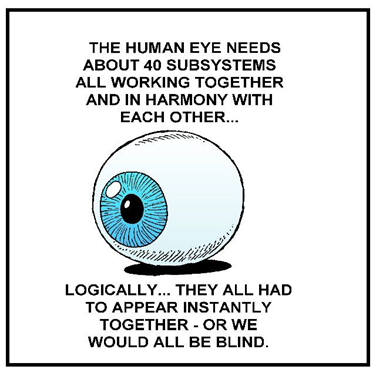
The human eye is one of the most intricate and sophisticated organs in the body, often cited as evidence of intelligent design. Its complexity and functionality defy random chance, pointing instead to purposeful creation. The eye’s ability to perceive light, distinguish colors, and adapt to varying conditions showcases an engineering marvel that naturalistic evolutionary processes struggle to explain.

The eye operates as an integrated system, relying on the coordinated function of numerous components. These include the cornea, lens, retina, optic nerve, and a network of supporting cells and tissues. The retina, for example, contains millions of photoreceptor cells—rods and cones—that convert light into electrical signals. These signals are then processed by the brain, enabling us to perceive the world in vivid detail. The cones are responsible for color vision, while rods excel in low-light conditions, allowing us to adapt to different environments.

A hallmark of the eye’s design is its irreducible complexity. Each part of the eye depends on the others to function properly. For instance, the lens focuses light onto the retina, which converts the light into signals transmitted by the optic nerve to the brain. If any of these components were absent or incomplete, the eye would be nonfunctional. This interdependence challenges the notion of gradual evolution, as intermediate stages would provide no survival advantage.

Darwin himself acknowledged this difficulty, writing in On the Origin of Species: “To suppose that the eye, with all its inimitable contrivances… could have been formed by natural selection, seems, I freely confess, absurd in the highest degree.” (Charles Darwin, On the Origin of Species.)

Biblically, the eye’s intricacy reflects God’s intentional design. Psalm 94:9 asks, “He that planted the ear, shall he not hear? He that formed the eye, shall he not see?” This rhetorical question emphasizes that the Creator, who designed the human eye, possesses perfect knowledge and wisdom. The complexity of the eye aligns with this biblical perspective, affirming a purposeful Designer.

Scientific attempts to explain the evolution of the eye, such as the idea of incremental improvements through natural selection, fail to account for the precise coordination required for its functionality. Mutations alone cannot produce the tightly integrated system observed in the human eye, further supporting the argument for intelligent design.

The human eye stands as a testament to the existence of a Creator. Its complexity, irreducible nature, and unparalleled functionality defy naturalistic explanations, pointing instead to purposeful design. As Romans 1:20 declares, “For the invisible things of him from the creation of the world are clearly seen, being understood by the things that are made.” The human eye, a marvel of engineering, is a clear manifestation of God’s creative power and wisdom.

Agape,

Spencer

the mystery of all religious error

Brothers and sisters, let me take you on a journey through the ages, a journey marked by error! We’re going to examine some of the grandest missteps in the Good Book, and I pray you’ll learn and love the Lord all the more by the time we’re done. Now, let’s start in the Garden of Eden.

GARDEN: And when the woman saw that the tree was good for food… Genesis 3:6
Eve, sweet Eve, saw that forbidden fruit and thought it looked mighty tasty. You know what they say, “Forbidden fruit is the sweetest.” But oh, how wrong she was! That bite led to the fall of man. When you think you know better than God, you’re just about to trip over your own pride. Brothers and sisters, remember this: the snake in the grass often has the best sales pitch, but his product never delivers what it promises!

CAIN: And Cain was very wroth, and his countenance fell. Genesis 4:5
Then we have Cain. Cain got madder than a hornet because God liked Abel’s offering better. His face was longer than a wet week! Instead of asking, “Lord, how can I do better?” he chose murder. Remember, when jealousy gets your goat, it’s just a short walk to the sin pasture. God’s ways aren’t always our ways, but they are always right.

PHARAOH: Who is the LORD, that I should obey his voice to let Israel go? I know not the LORD, neither will I let Israel go. Exodus 5:2
Pharaoh—now there was a man who thought he was all that and a bag of chips. He thought he could stand toe-to-toe with the Almighty. “Who is the Lord?” he scoffed. Let me tell you, when you hear someone ask that, you better stand. Pharaoh found out the hard way with ten plagues and a parted sea. Friends, when God says, “Let my people go,” you better step aside!

The more we know of God, the more we will obey Him. Conversely, the less we know of God, the less we will obey Him. Jesus himself pointed out the mystery of man’s error: “Ye do err, not knowing the scriptures, nor the power of God” (Matthew 22:29). This is a profound truth, my friends.

Sadducees and the Resurrection Errors
The Sadducees were trying to stump Jesus with riddles. They concocted a story about a woman who married seven brothers, each one dying in turn. “Whose wife will she be in the resurrection?” they asked, thinking they’d outsmarted Him. Jesus set them straight, reminding them that God’s word and His power transcends their earthly imaginations. Folks are still tying themselves in knots over theological riddles instead of trusting God’s word.

READING REQUIREMENTS in the OT law
In ancient Israel, God commanded His people to write His laws on stones and read them aloud. Deuteronomy 6:6-9 and 31:10-13 remind us that these words should be in our hearts, taught diligently to our children, spoken of at home and on the road. Yet Israel neglected this command.

We are also to read the word in the New Covenant, (John 20:30-31; Eph 3:3-4; 2Tim 3:15-17).

OT EXAMPLES of ERROR.
In the periods of Judges and Kings, they fell into cycles of forgetting, repenting, and deliverance. Not once do we read of the Israelites gathering to hear the law read, except under Jehoshaphat (2 Chronicles 17:7-9). When the word is neglected, the people perish!

David’s mishandling of the Ark of the Covenant, resulting in Uzzah’s death (1 Chronicles 13:5, 15:11-15), serves as a stern reminder of the importance of knowing and obeying God’s instructions. The failure to follow God’s law led to Israel’s captivity (Isaiah 5:13, Hosea 4:6).

REJECTING JESUS, Then and Now
Even in Jesus’ time, ignorance led to His rejection. The rulers didn’t recognize Him as the Lord of glory (1 Corinthians 2:6-8). Today, many still cling to errors—whether it’s misunderstanding salvation (Acts 15), mixing law and grace (Colossians 2:10), or holding onto traditions that contradict Scripture. From infant baptism to unnecessary church hierarchies, people err because they do not know the Scriptures nor the power of God.

So, do you value your soul? Jesus asked, “For what is a man profited, if he shall gain the whole world, and lose his own soul?” (Matthew 16:26). If we value our souls, we must study God’s word reverently, with fear, love, and care, and apply it daily.

Let’s avoid the errors of the past by immersing ourselves in God’s holy word. Read it, teach it, live it! And remember, when in doubt, God’s way is always the best way! Amen!

Agape, Spencer

you’re invited to one of our services at the Franklin and Juniper st church of Christ.

James 4; Life is a Vapor

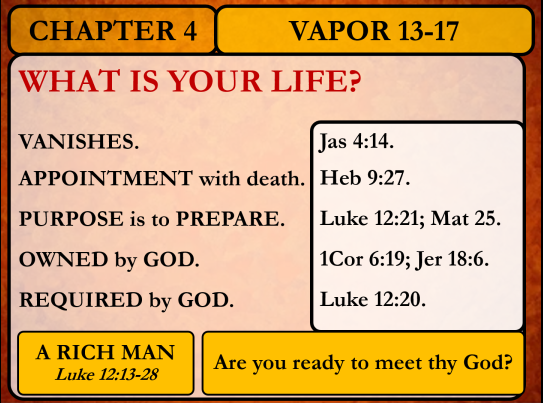
James 4:13 Come now, ye that say, To-day or to-morrow we will go into this city, and spend a year there, and trade, and get gain:
14 whereas ye know not what shall be on the morrow. What is your life? For ye are a VAPOR, that appeareth for a little time, and then vanisheth away.
15 For that ye ought to say, If the Lord will, we shall both live, and do this or that.
16 But now ye glory in your vauntings: all such glorying is evil.
17 To him therefore that knoweth to do good, and doeth it not, to him it is sin.

click here for more outlines of the book of James.

Why do we DOUBT? Oppression.

When Jesus asked Peter; “why did you doubt?” they were standing in the midst of a storm on tossing seas (Matt 14:24-31).

Isn’t that how it is for us? Our doubts arise in the midst of the storms on the crashing seas of life. We seldom doubt on the calm, and peaceful waters.

This scene with Peter on the sea reminds me of the parable of the Sower. Jesus’ teaching about the rocky soil resembles the fear and doubt that arise during times of trouble.

But he that received the seed into stony places, the same is he that heareth the word, and anon with joy receiveth it; Yet hath he not root in himself, but dureth for a while: for when tribulation or persecution ariseth because of the word, by and by he is offended” (Matt 13:20-21).

Doubt, and falling away, often comes in the face of opposition, or persecution for the word’s sake.

If we can learn to overcome doubt in these situations, perhaps we’ll be able to endure the regular troubles of life.

Why do we doubt? What is the source of doubt? This series of articles will seek to search the scriptures for the answer, and to learn how to combat, or to Overcome Doubt. The first article showed that Doubt is based on Disbelief, and the way to overcome disbelief is through knowledge of the Lord Jesus Christ. This article will attempt to Overcome Doubt that arises from the Oppression of life. 

In the parable of the soils, and in the example of Peter, it becomes clear that trouble reveals our DOUBTS instead of causing them. There are some who teach the error that becoming a Christian relieves us of all pain & suffering. The bible says something completely different.

Yea, and all that will live godly in Christ Jesus shall suffer persecution” (2Tim 3:12).

Confirming the souls of the disciples, and exhorting them to continue in the faith, and that we must through much tribulation enter into the kingdom of God” (Acts 14:22).

Be not thou therefore ashamed of the testimony of our Lord, nor of me his prisoner: but be thou partaker of the afflictions of the gospel according to the power of God” (2Tim 1:8)

Marvel not, my brethren, if the world hate you” (1John 3:13).

These few verses should be sufficient to show that suffering for the faith is a reality for the faithful. Resilience & Endurance is the antidote to DOUBT, but developing these is key. Resilience is the capacity to recover quickly from difficulties; toughness. Endurance is the ability or strength to continue or last, especially despite fatigue, stress, or other adverse conditions.

There is a very good reason why we ought to endure. “You therefore must endure hardship as a good soldier of Jesus Christ” (2Tim 2:3). “If we endure, We shall also reign with Him. If we deny Him, He also will deny us” (2Tim 2:12).

How does one develop endurance? This lesson goes along with the first lesson about faith; remember to remember the Lord and have faith. “Remember that Jesus Christ of the seed of David was raised from the dead according to my gospel: Wherein I suffer trouble, as an evil doer, even unto bonds; but the word of God is not bound. Therefore I endure all things for the elect’s sakes, that they may also obtain the salvation which is in Christ Jesus with eternal glory. It is a faithful saying: For if we be dead with him, we shall also live with him: If we suffer, we shall also reign with him: if we deny him, he also will deny us” (2Timothy 2:8-12).

Have Faith, then after that, the next thing is to stand firm for the faith. The way we can do this is through 5 reminders.

First, Stand back and ask, “is this the worst that can happen?” Before we sink, take time to think. “For our light affliction, which is for the moment, worketh for us more and more exceedingly an eternal weight of glory” (2Cor 4:17). “Fear him that can destroy in Hell” (Mat 10:28; Luke 12:5). “For I reckon that the sufferings of this present time are not worthy to be compared with the glory which shall be revealed to us-ward” (Rom 8:18). We often give up long before our endurance expires. 

Then ask, “How can I endure this?” Before we give up, remember the example of those that faced trials before you. “rejoicing that they were counted worthy to suffer dishonor for the Name” (Acts 5:41; cf. 2Cor 11:22-33). “Behold, we count them happy which endure. Ye have heard of the patience of Job, and have seen the end of the Lord; that the Lord is very pitiful, and of tender mercy” (James 5:11). Can you steel yourself against the pain, can you TOUGHEN up? Paul wrote, “Watch ye, stand fast in the faith, quit you like men, be strong” (1Cor 16:13).

A third question to ask is, “Are there any good things that can come from this?” Paul saw the good of preaching Christ even under false pretenses (Phil 1:12-18). James wrote that the trying of our faith produces patience (Jas 1:3).

Nature itself teaches us that growth comes through enduring difficulties. The writer of Hebrews noted this. “Furthermore we have had fathers of our flesh which corrected us, and we gave them reverence: shall we not much rather be in subjection unto the Father of spirits, and live? For they verily for a few days chastened us after their own pleasure; but he for our profit, that we might be partakers of his holiness. Now no chastening for the present seemeth to be joyous, but grievous: nevertheless afterward it yieldeth the peaceable fruit of righteousness unto them which are exercised thereby. Wherefore lift up the hands which hang down, and the feeble knees(Heb 12:9-13).

Then make a commitment to NEVER, NEVER, NEVER, NEVER, GIVE UP! “And let us not be weary in well doing: for in due season we shall reap, if we faint not” (Gal 6:9; cf. Phil 4:13; Rev 2:10). Make endurance the only option.

Lastly, and most importantly, do all you can do to stand. “Wherefore take unto you the whole armour of God, that ye may be able to withstand in the evil day, and having done all, to stand” (Eph 6:13; cf. 10-18). Be a doer of God’s word and not a hearer only. Do the best you can and when you learn to do better, do better.

I press toward the mark for the prize of the high calling of God in Christ Jesus.” “I can do all things through Christ which strengtheneth me”. (Phil 3:14; 4:13). The troubles of life reveal our doubts, but we can do it, the Lord said so (1Cor 10:13).

Agape,

Spencer

FILED UNDER: Overcoming doubt.

You’re invited to attend one of the services of the Franklin & Juniper st church of Christ in Borger Texas.

1JOhn 2:18-23 Who is the ANTICHRIST?

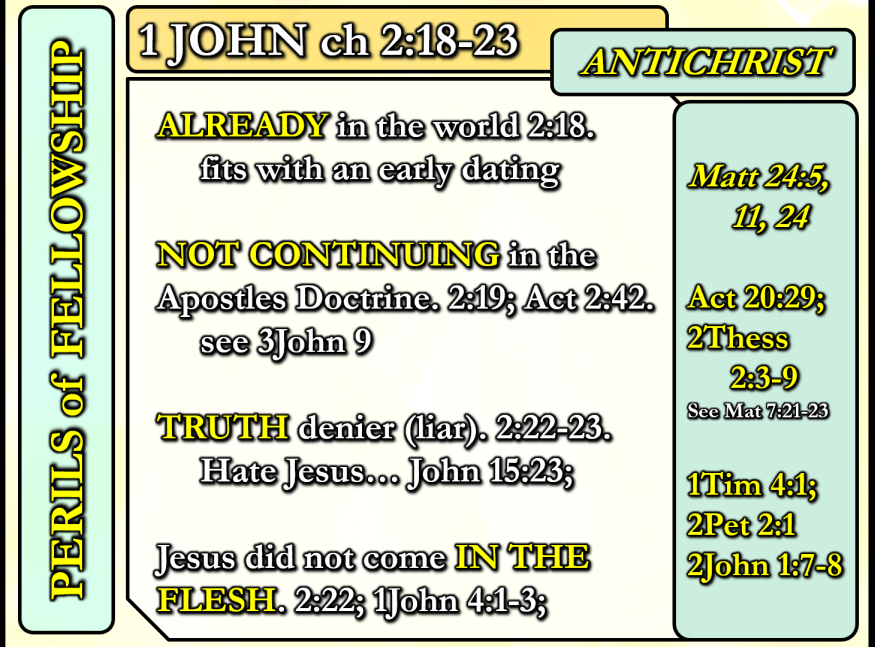
Who is the ANTICHRIST? 18-23

ALREADY in the world 2:18.
fits with an early dating

NOT CONTINUING in the Apostles Doctrine. 2:19; Act 2:42.
see 3John 9

TRUTH denier (liar). 2:22-23.
Hate Jesus… John 15:23;

Jesus did not come IN THE FLESH. 2:22; 1John 4:1-3;

Here’s a link to all the published studies from 1 John.

The Franklin and Juniper church of Christ begins an overview study of the book of 1John. If you live in the Borger area, We invite you to join us at 9:30am each Sunday Morning.

1John: chap 1 Fellowship defined

Biblical FELLOWSHIP is SHARED experiences.

We have SHARED in

SAME purpose. 1Cor 1:10; Eph 4:4-6.
HEART. Phil 1:7
ACTION. Phil 4:14-15
RESOURCES. Acts 2:42; Heb 10:34
EACH MEMBER. does its part. Rom 12; 1Cor 12:12-25; Eph 4:16.
DIFFICULTY. Heb 10:33

The Franklin and Juniper church of Christ begins an overview study of the book of 1John. If you live in the Borger area, We invite you to join us at 9:30am each Sunday Morning for the next few weeks.

Click here for the Overview Chart and links to other study outlines in this series.