
God’s plan for you

new year 2016

As 2015 ends, and 2016 is about to being, folks are putting together resolutions and plans for the new year. But, have you ever considered what Godly planning looks like? As you make your New Years Resolutions, let’s consider a Godly formula for making plans. 

BIBLICAL EXAMPLES OF PLANNING… The Scriptures show us many folks planning, some good and others making evil plans…..

EVIL PLANS – The Psalmist said, “Who plan evil things in their hearts; They continually gather together for war. (NKJV) [Psalm 140:2]. Solomon warned his son not to go with those who plan evil, “If they say, Come with us, let us lay wait for blood,” [Proverbs 1:11]. Jesus Himself told a parable of a man who planned fraud against his master [Luke 16:4 ].

Clearly, the scriptures condemn the making of evil plans, rather we should be making Godly plans….

GODLY PLANNING – Paul was planning to visit the church at Corinth to encourage them, “And in this confidence I was minded to come unto you before, that ye might have a second benefit; 17 Therefore, when I was planning this, did I do it lightly?” (NKJV) [2Co 1:15]

When MOSES was leading the children of Israel out of Egypt, he was working without much of a plan as he decided matters between one another. Jethro, his father-in-law, taught him a better way. “Hearken now unto my voice, I will give thee counsel, and God shall be with thee: Be thou for the people to God-ward, that thou mayest bring the causes unto God:” [Exodus 18:19]

DAVID faced Goliath with a plan. “This day will the LORD deliver thee into mine hand; and I will smite thee, and take thine head from thee; and I will give the carcases of the host of the Philistines this day unto the fowls of the air, and to the wild beasts of the earth; that all the earth may know that there is a God in Israel.” [1Samuel 17:46]. If you’ve ever wondered why David, a man of faith, needed 5 smooth stones, this is the reason, he needed one to kill Goliath and with the others he planned to route the Philistines!

There were others plans made as well. As men moved to fulfill commands of God to build the Temple, they made plans and set aside materials to ensure an expedient completion. [1Ch 22:1-19; 28:14-18; 29:1-5; 2Ch 3:1; 5:1]. Then Nehemiah also made plans as he oversaw the rebuilding of the Temple, after their return from the captivity. [Nehemiah 2:7, 8]

[Since God has ALLOWED MAN TO PLAN, ought you plan your life to serve Him?]

GODLY PLANNING FOR OUR LIVES – As we’ve seen, God has allowed and approved of man to make plans to serve Him. Looking at additional scripture, we find that planning is wise.

IT’S RIGHTEOUS TO PLAN – The book of Proverbs teaches us to make plans, by telling us to give thought to our steps, and that the plans of the diligent lead surely to abundance. Included is a warning to those who fail to pause and plan that living impulsively only leads to poverty. [Proverbs 14:15; Proverbs 21:5]

Our Lord commended planning when He told how the wise count the cost before building a tower [Luke 14:28], or when a King goes to battle [v31, 32]. Let us never forget that obedience to Him is like the wise one who built his house on a rock [Matthew 7:24-27].

The Prophet Isaiah wrote, “But he who is noble plans noble things, and on noble things he stands [32:8 ESV]. Shall we not, as children of God, make noble plans? The question then becomes, what are noble plans and how do we make them?

Using scriptures, let’s look at a 7 step formula for making Godly, noble plans.

Step 1 – KEEP GOD’S WILL IN MIND – The first, and most important step is to begin with God’s plan / will. Before making any choice or plans ask yourself, “Is this what God would want?” We should always consider whether or not our plans are involving sin, if so, it no longer qualifies as noble.

Looking again to the Proverbs, “There are many devices (plans) in a man’s heart; nevertheless the counsel of the LORD, that shall stand” [Pr 19:21]. By committing our work to the Lord, our plans will be pleasing to the Lord [Prov 16:3].

“If the Lord wills, we will live and do this or that,” ought to be our beginning attitude. [James 4:13-15]. Along with faithful obedience to the commands of God [Deuteronomy 28:1-68; John 14:15; Matthew 28:20].

Step 2 – SEEK WISE COUNSEL – “Plans fail for lack of counsel, but with many advisers they succeed,” [Proverbs 15:22]. We need to seek advice, but seek it from the right sources.

We need to ask GOOD PEOPLE, folks that are already living a Godly life. “Ye cannot drink the cup of the Lord, and the cup of devils: ye cannot be partakers of the Lord’s table, and of the table of devils,” [1Corinthians 10:21; Ephesians 5:11]. Remember that Paul taught, “Evil company corrupts good habits,” [1Corinthians 15:33].

We should make plans by seeking advice, [Proverbs 20:18]. Even something like building a house, and filling it with our stuff, needs wise plans and advice or it will fail, [Proverbs 20:18; 24:3-4].

Sometimes NATURE provides us wise counsel. “Go to the ant, O sluggard; consider her ways, and be wise. Without having any chief, officer, or ruler, she prepares her bread in summer and gathers her food in harvest,” [Proverbs 6:6-8]. Job said to “ask the beasts” [Job 12:7], “and they shall teach thee.” God’s own creation can be a source of wisdom and counsel.

But God gives us a warning about FALSE INFORMATION. There are silly myths, false and selfish desires which cause us to seek teachers to tell us what we want to hear, [1 Timothy 4:7; Proverbs 19:2; 23:4; 2Timothy 4:3]. You’ve met those folks. They ask for advice but seldom take it, doing what they had intended from the beginning as they chase their own lusts.

Step 3 – SET THE RIGHT PRIORITIES, Sometimes we make nonsinful plans, but we’ve neglected other areas of our lives. Jesus condemned the Pharisees for this very thing. “..ye pay tithe of mint and anise and cummin, and have omitted the weightier matters of the law, judgment, mercy, and faith:” Note that He wanted them to do the “WEIGHTIER MATTERS” but He also wanted them “not to leave the other undone” [Matthew 23:23].

Our first priorities are always to seek the kingdom of God, [Matthew 6:33], then the others things will be added to you. We also need to be mindful of giving, being benevolent, and taking care of our family’s needs [2Corinthians 9:7; 1Timothy 5:8]. If we seek our own selfish ambitions, we’re no longer making noble plans.

Step 4 is to PUT THINGS IN THE RIGHT ORDER, to do the things that are expedient to complete our plans. “.. get everything ready for yourself in the field, and after that build your house” [Proverbs 24:27 ESV]. We’re commanded our worship be done “decently and in order [1 Corinthians 14:40], should our lives, which is a service to God, be any less?

Step 5 is to DO IT, we need to get busy with our plans. Without work, no plans ever come to completion. When we work, let’s do it with all our might, [Ecclesiastes 9:10], without being slothful with our business [Romans 12:11], and to “do it heartily, as to the Lord” [Colossians 3:23]. God wants us to be active, not to be thieves, rather, “labour, working with his hands the thing which is good, that he may have to give to him that needeth” [Ephesians 4:28].

Step 6 is to EVALUATE the successes or failures of our plans. Are you still doing the right thing? Has your work changed making it sinful? Paul told the Corinthians to examine themselves, whether they be in the faith [1Cor 13:15], which must include our work activities as well as spiritual. If we stray away from the noble, Godly plans then let us bring ourselves back to the right.

Step 7 is to EXPECT TROUBLE and to prepare for it. This is a realistic view of life and many of us want to avoid or ignore trouble. Unfortunately, it is a part of life and the scriptures teach this. “time and chance happeneth to them all” [Ecc 9:11], is a reminder for us that things happen. Some good, and some bad. Look at the weather, God causes the rain on the just and the unjust, but sometimes floods come with the rain. [Matthew 5:45; 7:27] Consider the recent flooding in our own area.

Because of sin, and the broken world we live in because of sin, life is sometimes a struggle and we ought to expect it. We’re going to sweat, we’re going to get cut by thorns, but god has given us the strength to endure it. [Genesis 3:17, 18]

Even the people around us will sometimes be against us. Be it for jealousy or envy, they will be obstacles to our success [1Pe 4:4]. But don’t let the ungodly of this world, keep you from doing noble things.

CONCLUSION: With Godly planning, we can make the best of this world. God wants joy for us, but not just for this life. He has bigger and better plans. He has made a plan of SALVATION, which He made even before He created the world [Ephesians 1:4; Romans 16:25, 26; 1Peter 1:20].

His plans meant that His son, Christ Jesus, would be slain. This too was determined before the world was made [Revelation 13:8; Titus 1:2, 3].

His plans include for us to be a thinking people, [John 14:26]. His plans include for us to be obedient to Him [Ephesians 2:10; Titus 2:14; Matthew 28:20], to obey the Gospel [1 Thessalonians 1:8].

Finally, His plans include for us a FUTURE HOME which Jesus has gone to prepare [John 14:2]. A place that shall have no death, neither sorrow, nor crying, neither shall there be any more pain and God shall wipe away all tears [Revelations 21:1].

We can make all the plans in the world, but if we fail to plan for eternity, we’ve lost it all. “For the time is come that judgment must begin at the house of God: and if it first begin at us, what shall the end be of them that obey not the gospel of God?” [1Peter 4:17]

Spencer

The Force Awakens

star wars

It’s been 32 years since Return of the Jedi, the final episode of the Star Wars trilogy that began in 1977 with episode IV A New Hope. Since the announcement of an episode 7, adults and children alike have endured a 2-year, Christmas like anticipation for the movie to finally arrive in Theaters, of which I am one.

Stories abound of fans scrambling to purchase tickets, pilgrimaging to theaters in droves, to be witness to the first public viewings. Folks have called in sick, one website offered a list of plausible excuses to use when you call off work, so as to be a part of this momentous event. Threats of “unfriending” folks from Facebook if they reveal any spoilers to those of us who have yet to navigate through the sea of people for one of the early showings.

This article shall neither bash those among the masses who make the trek to the early movies, adorned in their Jedi regalia, nor those who couldn’t give a rip that a new Spock movie just opened. (laugh if you got that joke.) No, just a comparison shall I draw. (laugh at that one too.)

I am curious about a few things, have we as a church ever posted online, for any amount of time, displaying our excitement for the coming day to worship our Lord and Savior? Or even better than that, the breathless anticipation of the Return Of The Christ? Oh how I long for the day we could anticipate the 1st day of the week, or His wonderful, triumphant return.

____________________________________________________
Not forsaking the assembling of ourselves together, as the manner of some is; but exhorting one another: and so much the more, as ye see the day approaching. [Hebrews 10:25]
____________________________________________________
I can’t believe you missed it!

Has anyone ever excitedly said to you, “I can’t believe you missed it!”, when referring to the Sunday worship that you had to miss due to illness or work? Have they ever gushed out every single line from the sermon, every emotion and every point drawn? No? Yeah, neither have I. What I HAVE heard was, “Missed you on Sunday”, in that tone as if they were really saying, “what kind of sin kept you from the worship?” Worse than that are those that say, “missed ya on Sunday”, but really saying, “I had to be there, why weren’t you?”

To be sure, If I were given a $200 million budget and 3 years, I may be able to produce a sermon entertaining enough to draw in the numbers comparable to Star Wars. But alas, I do not. I have 6 days to produce 4 lessons (2 sermons & 2 bible Classes). Not counting the myriad of other personal Bible studies, calls and questions I receive. No, my budget is far less.

We have no authority to do anything of the sort. We are to “teach all nations, baptizing them in the name of the Father, and of the Son, and of the Holy Ghost: 20 Teaching them to observe all things whatsoever I have commanded you:” [Matthew 28:19-20] We have no authority to draw anyone by any carnal lust whether it be food, entertainment or money. No, we have the Gospel to draw folks in, drawn in with a “true heart in full assurance of faith” [Hebrews 10:22].

Our Lord warned us about such things. “Jesus answered them and said, Verily, verily, I say unto you, Ye seek me, not because ye saw the miracles, but because ye did eat of the loaves, and were filled. 27 Labour not for the meat which perisheth, but for that meat which endureth unto everlasting life, which the Son of man shall give unto you: for him hath God the Father sealed.” [John 6:26-27]

He was pointing out that some will only come if you feed them with food, but they should be laboring for the spiritual food that brings about everlasting life. A preacher once said to me, “what a person is converted with, they are converted to.”

I have nothing against Star Wars or many other forms of non-sinful entertainment. The question I must ask myself, and you must ask yourself, is this; Do I care as much about the worship of our Lord and Savior Jesus Christ and His Triumphant return as I care about a movie?

Spencer Blackwelder
Evangelist, Borger, Tx

If I only


THERE ARE LOTS OF ALIBIS for a weak church, but very few reasons. Churches that are weak have one distinguishing trait in common. They know all the reasons they’re weak, and have what they believe to be air-tight alibis to explain away their own weaknesses.

Some of the alibis are even clever, and quite a few are justified by the facts. Unfortunately, an alibi won’t be heard at the judgement [Mat 7:21-22]. All the Lord will want to know is, “HAVE YOU DONE THE WILL OF MY FATHER?” [Re 2:5]

A character analyst compiled a list of the most commonly used alibis. Though this was in context of business, I’ve learned that these alibis are used in any context, even the church.

As you read the list, examine yourself carefully, and determine how many of these alibis, if any, are your own property. Consider this, the teachings of the scripture makes every one of these obsolete. [Ge 3:12,13; Ex 4:1,10-14; 32:22-24; De 30:11-14; Jg 6:12-17; 1Ki 19:19-21; 2Ki 5:10-14; Jer 1:1,4-10; Mt 8:21; Lu 9:59-62; 14:18-20; Ac 24:25; Ro 1:20; 2:1]

  • IF I didn’t have a wife and family. ..
  • IF I had enough “pull” . . .
  • IF I had money . . .
  • IF I had a good education . . .
  • IF I could get a job . . .
  • IF I had good health . . .
  • IF I only had time . . .
  • IF times were better . . .
  • IF other people understood me . . .
  • IF conditions around me were only different . . .
  • IF I could live my life over again . . .
  • IF I did not fear what “THEY” would say . . .
  • IF I had been given a chance . . .
  • IF I now had a chance . . .
  • IF other people didn’t “have it in for me” . . .
  • IF nothing happens to stop me . . .
  • IF I were only younger . . .
  • IF I could only do what I want . . .
  • IF I had been born rich . . .
  • IF I could meet “the right people”. . .
  • IF I had the talent that some people have . . .
  • IF I dared assert myself . . .
  • IF I only had embraced past opportunities . . .
  • IF people didn’t get on my nerves . . .
  • IF I didn’t have to keep house and look after the children . . .
  • IF I could save some money . . .
  • IF the boss only appreciated me . . .
  • IF I only had somebody to help me . . .
  • IF my family understood me . . .
  • IF I lived in a big city . . .
  • IF I could just get started . . .
  • IF I were only free . . .
  • IF I had the personality of some people . . .
  • IF I were not so fat . . .
  • IF my talents were known …
  • IF I could just get a “break” . . .
  • IF I could only get out of debt . . .
  • IF I hadn’t failed . . .
  • IF I only knew how . . .
  • IF everybody didn’t oppose me . . .
  • IF I didn’t have so many worries . . .
  • IF I could marry the right person . . .
  • IF people weren’t so dumb . . .
  • IF my family were less extravagant. . .
  • IF I were sure of myself . . .
  • IF luck were not against me . . .
  • IF I had not been born under the wrong star . . .
  • IF it were not true that “what is to be will be” . . .
  • IF I did not have to work so hard . . .
  • IF I hadn’t lost my money . . .
  • IF I lived in a different neighborhood. .
  • IF I didn’t have a “past” . . .
  • IF I only had a business of my own. . .
  • IF other people would only listen to me . . .

IF * * * and this is the greatest of them all * * * I had the courage to see myself as I really am, I would find out what is wrong with me, and correct it, then I might have a chance to profit by my mistakes and learn something from the experience of others. [Job 13:23; Psalm 119:59; La 3:40; Hag 1:7; 1Co 11:28; Ga 6:3-5]

­­­­­­­­­­­­­­­­­­­_______________________________________________

Examine yourselves, whether ye be in the faith; prove your own selves. Know ye not your own selves, how that Jesus Christ is in you, except ye be reprobates? [2Corinthians 13:5]

_______________________________________________

We know that there is something WRONG, or we would now be where WE WOULD HAVE BEEN IF we had spent more time examining our weaknesses, and less time building alibis to cover them.

The ideas in this article are not new, [Ecclesiastes 1:9 The thing that hath been, it is that which shall be; and that which is done is that which shall be done: and there is no new thing under the sun.] We use the word excuse rather than alibi, but the meanings remain the same. The writer of Ecclesiastes also wrote that time and chance happen to us all [Ec 9:11]. We could add this to the list of alibis, but I believe this proves that every person has difficulties, albeit at different times and in different areas. Rather than use this as another reason for NOT, let’s DO despite the difficulty. Revelations 2:10, “be thou faithful unto death, and I will give thee a crown of life” means that we should remain faithful, EVEN IF IT CAUSES OUR DEATH.

Are we using excuses as a church, and if so, how can we turn that excuse into positive action? Just a thought.

San Bernardino & The Problem of Evil

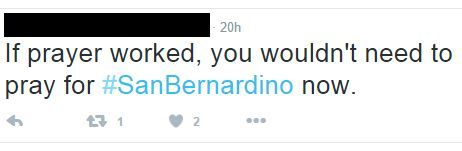
HOURS AFTER THE SHOOTING in San Bernardino, cries for the victims lit up social media. Political rhetoric was also spewed, yet there were also calls for prayer for the victims and for our land. Unfortunately, alongside those petitions for God’s help, shouts that God doesn’t help rang from the voices of the unbelievers. Even the New York Daily News printed a headline, “God isn’t fixing this.” Here’s just one example of many twitter complaints against prayer…. 

V1-47 12-06-15 Borger Bulletin the problem of evil TWITTER blog

V1-47 12-06-15 Borger Bulletin the problem of evil HEADLINE

Why didn’t God stop the San Bernardino shooting?

This exemplifies part of our trouble with our evangelism, the problem of evil. The argument goes like this, “If God exists, then why is there evil (like this shooting in San Bernardino)?” It is a valid question. It’s an objection that many people have and without a legitimate answer, will keep many without hope. We need to be able to answer this question. It’s going to come up for you, as folks wrestle with understanding during troubling events such as this.

We have hope, because God has given it to us [1Peter 3:15], so let’s consider some answers to this question, the problem of evil: 

Answer #1: The question itself actually proves the existence of God, rather than disproves Him. The fact that people recognize evil means that they understand good. Without God, there can be no such thing as good or evil. 

If Evil exists, as they cry against it, then there must also be a good. If there is good and evil, there must be a standard (absolute moral law) by which to differentiate the two. If there is an absolute moral law, there must be an absolute moral law giver, GOD. If there is no absolute Moral Law Giver, then there is no moral law. If there is no moral law, then there is no good nor evil. 

Answer #2: Love & free will. Love is the greatest ethic. 1Co 13:13 But now abideth faith, hope, love, these three; and the greatest of these is love. 

This truth is recognized by every person on the face of the planet. Paul suggested that some things had no laws against them; Galatians 5:22-23 But the fruit of the Spirit is love, joy, peace, longsuffering, kindness, goodness, faithfulness, 23 meekness, self-control; against such there is no law. 

In order to have LOVE, you must have the freedom to NOT LOVE. This is contained in our FREE WILL. Otherwise you just have automatons, instinctually motivated animals. FREE WILL is one of the greatest gifts received from God. With the ability to choose LOVE, comes the ability to go against it. With that comes all the problems (evil) that are associated with not loving. 

When FREE WILL exists, LOVE can also exist along with EVIL, and since the original question suggests that there is an ABSOLUTE MORAL LAW, God also exists. 

God has given mankind freedom of choice. He gave Adam and Eve the freedom of choice. [Genesis 2:16-17] Their choice was plain — obey and live or disobey and die. Their choice was made through and by their own will having been influenced by Satan. Who is willing to say that since God foreknew the outcome that He forced or ordained Adam and Eve to sin? We commit evil by our own desires and lusts [James 1:13-14]. Mankind today still has freedom of choice. [Joshua 24:15] People can choose today whether or not they will serve God. [Revelations 22:17] Both the Psalmist [Psalm 119:30] and Mary, the sister of Martha [Luke 10:42], are examples of this principle. 

God’s grace has appeared to all people [Titus 2:11] yet millions reject it. Each person is accountable to the Gospel call [2Thessalonians 1:8, 14; John 12:47-48]. Those who reject the teachings of Jesus are held responsible [John 5:24; 8:24] The Bible teaches us that each person is free to choose to obey the gospel, or not to take advantage of God’s grace. It clearly shows one may resist God’s grace, His truth and His authority [Acts 7:51; Romans 13:2; 2Timothy 3:8]. 

Luke 13:3 I tell you, Nay: but, except ye repent, ye shall all likewise perish.
2Peter 3:9
The Lord is not slack concerning his promise, as some men count slackness; but is longsuffering to us-ward, not willing that any should perish, but that all should come to repentance. 

These verses teach that man has free will to choose. With the ability to choose, we can choose evil (as this couple did in San Bernardino) or we can choose to do good. 

Answer #3: God will bring every work into judgement. God is the Judge of all [Hebrews 12:23]. All shall bow at Jesus’ feet, That at the name of Jesus every knee should bow,” [Philippians 2:10; John 5:22, 27]. And every person shall be judged, “For we must all appear before the judgment seat of Christ; that every one may receive the things done in his body, according to that he hath done, whether it be good or bad.” [2Corinthians 5:10] 

_____________________________________________________

 Dearly beloved, avenge not yourselves, but rather give place unto wrath: for it is written, Vengeance is mine; I will repay, saith the Lord. [Romans 12:19]

­­­_____________________________________________________

 We as Christians can take comfort knowing that God is real, God is not dead, He is in power and that He will repay every evil. Let Him have His way with thee. [1Peter 5:6]

Spencer Blackwelder
evangelist for the Franklin St. Church of Christ in Borger, Texas

Forgiveness

EVERY ONE of us have failed another and were in dire need of their forgiveness. We also know the pain of another that has failed us. This is all too clear when we look at our close relationships such as with our spouses, children and the like. Without forgiveness, we could never have lasting relationships. It’s only through forgiving others can we ever expect to receive forgiveness [Matthew 6:14-15].

            We learn from this scripture, that forgiveness is an essential aspect of our walk with God, and we desire He forgive us our trespasses against Him. We also urge folks to forgive others, citing this same passage. This is an easy teaching, that is, until we are the ones that need to forgive. Forgiveness is much more difficult to practice than it is to teach.

            God knows us better than we know ourselves. He left us instructions on how to practice forgiveness, even giving us His Son as the perfect example [Ephesians 4:32 …. forgiving one another, just as God in Christ forgave you]. Jesus is incredibly merciful, having given His life while we were ungodly sinners and enemies [Romans 5:6-10].

Let’s consider the Scriptures regarding how to practice forgiveness.

            First, we need to face the facts that even after we’ve forgiven someone, they very likely will need to be forgiven again. We need look no further than our own mirrors to realize this truth. Jesus was asked how many times one should forgive their brother. His answer, “…up to seventy times seven.” [Matthew 18:22]. Before you start counting down to 490, understand that the lesson is that there’s no limit to the number of times we are to extend forgiveness.

­­­­­­­­­­­­­­­­_______________________________________________________________

“I do not say to you, up to seven times, but up to seventy times seven.”

_______________________________________________________________

Praise the Lord that there’s no upper limit on the number of times HE WILL FORGIVE YOU. Look again at the command on forgiveness in Matthew 6, there’s no cap. How often will He forgive you? He is faithful and just to forgive us our sins and to cleanse us from all unrighteousness. [1John 1:9] If forgiveness were a number where then is mercy, grace, compassion and kindness?

            Next, we need to show compassion toward the one seeking our forgiveness. Empathy is a part of forgiveness. Looking again at Matthew 6, we see that The Lord is connecting a reminder of your own sin to that of the one we need to forgive.

            Do you recall your sins against Him? How do you feel, guilty? David wrote that, “my sin is ever before me.” [Psalm 51:2] Did you feel that way? How much did you need God’s forgiveness? How long did you desire to return to Joy, knowing that you were out of fellowship with God?

            When someone is seeking your forgiveness, remind yourself of your own shortcomings toward God. YOU MAY FIND THAT YOU NEED FORGIVENESS FROM THE VERY PERSON SEEKING IT FROM YOU!

            Lastly, we need to let it go. Some folks say they forgive but when they’re sinned against again, they will drudge up the past failings. Why do you suppose sayings like, “Bury the hatchet, but remember where you buried it in case you need it” exist? It’s hard to let go when we’ve been wronged.

            The Lord has shown us through His own forgiveness toward us, how we are to complete the process. “And their sins and iniquities will I remember no more.” [Hebrews 10:17] Without this last step, forgiveness hasn’t really occurred. When we hang onto the memory of the wrong, it will fester in our hearts, hardening us against them, preventing forgiveness.

            If we fail to forgive, fully, we are in jeopardy of losing our own salvation. Our very hope of eternal life is dependent upon God forgiving us our own sins, and His forgiveness is contingent upon US FORGIVING OTHERS.

I said that to say this…….

            As a preacher, I am commanded to preach, “…in season, out of season…” [2Timothy 4:2]. This means that I need to teach whether or not it’s liked by the hearer, preaching the truth in love. [Ephesians 4:15]  Paul continues by saying to, “reprove, rebuke, exhort with all longsuffering and doctrine.” People never like to be rebuked (sharp disapproval), nor do they enjoy being reproved (reprimanded), but that is my charge.

            In the process of doing my duty, I’m placed in a very precarious situation, so I follow the example of the early preachers who prayed for boldness [Acts 4:29]. This boldness I request, may come across as arrogance, the rebuke as closed minded and the reproof as downright meanness. I’ve been accused of preaching too negatively by one and rebuked for not enough fire and brimstone by another.

            I beg you therefore, give me the benefit of the doubt. When I preach, I may touch a touchy subject. I may step on your toes (though I was aiming for your heart). Paul struggled with this as well, “For even if I made you sorry with my letter, I do not regret it; though I did regret it. For I perceive that the same epistle made you sorry, though only for a while.” [2Corintheans 7:8] I may even hurt your feelings. PLEASE, PLEASE, PLEASE forgive me! My brother, please know that I do my job out of a deep love for you, that you and I may go to Heaven.

            As a human being, I may even say something wrong. WHEN I do, please love me and FORGIVE me as I repent of those things. We’ll learn how to do this together, to forgive one another.

spencer            

When Church is Boring 

church is boring

LET’S BE HONEST, sometimes we get bored, even at the worship. What are we to do, change it? But what would we change?

Denominationalism has taken on this problem of boredom head on. In an attempt to keep folks in the buildings (and their money) they have made some changes. I’ve told you about the hip hop church, but I’ve also seen “churches” adding coffee shops, gymnasiums and activity centers with pizza.

            We have, in our own area, churches for cowboys, churches for blacks (I abhor this idea), churches for old, churches for young, all in an attempt to make church more attractive to people. Many have embraced the idea of “churchitainment.” 

            We’ve come to a time where it’s hard to distinguish between a worship service and a concert. Dimmed lights over the audience and flashing colored lights on the stage. Worship leaders have become pop stars for the church. Preachers are becoming famous for proclaiming motivational messages rather than the “…whole counsel of God.” [Acts 20:27].

            Folks have now been trained to seek out churches based on their entertainment value over the spiritual truths it proclaims, unaware that the main work of the church is to teach God’s truth. [Matthew 28:18-20; 1Timothy 3:15]  

            Some of you may never go that far, yet still insist on change. In Recent times we’ve seen churches of our Lord introduce instrumental music into the worship, seeing no wrong with such. No, it didn’t happen overnight, hand clapping & cheering replacing the old-fashioned “AMEN”.

            If I wanted to introduce instrumental music to this congregation I would stop teaching that it’s wrong. Then after some time of never teaching on it, I would begin by speaking positively about the instrument, bringing lessons from the Old Testaments use of the lyre and the harps.

            Next I would suggest that it’s ok. I could even put together a mid-week instrumental service. After that has taken hold I would then move it closer to the first day of the week. Then I would turn the evening Sunday worship into a “contemporary” worship while keeping the “traditional” worship in the morning.

            After everyone was used to that I would then ask, “Why are we divided?” Suggesting that both worships be the same. I would appeal to your emotions and point to the successes of other congregations.

Nothing New Under the Sun

I hope you see, this is exactly how denominations have strayed from the truth. “..There is nothing new under the sun.” [Ecclesiastes 1:9]. Way back in the early history of the nation of Israel, they said, “Make us a king like all the nations.” [1Samuel 8:5] They wanted CHANGE, like the other nations. The problem was that they had REJECTED GOD. “And the LORD said unto Samuel, Hearken unto the voice of the people in all that they say unto thee: for they have not rejected thee, but they have rejected me, that I should not reign over them.” [1Samuel 8:7]

If you would like to reject God, by ignoring His will, we too can become like all the churches. God’s word said to “sing”. [Ephesians 5:19; Colossians 3:16] That which is specifically authorized makes all other choices unauthorized. Singing with the voice is the only authorized form of music for the worship.

“Where is My Honor?” 

            God asked the Israelites this question in Malachi 1:6. He asked because they had found “church” boring, speaking about their worship. He goes on through the prophet to quote what they were saying, “Behold, what a weariness is it!” They had even “snuffed at it”, [Malachi 1:13]. Even back then, folks found the ways of God boring and stopped following His commands for the worship.

            God proposed 2 changes to those that found it boring, turning up their noses at the worship: (1) Shut the doors, stay home and stop worshipping in vain, vs10. (2)He obviously would prefer them to repent, take it to heart and give honor to His name, lest He “will even send a curse upon you, and I will curse your blessings.” [Malachi 2:2]

            Please look closely, He never says to change His commands for the worship to accommodate our tastes, preferences or desires. Has God changed? Is He a new God that has no concern for how we worship? Jesus told the Samaritan woman, “God is a Spirit: and they that worship him must worship him in spirit and in truth.” [John 4:24]. He condemned the Pharisees; “But in vain they do worship me, teaching for doctrines the commandments of men.” [Matthew 15:9]

            I can shorten my sermons, fire them up a bit, making them more like motivational speeches instead of “instruction in righteousness.” [2Timothy 3:16] The song leader can select only upbeat songs and we can say more meaningful prayers. The real answer is not to change what God has authorized for our worship, (prayer 1Corintheans 11:24], vocal singing [Ephesians 5:19; Colossians 3:16], giving cheerfully [2Corintheans 9:7], preaching & the Lord’s Supper [Acts 20:7]), but to change our hearts as worshippers.

            To worship in “spirit and truth” is to worship with our whole hearts, loving Him fully, [Matthew 22:37] and to worship according to His command, according to His revealed word, for His word is truth. [John 17:17] When we read the New Testament, we find some Christians worshipping in error with regard to the Lord’s Supper. Paul said, “What? have ye not houses to eat and to drink in? or despise ye the church of God, and shame them that have not? What shall I say to you? shall I praise you in this? I praise you not.” [1Corintheans 11:22]

            Are we exempt from doing things God’s way? Can we change the worship because we find the “old paths” boring? Can we change the worship to attract more people? If you can find any passage authorizing these changes then let’s do it. The problem with making changes, it requires us to sin by ignoring God’s commands and these errors lead to more changes until we can no longer recognize the church found in the New Testament.

Someone once said, “WHAT PEOPLE ARE CONVERTED WITH, THEY ARE CONVERTED TO.” How about we just stay on the “narrow way”, which is the way that leads to eternal life. [Matthew 7:14]

Spencer Blackwelder
Evangelist for the church of Christ in Borger, Tx

No Absolute Truth?

what is truth

SOMEBODY once said, “There is no absolute truth.” To which we must ask, “Is that absolutely true?”

I find funny the things people assert about the Bible, God and religion. They’re “absolutely certain” about what they claim. When pressed, they never have a logical answer.

We should be ready for these assertions and be able to answer them [1Peter 2:15]. Let’s examine a few things people claim…….

I’M AGAINST ORGANIZED RELIGION: This claim is often used to excuse a person from weekly Sunday worship. They bolster the claim by pointing out the hypocrisy of church goers.

AN ANSWER: We are hypocrites. That’s because we’re people. John said, “If we say that we have no sin, we deceive ourselves, and the truth is not in us.” [1John 1:8] Paul reminded the Corinthian Christians what kind of person they once were, fornicators, idolaters, thieves, drunkards and the list goes on [1Co 6:9-11]. Do you suppose that every Christian stops all sins as soon as they are baptized?

Another answer for this is found in the fallacy of the argument. Why is this discussion only used with religion, but seldom elsewhere? We never criticize the Ford Motor CompanyTM for a few lousy drivers of their cars. We never criticize the grocery store when one of the shoppers is rude to us. Why then do we criticize God’s command to worship? I suppose it’s because of the false notion from the first part, that all Christians must be perfect.

Sometimes we foster that belief when we as Christians act arrogantly, and speak with unbelievers without love. [Ephesians 4:15] Besides, can we ignore the commands of God when others fail to follow them accurately?

I’VE READ THE BIBLE: This one is usually used when a person is attempting to establish their credibility as they preach an opinion. This is hard to contradict because you have no actual proof, (other than they don’t know scriptures), and they get angry when you call them out.

AN ANSWER: One way you can disqualify this assertion, without calling them a liar, is by pointing out that the Bible cannot be learned with ONE reading. It requires continual, daily, reading and study [Acts 17:11]. Ask them this, “Did you go to school? If so, were you able to understand all of your lessons upon reading your textbooks once?”

ALL CHURCHES LEAD TO THE SAME PLACE: Another way this claim is stated is when a preacher says, “Find a church of your choice.” The belief is that, due to the different personalities of people, the Lord has allowed different style of churches, but they’re all leading people to heaven.

AN ANSWER: The Scriptures teach that the church is the body of the Lord, [Ephesians 1:22, 23], therefore, when in chapter 4 it says, “There is one body,” it’s teaching that there is only one church. If there is only one church, then why are there so many different doctrines, even ones that teach a different gospel? [Galatians 1:6-9]

In order for any assembly of Christians to be considered a church of our Lord is if they follow the whole council of God. [Acts 20:27] Our desire here in Borger is to be a true church of Christ. [Matthew 7:21]

THE BIBLE DOESN’T SAY I CAN’T: For me, this is one of the most ridiculous statements I ever hear. What they mean is that there is no specific mention of their sin, therefore, they are free to commit said sin.

I tried this line of reasoning with my parents once. Just once. This method of reasoning NEVER works in other areas of our lives, yet we expect to use this rational with bible study. It is this attitude that causes problems, not just in the church, but in our personal lives. You’ve heard the unverified story of the person that is injured because he used his lawn mower as a hedger. He subsequently sued the mower company using this logic, “you didn’t say in the manual that I couldn’t use it as a hedger.”

AN ANSWER: The Lord has taught us that silence is not authoritative. When King David sought to build God a permanent Temple, he was stopped because God NEVER SAID ANYTHING ABOUT IT.  In 2Samuel 7:7, God asks, “Wherever I have moved about with all the children of Israel, have I ever spoken a word to anyone from the tribes of Israel, whom I commanded to shepherd My people Israel, saying, ‘Why have you not built Me a house of cedar?‘”‘  This is also taught in the book of Hebrews regarding the priesthood of Jesus [Hebrews 7:14], as well as over the issue of circumcision, [Acts 15:24].

These passages teach clearly, silence is prohibitive. If the bible doesn’t say you can, then you can’t. To argue, as do so many denominations, “any practices not expressly forbidden could be considered”, is to argue AGAINST God and His divine word.

There is an absolute truth, it is God’s inspired and divine word [John 17:17]. God delivered this truth to His Apostles and inspired men, and they wrote it down. When we read it, we can know what they knew about the mystery of God. Let us study God’s word and know the truth. [John 16:13; Ephesians 3:3-4; John 8:32]

spencer blackwelder
evangelist – Franklin St Church of Christ, Borger Texas.

Are you Noble?

SOMEBODY asked me one time about a preacher on a certain website to find out if they’re any good. I responded by saying, “Whether they’re on the internet, in a book or preaching from a pulpit in the church of Christ, we are to test every person to determine if their teaching aligns with God’s teachings.

That is the meaning of the verse in 1John 4:1; “Beloved, believe not every spirit, but try the spirits whether they are of God:” Then the writer added; “because many false prophets are gone out into the world.”

The Apostle John was warning that some will teach error, “false prophets.” The Apostle Peter had a similar warning, except that he said some false teachers would come from among the Christians; “But there were false prophets also among the people, even as there shall be false teachers among you, who privily shall bring in damnable heresies, even denying the Lord that bought them, and bring upon themselves swift destruction.” [2Peter 2:1]

Is there a way to determine between a false teacher and a true teacher from God? Yes, there is, and we MUST prove for our own knowledge what is being taught. [1Thessalonians 5:21]

TESTING THE TEACHER

In John’s 1st letter, he gives us two tests…..

TEST ONE – Do they deny that Jesus Christ came in the flesh? A true teacher will say that Jesus Christ has come in the flesh [1John 4:2]. Some folks are denying that Jesus is the Christ, the Son of the living God. [2John 1:7]

TEST TWO – Does the teaching match what the Apostles taught? We perform the test by matching it to what the Apostles taught as they were taught it by the Holy Spirit.

Looking at verse 6 of John’s 1st letter he tells us how to know the difference between truth and error, “We are of God: he that knoweth God heareth us; he that is not of God heareth not us. Hereby know we the spirit of truth, and the spirit of error.”

The Apostles were told what to teach and what to write by the Holy Spirit [John 16:13]. Also in 2Timothy 3:16 Paul wrote, “All scripture is given by inspiration of God…..” He also said, “How that by revelation he made known unto me the mystery; (as I wrote afore in few words,” [Ephesians 3:3].

In Galatians 1, Paul wrote, “But though we, or an angel from heaven, preach any other gospel unto you than that which we have preached unto you, let him be accursed” [Galatians 1:8].

He warned us in the 1st Corinthian letter, not to follow men further than what we can see in the word of God, “….that ye might learn in us not to think of men above that which is written, that no one of you be puffed up for one against another.” [1Corinthians 4:6b]

TWO OTHER TESTS

Though not mentioned by John, we can read about two more tests…..

TEST THREE – Moses answered this question, “How shall we know the word which the LORD hath not spoken?” [Deuteronomy 18:21-22]

            When a prophet makes a statement in the name of the Lord, if what he says does not take place and his words do not come true, then his word is not the word of the Lord. Certain modern denominations have made some predictions that have NOT come to pass. By this test, they are NOT from God.

TEST FOUR – This test is to be used if someone claims to do a wonder (miracle) or a sign [Deuteronomy 13:1-3]. If their teaching, doctrine, contradicts what God has already revealed, they are to be rejected. It matters not whether they were able to perform the sign or to give a wonder. This is very similar to what John taught in the second test. (BTW – signs, wonders & tongues have ceased 1Cor 13:8)

PERFORMING THE TEST

At the beginning of the church, as the inspired men and Apostles taught, folks performed these tests. We read of one such group in Acts 17, the Bereans. The writer notes that these were “more noble (honorable).” Why were they nobler? Simple, because they, “received the word with all readiness of mind, and searched the scriptures daily, whether those things were so.”

Look closely at this passage, the context shows that it was the Apostle Paul, along with Silas, who are teaching. God COMMENDS the Bereans for performing the tests for the Apostle Paul! Compare that to some denominations, even today, who CONDEMN the examination of scripture and tell their members that they are unable to know the truth unless the leadership teaches it.

The title asks if you are noble. We can be noble too, when we search the scriptures, just as they did. A message repeated yesterday and remains today, SEARCH THE SCRIPTURES. [Isaiah 34:16; Luke 16:29; John 5:39; 2Timothy 2:15, 16].

A final word. Let’s note one other thing that the Bereans did. It says that they searched the scriptures DAILY. I was studying with a brother in Christ the other day and he punched me right in the heart when he said, “We would all be better off if we INCREASED to weekly our DAILY STUDY.” Did you catch it? He is suggesting, and I agree, that we’re falling short in our daily reading of God’s word. So, I ask you, nay, I ask myself, Am I more noble?

Spencer Blackwelder

Let your conscience be your guide?

Give a Little Whistle

Give a Little Whistle


Give a little whistle, and always let your conscience by your guide.” Jiminy Cricket (1)

            In the movie, Pinocchio, the little puppet wanted to be a good boy and Jiminy was going to help him. All he had to do was whistle. Oh if that were only possible!!

            The presumption in the movie is that the conscience is never wrong, but is that true? It’s true that we do need to let our conscience be a guide, but what if it’s wrong? Who sets the conscience anyway, God? If God sets the conscience then none of us would have ever sinned. Of course we all have. [1John 1:8]. If God sets the conscience then how do we explain Saul?

            Saul was a Jew, zealous toward God, “I am verily a man which am a Jew, born in Tarsus, a city in Cilicia, yet brought up in this city at the feet of Gamaliel, and taught according to the perfect manner of the law of the fathers, and was zealous toward God, as ye all are this day.” [Acts 22:3]

            He was among the religiously elite class of Pharisees, “….after the most straitest sect of our religion I lived a Pharisee.” [Acts 26:5]. He succeeded beyond his equals far and above any other. “And profited in the Jews’ religion above many my equals in mine own nation, being more exceedingly zealous of the traditions of my fathers.” [Galatians 1:14]. Concerning the Law of Moses he kept it diligently. [Philippians 3:5]

            Because of his zeal toward God, he persecuted the sect called “the way” because he knew in his heart that it was wrong, even consenting to the death by stoning of Stephen. He persecuted Christians, consenting to their deaths, breathing out threats and slaughter against them. Delivering both men and women into prison. He petitioned the chief Priests to give him permission to go to other cities and synagogues, that if he found any “of the way”, he may bring them bound to Jerusalem.  [Acts 7:58 ; 8:1,3; 9:1,2; 22:4]

            If God sets the conscience, then what happened to Saul of Tarsus? He said, “I verily thought with myself, that I ought to do many things contrary to the name of Jesus of Nazareth.” [Acts 26:9] He was very sincere about his persecution of the church. [Acts 23:1]

            Our conscience is our moral compass, but only if it is set correctly, pointing to true north. In other words, attuned to truth. [John 17:17]

            The trouble is that our consciences are sometimes set wrong. Saul, later called Paul, had a conscience that was set toward God, but with wrong, outdated information. [1Timothy 1:13]

IS SINCERITY ENOUGH?

            If sincerity, based on our conscience, determines whether or not we go to heaven, then Saul was heaven bound while he persecuted the Lord. [Acts 9:4]. A famous denominational Pastor said that he doesn’t know if a Jew, Muslim or an atheist is lost if they don’t follow Jesus. “You know, I’m very careful about saying who would and wouldn’t go to heaven. I don’t know …” (2)

            If sincerity is enough, then why did Jesus tell Saul, “….Arise, and go into the city, and it shall be told thee what thou must do.” [Acts 9:6b]?  If sincerity is enough, then why was he told “arise, and be baptized, and wash away thy sins, calling on the name of the Lord.” [Acts 22:16]? If sincerity is enough, why did he tell others to confess that Jesus is the Christ? That if thou shalt confess with thy mouth the Lord Jesus, and shalt believe in thine heart that God hath raised him from the dead, thou shalt be saved. [Romans 10:9]. If sincerity is enough, why did he tell others to repent? [2Corinthians 7:9]. If sincerity is enough, why did he tell others to be baptized? [Romans 6:3]

GIVE A LITTLE WHISTLE

           Oh, it would be nice if we could just whistle and have Jiminy show up to keep us out of trouble? Jesus is no cricket, and He’s not a pet that we call to do our bidding. No sir, we have been given control over our conscience, and we are to train it. Jesus showed us the way….


Spencer Blackwelder

1 – Walt Disney Productions 1940.
2 – Larry King Live. http://www.cnn.com/TRANSCRIPTS/0506/20/lkl.01.htm

Are we A Strong Congregation?

3-09-15 Eph 6_6

What do you look for in a strong congregation? The scriptures teach that a congregation is made up Christians in a local area who assemble to worship and to work together. Revelations 3:1 calls the church in Laodicea dead and in 3:16 is lukewarm. None of us want to be in dead or lukewarm congregations, so what sets apart a strong congregation from a dead one? 

They Love God

The first and foremost characteristic of a strong congregation is when it’s composed of Christians who, “…love the Lord thy God with all thy heart, and with all thy soul, and with all thy mind, and with all thy strength: this is the first commandment.” [Mark 12:30]

The most powerful and effective motivation to obey God’s word is a sincere and deep love of God.

They Love God’s Word

A strong congregation loves God, therefore also loves His word. When I speak to “religious” people, one thing I notice is the lack of knowledge of God’s word and His patterns.

Weak congregations are short on giving; “…attendance to reading, to exhortation, to doctrine.” [1Timothy 4:13] Strong congregations consider FIRST what the will of the Lord is from His divine Word, for it is the truth; [John 17:17]. This enables them to worship in truth [John 4:24], Teach the truth [1Timothy 1:3] and do His work according to the divine pattern [Ephesians 4:12]. 

They Rejoice in the Lord

When a strong congregation loves God and His word, they will rejoice despite the difficulties that come from living on this side of the Judgement.

Paul warned the early Christians that life was tough, and not many others had a more difficult time than he. The Lord teaches, through Paul, to be content regardless of circumstance. [Philippians 4:11-13] The Lord also taught us to be prepared for trials that every Christian will face and to rejoice. [James 1:2; 1Peter 4:12] 

It is Growing and Working

Every congregation has folks that are at varying levels of their maturity. There are new converts, babes in Christ, some more mature, some struggling and overcoming sins and still others that are strong in their faith. [1Corintheans 8:12-31]

All of them, doing their own part in the body [Ephesians 4:11-12], are growing in grace and knowledge of the Lord [2Peter 3:18], so that the body grows [Ephesians 4:16], always abounding in the work of the Lord. [1Corintheans 15:58] 

It Follows the New Testament Pattern of organization

A strong congregation is striving to attain and to follow the New Testament pattern for its organization. [Philippians 1:1]

They have or are qualifying men to oversee as elders [Acts 20:17; 1Timothy 3:1-7; 1Peter 5:1-2], doing the same regarding deacons to serve under elders, [1Timothy 3:8-13]. In whichever state, the strong congregation has faithful men to see that the work of the Lord is accomplished never losing sight of the ideal. 

They’re Proactive

The strong congregation never waits. It continues to be zealous for good works [Titus 2:14; Revelations 3:19]. They want to be found doing and increasing in the Lord’s work [Matthew 25:14-30], never burying their talents or content with just getting themselves to heaven, because they want to others to be saved also [2Timothy 2:2].

What About the Church in Borger?

I bet, that as you read this article, you were also thinking about our congregation. I believe that we have a strong congregation. Perhaps not like the church in Smyrna which the Lord had nothing negative to say [Rev 2:8], but one that has the ability to overcome what is lacking [Revelations 2:7].

I feel that we are strong because we love God and His word, we rejoice and help each other during difficult times. We all desire for the truth to grow in Borger and that folks respond to the Gospel. I am grateful to you and to God for this local congregation.

That’s just my opinion, but what do you think? If you were to rate our congregation on a scale of 1-10, what number would you give us? If it’s not a 10 for being the best, why not? More importantly, what are you doing to change it?