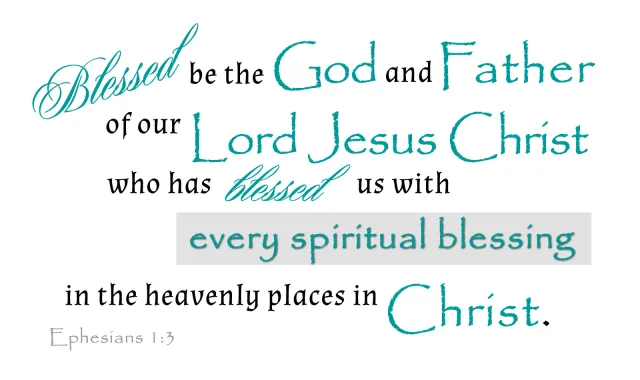
“Blessed be the God and Father of our Lord Jesus Christ, who hath blessed us with all spiritual blessings in heavenly places in Christ” (Eph 1:3)
Last month we saw how all spiritual blessings are IN CHRIST, and none are for those OUTSIDE of Christ. This month we shall answer the all-important question, “How to be in Christ?”
Continuing in the first chapter of Ephesians, all spiritual blessings (such as election, adoption, redemption, forgiveness, inheritance, and sealing with the Holy Spirit) belong exclusively to those who are “IN CHRIST” (Ephesians 1:3–14).
To be “IN CHRIST” means to be united with Him in His death, burial, and resurrection, then His righteousness, and blessings become yours (Romans 6:3–11; 2Cor 5:17, 21; Col 2:12; Gal 2:20).
The New Testament describes this union as happening through faith in Christ, through FAITH, REPENTANCE and BAPTISM:
Faith is the means: “Ye are all sons of God by faith in Christ Jesus” (Galatians 3:26). Believing the gospel of Jesus Christ begins our unity to Christ (Romans 10:9–10; Ephesians 2:8–9).
Repentance is inseparable from faith: Repentance was preached by Jesus at the beginning when Jesus said, “The time is fulfilled, and the kingdom of God is at hand: repent ye, and believe the gospel” (Mark 1:15). And continued to be preached after His death, burial, & resurrection, “Testifying both to the Jews, and also to the Greeks, repentance toward God, and faith toward our Lord Jesus Christ” (Acts 20:21; cf Acts 2:38).
Baptism in water is the point of inclusion: “Then they that gladly received his word were baptized: and the same day there were added unto them about three thousand souls” (Acts 2:42, 47). “For as many of you as have been baptized into Christ have put on Christ” (Galatians 3:27). “Know ye not, that so many of us as were baptized into Jesus Christ were baptized into his death” (Romans 6:3). “Buried with him in baptism, wherein also ye are risen with him through the faith of the operation of God, who hath raised him from the dead” (Colossians 2:12). Note that it is faith in God’s work as we obey the Gospel.
Thus, one becomes “IN CHRIST” by Hearing, Believing the gospel of Christ, Repentance, Confession (Romans 10:9), then being Baptized into Him (immersion in water in His name, Acts 2:38). It’s only then that a person is a new creation (2Corinthians 5:17), reconciled to God, and receives every spiritual blessing in Him.
“Blessed be the God and Father of our Lord Jesus Christ, who hath blessed us with all spiritual blessings in heavenly places in Christ” (Eph 1:3)
From this verse we learn that those who are “IN CHRIST” have been given spiritual blessings. There is a very important distinction being made by this verse; those “IN CHRIST” from those who are “OUTSIDE of CHRIST.”
Paul describes those who are (or were) outside of Christ: “…who were dead in trespasses and sins; Wherein in time past ye walked according to the course of this world, according to the prince of the power of the air, the spirit that now worketh in the children of disobedience: Among whom also we all had our conversation in times past in the lusts of our flesh, fulfilling the desires of the flesh and of the mind; and were by nature the children of wrath, even as others” (Eph 2:1-3), and “That at that time ye were without Christ, being aliens from the commonwealth of Israel, and strangers from the covenants of promise, having no hope, and without God in the world” (Eph 2:12, emphasis added seb). There’s more going on in these chapters, but for our discussion we must recognize that there are NO SPIRITUAL blessings for anyone OUTSIDE OF CHRIST! This must serve as a warning for everyone. Living outside of Christ is like standing exposed in the open wilderness during a ferocious storm—far beyond the sturdy walls of a fortified city or the secure shelter of a stormproof refuge.
The winds howl, lightning cracks without mercy, torrents of rain lash, and unseen predators circle in the darkness. Every step is perilous: the ground shifts underfoot, thunder drowns out any cry for help, and the cold seeps into the bones with no warmth to counter it. There is no barrier against the elements, no refuge from judgment, no covering from the wrath to come. There’s only vulnerability, isolation, and inevitable ruin.
Jesus Himself described this danger vividly in the parable of the two builders (Matthew 7:24-27): The foolish man built his house upon the sand. When the rain descended, the floods came, and the winds blew and beat upon that house, it fell: and great was the fall of it.
Outside of Christ, life is built on shifting, unstable ground. No matter how impressive the structure appears, the inevitable storms of life, temptation, trial, and final judgment will sweep it away completely.
In stark contrast, the wise man built his house upon the rock. The same rain fell, the same floods came, the same winds blew and beat upon that house—yet it stood: for it was founded upon a rock.
Do you remember what Jesus declared to Peter in Matthew 16:18? “And I say also unto thee, That thou art Peter, and upon this rock I will build my church; and the gates of hell shall not prevail against it.” That Rock is Christ!
The Bible presents the children of Abraham, specifically the twelve tribes of Israel, as God’s chosen people, selected for a divine purpose: to bring forth the Messiah, Jesus Christ, through whom all nations would be blessed. This narrative weaves through the Old and New Testaments, showing the progression from the Law of Moses to the New Covenant in Christ, culminating in the universal call to become God’s chosen through faith and obedience to the Gospel.
The Chosen People and the Promise. God’s covenant with Abraham (Genesis 12:1-3) established his descendants as the vehicle for His redemptive plan. Through Abraham’s seed—ultimately Christ (Galatians 3:16)—all nations would be blessed. The twelve tribes of Israel, descending from Abraham through Isaac and Jacob (Genesis 17:19; 35:10-12), were chosen to preserve God’s covenant, carry His oracles, and prepare the world for the Messiah. Deuteronomy 7:6-8 emphasizes that Israel’s election was not due to their merit but God’s love and faithfulness to His promise.
The Purpose of the Law of Moses. The Law of Moses, given to Israel at Sinai (Exodus 19-20), served as a tutor to lead humanity to Christ (Galatians 3:24-25). It revealed God’s holiness, exposed human sinfulness (Romans 3:20), and provided a framework for Israel’s covenant relationship with God. The Law included moral, ceremonial, and civil commands, pointing to Christ through types and shadows (Hebrews 10:1). For example, the Passover lamb (Exodus 12) prefigured Christ’s sacrificial death (1 Corinthians 5:7). However, the Law was temporary, unable to justify or remove sin permanently (Hebrews 7:19; 10:4). Its purpose was to prepare Israel—and the world—for the coming of the Messiah.
Fulfillment in Christ and the New Covenant. With Christ’s death, burial, and resurrection—the Gospel (1 Corinthians 15:1-4)—the Law of Moses was fulfilled and abrogated (Colossians 2:14; Hebrews 8:6-13). Jesus, as the promised seed of Abraham (Galatians 3:16), accomplished what the Law could not: justification and reconciliation with God (Romans 5:1-2). The New Covenant, established through His blood (Matthew 26:28), replaced the Old Covenant, making salvation accessible to all—Jew and Gentile—through faith in Christ (Romans 10:12-13). The Great Commission (Matthew 28:18-20) commands the spread of this Gospel to all nations, inviting everyone to obey Christ’s doctrine (2 John 1:9).
Paul expresses his heart for Israel’s salvation in Romans 10:1, noting their zeal for God but lack of knowledge about the righteousness that comes through faith in Christ (Romans 10:3-4). The Law’s purpose was fulfilled in Christ, and now all who believe—whether Jew or Gentile—are justified by faith (Galatians 3:26-29).
The Saints as the Chosen People. Under the New Covenant, the “chosen people” are no longer defined by ethnicity but by faith and obedience to the Gospel. 1 Peter 2:9 describes believers—Jew & Gentile—as a “chosen generation, a royal priesthood, a holy nation,” echoing Israel’s calling in Exodus 19:5-6 but now applied universally to the church. Anyone who obeys the Gospel by faith (Romans 1:16; Acts 2:38) becomes part of this spiritual Israel, grafted into God’s family (Romans 11:17-24). The saints, through Christ, inherit the promises made to Abraham (Galatians 3:29).
The twelve tribes of Israel were chosen to bring Christ into the world, with the Law of Moses guiding them toward this purpose while exposing humanity’s need for a Savior. Christ’s Gospel fulfilled and replaced the Law, opening salvation to all who obey Him by faith. The saints, as God’s new chosen people, reflect His redemptive plan: a universal call to become His own through the New Covenant, demonstrating His grace and power to save.
HOW IS ISRAEL SAVED TODAY?
Israel (and everyone else) is saved not by the Law of Moses but by the Law of Christ under the New Covenant. The fulfillment of Jeremiah 31:31-34, as affirmed in Hebrews 8, establishes that salvation for Israel—and all people—comes through faith and obedience to the Gospel of Christ.
Salvation Through the Law of Christ.
Since Pentecost, when the New Covenant was inaugurated with the outpouring of the Holy Spirit (Acts 2:1-4), salvation for Israel (and all nations) is through the Law of Christ, which is the Gospel—the message of His death, burial, and resurrection (1 Corinthians 15:1-4).
The Bible is clear:
Faith and Obedience to the Gospel: Romans 10:9-13 states that salvation comes by confessing Jesus as Lord and believing in His resurrection, with “no distinction between Jew and Greek, for the same Lord over all is rich to all who call upon Him.” Acts 2:38, preached to Jews on Pentecost, commands repentance and baptism in Jesus’ name for the forgiveness of sins, resulting in 3,000 Jews being saved (Acts 2:41). This marks the beginning of salvation under the Law of Christ.
The New Covenant Fulfilled: Jeremiah 31:31-34 promised a new covenant with Israel, where God would write His law on their hearts and forgive their sins. Hebrews 8:6-13 declares this fulfilled in Christ, who is the “mediator of a better covenant.” His sacrifice replaced the Old Covenant (Hebrews 8:13), making the Gospel the means of salvation for all, including Israel.
The Law of Christ: Galatians 6:2 refers to “the law of Christ” as the guiding principle for believers. This involves faith working through love (Galatians 5:6), obedience to Christ’s commands (John 14:15), and adherence to His doctrine (2 John 1:9). For Israel, this means accepting Jesus as the Messiah and obeying His Gospel, as seen in the Jewish believers of the early church (Acts 2:41; 6:7).
The Law of Moses Abrogated.
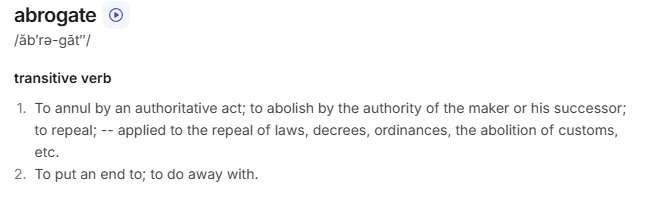
(Abrogated: To annul by an authoritative act; to abolish by the authority of the maker or his successor; To put an end to; to do away with.)
The Law of Moses, given to Israel at Sinai (Exodus 19-20), is no longer the means of salvation:
Fulfilled and Replaced: Jesus fulfilled the Law (Matthew 5:17-18), and His death on the cross abolished it as a system of justification (Colossians 2:14; Ephesians 2:15). Hebrews 10:9 states that Christ “takes away the first [covenant] that He may establish the second.” The Law’s sacrifices and ordinances could not perfect or justify (Hebrews 10:1-4; Galatians 3:10-13).
A Tutor to Christ: Galatians 3:24-25 explains that the Law was a “tutor to bring us to Christ,” but “after faith has come, we are no longer under a tutor.” For Israel, the Law pointed to the Messiah, but since His coming, salvation is through faith in Him, not the Law’s works (Romans 10:4).
Inability to Save: Acts 15:10-11, in the context of Jewish believers, affirms that neither Jews nor Gentiles are saved by the Law, which was a “yoke” they could not bear. Instead, “through the grace of the Lord Jesus Christ we shall be saved.”
Israel’s Salvation Today.
Since Pentecost, Jews (Israel) are saved by:
Hearing and Believing the Gospel: Romans 10:17 says faith comes by hearing the word of Christ. Jews must believe Jesus is the Messiah, as Peter proclaimed to Israel (Acts 2:36).
Repentance and Baptism: Acts 2:38 applies to Jews, as seen in the mass conversions at Pentecost. Baptism in Jesus’ name unites Jews and Gentiles with Christ (Galatians 3:27-29).
Ongoing Faithfulness: Like all believers, Jews must abide in Christ’s doctrine (2 John 1:9) and remain faithful (Hebrews 3:14). The remnant of Israel saved today includes Jews who obey the Gospel, such as the apostles and early disciples (Romans 11:5).
The Remnant and Future Hope.
Romans 11:5 speaks of a “remnant according to the election of grace” among Israel, saved by faith in Christ, as exemplified by Jewish believers in the New Testament (e.g., Acts 21:20). While Romans 11:26 anticipates a future time when “all Israel will be saved,” this does not imply salvation apart from the Gospel. The context (Romans 11:23-27) suggests Israel’s salvation comes through faith in Christ, aligning with the New Covenant promise of Jeremiah 31:31-34, fulfilled in Christ’s blood (Hebrews 8:8-12; Matthew 26:28).
Conclusion.
Since Pentecost, Israel is saved through the Law of Christ—the Gospel—not the Law of Moses, which was fulfilled and abrogated (Hebrews 8:13; Colossians 2:14). The New Covenant, promised in Jeremiah 31:31-34 and established through Christ (Hebrews 8:6), requires Jews to believe in Jesus as Messiah, repent, and be baptized (Acts 2:38; Romans 10:9-13). The remnant of Israel today, like all believers, enters God’s chosen people (1 Peter 2:9) by faith and obedience to the Gospel, fulfilling God’s redemptive plan through the eternal covenant of Christ.
The Kingdom of God (also called the Kingdom of Christ or of Heaven) is not a distant hope but a present reality inaugurated at Pentecost and advancing until Christ’s return. Here are five scriptural proofs that the Kingdom has been established and is operative now.
The Kingdom was Predicted and Came with Power on Pentecost: Jesus declared, “Some standing here will not taste death until they see the kingdom of God come with power” (Mark 9:1, ESV). He tied this power to the Holy Spirit’s arrival (Acts 1:8). On Pentecost, Acts 2:1–4 records the Spirit’s descent with wind, fire, and tongues, fulfilling Joel’s prophecy (Acts 2:16–21). Three thousand were baptized, marking the Kingdom’s (and the church’s) explosive launch (Acts 2:41). This was no mere preview; the Spirit’s outpouring signaled the Kingdom’s arrival, as Peter affirmed Christ’s enthronement (Acts 2:30–36). The Kingdom came with power, not as a future event but a present reality. Christ did not fail to set up His Kingdom and His church.
The Ordinance and Observation of the Lord’s Supper show the Kingdom is a present reality: Jesus promised to drink the cup anew “in the kingdom of God” (Matthew 26:29), and in 1Corinthians 11:20–26, Paul describes the early church regularly partaking of the Lord’s Supper, proclaiming Christ’s death “until He comes.” If the Supper is exclusive to the Kingdom, and believers ate it weekly on the 1st day of the week, the Kingdom must be present. This ordinance isn’t a rehearsal but a participation in Christ’s reign, a Kingdom meal served now, uniting believers with their risen King. Christ did not fail to set up His Kingdom and His church.
Since Pentecost, those that obeyed the Gospel Were and Are Translated into the Kingdom: Colossians 1:13 declares, “He has delivered us from the domain of darkness and transferred us to the kingdom of His beloved Son.” The past tense (“has transferred”) confirms believers are already Kingdom citizens ( cf. Philippians 3:19). Written to living Christians around AD 60, this verse shows the Kingdom isn’t a future destination but a current reality. We’ve been relocated, not to a physical territory but to Christ’s spiritual dominion, where His redemption and forgiveness reign (Col 1:14). Christ did not fail to set up His Kingdom and His church.
The Kingdom came with Power as seen in the Enthronement of Christ: Peter’s Pentecost sermon links Christ’s resurrection to His enthronement on David’s throne (Acts 2:30–36). Ephesians 1:20–22 adds that God seated Christ “far above all rule and authority,” making Him head over all things for the church. A king on the throne means a kingdom in session. Christ’s ascension wasn’t a delay but a coronation, inaugurating His reign over the Kingdom that began at Pentecost and continues now. He will reign until He delivers the kingdom to God when “he hath put all enemies under his feet” 1Cor 15:24-25). Christ did not fail to set up His Kingdom and His church.
We who are in Christ Reign with Him now: Paul writes that Jesus sits on His throne, “Which he wrought in Christ, when he raised him from the dead, and set him at his own right hand in the heavenly places,” (Ephesians 1:20). Then he says, “And hath raised us up together, and made us sit together in heavenly places in Christ Jesus:” (Ephesians 2:6). This present tense language shows the Saints reigning with Christ now. The language of Revelation 1:6 shows our identity as kings and priests now; “And hath made us kings and priests unto God and his Father; to him be glory and dominion for ever and ever.” We reign with Christ when we obey the Gospel of Christ. Christ did not fail to set up His Kingdom and His church.
Since Pentecost, Christ reigns, Satan is bound (Rev 20:2; Matt 12:29), and believers live as Kingdom citizens. This perspective embraces the “already” of Christ’s rule, and rejects any idea that Jesus failed to set up His promised Kingdom and His church. This reality is urging us to live boldly for the King who reigns now.
Christ is: “who is the blessed and only Potentate, the King of kings, and Lord of lords;” (1Timothy 6:15)
Christ did not fail to set up His Kingdom and His church.
As faithful believers, our union with Jesus Christ grants us a treasure trove of spiritual riches, transforming our lives and securing our eternal destiny. The Bible reveals many profound blessings we receive through Christ. Here are 6 amazing blessings we have through Christ.
First, we experience cleansing from sin through Christ’s atoning work. The Bible declares, “But if we walk in the light, as he is in the light, we have fellowship one with another, and the blood of Jesus Christ his Son cleanseth us from all sin” (1 John 1:7, KJV). Additionally, Hebrews 9:14 assures us, “How much more shall the blood of Christ, who through the eternal Spirit offered himself without spot to God, purge your conscience from dead works to serve the living God?” Through Christ, our sins are washed away (in baptism, see Acts 22:16), freeing us from guilt and enabling us to live in righteousness.
Second, we are given the hope of heaven, a confident expectation of eternal life with God. Colossians 1:5 speaks of “the hope which is laid up for you in heaven, whereof ye heard before in the word of the truth of the gospel.” Titus 1:2 further confirms, “In hope of eternal life, which God, that cannot lie, promised before the world began.” This hope anchors our souls, giving us peace and purpose as we await our heavenly home.
Third, we receive redemption in His blood, the price paid for our freedom from sin’s penalty. Ephesians 1:7 states, “In whom we have redemption through his blood, the forgiveness of sins, according to the riches of his grace.” Likewise, 1 Peter 1:18-19 reminds us, “Ye were not redeemed with corruptible things, as silver and gold… but with the precious blood of Christ, as of a lamb without blemish and without spot.” Christ’s sacrifice secures our salvation, a gift we could never earn.
Fourth, Christ serves as our intercessor between God and man, bridging the gap sin created. Hebrews 7:25 proclaims, “Wherefore he is able also to save them to the uttermost that come unto God by him, seeing he ever liveth to make intercession for them.” 1 Timothy 2:5 adds, “For there is one God, and one mediator between God and men, the man Christ Jesus.” Through His intercession, we have constant access to God’s throne.
Fifth, we are blessed with all spiritual blessings in Christ. Ephesians 1:3 declares, “Blessed be the God and Father of our Lord Jesus Christ, who hath blessed us with all spiritual blessings in heavenly places in Christ.” 2 Peter 1:3 echoes, “His divine power hath given unto us all things that pertain unto life and godliness.” These blessings equip us for a life of faith and service.
Finally, we are reconciled to God through Christ, restored to a right relationship with Him. Romans 5:10 assures, “For if, when we were enemies, we were reconciled to God by the death of his Son, much more, being reconciled, we shall be saved by his life.” Colossians 1:20 reinforces, “And, having made peace through the blood of his cross, by him to reconcile all things unto himself.” Reconciliation brings us back to God’s embrace, healing the divide caused by sin (Isaiah 59:2).
These six blessings in Christ reveal the depth of God’s love and the sufficiency of Christ’s work. They are ours by obedient faith in Him, offering joy and security for this life and eternity.
The Bible we hold today is a treasure, a book that has shaped lives for centuries. But how can we trust it’s the real deal, faithfully passed down through time? The early believers (often called church fathers) from the first few centuries after Christ give us compelling evidence that our Bible is reliable, rooted in their lives, writings, and devotion.
To begin with, people like Ignatius of Antioch and Polycarp, were taught by the apostles or their immediate followers. They didn’t just read about Jesus; they learned from those who walked with Him. Their writings, like Ignatius’ letters (circa 110 AD), echo the New Testament teachings, quoting books like Matthew, John, and Paul’s epistles as Scripture. For example, Ignatius references Jesus’ death and resurrection (Letter to the Smyrnaeans 1:1-2), aligning with 1 Corinthians 15:3-4. This shows the New Testament was already revered as God’s Word within a generation of the apostles, not some later invention.
Also, 2nd century believers defended the Bible’s truth against heresies. Irenaeus, in his Against Heresies (circa 180 AD), argued that the four Gospels (Matthew, Mark, Luke, and John) were uniquely authoritative, handed down through apostolic tradition. He tied their reliability to the Old Testament prophecies fulfilled in Christ, like Isaiah 53:5, which speaks of the Messiah’s suffering. Irenaeus’ work shows the early Church carefully preserved the Scriptures, ensuring no random texts slipped in. Their vigilance gives us confidence that our Bible matches what they held sacred.
Additionally, they sealed their trust in Scripture. Polycarp, martyred around 155 AD, faced death boldly, quoting Jesus’ words from Matthew 10:28: “Do not fear those who kill the body but cannot kill the soul.” His courage, recorded in The Martyrdom of Polycarp, proves he didn’t just believe the Bible, he staked his life on it. Countless others, like Justin Martyr, died for their faith, showing the Scriptures weren’t myths but truths worth everything. Their sacrifices declare to us: this Book is trustworthy. (BTW: their willingness to die wasn’t related in any way to a desire to kill as many folks as possible, as some religions do)
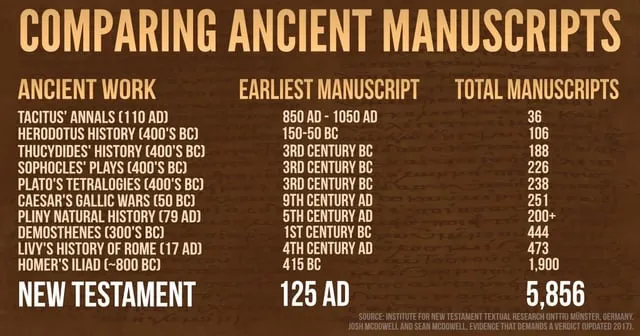
Finally, their meticulous copying and sharing of Scriptures ensured accuracy. Clement of Alexandria (c.150-c.215) and Origen (c.185-c.254) cataloged and taught from texts that match our modern Bible (long before the claims of the catholic church to have brought us the Bible), as seen in surviving manuscripts like the Codex Sinaiticus (4th century). Their efforts preserved God’s Word through persecution and time, a demonstration of faithfulness.
The early believers weren’t perfect, but their writings, lives, and love for Scripture shine as evidence: the Bible we have is the same one they cherished. They bridge the gap between us and the apostles, inviting us to trust God’s Word with the same fire they did.
The Bible stands firm because the early Church Fathers lived and died for it, passing down the truth we hold today.
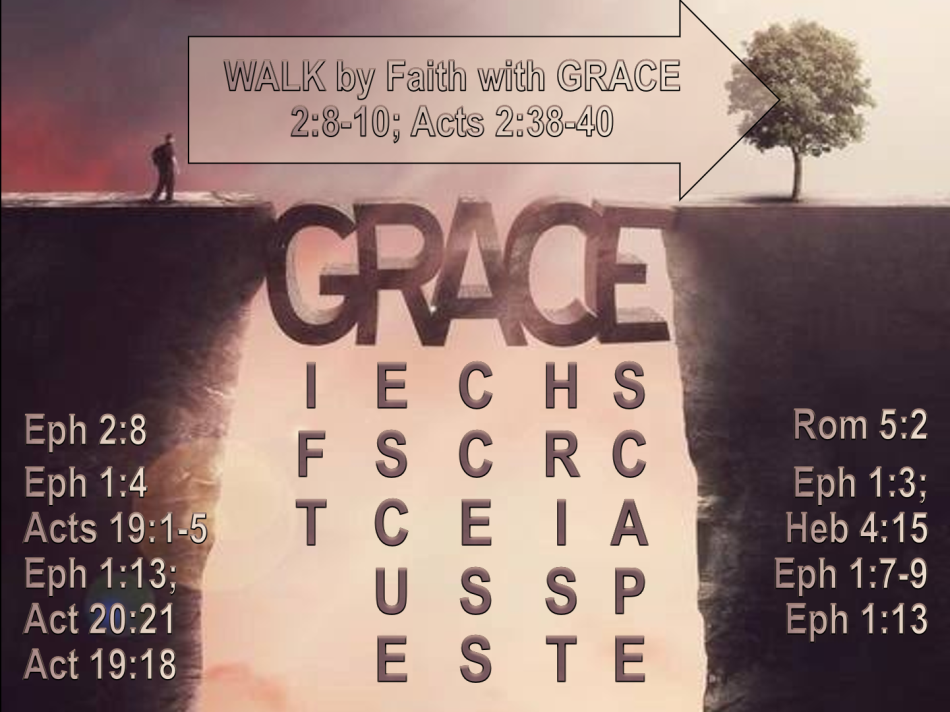
GRACE gives us the means to escape from the penalty of our sin.
Eph 1:7-9 In whom we have redemption through his blood, the forgiveness of sins, according to the riches of his grace; 8 Wherein he hath abounded toward us in all wisdom and prudence; 9 Having made known unto us the mystery of his will, according to his good pleasure which he hath purposed in himself:
Eph 1:13 In whom ye also trusted, after that ye heard the word of truth, the gospel of your salvation: in whom also after that ye believed, ye were sealed with that holy Spirit of promise,
Without acting on the GRACE that has been given, we shall not escape.
Heb 2:3 How shall we escape, if we neglect so great salvation; which at the first began to be spoken by the Lord, and was confirmed unto us by them that heard him;
Ro 2:4 Or despisest thou the riches of his goodness and forbearance and longsuffering; not knowing that the goodness of God leadeth thee to repentance?
Christ is the object of Grace. Without His blood there is no grace.
Eph 1:3 Blessed be the God and Father of our Lord Jesus Christ, who hath blessed us with all spiritual blessings in heavenly places in Christ:
Eph 1:6 To the praise of the glory of his grace, wherein he hath made us accepted in the beloved. 7 In whom we have redemption through his blood, the forgiveness of sins, according to the riches of his grace;
Eph 1:13 In whom ye also trusted, after that ye heard the word of truth, the gospel of your salvation: in whom also after that ye believed, ye were sealed with that holy Spirit of promise,
CHRIST is the object of Grace…
He was CRUCIFIED for us. John 3:16
We were redeemed with HIS BLOOD. 1Peter 1:18-19
He is the RESURRECTION from the dead. John 11:25
He is the IMAGE of the INVISIBLE God. Col 1:15
His SACRIFICE is the one and only sacrifice for everyone. Heb 10:12
He TASTED death for everyone. Heb 2:9
Click here for the first article in the series on GRACE.
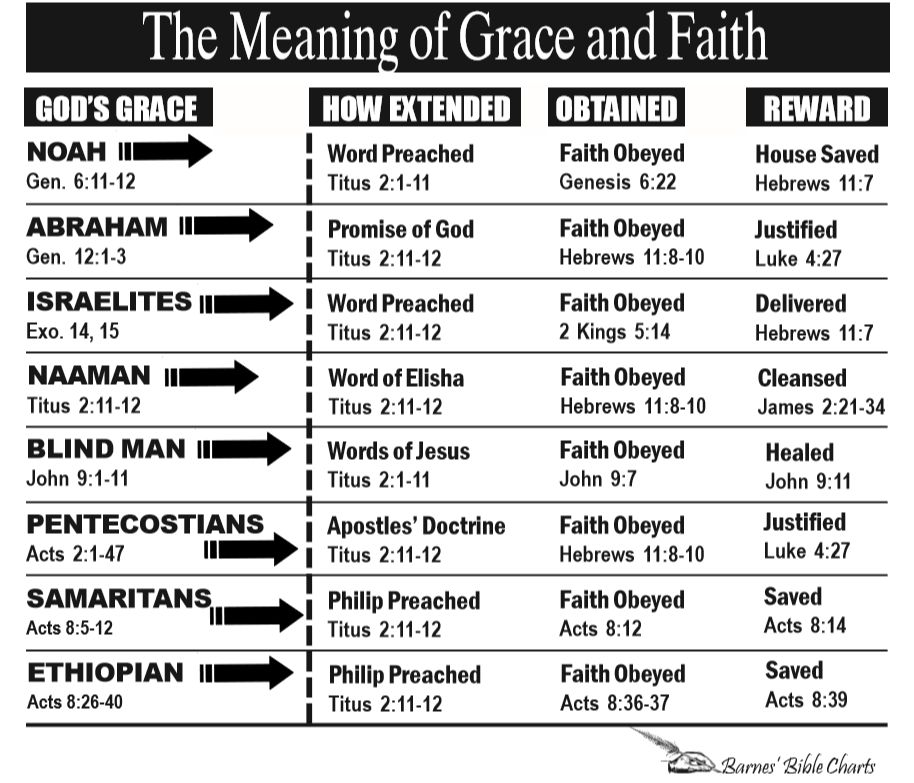
“For by grace are ye saved through faith; and that not of yourselves: it is the gift of God.”
(Eph 2:8)
“But we believe that through the grace of the Lord Jesus Christ we shall be saved, even as they.” (Acts 15:11)
“And the grace of our Lord was exceeding abundant with faith and love which is in Christ Jesus” (1Tim 1:14).
“Thou therefore, my son, be strong in the grace that is in Christ Jesus” (2Tim 2:1).
As we study more about GRACE, the more we’ll realize that Grace is IN CHRIST. He and His sacrifice is the gift of Grace.
Grace appeared IN CHRIST. How does Grace come through CHRIST?
CHRIST was CRUCIFIED fulfilling the prophecy of the manner of His death for the sins of the world. Jesus said, “And as Moses lifted up the serpent in the wilderness, even so must the Son of man be lifted up” (John 3:14; cf. Deut 21:23; Gal 3:10-13). In the first sermon at Pentecost, Peter said, “Therefore let all the house of Israel know assuredly, that God hath made that same Jesus, whom ye have crucified, both Lord and Christ” (Acts 2:36). It is the included in the preaching of Jesus. “But we preach Christ crucified” (1Cor 1:23).
As we follow CHRIST, being crucified is something we also do in a figure. “And they that are Christ’s have crucified the flesh with the affections and lusts” (Gal 5:24; cf. Rom 6:3-6).
It is only by HIS BLOOD that the church is made possible. “Take heed therefore unto yourselves, and to all the flock, over the which the Holy Ghost hath made you overseers, to feed the church of God, which he hath purchased with his own blood” (Acts 20:28). “Wherefore Jesus also, that he might sanctify the people with his own blood, suffered without the gate” (Heb 13:12; cf Heb 9:12).
We who follow Christ are washed IN HIS blood in baptism. “And from Jesus Christ, who is the faithful witness, and the first begotten of the dead, and the prince of the kings of the earth. Unto him that loved us, and washed us from our sins in his own blood” (Rev 1:5).
After His death and burial, He ROSE FROM THE DEAD. “Be it known unto you all, and to all the people of Israel, that by the name of Jesus Christ of Nazareth, whom ye crucified, whom God raised from the dead, even by him doth this man stand here before you whole” (Acts 4:10). It wasn’t enough that He died, but that He also ROSE AGAIN!
We also RISE to walk in newness of life. “Know ye not, that so many of us as were baptized into Jesus Christ were baptized into his death? Therefore we are buried with him by baptism into death: that like as Christ was raised up from the dead by the glory of the Father, even so we also should walk in newness of life. For if we have been planted together in the likeness of his death, we shall be also in the likeness of his resurrection” (Rom 6:3-5). Because He ROSE from the dead, we have hope in our own RESURRECTION into eternal life.
It’s a fact that man cannot provide his own salvation (Rom 3:12, 23), but Jesus could provide for salvation because He is the very IMAGE OF GOD. “Who is the image of the invisible God, the firstborn of every creature” (Col 1:15; 2Co 4:4; Heb 1:3). As God in the flesh, He is able to be the perfect remedy for the sins of man. “So Christ was once offered to bear the sins of many; and unto them that look for him shall he appear the second time without sin unto salvation” (Hebrews 9:28; cf 4:15).
Man was originally made in the IMAGE of God, but we are not deity. We can become more like Christ the more we IMITATE Him. “And have put on the new man, which is renewed in knowledge after the image of him that created him” (Col 3:10). “For whom he did foreknow, he also did predestinate to be conformed to the image of his Son, that he might be the firstborn among many brethren” (Romans 8:29).
What we’re learning is that grace is Christ as God’s SACRIFICE for man’s sin. “But this man, after he had offered one sacrifice for sins for ever, sat down on the right hand of God” (Heb 10:12). “Who being the brightness of his glory, and the express image of his person, and upholding all things by the word of his power, when he had by himself purged our sins, sat down on the right hand of the Majesty on high” (Heb 1:3).
As followers of Christ, we also SACRIFICE our lives to Him. “And walk in love, as Christ also hath loved us, and hath given himself for us an offering and a sacrifice to God for a sweetsmelling savour” (Eph 5:2). “I beseech you therefore, brethren, by the mercies of God, that ye present your bodies a living sacrifice, holy, acceptable unto God, which is your reasonable service” (Romans 12:1).
GRACE is IN CHRIST because He TASTED DEATH FOR US. “But we see Jesus, who was made a little lower than the angels for the suffering of death, crowned with glory and honour; that he by the grace of God should taste death for every man” (Heb 2:9). “For when we were yet without strength, in due time Christ died for the ungodly” (Rom 5:6). “And that he died for all, that they which live should not henceforth live unto themselves, but unto him which died for them, and rose again” (2Cor 5:15).
We also TASTE DEATH IN WATER BAPTISM. “Know ye not, that so many of us as were baptized into Jesus Christ were baptized into his death?” (Rom 6:3; cf. Rom 6:11-12; 14:7-8; 1Co 6:19; Ga 2:20; 1Th 5:10). And we mortify (put to death) the deeds of the flesh. “Mortify therefore your members which are upon the earth; fornication, uncleanness, inordinate affection, evil concupiscence, and covetousness, which is idolatry” (Col 3:4-9).
While GRACE is IN CHRIST, we have none of these blessings until we are IN CHRIST. “For as many of you as have been baptized into Christ have put on Christ” (Gal 3:27; Eph 1:3).
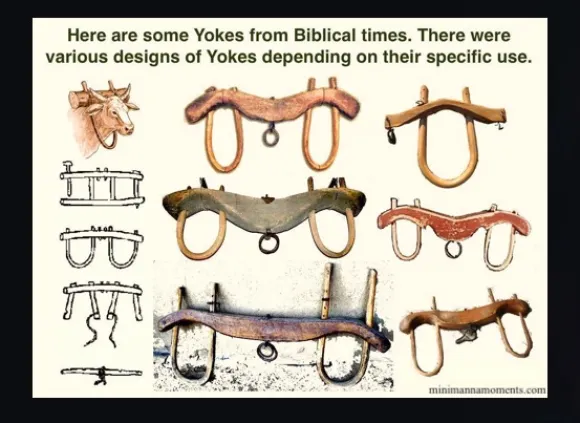
28 “Come unto me, all ye that labour and are heavy laden, and I will give you rest. 29 Take my yoke upon you, and learn of me; for I am meek and lowly in heart: and ye shall find rest unto your souls. 30 For my yoke is easy, and my burden is light.”
How is the BURDEN light?
we BELIEVE in the promises. Heb 12:6. 2Tim 4:6-8
because of His UNSURPASSED love. Eph 3:18-21
because of our REDEMPTION through Christ. 1John 1:7-9
his word is DELIGHTFUL and not grievous. 1Cor 10:13. 1John 5:3; Ps 119:24
because His Yoke is EASY. Mat 11:28-30
because He NEVER LEAVES us nor forsakes us. Heb 13:5; Psalm 37:25


 Borger church of Christ @ Franklin & Juniper