The Benefits of Reading a Physical Bible: Why REAL Matters
In an age where smartphones dominate, many turn to digital Bible apps for convenience. While these apps are valuable and not sinful, there are unique benefits to reading a physical Bible.
Read Without Pop-Up Distractions from our phones. A physical Bible offers a focused reading experience free from the interruptions of notifications, pop-up ads, or tempting app switches. When you open a physical Bible, you immerse yourself in the text without the risk of a text message or social media alert pulling you away. This uninterrupted time fosters deeper reflection and connection with the Word, allowing for a more contemplative and distraction-free engagement with Scripture.
Evangelism Effectiveness There’s a powerful psychological impact when sharing the Gospel using a physical Bible. Flipping to a passage and showing someone the words on a page carries a tangible weight that a phone screen often lacks. The physical act of turning pages and pointing to verses can make the message feel more authoritative and personal, enhancing evangelism efforts. It signals reverence for the text and invites others to engage with it in a meaningful way.
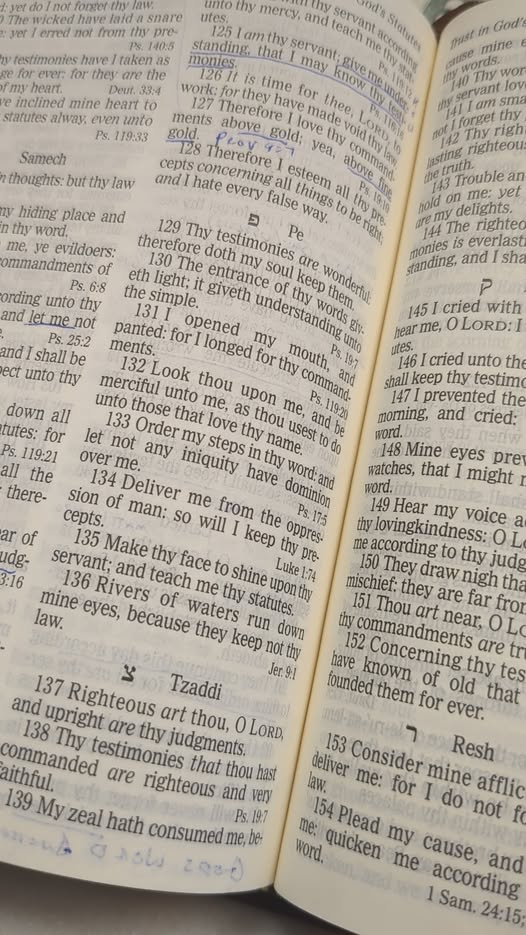
Annotate, Highlight, & Underline. A physical Bible becomes a personal treasure through annotation. Underlining, highlighting, and jotting notes in the margins allow readers to mark insights, prayers, or revelations directly on the page. These annotations create a unique record of one’s spiritual journey, something a digital Bible struggles to replicate with the same tactile intimacy. A well-worn, marked-up Bible tells a story of growth and connection that’s deeply personal.
Look Up, & Look at Multiple Passages at one time. Comparing passages or cross-references is seamless with a physical Bible. You can flip between pages, bookmark multiple sections, or even lay the book open to view two passages side by side. Digital apps often make it cumbersome to switch between two, three, or four passages, requiring multiple taps or split screens that disrupt the flow. A physical Bible’s layout makes it easier to explore connections across Scriptures, enriching study and understanding.
While digital Bibles are practical and accessible, the tactile and focused nature of a physical Bible offers distinct advantages. By embracing the REAL benefits we can deepen our engagement with God’s Word in a way that feels timeless and profound.
For years, critics of the Bible pointed to the Greek word politarch, used in Acts 17:6-8 to describe Thessalonian city officials, as evidence of scriptural inaccuracy. This term, unique to Luke’s account and absent from classical Greek literature, led some 19th-century scholars to argue that Luke fabricated details, casting doubt on the New Testament’s historical reliability. They claimed politarch was an anachronism or error, undermining Luke’s credibility as a historian.
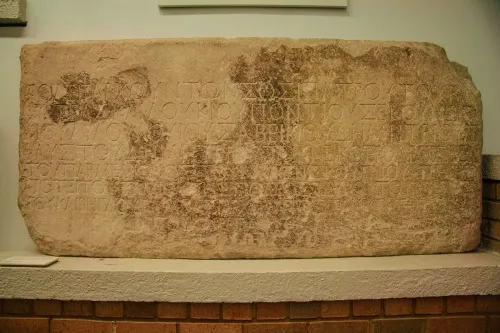
However, the discovery of the Thessalonian Politarch Inscription1 in the 19th century, which explicitly lists “politarchs” as civic leaders in Thessaloniki, silenced these objections. As noted by historians like F.F. Bruce, this archaeological find confirmed Luke’s precision, showing that politarch was a legitimate title in first-century Macedonia. This turnaround highlights how critics’ challenges, when met with evidence, can strengthen faith in the Bible’s trustworthiness, echoing Psalm 119:160’s assurance that God’s Word is true.
Thessaloniki was a bustling Roman city, and the politarchs were civic leaders navigating the tensions of a diverse, often skeptical society. Acts 17:4-5 tells of locals and converts stirred by Paul’s preaching, clashing with those loyal to Roman order. The inscription, studied by scholars like N.T. Wright, reveals a city governed by these politarchs, who faced real pressures from crowds opposing the gospel. This context makes Paul’s courage, and the Thessalonians’ faith, more vivid. It reminds us that the Gospel continued to spread in a complex, real-world setting, encouraging us to live boldly for Christ today, as Paul urged in 1 Thessalonians 5:16-18, to “rejoice always” despite challenges.
The Politarch Inscription strengthens our confidence in scripture’s reliability. If Luke accurately recorded a minor detail like a local title (which was for centuries thought to be inaccurate until archaeological discovery), we can trust his accounts of greater events (like Jesus’ resurrection or Paul’s missionary journeys). Archaeological finds consistently show the Bible’s alignment with history. This harmony between faith and evidence invites us to approach scripture with confidence, not blind belief, knowing it withstands scrutiny. As John 17:17 reminds us, God’s Word is truth, a foundation that discovery affirms rather than contradicts.
The Thessalonian Politarch Inscription is more than a dusty relic; it’s a testament to the Bible’s trustworthiness. It encourages us to dig deeper into scripture, marvel at its accuracy, and live out our faith with boldness. Let this ancient stone inspire you to trust God’s Word, knowing it stands firm both then and now.
agape
1. The Thessalonian Politarch Inscription, discovered in Thessaloniki, Greece, in the 19th century, is a fragmented stone artifact from the first century AD, likely part of a public monument or building. This stone tablet discovered in Thessalonica (modern-day Thessaloniki, Greece) that dates to the second century A.D. lists six officials known as “politarchs,”.
The Inscription on the Politarch as much as is possible due to its fragmented condition.
“In the time of [name of a Roman official or emperor, possibly missing], the politarchs of Thessaloniki, [names such as Sosipatros, Lucius, Sextus, Gaius, Secundus, as typical in Macedonian inscriptions], [served or dedicated this] to [a deity, civic institution, or event, possibly Zeus or the city], in the year [specific dating, often tied to a Roman or local calendar].”
INTERESTING NAMES ON THE STONE
Sosipater: A common Greek name, possibly linked to the biblical Sosipater in Romans 16:21.
C. (Gaius): another name that echoes biblical figures like the Gaius mentioned in Acts 20:4.
Secundus: A Roman name, similar to the Thessalonian Secundus in Acts 20:4.
The Bible we hold today is a treasure, a book that has shaped lives for centuries. But how can we trust it’s the real deal, faithfully passed down through time? The early believers (often called church fathers) from the first few centuries after Christ give us compelling evidence that our Bible is reliable, rooted in their lives, writings, and devotion.
To begin with, people like Ignatius of Antioch and Polycarp, were taught by the apostles or their immediate followers. They didn’t just read about Jesus; they learned from those who walked with Him. Their writings, like Ignatius’ letters (circa 110 AD), echo the New Testament teachings, quoting books like Matthew, John, and Paul’s epistles as Scripture. For example, Ignatius references Jesus’ death and resurrection (Letter to the Smyrnaeans 1:1-2), aligning with 1 Corinthians 15:3-4. This shows the New Testament was already revered as God’s Word within a generation of the apostles, not some later invention.
Also, 2nd century believers defended the Bible’s truth against heresies. Irenaeus, in his Against Heresies (circa 180 AD), argued that the four Gospels (Matthew, Mark, Luke, and John) were uniquely authoritative, handed down through apostolic tradition. He tied their reliability to the Old Testament prophecies fulfilled in Christ, like Isaiah 53:5, which speaks of the Messiah’s suffering. Irenaeus’ work shows the early Church carefully preserved the Scriptures, ensuring no random texts slipped in. Their vigilance gives us confidence that our Bible matches what they held sacred.
Additionally, they sealed their trust in Scripture. Polycarp, martyred around 155 AD, faced death boldly, quoting Jesus’ words from Matthew 10:28: “Do not fear those who kill the body but cannot kill the soul.” His courage, recorded in The Martyrdom of Polycarp, proves he didn’t just believe the Bible, he staked his life on it. Countless others, like Justin Martyr, died for their faith, showing the Scriptures weren’t myths but truths worth everything. Their sacrifices declare to us: this Book is trustworthy. (BTW: their willingness to die wasn’t related in any way to a desire to kill as many folks as possible, as some religions do)
Finally, their meticulous copying and sharing of Scriptures ensured accuracy. Clement of Alexandria (c.150-c.215) and Origen (c.185-c.254) cataloged and taught from texts that match our modern Bible (long before the claims of the catholic church to have brought us the Bible), as seen in surviving manuscripts like the Codex Sinaiticus (4th century). Their efforts preserved God’s Word through persecution and time, a demonstration of faithfulness.
The early believers weren’t perfect, but their writings, lives, and love for Scripture shine as evidence: the Bible we have is the same one they cherished. They bridge the gap between us and the apostles, inviting us to trust God’s Word with the same fire they did.
The Bible stands firm because the early Church Fathers lived and died for it, passing down the truth we hold today.
You know, the Word of God is like a hidden gem for all of us believers. It’s more than just pages filled with text; it’s our go-to guide, a wellspring of truth, and an incredible tool for our spiritual journey. Seriously, if you really pay attention to its teachings, you’ll uncover so many benefits! When we dig into the scriptures, we see how God shows us His will, gives us solid truth, helps us stand strong in our faith, and lights up our paths. How cool is that?
Knowing the Will of the Lord (Ephesians 5:17)
Ephesians 5:17 exhorts, “Wherefore be ye not unwise, but understanding what the will of the Lord is.” In a world clouded by confusion, the Bible unveils God’s will for humanity. It reveals His universal desires, such as salvation for all (2 Peter 3:9, KJV: “not willing that any should perish, but that all should come to repentance”) and holy living (1 Thessalonians 4:3). By meditating on Scripture, as Psalm 119:11 (KJV) states, “Thy word have I hid in mine heart, that I might not sin against thee,” believers align their lives with God’s purposes. The Word acts as a divine compass, guiding us to avoid folly and live according to His eternal plan.
Objective Truth in a Deceptive World (John 17:17)
In John 17:17, Jesus prays, “Sanctify them through thy truth: thy word is truth.” The Bible stands as the unchanging standard of truth in an age of shifting values. As 2 Timothy 3:16 (KJV) declares, “All scripture is given by inspiration of God,” it is a reliable foundation for faith and practice. This truth sanctifies believers, setting them apart for God’s service by renewing their minds (Romans 12:2). It also guards against deception, as Jesus used Scripture to defeat Satan’s lies (Matthew 4:4-10). In a world prone to error, the Word anchors us in divine truth, enabling us to live with understanding.
A Ready Answer for Our Faith (1 Peter 3:15)
The Word equips believers to share their hope in Christ. 1 Peter 3:15 instructs, “Be ready always to give an answer to every man that asketh you a reason of the hope that is in you with meekness and fear.” Scripture strengthens our faith (Romans 10:17, KJV: “faith cometh by hearing, and hearing by the word of God”) and prepares us to share the gospel with humility and reverence. Whether answering skeptics or encouraging seekers, the Bible provides the foundation for our testimony, ensuring our words reflect God’s truth and grace (Colossians 4:6).
Direction for Our Lives (Jeremiah 10:23; Psalm 119:105)
Jeremiah 10:23 acknowledges, “The way of man is not in himself: it is not in man that walketh to direct his steps.” Paired with Psalm 119:105, “Thy word is a lamp unto my feet, and a light unto my path,” this reveals the Bible’s role as a guide. Human wisdom falters (Proverbs 16:9), but Scripture illuminates both immediate decisions and long-term goals. Whether facing trials or choices, the Word offers wisdom (Joshua 1:8) and warnings (Proverbs 14:12). By following it, believers walk confidently in God’s purposes.
The Word is “quick, and powerful” (Hebrews 4:12, KJV), transforming hearts, comforting in affliction (Psalm 119:92), and fostering intimacy with God (John 15:7). It equips us for every good work (2 Timothy 3:17), enabling us to live with purpose, anchored in the truth and guidance of God’s Word.
Missing the gospel isn’t just a minor misstep, it’s a choice with eternal consequences. The New Testament lays out what’s on the line when we turn away from God’s call to follow Jesus. It’s not about fear-mongering or guilt-tripping anyone; it’s about understanding the weight of our decisions. What’s really at risk for missing out on the Gospel of Christ?
First, salvation itself hangs in the balance. Hebrews 5:8 tells us Jesus learned obedience through suffering, becoming the source of eternal salvation for those who obey Him. Disobeying the gospel means rejecting the only path to being made right with God. Look at John 3:36 “He that believeth on the Son hath everlasting life: and he that believeth not the Son shall not see life; but the wrath of God abideth on him.” Acts 4:12 hammers it home: there’s no other name under heaven by which we can be saved. And Romans 10:16 ties belief and obedience together, showing that refusing to obey the gospel is like shutting the door on God’s grace. Salvation isn’t a free pass; it’s a response to Jesus’ sacrifice.
Next, there’s treasure in heaven. Matthew 6:19-20 urges us to store up treasures in heaven, not on earth, where moth and rust destroy. Disobeying the gospel means chasing fleeting, earthly rewards instead of eternal ones. Colossians 3:2 pushes us to set our minds on things above, not earthly things. And 1 Timothy 6:17 encourages us not to place our trust in uncertain riches, but in the living God, who giveth us richly all things to enjoy. Ignoring the Gospel risks a life spent on what fades away.
Then there’s the danger of apostasy; falling away from faith. Galatians 4:11 shows Paul’s fear that his work among the Galatians might be in vain if they turn from the gospel. Hebrews 6:4-6 warns of the impossibility of renewing repentance in those who fall away after receiving the truth. 2 Peter 2:20-21 paints a grim picture of those who know Jesus but return to the world, saying it’s worse than never knowing at all. And 1Timothy 4:1 speaks of some abandoning faith in later times. Ignoring the gospel can lead to a slow drift or outright rejection of the truth we once held.
Kingdom citizenship is also at stake. Colossians 1:13 says God has rescued us from darkness and brought us into His Son’s kingdom. Disobeying the gospel means missing out on that transfer. Ephesians 2:19 calls believers fellow citizens with God’s people, no longer strangers. Philippians 3:20 declares our citizenship is in heaven, where we await Jesus. And Luke 22:29-30 promises a place in God’s kingdom for those who follow Him. Rejecting the gospel keeps us outside this family, this home God offers.
Finally, eternal life itself is on the line. Matthew 7:13-14 describes the narrow gate leading to life and the wide road to destruction. Disobedience chooses the latter. John 5:28-29 warns that those who’ve done evil face a resurrection to judgment. Romans 6:23 contrasts the wages of sin, death, with the gift of eternal life through Jesus. And 1 John 5:11-12 makes it clear: eternal life is in the Son, and without Him, we don’t have it. Missing the gospel risks an eternity apart from God.
So, what’s at stake? Everything—our salvation, our eternal reward, our steadfastness, our place in God’s kingdom, and life itself. The gospel isn’t just good news; it’s a call to choose wisely, to live for what lasts.
The way we speak reveals the condition of our hearts and serves as a powerful expression of love. Scripture, particularly Ephesians, provides a blueprint for how our words can reflect Christ’s love, fostering unity, encouragement, and grace. By aligning our speech with biblical principles, we demonstrate love that honors God and uplifts others.
Seasoned with Salt; Colossians 4:6 urges believers to let their speech be “always full of grace, seasoned with salt,” so that they know how to answer everyone (“seasoned with salt” suggesting speech that is gracious, wise, and impactful, enhancing conversations like salt enhances food). Similarly, James 3:17 describes wisdom from above as pure, peace-loving, and gentle. Words seasoned with salt are purposeful, preserving truth and adding value to conversations. They avoid blandness or harshness, striking a balance that reflects thoughtfulness and care. When our speech is seasoned with grace, it becomes a tool to point others to Christ, making our interactions meaningful and impactful.
Pleasant, Not Profane; Ephesians 5:4 warns against “filthiness, foolish talk, or crude joking,” which are out of place for those who follow Christ. Instead, our words should be pleasant, reflecting gratitude and reverence. Filthy or foolish speech tears down, while pleasant words build up and create an atmosphere of love. Avoiding foul language doesn’t mean stifling humor or joy but choosing words that align with God’s holiness. Pleasant speech invites others into a space of dignity and respect, mirroring the love Christ shows us.
Edifying, Empathetic, & Encouraging; Ephesians 4:29 instructs, “Let no corrupting talk come out of your mouths, but only such as is good for building up, as fits the occasion, that it may give grace to those who hear” (Edifying means Building up or strengthening others spiritually). Romans 14:19 tells us to pursue peace and mutual edification, while Colossians 3:16 encourages teaching and admonishing one another with wisdom. Hebrews 10:24-25 emphasizes spurring one another toward love and good works. Empathetic and encouraging speech listens deeply, validates feelings, and inspires growth. It puts others’ needs above our own, fostering community and reflecting Christ’s sacrificial love.
Speaking Truth in Love; Ephesians 4:15 and 4:25 highlight the importance of speaking truth in love, rooted in agape type (love selfless, unconditional love). Truth without love can wound, while love without truth can enable. Speaking truth in love requires humility and courage, ensuring our words are honest yet delivered with kindness. This balance builds trust and strengthens relationships, as we lovingly correct or guide others toward God’s truth. Loving speech prioritizes the other person’s spiritual growth, even when it’s uncomfortable, because it seeks their ultimate good.
Kindness in Speech; Ephesians 4:32 tells us to be kind and compassionate, forgiving one another as God forgave us. James 1:26 warns that those who fail to bridle their tongues deceive themselves, and Colossians 3:12-13 emphasizes clothing ourselves with kindness and patience. Kind words diffuse conflict, heal wounds, and demonstrate grace. They reflect a heart transformed by Christ, choosing gentleness over harshness and forgiveness over bitterness. Kindness in speech is a daily practice of love, creating a ripple effect of grace in our interactions.
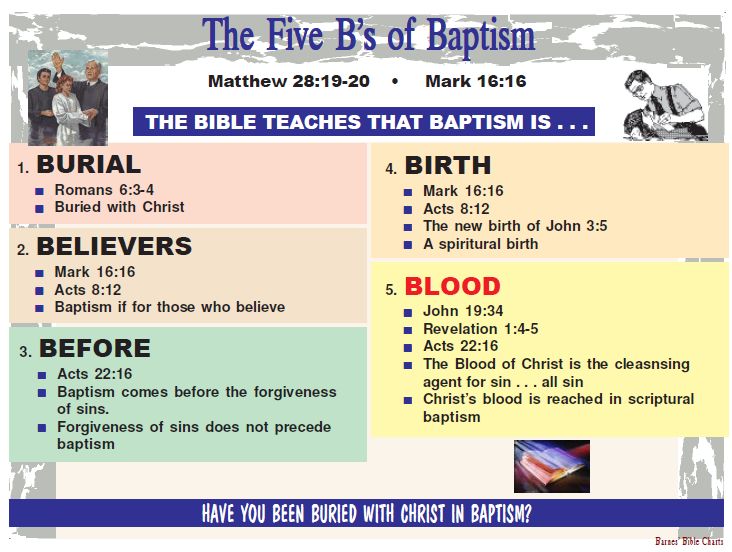
Far from a mere ritual, BAPTISM is a divinely ordained step that aligns believers with Christ’s redemptive work. Through baptism, individuals experience a cleansing of sins, union with Christ’s church, salvation, and an inheritance as heirs of God’s promises.
1. Washing Away Our Sins
Baptism serves as a divine act of cleansing, washing away the stain of sin. In Acts 22:16, Ananias urges Saul, “And now why do you wait? Rise and be baptized and wash away your sins, calling on his name.” This passage emphasizes baptism’s role in cleansing the believer’s conscience before God. Similarly, Acts 2:38 declares, “Repent and be baptized every one of you in the name of Jesus Christ for the forgiveness of your sins, and you will receive the gift of the Holy Spirit.” Here, baptism is linked directly to the remission of sins and the reception of the Holy Spirit. Additionally, Matthew 26:28 connects the concept of forgiveness to Christ’s sacrifice: “For this is my blood of the covenant, which is poured out for many for the forgiveness of sins.” Baptism, therefore, is the moment when a believer appropriates the forgiveness secured by Christ’s blood. Supporting this, Ephesians 5:26 describes Christ sanctifying the church “by the washing of water with the word,” reinforcing baptism’s cleansing power.
2. Added to the Church That Christ Built
Through baptism, believers are united with the body of Christ, the church He established. Acts 2:47 states, “And the Lord added to their number day by day those who were being saved.” This follows the account of 3,000 souls being baptized and added to the church after Peter’s sermon (Acts 2:41). Baptism is the entry point into Christ’s church, as seen in 1 Corinthians 12:13: “For in one Spirit we were all baptized into one body—Jews or Greeks, slaves or free—and all were made to drink of one Spirit.” This passage highlights the unity of believers in the church through baptism. Additionally, Colossians 1:18 affirms Christ as “the head of the body, the church,” underscoring that baptism incorporates individuals into this divine institution, built by Christ Himself (Matthew 16:18).
3. Saved Through Baptism
Baptism is intricately tied to salvation, as it is the moment when a believer’s faith is actualized in obedience to God’s command. 1 Peter 3:21 explicitly states, “Baptism, which corresponds to this, now saves you, not as a removal of dirt from the body but as an appeal to God for a good conscience, through the resurrection of Jesus Christ.” This verse clarifies that baptism is not a mere physical cleansing but a spiritual act that appeals to God for salvation. Mark 16:16 further supports this: “Whoever believes and is baptized will be saved, but whoever does not believe will be condemned.” The connection between baptism and salvation is also evident in Romans 6:3-4, which describes believers being “baptized into his death” and raised to “walk in newness of life,” symbolizing the transformative power of baptism in securing salvation.
4. Becoming Heirs of Abraham
Baptism establishes believers as heirs of the promises made to Abraham, uniting them in God’s covenant family. Galatians 3:27-29 explains, “For as many of you as were baptized into Christ have put on Christ… And if you are Christ’s, then you are Abraham’s offspring, heirs according to promise.” Through baptism, believers become part of the spiritual lineage of Abraham, inheriting the blessings of God’s covenant. Romans 4:16 reinforces this, stating that the promise to Abraham comes “to the one who shares the faith of Abraham, who is the father of us all.” Additionally, Ephesians 3:6 affirms that through the gospel, Gentiles are “fellow heirs” with Israel, a reality actualized in baptism as believers are incorporated into Christ’s body.
5. Putting on Christ
In baptism, believers clothe themselves with Christ, taking on His identity and righteousness. Galatians 3:27 declares, “For as many of you as were baptized into Christ have put on Christ.” This vivid imagery portrays baptism as the moment when a believer is enveloped in Christ’s nature. Romans 13:14 echoes this, urging believers to “put on the Lord Jesus Christ,” a process initiated at baptism. Colossians 3:9-10 further supports this idea, describing believers as having “put off the old self with its practices and… put on the new self,” a transformation that begins with baptism’s symbolic burial and resurrection (Colossians 2:12).
6. Becoming a Disciple of Christ
Baptism marks the beginning of a life of discipleship, as believers commit to following Christ. Matthew 28:19 commands, “Go therefore and make disciples of all nations, baptizing them in the name of the Father and of the Son and of the Holy Spirit.” Baptism is the initiatory step in making disciples, signifying a public commitment to Christ’s teachings. Acts 8:12 illustrates this: “But when they believed Philip as he preached good news… they were baptized, both men and women,” showing that baptism follows belief and marks the start of discipleship. John 3:5 further emphasizes baptism’s role in entering the kingdom of God: “Unless one is born of water and the Spirit, he cannot enter the kingdom of God,” linking baptism to the disciple’s journey of faith.
Baptism is far more than a symbolic act; it is a transformative moment in the believer’s life, rich with spiritual significance. Through baptism, sins are washed away, believers are added to Christ’s church, salvation is received, the promises to Abraham are inherited, Christ is put on, and a lifelong journey of discipleship begins. These truths, grounded in Scripture, underscore baptism’s ESSENTIAL role in the Christian faith.
Knowing the Voice of Jesus: The Written Word as the Sole Means
In John 10:4, Jesus, the Good Shepherd, declares, “And when he putteth forth his own sheep, he goeth before them, and the sheep follow him: for they know his voice.” Believers today do not hear an audible voice nor witness the signs Jesus performed during His earthly ministry, as those signs, per John 20:30-31, were recorded so that we might believe without seeing them firsthand: “And many other signs truly did Jesus in the presence of his disciples, which are not written in this book: But these are written, that ye might believe that Jesus is the Christ, the Son of God; and that believing ye might have life through his name.” The implication is that the signs done then will not be repeated; instead, we know Jesus’ voice through the written word. The apostles’ teaching, the New Testament history of Jesus, and obedience to Christ all converge in the written word as the sole means to know His voice and the truth.
We will know His voice by keeping the apostles’ teaching. The apostles, guided by the Holy Spirit, delivered Jesus’ teachings, preserved in Scripture. John 16:13 promises, “When he, the Spirit of truth, is come, he will guide you into all truth.” Their doctrine, recorded in the written word, allows us to hear Jesus. Later Jesus prays for the apostles in John 17:20, “Neither pray I for these alone, but for them also which shall believe on me through their word;” This shows us that people will believe through their inspired preaching and teaching which is now recorded for all in the New Testament. Acts 2:42 shows early believers “continued stedfastly in the apostles’ doctrine,” while Galatians 1:11-12 clarifies, “The gospel which was preached of me is not after man… but by the revelation of Jesus Christ.” These inspired writings are our access to His voice today.
We will know His voice by the New Testament history of Jesus Christ. The Gospels record Jesus’ life and works, but the signs He performed were for those who saw them personally. John 20:29 reinforces this: “Blessed are they that have not seen, and yet have believed.” We know Him through the written record, as Luke 1:1-4 states: “To set forth in order a declaration… that thou mightest know the certainty of those things.” The written history in Scripture conveys His voice to us. John 20:31a, “But these are written, that ye might believe that Jesus is the Christ, the Son of God;”
We will know His voice by obedience to Christ. Obeying Jesus’ commands, found in Scripture, confirms we hear His voice. John 10:27 says, “My sheep hear my voice… and they follow me.”1 John 2:4 warns, “He that saith, I know him, and keepeth not his commandments, is a liar, and the truth is not in him.”John 14:23 adds, “If a man love me, he will keep my words: and my Father will love him.” Obedience to the written word ensures we know Him.
The written word is the only means by which we know Jesus’ voice and the truth. The signs Jesus performed, as recorded in John 20:30-31, were for those who saw them, but we believe through what is written. Jesus’ life is in the word (John 5:39: “Search the scriptures… they are they which testify of me”). The apostles’ teachings come from the word (2 Peter 1:21). The Holy Spirit revealed the word (2 Timothy 3:16). While preachers may proclaim the gospel (Romans 10:14), they must teach from the written word. 2 John 1:9 emphasizes, “He that abideth in the doctrine of Christ, he hath both the Father and the Son.” The written word alone enables us to hear and follow the Good Shepherd.
We will know His voice by keeping the apostles’ teaching. The apostles, guided by the Holy Spirit, delivered Jesus’ teachings, preserved in Scripture. John 16:13 promises, “When he, the Spirit of truth, is come, he will guide you into all truth.” Their doctrine, recorded in the written word, allows us to hear Jesus. After Jesus then prays for the apostles, He then prays this in John 17:20, “Neither pray I for these alone, but for them also which shall believe on me through their word;” This shows us that people will believe through their inspired preaching and teaching which is now recorded for all in the New Testament. Acts 2:42 shows early believers “continued stedfastly in the apostles’ doctrine,” while Galatians 1:11-12 clarifies, “The gospel which was preached of me is not after man… but by the revelation of Jesus Christ.” These inspired writings are our access to His voice today.
We will know His voice by the New Testament history of Jesus Christ. The Gospels record Jesus’ life and works, but the signs He performed were for those who saw them personally. John 20:29 reinforces this: “Blessed are they that have not seen, and yet have believed.” We know Him through the written record, as Luke 1:1-4 states: “To set forth in order a declaration… that thou mightest know the certainty of those things.” The written history in Scripture conveys His voice to us.
We will know His voice by obedience to Christ. Obeying Jesus’ commands, found in Scripture, confirms we hear His voice. John 10:27 says, “My sheep hear my voice… and they follow me.”1 John 2:4 warns, “He that saith, I know him, and keepeth not his commandments, is a liar, and the truth is not in him.”John 14:23 adds, “If a man love me, he will keep my words: and my Father will love him.” Obedience to the written word ensures we know Him.
In conclusion, the written word is the only means by which we know Jesus’ voice and the truth. The signs Jesus performed, as recorded in John 20:30-31, were for those who saw them, but we believe through what is written. Jesus’ life is in the word (John 5:39: “Search the scriptures… they are they which testify of me”). The apostles’ teachings come from the word (2 Peter 1:21). The Holy Spirit revealed the word (2 Timothy 3:16). While preachers may proclaim the gospel (Romans 10:14), they must teach from the written word. 2 John 1:9 emphasizes, “He that abideth in the doctrine of Christ, he hath both the Father and the Son.” The written word alone enables us to hear and follow the Good Shepherd.
“But thou, O man of God, flee these things; and follow after righteousness, godliness, faith, love, patience, meekness.” (1Tim 6:11)
“Flee also youthful lusts: but follow righteousness, faith, charity, peace, with them that call on the Lord out of a pure heart.” (2Tim 2:22)
Striving for Selfless Love. As I walk through this life, I’m learning that selfless love is the heartbeat of what it means to follow Christ. The New Testament tells me to pursue love (agape, the kind of love that puts others first) as Paul urges in 1 Corinthians 14:1, “Pursue love,” and 1 Corinthians 10:24, “Let no one seek his own, but each one the other’s well-being.” I see this love woven into the virtues of 1 Timothy 6:11 and 2 Timothy 2:22, where love stands alongside righteousness, faith, and peace. Yet, I confess, loving selflessly doesn’t come naturally to me. It’s a daily choice to set aside my own desires and seek the good of those around me.
This pursuit matters deeply because love is the foundation of God’s kingdom. Paul says in 1 Corinthians 13:13 that love is greater than faith or hope, and I’m beginning to understand why. When I choose to love others (whether through a kind word, a listening ear, or an act of hospitality like Romans 12:13 encourages) I reflect Christ’s heart. Every effort to encourage others flows from this love. But I stumble often. My selfishness creeps in, and I need God’s grace to soften my heart, to help me embody the gentleness of 1 Timothy 6:11 or the peace of 2 Timothy 2:22 in my relationships.
Striving for selfless love changes me. It pushes me to forgive when I’d rather hold a grudge, to serve when I’m tired, and to prioritize others’ needs over my own comfort. It’s humbling to realize how far I fall short, yet I find joy in small steps, like a kind word to a neighbor or praying for a struggling friend. This pursuit brightens the light of Christ in my heart, showing the world a glimpse of Jesus’ love through my imperfect efforts. I keep chasing selflessness to make my love more like God’s.
Seeking God; Aspiring to Excellence (Godliness and Holiness) In my walk with Christ, I’m learning to aspire to excellence through godliness and holiness, though I often feel unworthy of such a high calling. 1 Timothy 6:11 urges me to pursue godliness, a life of devotion to God, while Hebrews 12:14 says to “pursue… holiness, without which no one will see the Lord.” These virtues connect to the righteousness and faith in 1 Timothy 6:11 and 2 Timothy 2:22, and they echo the urging to seek “things above” in Colossians 3:1-2. I’m far from perfect, but I long to reflect God’s character more each day.
This pursuit is crucial because it draws me closer to God Himself. Godliness means living with reverence, seeking His will in every decision, but I often get distracted by worldly concerns. Holiness, too, challenges me to stand apart from sin and selfishness, as Hebrews 12:14 warns that without it, I won’t see God. This sobers me, reminding me that my efforts matter, not to earn salvation but to honor the One who saved me. These virtues shape my heart, teaching me to love what God loves and hate what He hates, aligning with the righteousness of both Timothy passages.
Aspiring to godliness and holiness is a humbling journey. I need the support of other saint, as 2 Timothy 2:22 suggests, pursuing these virtues “with those who call on the Lord.” Through prayer, Scripture, and accountability, I’m slowly growing, learning to forgive quickly, speak truthfully, and serve humbly. Each step feels like a battle, but it’s worth it to become more like Christ. As a saint, I seek this treasure of excellence, trusting God to refine me into His image, one faltering step at a time.
Seeking God; Longing for Eternal Life As I seek to grow in faith, the hope of eternal life has become a treasure I hold dear, though I’m still learning to pursue it with the patience it demands. Romans 2:7 speaks of “eternal life to those who by patient continuance in doing good seek for glory, honor, and immortality,” and I see this echoed in the patience and righteousness Paul pleads for in 1 Timothy 6:11 and 2 Timothy 2:22. I’m not there yet, my faith wavers, and my endurance falters, but I keep pressing forward, trusting God to sustain me.
This pursuit is vital because it anchors my life in something beyond the fleeting moments of this world. Eternal life isn’t just a future hope; it shapes how I live now. The urging to “patient continuance” in Romans 2:7 reminds me of the patience in 1 Timothy 6:11, compelling me to persevere through trials without giving up. I often grow weary, tempted to chase temporary comforts instead of God’s eternal reward. But when I fix my eyes on eternity, I find strength to choose righteousness, even when it’s costly, like forgiving an offense or staying faithful in difficult times.
Longing for eternal life humbles me. It is God’s gift through Christ to those who obey the gospel. Yet, I’m told to seek it by living uprightly, as 2 Timothy 2:22 encourages in pursuing righteousness. Each step, resisting temptation, serving others, or trusting God in hardship, feels like a deposit toward that eternal hope. It’s a slow, steady journey, and I rely on God’s mercy and His word to keep me faithful. This pursuit reminds me that my true home is with Him, forever.
Seeking God; Seeking the Kingdom of God and His Righteousness As I grow in faith, I’m learning to make the kingdom of God and His righteousness my highest pursuit, though I often fall short of this priority. Jesus’ words in Matthew 6:33, “Seek first the kingdom of God and His righteousness,” and Luke 12:31 tell me to focus on God’s rule and moral standard above all else. This aligns with the righteousness, faith, and godliness in 1 Timothy 6:11 and 2 Timothy 2:22, but I confess it’s a struggle to keep this first in my heart when life’s demands pull me in every direction.
This pursuit is the cornerstone of my faith because it reorients everything else. Jesus promises that when I seek God’s kingdom first, my needs will be met, freeing me from worry. But trusting this promise requires the faith of 1 Timothy 6:11 and 2 Timothy 2:22, believing God’s way is better than my own. Righteousness (living justly and obediently) isn’t just a rule to follow; it’s a reflection of God’s character, as is the godliness in 1 Timothy 6:11. I’m humbled by how often I prioritize my plans over God’s, yet His word directs me back to God’s seeking His way.
Seeking the kingdom means living differently, praying for God’s will, sharing the gospel, and standing for His truth, even when it’s unpopular. I stumble, chasing lesser things, but each time I refocus, through study, and service, I find purpose and peace. As a saint, I’m learning to seek the Kingdom of God and His righteousness above all, trusting Him along the way.
Life can throw some heavy punches, can’t it? For the believers in Thessalonica, those punches came in the form of persecutions, false teachings, and even some within their own community slacking off and stirring up trouble. Yet, in his second letter to them, Paul points to three timeless virtues (faith, hope, and love) as the keys to standing firm, no matter what others say or do. Rooted in knowing God’s word, these qualities enabled the Thessalonians to rise above their troubles and the “lowness” of their troublers.
Chapter 1: Enduring Through Faith, Hope, and Love
The Thessalonian church was under fire, literally and figuratively. They faced “persecutions and tribulations” (2 Thessalonians 1:4, KJV), likely from hostile neighbors or authorities who opposed their faith. Yet Paul couldn’t stop bragging about them: “We ourselves glory in you in the churches of God for your patience and faith in all your persecutions and tribulations that ye endure” (1:4). Their faith wasn’t just a Sunday morning nod to God; it was a steadfast trust in His promises, even when the world seemed against them. That faith, Paul says, was “growing exceedingly” (1:3), and their love for one another was increasing right alongside it.
But what kept them going? HOPE. Paul paints a vivid picture of hope tied to God’s justice and Christ’s return: “Seeing it is a righteous thing with God to recompense tribulation to them that trouble you; And to you who are troubled rest with us, when the Lord Jesus shall be revealed from heaven with his mighty angels” (1:6-7). The promise that God would deal with their troublers and grant them relief gave them a reason to hold on. This hope wasn’t wishful thinking, it was grounded in God’s word, which assured them that their suffering was “a manifest token of the righteous judgment of God” (1:5). Knowing God’s word fueled their faith to endure, their hope to look forward, and their love to care for one another, even under pressure. Paul prayed for this to continue, asking God to “fulfil all the good pleasure of his goodness, and the work of faith with power” (1:11).
So, what’s the lesson? When trouble comes (whether it’s people attacking your faith or life’s hardships piling up) lean into faith, hope, and love. Trust God’s word, hold fast to the promise of Christ’s return, and keep loving those around you. That’s how you stay faithful, no matter what others do.
Chapter 2: Standing Firm Against Deception
The troubles didn’t stop with persecution. Someone was spreading lies, maybe even claiming Paul’s authority, saying the day of the Lord had already come. This shook the Thessalonians, leaving them “troubled” and “shaken in mind” (2 Thessalonians 2:2). Imagine the confusion, thinking you missed the biggest event in history! But Paul steps in with clarity, urging them not to be “soon shaken in mind, or be troubled, neither by spirit, nor by word, nor by letter as from us” (2:2). He reminds them of God’s word, which he’d already taught: the day of the Lord won’t come until the “man of lawlessness” is revealed (2:3-4) and destroyed by Christ’s return (2:8).
Here’s where faith, hope, and love shine again. Their faith in the truth (God’s word) kept them from falling for deception. Paul calls them “brethren beloved of the Lord” (2:13), chosen for salvation “through sanctification of the Spirit and belief of the truth” (2:13; see John 17:17). That belief anchored them. Hope came from knowing Christ would return to set things right: “The Lord Jesus Christ… shall destroy with the brightness of his coming” (2:8). This hope steadied them against false alarms. And love? Paul prays for their hearts to be comforted and established “in every good word and work” (2:16-17), a call to keep loving and serving each other despite the chaos.
The troublers spreading lies were low, trying to unsettle God’s people. But Paul’s answer is clear: “Therefore, brethren, stand fast, and hold the traditions which ye have been taught, whether by word, or our epistle” (2:15). Stay rooted in God’s word. Let faith keep you grounded, hope keep you looking up, and love keep you moving forward. That’s how you abound, no matter what others say.
Chapter 3: Overcoming Internal Troubles
If external persecution and false teachings weren’t enough, the Thessalonians had trouble within their own ranks. Some believers were “walking disorderly,” refusing to work and meddling as busybodies (2 Thessalonians 3:6, 11). This idleness wasn’t just laziness, it disrupted the work of the church. Paul doesn’t mince words: “If any would not work, neither should he eat” (3:10). Yet even this discipline is rooted in love, as he urges the church to correct the idle “as a brother” (3:15), not an enemy.
Faith shows up in Paul’s confidence that the Thessalonians would stay faithful: “We have confidence in the Lord touching you, that ye both do and will do the things which we command you” (3:4). Their hope was tied to God’s word, which provided clear instructions for living, and to the promise of God’s peace: “Now the Lord of peace himself give you peace always by all means” (3:16). Love guided their response to the troublers within, balancing discipline with care, and Paul prayed that “the Lord direct your hearts into the love of God, and into the patient waiting for Christ” (3:5).
The idle were acting low, causing trouble by neglecting their responsibilities. But Paul calls the church to a higher standard: “Be not weary in well doing” (3:13). By staying faithful to God’s word (working diligently, loving one another, and holding fast to His commands) they could overcome even internal challenges.
Tying It All Together
What do we learn from the Thessalonians? Troubles and troublers come in many forms: persecutors who mock your faith, deceivers who twist the truth, or even fellow believers who let you down. But faith, hope, and love, rooted in knowing God’s word, are your strength. Faith keeps you trusting God’s truth, like the Thessalonians’ belief in the gospel (2:13) and obedience to Paul’s teaching (3:4). Hope lifts your eyes to God’s vengeance (1:6-9, 2:8) and Christ’s return (1:7, 2:8), assuring you that troubles won’t have the last word. Love binds you to your brothers and sisters, growing even in tough times (1:3) and guiding how you correct the wayward (3:15).
Knowing God’s word is the thread that ties it all together. It’s the foundation for faith, the source of hope, and the guide for love. The Thessalonians’ troubles didn’t define them, their faithfulness did. They stayed abounding, growing in faith and love (1:3), standing firm against lies (2:15), and doing good despite setbacks (3:13). So, when others try to drag you down with their words or actions, don’t stoop to their level. Hold fast to God’s word. Let faith, hope, and love keep you faithful and abounding, just as they did for the Thessalonians.





 Borger church of Christ @ Franklin & Juniper