Jesus and Gratitude

Jesus and a Heart of Gratitude

Gratitude has a way of softening the heart, doesn’t it? It shifts our gaze from what’s missing to what’s present, from worry to wonder. In the life of Jesus, we see a beautiful model of thankfulness, even in the midst of challenges. The example of our Lord helps us to pause, reflect, and give thanks in our own lives.

Picture the scene: thousands of people, hungry and weary, gathered on a hillside. Jesus holds just five loaves and two fish; hardly enough for a crowd. Yet, in John 6:11, we read that Jesus took the loaves, JESUS GAVE THANKS, and distributed them through the hands of his disciples, and the food multiplied to feed over 5,000 people. Before the miracle even happened, Jesus gave thanks. We don’t give thanks solely on what we see, but on faith in God’s goodness. This moment reminds us that giving thanks, even when resources seem scarce reminds us to trust in God.

In another scene at the Last Supper, Jesus shared a meal that would become a cornerstone of Christian faith. In Luke 22:17-19, He took the cup and bread, JESUS GAVE THANKS, and broke them, sharing with His disciples. This was a deeply human moment of connection. “And he said unto them, With desire I have desired to eat this passover with you before I suffer” (Luke 22:15). Jesus knew betrayal and suffering were near, yet JESUS GAVE THANKS for the elements that represent His Body and His Blood. His gratitude in that bittersweet moment teaches us to be grateful even when the road ahead feels heavy.

In one more scene in John 11:41-42, as Jesus stood before Lazarus’ tomb, He lifted His eyes and said, “Father, I THANK YOU that You have heard Me” (emphasis mine seb). Lazarus was still dead when Jesus spoke these words, but He thanked God with confidence that His prayer would be answered. Not only that, He gave thanks to God vocally for the benefit of those around. “And I knew that thou hearest me always: but because of the people which stand by I said it, that they may believe that thou hast sent me” (John 11:42; cf. James 1:6). Perhaps this is a lesson for me? To give thanks in the view and hearing of others rather than simply saying, “I’ll pray for you.” This bold gratitude shows a deep trust in God, even in the face of death. It’s a powerful reminder that thankfulness isn’t just for what’s already happened but for what God has promised to do.

Jesus’ life shows us that gratitude isn’t just a reaction to what is, but faith in God for what will be. Whether He was facing a hungry crowd, a sacred meal, or a moment of loss, JESUS GAVE THANKS, leaving us an example to follow. For us, this can be a daily practice. Start small: thank God for a warm meal, a kind word, or a quiet moment. Write down three things each day you’re grateful for, or pause to pray before a challenge, trusting God’s provision; and be thankful for the things that God has promised. He has promised to care for us (Heb 13:5,6; Matt 6:33). He has promised the forgiveness of sins (1John 1:9-2:2). He has promised a crown (2Tim 4:6-8).

Giving thanks can change our negative attitudes, drawing us closer to God and each other. Let’s follow Jesus’ example, choosing thankfulness not just when life feels abundant but in every season, knowing God is always near.

Agape
spencer

Testing the Spirits: Knowing God’s Will Through Scripture

Many who claim to follow Jesus assert they “hear God” or “feel the Holy Spirit” guiding them through personal experiences, visions, or inner promptings. While sincerity is commendable, the New Testament instructs believers to test such claims against the inspired Word of God, which alone reveals His will. The Bible warns that not every spirit is from God (1John 4:1), and it provides the sole standard for discerning truth. Today, no one receives divine revelation apart from Scripture, and we must lovingly but firmly guide others to this truth.

The New Testament teaches that God’s revelation was completed through the apostles and prophets. John 20:30-31 declares that the recorded signs of Jesus are sufficient for belief and life in His name. Similarly, 2Timothy 3:16-17 affirms that Scripture is “by inspiration of God” and equips believers for every good work, leaving no need for additional revelation. The apostles, uniquely inspired by the Holy Spirit (John 16:13; Acts 2:4), delivered the faith “once delivered unto the saints” (Jude 3). This completed revelation warns against adding to or subtracting from God’s Word (Revelation 22:18-19).

Claims of hearing God apart from Scripture often lead to confusion, as seen in the conflicting beliefs among denominations. The Bible cautions against deceptive spirits and false prophets (2Corinthians 11:13-15; 1Timothy 4:1). Jesus Himself warned of false christs and prophets who would mislead many (Matthew 24:24). If individuals claim divine guidance that contradicts Scripture or leads to opposing doctrines, such “spirits” fail the test of 1John 4:2-3, which demands alignment with the apostolic testimony about Christ.

The Holy Spirit’s work today is not to provide new revelations but to illuminate the written Word. Jesus promised the Holy Spirit would guide the apostles into all truth (John 16:13), a process fulfilled in the New Testament’s completion. Ephesians 3:3-5 reveals that God’s mystery was made known through apostolic writings, not ongoing personal revelations. Peter underscores that Scripture, inspired by the Spirit, surpasses even eyewitness experiences (2Peter 1:16-21). Thus, any claim of divine communication must be measured against the Bible’s unchanging standard.

To those who feel they “hear God,” we respond with compassion but clarity: God has spoken fully through His Word. Hebrews 1:1-2 contrasts God’s past revelations with His final word in Christ, recorded in Scripture.

Personal feelings, while powerful, are subjective and fallible (Jeremiah 17:9). The Bereans were commended for testing even Paul’s teachings against Scripture (Acts 17:11). We must do the same, trusting that the Bible alone is sufficient to guide us into God’s will (Psalm 119:105). In a world of competing voices, Christians must anchor their faith in the inspired, complete Word of God. By testing every spirit against Scripture, we guard against deception and find the true path to knowing God.

The heart is deceitful above all things, and desperately wicked: who can know it?” (Jeremiah 17:9)

I verily thought with myself, that I ought to do many things contrary to the name of Jesus of Nazareth.” (Acts 26:9)

agape

Spencer

Evidence for our Faith: the Politarch

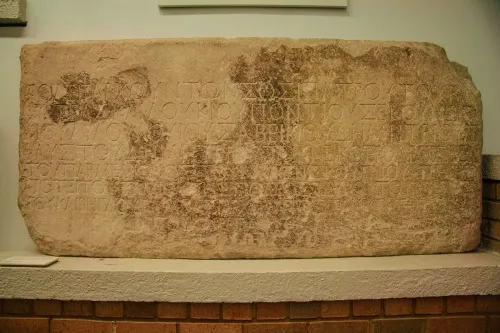
The Politarch Inscription

For years, critics of the Bible pointed to the Greek word politarch, used in Acts 17:6-8 to describe Thessalonian city officials, as evidence of scriptural inaccuracy. This term, unique to Luke’s account and absent from classical Greek literature, led some 19th-century scholars to argue that Luke fabricated details, casting doubt on the New Testament’s historical reliability. They claimed politarch was an anachronism or error, undermining Luke’s credibility as a historian.

However, the discovery of the Thessalonian Politarch Inscription1 in the 19th century, which explicitly lists “politarchs” as civic leaders in Thessaloniki, silenced these objections. As noted by historians like F.F. Bruce, this archaeological find confirmed Luke’s precision, showing that politarch was a legitimate title in first-century Macedonia. This turnaround highlights how critics’ challenges, when met with evidence, can strengthen faith in the Bible’s trustworthiness, echoing Psalm 119:160’s assurance that God’s Word is true.

Thessaloniki was a bustling Roman city, and the politarchs were civic leaders navigating the tensions of a diverse, often skeptical society. Acts 17:4-5 tells of locals and converts stirred by Paul’s preaching, clashing with those loyal to Roman order. The inscription, studied by scholars like N.T. Wright, reveals a city governed by these politarchs, who faced real pressures from crowds opposing the gospel. This context makes Paul’s courage, and the Thessalonians’ faith, more vivid. It reminds us that the Gospel continued to spread in a complex, real-world setting, encouraging us to live boldly for Christ today, as Paul urged in 1 Thessalonians 5:16-18, to “rejoice always” despite challenges.

The Politarch Inscription strengthens our confidence in scripture’s reliability. If Luke accurately recorded a minor detail like a local title (which was for centuries thought to be inaccurate until archaeological discovery), we can trust his accounts of greater events (like Jesus’ resurrection or Paul’s missionary journeys). Archaeological finds consistently show the Bible’s alignment with history. This harmony between faith and evidence invites us to approach scripture with confidence, not blind belief, knowing it withstands scrutiny. As John 17:17 reminds us, God’s Word is truth, a foundation that discovery affirms rather than contradicts.

The Thessalonian Politarch Inscription is more than a dusty relic; it’s a testament to the Bible’s trustworthiness. It encourages us to dig deeper into scripture, marvel at its accuracy, and live out our faith with boldness. Let this ancient stone inspire you to trust God’s Word, knowing it stands firm both then and now.

agape

1. The Thessalonian Politarch Inscription, discovered in Thessaloniki, Greece, in the 19th century, is a fragmented stone artifact from the first century AD, likely part of a public monument or building. This stone tablet discovered in Thessalonica (modern-day Thessaloniki, Greece) that dates to the second century A.D.  lists six officials known as “politarchs,”.

The Inscription on the Politarch as much as is possible due to its fragmented condition.

“In the time of [name of a Roman official or emperor, possibly missing], the politarchs of Thessaloniki, [names such as Sosipatros, Lucius, Sextus, Gaius, Secundus, as typical in Macedonian inscriptions], [served or dedicated this] to [a deity, civic institution, or event, possibly Zeus or the city], in the year [specific dating, often tied to a Roman or local calendar].”

INTERESTING NAMES ON THE STONE

Sosipater: A common Greek name, possibly linked to the biblical Sosipater in Romans 16:21.

C. (Gaius): another name that echoes biblical figures like the Gaius mentioned in Acts 20:4.

Secundus: A Roman name, similar to the Thessalonian Secundus in Acts 20:4.

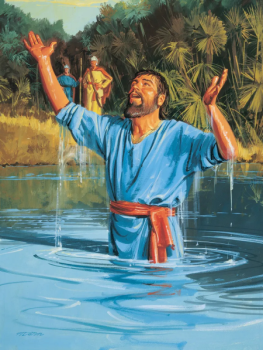
Are you WASHED?

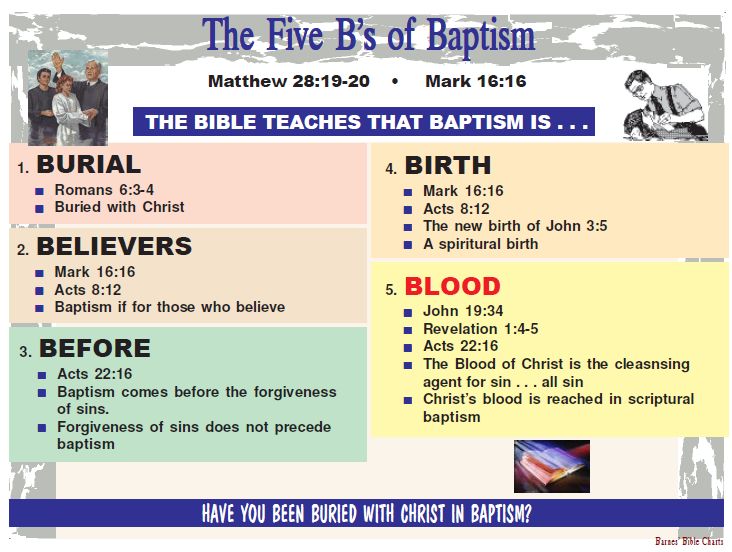
Far from a mere ritual, BAPTISM is a divinely ordained step that aligns believers with Christ’s redemptive work. Through baptism, individuals experience a cleansing of sins, union with Christ’s church, salvation, and an inheritance as heirs of God’s promises.

1. Washing Away Our Sins

Baptism serves as a divine act of cleansing, washing away the stain of sin. In Acts 22:16, Ananias urges Saul, “And now why do you wait? Rise and be baptized and wash away your sins, calling on his name.” This passage emphasizes baptism’s role in cleansing the believer’s conscience before God. Similarly, Acts 2:38 declares, “Repent and be baptized every one of you in the name of Jesus Christ for the forgiveness of your sins, and you will receive the gift of the Holy Spirit.” Here, baptism is linked directly to the remission of sins and the reception of the Holy Spirit. Additionally, Matthew 26:28 connects the concept of forgiveness to Christ’s sacrifice: “For this is my blood of the covenant, which is poured out for many for the forgiveness of sins.” Baptism, therefore, is the moment when a believer appropriates the forgiveness secured by Christ’s blood. Supporting this, Ephesians 5:26 describes Christ sanctifying the church “by the washing of water with the word,” reinforcing baptism’s cleansing power.

2. Added to the Church That Christ Built

Through baptism, believers are united with the body of Christ, the church He established. Acts 2:47 states, “And the Lord added to their number day by day those who were being saved.” This follows the account of 3,000 souls being baptized and added to the church after Peter’s sermon (Acts 2:41). Baptism is the entry point into Christ’s church, as seen in 1 Corinthians 12:13: “For in one Spirit we were all baptized into one body—Jews or Greeks, slaves or free—and all were made to drink of one Spirit.” This passage highlights the unity of believers in the church through baptism. Additionally, Colossians 1:18 affirms Christ as “the head of the body, the church,” underscoring that baptism incorporates individuals into this divine institution, built by Christ Himself (Matthew 16:18).

3. Saved Through Baptism

Baptism is intricately tied to salvation, as it is the moment when a believer’s faith is actualized in obedience to God’s command. 1 Peter 3:21 explicitly states, “Baptism, which corresponds to this, now saves you, not as a removal of dirt from the body but as an appeal to God for a good conscience, through the resurrection of Jesus Christ.” This verse clarifies that baptism is not a mere physical cleansing but a spiritual act that appeals to God for salvation. Mark 16:16 further supports this: “Whoever believes and is baptized will be saved, but whoever does not believe will be condemned.” The connection between baptism and salvation is also evident in Romans 6:3-4, which describes believers being “baptized into his death” and raised to “walk in newness of life,” symbolizing the transformative power of baptism in securing salvation.

4. Becoming Heirs of Abraham

Baptism establishes believers as heirs of the promises made to Abraham, uniting them in God’s covenant family. Galatians 3:27-29 explains, “For as many of you as were baptized into Christ have put on Christ… And if you are Christ’s, then you are Abraham’s offspring, heirs according to promise.” Through baptism, believers become part of the spiritual lineage of Abraham, inheriting the blessings of God’s covenant. Romans 4:16 reinforces this, stating that the promise to Abraham comes “to the one who shares the faith of Abraham, who is the father of us all.” Additionally, Ephesians 3:6 affirms that through the gospel, Gentiles are “fellow heirs” with Israel, a reality actualized in baptism as believers are incorporated into Christ’s body.

5. Putting on Christ

In baptism, believers clothe themselves with Christ, taking on His identity and righteousness. Galatians 3:27 declares, “For as many of you as were baptized into Christ have put on Christ.” This vivid imagery portrays baptism as the moment when a believer is enveloped in Christ’s nature. Romans 13:14 echoes this, urging believers to “put on the Lord Jesus Christ,” a process initiated at baptism. Colossians 3:9-10 further supports this idea, describing believers as having “put off the old self with its practices and… put on the new self,” a transformation that begins with baptism’s symbolic burial and resurrection (Colossians 2:12).

6. Becoming a Disciple of Christ

Baptism marks the beginning of a life of discipleship, as believers commit to following Christ. Matthew 28:19 commands, “Go therefore and make disciples of all nations, baptizing them in the name of the Father and of the Son and of the Holy Spirit.” Baptism is the initiatory step in making disciples, signifying a public commitment to Christ’s teachings. Acts 8:12 illustrates this: “But when they believed Philip as he preached good news… they were baptized, both men and women,” showing that baptism follows belief and marks the start of discipleship. John 3:5 further emphasizes baptism’s role in entering the kingdom of God: “Unless one is born of water and the Spirit, he cannot enter the kingdom of God,” linking baptism to the disciple’s journey of faith.

Baptism is far more than a symbolic act; it is a transformative moment in the believer’s life, rich with spiritual significance. Through baptism, sins are washed away, believers are added to Christ’s church, salvation is received, the promises to Abraham are inherited, Christ is put on, and a lifelong journey of discipleship begins. These truths, grounded in Scripture, underscore baptism’s ESSENTIAL role in the Christian faith.

AGAPE

Evidence for our Faith: The Historical Reality of the Crucifixion

The crucifixion of Jesus Christ stands as one of the most pivotal events in human history, yet its reality is occasionally questioned. However, a careful analysis of historical evidence, both biblical and secular, reveals compelling and logical arguments supporting its occurrence. Far from being a mere theological construct, the crucifixion aligns with the historical context of Roman governance, is corroborated by non-Christian sources, and is consistently detailed in early Christian writings.

First, the Roman practice of crucifixion provides a strong foundation for its historical plausibility. Crucifixion was a well-documented method of execution in the Roman Empire, reserved for slaves, rebels, and those deemed threats to imperial authority. Historian Tacitus, in his Annals (15.44), references the execution of Jesus under Pontius Pilate during Tiberius’ reign, aligning with the biblical timeline. The Gospel of Matthew (27:31-37) describes Jesus’ crucifixion in detail, including Roman soldiers, a cross, and a public spectacle, elements consistent with Roman punitive customs as noted by scholars like Martin Hengel in Crucifixion in the Ancient World. This convergence of Roman practice and biblical narrative anchors the event in historical reality.

Second, multiple independent sources outside the Bible affirm the crucifixion. Alongside Tacitus, Jewish historian Josephus, in Antiquities of the Jews (18.3.3), mentions Jesus’ death by crucifixion, though some debate the text’s authenticity due to later Christian edits. Even skeptical scholars, such as Bart Ehrman in Did Jesus Exist?, concede that the core reference to Jesus’ execution is likely genuine. Additionally, the Roman satirist Lucian, in The Death of Peregrinus (circa 165 CE), mocks Christians for worshiping a “crucified sage,” indicating that Jesus’ death was widely known beyond Christian circles. These secular testimonies provide external validation of the biblical accounts in Mark 15:24-32 and John 19:16-18.

Third, the coherence and early attestation of the New Testament writings bolster the argument. The Gospels (Matthew, Mark, Luke, and John) were composed within decades of Jesus’ life. Paul’s letters, such as 1 Corinthians 15:3-4 (written circa 55 CE), affirm the crucifixion as a foundational belief among early Christians, predating the Gospels. This rapid documentation, combined with the lack of contemporary refutations from Jesus’ opponents, suggests the event was an accepted fact. As historian N.T. Wright argues in The Resurrection of the Son of God, the crucifixion’s prominence in such early texts reflects a historical memory too vivid to dismiss.

Critics might argue that the accounts are biased or mythologized, yet the consistency across sources, the embarrassment of a crucified messiah (contrary to Jewish expectations, as in Deuteronomy 21:23), and the absence of alternative narratives strengthen the case. The crucifixion’s historical reality emerges not from blind faith but from a convergence of evidence that withstands scrutiny.

In the end, the crucifixion of Jesus is not a fable spun by devotees but a stark historical event etched into the annals of time. Its truth pierces through centuries, demanding we confront its weight.

Agape,

Evidence for our Faith: The Historical Reality of the Crucifixion

The crucifixion of Jesus Christ stands as one of the most pivotal events in human history, yet its reality is occasionally questioned. However, a careful analysis of historical evidence, both biblical and secular, reveals compelling and logical arguments supporting its occurrence. Far from being a mere theological construct, the crucifixion aligns with the historical context of Roman governance, is corroborated by non-Christian sources, and is consistently detailed in early Christian writings.

First, the Roman practice of crucifixion provides a strong foundation for its historical plausibility. Crucifixion was a well-documented method of execution in the Roman Empire, reserved for slaves, rebels, and those deemed threats to imperial authority. Historian Tacitus, in his Annals (15.44), references the execution of Jesus under Pontius Pilate during Tiberius’ reign, aligning with the biblical timeline. The Gospel of Matthew (27:31-37) describes Jesus’ crucifixion in detail, including Roman soldiers, a cross, and a public spectacle, elements consistent with Roman punitive customs as noted by scholars like Martin Hengel in Crucifixion in the Ancient World. This convergence of Roman practice and biblical narrative anchors the event in historical reality.

Second, multiple independent sources outside the Bible affirm the crucifixion. Alongside Tacitus, Jewish historian Josephus, in Antiquities of the Jews (18.3.3), mentions Jesus’ death by crucifixion, though some debate the text’s authenticity due to later Christian edits. Even skeptical scholars, such as Bart Ehrman in Did Jesus Exist?, concede that the core reference to Jesus’ execution is likely genuine. Additionally, the Roman satirist Lucian, in The Death of Peregrinus (circa 165 CE), mocks Christians for worshiping a “crucified sage,” indicating that Jesus’ death was widely known beyond Christian circles. These secular testimonies provide external validation of the biblical accounts in Mark 15:24-32 and John 19:16-18.

Third, the coherence and early attestation of the New Testament writings bolster the argument. The Gospels (Matthew, Mark, Luke, and John) were composed within decades of Jesus’ life. Paul’s letters, such as 1 Corinthians 15:3-4 (written circa 55 CE), affirm the crucifixion as a foundational belief among early Christians, predating the Gospels. This rapid documentation, combined with the lack of contemporary refutations from Jesus’ opponents, suggests the event was an accepted fact. As historian N.T. Wright argues in The Resurrection of the Son of God, the crucifixion’s prominence in such early texts reflects a historical memory too vivid to dismiss.

Critics might argue that the accounts are biased or mythologized, yet the consistency across sources, the embarrassment of a crucified messiah (contrary to Jewish expectations, as in Deuteronomy 21:23), and the absence of alternative narratives strengthen the case. The crucifixion’s historical reality emerges not from blind faith but from a convergence of evidence that withstands scrutiny.

In the end, the crucifixion of Jesus is not a fable spun by devotees but a stark historical event etched into the annals of time. Its truth pierces through centuries, demanding we confront its weight.

Agape,

Evidence for our Faith: The Mathematical Improbability of fulfilled Prophecy

The Astonishing Mathematical Probability of Jesus Fulfilling the Full Scope of Old Testament Prophecies

The historical existence of Jesus Christ gains unparalleled logical support when we consider the sheer mathematical improbability of any individual fulfilling the entirety of Old Testament prophecies attributed to him. These predictions, numbering over 300 by some counts, spanning centuries and covering his lineage, birth, ministry, death, and legacy, converge on Jesus with a precision that defies random chance. Calculating the cumulative probability of this alignment offers a compelling case that Jesus was not a myth but a figure uniquely embedded in a prophetic framework, as recorded in the New Testament.

Scholars like J. Barton Payne (The Encyclopedia of Biblical Prophecy, 1973) identify approximately 333 messianic prophecies across the Old Testament, written between 1500 BC and 400 BC. These range from broad themes (e.g., a savior from David’s line, 2 Samuel 7:12-13) to precise details (e.g., born in Bethlehem, Micah 5:2; betrayed for 30 pieces of silver, Zechariah 11:12). Jesus’ life, as documented in Matthew, Mark, Luke, and John, fulfills these with remarkable consistency, his genealogy (Matthew 1:1-16), virgin birth (Matthew 1:22-23), crucifixion (John 19:18), and resurrection (1 Corinthians 15:4). To assess this logically, we must estimate the odds of one person matching this vast array by chance.

Mathematician Peter Stoner (Science Speaks, 1958), peer-reviewed by the American Scientific Affiliation, analyzed just eight specific prophecies, e.g., Bethlehem birth (1 in 2,000), virgin birth (1 in 10,000), crucifixion details (1 in 10,000), and burial with the rich (1 in 1,000). He calculated a combined probability of 1 in 10^17 (1 followed by 17 zeros), akin to picking one marked coin from a pile covering Texas two feet deep. Scaling this to all 333 prophecies is daunting, but let’s conservatively assign an average probability of 1 in 1,000 per prophecy—far more generous than Stoner’s estimates for specific ones. The cumulative odds become 1 in 10^999 (1,000 raised to the 333rd power), a number so vast it exceeds the atoms in the observable universe (estimated at 10^80).

Consider key examples: Genesis 49:10 ties the Messiah to Judah’s tribe before its sovereignty ends, fulfilled as Jesus’ lineage traces to Judah (Luke 3:33) before Rome’s dominance. Daniel 9:25-26 predicts the Messiah’s death 483 years after a decree to rebuild Jerusalem (circa 445 BC), aligning with Jesus’ crucifixion around AD 30-33, a 1 in 100,000 earthly precision. Psalm 16:10’s promise of no decay (Acts 2:31) adds another layer, rare for executed figures. Each prophecy compounds the improbability exponentially.

Critics might argue some prophecies are vague or retrofitted, but the Dead Sea Scrolls (e.g., 4Q521, pre-100 BC) confirm their antiquity, and many, like Zechariah 9:9’s humble king on a donkey (Matthew 21:5), are too specific to stretch. Scholar John Lennox (God’s Undertaker, 2009) notes that this convergence surpasses statistical fluke, pointing to intentional fulfillment.

Agape,

Evidence for our Faith: External Evidence for Jesus

Whether you’re a believer or just curious, the question of whether Jesus of Nazareth really lived is something that gets people talking. While the Bible gives the main story of His life, it’s not the only place we hear about Him. In fact, several ancient Roman and Jewish writers, people who weren’t Christians, also mentioned Jesus. And what they said actually backs up the Bible in some powerful ways.

One of the best-known Roman historians, Tacitus, wrote about Christians in his work Annals around the year 116 AD. In Book 15, Chapter 44, he talks about how Emperor Nero blamed Christians for a fire in Rome and punished them. He even mentions their founder, “Christus” (Christ), who was executed by Pontius Pilate during the reign of Emperor Tiberius. That lines up perfectly with what we read in Matthew 27:2. What’s especially interesting is that Tacitus wasn’t a fan of Christians at all. He was just reporting what he knew, likely from official Roman records. That makes his words a strong, unbiased confirmation that Jesus really was crucified.

Another Roman writer, Pliny the Younger, gives us a peek into what early Christians were up to. Around the year 112 AD, he wrote a letter to the Emperor Trajan asking how to deal with this growing group of Jesus-followers. He said they worshiped Christ “as a god” and were spreading quickly. This matches what we see in Acts 2:41, where thousands started following Jesus shortly after His resurrection. Pliny wasn’t trying to preach, he was just doing his job as a governor, which makes his report even more valuable.

Then there’s Flavius Josephus, a Jewish historian who lived in the first century. In his book Antiquities of the Jews, he refers to Jesus as a wise man who did amazing things, was crucified by Pilate, and had followers who didn’t give up on Him. This section, called the “Testimonium Flavianum,” has sparked debate because it may have been edited by Christian scribes later on. But most scholars believe the basic facts, like Jesus’ crucifixion, are authentic. It’s a fascinating link to what we see in Mark 15:15.

Even the Babylonian Talmud, a collection of Jewish writings compiled later on, has something to say. In Sanhedrin 43a, it talks about a man named Yeshu who was executed on the eve of Passover for leading people astray. It’s a negative take on Jesus, but oddly enough, it lines up with John 19:14 and Matthew 26:65-66. Even though the tone is critical, it still confirms key parts of the story—Jesus’ existence, His influence, and His death.

So, what do all these sources have in common? They come from people who weren’t trying to promote Christianity. In some cases, they were even hostile to it. And yet, they confirm important details from the Gospels, like Jesus being crucified under Pilate and the rapid rise of His followers.

When you put it all together, these outside voices create a strong picture: Jesus wasn’t just a religious figure made up later. He was a real person who made a real impact—so much so that even His critics couldn’t ignore Him.

Agape,

The DOOR was shut, Matthew 25:10

In Matthew 25:10, within the parable of the ten virgins, Jesus declares, “And while they were going to buy, the bridegroom came, and those who were ready went in with him to the marriage feast, and the door was shut.” This vivid imagery underscores a sobering truth: opportunities for salvation and readiness have limits. The shutting of the door represents finality, a point of no return in our spiritual journey. How, then, is this door shut in practical application? Scripture reveals four key ways that the door becomes shut.

First, death is a closed door. Hebrews 9:27 states, “It is appointed for man to die once, and after that comes judgment.” Life is the season for repentance and faith, but death ends that opportunity, once life ends, the opportunity for repentance ceases. The parable’s foolish virgins, unprepared when the bridegroom arrived, mirror those who delay repentance, assuming time remains. Death seals our choices, shutting the door to further chances to accept God’s grace by obeying the gospel. This urges us to live ready, embracing salvation now, as tomorrow is not promised (2 Corinthians 6:2). Like the foolish virgins who scrambled too late to prepare, those who postpone turning to Christ risk facing eternity unprepared. This reality presses us to act now, (by obeying the gospel through baptism by through faith, Colossians 2:11-12) because no one knows their final hour (James 4:14). Death’s finality demands we live ready.

Second, obstinance toward the Holy Spirit shuts the door. Acts 7:51 warns against resisting the Spirit, who convicts us of sin and guides us to truth (John 16:8). Rejecting the revealed Word (God’s plan for salvation through Christ and call to godliness) hardens the heart. Like Pharaoh, who ignored God’s signs (Exodus 8:15), persistent refusal to heed Scripture’s clear path (John 3:16; Acts 2:38) closes the door to grace. Jesus warned of blasphemy against the Spirit as an unforgivable sin (Matthew 12:31-32), reflecting a willful, persistent refusal to accept God’s way. The foolish virgins’ lack of oil mirrors this neglect, choosing self-reliance over surrender. The foolish virgins’ neglect of oil symbolizes this willful unpreparedness, choosing self over surrender to God’s Spirit. To keep the door open, we must heed the Spirit’s prompting today through the revealed word in scripture.

Third, refusing to open the door Jesus knocks upon seals our exclusion. Revelation 3:20 declares, “Behold, I stand at the door and knock. If anyone hears my voice and opens the door, I will come in.” Salvation is a personal choice; Jesus invites, but we must respond. Ignoring His call (through apathy, pride, or worldly distractions) leaves us outside the feast, as the virgins discovered. Scripture laments those who reject God’s invitation (Luke 14:24), underscoring that an unopened heart shuts the door to eternal life. There are several examples of those who turned away from Jesus. The Rich Young Ruler (Matthew 19:16-22). Some of Jesus’ Disciples (John 6:60-66). Answering Jesus now ensures entry.

Fourth, Christ’s return will shut the door finally for all. Matthew 25:31-46 describes the judgment day, when Christ separates the ready from the unprepared. The bridegroom’s arrival in the parable foreshadows this moment, when “the Son of Man comes” unexpectedly (Matthew 24:44). No further chances remain; every soul will account for their faith and deeds (2 Corinthians 5:10). As God shut the ark’s door before the flood (Genesis 7:16), Christ’s return will close salvation’s offer, finalizing destinies. On that day, “But the day of the Lord will come as a thief in the night; in the which the heavens shall pass away with a great noise, and the elements shall melt with fervent heat, the earth also and the works that are therein shall be burned up.” (2Peter 3:10). This compels us to live in readiness, clothed in Christ (Galatians 3:27), faith and obedience.

Matthew 25:10 is a call to vigilance. Death’s certainty, the Spirit’s voice, Jesus’ knock, and Christ’s return all remind us: the door is open now, but not forever. Like the wise virgins, we must prepare (embracing salvation, yielding to God’s Spirit, welcoming Christ, and awaiting His return). Let us act before the door is shut, securing our place at the eternal feast.

Evidence for our faith: conversion of Skeptics

Skeptics Turned Believers

The resurrection of Jesus Christ stands as a pivotal claim of Christianity, and its credibility is bolstered by the transformations of skeptics like Simon Greenleaf and Frank Morison, who, through rigorous examination of evidence, became convinced of its truth. These non-biblical figures—initially doubters—offer compelling, logical arguments rooted in historical and legal scrutiny, making their conclusions a powerful case for the resurrection.

Simon Greenleaf, a 19th-century Harvard law professor and co-founder of its law school, was a skeptic of Christianity. Known for his work A Treatise on the Law of Evidence, Greenleaf applied legal standards to the Gospel accounts. He argued that the testimonies of Matthew, Mark, Luke, and John (e.g., Matthew 28:1-10, John 20:1-18) hold up as credible eyewitness reports. In his book The Testimony of the Evangelists (1874), Greenleaf noted the consistency of the resurrection narratives despite minor variations, a hallmark of authentic, uncoached testimony. He emphasized that the disciples’ willingness to die for their claims, as tradition records (e.g., Peter’s crucifixion), defies the behavior of liars protecting a hoax. Greenleaf concluded that the resurrection met the burden of proof beyond reasonable doubt, converting him from skeptic to believer.

Similarly, Frank Morison, a 20th-century British journalist, set out to disprove the resurrection in his book Who Moved the Stone? (1930). Initially viewing the story as myth, Morison approached it with a detective’s mindset, analyzing historical context and psychological plausibility. He found the empty tomb (Matthew 28:11-15) particularly persuasive—Roman and Jewish authorities, with every incentive to produce Jesus’ body, failed to do so. Morison also grappled with the transformation of the disciples, from despairing cowards (John 20:19) to bold proclaimers (Acts 2:14-36), a shift he deemed inexplicable without a real event. The sudden conversion of Paul, a former persecutor (Acts 9:1-19), further convinced Morison that only a tangible encounter with the risen Christ could account for such a reversal. His investigation led him to faith.

Both men highlight the resurrection’s evidential strength outside biblical bias. Greenleaf’s legal lens underscores the reliability of the Gospel witnesses, while Morison’s historical probe reveals the improbability of alternative explanations (like theft or hallucination) given the cultural and political pressures of the time. The rapid spread of Christianity, despite persecution, aligns with their findings: a fabricated tale wouldn’t inspire such conviction. Paul’s own testimony in 1 Corinthians 15:3-8, listing over 500 witnesses, adds weight, as Greenleaf and Morison noted its early circulation, too soon for legend to distort fact.

These skeptics-turned-believers demonstrate that the resurrection withstands intellectual scrutiny. Their journeys from doubt to conviction rest on evidence (eyewitness accounts, an empty tomb, and transformed lives) that defies dismissal.

Agape

spencer