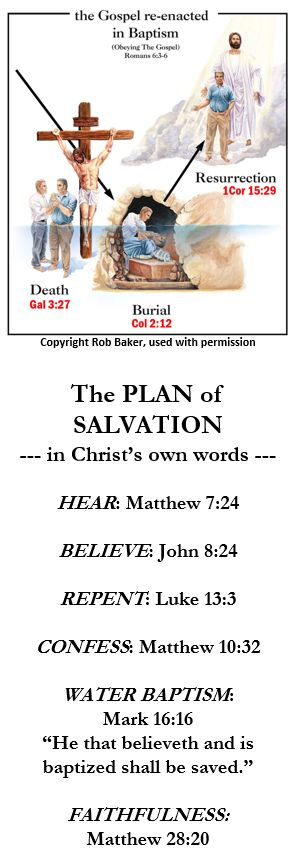
Evidence for our faith: Biological similarities

Vertebrate eye

Biological Similarities: Evidence for God in a Six-Day Creation

The remarkable biological similarities between species—too intricate and precise to be explained by evolution—provide powerful scientific evidence for God’s existence as the Creator of all life. These shared features across diverse organisms defy the idea of gradual, naturalistic development, pointing instead to a purposeful design as recounted in the Bible’s six-day creation narrative.

Take the camera-like eye found in both humans and octopuses. Despite no evolutionary link close enough to explain it, both possess retinas, lenses, and optic nerves in stunningly similar arrangements. Evolution suggests these complex structures emerged separately by chance, but the odds of such identical designs arising independently are astronomical.

Biologist Simon Conway Morris notes that these similarities occur too frequently to be random, hinting at a deliberate pattern (Morris, 2015, The Runes of Evolution). Genesis 1:20-21 tells us God created sea creatures and birds on the fifth day, suggesting He crafted these eyes intentionally, not through eons of trial and error.

Then there’s the universal genetic code and protein-building systems—DNA and ribosomes—shared by all life, from bacteria to mankind. Evolution claims this arose once and persisted unchanged, but the complexity of these systems resists explanation as a fluke of nature. Biochemist Michael Denton calls them “primal patterns,” more akin to a master plan than a cosmic accident (Denton, 1986, Evolution: A Theory in Crisis). Genesis 1:26-27 reveals God made man in His image on the sixth day, implying a purposeful design woven into all life from the start.

Enzymes like cytochrome c, vital for energy production, further challenge evolutionary logic. Found in yeast and horses alike, their near-identical structure across vast species gaps suggests a fixed design, not random divergence. Why would such precision hold steady unless crafted by intent? Genesis 1:11-12 describes God creating plants on the third day, each “according to its kind,” hinting at a blueprint for life’s consistency. Psalm 139:14 praises His “wonderful works,” reflecting this meticulous handiwork.

Critics might argue that similarities reflect adaptation or convergence, but this overlooks the sheer complexity and specificity involved. The odds of unrelated organisms independently developing identical genetic and metabolic systems strain credulity without invoking a creator. Psalm 104:24 celebrates this: “How many are your works, Lord! In wisdom you made them all; the earth is full of your creatures.” Biological similarities, then, are not accidents but fingerprints of a Creator who, in six days, crafted a coherent, interconnected world.

Evolution’s tale of chance and time crumbles under these biological marvels. The six-day creation offers a clearer answer: God designed life’s similarities as a signature of His power. From eyes to enzymes, the evidence aligns with Scripture’s bold claim of a purposeful beginning.

Agape,
spencer

Sources:
Denton, M. (1986). Evolution: A Theory in Crisis. Adler & Adler.
Meyer, S. C. (2013). Darwin’s Doubt. HarperOne.
Morris, S. C. (2015). The Runes of Evolution. Templeton Press.

Evidence for our Faith: the Population Problem

The Population Problem: A Case for a Young Earth

One of the most intriguing arguments for a young Earth comes from an analysis of human population growth. If humans have existed for 300,000 years or more, as conventional science suggests, the number of humans alive today—or even in recorded history—presents a logical conundrum when viewed through the lens of population dynamics. By examining reasonable growth rates and historical data, the evidence aligns more closely with a young Earth timeline, consistent with a biblical framework of roughly 6,000 to 10,000 years.

By looking at how quickly people multiply and comparing ancient survival rates to today’s, the current 8 billion population supports a short history rooted in reason and scripture.

Picture the biblical Flood 4,500 years ago, leaving just Noah’s family of eight (Genesis 7:13). With a small, steady growth rate—much lower than today’s because fewer babies survived back then—the population could climb to 8 billion in that time. It’s a straightforward buildup: start small, grow consistently, and hit today’s number without any wild leaps. This fits the tough conditions of ancient life, where disease and hardship kept survival rates low, with studies showing only about half of kids made it to adulthood (Volk & Atkinson, 2013, Historical Biology).

Now imagine humans starting 200,000 to 300,000 years ago, as some claim. Even with a tiny growth rate, the numbers explode way past 8 billion—think hundreds of billions or more in just a fraction of that time. To stay at today’s population, growth would have to stall almost completely for centuries, suggesting endless disasters like plagues or wars. But history shows humans thriving and spreading since about 10,000 years ago, not stuck in a rut. And where are all the graves from those supposed billions of extra people?

Today’s faster growth—around 0.8% a year—comes from better medicine and food, things ancient people didn’t have. Apply that rate backward over thousands of years, and you’d get ridiculous numbers, far beyond what Earth could hold. The Bible’s call to “be fruitful and multiply” (Genesis 9:1) and the spread of nations (Genesis 10) match a 4,500-year rise to 8 billion, backed by genetic hints of a recent common ancestor (Carter, 2007, Journal of Creation). A 200,000–300,000-year story, though, needs constant excuses to explain why we’re not overrun with people.

In short, a young Earth makes sense: a steady climb from a handful to 8 billion in a few thousand years, no tricks needed. The longer timeline buckles under its own logic, leaving too many questions and not enough bones!


Agape,
spencer

Sources:
o Carter, R. (2007). “Mitochondrial Diversity within Modern Humans.” Journal of Creation, 21(2).
o Volk, A. A., & Atkinson, J. A. (2013). “Infant and Child Death in the Human Environment of Evolutionary Adaptation.” Historical Biology, 25(5).
o Genesis 5, 7:13, 9:1, 10 (KJV).

Evidence for our faith: Fine Tuning

The Laws of Physics: Evidence of a Lawgiver

Could the laws of physics—precise, universal, and life-sustaining—point to a purposeful design, a Lawgiver shaping the cosmos? Modern science offers compelling clues that resonate with biblical accounts, suggesting God’s hand in creation.

The universe’s fine-tuning is astonishing. Physicist Paul Davies (The Cosmic Blueprint, 1988) highlights that if gravity shifted by one part in 10^40, stars like our Sun—vital for life—wouldn’t exist.

Roger Penrose (The Emperor’s New Mind, 1989) calculates the initial entropy —essentially the universe’s starting level of disorder— required odds-defying precision (1 in 10^10^123) for a habitable cosmos. This suggests intent, not chance, mirroring Genesis 1:1: “In the beginning, God created the heavens and the earth.”

Equally remarkable is the rational order of these laws. Eugene Wigner’s 1960 paper, “The Unreasonable Effectiveness of Mathematics,” marvels at how abstract equations govern reality with uncanny accuracy. Why does the universe follow such logic? Psalm 19:1 offers a poetic parallel: “The heavens declare the glory of God; the skies proclaim the work of his hands,” declaring a mind behind the order.

The universe’s origin adds intrigue. The Big Bang, confirmed by cosmic microwave background radiation (Penzias and Wilson, 1965), marks a sudden start from nothing. Stephen Hawking (A Brief History of Time, 1988) notes this challenges materialist explanations, as “nothing” producing “something” implies a cause beyond physics. Genesis 1:3—“And God said, ‘Let there be light’”—echoes this emergence.

The anthropic principle—meaning the universe seems tailored for human life— deepens the case. Michael Denton (Nature’s Destiny, 1998) argues that physical laws governing carbon, water, and oxygen are uniquely tuned for life. Alter any constant slightly, and biology collapses. Isaiah 45:18 aligns: God “formed the earth… to be inhabited.” Such specificity strains random odds, suggesting deliberate calibration.

Skeptics propose a multiverse to explain our “lucky” universe, but this lacks evidence and complicates rather than clarifies. A single, purposeful design aligns with Occam’s razor. Romans 1:20 ties it together: God’s “invisible qualities… have been clearly seen, being understood from what has been made.” The laws of physics—fine-tuned, rational, and life-enabling— more than whisper of a Lawgiver, inviting us to ponder the Creator behind the cosmos.

Agape,

Spencer

Sources:

  • Davies, Paul. The Cosmic Blueprint. 1988.
  • Penrose, Roger. The Emperor’s New Mind. 1989.
  • Wigner, Eugene. “The Unreasonable Effectiveness of Mathematics.” 1960.
  • Hawking, Stephen. A Brief History of Time. 1988.

Denton, Michael. Nature’s Destiny. 1998.

Jesus is the one to follow when we’re HURTING

Hope and Healing in Christ for the Hurting

Life is full of hardship. Suffering, loss, and disappointment are part of the human experience. Some struggle with grief, others with betrayal, loneliness, or physical pain. No one is immune to the trials of life. Yet, in the midst of sorrow, there is One who offers healing, hope, and peace—Jesus Christ.

Jesus understands suffering because He experienced it firsthand. Isaiah 53:3 describes Him as “a man of sorrows, and acquainted with grief.” He knew what it was like to be rejected, betrayed, and physically tormented. He endured humiliation and pain on the cross, bearing the weight of humanity’s sin. Because of this, He is uniquely qualified to comfort those who are hurting. Hebrews 4:15 assures us that we have a Savior who can sympathize with our weaknesses, for He was “tempted like as we are, yet without sin.”

Hope in Christ for the Hurt of This Life

Pain can make life feel unbearable. The world offers temporary distractions, but they cannot bring lasting peace. Only Christ provides true hope. John 16:33 reminds us of this reality: “In the world ye shall have tribulation: but be of good cheer; I have overcome the world.” The suffering of this present life is temporary, but the joy found in Christ is eternal. Paul declares in Romans 8:18, “For I reckon that the sufferings of this present time are not worthy to be compared with the glory which shall be revealed in us.” When we trust in Christ, we gain a perspective that allows us to endure, knowing that something far greater awaits.

Understanding from Christ, Who Endured Suffering

One of the most comforting truths about Jesus is that He understands human suffering. He was betrayed by a close friend (Luke 22:48; Psalm 41:9), falsely accused (Matthew 26:59-60), mocked (Matthew 27:29-31), and crucified (Luke 23:33). He knows what it feels like to be abandoned, rejected, and mistreated. This means that when we pour out our hearts to Him, we are speaking to One who truly understands. Psalm 34:18 assures us, “The Lord is nigh unto them that are of a broken heart.”

Rest and Peace in His Forgiveness and Mercy

Many suffer not only from external circumstances but also from the weight of guilt and shame. Sin leaves scars, and the burden of past mistakes can feel overwhelming. Yet, Jesus offers complete forgiveness. Matthew 11:28 invites us, “Come unto me, all ye that labour and are heavy laden, and I will give you rest.” Through His sacrifice, we are freed from sin’s condemnation. Psalm 103:12 declares, “As far as the east is from the west, so far hath he removed our transgressions from us.” In Christ, we find peace, knowing that our past does not define us.

Truth, Life, and True Joy

Many search for meaning in temporary pleasures, but Jesus alone is the source of true life. He declares in John 14:6, “I am the way, the truth, and the life.” The joy He gives is not dependent on circumstances but is rooted in a relationship with Him. John 15:11 states, “These things have I spoken unto you, that my joy might remain in you, and that your joy might be full.”

Jesus, Our Intercessor

For those who feel distant from God, Jesus bridges the gap. 1 Timothy 2:5 tells us, “For there is one God, and one mediator between God and men, the man Christ Jesus.” He intercedes for us before the Father, offering continual access to God’s grace and help.

He Never Leaves nor Forsakes Us

Loneliness is one of the deepest forms of suffering. Yet, Jesus promises, “I will never leave thee, nor forsake thee” (Hebrews 13:5). Even when we feel abandoned, He is always near.

Good Can Come Despite the Pain

While suffering is hard, God can bring blessings out of trials. Romans 8:28 reassures us, “And we know that all things work together for good to them that love God.” Even when we don’t understand, we can trust that He can bring about good despite the pain and suffering in this life.

Conclusion

No matter what pain or sorrow you carry, Jesus offers hope and healing. Turn to Him, and you will find peace, understanding, and the strength to endure. “Casting all your care upon him; for he careth for you.” (1 Peter 5:7)

Agape

Spencer

There is a way you may know if you have eternal life.

Evidence for our faith: the problem of beauty

The existence of beauty in the world presents a profound question: why does beauty exist at all, and why are humans uniquely capable of perceiving and appreciating it? From awe-inspiring sunsets to masterful works of art, beauty seems unnecessary for survival, challenging purely naturalistic explanations and pointing to a Creator who values aesthetics.

  1. Beauty in Nature
    Nature abounds with intricate and breathtaking beauty. The symmetry of snowflakes, the vibrant colors of a coral reef, and the majesty of mountain ranges go far beyond what is required for survival. Evolutionary theory might explain functional traits aiding survival and reproduction, but beauty often serves no such purpose. For example, the iridescence of a butterfly’s wing or the intricate design of a seashell does not directly contribute to the organism’s fitness. These examples suggest an artist behind the canvas of creation.
  2. The Human Appreciation of Beauty
    Human beings uniquely recognize and create beauty. Unlike animals, which may engage in utilitarian behaviors related to survival, humans produce art, music, and poetry with no direct survival benefit. Neuroscientists have identified regions of the brain that respond to beauty, regardless of its form—visual, auditory, or conceptual. This capacity for aesthetic appreciation suggests that humans are made in the image of a Creator who delights in beauty. The Bible affirms this in Genesis 1:27, where it states, “God created man in his own image.”
  3. Universality of Beauty
    Across cultures and times, humans have consistently found certain patterns, colors, and sounds beautiful. The golden ratio, found in natural phenomena and human art, is a prime example. This universality suggests an objective standard of beauty woven into the fabric of creation. Ecclesiastes 3:11 notes, “He hath made every thing beautiful in his time,” affirming that beauty reflects the order and intention of God.
  4. Beauty and Purpose
    If the universe were purely a product of random chance, beauty would be an inexplicable anomaly. However, the Bible reveals that creation declares the glory of God: “The heavens declare the glory of God; and the firmament sheweth his handywork” (Psalm 19:1). Beauty serves a purpose in pointing humanity to its Creator, inspiring wonder and gratitude.

Conclusion
The existence and appreciation of beauty challenge naturalistic explanations and align with the biblical worldview of a Creator who delights in aesthetics. Beauty is not accidental but purposeful, reflecting God’s nature and inviting us to seek Him. As Romans 1:20 states, “For the invisible things of him from the creation of the world are clearly seen, being understood by the things that are made.” Beauty, in all its forms, is a testament to the divine Artist behind the universe.

Sources:
• D’Souza, D. What’s So Great About Christianity?
• Lennox, J. God’s Undertaker: Has Science Buried God?
• Genesis 1:27, Psalm 19:1, Ecclesiastes 3:11, Romans 1:20 (KJV).

Agape,
Spencer

Evidence for our Faith, the Flood

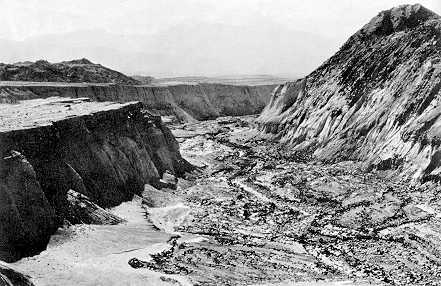
RAPID EROSION AT MOUNT ST. HELENS

Scientific Evidence for the Global Flood

The biblical account of a global flood is detailed in Genesis 6–9, describing Noah’s ark, the catastrophic deluge, and the repopulation of the earth. This narrative has parallels in ancient cultures worldwide, suggesting a shared memory of a catastrophic event. Scientific evidence also lends credibility to this account, providing compelling data that aligns with the possibility of a global flood.

Sedimentary Layers and Fossil Evidence

Sedimentary rock layers, found across the earth, contain fossils of marine and land organisms, often in unexpected locations. For instance, marine fossils have been discovered atop the Himalayas and other high-altitude regions. This suggests that these areas were once submerged under water. Rapid burial of organisms during a massive flood could explain the fossilization of soft-bodied creatures and the preservation of delicate features, such as jellyfish imprints, which would decay under normal conditions.

Polystrate Fossils

Polystrate fossils, or fossils that extend vertically through multiple sedimentary layers, challenge the standard geological timeline that attributes these layers to slow accumulation over millions of years. A rapid deposition of sediment, such as during a global flood, provides a more plausible explanation for how these fossils formed without significant decay.

Large-Scale Erosion and Canyon Formation

The formation of canyons, such as the Grand Canyon, shows evidence of rapid water erosion rather than slow geological processes. Experiments following events like the eruption of Mount St. Helens in 1980 showed how massive volumes of water can carve canyons in a short period, mirroring what a global flood might accomplish on a larger scale.

Flood Legends Across Cultures

Over 200 flood legends exist among ancient cultures worldwide, including those of the Sumerians, Babylonians, and Native Americans. Many of these accounts include a large vessel, a remnant of humanity and animals, and a divine reason for the flood. Such widespread narratives suggest a historical basis for the biblical account of Noah’s flood.

Biblical Consistency with Science

Genesis describes “the fountains of the great deep” breaking open and “the windows of heaven” releasing water (Genesis 7:11). Modern geology acknowledges subterranean water reserves and their role in catastrophic events. Furthermore, the ark’s dimensions (Genesis 6:15) align with the proportions needed for stability and capacity, as confirmed by naval architects.

Conclusion

While interpretations of evidence vary, the sedimentary layers, polystrate fossils, rapid erosion patterns, and global flood legends align with the Genesis narrative. These findings challenge the notion of slow geological processes and suggest that a catastrophic event, consistent with the biblical flood, is plausible.

Agape,

Spencer

Sources:

Morris, J. “The Global Flood.” Institute for Creation Research.

Snelling, A. “Flood Evidences.” Answers in Genesis.

Genesis 6–9, KJV.

Bible Reading Plan 2025

Not Just another Bible Reading plan you won’t finish.

It’s that time of year again when we encourage folks to find the right Bible reading plan that works for them. If you’ve ever struggled to read the Bible consistently, having a structured plan can make all the difference.

Before we introduce the 2025 plan, let’s take a moment to reflect on why a regular approach to Bible reading is so valuable.

The Word of God is our spiritual nourishment (Matthew 4:4), and regular reading allows us to grow in knowledge, faith, and obedience. A well thought out plan provides consistency and focus, ensuring that we engage with the whole counsel of God (Acts 20:27). It also helps us build a daily habit of spending time in God’s Word, which strengthens our walk with Him and equips us for every good work (2 Timothy 3:16-17).

Following is a simplified version of the Bible Reading Plan I’ve followed for the last few years. This plan is both simple and engaging. By breaking up the reading between the Old and New Testaments it helps to break up any monotony that keeps many folks from finishing.


The Monday Through Friday 5-day Reading Plan
This year’s plan has us reading the New Testament twice while incorporating the Old Testament and Poetry/Wisdom books. It is structured to give variety and balance:

• Mondays: Read 4 chapters from the Gospels (Matthew, Mark, Luke, and John – 89 chapters twice).

• Tuesdays: Read 4 chapters from Paul’s letters (Romans through Philemon – 87 chapters twice).

• Wednesdays: Read 4 chapters from the General Letters and Acts (Hebrews through Revelation and Acts – 84 chapters twice).

• Thursdays & Fridays: Read 7 chapters each on these two days from the Old Testament History & prophets (728 chapters total).

• Monday–Friday: Add 1 chapter each morning or evening from the Poetry and Wisdom books (Psalms, Proverbs, Ecclesiastes, Song of Solomon – 201 chapters total). With the 59 days to spare I’ll usually read Proverbs, Ecclesiastes, & Song of Solomon again.

By following this plan, you will read through the entire Bible in a year, with the New Testament covered twice.

Why This Plan Works
As New Testament Christians, the focus on the New Covenant is especially meaningful. By reading the New Testament twice in a year—just 4 chapters a day—you’ll gain a deeper understanding of Jesus’ life and teachings, as well as learning about the Lord’s church. In about 15–20 minutes each day, you can reflect on God’s grace and truth revealed through His Word.

The plan also ensures exposure to the Old Testament, grounding us in God’s purpose, and wisdom. With its organized structure, each day brings fresh motivation and variety, helping you stay engaged.

Imagine this time next year, having read about the life of Jesus twice and journeyed through the entire Bible. You’ll gain not just knowledge, but also a richer, deeper relationship with God through His Word. Start your journey today, and see how consistent Bible reading transforms your life in 2025!.

Agape,
Spencer

The Necessity of Hearing and Obeying the Written Word of God

The Bible is God’s communication to us, written to guide, instruct, and equip His people. In Ephesians 3:1-5, Paul reminds Christians that God revealed His mystery to the Apostles and prophets by the Holy Spirit, ensuring that all can now understand it through what has been written. This truth highlights the sufficiency and authority of Scripture for every generation.

It was Written for Us Today: No Continuing Revelation

Paul’s words affirm that the Scriptures are complete. In Ephesians 3:3-5, he explains that the mystery of Christ has been fully revealed and recorded for our understanding. This aligns with Jude 3, which tells us the faith was once delivered to the saints. There is no need for additional revelations. Galatians 1:8-9 warns against anyone who would add to or alter the gospel, emphasizing that God’s Word is final and unchanging. Likewise, 2 Peter 1:3 assures us that God has given us everything necessary for life and godliness through His Word. Scripture alone contains the truth we need to live faithfully (2Tim 3:15-17).

It was written to be obeyed

Jesus asked, “Why call ye me, Lord, Lord, and do not the things which I say?” (Luke 6:46). His question emphasizes the necessity of obeying His commands. The written Word is not merely for information but for transformation and obedience. Paul reinforced this in 2 Thessalonians 3:14, urging discipline for those who disregard the apostles’ writings. The Great Commission (Matthew 28:20) reminds us to observe all Christ has commanded, and John 12:48 warns that His Word will be the standard by which we are judged.

It was Revealed to a Select Few, Confirmed by Miracles and Signs

Scripture’s authority is rooted in its divine inspiration. As Paul explains in Ephesians 3:5, the Holy Spirit revealed God’s truth to him and other select Apostles and prophets. Miracles and signs confirmed their message (Mark 16:20). Paul highlights these “signs of an apostle” in 2 Corinthians 12:12, showing their role in validating God’s Word. However, these miraculous gifts ceased with the completion of divine revelation (1 Corinthians 13:8-10), leaving us the written Word as the enduring foundation of faith.

Diligence is Required to Study and Apply the Word

Understanding God’s will requires effort. Paul instructs Timothy to “study (give diligence) to shew thyself approved unto God” (2 Timothy 2:15). The Bereans, commended in Acts 17:11, exemplify this diligence by examining the Scriptures daily. Abiding in the doctrine of Christ, as emphasized in 2 John 1:9, is essential for fellowship with God.

The Bible is God’s sufficient and final revelation. Let us treasure it, study it, and obey its commands to walk in His will and receive eternal life.

Whereby, when ye read, ye may understand my knowledge in the mystery of Christ).” (Eph 3:4)

Agape, Spencer

What did Judas bring to the garden?

When Jesus had spoken these words, He went forth with His disciples over the brook Cedron, where was a garden, into the which He entered, and His disciples. And Judas also, which betrayed Him, knew the place: for Jesus oftentimes resorted thither with His disciples (John 18:1-2).

And while He yet spake, lo, Judas, one of the twelve, came, and with him a great multitude with swords and staves, from the chief priests and elders of the people (Matthew 26:47). And Judas received a band of men and officers from the chief priests and Pharisees, and cometh thither with lanterns and torches and weapons (John 18:3).

Jesus therefore, knowing all things that should come upon Him, went forth, and said unto them, “Whom seek ye?”
They answered Him, “Jesus of Nazareth.”
Jesus saith unto them, “I am He.” And Judas also, which betrayed Him, stood with them. As soon then as He had said unto them, “I am He,” they went backward, and fell to the ground (John 18:4-6).

Then asked He them again, “Whom seek ye?”
And they said, “Jesus of Nazareth.”
Jesus answered, “I have told you that I am He: if therefore ye seek Me, let these go their way:” that the saying might be fulfilled, which He spake, “Of them which Thou gavest Me have I lost none” (John 18:7-9).

Now he that betrayed Him gave them a sign, saying, “Whomsoever I shall kiss, that same is He: hold Him fast, and lead Him away safely” (Mark 14:44). And forthwith he came to Jesus, and said, “Hail, Master;” and kissed Him (Matthew 26:49).

And Jesus said unto him, “Friend, wherefore art thou come? Betrayest thou the Son of man with a kiss?” (Matthew 26:50, Luke 22:48).
When they which were about Him saw what would follow, they said unto Him, “Lord, shall we smite with the sword?” (Luke 22:49). Then Simon Peter having a sword drew it, and smote the high priest’s servant, and cut off his right ear. The servant’s name was Malchus (John 18:10).

Then said Jesus unto Peter, “Put up thy sword into the sheath: for all they that take the sword shall perish with the sword. The cup which My Father hath given Me, shall I not drink it?” (John 18:11, Matthew 26:52). And He touched his ear, and healed him (Luke 22:51).

In that same hour said Jesus to the multitudes, “Are ye come out as against a thief with swords and staves for to take Me? I sat daily with you teaching in the temple, and ye laid no hold on Me. But this is your hour, and the power of darkness” (Matthew 26:55, Luke 22:53).
All this was done, that the scriptures of the prophets might be fulfilled (Matthew 26:56).

Then all the disciples forsook Him, and fled (Matthew 26:56, Mark 14:50).


Agape,
Spencer

THANKSGIVING JOY

Gratitude isn’t just a seasonal practice—it’s a lifestyle. The Bible teaches us that thanksgiving can shift our perspective and strengthens our faith.

Thanksgiving in Trouble: Jehoshaphat’s Singers
Imagine being in King Jehoshaphat’s position: three armies are marching toward you, and the situation looks hopeless. Instead of panicking, Jehoshaphat sought the Lord, and the strategy God gave him was extraordinary—send singers ahead of the army to praise Him! The singers declared, “Praise the LORD, for His mercy endureth forever” (2 Chronicles 20:21).

When the singers began to praise, God set ambushes against their enemies, causing them to destroy one another. Victory was won, not with weapons, but with thanksgiving and faith.
When we face challenges today, we are called to respond in a similar way. Paul reminds us in Philippians 4:6-7, “Be careful for nothing; but in every thing by prayer and supplication with thanksgiving let your requests be made known unto God. And the peace of God, which passeth all understanding, shall keep your hearts and minds through Christ Jesus.”

Thanksgiving in Loneliness: The Psalmist’s Cry
Loneliness is a reality many of us face, and the psalmist captures this struggle in Psalm 42: “Why art thou cast down, O my soul? And why art thou disquieted in me? Hope thou in God: for I shall yet praise Him for the help of His countenance” (Psalm 42:5).

The psalmist’s honesty about his emotions is relatable, but his decision to praise God despite his feelings is inspiring. Thanksgiving shifts our focus from our emptiness to God’s fullness..

Jesus Himself assures us of His abiding presence in Matthew 28:20: “And, lo, I am with you alway, even unto the end of the world.” Gratitude for God’s unchanging presence can anchor our hearts when we feel alone. Instead of dwelling on what’s missing, we can thank Him for His faithfulness where we’ll find comfort and strength to keep going.

Thanksgiving for Christ’s Goodness: The One Thankful Leper
In Luke 17, ten lepers cried out to Jesus for mercy, and He healed them all. However, only one returned to give thanks. He fell at Jesus’ feet and praised Him, and Jesus said, “Thy faith hath made thee whole” (Luke 17:16-19).

This Samaritan’s gratitude set him apart. While the other nine received physical healing, he recognized and remembered the one from whom all blessings flow. Thanksgiving acknowledges that everything good in our lives comes from above.

This reminder in Colossians helps, “And let the peace of God rule in your hearts, to the which also ye are called in one body; and be ye thankful… And whatsoever ye do in word or deed, do all in the name of the Lord Jesus, giving thanks to God and the Father by Him.” (Col 3:15-17). Thanksgiving is a daily recognition of Christ’s goodness, shaping our actions and attitudes through His word.

A Challenge for Thanksgiving
This week, take time to reflect on your own heart of thanksgiving. Are you thanking God in the midst of your troubles, trusting Him to bring victory? Are you finding reasons to praise Him, even in seasons of loneliness? And are you remembering to give thanks for all the blessings you’ve received through Christ?

As we cultivate a grateful heart, we’ll find that thanksgiving doesn’t just change our circumstances—it changes us. Let our thanksgiving be a reflection of our faith, a reminder of God’s presence, and a response to His abundant goodness.

In every thing give thanks: for this is the will of God in Christ Jesus concerning you” (1 Thessalonians 5:18).