
What Can We Say Shen We Don’t Know What to Say?

And if it seem evil unto you to serve the LORD, choose you this day whom ye will serve; whether the gods which your fathers served that were on the other side of the flood, or the gods of the Amorites, in whose land ye dwell: but as for me and my house, we will serve the LORD.” (Joshua 24:15).

Being a personal worker is hard. Not only does the personal worker need to be able to present the truth with love, we must also combat error. I’ll admit it, I’ve often taken the “you’re wrong here’s why” approach to evangelism.

 Almost on a daily basis, especially Since I started preaching in Borger, I am told fantastic stories of how folks claim to have been saved. At no point is there ever a “thus saith the Lord” with a bible book, chapter, verse reference.

What do we say after those kinds of tales? It’s too easy to shake your head and close off the conversation because we don’t know how to respond.

I’ve discovered a better way, and I want to share it with you. Instead of running away, I see it as an opportunity to share the true Gospel, (Romans 1:16).

It’s called the “As for me…” principle as found in Joshua 24:15. The Apostle Paul used a similar tactic on Mars Hill. “Then Paul stood in the midst of Mars’ hill, and said, Ye men of Athens, I perceive that in all things ye are too superstitious. For as I passed by, and beheld your devotions, I found an altar with this inscription, TO THE UNKNOWN GOD. Whom therefore ye ignorantly worship, him declare I unto you. God that made the world and all things therein, seeing that he is Lord of heaven and earth, dwelleth not in temples made with hands” (Acts 17:22-24).

Here’s how it works. First, I ASK if I can open up to them about my own salvation. I then tell them how I was SAVED according to the commands of God. I had to Hear the gospel (Matt 7:23-29). I Believe that Jesus is the Christ (John 8:24). I Repented and continue to live a penitent life (Luke 13:3). I have Confessed and continue to Confess Jesus before all (Matt 10:32). I was Baptized in Water, just as the Lord commands to have my sins washed away (Mar 16:16; Acts 2:38), and I strive to be Faithful to the Lord all the days of my life even if doing so causes me hurt (Mat 28:20; Rev 2:10). “I know whom I have believed, and am persuaded that he is able to keep that which I have committed unto him against that day” (2Tim 1:12).       

Sometimes there are questions about what I’ve said. I answer by saying, “I’ve FOUND that there are many discrepancies between what people say and what God teaches in His word. This next part is important. I ask if I can show them what I did. Then OPEN an actual printed bible for them to see and read for themselves.

I READ to them, (or let them read) those passages that I saw when I first learned the truth. Sometimes I need a few MARGIN notes to remind me where they are. I let the gospel be the power of God unto salvation and not myself for the converting of the soul. Whenever I’ve relied on my own ability to quote scripture, I’ve been met with resistance. One person said, “Satan quoted scripture too.” That push back was helpful because it revealed to me what people are thinking whenever I have quoted verses (even if accurately). It’s hard for people to argue against the Word. They’ll try, but they’ll fail.

Finally, I have no EXPECTATIONS of them. Certainly, my desire is that they come to the knowledge of the truth and be saved, but that’s God’s work. My job is to scatter the seed on the ground of the heart (see Mark 4:14-20). “I have planted, Apollos watered; but God gave the increase” (1Cor 3:6).

Agape,

Spencer

Go here For some helps with scripture when sharing the gospel.
Who are we? We are just CHRISTIANS.

Then Agrippa said unto Paul, Almost thou persuadest me to be a Christian. And Paul said, I would to God, that not only thou, but also all that hear me this day, were both almost, and altogether such as I am, except these bonds.” (Acts 26:28,29).

We’re often asked to show our ID’s. From getting on a plane, to buying things on credit, or to the police officer that pulled me over looking for my autograph.

We use identification to gain access to banking accounts, safety deposit boxes, and the like.

When we speak about locating the Lord’s church, we look for its identifying marks. What does it teach about salvation, assembling together for worship, morality, and eschatology.

The Christian has an identity also. It’s interesting to note that our identity is in relationship to our God and to fellow Christians.

Let us explore our multifaceted identity as outlined in God’s Word.

When viewed in relation to God we are His children. “And will be a Father unto you, and ye shall be my sons and daughters, saith the Lord Almighty.” (2Cor 6:18)

When viewed in relation of hope we are heirs. “And if children, then heirs; heirs of God, and joint-heirs with Christ; if so be that we suffer with him, that we may be also glorified together.” (Rom. 8:17)

When viewed in relation to each other we are brethren. “I beseech you therefore, brethren, by the mercies of God, that ye present your bodies a living sacrifice, holy, acceptable unto God, which is your reasonable service.” (Rom. 12:1)

When viewed in relation to character we are saints. “To all that be in Rome, beloved of God, called to be saints: Grace to you and peace from God our Father, and the Lord Jesus Christ.” (Rom. 1:7)

If viewed as fighters we are soldiers. “Thou therefore endure hardness, as a good soldier of Jesus Christ.” (2Tim. 2:3)

When viewed in relation to our abode upon earth we are pilgrims. “Dearly beloved, I beseech you as strangers and pilgrims, abstain from fleshly lusts, which war against the soul.” (1Pet. 2:11.)

When viewed as the Image of Christ we are persecuted. “But rejoice, inasmuch as ye are partakers of Christ’s sufferings; that, when his glory shall be revealed, ye may be glad also with exceeding joy.” (1Pet 4:13; cf. Matt 10:24,25; 2Tim 3:12).

When viewed as learners of Christ we are disciples (adherents). “Go ye therefore, and make disciples of all the nations, baptizing them into the name of the Father and of the Son and of the Holy Spirit” (Matt. 28:19 ASV).

When viewed in relation to Christ we have a name; we are called Christians. “And the disciples were called Christians first in Antioch.” (Acts 11:26b).

When viewed as workers for the Lord we are servants of Christ. “For, brethren, ye have been called unto liberty; only use not liberty for an occasion to the flesh, but by love serve one another.” (Gal. 5:13).

Agape,

Spencer

We are striving to be undenominational and non-sectarian. We plead for a restoration of New Testament Christianity. It is our sincere conviction that one cannot be right in the sight of God by ignoring and disregarding the teaching of God’s word. Let us strive to “do all in the name of the Lord Jesus” (Col. 3:17).

Remembering the Example of the Thessalonians

Remembering without ceasing your work of faith, and labour of love, and patience of hope in our Lord Jesus Christ, in the sight of God and our Father.” (1Thessalonians 1:3).

The book of 1 Thessalonians, nestled in the New Testament, provides a profound and insightful guide for living a faithful life. In its five chapters, this epistle imparts at least five principles that resonates through the ages.

From turning away from idols to seeking to do good, 1 Thessalonians offers a roadmap for spiritual growth.

It is the first Epistle of the New Testament (after the letter in Acts 15), and is recommended to be read by all the Saints, and especially those new to the faith.

Let us delve into each principle, exploring their depth and relevance, while drawing inspiration from additional New Testament scriptures.

The first principle emphasizes a decisive turning point in the lives of the Thessalonian believers — the abandonment of idols in favor of embracing the one true God (1Thess 1:9). This echoes the broader biblical theme of avoiding false gods and worshiping the Almighty. In Matthew 4:10, Jesus reiterates this, stating, “Worship the Lord your God, and serve him only.” Thus, turning away from idols is not merely a historical narrative but a timeless call to prioritize God in our lives.

The second principle underscores the importance of not just hearing the Word but receiving it as divine revelation (1Thess 2:13). This aligns with the New Testament teachings in 1 Corinthians 2:9-13.

The third principle involves how our example of faithfulness edifies and encourages fellow believers (1Thess 3:6). 2 & 3John reinforces this concept of encouragement coming from hearing of others’ faithfulness to the truth. The Thessalonians’ faithfulness not only strengthened their personal connection with God but also served as a source of inspiration and support for their brothers and sisters in Christ.

The fourth principle addresses the Christian hope of seeing the Lord someday (1Thess 4:13-18). This passage has provided comfort to believers through centuries, assuring them of the reunion with loved ones who have passed away in Christ. It resonates with Paul’s words in 1Corinthians 15:51-52, where he describes the transformation that will occur at the last trumpet, emphasizing the victory over death through Jesus Christ.

The final principle encapsulates the essence of Christian living – the continuous pursuit of goodness (1Thess 5:15). Galatians 5:22-23 lists the fruits of the Spirit, with goodness being a key element. In a world marred by strife and discord, seeking to do good stands as a testament to a transformed heart. It echoes Jesus’ teaching in Matthew 5:16, encouraging believers to let their light shine through good deeds, glorifying God.

Conclusion:
The principles outlined in 1 Thessalonians offer a comprehensive guide for living a faithful and purposeful life. As we navigate the complexities of life, let us draw inspiration from these principles, anchoring our faith in the unchanging truths found in the Word of God.

Agape,
Spencer

Sinning against the Holy Spirit

Let the word of Christ dwell in you richly in all wisdom” (Colossians 3:16).

The concept of blasphemy against the Holy Spirit has long intrigued and, at times, perplexed believers. In Mark 3:29, Jesus warns about an unforgiveable sin called blasphemy against the Holy Spirit. Some have said that it’s saying a certain phrase. That view doesn’t fit with the rest of the scriptures on this matter.

It makes sense that this blasphemy involves disobeying the written word of God and remaining unrepentant unto death. It is the Holy Spirit that reveals God’s will to man. This is true for the Old and the New Testaments.

For the prophecy came not in old time by the will of man: but holy men of God spake as they were moved by the Holy Ghost

(2Pet 1:21; Acts 1:16; Heb 9:8; 2Tim 3:16-17).

To better understand this ultimate sin, let’s explore the many ways we sin against the Holy Spirit as revealed in the written word.

Ephesians 4:30 implores believers not to grieve the Holy Spirit. Sorrowing the Spirit occurs when we engage in actions contrary to God’s commands. Look at what Isaiah wrote; “But they rebelled, and vexed his holy Spirit: therefore he was turned to be their enemy, and he fought against them” (Isaiah 63:10). This grief is a result of our disobedience and disregard for His word. When we knowingly choose sin over righteousness, we grieve the Spirit.

In 1 Thessalonians 5:19, we are warned not to quench the Spirit. The Holy Spirit is often symbolized as a flame or fire (Acts 2:3-4). To quench the Spirit is to suppress His influence in our lives through the word. When we ignore His revealed word, or neglect the pursuit of spiritual growth, we extinguish the flame of the Spirit that should cause a burning within us. “Did not our heart burn within us, while he talked with us by the way, and while he opened to us the scriptures?” (cf. Luke 24:32).

Acts 5:1-11 recounts the tragic tale of Ananias and Sapphira, who lied to God the Holy Spirit. Deception never draws us closer to God. They chose to lie to be seen as being more generous than they were. We can fake out men, but we’ll never pull the wool over the all-seeing eyes of God.

In Acts 7:51, Stephen accuses the religious leaders of resisting the Holy Spirit. Resistance involves actively opposing the Spirit’s instructions in the revealed word. When we resist the Holy Spirit, we interfere with the saving power of the Gospel (Romans 1:16).

The account of Simon the sorcerer in Acts 8:17-24 illustrates the danger of insulting the Holy Spirit. Simon sought to purchase the power of the Holy Spirit, demonstrating a profound misunderstanding of the Spirit’s purpose. This sin lies in attempting to commercialize the divine. When we seek to use the Word for personal gain, we insult His sovereignty and it seeks to take advantage (cf. 2Pet 2:3).

Mark 3:22-30 warns against turning away from the Holy Spirit in an unrepentant state. Turning away involves a deliberate rejection of the Spirit’s convicting work and a refusal to acknowledge our need for repentance. If this form of rebellion continues until death, it closes the door to God’s mercy and forgiveness. Unrepentance signifies a hardened heart that resists the transformative power of the Gospel leading to eternal death.

 Agape,

Spencer

Here’s a link for additional reading on how we’re led by the Holy Spirit.

This is part 3 of a series “Preaching through Mark.” Click here for the complete series.

4 Views of LIFE, Luke 10:25-42.

And, behold, a certain lawyer stood up, and tempted him, saying, Master, what shall I do to inherit eternal life?” (Luke 10:25).  

The biblical passage in Luke 10:25-42 provides a rich narrative that unveils four distinct views of life, as encountered by a certain lawyer who seeks to test Jesus. As we delve into the dialogue and parables presented, we uncover profound insights into human nature and the pursuit of righteous living.

Jesus answers the initial question by asking the Lawyer about the Law, and the Lawyer answers well.

And he answering said, Thou shalt love the Lord thy God with all thy heart, and with all thy soul, and with all thy strength, and with all thy mind; and thy neighbour as thyself. And he said unto him, Thou hast answered right: this do, and thou shalt live” (Luke 10: 27-28; cf. Le 19:18; De 6:5).

The Lawyer’s response and the parable which follows give us insight into the 4 Views of Life.

The lawyer unveils the first view: Self-Righteousness. In questioning Jesus about who his neighbor is, the lawyer exposes an inclination to justify himself. “But he, willing to justify himself, said unto Jesus, And who is my neighbour?” This attitude is mirrored in Luke 18:9-14, where a Pharisee boasts of his righteousness compared to others. The message is clear – salvation is not achieved through self-righteousness, but through humility, Faithful obedience, and reliance on God.

The second view is revealed in the parable of the Good Samaritan. The narrative describes some who live in iniquity as seen in the actions of a thief, a Priest, and a Levite. This section highlights the fact that people’s actions declare what is in their hearts (Matt 7:15-20). Thieves hate to be stolen from, and their theft exposes their iniquity & hypocrisy. So also, the Priest and the Levite. “Wherefore by their fruits ye shall know them.”

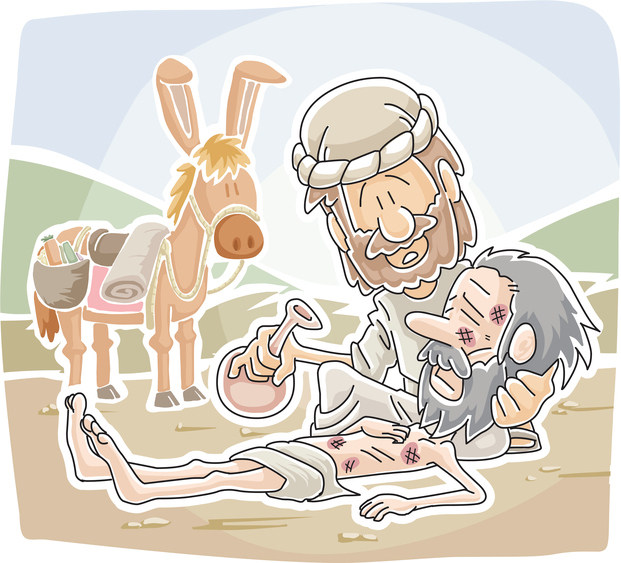
The Samaritan exemplifies the third view of life. “But a certain Samaritan, as he journeyed, came where he was: and when he saw him, he had compassion on him” (33). A Samaritan would have been looked down upon by the Lawyer, the Priest, and the Levite. The Samaritans knew this, (John 4:9). Being full of compassion, the Samaritan man, “went to him, and bound up his wounds, pouring in oil and wine, and set him on his own beast, and brought him to an inn, and took care of him” (34).

After the telling of the parable, Jesus asks, “Which now of these three, thinkest thou, was neighbour unto him that fell among the thieves?  And he said, He that shewed mercy on him. Then said Jesus unto him, Go, and do thou likewise” (36, 37). Jesus takes the Lawyer back to the answer given to the original question.

We usually stop here, but there is another scene in this chapter that relates to the views of life. The short account of Martha & Mary. While Jesus is teaching, Mary sat at Jesus’ feet, and heard his word. “But Martha was cumbered about much serving, and came to him, and said, Lord, dost thou not care that my sister hath left me to serve alone? bid her therefore that she help me” (40). Jesus gives us the fourth view of Life; “Martha, Martha, thou art careful and troubled about many things: But one thing is needful: and Mary hath chosen that good part, which shall not be taken away from her” (41, 42). This view is about distractions that take us away from hearing about eternal life. Jesus warned about THORNS, the 3rd soil in the parable of the Sower. While there’s commendation in serving, we must remain mindful of the things pertaining to eternal life. “Set your affection on things above, not on things on the earth” (Col 3:2).

 Agape,

Spencer

Spencer is an evangelist for the Franklin & Juniper st church of Christ in Borger, Texas.

The Truth sets us free and makes people mad

Am I therefore become your enemy, because I tell you the truth?” (Gal 4:16).  

The New Testament recounts the life, teachings, death, and resurrection of Jesus Christ. It tells us about the love of God through the sacrifice of Christ. We also find instances where the truth elicited strong and often negative reactions from people of the time.

The Truth has the power to disturb, unsettle, and even anger those who encountered it. The stories in the NT serve as a timeless reminder that the truth, though uncomfortable, has the potential to challenge the status quo, expose hypocrisy, and disrupt ingrained power dynamics.

The reactions to the truth highlight the vehement resistance toward the truth & truth tellers. Knowing this we can be better prepared to proclaim the truth with resilience, confidence, and determination.

5 things the TRUTH does.

In today’s diverse world, where ideologies clash and beliefs vary, the concept of objective truth is often lost on many. A closer examination of scriptures reveals that the truth is both unwavering and, at times, divisive.

Paul warns us that some will turn away from the truth toward their own lusts, (2Timothy 4:3-4). Jesus’ own teaching was difficult for some and they turned away from our Lord, walking no more with Him, (John 6:60-66). We still see this same thing when people fail to understand the truth.

The exclusivity of truth is underscored in passages like John 14:6, Mark 16:15-16, and Acts 4:12. These verses assert that the path to truth is narrow and requires faithful obedience. While the gospel is open to all, (Mark 16:15), it maintains the exclusivity of salvation through faith in Christ, repentance to sin, and water baptism.

Moreover, the unchanging and unalterable nature of truth is emphasized in 1Peter 1:23-25, Psalm 119:160, and 2Timothy 1:13. The very nature of truth requires that it be unchanging. Subjectiveness is confusing, changing, and unstable. “For God is not the author of confusion, but of peace, as in all churches of the saints” (1Cor 14:33; cf Matt 7:24-29).

Yet, the unyielding nature of truth can be troubling to those who choose to believe otherwise. In Matthew 15:10-12 and Galatians 4:16, the Bible addresses the offense caused by the truth, creating tension and discomfort among those who resist its teachings. “Let them alone: they be blind leaders of the blind. And if the blind lead the blind, both shall fall into the ditch” (Mat 15:14).

Furthermore, truth can be seen as both hostile and divisive. The hostility arises from the clash of conflicting beliefs and is often directed toward truth tellers, (cf. 1Cor 22:21,22). Despite its divisive nature, truth brings joy to believers who embrace it, (Acts 13:48).

The Bible presents truth as a constant, exclusive, and unchanging entity that can be divisive and troubling to those who choose to turn away. While the truth may offend some, it remains a source of joy and happiness for those who embrace it wholeheartedly. The truth shall set you free.

Agape,

Spencer

This article is part 2 of a series titled, God’s Moral Law. click here for part one.

You’re invited to attend one of our services at the church of Christ on Franklin and Juniper in Borger Texas.

The Lord give mercy unto the house of Onesiphorus

For he oft refreshed me

The Lord give mercy unto the house of Onesiphorus; for he oft refreshed me, and was not ashamed of my chain,” (2Tim 1:16).  

Who inspires or impresses you? Take a serious moment to think about it.

Is it because they’re successful? Is it because they’re famous? Is it because they’re big shots?

After you think about that, who do you suppose inspires or impresses them? Are they impressed by more successful people, or more famous celebrities? Bigger big shots?

One more question… Who inspires or impresses true big shots? Paul is an Apostle, but he was humble and was able to see the labors of others.

Onesiphorus impressed Paul.

Impressed may not be the right word. He was Grateful, Glad, Invigorated, Renewed, Refreshed. Did Paul release an audible sigh of relief upon being found by him? The scripture is full of lesser known & unknown names of mighty heroes of faith.

Paul was in a Roman prison, (2Tim 1:8). It was about the time that Nero was blaming Christians for the burning of Rome (64AD). This is Paul’s last writing of the New Testament with the purpose to encourage the young evangelist Timothy, (1:6, 2:1, 3:14-15).

Paul was ready to die, and it looked like it was going to happen this time. “For I am now ready to be offered, and the time of my departure is at hand” (2Tim 4:6). It was no sad moment for him, because he had “fought a good fight, I have finished my course, I have kept the faith: Henceforth there is laid up for me a crown of righteousness, which the Lord, the righteous judge, shall give me at that day: and not to me only, but unto all them also that love his appearing” (2Tim 4:7,8).

Even though he had been forsaken by many, he still encouraged Timothy to come to him, for there was still work to be done. “Do thy diligence to come shortly unto me. The cloke that I left at Troas with Carpus, when thou comest, bring with thee, and the books, but especially the parchments” (2Tim 4:9,13).

In this letter we learn about ONESIPHORUS. He was a man of…

UNPARALLELED SUPPORT: “for he oft Refreshed me.” (2Tim 1:16a)

UNABASHED FRIEND: “was not ashamed of my chain.” (2Tim 1:16b)

UNSTOPPABLE EFFORT: “when he was in Rome, he sought me out very diligently, and found me.” (2Tim 1:17)

UNUSUAL SERVICE: “in how many things he ministered unto me at Ephesus, thou knowest very well.” (2Tim 1:18)

UNSURPASSED REWARD: “He that receiveth you receiveth me, and he that receiveth me receiveth him that sent me. He that receiveth a prophet in the name of a prophet shall receive a prophet’s reward; and he that receiveth a righteous man in the name of a righteous man shall receive a righteous man’s reward. And whosoever shall give to drink unto one of these little ones a cup of cold water only in the name of a disciple, verily I say unto you, he shall in no wise lose his reward” (Mat 10:40-42).

The scripture is full of lesser known & unknown names of mighty heroes of faith. God doesn’t waste ink, these examples are there for a reason. “Brethren, be followers together of me, and mark them which walk so as ye have us for an ensample” (Phil 3:17).

 Agape,

Spencer

This article is based on a sermon presented at the Franklin & Juniper st church of Christ in Borger, Texas. We invite you to visit one of our assemblies to learn more about Christ.

Mark 2, Jesus is God

Mark may be the shortest of the Gospels, but what it contains often has more detail than the other synoptic Gospels.

Mark chapter two is a great chapter because of the significant teachings from Jesus. It’s also easy to outline by looking at the 4 questions asked of Him.

  • Who can forgive sins but God alone? (2:7).
  • How is it that he eateth and drinketh with publicans and sinners? (2:16).
  • Why do the disciples of John and of the Pharisees fast, but thy disciples fast not? (2:18).
  • Why do they on the sabbath day that which is not lawful?” (2:24).

In answering these questions Jesus teaches one of the greatest lessons in the Gospels. The lesson is that Jesus is God.

The second chapter of the Gospel of Mark is a rich tapestry of events and dialogues that offer profound insights into the ministry of Jesus Christ.  

Who can forgive sins but God alone?” (2:7). The Pharisees were quick to question Jesus’ authority when He forgave the sins of a paralytic man. Their query (stated privately in their head), “Who can forgive sins but God alone?” reflects a fundamental theological concern. The forgiveness of sins is an exclusive prerogative of God, and the Pharisees were wary of any challenges to this divine authority. In answering, Jesus reveals His power to know the thoughts and intents of the heart and the power to forgive sins. By healing the paralytic He proves His deity. He directly states why He did it, “But that ye may know that the Son of man hath power on earth to forgive sins, (he saith to the sick of the palsy,) I say unto thee, Arise, and take up thy bed, and go thy way into thine house. And immediately he arose, took up the bed, and went forth before them all; insomuch that they were all amazed, and glorified God, saying, We never saw it on this fashion” (2:10-12).

How is it that he eateth and drinketh with publicans and sinners?” (2:16). In the cultural context of that time, sharing a meal signified more than a casual encounter; it symbolized acceptance. His response highlighted the core of Jesus’ mission – to seek and to save the lost, which is a demonstration of the divine Love of God that transcends social boundaries. The Pharisees wouldn’t stoop down to reach out to the lost, but God does.

Why do the disciples of John and of the Pharisees fast, but thy disciples fast not?” (2:18). Fasting was a point of contention between the Pharisees, and Jesus’ disciples. The question sought to understand the apparent disparity in their observance of this spiritual discipline. Jesus, in his response, likened himself to a bridegroom, indicating that while the bridegroom is present, it is a time of joy, not mourning. It was an early lesson about the coming end of the Old Law and the coming in of the prophetic New Testament of Christ.

Why do they on the sabbath day that which is not lawful?” (2:24). The final question revolves around Sabbath observance, a cornerstone of Jewish religious life. The Pharisees were quick to criticize Jesus and his disciples for plucking grain on the Sabbath, an action they deemed unlawful. Jesus targets the weakness of their belief system by pointing out the error of David, someone they held in high esteem. Jesus doesn’t teach situation ethics, He points out their willingness to overlook the sins of David, but unwilling to recognize the innocence of David’s Royal Divine Son. “But I say unto you, That in this place is one greater than the temple. But if ye had known what this meaneth, I will have mercy, and not sacrifice, ye would not have condemned the guiltless” (Matt 12:6,7).                                                                               

Agape,

Spencer

This is part of a series of sermons preached at the Franklin & Juniper st church of Christ in Borger, Texas. Click here for Mark 1.

The Sure STONE

Therefore thus saith the Lord GOD, Behold, I lay in Zion for a foundation a stone, a tried stone, a precious corner stone, a sure foundation: he that believeth shall not make haste.” (Isaiah 28:16).

In this language we hear the voice of God predicting the coming of the Messiah who is described as a “sure foundation.”

God has used this language of building before. “And when thy days be fulfilled, and thou shalt sleep with thy fathers, I will set up thy seed after thee, which shall proceed out of thy bowels, and I will establish his kingdom. He shall build an house for my name, and I will stablish the throne of his kingdom for ever” (2Sam 7:12, 13).

It’s axiomatic that before building of any structure one must begin with a foundation that is strong, level, and sure. Every other building block will be aligned to the foundation.

We’re speaking about a spiritual building which is divine in origin, and therefore worthy to be built upon.

The OT prophecies identify Jerusalem as the place of the building, also called SION (ZION). “I lay in Zion.” This is a Synonym for the Jewish nation, Jerusalem in particular. Jesus was a Jew, of the family of David (Matt 1). In Jerusalem He was crucified, Buried, and raised. In Jerusalem the gospel was 1st preached. (Acts 2). “And he shall be for a sanctuary; but for a stone of stumbling and for a rock of offence to both the houses of Israel, for a gin and for a snare to the inhabitants of Jerusalem” (Isaiah 8:14). Many at that time expected a physical building, but God laid the foundation to a spiritual building in Jerusalem. This continues to be a common error of denominationalism.

Jesus said, “I will build my church.” and “My kingdom is not of this world.” (Matt 16:18; John 18:36). Jerusalem (Zion / Sion) is the place where the spiritual kingdom of God would begin. Prophecy prevents Jesus from having a physical building & throne in Jerusalem. “Thus saith the LORD, Write ye this man childless, a man that shall not prosper in his days: for no man of his seed shall prosper, sitting upon the throne of David, and ruling any more in Judah” (Jer 22:30).

Isaiah says that this would be a TRIED Stone. A tried stone is a stone for solidarity, for strength, for duration. Jesus was tried by Satan, by men, and by God. “For we have not an high priest which cannot be touched with the feeling of our infirmities; but was in all points tempted like as we are, yet without sin” (Heb 3:15).

While there are many stones in a building, there is only ONE foundation stone. It is of Precious value to God, the Father. The ONLY begotten Son, (John 1:14; 3:16; Mark 1:11). Precious to Man, the believer (1Pet 2:7). The ONLY sufficient sacrifice, (1Pet 1:18,19). The ONLY hope of salvation. “This is the stone which was set at nought of you builders, which is become the head of the corner” (Acts 4:11,12).

Christ is the chief cornerstone. The cornerstone is the NUMBER ONE stone. His position is chief (Col 1:18). He has the Preeminence. The chief cornerstone unites both sides of the edifice. He is Deity & Humanity, the old and the new dispensations. He brings together both Jew & Gentile united in HIM (Eph 2:19,20).

We are warned about how we build. “Except the LORD build the house, they labour in vain that build it: except the LORD keep the city, the watchman waketh but in vain” (Psalm 127:1). We must be careful to build on this stone.

Agape,

Spencer

God Gave them Up

Wherefore God also gave them up to uncleanness through the lusts of their own hearts, to dishonour their own bodies between themselves” (Rom 1:24).

People often cite the Letter to the Romans for their erroneous view on election and predestination. While these concepts are here, their view that God preselects individuals to be lost or saved before they were born and without any reason is error.

We can answer this erroneous view beginning with chapter one where we are told why God gave them up to their sin. People are not lost because God randomly chose them to be lost. People are lost because of their disobedience to Him (sin), neither does He cause them to sin.

Note verse 26, “For this cause God gave them up.” Paul is telling us WHY God gave them up, and the reason is not because God just didn’t want them to be saved. There are reasons.

For God to give someone up to sin, there must be some standard by which the guilt is determined.

God gave them up to their sins because they gave Him up. Notice what people had done BEFORE God gave them up.

Because that which may be known of God is manifest in them; for God hath shewed it unto them. For the invisible things of him from the creation of the world are clearly seen, being understood by the things that are made, even his eternal power and Godhead; so that they are without excuse: Because that, when they knew God, they glorified him not as God, neither were thankful; but became vain in their imaginations, and their foolish heart was darkened. Professing themselves to be wise, they became fools, And changed the glory of the uncorruptible God into an image made like to corruptible man, and to birds, and fourfooted beasts, and creeping things. Wherefore God also gave them up to uncleanness through the lusts of their own hearts, to dishonour their own bodies between themselves” (Rom 1:19-24 emphasis mine seb).

God had revealed to mankind His existence through His creation. Instead of glorifying Him, they were ungrateful, turned to their own wisdom, and then to idolatry. They took a piece of creation and worshiped it.

Jeremiah described their foolishness this way; “For the customs of the people are vain: for one cutteth a tree out of the forest, the work of the hands of the workman, with the axe. They deck it with silver and with gold; they fasten it with nails and with hammers, that it move not. They are upright as the palm tree, but speak not: they must needs be borne, because they cannot go. Be not afraid of them; for they cannot do evil, neither also is it in them to do good” (Jer 10:3-5). Jeremiah then warns them, “Every man is brutish in his knowledge: every founder is confounded by the graven image: for his molten image is falsehood, and there is no breath in them. They are vanity, and the work of errors: in the time of their visitation they shall perish” (10:14-15; cf, Isa 44:9-20).

Think about it. Created humans rejected their creator, then created a wooden image to worship, and did not give the God of Heaven thanks nor glory for His great might. Do we see anything different happening today? The only difference is the object of worship.

For many walk, of whom I have told you often, and now tell you even weeping, that they are the enemies of the cross of Christ: Whose end is destruction, whose God is their belly, and whose glory is in their shame, who mind earthly things” (Phil 3:18-19).

Agape,

Spencer

This article is part 1 of a series titled, God’s Moral Law. click here for part two.

You’re invited to attend one of our services at the church of Christ on Franklin and Juniper in Borger Texas.