Rejoice Always, Phil 4:4

There is a direct command in scripture that is often overlooked by even the most zealous Saint. “Rejoice in the Lord alway: and again I say, Rejoice.” (Phil 4:4).

It is a discriminating command. In matters of the Lord of what does an alien sinner have to rejoice? All spiritual blessings are “in Christ” (Eph 1:3), and only those that have obeyed the Gospel are in the Lord (Gal 3:26-27). Those that have obeyed the Gospel are the only ones that have reason to rejoice (Acts 8:37).

The command is discriminating in that it also excludes rejoicing in the flesh (Phil 3:3,7). It excludes rejoicing in the wisdom of the world (1Cor 1:20-21). It also excludes rejoicing in one’s own works (Titus 3:5; Is 64:6). We are to work God’s righteousness (Acts 10:34-35; Rom 10:1-3).

By the words of some one is led to wonder if Christians are aware of this command to rejoice.

Let us see about what it means to rejoice always in the Lord.

ALWAYS” tells us it is a perpetual command without regard to external conditions. The Apostle Paul wrote this by inspiration while imprisoned in Rome for his faith. This epistle has been called the epistle of joy, for it contains the words “joy,” “rejoice,” or “rejoicing” some sixteen times.

The command is without regard to Adversity or Prosperity. “Yea, and if I be offered upon the sacrifice and service of your faith, I joy, and rejoice with you all. For the same cause also do ye joy, and rejoice with me” (Phil 2:17-18). Paul is able to rejoice in adversity because it was in service to Christ. “But I have all, and abound: I am full, having received of Epaphroditus the things which were sent from you, an odour of a sweet smell, a sacrifice acceptable, wellpleasing to God” (Phil 4:18).

The command is without regard to being Loved or Hated. “The one preach Christ of contention, not sincerely, supposing to add affliction to my bonds: But the other of love, knowing that I am set for the defence of the gospel. What then? notwithstanding, every way, whether in pretence, or in truth, Christ is preached; and I therein do rejoice, yea, and will rejoice” (Phil 1:16-18). Paul is able to rejoice despite the haters because Christ was being preached. “And I will very gladly spend and be spent for you; though the more abundantly I love you, the less I be loved” (2Cor 12:15).

The command is without regard to Weariness or Strength. “I know both how to be abased, and I know how to abound: every where and in all things I am instructed both to be full and to be hungry, both to abound and to suffer need. I can do all things through Christ which strengtheneth me” (Phil 4:12-13). Paul’s life in the Lord is marked by great adversity (2Cor 11:22-29), but it was from his pen the Holy Spirit wrote, “And let us not be weary in well doing: for in due season we shall reap, if we faint not” (Gal 6:9).

The command is without regard to Arrest or Among Friends. “But I would ye should understand, brethren, that the things which happened unto me have fallen out rather unto the furtherance of the gospel; So that my bonds in Christ are manifest in all the palace, and in all other places; And many of the brethren in the Lord, waxing confident by my bonds, are much more bold to speak the word without fear” (Phil 1:12-14). Paul could rejoice in his arrest and detainment because of the increased boldness of others to speak the gospel. Peter and John could rejoice for being beaten for the name of Christ. “And to him they agreed: and when they had called the apostles, and beaten them, they commanded that they should not speak in the name of Jesus, and let them go. And they departed from the presence of the council, rejoicing that they were counted worthy to suffer shame for his name” (Acts 5:41).

The command is without regard even for Your very life. “For to me to live is Christ, and to die is gain. But if I live in the flesh, this is the fruit of my labour: yet what I shall choose I wot not. For I am in a strait betwixt two, having a desire to depart, and to be with Christ; which is far better: Nevertheless to abide in the flesh is more needful for you.” (Phil 1:21-24). The life that one lives in the Lord prepares him for the appointment of death (Heb 9:27). “And I heard a voice from heaven saying unto me, Write, Blessed are the dead which die in the Lord from henceforth: Yea, saith the Spirit, that they may rest from their labours; and their works do follow them” (Rev 14:13). There is comfort in the death of faithful saints (1Thess 4:13-18). For them “to die is gain.”

The command is without regard to Sickness or Health. Paul could rejoice in the highs or lows of his physical life because of the grace of Christ. “Therefore I take pleasure in infirmities, in reproaches, in necessities, in persecutions, in distresses for Christ’s sake: for when I am weak, then am I strong” (2Cor 12:9-10). There was rejoicing for Epaphroditus despite his sickness because he didn’t regard his life to supply those things that were lacking from the church at Philippi. “I sent him therefore the more carefully, that, when ye see him again, ye may rejoice, and that I may be the less sorrowful” (Phil 2:28; cf, 25-30).

Rejoicing in the Lord always brings about many gratifying results. It is the means by which hope can be seen in the midst of adversity (cf. 1Pet 3:14-15). Rejoicing can put to death the PLAGUES of the mind. Rejoicing and negativity cannot coexist nor be done at the same time.

Rejoicing in the Lord always is the means by which our light can shine in this dark world. Our rejoicing in the Lord becomes a beacon of attraction to the lost and our religion will radiate a wholesome influence upon the lives of those around us. 

Rejoicing in the Lord always can do us no harm, but rather only bring about good, and in many ways will preserve our health and effectiveness.

Rejoicing in the Lord always is easy when we remember that our names are written in the heaven as we obey the Gospel of Christ. “And I intreat thee also, true yokefellow, help those women which laboured with me in the gospel, with Clement also, and with other my fellowlabourers, whose names are in the book of life” (Phil 4:3; Acts 2:38-41; Heb 12:23).

Agape,

Spencer
7 Plagues of the mind pt5

The last plague of the mind on our list is vacillation, or being like a See-Saw. This plague can be described as a person that is easily pulled away from one thing to another without being resolute on any one thing. This is a problem when dealing with the truth.

Paul described it this way, “That we henceforth be no more children, tossed to and fro, and carried about with every wind of doctrine, by the sleight of men, and cunning craftiness, whereby they lie in wait to deceive” (Eph 4:14).

Being irresolute is different from being indecisive. A See-Saw person bounces back and forth and appears to be very confident about opposing viewpoints.

Elijah said it this way, “How long go ye limping between the two sides? if the LORD be God, follow him: but if Baal, then follow him. And the people answered him not a word” (1Kings 18:21).

He calls it “limping between two sides” (ASV). Everyone can see it, but seldom in ourselves. Let’s see why this plague of the mind is so dangerous.

Our Lord warned us that it’s impossible to SERVE two masters. “No man can serve two masters; for either he will hate the one, and love the other; or else he will hold to one, and despise the other. Ye cannot serve God and mammon” (Matt 6:24). He then connects it to anxiety in verse 25, “Therefore I say unto you, be not anxious for your life…”

It’s impossible to serve and please everyone. “For am I now seeking the favor of men, or of God? or am I striving to please men? if I were still pleasing men, I should not be a servant of Christ” (Gal 1:10). If we seek to SERVE man, we will not be a SERVANT of Christ! THIS IS WHY IT’S DANGEROUS!

Another illustration of this comes from Paul, “Know ye not that your bodies are members of Christ? shall I then take away the members of Christ, and make them members of a harlot? God forbid” (1Cor 6:15). We cannot be both a member of the body of Christ while still trying to remain in sin.

Paul would give the solution in his 2nd letter to the Corinthians. “Be not unequally yoked with unbelievers: for what fellowship have righteousness and iniquity? or what communion hath light with darkness? And what concord hath Christ with Belial? or what portion hath a believer with an unbeliever? And what agreement hath a temple of God with idols? for we are a temple of the living God; even as God said, I will dwell in them, and walk in them; and I will be their God, and they shall be my people. Wherefore Come ye out from among them, and be ye separate, saith the Lord, And touch no unclean thing; And I will receive you, And will be to you a Father, And ye shall be to me sons and daughters, saith the Lord Almighty” (2Cor 6:14-18).

Our next point on this topic comes from this same warning, (quoting from Luke). “No servant can serve two masters: for either he will hate the one, and love the other; or else he will hold to the one, and despise the other” (Luke 16:13).

To limp between two opinions places us in opposition to Christ. We become ENEMIES to God! “Ye adulterers and adulteresses, know ye not that the friendship of the world is enmity with God? whosoever therefore will be a friend of the world is the enemy of God” (James 4:4). The Apostle John wrote, “Love not the world, neither the things that are in the world. If any man love the world, the love of the Father is not in him” (1John 2:15). THIS IS WHY IT’S DANGEROUS!

Finally, believing that everyone or anyone’s opinion is the truth ie, “your truth, my truth, we all have truth,” is a belief of confusion. “For God is not the AUTHOR of confusion,” (1Cor 14:33). There is only ONE truth. “There is one body, and one Spirit, even as also ye were called in one hope of your calling; one Lord, one faith, one baptism, one God and Father of all, who is over all, and through all, and in all” (Eph 4:4-6).

Recognition of the fact that there is only one truth will move us from duplicity to certainty. It’s here we had our starting place, “that we may be no longer children, tossed to and fro and carried about with every wind of doctrine, by the sleight of men, in craftiness, after the wiles of error.” Error leads to sin and sin leads to death. “For it were better for them not to have known the way of righteousness, than, after knowing it, to turn back from the holy commandment delivered unto them. It has happened unto them according to the true proverb, The dog turning to his own vomit again, and the sow that had washed to wallowing in the mire” (2Peter 2:21-22).

THIS IS WHY IT’S DANGEROUS! To limp, halt, falter between serving mankind or serving the Lord puts us in an impossibility, puts us in the position of being an enemy of God, and makes us confused! Is it any wonder that people are living wandering, hopeless, and worry filled lives?

The solution is a simple one; CHOOSE TO SERVE THE LORD.

This is the solution that Joshua presented to the Israelites after conquering the promised land, “And if it seem evil unto you to serve the LORD, choose you this day whom ye will serve; whether the gods which your fathers served that were on the other side of the flood, or the gods of the Amorites, in whose land ye dwell: but as for me and my house, we will serve the LORD” (Joshua 24:15; emph mine SEB).

Solomon concluded, “Let us hear the conclusion of the whole matter: Fear God, and keep his commandments: for this is the whole duty of man” (Ecc 12:13).

This is the same answer Jesus gives when asked what is the greatest commandment, “Thou shalt love the Lord thy God with all thy heart, and with all thy soul, and with all thy mind. This is the first and great commandment” (Matt 22:37).

When Jesus was being tempted by Satan, this was His answer, “Then saith Jesus unto him, Get thee hence, Satan: for it is written, Thou shalt worship the Lord thy God, and him only shalt thou serve” (Matt 4:10).

Let us be focused, and singular in purpose. Anything else is idolatry.

Agape,

Spencer

This is part of a series on the 7 PLAGUES of the mind.

7 PLAGUES of the mind pt4

The next two plagues of the mind in our list are UNCERTAINTY (duplicity) & EXASPERATION (worry).

These two are related to one another in their effect on our faith. Two key passages to remember related to these diseases of the mind;

No man can serve two masters: for either he will hate the one, and love the other; or else he will hold to the one, and despise the other. Ye cannot serve God and mammon.” (Matt 6:24).

And which of you by being anxious can add one cubit unto the measure of his life” (Matt 6:27 ASV)?

These are so interconnected that it can be difficult to distinguish one from the other. It’s like the age old which comes first question?

Therefore, we will examine these two plagues of the mind together. “Wherefore, if God so clothe the grass of the field, which to day is, and to morrow is cast into the oven, shall he not much more clothe you, O ye of little faith” (Matt 6:30)?

UNCERTAINTY is a form of doubt that is seen when a person is torn between two things. We’re not talking about trying to decide between two good and righteous things. This plague of the mind is about being torn between the world and God. Remember Lot’s wife (Luke 17:32; Gen 19:26).

During the divided Kingdom years under Ahab, the people were torn between two Gods, the One and Only True God of heaven, and the false, pretend little “g” god of Baalim. “And Elijah came unto all the people, and said, How long halt ye between two opinions? if the LORD be God, follow him: but if Baal, then follow him. And the people answered him not a word” (1Kings 18:21).

Jesus spoke of this duplicity in His teaching on worry in the Sermon on the Mount. “For where your treasure is, there will your heart be also” (Matt 6:19-24). There are only two treasure, an earthly one, and a heavenly one. “Ye cannot serve God and mammon.”

James wrote this, “Ye adulterers and adulteresses, know ye not that the friendship of the world is enmity with God? whosoever therefore will be a friend of the world is the enemy of God” (James 4:4). We can either seek friendship with the world, or seek to be a friend of the Lord, “Ye are my friends, if ye do whatsoever I command you” (John 15:14). James would continue the warning about becoming too focused on worldly wealth, “But now ye rejoice in your boastings: all such rejoicing is evil. Therefore to him that knoweth to do good, and doeth it not, to him it is sin” (James 4:16-17). “Ye have lived delicately on the earth, and taken your pleasure; ye have nourished your hearts in a day of slaughter” (5:5).

Paul, in his concern for the Galatians as they turned from the gospel to another he wrote, “For do I now persuade men, or God? or do I seek to please men? for if I yet pleased men, I should not be the servant of Christ” (Gal 1:10). The Apostle John wrote, “Love not the world, neither the things that are in the world. If any man love the world, the love of the Father is not in him. For all that is in the world, the lust of the flesh, and the lust of the eyes, and the pride of life, is not of the Father, but is of the world” (1John 2:14-15).

Indecision about our faith in God is serious business. Does it matter what one believes? Apparently, it does. We cannot serve two masters. Idolatry is another word to describe this duplicity. Paul’s teaching on covetousness and worldliness is very much related, “covetousness, which is idolatry” (Col 3:5b).

The words of Joshua still ring true today, “And if it seem evil unto you to serve the LORD, choose you this day whom ye will serve; whether the gods which your fathers served that were on the other side of the flood, or the gods of the Amorites, in whose land ye dwell: but as for me and my house, we will serve the LORD” (Joshua 24:15).

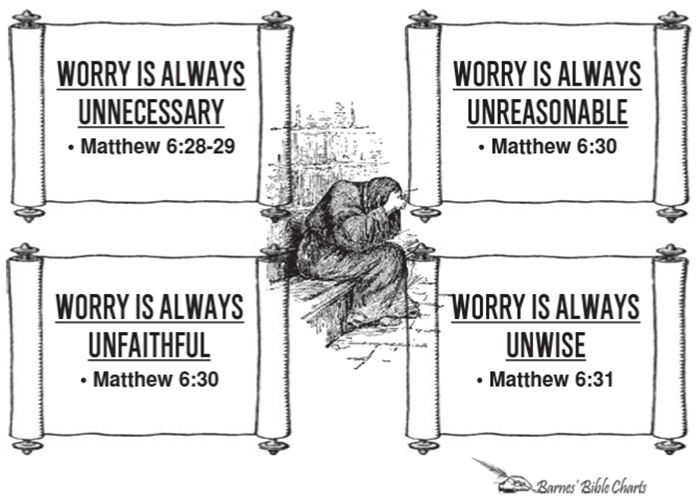
Which brings us to the plague of worry. A duplicitous life leads to a worrisome one. It may be that our uncertainty about God or mammon is why so many of us are living exasperated, worrisome lives. The best answer about this subject comes from our Lord in His sermon on the mount.

Therefore I say unto you, Take no thought for your life, what ye shall eat, or what ye shall drink; nor yet for your body, what ye shall put on. Is not the life more than meat, and the body than raiment?

26 Behold the fowls of the air: for they sow not, neither do they reap, nor gather into barns; yet your heavenly Father feedeth them. Are ye not much better than they?

 27 Which of you by taking thought can add one cubit unto his stature?

 28 And why take ye thought for raiment? Consider the lilies of the field, how they grow; they toil not, neither do they spin:

29 And yet I say unto you, That even Solomon in all his glory was not arrayed like one of these.

30 Wherefore, if God so clothe the grass of the field, which to day is, and to morrow is cast into the oven, shall he not much more clothe you, O ye of little faith?

31 Therefore take no thought, saying, What shall we eat? or, What shall we drink? or, Wherewithal shall we be clothed?

32 (For after all these things do the Gentiles seek:) for your heavenly Father knoweth that ye have need of all these things.

33 But seek ye first the kingdom of God, and his righteousness; and all these things shall be added unto you.

34 Take therefore no thought for the morrow: for the morrow shall take thought for the things of itself. Sufficient unto the day is the evil thereof.” (Matt 6:25-34)

Worry that overwhelms our thinking can become an interference to our faith. Are we Worrier or Warrior? Paul was able to face persecution because of his trust in God. “Nay, in all these things we are more than conquerors through him that loved us” (Rom 8:37). Having joy in trial tells us that we will have difficulty, but that we can also exemplify hope (cf. James 1:2-4; 2Tim 3:12). Faithfulness doesn’t mean free from difficulty, but a path to be free from worry.

The Kingdom of God is a treasure to be desired (Matt 13:44), and if we’re able to have a singular focus for Him and His righteousness in our daily lives, we may just see that this life is more tolerable when we know a better life awaits.

Agape,

Spencer

This is part of a series on the 7 PLAGUES of the mind.

Biblical FELLOWSHIP

The way most use the word “FELLOWSHIP” is in connection to a common meal. While having something in common is the meaning of fellowship, BIBLICAL FELLOWSHIP is far more. To reduce it to a common meal is to miss it altogether.

What does the bible say about FELLOWSHIP? Here are all the words for fellowship, beginning with the English word, then a breakdown of its various Greek forms.

FELLOWSHIP in English.

Le 6:2 If a soul sin, and commit a trespass against the LORD, and lie unto his neighbour in that which was delivered him to keep, or in fellowship, or in a thing taken away by violence, or hath deceived his neighbour;

 Ps 94:20 Shall the throne of iniquity have fellowship with thee, which frameth mischief by a law?

 Ac 2:42 And they continued stedfastly in the apostles’ doctrine and fellowship, and in breaking of bread, and in prayers.

 1Co 1:9 God is faithful, by whom ye were called unto the fellowship of his Son Jesus Christ our Lord.

 1Co 10:20 But I say, that the things which the Gentiles sacrifice, they sacrifice to devils, and not to God: and I would not that ye should have fellowship with devils.

 2Co 6:14 Be ye not unequally yoked together with unbelievers: for what fellowship hath righteousness with unrighteousness? and what communion (same word) hath light with darkness?

 2Co 8:4 Praying us with much intreaty that we would receive the gift, and take upon us the fellowship of the ministering to the saints.

 Ga 2:9 And when James, Cephas, and John, who seemed to be pillars, perceived the grace that was given unto me, they gave to me and Barnabas the right hands of fellowship; that we should go unto the heathen, and they unto the circumcision.

 Eph 3:9 And to make all men see what is the fellowship of the mystery, which from the beginning of the world hath been hid in God, who created all things by Jesus Christ:

 Eph 5:11 And have no fellowship with the unfruitful works of darkness, but rather reprove them.

 Php 1:5 For your fellowship in the gospel from the first day until now;

 Php 2:1 If there be therefore any consolation in Christ, if any comfort of love, if any fellowship of the Spirit, if any bowels and mercies,

 Php 3:10 That I may know him, and the power of his resurrection, and the fellowship of his sufferings, being made conformable unto his death;

 1Jo 1:3 That which we have seen and heard declare we unto you, that ye also may have fellowship with us: and truly our fellowship is with the Father, and with his Son Jesus Christ.

 1Jo 1:6 If we say that we have fellowship with him, and walk in darkness, we lie, and do not the truth:

 1Jo 1:7 But if we walk in the light, as he is in the light, we have fellowship one with another, and the blood of Jesus Christ his Son cleanseth us from all sin.

KOINONIA. using a different English word than above.

Rom 15:26 For it hath pleased them of Macedonia and Achaia to make a certain contribution for the poor saints which are at Jerusalem.

1Cor 10:16 The cup of blessing which we bless, is it not the communion of the blood of Christ? The bread which we break, is it not the communion of the body of Christ?

2Co 9:13 Whiles by the experiment of this ministration they glorify God for your professed subjection unto the gospel of Christ, and for your liberal distribution unto them, and unto all men;

2Co 13:14 The grace of the Lord Jesus Christ, and the love of God, and the communion of the Holy Ghost, be with you all. Amen.

Phm 1:6 That the communication of thy faith may become effectual by the acknowledging of every good thing which is in you in Christ Jesus.

Heb 13:16 But to do good and to communicate forget not: for with such sacrifices God is well pleased.

KOINONOS, koy-no-nos’

Mt 23:30 And say, If we had been in the days of our fathers, we would not have been partakers with them in the blood of the prophets.

Lu 5:10 And so was also James, and John, the sons of Zebedee, which were partners with Simon.

1Co 10:18 Behold Israel after the flesh: are not they which eat of the sacrifices partakers of the altar?

1Co 10:20 But I say, that the things which the Gentiles sacrifice, they sacrifice to devils, and not to God: and I would not that ye should have fellowship with devils.

2Co 1:7 And our hope of you is stedfast, knowing, that as ye are partakers of the sufferings, so shall ye be also of the consolation.

2Co 8:23 Whether any do enquire of Titus, he is my partner and fellowhelper concerning you:

Phm 1:17 If thou count me therefore a partner, receive him as myself.

Heb 10:33 Partly, whilst ye were made a gazingstock both by reproaches and afflictions; and partly, whilst ye became companions of them that were so used.

1Pe 5:1 ¶ The elders which are among you I exhort, who am also an elder, and a witness of the sufferings of Christ, and also a partaker of the glory that shall be revealed:

2Pe 1:4 Whereby are given unto us exceeding great and precious promises: that by these ye might be partakers of the divine nature, having escaped the corruption that is in the world through lust.

KOINOS, koy-nos’ COMMON / UNCLEAN.

Jude 1:3 Beloved, when I gave all diligence to write unto you of the common salvation,

Titus 1:4 To Titus, mine own son after the common faith: Grace, mercy, and peace, from God the Father and the Lord Jesus Christ our Saviour.

There are other verses using this root word, all mean common or unclean.

Mark 7:2; Acts 2:42; 4:32; 10:14,28; 11:8; Rom 14:14; Heb 10:29;

A clear picture emerges about SPIRITUAL FELLOWSHIP.

And they continued stedfastly in the apostles’ doctrine and fellowship, and in breaking of bread, and in prayers.

fellowship of his Son Jesus Christ our Lord.

partakers of the sufferings,

the right hands of fellowship;

the fellowship of the mystery,

your fellowship in the gospel

any fellowship of the Spirit

the fellowship of his sufferings,

partaker of the glory that shall be revealed

partakers of the divine nature,

common salvation,

common faith:

contribution for the poor saints

the fellowship of the ministering to the saints.

liberal distribution unto them,

the communication of thy faith

do good and to communicate

communion of the blood of Christ?

communion of the body of Christ?

the communion of the Holy Ghost,

But if we walk in the light, as he is in the light, we have fellowship one with another

that ye also may have fellowship with us: and truly our fellowship is with the Father, and with his Son Jesus Christ.

7 Plagues of the mind pt3. GRUMBLING

(Phil 2:14-15)

The fourth plague of the mind is complaining, or what the bible calls murmuring. I like to call it grumbling, because much of it sounds like we’re growling like hungry dogs.

Generally speaking, God hates it.

How long shall I bear with this evil congregation, that murmur against me? I have heard the murmurings of the children of Israel, which they murmur against me.” (Num 14:27)?

However, before we go running off to condemn everyone that ever has a complaint, let’s make sure we know what we’re talking about.

Some complaints are warranted, and not condemned by God. “Now in these days, when the number of the disciples was multiplying, there arose a murmuring of the Grecian Jews against the Hebrews, because their widows were neglected in the daily ministration” (Acts 6:1).

Here is an example of a “murmur” that was justified and a remedy was sought for the complaint.

There are some complaints that are warranted and should be expressed. Complaints about a health issue needs to be taken up with our doctors. However, when we complain about our health to every stranger, it becomes less about health and more about attention.

The children of Israel had several complaints in the books of Exodus and Numbers after leaving Egypt. Some of the notable complaints include:

These complaints often led to God’s interventions, and sometimes punishments as part of their journey in the wilderness. You’ll notice that they had 3 main categories of complaint that continue to all generations (Food, Conditions, and Leadership). What was the difference between a complaint that was answered and a complaint that invoked God’s wrath?

The main difference is when they were complaining about the blessing, and having no gratitude toward God for His provisions. Note just one example, the complaint about food. At the beginning of their journey, they had no food so they complained and received food (Ex 16:3). Later, they continued to complain about food, but not that it was lacking, but that they were tired of the Miracle Manna from Heaven. “but now our soul is dried away; there is nothing at all save this manna to look upon” (Num 11).

Even so, constant grumbling and complaining is frowned upon by God for at least another reason. It makes the Christian appear hopeless. Paul looked at the pains of life this way, “Wherefore we faint not; but though our outward man is decaying, yet our inward man is renewed day by day. For our light affliction, which is for the moment, worketh for us more and more exceedingly an eternal weight of glory; while we look not at the things which are seen, but at the things which are not seen: for the things which are seen are temporal; but the things which are not seen are eternal” (2Cor 4:16-18; cf. 2Cor 12:7-10; 1Pet 3:14-16).

What can we do when we feel that urge to complain. First, when faced with the THORNS of life, complain with Grace by being thankful for the good. We can show our gratitude by thinking about what is right amidst all that is wrong. “in everything give thanks: for this is the will of God in Christ Jesus to you-ward” (1Thess 5:18).

We can be helpful in the area of complaints about Leadership. Instead of fault finding, we can solution seeking. We can Pray, and we can Participate. Be Helpful instead of Hurtful. “that they may do it with joy, and not with grief: for that is unprofitable for you” (Heb 13:17).

When life appears unfair, instead of lamenting what’s wrong, let’s seek out Opportunities to serve our fellow man. When we are left out, go and include someone else in your plans instead of stewing in complaint. “Do ye not make distinctions among yourselves, and become judges with evil thoughts” (Jas 2:1-4)?

We can also Rejoice, like Paul, knowing that pain produces patience and glorifies God in our continuing hope of His return (2Cor 12:10; Jas 1:2-4).

Never complain to someone who can’t fix it or isn’t responsible for our problem. Much damage has been done against one person when we complain about them to another (James 3:10-15). That’s not to say we can’t share with each other about our pains (James 5:13), but let us be careful about hopeless complaining.

Finally, Seek Solutions that Serve. We can all serve in some manner, whether it be encouraging, ministering, giving, teaching, mercy, or cheerfulness (Romans 12). If there is nothing anyone can do, give it to God, and look forward to His return.

Agape,

Spencer

Based on a series “the 7 PLAGUES of the mind / heart”

Test every spirit. 1John 4:1-6

How do we know who is an antichrist?

1Jo 4:6 We are of God: he that knoweth God heareth us; he who is not of God heareth us not. By this we know the spirit of truth, and the spirit of error.

The spirit of truth HEARS

HEAR the sayings of Jesus. Matt 7:24; John 12:48
EXAMPLES that match Christ. 1Cor 11:1; Php 3:17; 2Th 3:9; John 13:15; 1Tim 4:12; 1Pet 2:1-6, 21;
APOSTLES Doctrine. Acts 2:42; 1John 1:5; 2:19; John 17:20; 1Thess 2:13; 1Cor 2:9-13
READING is hearing. John 20:30-31; Eph 3:3-4; 1John 2:12-14.

additional outlines from 1John can be found here.

Love CASTS out fear. 1John 4:17

4:17-18 There is no fear in love; but perfect love casteth out fear.

With the Love of God we can have Confidence to approach Christ. Heb 4:16.

God’s love gives us Assurance in knowing when doing His will. John 14:15.

The Love of God makes Salvation is certain when we remain faithful. 1John 1-2:2.

Because of His Love we are Trusting in His working. Col 2:11-12.

His love gave us Scriptural Support. 2Tim 3:15-17.

Additional outlines from 1John can be found here.

James 4; what the Lord WILLS

The Lord WILLS certain things. We ought not use the phrase “Lord willing” like He is a micromanager. Rather, in the context of James 4, the Lord’s will is for us to live life for HIS WILL.

5 Things the Lord WILLS.

Not WILLING that any perish.
2Pet 3:9; 2Cor 7; Acts 8:22.

The Lord is not slack concerning his promise, as some count slackness; but is longsuffering to you-ward, not wishing that any should perish, but that all should come to repentance.

INCREASE. 1Th 4:1-12; 2Pet 3:18.

Finally then, brethren, we beseech and exhort you in the Lord Jesus, that, as ye received of us how ye ought to walk and to please God, even as ye do walk, –that ye abound more and more.

LABOR. Eph 4:28.

Let him that stole steal no more: but rather let him labor, working with his hands the thing that is good, that he may have whereof to give to him that hath need.

LOVE. Matt 22:37-39; 1Thess 4:9-10.

But concerning love of the brethren ye have no need that one write unto you: for ye yourselves are taught of God to love one another;
10 for indeed ye do it toward all the brethren that are in all Macedonia. But we exhort you, brethren, that ye abound more and more;

SAVE all men. 1Tim 2:1-8.

3 This is good and acceptable in the sight of God our Saviour;
4 who would have all men to be saved, and come to the knowledge of the truth.

Any shortfall in what God is Willing for all is not from an inability. Rather, it must be due to someone’s freewill acting contrary to His Will.

Does God want repentance of all? Yes. Are all repentant? No.

Does God want all to increase in good works? Yes. Do all increase? No.

Does God want all to Labor to provide for their own? Yes. Do they? No.

Does God want all to Love one another? Yes. Do they? No.

Does God want all to be saved? Yes. Are all saved? No.

agape

Spencer

click here for more outlines of the book of James.

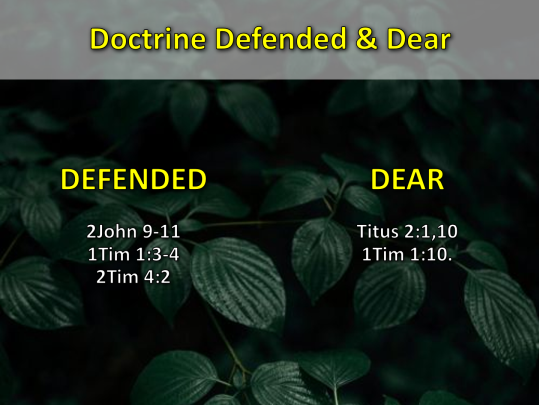
Take Heed unto the Doctrine

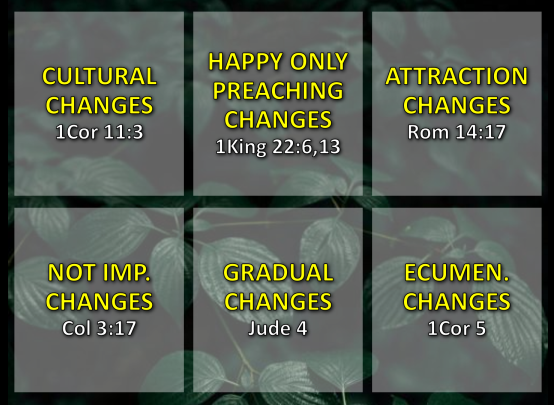
The denominational world is trying to CHANGE the church, which means they’re trying to CHANGE the doctrine of Christ.

DOCTRINE DEFINED. Doctrine is Teaching.

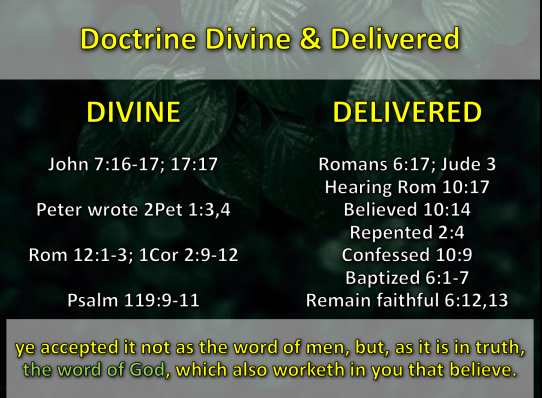
DOCTRINE DIVINE & DOCTRINE DELIVERED.

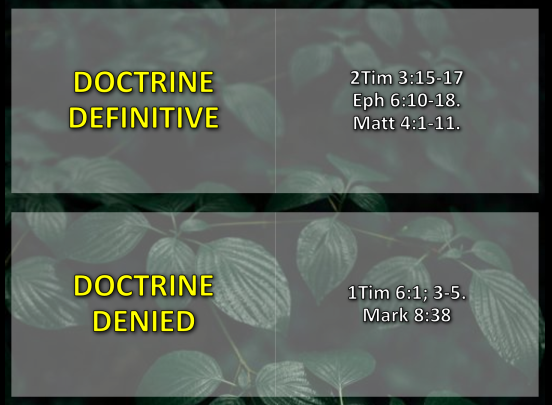
DOCTRINE that is DIFINITIVE, and DOCTRINE that is DENIED.

DOCTRINE to be DEFENDED, and a DOCTRINE so DEAR.

Why so urgent about the Doctrine of Christ? Because heaven is at stake. Fellowship with God and His Son Christ Jesus demand it.

Agape,

Spencer

Spencer is an evangelist for the church of Christ at Franklin & Juniper st. in Borger Texas. You’re invited to visit one of our services to learn more about the doctrine of Christ.

7 PLAGUES of the mind pt 2

LEERINESS & APATHY.

Before we can exceed our expectations, we must first face our limitations. Attitudes of the mind that interfere with our faith are some of those limitations.

Awareness is a warning. Just as we watch the weather to prepare for a storm, so too should we be aware of those negative PLAGUES of the mind that contribute to the storms of life.

Last article looked at the first in our list called Pessimism. Today we give warning to the second and third; Leeriness (overcaution) and Apathy.

All of the PLAGUES are natural responses to our experiences in life. They are not sin in and of themselves, except as it weakens our faith, and faithfulness.

And immediately Jesus stretched forth his hand, and took hold of him, and saith unto him, O thou of little faith, wherefore didst thou doubt” (Matt 14:31)?

Overcaution, being overly leery, is being unnecessarily cautious. We are instructed to be cautious; “Look therefore carefully how ye walk, not as unwise, but as wise” (Eph 5:15), but overcautious can hinder us in helping brethren. “Forget not to show love unto strangers: for thereby some have entertained angels unawares” (Heb 13:2).

Jesus spoke about helping strangers, “Then shall the King say unto them on his right hand, Come, ye blessed of my Father, inherit the kingdom prepared for you from the foundation of the world:  for I was hungry, and ye gave me to eat; I was thirsty, and ye gave me drink; I was a stranger, and ye took me in; naked, and ye clothed me; I was sick, and ye visited me; I was in prison, and ye came unto me” (Matt 25:34-36). These two passages talk about the individual responsibility first toward brethren in Christ, and also toward our fellow man (cf Gal 6:10; Luke 10:33-37)

Life is full of risk. It’s risky to do those things needed to take responsibility for the needs of the family. It’s risky to try to improve our health, & mind. We risk appearing foolish as we learn. It’s risky to serve God (Acts 3-8). It’s risky to keep the faith in a faithless world. “And ye shall be hated of all men for my name’s sake: but he that endureth to the end, the same shall be saved” (Matt 10:22).

A few years ago, Overcaution led many away from assembling with the saints. That’s not to say we should take unnecessary risks, being too risky is unwise, but it takes risk to remain faithful. If worshiping together with the saints becomes illegal, will you risk it to worship God? While Paul was ready to risk death (Acts 21:13), he took advantage of an opportunity to avoid dying unnecessarily (Acts 23:11-22). Be ready to die, but avoid it if it doesn’t cause you to lose faith. “For whosoever would save his life shall lose it: and whosoever shall lose his life for my sake shall find it” (Matt 16:25).

To overcome overcaution, we need to remember the instruction to Timothy; “For which cause I put thee in remembrance that thou stir up the gift of God, which is in thee through the laying on of my hands. For God gave us not a spirit of fearfulness; but of power and love and discipline. Be not ashamed therefore of the testimony of our Lord, nor of me his prisoner: but suffer hardship with the gospel according to the power of God” (2Tim 1:6-8)

Apathy is the third in our list of plagues of the mind. The bible describes it as being lukewarm. “I know thy works, that thou art neither cold nor hot: I would thou wert cold or hot. So because thou art lukewarm, and neither hot nor cold, I will spew thee out of my mouth” (Rev 3:15-16). Think about coffee. We like it either piping hot or ice cold, but room temperature coffee is not on any Starbucks menu. Room temperature is the temperature of inactivity.

Apathy takes the “I don’t care” or “It doesn’t matter” approach to service rendered toward God. While there are some things that have no affect on maintaining fellowship, there are other things that are absolute. Baptism, instrumental music in worship, faith in Christ, preaching the gospel, etc are doctrines that cannot be changed.

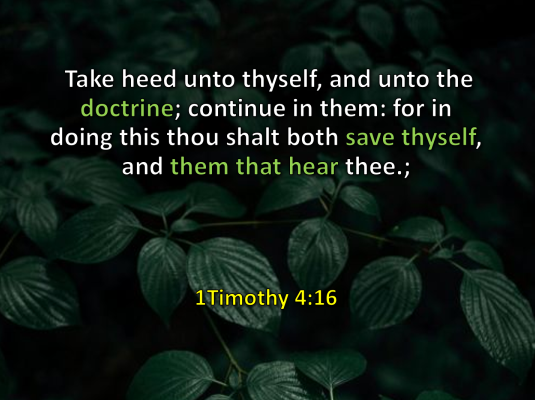
Paul wrote to Timothy, “Take heed to thyself, and to thy teaching. Continue in these things; for in doing this thou shalt save both thyself and them that hear thee” (1Tim 4:16). There are teachings (doctrines) that are absolute. The ecumenical world takes a casual approach to the doctrine of Christ. “If any one cometh unto you, and bringeth not this teaching, receive him not into your house, and give him no greeting” (2John 10).

Pour it on is the opposite attitude of apathy. Paul found contentment in whatever state he was in; “Not that I speak in respect of want: for I have learned, in whatsoever state I am, therein to be content.” (Phil 4:11). Paul pressed all the buttons, turned all the knobs, and flipped all the switches. “I press toward the mark for the prize of the high calling of God in Christ Jesus” (Phil 3:14).

Paul wrote quite a bit about being on fire for the Lord:

Apathy is the drift approach to faithfulness. “Therefore we ought to give the more earnest heed to the things that were heard, lest haply we drift away from them. For if the word spoken through angels proved stedfast, and every transgression and disobedience received a just recompense of reward; how shall we escape, if we neglect so great a salvation? which having at the first been spoken through the Lord, was confirmed unto us by them that heard;” (Heb 2:1-3; emph mine seb).

The Leeriness and Apathetic approach to faith is no faith at all. These two plagues need to be fought like we fight any physical disease.

Agape,

Spencer

the 7 PLAGUES of the mind is a series of articles about attitudes.