
Evidence for our Faith: DNA

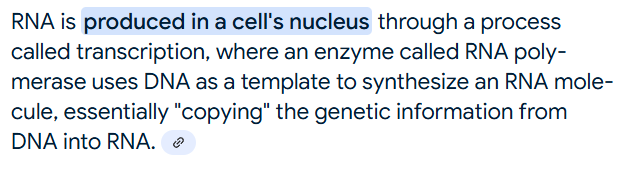
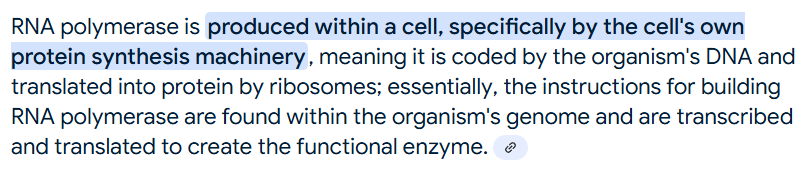
RNA is necessary to produce the proteins, like RNA polymerase, that are required to transcribe RNA from DNA, creating an interdependent system that could not function without all parts existing simultaneously.

Evidence of God in DNA

DNA, deoxyribonucleic acid, serves as the molecular basis of heredity and the blueprint for all living organisms. Within its structure lies an extraordinary amount of information encoded in sequences of nucleotide bases. This informational content directs the development, functioning, and reproduction of living beings, showcasing a complexity that defies random chance.

The intricate information stored in DNA speaks to the concept of intelligent design proposed by the Cosmological Argument. This argument posits that the order and complexity observed in the universe, including biological systems like DNA, imply a purposeful design rather than mere random processes. The information-rich nature of DNA points towards a mind behind its creation—a mind that comprehends and engineers complex systems far beyond human understanding.

Biblically, the narrative supports this idea of intentional design. Psalm 139:14 states, “I praise you, for I am fearfully and wonderfully made. Wonderful are your works; my soul knows it very well.” This verse acknowledges the intricate craftsmanship evident in human beings, echoing the complexity found in DNA. Moreover, Genesis 1:27 affirms that mankind is created in the image of God, implying a deliberate act of creation imbued with purpose and design.

Scientifically, the discovery of DNA’s structure and function has revolutionized our understanding of biology and genetics. Francis Crick and James Watson’s explanation of its double helix structure in 1953 marked a watershed moment in science, revealing the elegance and complexity of this molecule. Since then, advancements in genomic research have uncovered layers of complexity within DNA that continue to astonish scientists.

Moreover, the concept of irreducible complexity, as proposed by biochemist Michael Behe, further bolsters the argument for intelligent design in DNA. Irreducible complexity posits that certain biological systems are composed of multiple intricate parts that must all be present and functioning for the system to work. This challenges the idea of gradual evolution through natural selection alone, suggesting instead a purposeful arrangement of components.

Romans 1:20 declares, “For his invisible attributes, namely, his eternal power and divine nature, have been clearly perceived, ever since the creation of the world, in the things that have been made.” This verse emphasizes that the intricacies of creation, such as DNA, bear witness to God’s existence and creative power.

The study of DNA provides compelling evidence for the Cosmological Argument, pointing towards an intelligent designer behind the complexity of life.

Agape,

Spencer
Evidence for our Faith

The Cosmological Argument: Why the Universe Needs a Cause

The cosmological argument, one of the oldest and most compelling proofs for the existence of God, asserts that the universe must have a cause. Its foundation lies in the principle of causality: everything that begins to exist has a cause. Scientific discoveries and philosophical reasoning bolster this argument, making a strong case for a Creator.

The Universe Had a Beginning. One of the most significant discoveries of modern science is that the universe had a beginning. The Big Bang theory, widely accepted among cosmologists, posits that all matter, energy, space, and time originated from a singular event approximately 13.8 billion years ago. Before this point, there was no time, space, or physical reality. This supports the biblical assertion that the universe is not eternal but was created, as described in Genesis 1:1: “In the beginning, God created the heaven and the earth.” (other evidence supports the Biblical narrative for the age of the Earth)

The Second Law of Thermodynamics also supports this conclusion. The universe is moving toward a state of increased entropy, or disorder, which implies that it had an initial highly ordered state. If the universe were eternal, it would have already reached maximum entropy, contradicting observable reality.

Causality and the Need for a Cause. The principle of causality states that everything that begins to exist has a cause. Since the universe began to exist, it must have a cause. However, this cause cannot be part of the physical universe because time, space, and matter only came into existence at the universe’s origin. Therefore, the cause must be timeless, spaceless, and immaterial—qualities that align with the biblical description of God.

Hebrews 11:3 affirms this: “Through faith, we understand that the worlds were framed by the word of God so that things which are seen were not made of things which do appear.” This aligns with the cosmological argument, as it emphasizes that the universe was caused by something outside itself.

The Impossibility of Infinite Regress. An infinite regress of causes—where every cause has a prior cause—leads to logical contradictions. If there were no first cause, the chain of causes could never begin, and the universe could not exist. This necessitates a first, uncaused cause, which philosophers and theologians identify as God.

The cosmological argument is reinforced by scientific evidence that the universe had a beginning, philosophical reasoning on causality, and the impossibility of infinite regress. These findings point to a timeless, spaceless, immaterial, and powerful Creator—attributes consistent with the God of the Bible. As Psalm 33:6 declares, “By the word of the Lord were the heavens made; and all the host of them by the breath of his mouth.”

Sources:
• Craig, W.L. Reasonable Faith: Christian Truth and Apologetics.
• Hawking, S., and Mlodinow, L. The Grand Design.
• Genesis 1:1, Hebrews 11:3, Psalm 33:6 (KJV).

Agape,
Spencer