Evidence for our Faith: The Historical Reality of the Crucifixion

The crucifixion of Jesus Christ stands as one of the most pivotal events in human history, yet its reality is occasionally questioned. However, a careful analysis of historical evidence, both biblical and secular, reveals compelling and logical arguments supporting its occurrence. Far from being a mere theological construct, the crucifixion aligns with the historical context of Roman governance, is corroborated by non-Christian sources, and is consistently detailed in early Christian writings.

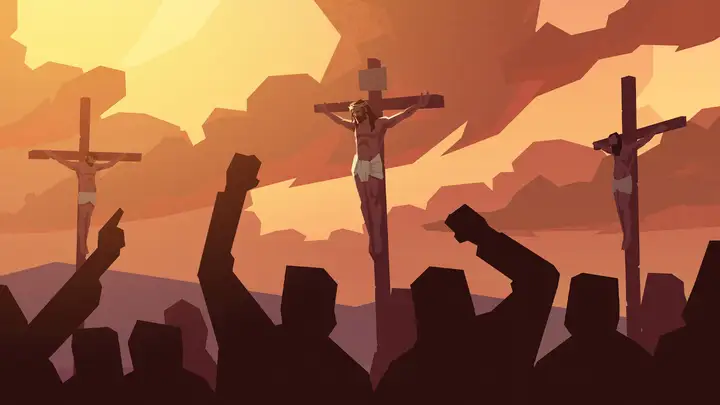
First, the Roman practice of crucifixion provides a strong foundation for its historical plausibility. Crucifixion was a well-documented method of execution in the Roman Empire, reserved for slaves, rebels, and those deemed threats to imperial authority. Historian Tacitus, in his Annals (15.44), references the execution of Jesus under Pontius Pilate during Tiberius’ reign, aligning with the biblical timeline. The Gospel of Matthew (27:31-37) describes Jesus’ crucifixion in detail, including Roman soldiers, a cross, and a public spectacle, elements consistent with Roman punitive customs as noted by scholars like Martin Hengel in Crucifixion in the Ancient World. This convergence of Roman practice and biblical narrative anchors the event in historical reality.

Second, multiple independent sources outside the Bible affirm the crucifixion. Alongside Tacitus, Jewish historian Josephus, in Antiquities of the Jews (18.3.3), mentions Jesus’ death by crucifixion, though some debate the text’s authenticity due to later Christian edits. Even skeptical scholars, such as Bart Ehrman in Did Jesus Exist?, concede that the core reference to Jesus’ execution is likely genuine. Additionally, the Roman satirist Lucian, in The Death of Peregrinus (circa 165 CE), mocks Christians for worshiping a “crucified sage,” indicating that Jesus’ death was widely known beyond Christian circles. These secular testimonies provide external validation of the biblical accounts in Mark 15:24-32 and John 19:16-18.

Third, the coherence and early attestation of the New Testament writings bolster the argument. The Gospels (Matthew, Mark, Luke, and John) were composed within decades of Jesus’ life. Paul’s letters, such as 1 Corinthians 15:3-4 (written circa 55 CE), affirm the crucifixion as a foundational belief among early Christians, predating the Gospels. This rapid documentation, combined with the lack of contemporary refutations from Jesus’ opponents, suggests the event was an accepted fact. As historian N.T. Wright argues in The Resurrection of the Son of God, the crucifixion’s prominence in such early texts reflects a historical memory too vivid to dismiss.

Critics might argue that the accounts are biased or mythologized, yet the consistency across sources, the embarrassment of a crucified messiah (contrary to Jewish expectations, as in Deuteronomy 21:23), and the absence of alternative narratives strengthen the case. The crucifixion’s historical reality emerges not from blind faith but from a convergence of evidence that withstands scrutiny.

In the end, the crucifixion of Jesus is not a fable spun by devotees but a stark historical event etched into the annals of time. Its truth pierces through centuries, demanding we confront its weight.

Agape,
The CROSS of Christ

One of the saddest days in history, while simultaneously being the greatest day, was the day that Jesus died on an ancient Roman cross of execution.

While this is the time of year many are talking about His birth, can we remember and be ready to talk about His death?

What does the CROSS of Christ mean to us? While books can and have been written on this subject, this article will look at just a few aspects of the Cross of Christ.

We have no instructions on how nor when to celebrate His birth, but we do have instructions on how & when to remember His death… His death on a CROSS.

Behold, we go up to Jerusalem; and the Son of man shall be betrayed unto the chief priests and unto the scribes, and they shall condemn him to death,And shall deliver him to the Gentiles to mock, and to scourge, and to crucify him: and the thir d day he shall rise again.” [Matt 20:18-19]

Jesus lived a perfect life free of sin [Heb 4:15; 1Pet 2:21-22]. Yet, His short life on earth ended as if He were the vilest of sinners by being executed on a Cross.

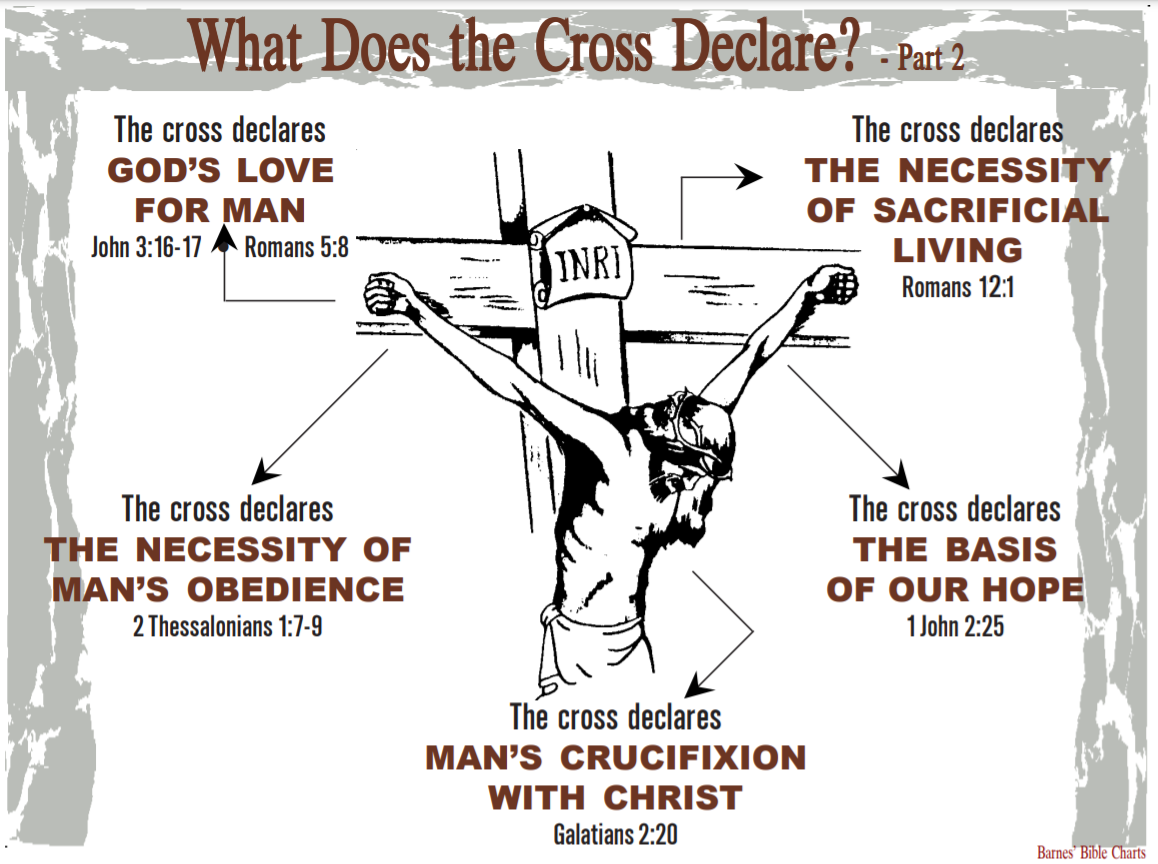
The Cross of Christ means death by CRUCIFIXION. It is the execution of a person by nailing them to a post with their arms outstretched on a cross member lifting the person up on full display to all. Our Savior knew all of this. He told His disciples about it [Mat 16:21; Joh 3:14], and He did it anyway. The Cross of Christ represents CRUCIFIXION still [Rom 6:6; Gal 2:20; 5:24; 6:14].

The Cross of Christ represents REJECTION by His own. The prophet Isaiah foretold this, “He is despised and rejected of men; a man of sorrows, and acquainted with grief: and we hid as it were our faces from him; he was despised, and we esteemed him not.” [Isa 53:3] During His last hours on earth, the ones who cried “Hosanna: Blessed is the King of Israel that cometh in the name of the Lord” [John 12:13], just days earlier, were calling out for His death. This despite the evidence of scripture, and His own works and words, the Jews REJECTED Him. The Cross of Christ represents REJECTION still. [John 15:18]

The Cross of Christ represents His OBEDIENCE to God the Father. “And he said, Abba, Father, all things are possible unto thee; take away this cup from me: nevertheless not what I will, but what thou wilt.” [Mar 14:36; Joh 8:29; Heb 5:7] It amazes me how fervent some will fight against our need for OBEDIENCE to Christ while claiming to follow the example of Jesus. “Though he were a Son, yet learned he obedience by the things which he suffered; And being made perfect, he became the author of eternal salvation unto all them that obey him;” [Heb 5:8-9]. The Cross of Christ represents OBEDIENCE still. [2Thess 1:8-9]

The Cross of Christ represents SUFFERING. Jesus suffered even before reaching the cross. “Then Pilate therefore took Jesus, and scourged him.” [John 19:1; Mark 15:15-20]. The Cross of Christ represents SUFFERING still today; “Forasmuch then as Christ hath suffered for us in the flesh, arm yourselves likewise with the same mind: for he that hath suffered in the flesh hath ceased from sin;” [1Pet 4:1-2]. “For even hereunto were ye called: because Christ also suffered for us, leaving us an example, that ye should follow his steps:” [2:21].

The Cross of Christ represents SACRIFICE. Jesus died because He was the only acceptable Sacrifice for our sin. The blood of animals can never take away sin, “For it is not possible that the blood of bulls and of goats should take away sins.” [Heb 10:4], and without the shedding of blood there is no remission of sin, “…and without shedding of blood is no remission.” [Heb 9:22]. Christ shed His own blood, becoming, “the Lamb of God, which taketh away the sin of the world.” [John 1:29, 36]. The Gospel we obey, by which we may be saved, is the Death (on a Cross), Burial, and resurrection of Jesus [1Cor 15:1-4]. The death of Christ is God’s grace toward us who deserve nothing from Him. He provided the Lamb, the SACRIFICE [cf. Gen 22:8].

The Cross of Christ represents SACRIFICE still. “I beseech you therefore, brethren, by the mercies of God, that ye present your bodies a living sacrifice, holy, acceptable unto God, which is your reasonable service.” [Rom 12:1; cf. Phil 4:18]

So you see, the Cross of Christ represents so much more than an object to be viewed. What happened on that Cross, and our response to it is what truly matters. May God bless us all.

     — spencer

What Did Jesus Do For You?

Jesus Endured so much for us.

Our Lord and Savior put up with a lot. I mean, A LOT. Below is a list of things done to our Lord.

  • Mat 27:30 And they SPIT upon him, and took the reed, and SMOTE him on the head.
  • Mat 26:67 Then did they SPIT in his face, and BUFFETED him; and others SMOTE him with the palms of their hands,
  • Mat 27:2 And when they had BOUND him, they led him away, and delivered him to Pontius Pilate the governor.
  • Mat 27:26 and when he had SCOURGED Jesus, he delivered him to be crucified.
  • Mat 27:28 And they STRIPPED him, and put on him a scarlet robe.
  • Mat 27:29-30 And when they had platted A CROWN OF THORNS, they put it upon his head, and a reed in his right hand: and they bowed the knee before him, and MOCKED him, saying, Hail, King of the Jews! And they SPIT upon him, and took the reed, and SMOTE him on the head.
  • Isa 50:6 I gave my back to the SMITERS, and my cheeks to them that PLUCKED OFF THE HAIR: I hid not my face from shame and spitting.
  • Mat 26:60 But found none: yea, though MANY FALSE WITNESSES came, yet found they none. At the last came TWO FALSE WITNESSES,
  • Luke 23:40-41 But the other answering rebuked him, saying, Dost not thou fear God, seeing thou art in the same CONDEMNATION? And we indeed justly; for we receive the due reward of our deeds: but THIS MAN HATH DONE NOTHING AMISS.
  • Mark 15:31 Likewise also the CHIEF PRIESTS MOCKING said among themselves with the scribes, He saved others; himself he cannot save.
  • Psalm 22:16 For dogs have compassed me: the assembly of the wicked have inclosed me: they PIERCED MY HANDS AND MY FEET.
  • Mat 27:35 And they CRUCIFIED him,
  • John 19:34 But one of the soldiers with a spear PIERCED HIS SIDE, and forthwith came there out blood and water.

This list is hard to read when you remember why He came to earth. To free us from the bondage of sin, to redeem us to God and all because He loved us. “But God commendeth his love toward us, in that, while we were yet sinners, Christ died for us” [Rom 5:8].

SELF CONTROL

Another thing that comes to mind when reading this list is how much self-control Christ demonstrated. Just before all these things took place Jesus said, “Thinkest thou that I cannot now pray to my Father, and he shall presently give me more than twelve legions of angels?” [Mat 26:53] He said this BEFORE all the abuse, yet during the abuse, He remained silent.

Reading this list, may we come to the same conclusion as the Centurion at the crucifixion, “they feared greatly, saying, Truly this was the Son of God.” [Mat 27:54]

A FINAL THOUGHT

When we, those who have put on Christ in faithful baptism, return to sin, it’s as if we’re doing it all over again.

“…seeing they crucify to themselves the Son of God afresh, and put him to an open shame. [Heb 6:6b]

My hope is that this serves as a reminder of how much Jesus loves you and what He was willing to do for you.

Since He went that far for you, how far will you go for Him?