
A Logical Case for Jesus’ Resurrection
The rapid spread of Christianity in its early years, despite relentless persecution, offers a compelling and logical argument for the resurrection of Jesus Christ. In the first century, followers of Jesus faced hostility from both Jewish authorities and the Roman Empire, yet their movement not only survived but flourished. This phenomenon defies natural explanation unless the resurrection, a transformative event, provided the catalyst for such resilience and growth.
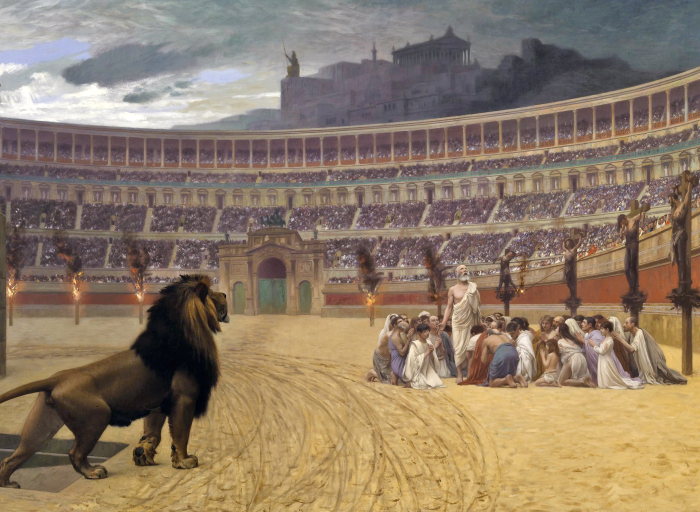
First, consider the historical context. Early Christians endured brutal persecution, including detention, affliction, and execution. The Roman historian Tacitus records that under Emperor Nero, Christians were blamed for the Great Fire of Rome in 64 AD and subjected to horrific deaths (Tacitus, Annals 15.44). Despite this, Christianity grew from a small sect in Judea to a dominant force across the empire within three centuries. Sociologically, movements based on fabricated claims typically collapse under such pressure, as followers abandon a cause that offers no tangible reward. Yet, the unwavering commitment of Jesus’ disciples suggests they witnessed something extraordinary—something worth dying for.
This leads to the second point: the transformation of the disciples. The New Testament describes them as fearful and scattered after Jesus’ crucifixion (John 20:19), yet post-resurrection, they boldly proclaimed His rising, even at the cost of their lives. Peter, who denied Jesus three times (Luke 22:54-62), later preached fearlessly in Jerusalem (Acts 2:14-36). Tradition holds that most disciples faced martyrdom—Peter crucified upside-down, James beheaded—yet none recanted their testimony. Psychologically, people do not die for a known lie. The resurrection, as recorded in all four Gospels (Matthew 28:1-10, Mark 16:1-8, Luke 24:1-12, John 20:1-18), provides a logical explanation: they saw the risen Christ.
Third, the conversion of skeptics like Paul strengthens the case. Initially a persecutor of Christians (Acts 8:1-3), Paul’s dramatic turnaround after encountering the risen Jesus on the road to Damascus (Acts 9:1-19) turned him into the faith’s greatest missionary. His epistles, such as 1 Corinthians 15:3-8, affirm the resurrection as a historical event witnessed by over 500 people. Paul’s shift from enemy to advocate, risking death himself (2 Corinthians 11:23-27), underscores the event’s credibility. A fabricated story would hardly sway a hostile intellectual like Paul without overwhelming evidence.
Finally, the empty tomb, acknowledged even by Jesus’ opponents (Matthew 28:11-15), poses a challenge. If the body remained, producing it would have crushed the movement. Instead, the claim of resurrection fueled Christianity’s expansion, despite every effort to suppress it. The Jewish and Roman authorities, with motive and means to disprove it, could not.
The spread of Christianity under persecution defies logic unless anchored in a real event. The resurrection, attested by transformed lives, historical records, and an empty tomb, emerges as the most reasonable explanation. In a world bent on silencing them, early Christians didn’t just survive—they thrived, because a dead man walked out of His grave.
Agape
Spencer
Sources:
Morris, Henry M. The Biblical Basis for Modern Science. Baker Books, 1984.
Montgomery, John W. Evidence for Faith. Probe Books, 1991.
Uman, Martin A. The Lightning Discharge. Academic Press, 1987.
 Borger church of Christ @ Franklin & Juniper