“Herein is my Father glorified, that ye bear much fruit; so shall ye be my disciples.” (John 15:8)
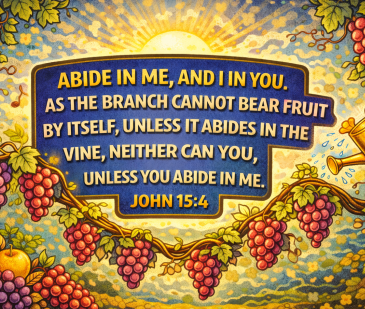
Last month we learned who defines good fruit, this month we find out that Jesus expects fruit bearing, and He tells us how to bear MUCH fruit. “Abide in me, and I in you. As the branch cannot bear fruit of itself, except it abide in the vine; no more can ye, except ye abide in me. I am the vine, ye are the branches: He that abideth in me, and I in him, the same bringeth forth much fruit: for without me ye can do nothing” (John 15:4-5).
People let their imaginations run wild with ideas about what it means to “ABIDE” in Christ. Anything from emotional claims, miraculous personal indwelling, to hearing of still small voices. The trouble with these is there’s no way to distinguish from what a person already desires from that which God desires.
What needs to be observed from the passage in John 15 is that Jesus is giving a directive to us. When He gives a command, or a directive, then it is something WE MUST DO. Another example is the command to “repent and be baptized” (Acts 2:38). When we’re told to do something, it stands to reason that it involves action on our part. The command to ABIDE IN ME, is a directive that we must ACT upon. We can do things to abide in Christ. The question then becomes, ‘what things?’
First, John also wrote, “Therefore let that abide in you which you heard from the beginning. If what you heard from the beginning abides in you, you also will abide in the Son and in the Father.” (1John 2:24) We today hear & know what they heard when we read the Bible. Note these passages in the Letter of 1John:
• 1John 1:4 And these things write we unto you…
• 1John 2:1 My little children, these things write I unto you…
• 1John 2:7 Brethren, I write no new commandment unto you…
• 1John 2:8 Again, a new commandment I write unto you…
• 1John 2:12 I write unto you…
• 1John 2:13 I write unto you…
• 1John 2:14 I have written unto you…
• 1John 2:21 I have not written unto you…
• 1John 2:26 These things have I written unto you…
• 1John 5:13 These things have I written unto you…
We abide in Christ when we study & keep His word so that it DWELLS IN us. “If you continue [same Greek word: abide/remain] in My word, you are truly My disciple.” (John 8:31 cf. Col 3:16).
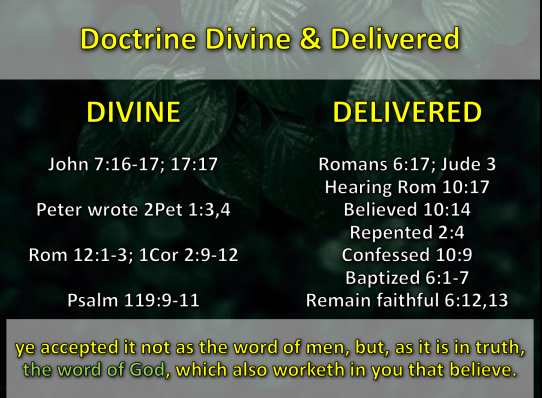
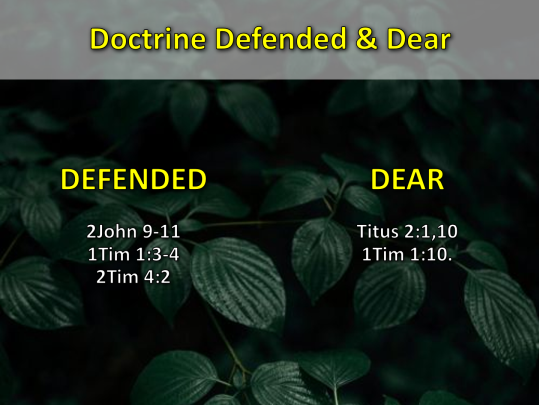
We abide in Christ when we DO HIS WILL. “Whoever transgresses and does not abide in the doctrine of Christ does not have God. He who abides in the doctrine of Christ has both the Father and the Son” (2John 9). “Whoever says he abides in Him ought himself also to walk just as He walked” (1John 2:6).
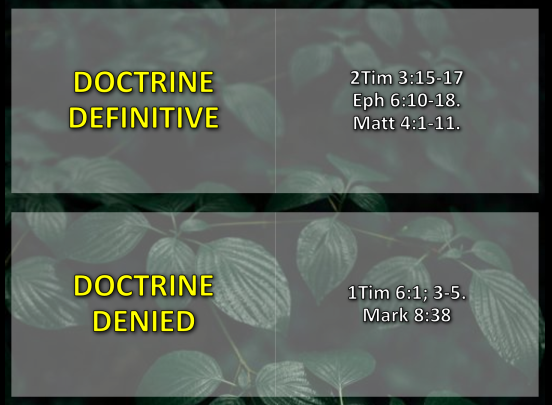
Repeatedly the scriptures connect ABIDING IN CHRIST with scripture. To abide in Christ is to keep His commands and to bear fruit. Paul wrote to Timothy, “All scripture is given by inspiration of God, and is profitable for doctrine, for reproof, for correction, for instruction in righteousness: That the man of God may be perfect, throughly furnished unto all good works.” (2Tim 3:16-17). It stands to reason then, that knowing the scriptures EQUIPS us to bear fruit (good works). This includes avoiding sin. “No one who abides in Him keeps on sinning; no one who keeps on sinning has either seen Him or known Him” (1John 3:6).
We can ABIDE IN CHRIST. He has shown us and told us how.
Agape
spencer






 Borger church of Christ @ Franklin & Juniper