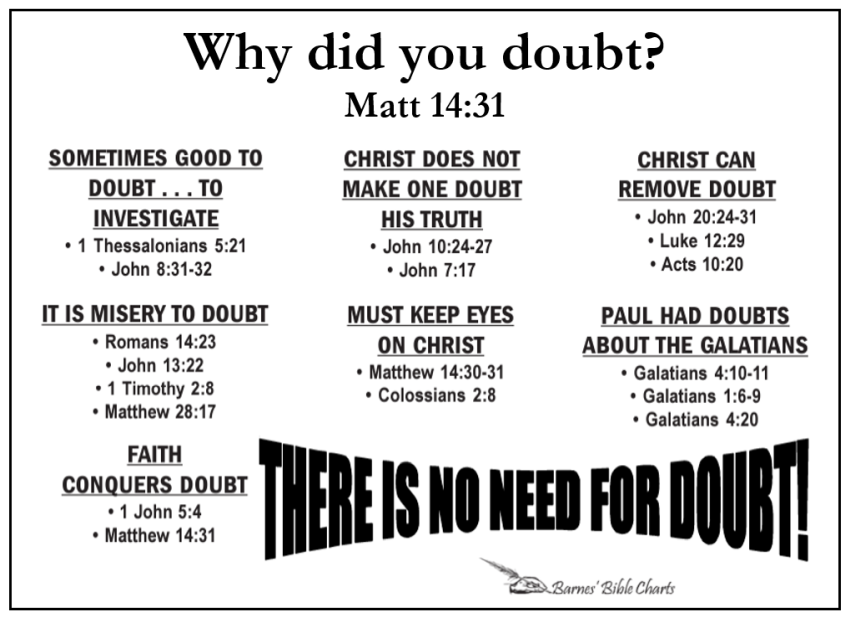
Why do we doubt? pt5

We have seen in this series of articles that doubt can develop from several places. Our job is to recognize the triggers for doubt and to avoid them.

So far we’ve learned about disbelief, opposition, uncertainty, and division. Today we talk about one more, distractions, or as Jesus put it, THORNS.

 “And these are they which are sown among thorns; such as hear the word, And the cares of this world, and the deceitfulness of riches, and the lusts of other things entering in, choke the word, and it becometh unfruitful

(Mark 4:18-19).

Distractions lead to doubt by taking our eyes off the goal, or diverting our time. When we focus on the vanities of life (see Ecclesiastes), we lose sight of hope and then doubt. Distractions give us less time for the study we need to strengthen our faith.

While there are many distractions, most of them can be grouped together into a few categories. 

One of the main categories of thorns leading to doubt is from family TRADITIONS. “Howbeit in vain do they worship me, teaching for doctrines the commandments of men” (Mark 7:7). Family traditions (religious or other), can lead to doubt especially as the word of God conflict with their religious practices or family time. When I first became a Christian, the tradition of our Sunday morning brunch interfered with worship. There is often pressure from the family for the Christian to forego worship, bible study, or even beliefs. This is especially difficult for the new in the faith, as they lack the biblical knowledge to defend themselves. (see Matt 10:37; Luke 14:26).

Another areas of distraction that keep us from study, meditation, and serving the Lord (Rom 12:6-8) are HOBBIES, Social-Media, and entertainment that consumes a significant amount of time. While these are non-sinful activities (sinful activities are always to be avoided), they can become distractions when the time & resources needed for them leave little of the same for God. Some have led to neglect of the family and job that can lead to financial strain. Hobbies and such like can be used for godly service. I know of one family that intentionally plans their activities as a tool for meeting people for an opportunity to share the gospel. Some use Social-Media for advancing the kingdom. “He who tills his land will be satisfied with bread, But he who follows frivolity is devoid of understanding” (Prov 12:11; 28:19 NKJV).

Lust for OTHER THINGS is another area that affects us (Mark 4:19). “Ye ask, and receive not, because ye ask amiss, that ye may spend it in your pleasures” (James 4:3). We begin to doubt when our prayers seem to go unanswered not recognizing that we’re praying amiss. Prayer is very personal as we pour out our heart to God. Sometimes we pray for things that go against the will of God. When our desires and God’s will conflict, we need to align our will with His, or doubt will creep in (cf. Jas 1:13-15).

The parable in Mark 4 also warns about the deceitfulness of RICHES. Money is a tool we use to ease trade. Sadly, many of us begin to trust in wealth above trusting in God. “But they that are minded to be rich fall into a temptation and a snare and many foolish and hurtful lusts, such as drown men in destruction and perdition” (1Tim 6:9-17). It’s very easy to think that money solves all our problems and leads to an easier life. That’s what one rich man thought (Luke 12:15-21). If we have problems that can be solved with money, we don’t have a problem. Then, when a real problem comes (one not solved by money), our faith may begin to waver. Our treasure in heaven is far more valuable than any earthly treasure, let’s focus on that (Matt 13:44-45; 16:26).

Related to riches is our concern for the NEEDS of this world. We need what we need and stress about them may lead to doubt. Because they’re needs, they can quickly and easily distract us and cause doubt especially if we lack any need. “Therefore I say unto you, be not anxious for your life, what ye shall eat, or what ye shall drink; nor yet for your body, what ye shall put on. Is not the life more than the food, and the body than the raiment” (Matt 6:25-34)? The command of Christ is to seek first the kingdom of God and His righteousness.

The final category of thorns is found in SICKNESS, Sadness or Sorrows. The physical and emotional pains of life can quickly overwhelm our faith and become the focus of every conversation. When we’re asked how we’re doing, do we give an organ recital (listing all our ailments) or do we talk about our hope? “For our light affliction, which is but for a moment, worketh for us a far more exceeding and eternal weight of glory” (2Cor 4:17). Unhealed pain is a source of doubt for many of our brethren, and certainly for the world.

For me this is one of the most difficult thorns. Pain, Loss, Sickness, and Sorrows can drive our identity. A friend of mine noticed after the loss of his infant son that he could end any joyful moment for himself and others. Some pains can be healed, but the death of a loved one lives with us forever. This and other Sorrows can be a constant source of doubt.

Paul faced a physical thorn that he appealed to the Lord three times in prayer. However, the Lord’s answer changed his perception about the pain. “Concerning this thing I besought the Lord thrice, that it might depart from me. And he hath said unto me, My grace is sufficient for thee: for my power is made perfect in weakness. Most gladly therefore will I rather glory in my weaknesses, that the power of Christ may rest upon me. Wherefore I take pleasure in weaknesses, in injuries, in necessities, in persecutions, in distresses, for Christ’s sake: for when I am weak, then am I strong.” (2Cor 12:8-10). Instead of letting his thorn in the flesh become his identity, it became a motivation and a source of strength through faith in Jesus Christ.

Friends, we all have our fears and doubts, but we must never let it have a foothold in our hearts. When we are aware of how doubt develops, we’ll be better able to stave it off. The tried-and-true way to combat doubt is by keeping our eyes on Jesus. We do this by reading His word, encouraging and assembling with the saints, and being diligent to show ourselves approved unto God.

Agape,

Spencer

This is part 5 of a series on Overcoming Doubt.
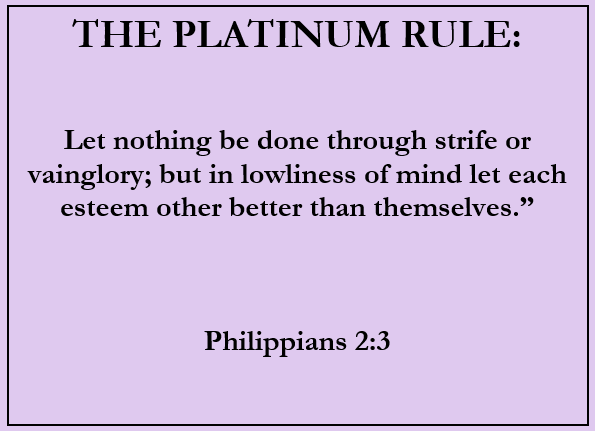
Why did you Doubt? pt4

The previous articles looked at doubt from Disbelief, Obstacles, Untruths, and now we look at doubt that comes from strife & divisive behavior.

Casting doubt is the next on our list of reasons why we doubt. There are some outside of the church that cast doubt, but there are also some inside the church.

The church is wonderful. Jesus said this about the church, “I will build my church; and the gates of hell shall not prevail against it” (Matt 16:18b). He built it, and it’s indestructible, but that doesn’t mean some won’t try.

For the most part, folks aren’t necessarily trying to wreck the church, but we can be casting doubt upon it through certain attitudes and actions. This leads to some leaving the church.

People do not like conflict. When we fail to resolve issues in kind, loving and truthful ways it leads to disappointment and division. Some leave to another congregation. Others leave the church for a denomination.

To ward off doubt, we need to identify our negative behaviors without casting more doubt!

5 things we do to cast doubt upon others in the church.

The first negative behavior that casts doubt on others is BACKBITING. “A froward man soweth strife: and a whisperer separateth chief friends” (Prov 16:28). In Romans, backbiting is in the list of the unrighteous (Rom 1:30. It’s among the list of thing Paul hoped to find missing when he visited the church at Corinth (2Cor 12:20). Backbiting is defaming speech to attack the good name or reputation of a person by uttering anything false or injurious. This can cast doubt on the faith of some by tearing down those who teach, aid, or example for others. This kind of doubt leads to trust issues and divisions.

The next way we could cause doubt is through RIVALRIES. The church at Corinth had this problem. “For ye are yet carnal: for whereas there is among you envying, and strife, and divisions, are ye not carnal, and walk as men” (1Cor 3:3)? The first chapter shows the root of this rivalry was about who baptized who. In chapter six there was rivalry caused by doing wrong to one another and they were taking their grievances before unbelievers (6:1-6). This causes doubt about the church inside and outside the church. “For where envying and strife is, there is confusion and every evil work” (James 3:16). This sort of doubt causing gives occasion for the enemies of God to blaspheme.

EVIL Speaking is another area when we might cast doubt. I recall a friend telling me about when he was a kid riding home with his parents from worship. They began to speak about something a brother in Christ had done when his father stopped the conversation. His father told him that he didn’t want to talk poorly about a brother in front of the kids. Perhaps the brother would repent, but if they had poisoned the mind of the children about this brother, they may harbor ill feelings toward him into adulthood. “Wherefore laying aside all malice, and all guile, and hypocrisies, and envies, and all evil speakings, As newborn babes, desire the sincere milk of the word, that ye may grow thereby” (1Pet 2:1-2). “A false witness that speaketh lies, and he that soweth discord among brethren” (Prov 6:12-14; 19). This kind of doubt leads to division between brethren and ultimately a weaker congregation.

The next attitude is ANGER toward others in the church. “But now ye also put off all these; anger, wrath, malice, blasphemy, filthy communication out of your mouth.” (Col 3:8, 21; Eph 4:31, 26). Animosity is in opposition to loving kindness. “Put on therefore, as the elect of God, holy and beloved, bowels of mercies, kindness, humbleness of mind, meekness, longsuffering. (Col 3:12). When people come together there may times when we disappoint each other, but we must not allow this to develop into anger and cause division and doubt about our brethren or doubt about the church. “Beloved, let us love one another: for love is of God; and every one that loveth is born of God, and knoweth God. He that loveth not knoweth not God; for God is love” (1John 4:7-8).

Lastly, there is doubt cast on another when someone lays claim to special KNOWLEDGE that others lack. Paul warned Timothy about these people. “But foolish and unlearned questions avoid, knowing that they do gender strifes” (2Tim 2:23). “He is proud, knowing nothing, but doting about questions and strifes of words, whereof cometh envy, strife, railings, evil surmisings” (1Tim 6:4). When people engage in doubtful disputations (Rom 14:2) it may cause a weaker brother to stumble. Paul also wrote about KNOWLEDGE that a strong brother has that a weaker brother does not have. In these cases, the stronger brother is to forebear so as not to cause stumbling in the weaker.

But take heed lest by any means this liberty of yours become a stumblingblock to them that are weak. For if any man see thee which hast knowledge sit at meat in the idol’s temple, shall not the conscience of him which is weak be emboldened to eat those things which are offered to idols; And through thy knowledge shall the weak brother perish, for whom Christ died” (1Cor 8:9-11)?

Casting doubt about brethren casts doubt about the church for the church is the brethren. There will be disagreements, disappointments, and differences in understanding. However, these can be overcome through Love for God, Love for His word and Love for one another.

Agape,

Spencer

This is part 4 of a series on Overcoming Doubt.

Why do we DOUBT? p3

Would ye also go away?

John 6:67-68

They went away because of His Teaching.

John 6:53

Some go away because of Fear of men.

John 12:42

Some go away because of Doubts or Questions.

John 7:52-53

Some go away out of procrastination.

Matt 8:21

Why did you doubt?” p3

(Matt 14:24-31).

Why do we doubt? What is the source of doubt? This series of articles seeks to search the scriptures for the answer, and to learn how to combat, or to Overcome Doubt.

The first article showed that Doubt is based on Disbelief, and the way to overcome disbelief is through knowledge of the Lord Jesus Christ. The second article spoke about obstacles that reveal doubt. This article will attempt to Overcome Doubt that arises when we turn away from the truth toward uncertainties. 

When we begin to DOUBT, our response is often to take matters into our own hands. Think of those examples when folks didn’t know how God was going to fulfill a promise, so they tried to “help” Him out. Sarah’s suggesting Hagar (Gen 16:1-4). King Saul making an unlawful sacrifice when Samuel was delayed (1Sam 13:8-13).

When life becomes uncertain, we may place our trust in more UNCERTAINTIES. We try to walk by sight instead of by faith. When doubts arise and fears dismay, we place our trust in earthly resources.

Paul charged Timothy to warn the rich of this. “But they that will be rich fall into temptation and a snare, and into many foolish and hurtful lusts, which drown men in destruction and perdition. Charge them that are rich in this present world, that they be not highminded, nor have their hope set on the uncertainty of riches, but on God, who giveth us richly all things to enjoy” (1Tim 6:9, 17).

For many of us, instead of the NOTHING wavering faith of James 1, we become tossed about by every wind of doctrine. “That we henceforth be no more children, tossed to and fro, and carried about with every wind of doctrine, by the sleight of men, and cunning craftiness, whereby they lie in wait to deceive” (Eph 4:14). We turn from the truth of God’s word to the opinions of others.

When doubt increases, others place their trust in SELF. “I’ll do it my way.” “Daring, self-willed, they tremble not to rail at dignities” (2Pet 2:10; Lu 12:15-21).

These things may appear helpful, but they are UNFRUITFUL. The deceit of the world leads to being unfruitful, “And some fell among thorns; and the thorns sprung up, and choked them: He also that received seed among the thorns is he that heareth the word; and the care of this world, and the deceitfulness of riches, choke the word, and he becometh unfruitful” (Matt 13:7,22; Mark 4:18,19).

For some they turn to seemingly successful & happy people that end up ROBBING them of whatever faith they have remaining. “Let no man deceive you with empty words: for because of these things cometh the wrath of God upon the sons of disobedience” (Eph 5:6; Col 2:4,8,18; 3:6; 2Th 2:3).

Paul wrote about these deceptive people, “holding a form of godliness, but having denied the power therefore. From these also turn away. For of these are they that creep into houses, and take captive silly women laden with sins, led away by divers lusts, ever learning, and never able to come to the knowledge of the truth” (2Tim 3:5-7).

Each of the above strategies smack of an EARTHLY wisdom from beneath that moves away from the wisdom of God’s word that comes from above. “This wisdom is not a wisdom that cometh down from above, but is earthly, sensual, devilish. For where jealousy and faction are, there is confusion and every vile deed” (James 3:15-16).

What is the remedy to doubt?

The first and main thing we need to do to answer doubt is to continue to SEEK the kingdom of God and his righteousness. In the famous passage on worry, Jesus said, “But seek ye first his kingdom, and his righteousness; and all these things shall be added unto you” (Matt 6:33). Just because we sometimes doubt, doesn’t mean we stop doing the right thing. Sin is never the answer to doubt.

Look UP, set your affections on things above. Developing hope is a great strategy for overcoming or alleviating doubt. “If then ye were raised together with Christ, seek the things that are above, where Christ is, seated on the right hand of God. Set your mind on the things that are above, not on the things that are upon the earth. For ye died, and your life is hid with Christ in God. When Christ, who is our life, shall be manifested, then shall ye also with him be manifested in glory” (Col 3:1-4). When we have a big enough why, we can endure any how.

We can READ the word of the Lord. When we don’t know what to do, instead of turning to the earthly advice, turn to the word of God, or to people that will give godly advice (Titus 2:1-8). His word gives us all things pertaining to life and godliness (2Pet 1:3). Doubt is the opposite of faith, and faith comes by hearing (Rom 10:17). Read the bible for insight into this life. We can learn how to handle fear and doubt by reading of the examples of those that faced the same things. “Every scripture inspired of God is also profitable for teaching, for reproof, for correction, for instruction which is in righteousness. That the man of God may be complete, furnished completely unto every good work” (2Tim 3:16-17).

While doubt is uncomfortable, there is still hope. Doubt tends to focus on what’s missing. There are still things to ENJOY. The wise advice of one of our songs is to “count your many blessings.” Look for what is good, and watch for the good that may come from our continued faithfulness in times of trial. James wrote for us to count it all joy when we face trials. “Count it all joy, my brethren, when ye fall into manifold temptations; Knowing that the proving of your faith worketh patience” (James 1:2-3).

Every good gift and every perfect gift is from above, coming down from the Father of lights, with whom can be no variation, neither shadow that is cast by turning” (James 1:17).

Agape,

Spencer

This is part 3 of a series on Overcoming Doubt.

Why do we DOUBT? Oppression.

When Jesus asked Peter; “why did you doubt?” they were standing in the midst of a storm on tossing seas (Matt 14:24-31).

Isn’t that how it is for us? Our doubts arise in the midst of the storms on the crashing seas of life. We seldom doubt on the calm, and peaceful waters.

This scene with Peter on the sea reminds me of the parable of the Sower. Jesus’ teaching about the rocky soil resembles the fear and doubt that arise during times of trouble.

But he that received the seed into stony places, the same is he that heareth the word, and anon with joy receiveth it; Yet hath he not root in himself, but dureth for a while: for when tribulation or persecution ariseth because of the word, by and by he is offended” (Matt 13:20-21).

Doubt, and falling away, often comes in the face of opposition, or persecution for the word’s sake.

If we can learn to overcome doubt in these situations, perhaps we’ll be able to endure the regular troubles of life.

Why do we doubt? What is the source of doubt? This series of articles will seek to search the scriptures for the answer, and to learn how to combat, or to Overcome Doubt. The first article showed that Doubt is based on Disbelief, and the way to overcome disbelief is through knowledge of the Lord Jesus Christ. This article will attempt to Overcome Doubt that arises from the Oppression of life. 

In the parable of the soils, and in the example of Peter, it becomes clear that trouble reveals our DOUBTS instead of causing them. There are some who teach the error that becoming a Christian relieves us of all pain & suffering. The bible says something completely different.

Yea, and all that will live godly in Christ Jesus shall suffer persecution” (2Tim 3:12).

Confirming the souls of the disciples, and exhorting them to continue in the faith, and that we must through much tribulation enter into the kingdom of God” (Acts 14:22).

Be not thou therefore ashamed of the testimony of our Lord, nor of me his prisoner: but be thou partaker of the afflictions of the gospel according to the power of God” (2Tim 1:8)

Marvel not, my brethren, if the world hate you” (1John 3:13).

These few verses should be sufficient to show that suffering for the faith is a reality for the faithful. Resilience & Endurance is the antidote to DOUBT, but developing these is key. Resilience is the capacity to recover quickly from difficulties; toughness. Endurance is the ability or strength to continue or last, especially despite fatigue, stress, or other adverse conditions.

There is a very good reason why we ought to endure. “You therefore must endure hardship as a good soldier of Jesus Christ” (2Tim 2:3). “If we endure, We shall also reign with Him. If we deny Him, He also will deny us” (2Tim 2:12).

How does one develop endurance? This lesson goes along with the first lesson about faith; remember to remember the Lord and have faith. “Remember that Jesus Christ of the seed of David was raised from the dead according to my gospel: Wherein I suffer trouble, as an evil doer, even unto bonds; but the word of God is not bound. Therefore I endure all things for the elect’s sakes, that they may also obtain the salvation which is in Christ Jesus with eternal glory. It is a faithful saying: For if we be dead with him, we shall also live with him: If we suffer, we shall also reign with him: if we deny him, he also will deny us” (2Timothy 2:8-12).

Have Faith, then after that, the next thing is to stand firm for the faith. The way we can do this is through 5 reminders.

First, Stand back and ask, “is this the worst that can happen?” Before we sink, take time to think. “For our light affliction, which is for the moment, worketh for us more and more exceedingly an eternal weight of glory” (2Cor 4:17). “Fear him that can destroy in Hell” (Mat 10:28; Luke 12:5). “For I reckon that the sufferings of this present time are not worthy to be compared with the glory which shall be revealed to us-ward” (Rom 8:18). We often give up long before our endurance expires. 

Then ask, “How can I endure this?” Before we give up, remember the example of those that faced trials before you. “rejoicing that they were counted worthy to suffer dishonor for the Name” (Acts 5:41; cf. 2Cor 11:22-33). “Behold, we count them happy which endure. Ye have heard of the patience of Job, and have seen the end of the Lord; that the Lord is very pitiful, and of tender mercy” (James 5:11). Can you steel yourself against the pain, can you TOUGHEN up? Paul wrote, “Watch ye, stand fast in the faith, quit you like men, be strong” (1Cor 16:13).

A third question to ask is, “Are there any good things that can come from this?” Paul saw the good of preaching Christ even under false pretenses (Phil 1:12-18). James wrote that the trying of our faith produces patience (Jas 1:3).

Nature itself teaches us that growth comes through enduring difficulties. The writer of Hebrews noted this. “Furthermore we have had fathers of our flesh which corrected us, and we gave them reverence: shall we not much rather be in subjection unto the Father of spirits, and live? For they verily for a few days chastened us after their own pleasure; but he for our profit, that we might be partakers of his holiness. Now no chastening for the present seemeth to be joyous, but grievous: nevertheless afterward it yieldeth the peaceable fruit of righteousness unto them which are exercised thereby. Wherefore lift up the hands which hang down, and the feeble knees(Heb 12:9-13).

Then make a commitment to NEVER, NEVER, NEVER, NEVER, GIVE UP! “And let us not be weary in well doing: for in due season we shall reap, if we faint not” (Gal 6:9; cf. Phil 4:13; Rev 2:10). Make endurance the only option.

Lastly, and most importantly, do all you can do to stand. “Wherefore take unto you the whole armour of God, that ye may be able to withstand in the evil day, and having done all, to stand” (Eph 6:13; cf. 10-18). Be a doer of God’s word and not a hearer only. Do the best you can and when you learn to do better, do better.

I press toward the mark for the prize of the high calling of God in Christ Jesus.” “I can do all things through Christ which strengtheneth me”. (Phil 3:14; 4:13). The troubles of life reveal our doubts, but we can do it, the Lord said so (1Cor 10:13).

Agape,

Spencer

FILED UNDER: Overcoming doubt.

You’re invited to attend one of the services of the Franklin & Juniper st church of Christ in Borger Texas.

Overcoming Doubt

Why do we doubt? What is the source of doubt? This series of articles will seek to search the scriptures for the answer, and to learn how to combat, or to Overcome Doubt.

LESSON LINKS.

Why do we DOUBT? Don’t Believe. 09/08/23

Why do we DOUBT? Oppression. 9/14/23

Why do we DOUBT? Uncertainties. 9-22-23

Why do we DOUBT? Backbiting. 09-30-23

Why do we DOUBT? Thorns. 10-07-23

You’re invited to visit our services at the Franklin & Juniper St church of Christ in Borger Texas.

Why do we DOUBT?

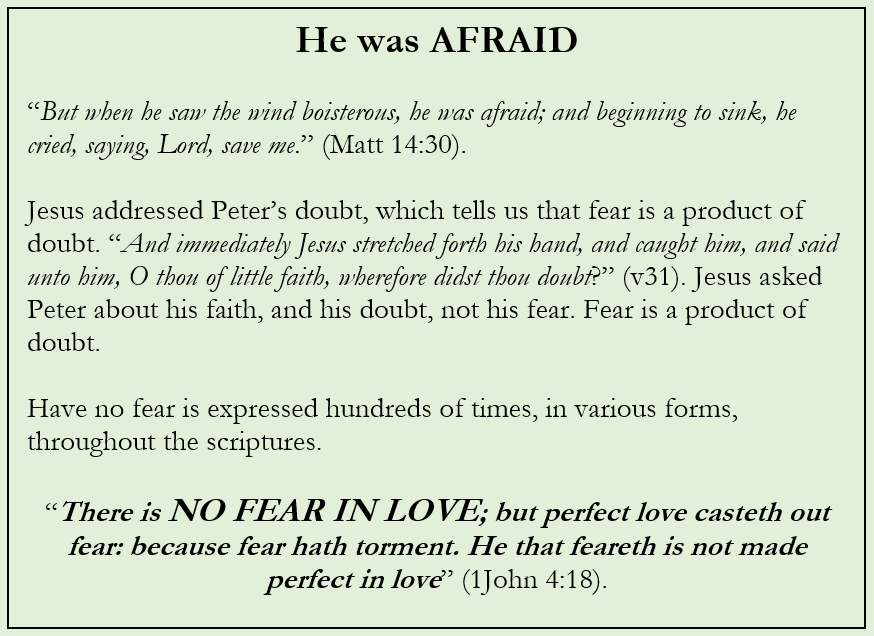
Jesus asked this question of Peter when he began to sink after walking on the water.

And in the fourth watch of the night Jesus went unto them, walking on the sea. And when the disciples saw him walking on the sea, they were troubled, saying, It is a spirit; and they cried out for fear. But straightway Jesus spake unto them, saying, Be of good cheer; it is I; be not afraid. And Peter answered him and said, Lord, if it be thou, bid me come unto thee on the water. And he said, Come. And when Peter was come down out of the ship, he walked on the water, to go to Jesus. But when he saw the wind boisterous, he was afraid; and beginning to sink, he cried, saying, Lord, save me. And immediately Jesus stretched forth his hand, and caught him, and said unto him, O thou of little faith, wherefore didst thou doubt? And when they were come into the ship, the wind ceased. Then they that were in the ship came and worshipped him, saying, Of a truth thou art the Son of God

(Matthew 14:25-23).

You may wonder why the Lord was so critical of Peter’s doubt, because walking on water is not normal. But that was not the Lord’s rebuke. Peter was walking on water. Jesus was walking on water. They both walked on water together in the storm.

Do we also doubt in the storms of life?
Why do we doubt? What is the source of doubt? This series of articles will seek to search the scriptures for the answer, and to learn how to combat, or to Overcome Doubt.

The first thing we ought to do is to make certain we know what it means. Jesus asked Peter, “why did you doubt (duplicate, i.e. mentally to waver in opinion) [Strong’s Greek dictionary; distazo]. The dictionary defines doubt as; “to be uncertain about; consider questionable or unlikely; hesitate to believe.” DOUBT is the opposite of BELIEF. Therefore, our first source of DOUBT is DISBELIEF. This will be the ultimate root of all the sources.

DISBELIEF is the target of the Lord’s question to Peter (v31), and is our challenge today. Belief in God is the beginning of our salvation. It’s placed first of all other commands in obeying the gospel. Works without faith is vanity. Faith is a work (John 6:29; 1Thess 1:3; 2Thess 1:11).

But without faith it is impossible to please him: for he that cometh to God must believe that he is, and that he is a rewarder of them that diligently seek him” (Hebrews 11:6).

He that believeth and is baptized shall be saved; but he that believeth not shall be damned” (Mark 16:16).

The type of Belief under consideration is compared to the faith of Abraham when he went to sacrifice the son of promise. “Was not Abraham our father justified by works, when he had offered Isaac his son upon the altar? Seest thou how faith wrought with his works, and by works was faith made perfect? And the scripture was fulfilled which saith, Abraham believed God, and it was imputed unto him for righteousness: and he was called the Friend of God. Ye see then how that by works a man is justified, and not by faith only” (James 2:21-24). His belief was so certain that he supposed God would raise Isaac from the dead (Heb 11:17).

However, faith is not blind. “Now faith is the substance of things hoped for, the evidence of things not seen” (Hebrews 11:1). There’s evidence to believe. Peter’s evidence was the prior miracles of Jesus (which are still evidence for us today John 20:30-31). Peter had participated in the feeding of the 5,000 just preceding his water ambulation. How many steps he made on the water we do not know, but one step out of a boat into the deep stormy waters is sufficient. He had gone out in the limited commission with powers, “against unclean spirits, to cast them out, and to heal all manner of sickness and all manner of disease” (Matthew 10:1).

Well, that was Peter you may say; what about us? We don’t see those miracles today. No, we don’t see biblical miracles today, but that’s okay. The miracles Peter saw, and those in the early church are for our belief. “And many other signs truly did Jesus in the presence of his disciples, which are not written in this book: But these are written, that ye might believe that Jesus is the Christ, the Son of God; and that believing ye might have life through his name” (John 20:30-31). But there’s more…

God’s word says that God’s creation is for belief. “Because that which may be known of God is manifest in them; for God hath shewed it unto them. For the invisible things of him from the creation of the world are clearly seen, being understood by the things that are made, even his eternal power and Godhead; so that they are without excuse” (Romans 1:19-20). God’s creation is enough to begin our belief in Him.

Paul used this same evidence for belief. “Nevertheless he left not himself without witness, in that he did good, and gave us rain from heaven, and fruitful seasons, filling our hearts with food and gladness” (Acts 14:17; 17:27-28). The evidence of creation and human life will point you in the right direction to look further. There are only 2 possibilities about creation: 1) that everything came from a thoughtless nothing, or 2) everything came from a very wise, powerful, and brilliant God.

Belief is not blind. It has evidence and there’s so much evidence inside and outside of scripture. If you doubt, perhaps a study of evidences is for you to combat that doubt. Here are a few areas to study…

I have a few resources in my library. One of my favorites is by a brother in Christ named A.O. Schnabel, “Has God Spoken?” This book references scriptures of nature that science discovered many hundreds and thousands of years later. Some discoveries as recent as the 1960’s!

There’s no need to doubt. We can know and be assured.

(to be continued)

Agape,

Spencer

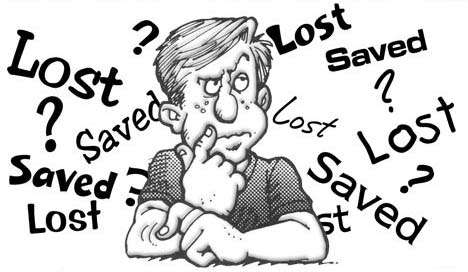
5 Reasons to DOUBT your salvation.

Nobody wants to doubt their salvation, but before you can be assured, one must know where they are.

Once you know where you are, then you can learn how to be assured.

5 Reasons to DOUBT your salvation.

You DO NOT KNOW:

If you DO NOT KNOW how to be saved, or DO NOT KNOW what the bible says about salvation, then you need to be in DOUBT. There are many examples of people who DO NOT KNOW they are lost.

Because thou sayest, I am rich, and increased with goods, and have need of nothing; and knowest not that thou art wretched, and miserable, and poor, and blind, and naked” (Rev 3:17).

OPPOSES Scripture:

If you’re practice is in direct OPPOSITION to clear biblical teaching. It should be self evident, but many are in OPPOSITION to the word of God. Often it’s related to the first one.

He answered and said unto them, Well hath Esaias prophesied of you hypocrites, as it is written, This people honoureth me with their lips, but their heart is far from me. Howbeit in vain do they worship me, teaching for doctrines the commandments of men” (Mark 7:6-7).

UNDERSTANDING:

If you don’t UNDERSTAND why you’re doing something. To be pleasing to God, we must know what He wants and UNDERSTAND why. This doesn’t mean you need to become a biblical scholar, but our hearts have to be involved in obedience to God. Balaam was compliant with God’s command in Number 22-25, but he certainly wasn’t obedient (Jude 11).

And Philip ran thither to him, and heard him read the prophet Esaias, and said, Understandest thou what thou readest? And he said, How can I, except some man should guide me? And he desired Philip that he would come up and sit with him” (Acts 8:30-31).

BIBLICAL Evidence:

Probably the most important reason, and the reason every other one is based, is BIBLICAL evidence. Unless we have BOOK, CHAPTER, & VERSE for what we practice, then we ought to be in doubt. We need to have a firm understanding of how to study, how to know what God wants, and how to rightly divide the word of God.

Study to shew thyself approved unto God, a workman that needeth not to be ashamed, rightly dividing the word of truth” (2Tim 2:15).

And that from a child thou hast known the holy scriptures, which are able to make thee wise unto salvation through faith which is in Christ Jesus. All scripture is given by inspiration of God, and is profitable for doctrine, for reproof, for correction, for instruction in righteousness: That the man of God may be perfect, throughly furnished unto all good works” (2Tim 3:15-17).

These were more noble than those in Thessalonica, in that they received the word with all readiness of mind, and searched the scriptures daily, whether those things were so” (Acts 17:11).

And whatsoever ye do in word or deed, do all in the name of the Lord Jesus, giving thanks to God and the Father by him” (Col 3:17).

“And why call ye me, Lord, Lord, and do not the things which I say” (Luke 6:46)?

TOLD something from silence:

If what we’re doing is solely based on what someone TOLD us to do without a biblical basis, then run away from that person. Many believe that we can do whatever we want as long as God has never said we can’t. This is operating from silence. Silence prohibits. Consider what happened to David when he argued from Silence.

And it came to pass, when the king sat in his house, and the LORD had given him rest round about from all his enemies; That the king said unto Nathan the prophet, See now, I dwell in an house of cedar, but the ark of God dwelleth within curtains. And Nathan said to the king, Go, do all that is in thine heart; for the LORD is with thee. And it came to pass that night, that the word of the LORD came unto Nathan, saying, Go and tell my servant David, Thus saith the LORD, Shalt thou build me an house for me to dwell in? Whereas I have not dwelt in any house since the time that I brought up the children of Israel out of Egypt, even to this day, but have walked in a tent and in a tabernacle. In all the places wherein I have walked with all the children of Israel spake I a word with any of the tribes of Israel, whom I commanded to feed my people Israel, saying, Why build ye not me an house of cedar” (2Samuel 7:1-7)?

Nowhere in our lives do we find it acceptable for a defiant person to claim, “nobody said I couldn’t.” Without the prohibition of silence the direct statements and commands of God are rendered useless. When we order a pizza, our direct statements about what we want eliminates all other unspoken possibilities. If you doubt me on this, try ordering any food for a child and see if even their silence matters.

These are 5 reasons to DOUBT. However, we need not remain in DOUBT. We can KNOW the will of the Lord. That will be in a future article.

spencer

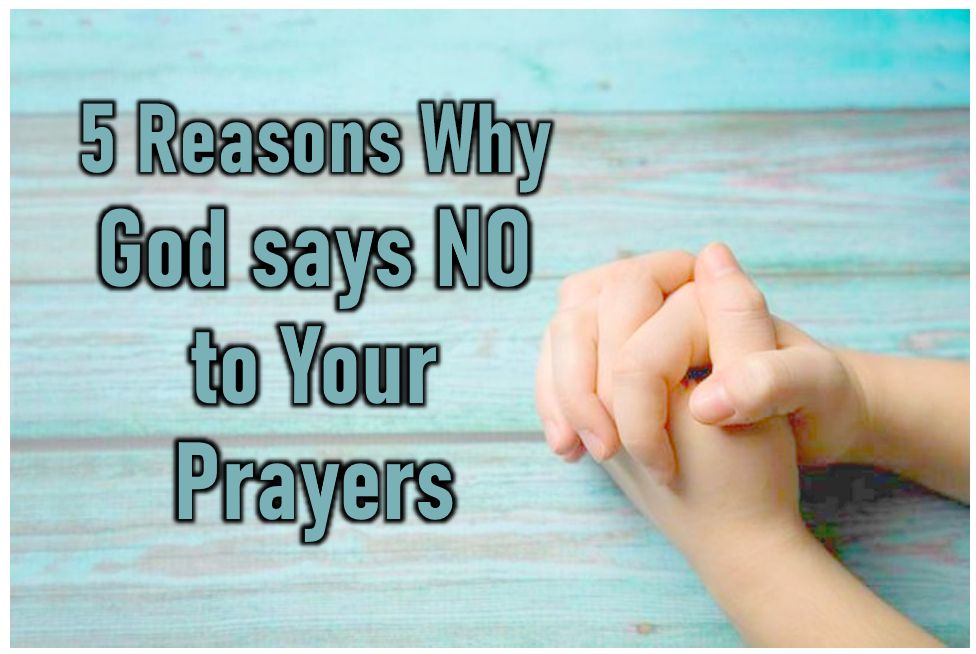
Why Would God Say NO to Our Prayer?

The world misunderstands how prayer works, and the mockers use those errors to attack the church. We must understand it otherwise we may fall into temptation and lose our faith.

Here are just a few of the misunderstandings about prayer:

  • When bad things happen in the world, mockers attack when someone says, “our thoughts and prayers are with you.”
  • When a prayer is not answered, the weak in faith and those that don’t understand, get angry with God and fall away. One fellow said, “Me and God aren’t on speaking terms.”
  • When God says no, some doubt their own faith and become disillusioned about the effectiveness of prayer.
  • Others fall into atheism when God doesn’t give them what they ask for in their prayer. Perhaps a sick child passes away despite the ongoing prayers. David teaches us a better way. [2Sam 12:16-23].
  • Some get weaker. Paul was told no in 2Corinthians 12:7-10, but he became stronger. We can too, once we learn why God might say no to our prayer.


WHY WOULD GOD SAY NO?

AGAINST HIS WILL. Let’s face the facts, some of our prayers are not according to His will. We don’t know what He wants because we don’t read His word and we ask for things God has never promised to give. It’s incumbent upon us to know what He wants.

And this is the confidence that we have in him, that, if we ask any thing according to his will, he heareth us:

[1John 5:14]


MISUNDERSTAND OUR RELATIONSHIP WITH GOD. God looks to those in Christ as His children and is training us as a Father does with a child. Would you give your young child everything he may wish? Certainly not, and God won’t either, because He loves us too much to give us something for which we are too immature to handle.

Furthermore, we have had human fathers who corrected us, and we paid them respect. Shall we not much more readily be in subjection to the Father of spirits and live? For they indeed for a few days chastened us as seemed best to them, but He for our profit, that we may be partakers of His holiness. Now no chastening seems to be joyful for the present, but painful; nevertheless, afterward it yields the peaceable fruit of righteousness to those who have been trained by it.” [Hebrews 12:9-11]


INDECISIVE PRAYER.  Our prayers are duplicitous, or in opposition with other prayers. We shouldn’t expect anything if we’re praying against ourselves or if we doubt that God can answer. Some even begin their prayer with, “God, if you’re there…”

But let him ask in faith, with no doubting, for he who doubts is like a wave of the sea driven and tossed by the wind. For let not that man suppose that he will receive anything from the Lord; he is a double-minded man, unstable in all his ways.” [James 1:6-8]


SELFISH PRAYER. For some, prayer is nothing more than having a genie in a bottle. You see something you want so you pray for it, as if God is just sitting on His throne granting wishes.

You ask and do not receive, because you ask amiss, that you may spend it on your pleasures.” [James 4:3]


SINNER PRAYER. This is not the prayer of the sinner asking God for enlightenment as Cornelius did [Acts 10:1-2]. Which, when he heard the word of God, he obeyed the gospel in Baptism. No, I’m referring to the prayer of an unrepentant sinner. If you’re asking God for some blessing while you’re disobedient to His word, living in an unsaved condition, don’t expect a single thing from Him. It’s a worthless prayer because God has said that He doesn’t heed the prayer of the sinner.

When you spread out your hands, I will hide My eyes from you; Even though you make many prayers, I will not hear. Your hands are full of blood. Wash yourselves, make yourselves clean; Put away the evil of your doings from before My eyes. Cease to do evil,” [Isaiah 1:15-16]

 There are many more such examples of God promising a NO to those who continue in sin. [Joh 9:31; Job 27:9; 35:12; Ps 18:41; 34:15; 66:18; Pr 1:28; 15:29; 28:9; Isa 1:15; Jer 11:11; 14:12; Eze 8:18; Mic 3:4; Zec 7:13; Joh 21:25]


CONCLUSION: You see, we ask and do not have because we ask AMISS [James 4:3]. It’s proven that we can pray in vain error. When we ask AMISS, don’t expect anything from God.

For let not that man suppose that he will receive anything from the Lord;” [James 1:7]

My prayer is that you come to a full understanding about prayer so that you can have the confidence that your petitions to God are heard according to His will.

—Spencer