
4 Things I Seek

But thou, O man of God, flee these things; and follow after righteousness, godliness, faith, love, patience, meekness.” (1Tim 6:11)

Flee also youthful lusts: but follow righteousness, faith, charity, peace, with them that call on the Lord out of a pure heart.” (2Tim 2:22)

Striving for Selfless Love.
As I walk through this life, I’m learning that selfless love is the heartbeat of what it means to follow Christ. The New Testament tells me to pursue love (agape, the kind of love that puts others first) as Paul urges in 1 Corinthians 14:1, “Pursue love,” and 1 Corinthians 10:24, “Let no one seek his own, but each one the other’s well-being.” I see this love woven into the virtues of 1 Timothy 6:11 and 2 Timothy 2:22, where love stands alongside righteousness, faith, and peace. Yet, I confess, loving selflessly doesn’t come naturally to me. It’s a daily choice to set aside my own desires and seek the good of those around me.

This pursuit matters deeply because love is the foundation of God’s kingdom. Paul says in 1 Corinthians 13:13 that love is greater than faith or hope, and I’m beginning to understand why. When I choose to love others (whether through a kind word, a listening ear, or an act of hospitality like Romans 12:13 encourages) I reflect Christ’s heart. Every effort to encourage others flows from this love. But I stumble often. My selfishness creeps in, and I need God’s grace to soften my heart, to help me embody the gentleness of 1 Timothy 6:11 or the peace of 2 Timothy 2:22 in my relationships.

Striving for selfless love changes me. It pushes me to forgive when I’d rather hold a grudge, to serve when I’m tired, and to prioritize others’ needs over my own comfort. It’s humbling to realize how far I fall short, yet I find joy in small steps, like a kind word to a neighbor or praying for a struggling friend. This pursuit brightens the light of Christ in my heart, showing the world a glimpse of Jesus’ love through my imperfect efforts. I keep chasing selflessness to make my love more like God’s.

Seeking God; Aspiring to Excellence (Godliness and Holiness)
In my walk with Christ, I’m learning to aspire to excellence through godliness and holiness, though I often feel unworthy of such a high calling. 1 Timothy 6:11 urges me to pursue godliness, a life of devotion to God, while Hebrews 12:14 says to “pursue… holiness, without which no one will see the Lord.” These virtues connect to the righteousness and faith in 1 Timothy 6:11 and 2 Timothy 2:22, and they echo the urging to seek “things above” in Colossians 3:1-2. I’m far from perfect, but I long to reflect God’s character more each day.

This pursuit is crucial because it draws me closer to God Himself. Godliness means living with reverence, seeking His will in every decision, but I often get distracted by worldly concerns. Holiness, too, challenges me to stand apart from sin and selfishness, as Hebrews 12:14 warns that without it, I won’t see God. This sobers me, reminding me that my efforts matter, not to earn salvation but to honor the One who saved me. These virtues shape my heart, teaching me to love what God loves and hate what He hates, aligning with the righteousness of both Timothy passages.

Aspiring to godliness and holiness is a humbling journey. I need the support of other saint, as 2 Timothy 2:22 suggests, pursuing these virtues “with those who call on the Lord.” Through prayer, Scripture, and accountability, I’m slowly growing, learning to forgive quickly, speak truthfully, and serve humbly. Each step feels like a battle, but it’s worth it to become more like Christ. As a saint, I seek this treasure of excellence, trusting God to refine me into His image, one faltering step at a time.

Seeking God; Longing for Eternal Life
As I seek to grow in faith, the hope of eternal life has become a treasure I hold dear, though I’m still learning to pursue it with the patience it demands. Romans 2:7 speaks of “eternal life to those who by patient continuance in doing good seek for glory, honor, and immortality,” and I see this echoed in the patience and righteousness Paul pleads for in 1 Timothy 6:11 and 2 Timothy 2:22. I’m not there yet, my faith wavers, and my endurance falters, but I keep pressing forward, trusting God to sustain me.


This pursuit is vital because it anchors my life in something beyond the fleeting moments of this world. Eternal life isn’t just a future hope; it shapes how I live now. The urging to “patient continuance” in Romans 2:7 reminds me of the patience in 1 Timothy 6:11, compelling me to persevere through trials without giving up. I often grow weary, tempted to chase temporary comforts instead of God’s eternal reward. But when I fix my eyes on eternity, I find strength to choose righteousness, even when it’s costly, like forgiving an offense or staying faithful in difficult times.

Longing for eternal life humbles me. It is God’s gift through Christ to those who obey the gospel. Yet, I’m told to seek it by living uprightly, as 2 Timothy 2:22 encourages in pursuing righteousness. Each step, resisting temptation, serving others, or trusting God in hardship, feels like a deposit toward that eternal hope. It’s a slow, steady journey, and I rely on God’s mercy and His word to keep me faithful. This pursuit reminds me that my true home is with Him, forever.

Seeking God; Seeking the Kingdom of God and His Righteousness
As I grow in faith, I’m learning to make the kingdom of God and His righteousness my highest pursuit, though I often fall short of this priority. Jesus’ words in Matthew 6:33, “Seek first the kingdom of God and His righteousness,” and Luke 12:31 tell me to focus on God’s rule and moral standard above all else. This aligns with the righteousness, faith, and godliness in 1 Timothy 6:11 and 2 Timothy 2:22, but I confess it’s a struggle to keep this first in my heart when life’s demands pull me in every direction.

This pursuit is the cornerstone of my faith because it reorients everything else. Jesus promises that when I seek God’s kingdom first, my needs will be met, freeing me from worry. But trusting this promise requires the faith of 1 Timothy 6:11 and 2 Timothy 2:22, believing God’s way is better than my own. Righteousness (living justly and obediently) isn’t just a rule to follow; it’s a reflection of God’s character, as is the godliness in 1 Timothy 6:11. I’m humbled by how often I prioritize my plans over God’s, yet His word directs me back to God’s seeking His way.

Seeking the kingdom means living differently, praying for God’s will, sharing the gospel, and standing for His truth, even when it’s unpopular. I stumble, chasing lesser things, but each time I refocus, through study, and service, I find purpose and peace. As a saint, I’m learning to seek the Kingdom of God and His righteousness above all, trusting Him along the way.

Seeking God; Eternal Life

Longing for Eternal Life

As I seek to grow in faith, the hope of eternal life has become a treasure I hold dear, though I’m still learning to pursue it with the patience it demands. Romans 2:7 speaks of “eternal life to those who by patient continuance in doing good seek for glory, honor, and immortality,” and I see this echoed in the patience and righteousness Paul calls for in 1 Timothy 6:11 and 2 Timothy 2:22. I’m not there yet, my faith wavers, and my endurance falters, but this promise keeps me pressing forward, trusting God’s grace to sustain me.

This pursuit is vital because it anchors my life in something beyond the fleeting moments of this world. Eternal life isn’t just a future hope; it shapes how I live now. The call to “patient continuance” in Romans 2:7 reminds me of the patience in 1 Timothy 6:11, urging me to persevere through trials without giving up. I often grow weary, tempted to chase temporary comforts instead of God’s eternal reward. But when I fix my eyes on eternity, I find strength to choose righteousness, even when it’s costly, like forgiving an offense or staying faithful in difficult times.

Longing for eternal life humbles me. It is God’s gift through Christ to those who obey the gospel. Yet, I’m told to seek it by living uprightly, as 2 Timothy 2:22 encourages in pursuing righteousness. Each step, resisting temptation, serving others, or trusting God in hardship, feels like a deposit toward that eternal hope. It’s a slow, steady journey, and I rely on God’s mercy and His word to keep me faithful. As a saint, this treasure reorients my priorities, reminding me that my true home is with Him, forever.

agape

spencer

Who was in the MANGER?

Who Was in the Manger?
The question, “Who was in the manger?” directs our thoughts to a singular event in human history: the birth of Jesus Christ. The identity of the One lying in that humble setting reveals profound truths about God’s plan for mankind.

The Messiah
The child in the manger was the long-awaited Messiah, the Anointed One sent to save humanity. Andrew declared in John 1:41, “We have found the Messiah.” The angels echoed this truth to shepherds, proclaiming, “Unto you is born this day in the city of David a Saviour, which is Christ the Lord” (Luke 2:11). This Messiah came not just for Israel but for all mankind, as Matthew 1:21 reveals: “He shall save his people from their sins.” Paul emphasized in 1 Timothy 1:15 that Christ’s purpose was to save sinners.

Alpha and Omega
The baby in the manger was more than just the Savior; He was the eternal God, the Alpha and the Omega, the beginning and the end (Revelation 1:8). While the world saw a helpless infant, in Him dwelled the fullness of deity. His coming was the intersection of the Creator stepping into His creation.

Name Above All Names
The child born in Bethlehem carried the name above all names, one that is unequaled in power and significance. Acts 4:12 declares, “There is none other name under heaven given among men, whereby we must be saved.” Philippians 2:9 states that God exalted Jesus and gave Him a name above every name.

God’s Only and Beloved Son
This infant was God’s only begotten and beloved Son, sent to fulfill His divine mission. Mark 9:7 records God’s declaration: “This is my beloved Son: hear him.” Peter confessed in Matthew 16:16, “Thou art the Christ, the Son of the living God.” As God’s Son, Jesus was uniquely qualified to reconcile humanity to the Father, demonstrating both God’s love and His justice.

Eternal Life Giver
In the manger lay the giver of eternal life. John 1 portrays Him as the Word, the source of life and light for all. Jesus Himself said, “The words that I speak unto you, they are spirit, and they are life” (John 6:63). This eternal life is not only a future promise but a present reality for those who believe in Hime and obey the Gospel.

The Root and Offspring of David
Finally, the child in the manger was both the root and offspring of David, fulfilling prophecy and confirming His rightful place as King. Revelation 22:16 proclaims, “I am the root and the offspring of David, and the bright and morning star.” He is the Lion of the tribe of Judah, worthy to reign forever (Revelation 5:5).

The one in the manger was no ordinary child. He was the Messiah, the Alpha and Omega, the name above all names, God’s beloved Son, the eternal life giver, and the root and offspring of David. While we don’t know when Jesus was born, we take this time of year as an opportunity to talk to folks because many are already thinking about Him. It’s an opportunity to remind the world of who Jesus truly is and why He came: to offer salvation and eternal hope to all who believe. Let’s use this season and every season to share the good news of the Savior who changed everything.

Agape,

Spencer

From Milk to Meat, Heb 5:12-6:2

Therefore leaving the principles of the doctrine of Christ, let us go on unto perfection; not laying again the foundation of repentance from dead works, and of faith toward God, Of the doctrine of baptisms, and of laying on of hands, and of resurrection of the dead, and of eternal judgment” (Heb 5:12-6:2).

In the book of Hebrews, the writer admonishes believers to progress from the foundational principles of the doctrine of Christ towards spiritual maturity, (Heb 5:12-14).

Believers are likened to infants who require milk, unable to digest the deeper truths of the gospel. Instead, they are urged to embrace the “strong meat” of the Word, reserved for those who are mature and spiritually discerning. The writer then lists 6 foundational principles that believers are to be building upon.

The first principle is repentance from dead works. Galatians 5:19-26 underscores the contrast between the works of the flesh and the fruit of the Spirit, emphasizing the need for genuine repentance and fruits worthy of repentance.

The next is faith toward God, which is central to the doctrine of Christ. This faith is not merely intellectual assent but a deep-seated trust in the character and promises of God. Without faith it is impossible to please God. (Heb 11:6). Believers are commanded to add to their faith (2Peter 1:5-11).

The third is the doctrine of baptisms which encompasses various forms of baptism, including water baptism and baptism in the Holy Spirit. Hebrews 9:10 references the ceremonial washings prescribed in the Old Testament law, while Ephesians 4:4-6 emphasizes the unity of believers through the one baptism in Christ. Believers are called to understand the significance of water baptism as the moment one’s sins are washed away and marks the beginning of a new life in Christ (Acts 2:38; 8:35-39; 22:16; Rom 6:3-4).

Next is the laying on of hands which has 3 forms in the NT Apostolic age of the church; the impartation of spiritual gifts, in healing the sick, and commissioning for ministry. Acts 8:17 shows through the laying on of the Apostles’ that the Holy Spirit was given, while Acts 6:6 and Acts 13:3 shows the ordination of individuals for service in the early church. Believers today are only able to practice the ordination of men to the work of the ministry.

Fifth is the resurrection of the dead which is a foundational truth of the Christian faith, affirming the hope of eternal life. Scriptures such as Matthew 22:23 and 1Corinthians 15:12-19 underscore the reality of resurrection and its implications for believers. Acts 17:32 shows how the resurrection is a stumbling block for unbelievers. As followers of Christ, believers are called to live in light of eternity, knowing that death is not the end but the beginning of a glorious new existence in Christ (1Thess 4:13-18).

Finally, believers are reminded of the reality of eternal judgment, wherein every person will give an account for their actions. Matthew 25:26 and Mark 9:41-50 emphasize the seriousness of sin and its consequences. Believers are called to live in reverence and obedience to God, knowing that we must all appear before the judgment seat of Christ (2Cor 5:10-11a).

The doctrine of Christ is not merely a set of beliefs to be acknowledged but is foundational truth from which we are expected to grow & mature, and become effective citizens in the Lord’s Kingdom. “But grow in grace, and in the knowledge of our Lord and Saviour Jesus Christ. To him be glory both now and for ever. Amen” (2Pet 3:18).

Agape,

Spencer

This article is part 3 of a series titled, God’s Moral Law. click here for part one.

You are invited to visit one of our services in Borger Texas. Here is a link to information about finding a church, who we are, and why we’re different.

4 Views of LIFE, Luke 10:25-42.

And, behold, a certain lawyer stood up, and tempted him, saying, Master, what shall I do to inherit eternal life?” (Luke 10:25).  

The biblical passage in Luke 10:25-42 provides a rich narrative that unveils four distinct views of life, as encountered by a certain lawyer who seeks to test Jesus. As we delve into the dialogue and parables presented, we uncover profound insights into human nature and the pursuit of righteous living.

Jesus answers the initial question by asking the Lawyer about the Law, and the Lawyer answers well.

And he answering said, Thou shalt love the Lord thy God with all thy heart, and with all thy soul, and with all thy strength, and with all thy mind; and thy neighbour as thyself. And he said unto him, Thou hast answered right: this do, and thou shalt live” (Luke 10: 27-28; cf. Le 19:18; De 6:5).

The Lawyer’s response and the parable which follows give us insight into the 4 Views of Life.

The lawyer unveils the first view: Self-Righteousness. In questioning Jesus about who his neighbor is, the lawyer exposes an inclination to justify himself. “But he, willing to justify himself, said unto Jesus, And who is my neighbour?” This attitude is mirrored in Luke 18:9-14, where a Pharisee boasts of his righteousness compared to others. The message is clear – salvation is not achieved through self-righteousness, but through humility, Faithful obedience, and reliance on God.

The second view is revealed in the parable of the Good Samaritan. The narrative describes some who live in iniquity as seen in the actions of a thief, a Priest, and a Levite. This section highlights the fact that people’s actions declare what is in their hearts (Matt 7:15-20). Thieves hate to be stolen from, and their theft exposes their iniquity & hypocrisy. So also, the Priest and the Levite. “Wherefore by their fruits ye shall know them.”

The Samaritan exemplifies the third view of life. “But a certain Samaritan, as he journeyed, came where he was: and when he saw him, he had compassion on him” (33). A Samaritan would have been looked down upon by the Lawyer, the Priest, and the Levite. The Samaritans knew this, (John 4:9). Being full of compassion, the Samaritan man, “went to him, and bound up his wounds, pouring in oil and wine, and set him on his own beast, and brought him to an inn, and took care of him” (34).

After the telling of the parable, Jesus asks, “Which now of these three, thinkest thou, was neighbour unto him that fell among the thieves?  And he said, He that shewed mercy on him. Then said Jesus unto him, Go, and do thou likewise” (36, 37). Jesus takes the Lawyer back to the answer given to the original question.

We usually stop here, but there is another scene in this chapter that relates to the views of life. The short account of Martha & Mary. While Jesus is teaching, Mary sat at Jesus’ feet, and heard his word. “But Martha was cumbered about much serving, and came to him, and said, Lord, dost thou not care that my sister hath left me to serve alone? bid her therefore that she help me” (40). Jesus gives us the fourth view of Life; “Martha, Martha, thou art careful and troubled about many things: But one thing is needful: and Mary hath chosen that good part, which shall not be taken away from her” (41, 42). This view is about distractions that take us away from hearing about eternal life. Jesus warned about THORNS, the 3rd soil in the parable of the Sower. While there’s commendation in serving, we must remain mindful of the things pertaining to eternal life. “Set your affection on things above, not on things on the earth” (Col 3:2).

 Agape,

Spencer

Spencer is an evangelist for the Franklin & Juniper st church of Christ in Borger, Texas.

Let’s Talk about Jesus, the Eternal Life Giver

“Thou hast the words of eternal life.”

The statement above is one of the most significant realizations a person can make. (John 6:68)

There are 3 life questions that many folks ask about life…

Where are we from?

Why are we here?

Where are we going?

To answer these questions, one needs a divine source. Jesus is the answer to these questions, and His written word is where we will find His answers.

Let’s see how Jesus is the answer to the question of where we are going.

He has the words of ETERNAL LIFE.

There are some 30 specific references in the New Testament to “ETERNAL LIFE.” It seems to this writer that this holds some significance.

Jesus said, “Take my yoke upon you, and LEARN OF ME; for I am meek and lowly in heart: and ye shall find rest unto your souls.” (Matt 11:29) The context of this verse is about learning. “HEARING” is another way the Bible says the same thing. “Therefore whosoever heareth these sayings of mine, and doeth them, I will liken him unto a wise man, which built his house upon a rock:” (Mat 7:24). These verses clearly teach there is individual responsibility to Hear & LEARN. Some would have you believe that we’re unable to do either except miraculously. UNTRUE! We are all called by the Gospel message. “Whereunto he called you by our gospel, to the obtaining of the glory of our Lord Jesus Christ.” (2Thess 2:14).

Paul wrote to Timothy to remind Saints to “Give diligence to present thyself approved unto God, a workman that needeth not to be ashamed, handling aright the word of truth” (2Tim 2:15 ASV). The discourse of Jesus in John 6:26-68 is all about believing and learning of Christ. “I am the living bread which came down out of heaven” (John 6:51). Compare this to what Jesus said to the Devil, “It is written, Man shall not live by bread alone, but by every word that proceedeth out of the mouth of God” (Matt 4:4).

The beginning of attaining Eternal Life is LEARNING.

—-

Matthew 7:24-29 is a link in the chain connecting the first action with the next; we must be INVOLVED in doing the things that we’ve LEARNED. We’re involved by obeying the commands of God. “Therefore whosoever heareth these sayings of mine, and doeth them, I will liken him unto a wise man, which built his house upon a rock: And the rain descended, and the floods came, and the winds blew, and beat upon that house; and it fell not: for it was founded upon a rock. And every one that heareth these sayings of mine, and doeth them not, shall be likened unto a foolish man, which built his house upon the sand: And the rain descended, and the floods came, and the winds blew, and beat upon that house; and it fell: and great was the fall of it.”

The clear teaching by Jesus here, and in other places (cf. Phil 2:12), is that the INDIVIDUAL is responsible to LEARN & get INVOLVED in his own salvation. “Save yourselves from this untoward generation.” (Acts 2:40b). In the immediate context of this verse, they LEARNED to be baptized in the name of Jesus. “Then they that gladly received his word were baptized: and the same day there were added unto them about three thousand souls. (Acts 2:41).

James wrote under the influence of the Holy Spirit, “But be ye doers of the word, and not hearers only, deluding your own selves. For if any one is a hearer of the word and not a doer, he is like unto a man beholding his natural face in a mirror: for he beholdeth himself, and goeth away, and straightway forgetteth what manner of man he was. But he that looketh into the perfect law, the law of liberty, and so continueth, being not a hearer that forgetteth but a doer that worketh, this man shall be blessed in his doing” (James 1:22-25).

Eternal Life is for those INVOLVED people that obey.

—-

When we write articles like this some will often decry “LEGALISM” or say that we’re working our way into heaven. Nothing of the sort is being said. Obedience to the will of God is FAITH (Heb 11:6). We trust that God will do what He promises for those that obey Him. God works through our faith. “Buried with him in baptism, wherein also ye are risen with him through the faith of the operation of God, who hath raised him from the dead.” (Col 2:12). Eternal Life is for those who are emotionally engaged.

Therefore, that the person striving for Eternal Life must have FAITH from the heart and is not just checking boxes on a list. Jesus said, “Thou shalt love the Lord thy God with all thy heart, and with all thy soul, and with all thy mind.” (Mat 22:37). He said in another place, “If ye love me, keep my commandments” (John 14:15). And also, “This people honoureth me with their lips, but their heart is far from me.” (Mark 7:6). Those that have Eternal Life in Christ have their whole heart, mind, and soul engaged.

Eternal Life is for those that have FAITH.

—-

It then stands to reason that as a person LEARNS, is INVOLVED, this person must FINISH what he began. “For which of you, intending to build a tower, sitteth not down first, and counteth the cost, whether he have sufficient to finish it?” (Luke 14:28) The clear teaching here, and other places (cf. John 15:1-6; Rom 11:21), is that there’s no such thing as “once saved, always saved.” The Hebrew writer warned, “but Christ as a son, over his house; whose house are we, if we hold fast our boldness and the glorying of our hope firm unto the end” (Hebrews 3:6).

Eternal Life is for those that ENDURE to the end.

Agape,

Spencer is an evangelist for the Franklin & Juniper st church of Christ in Borger, Tx.

This is part of a series of articles about reasons to Talk About Jesus.

Hearing the Voice of Jesus, Pt2

My sheep hear my voice, and I know them, and they follow me” (John 10:27)

Last week we began the discussion about hearing the VOICE of Jesus. The previous article included the first 3 of 5 points.

This article will touch on the next 2 points in this series.

What does it mean to hear the VOICE of Jesus? Some claim He will speak directly, personally, and miraculously to us. What is the truth?

Hearing the VOICE of Jesus.

The voice of Jesus (through the study of His Word) is a source of comfort for us in our pains, sorrows, and hurts. The letters of the New Testament are also the commands of Jesus; “If any man think himself to be a prophet, or spiritual, let him acknowledge that the things that I write unto you are the commandments of the Lord” (1Cor 14:37), The truths contained therein contain comfort. One example is in 1Thess 4.

But I would not have you to be ignorant, brethren, concerning them which are asleep, that ye sorrow not, even as others which have no hope. For if we believe that Jesus died and rose again, even so them also which sleep in Jesus will God bring with him. For this we say unto you by the word of the Lord, that we which are alive and remain unto the coming of the Lord shall not prevent them which are asleep. For the Lord himself shall descend from heaven with a shout, with the voice of the archangel, and with the trump of God: and the dead in Christ shall rise first: Then we which are alive and remain shall be caught up together with them in the clouds, to meet the Lord in the air: and so shall we ever be with the Lord. Wherefore comfort one another with these words” (1Thess 4:13-18).

We can find comfort through the words of Jesus. “Blessed be God, even the Father of our Lord Jesus Christ, the Father of mercies, and the God of all comfort; Who comforteth us in all our tribulation, that we may be able to comfort them which are in any trouble, by the comfort wherewith we ourselves are comforted of God” (2Cor 1:3-4)

Another one of the ways His word comforts us is through the assurance we have from His promises. “That by two immutable things, in which it was impossible for God to lie, we might have a strong consolation, who have fled for refuge to lay hold upon the hope set before us: Which hope we have as an anchor of the soul, both sure and stedfast, and which entereth into that within the veil” (Heb 6:18-19). “But without faith it is impossible to please him: for he that cometh to God must believe that he is, and that he is a rewarder of them that diligently seek him” (Heb 11:6).

Paul wrote; “I have fought a good fight, I have finished my course, I have kept the faith: Henceforth there is laid up for me a crown of righteousness, which the Lord, the righteous judge, shall give me at that day: and not to me only, but unto all them also that love his appearing” (2Tim 4:7-8).

When we seek His voice through the reading & study of His inspired word, and we Obey it, we can have the assurance that He will reward us.

Finally, His voice has the words of ETERNAL Life.

My sheep hear my voice, and I know them, and they follow me: And I give unto them eternal life; and they shall never perish, neither shall any man pluck them out of my hand” (John 10:27-28).

Sadly, some will hear it & turn from it. “From that time many of his disciples went back, and walked no more with him. Then said Jesus unto the twelve, Will ye also go away? Then Simon Peter answered him, Lord, to whom shall we go? thou hast the words of eternal life” (John 6:66-68).

Jesus said, “He that rejecteth me, and receiveth not my words, hath one that judgeth him: the word that I have spoken, the same shall judge him in the last day” (John 12:48). “It is the spirit that quickeneth; the flesh profiteth nothing: the words that I speak unto you, they are spirit, and they are life” (John 6:63).

The writer of Hebrew was inspired to write, “And being made perfect, he became the author of eternal salvation unto all them that obey him” (Heb 5:9). Cornelius was told he needed to hear words, so he sent for Peter who came to tell him words and they were ready to, “hear all things that are commanded thee of God” (Acts 10:6, 22, 33).

When we read, we can believe that we might have life, “But these are written, that ye might believe that Jesus is the Christ, the Son of God; and that believing ye might have life through his name” (John 20:31). When we read, we can understand the mystery, “Whereby, when ye read, ye may understand my knowledge in the mystery of Christ” (Eph 3:4).

The VOICE of Jesus is represented as a sword in the imagery seen by John in Revelation 1:16. The Hebrew writer said, “For the word of God is quick, and powerful, and sharper than any twoedged sword, piercing even to the dividing asunder of soul and spirit, and of the joints and marrow, and is a discerner of the thoughts and intents of the heart” (Heb 4:12).

The sheep will find comfort, peace, assurance, and salvation through the words of the Good Shepherd, Christ Jesus.

–Spencer

What is Grace pt5, it brings ETERNAL life.

For by grace are ye saved through faith; and that not of yourselves: it is the gift of God.

(Eph 2:8)

But we believe that through the grace of the Lord Jesus Christ we shall be saved, even as they.” (Acts 15:11)

For the grace of God that bringeth salvation hath appeared to all men,” (Titus 2:11)

That being justified by his grace, we should be made heirs according to the hope of eternal life” (Titus 3:7).

Grace is the gift of God that brings us Eternal Life. “For the wages of sin is death; but the gift of God is eternal life through Jesus Christ our Lord” (Romans 6:23).

It may be helpful to some, as it is me, to think about the grace of God that enables us to have ETERNAL life.

First, we need to explain what ETERNAL means, (I know, but some “scholars” try to tell us it doesn’t mean what we think it means). It means EVERLASTING; perpetual, forever, ongoing. We look forward to a time when we can live with the Lord forever and ever.  

How to attain to Eternal life is TAUGHT by the Word of Christ. “Then Simon Peter answered him, Lord, to whom shall we go? thou hast the words of eternal life” (Joh 6:68). “Labour not for the meat which perisheth, but for that meat which endureth unto everlasting life” (John 6:27). “Verily, verily, I say unto you, He that heareth my word, and believeth on him that sent me, hath everlasting life, and shall not come into condemnation; but is passed from death unto life” (John 5:24). “Search the scriptures; for in them ye think ye have eternal life: and they are they which testify of me” (John 5:39). We would know nothing about it separate and apart from the revealed will of God in the Scriptures.

Eternal life is our lifelong EXPECTATION of hope that is in Christ. “And this is the promise that he hath promised us, even eternal life” (1John 2:25). “In hope of eternal life, which God, that cannot lie, promised before the world began” (Titus 1:2; 3:7). “To them who by patient continuance in well doing seek for glory and honour and immortality, eternal life” (Romans 2:7). Without eternal life, where is the hope?

Eternal life is for the RIGHTEOUS as defined by God. “And these shall go away into everlasting punishment: but the righteous into life eternal” (Matt 25:46). “That as sin hath reigned unto death, even so might grace reign through righteousness unto eternal life by Jesus Christ our Lord” (Rom 5:21). We are made righteous through the blood of Christ when we are baptized into Christ (Rom 5:9; Rev 1:5).

There is a NEGATIVE aspect to eternal life. The same length of eternity that awaits those that are in Christ also awaits those who are outside of Christ. The difference will be location. “Then shall he say also unto them on the left hand, Depart from me, ye cursed, into everlasting fire, prepared for the devil and his angels” (Matt 25:41-46). “But he that shall blaspheme against the Holy Ghost hath never forgiveness, but is in danger of eternal damnation” (Mark 3:29). “Who shall be punished with everlasting destruction from the presence of the Lord, and from the glory of his power” (2Thess 1:9). “Even as Sodom and Gomorrha, and the cities about them in like manner, giving themselves over to fornication, and going after strange flesh, are set forth for an example, suffering the vengeance of eternal fire” (Jude 1:7). Some will claim that the lost will be annihilated; the scriptures teach something different.

Back to the positive aspects of eternal life. We can be ASSURED of eternal life by our faithfulness to Christ. “These things have I written unto you that believe on the name of the Son of God; that ye may know that ye have eternal life, and that ye may believe on the name of the Son of God” (1John 5:13). When our faith begins to waver, perhaps it’s an indication of a need to study His word, examine ourselves, and make correction so we may return to that confidence we have in Christ. “And now, little children, abide in him; that, when he shall appear, we may have confidence, and not be ashamed before him at his coming” (1John 2:28; cf Heb 3:14; 10:22).

We can LAY HOLD of eternal life; “Fight the good fight of faith, lay hold on eternal life, whereunto thou art also called, and hast professed a good profession before many witnesses… Laying up in store for themselves a good foundation against the time to come, that they may lay hold on eternal life.” (1Tim 6:12, 19). This is done when we remain in the LOVE of Christ. “Keep yourselves in the love of God, looking for the mercy of our Lord Jesus Christ unto eternal life” (Jude 1:21). We love God when we keep His commandments. “For this is the love of God, that we keep his commandments: and his commandments are not grievous” (1John 5:3; cf John 14:15). The New Testament Scriptures are consistent on this point. “For he that soweth to his flesh shall of the flesh reap corruption; but he that soweth to the Spirit shall of the Spirit reap life everlasting” (Gal 6:8). “And being made perfect, he became the author of eternal salvation unto all them that obey him” (Heb 5:9).

Spencer

If you are in the Borger area and would like to attend one of the services of the church of Christ at Franklin and Juniper, click here for location, and time.

Why I Read the BIBLE #5

TO BE WISE UNTO ETERNAL LIFE.

John 6:68

Then Simon Peter answered him, Lord, to whom shall we go? thou hast the words of eternal life.

2Tim 3:15

And that from a child thou hast known the holy scriptures, which are able to make thee wise unto salvation through faith which is in Christ Jesus.

1John 5:13

These things have I written unto you that believe on the name of the Son of God; that ye may know that ye have eternal life, and that ye may believe on the name of the Son of God.

John 20:31

But these are written, that ye might believe that Jesus is the Christ, the Son of God; and that believing ye might have life through his name.

John 17:20

Neither pray I for these alone, but for them also which shall believe on me through their word;

That’s why I read the Bible. To be Wise unto ETERNAL Life.

Let’s read the bible through in 2023

Here’s a link to some printable Bible reading Bookmarks.

If you live in the Borger area and would like to study the bible better, we invite you to one of our services with the church of Christ on Franklin and Juniper.

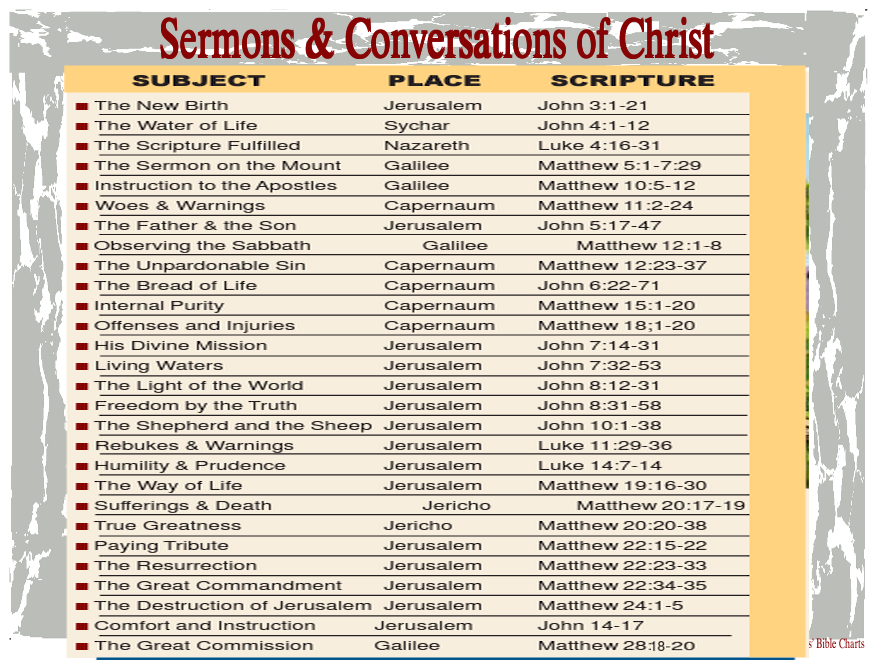
the BREAD of Life

After miraculously feeding 5,000+ people, Jesus crosses the sea of Galilee, and those having eaten, follow Him.

Jesus, knowing what is in the heart of a person said, “Verily, verily, I say unto you, Ye seek me, not because ye saw the miracles, but because ye did eat of the loaves, and were filled. Labour not for the meat which perisheth, but for that meat which endureth unto everlasting life, which the Son of man shall give unto you: for him hath God the Father sealed.” (John 6:26-27)

He then preaches to them where he says, “I am the living bread which came down from heaven: if any man eat of this bread, he shall live for ever: and the bread that I will give is my flesh, which I will give for the life of the world.” (John 3:51)

Those hearing this statement were confused, so too many today. How are we to understand this statement about Jesus being the BREAD of life and the necessity of eating it? This is a figurative statement with a major lesson behind it. Here are 5 clues to help us understand its meaning and how to comply.

The first clue, Jesus said in verse 35, “I am the bread of life: he that cometh to me shall never hunger; and he that believeth on me shall never thirst.” Two things are discovered; 1) whoever is to have the blessing of the Bread of Life must come to Him, and 2) they must BELIEVE on Him. In this same book of John, we learn that BELIEF comes from reading about Him. “But these are written, that ye might believe that Jesus is the Christ, the Son of God; and that believing ye might have life through his name.” (John 20:31; cf. Rom 10:17) So, the first clue teaches us that to eat His flesh is a figure for reading His word.

Next, Jesus continues by comparing Himself to the manna that came down from heaven (6:31-34). He then says, “For I came down from heaven, not to do mine own will, but the will of him that sent me. And this is the Father’s will which hath sent me, that of all which he hath given me I should lose nothing, but should raise it up again at the last day.” (38-39). From this we learn that He, as the Bread of Life, came down from heaven to RAISE up certain people. The Bread of Life is related to being RAISED up to heaven.

Related to this is the next clue found in verse 40. “And this is the will of him that sent me, that every one which seeth the Son, and believeth on him, may have everlasting life: and I will raise him up at the last day.” (47,54) Speaking again about ‘belief,’ Jesus relates the raising up to those same people having EVERLASTING LIFE. Remember, Belief comes from reading about Jesus.

The fourth clue is found in verse 62. Many of the disciples began to murmur, wondering who could hear it. In response Jesus said, “What and if ye shall see the Son of man ascend up where he was before?” It’s interesting that He now speaks of ASCENDING into heaven after telling them He came down. This Bread of Life came down, like the manna, but this Bread will ASCEND back into heaven. In our time, we know what happens later. Jesus will ASCEND into heaven, but not before instructing the Apostles in Matt 28:19-20, where we read; “Go ye therefore, and teach all nations, baptizing them in the name of the Father, and of the Son, and of the Holy Ghost: Teaching them to observe all things whatsoever I have commanded you: and, lo, I am with you alway, even unto the end of the world.” (Matt 28:19-20). Once again, we see the repeated theme of teaching, learning, and obeying.

The commentary of scripture is telling us that the eating of the Bread of Life is related to learning, reading, and obeying the instructions from Jesus. In John 1 He is also called The Word.

However, some of the DISCIPLES turned. “From that time many of his disciples went back, and walked no more with him. The last clue is found in Peter’s statement. “Then said Jesus unto the twelve, Will ye also go away? Then Simon Peter answered him, Lord, to whom shall we go? thou hast the words of eternal life.” (John 6:66-68)

While they may not have fully appreciated the depth of Jesus’ words, Peter seems to recognize something. Eternal Life is related to the teaching of Jesus. He would fully understand later; “Howbeit when he, the Spirit of truth, is come, he will guide you into all truth:” (John 16:13). So, being a DISCIPLE, (a learner, i.e. pupil), is our fifth clue. It’s not enough to just believe, we must do.

Eating His flesh and drinking His blood is not literal. Neither is it related to the Lord’s Supper, which is not literal either. What it means is to be a Hearing, believing, obedient follower of Christ.

— spencer

Spencer is an evangelist for the Franklin & Juniper St church of Christ in Borger Texas. If you live in the Borger area and would like a personal bible study, please reach out & let us know how we can help you know more of God’s word.