Evidence for our Faith: The Historical Reality of the Crucifixion

The crucifixion of Jesus Christ stands as one of the most pivotal events in human history, yet its reality is occasionally questioned. However, a careful analysis of historical evidence, both biblical and secular, reveals compelling and logical arguments supporting its occurrence. Far from being a mere theological construct, the crucifixion aligns with the historical context of Roman governance, is corroborated by non-Christian sources, and is consistently detailed in early Christian writings.

First, the Roman practice of crucifixion provides a strong foundation for its historical plausibility. Crucifixion was a well-documented method of execution in the Roman Empire, reserved for slaves, rebels, and those deemed threats to imperial authority. Historian Tacitus, in his Annals (15.44), references the execution of Jesus under Pontius Pilate during Tiberius’ reign, aligning with the biblical timeline. The Gospel of Matthew (27:31-37) describes Jesus’ crucifixion in detail, including Roman soldiers, a cross, and a public spectacle, elements consistent with Roman punitive customs as noted by scholars like Martin Hengel in Crucifixion in the Ancient World. This convergence of Roman practice and biblical narrative anchors the event in historical reality.

Second, multiple independent sources outside the Bible affirm the crucifixion. Alongside Tacitus, Jewish historian Josephus, in Antiquities of the Jews (18.3.3), mentions Jesus’ death by crucifixion, though some debate the text’s authenticity due to later Christian edits. Even skeptical scholars, such as Bart Ehrman in Did Jesus Exist?, concede that the core reference to Jesus’ execution is likely genuine. Additionally, the Roman satirist Lucian, in The Death of Peregrinus (circa 165 CE), mocks Christians for worshiping a “crucified sage,” indicating that Jesus’ death was widely known beyond Christian circles. These secular testimonies provide external validation of the biblical accounts in Mark 15:24-32 and John 19:16-18.

Third, the coherence and early attestation of the New Testament writings bolster the argument. The Gospels (Matthew, Mark, Luke, and John) were composed within decades of Jesus’ life. Paul’s letters, such as 1 Corinthians 15:3-4 (written circa 55 CE), affirm the crucifixion as a foundational belief among early Christians, predating the Gospels. This rapid documentation, combined with the lack of contemporary refutations from Jesus’ opponents, suggests the event was an accepted fact. As historian N.T. Wright argues in The Resurrection of the Son of God, the crucifixion’s prominence in such early texts reflects a historical memory too vivid to dismiss.

Critics might argue that the accounts are biased or mythologized, yet the consistency across sources, the embarrassment of a crucified messiah (contrary to Jewish expectations, as in Deuteronomy 21:23), and the absence of alternative narratives strengthen the case. The crucifixion’s historical reality emerges not from blind faith but from a convergence of evidence that withstands scrutiny.

In the end, the crucifixion of Jesus is not a fable spun by devotees but a stark historical event etched into the annals of time. Its truth pierces through centuries, demanding we confront its weight.

Agape,

Evidence for our Faith: The Historical Reality of the Crucifixion

The crucifixion of Jesus Christ stands as one of the most pivotal events in human history, yet its reality is occasionally questioned. However, a careful analysis of historical evidence, both biblical and secular, reveals compelling and logical arguments supporting its occurrence. Far from being a mere theological construct, the crucifixion aligns with the historical context of Roman governance, is corroborated by non-Christian sources, and is consistently detailed in early Christian writings.

First, the Roman practice of crucifixion provides a strong foundation for its historical plausibility. Crucifixion was a well-documented method of execution in the Roman Empire, reserved for slaves, rebels, and those deemed threats to imperial authority. Historian Tacitus, in his Annals (15.44), references the execution of Jesus under Pontius Pilate during Tiberius’ reign, aligning with the biblical timeline. The Gospel of Matthew (27:31-37) describes Jesus’ crucifixion in detail, including Roman soldiers, a cross, and a public spectacle, elements consistent with Roman punitive customs as noted by scholars like Martin Hengel in Crucifixion in the Ancient World. This convergence of Roman practice and biblical narrative anchors the event in historical reality.

Second, multiple independent sources outside the Bible affirm the crucifixion. Alongside Tacitus, Jewish historian Josephus, in Antiquities of the Jews (18.3.3), mentions Jesus’ death by crucifixion, though some debate the text’s authenticity due to later Christian edits. Even skeptical scholars, such as Bart Ehrman in Did Jesus Exist?, concede that the core reference to Jesus’ execution is likely genuine. Additionally, the Roman satirist Lucian, in The Death of Peregrinus (circa 165 CE), mocks Christians for worshiping a “crucified sage,” indicating that Jesus’ death was widely known beyond Christian circles. These secular testimonies provide external validation of the biblical accounts in Mark 15:24-32 and John 19:16-18.

Third, the coherence and early attestation of the New Testament writings bolster the argument. The Gospels (Matthew, Mark, Luke, and John) were composed within decades of Jesus’ life. Paul’s letters, such as 1 Corinthians 15:3-4 (written circa 55 CE), affirm the crucifixion as a foundational belief among early Christians, predating the Gospels. This rapid documentation, combined with the lack of contemporary refutations from Jesus’ opponents, suggests the event was an accepted fact. As historian N.T. Wright argues in The Resurrection of the Son of God, the crucifixion’s prominence in such early texts reflects a historical memory too vivid to dismiss.

Critics might argue that the accounts are biased or mythologized, yet the consistency across sources, the embarrassment of a crucified messiah (contrary to Jewish expectations, as in Deuteronomy 21:23), and the absence of alternative narratives strengthen the case. The crucifixion’s historical reality emerges not from blind faith but from a convergence of evidence that withstands scrutiny.

In the end, the crucifixion of Jesus is not a fable spun by devotees but a stark historical event etched into the annals of time. Its truth pierces through centuries, demanding we confront its weight.

Agape,
Evidence for our Faith: The Human Eye

The Human Eye

The human eye is one of the most intricate and sophisticated organs in the body, often cited as evidence of intelligent design. Its complexity and functionality defy random chance, pointing instead to purposeful creation. The eye’s ability to perceive light, distinguish colors, and adapt to varying conditions showcases an engineering marvel that naturalistic evolutionary processes struggle to explain.

The eye operates as an integrated system, relying on the coordinated function of numerous components. These include the cornea, lens, retina, optic nerve, and a network of supporting cells and tissues. The retina, for example, contains millions of photoreceptor cells—rods and cones—that convert light into electrical signals. These signals are then processed by the brain, enabling us to perceive the world in vivid detail. The cones are responsible for color vision, while rods excel in low-light conditions, allowing us to adapt to different environments.

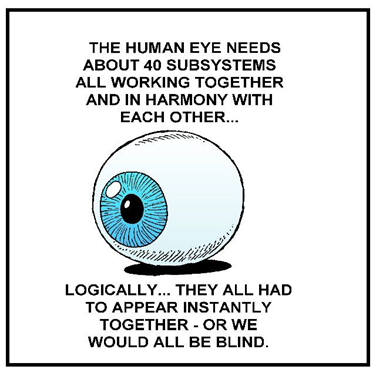
A hallmark of the eye’s design is its irreducible complexity. Each part of the eye depends on the others to function properly. For instance, the lens focuses light onto the retina, which converts the light into signals transmitted by the optic nerve to the brain. If any of these components were absent or incomplete, the eye would be nonfunctional. This interdependence challenges the notion of gradual evolution, as intermediate stages would provide no survival advantage.

Darwin himself acknowledged this difficulty, writing in On the Origin of Species: “To suppose that the eye, with all its inimitable contrivances… could have been formed by natural selection, seems, I freely confess, absurd in the highest degree.” (Charles Darwin, On the Origin of Species.)

Biblically, the eye’s intricacy reflects God’s intentional design. Psalm 94:9 asks, “He that planted the ear, shall he not hear? He that formed the eye, shall he not see?” This rhetorical question emphasizes that the Creator, who designed the human eye, possesses perfect knowledge and wisdom. The complexity of the eye aligns with this biblical perspective, affirming a purposeful Designer.

Scientific attempts to explain the evolution of the eye, such as the idea of incremental improvements through natural selection, fail to account for the precise coordination required for its functionality. Mutations alone cannot produce the tightly integrated system observed in the human eye, further supporting the argument for intelligent design.

The human eye stands as a testament to the existence of a Creator. Its complexity, irreducible nature, and unparalleled functionality defy naturalistic explanations, pointing instead to purposeful design. As Romans 1:20 declares, “For the invisible things of him from the creation of the world are clearly seen, being understood by the things that are made.” The human eye, a marvel of engineering, is a clear manifestation of God’s creative power and wisdom.

Agape,

Spencer

Evidence for our faith: the problem of beauty

The existence of beauty in the world presents a profound question: why does beauty exist at all, and why are humans uniquely capable of perceiving and appreciating it? From awe-inspiring sunsets to masterful works of art, beauty seems unnecessary for survival, challenging purely naturalistic explanations and pointing to a Creator who values aesthetics.

  1. Beauty in Nature
    Nature abounds with intricate and breathtaking beauty. The symmetry of snowflakes, the vibrant colors of a coral reef, and the majesty of mountain ranges go far beyond what is required for survival. Evolutionary theory might explain functional traits aiding survival and reproduction, but beauty often serves no such purpose. For example, the iridescence of a butterfly’s wing or the intricate design of a seashell does not directly contribute to the organism’s fitness. These examples suggest an artist behind the canvas of creation.
  2. The Human Appreciation of Beauty
    Human beings uniquely recognize and create beauty. Unlike animals, which may engage in utilitarian behaviors related to survival, humans produce art, music, and poetry with no direct survival benefit. Neuroscientists have identified regions of the brain that respond to beauty, regardless of its form—visual, auditory, or conceptual. This capacity for aesthetic appreciation suggests that humans are made in the image of a Creator who delights in beauty. The Bible affirms this in Genesis 1:27, where it states, “God created man in his own image.”
  3. Universality of Beauty
    Across cultures and times, humans have consistently found certain patterns, colors, and sounds beautiful. The golden ratio, found in natural phenomena and human art, is a prime example. This universality suggests an objective standard of beauty woven into the fabric of creation. Ecclesiastes 3:11 notes, “He hath made every thing beautiful in his time,” affirming that beauty reflects the order and intention of God.
  4. Beauty and Purpose
    If the universe were purely a product of random chance, beauty would be an inexplicable anomaly. However, the Bible reveals that creation declares the glory of God: “The heavens declare the glory of God; and the firmament sheweth his handywork” (Psalm 19:1). Beauty serves a purpose in pointing humanity to its Creator, inspiring wonder and gratitude.

Conclusion
The existence and appreciation of beauty challenge naturalistic explanations and align with the biblical worldview of a Creator who delights in aesthetics. Beauty is not accidental but purposeful, reflecting God’s nature and inviting us to seek Him. As Romans 1:20 states, “For the invisible things of him from the creation of the world are clearly seen, being understood by the things that are made.” Beauty, in all its forms, is a testament to the divine Artist behind the universe.

Sources:
• D’Souza, D. What’s So Great About Christianity?
• Lennox, J. God’s Undertaker: Has Science Buried God?
• Genesis 1:27, Psalm 19:1, Ecclesiastes 3:11, Romans 1:20 (KJV).

Agape,
Spencer

Evidence for our Faith, the Flood

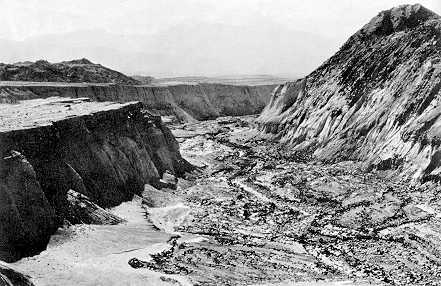
RAPID EROSION AT MOUNT ST. HELENS

Scientific Evidence for the Global Flood

The biblical account of a global flood is detailed in Genesis 6–9, describing Noah’s ark, the catastrophic deluge, and the repopulation of the earth. This narrative has parallels in ancient cultures worldwide, suggesting a shared memory of a catastrophic event. Scientific evidence also lends credibility to this account, providing compelling data that aligns with the possibility of a global flood.

Sedimentary Layers and Fossil Evidence

Sedimentary rock layers, found across the earth, contain fossils of marine and land organisms, often in unexpected locations. For instance, marine fossils have been discovered atop the Himalayas and other high-altitude regions. This suggests that these areas were once submerged under water. Rapid burial of organisms during a massive flood could explain the fossilization of soft-bodied creatures and the preservation of delicate features, such as jellyfish imprints, which would decay under normal conditions.

Polystrate Fossils

Polystrate fossils, or fossils that extend vertically through multiple sedimentary layers, challenge the standard geological timeline that attributes these layers to slow accumulation over millions of years. A rapid deposition of sediment, such as during a global flood, provides a more plausible explanation for how these fossils formed without significant decay.

Large-Scale Erosion and Canyon Formation

The formation of canyons, such as the Grand Canyon, shows evidence of rapid water erosion rather than slow geological processes. Experiments following events like the eruption of Mount St. Helens in 1980 showed how massive volumes of water can carve canyons in a short period, mirroring what a global flood might accomplish on a larger scale.

Flood Legends Across Cultures

Over 200 flood legends exist among ancient cultures worldwide, including those of the Sumerians, Babylonians, and Native Americans. Many of these accounts include a large vessel, a remnant of humanity and animals, and a divine reason for the flood. Such widespread narratives suggest a historical basis for the biblical account of Noah’s flood.

Biblical Consistency with Science

Genesis describes “the fountains of the great deep” breaking open and “the windows of heaven” releasing water (Genesis 7:11). Modern geology acknowledges subterranean water reserves and their role in catastrophic events. Furthermore, the ark’s dimensions (Genesis 6:15) align with the proportions needed for stability and capacity, as confirmed by naval architects.

Conclusion

While interpretations of evidence vary, the sedimentary layers, polystrate fossils, rapid erosion patterns, and global flood legends align with the Genesis narrative. These findings challenge the notion of slow geological processes and suggest that a catastrophic event, consistent with the biblical flood, is plausible.

Agape,

Spencer

Sources:

Morris, J. “The Global Flood.” Institute for Creation Research.

Snelling, A. “Flood Evidences.” Answers in Genesis.

Genesis 6–9, KJV.