Evidence for our Faith: The Unique Sacrifice of Christ

People from all over the world, in different cultures and religions, have practiced some form of sacrifice. Whether it was to please a god, seek forgiveness, or keep some kind of cosmic balance, it’s something humanity has been doing for thousands of years. But when we look at Jesus’ death on the cross, we see something that really stands out from the rest.

What makes it so different? Well, there are three big reasons: it was intentional, it was for everyone, and it was once and for all.

One of the most powerful things about Jesus’ death is that He wasn’t forced into it. In John 10:17-18, He says, “I lay down my life… No one takes it from me, but I lay it down of my own accord.” That’s huge. He didn’t get caught in the wrong place at the wrong time or die just for the sake of being a hero. He chose to die for a purpose.

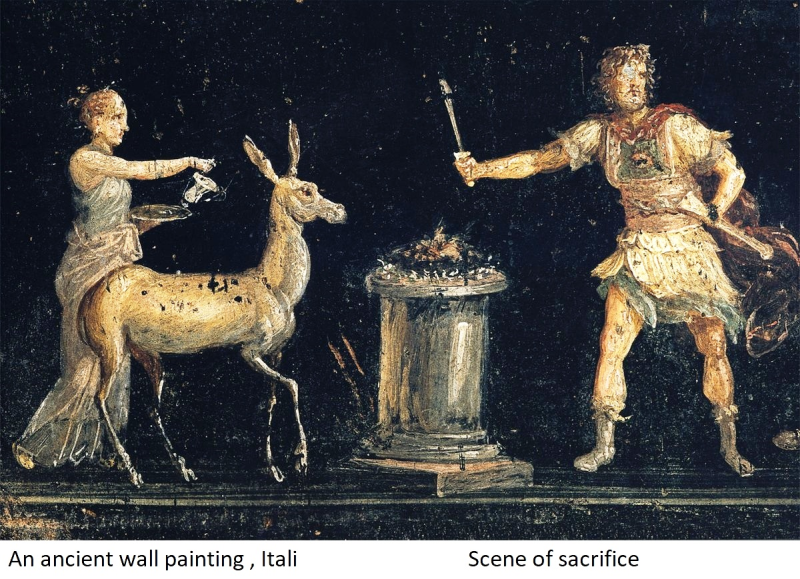
Now, other traditions talk about noble deaths too. Think of Socrates, the Greek philosopher who drank poison rather than run away from what he believed in (Plato, Apology). That’s admirable, but it was more about personal honor. Similarly, in Hinduism, animal sacrifices in Vedic rituals (Rigveda, 10.91) aim to sustain cosmic order, not to personally bridge a gap between humanity and the divine. Jesus’ death, on the other hand, was meant to bring people back to God. He wasn’t just a martyr, He was both the priest and the sacrifice.

Another thing that makes Jesus’ sacrifice unique is that it wasn’t limited to just one group of people. Hebrews 10:10 says, “We have been made holy through the sacrifice of the body of Jesus Christ once for all.” That means it wasn’t just for the Jews, or for a certain tribe, or people from a certain time, it was for all of us.

Other religions had sacrifices too, but they were often done just for a specific community or to honor a local god. For example, the ancient Israelites had the Day of Atonement once a year, and only the high priest could do it, for Israel. And in some cultures like the Aztecs, sacrifices were made to specific gods in hopes of things like rain or victory in battle (Florentine Codex, Book 2). But Jesus’ sacrifice reached across time, culture, and race. It was global.

Most ancient sacrifices had to be repeated year after year, or even more often. It was never-ending. But Jesus’ death was different. Hebrews 9:26 says He “appeared once for all… to do away with sin by the sacrifice of himself.” That means it was complete. Done. No do-overs needed.

This stands in stark contrast to the cyclical sacrifices of ancient pagan religions, such as Rome’s suovetaurilia (Livy, History of Rome, 1.7), or even Buddhism’s karmic atonements, which rely on ongoing personal effort rather than a singular, completed act.

When you step back and look at the big picture, Jesus’ sacrifice isn’t just a church teaching, it’s something totally unique in all of history. Religious scholar Mircea Eliade, who studied sacrifice across many cultures, found sacrifice everywhere, but nothing quite like what Jesus did.

He wasn’t just another teacher or martyr. He was God in the flesh, choosing to give His life, for everyone, forever. And that’s what makes His sacrifice so different, and so deeply personal for each of us.

Agape,
Evidence for our faith: Scientific Discoveries

Scientific Insights in the Bible Before Their Discovery

The Bible, often seen as a spiritual guide, harbors scientific insights that predate their modern discovery, hinting at a wisdom beyond its ancient writers. While not a scientific treatise, its casual mentions of natural phenomena (later validated by research) present a compelling case for its inspired nature. From lightning’s path to Earth’s form, these glimpses into the physical world challenge assumptions of a purely primitive text.

One remarkable example is the Bible’s reference to lightning’s path. Job 28:26 states, “When He made a law for the rain and a path for the thunderstorm,” while Job 38:25 asks, “Who has divided a channel for the overflowing water, or a path for the lightning of thunder?” Written around 2000 BC, these verses suggest lightning follows a guided route, a concept unknown to ancient meteorology. Not until the 1960s, with advancements in high-speed photography and electrical studies, did scientists like Martin Uman confirm that lightning indeed traces a predictable plasma channel. This discovery, detailed in The Lightning Discharge (1987), aligns with Job’s imagery, predating it by nearly 4,000 years. This example is absolutely compelling; it’s a precise, testable phenomenon described millennia before the tools existed to verify it, making it a standout among biblical insights.

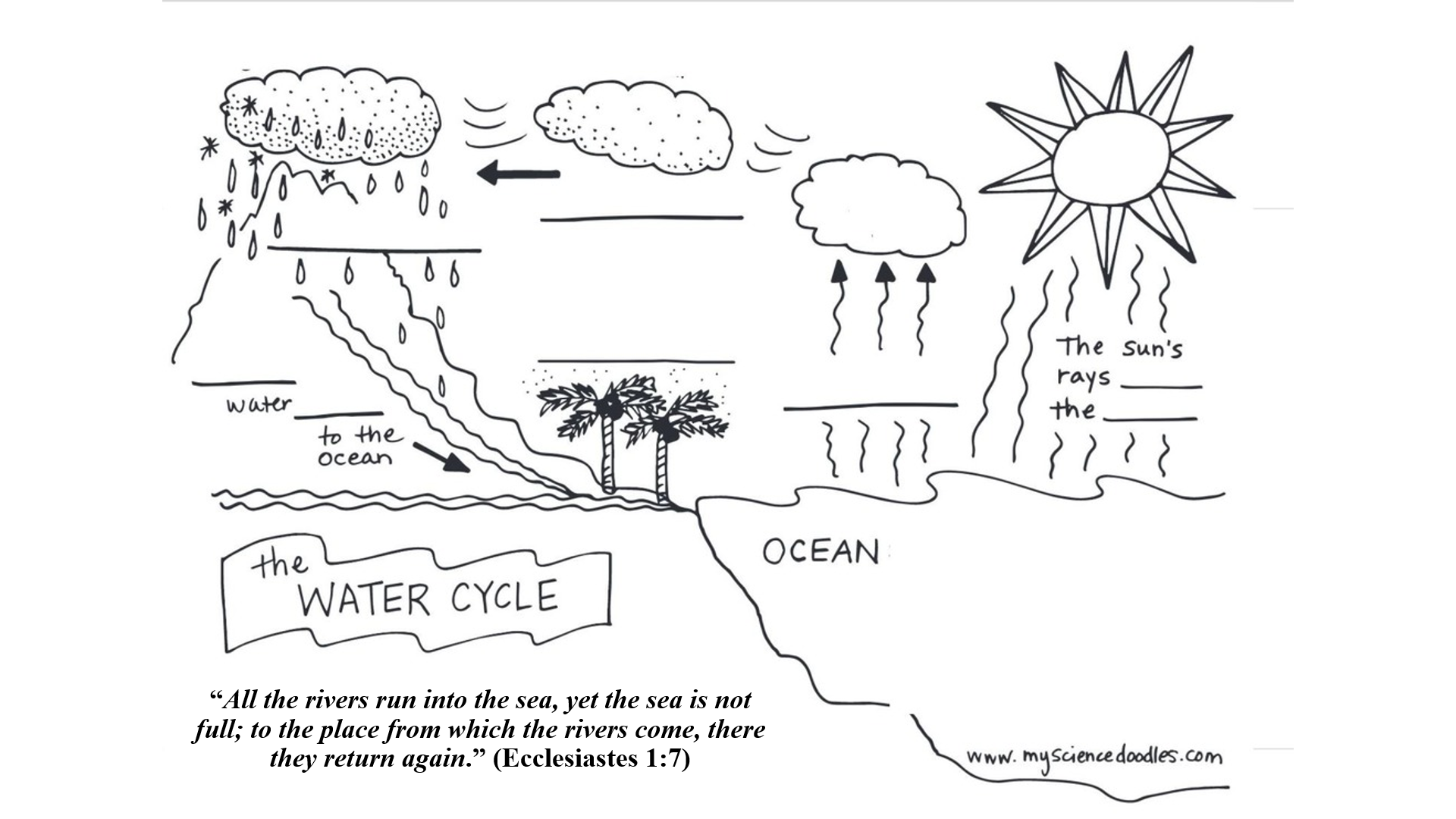
The hydrologic cycle also emerges in Scripture long before its scientific mapping. Ecclesiastes 1:7 observes, “All the rivers run into the sea, yet the sea is not full; to the place from which the rivers come, there they return again.” This encapsulates evaporation and precipitation, a process not formalized until Bernard Palissy’s 16th-century work. Job 36:27-28 reinforces this: “He draws up the drops of water, which distill as rain from the mist,” revealing an understanding absent in contemporary cultures.

Biologically, Leviticus 17:11 declares, “For the life of the flesh is in the blood,” a truth central to modern medicine. Penned circa 1400 BC, it precedes William Harvey’s 1628 circulation discovery by over two millennia. Henry Morris, in The Biblical Basis for Modern Science (1984), argues this reflects knowledge beyond ancient observation, tying blood to vitality in a way science later confirmed.

Cosmologically, Job 26:7 asserts, “He hangs the earth on nothing,” portraying Earth as suspended in space—a view not widely accepted until Copernicus. This contrasts with ancient myths of a supported Earth, aligning with modern astronomy’s findings. John W. Montgomery’s Evidence for Faith (1991) notes such insights suggest a source transcending human limits.

These instances don’t prove divinity but defy coincidence, bridging faith and reason.

Agape

Sources:

Morris, Henry M. The Biblical Basis for Modern Science. Baker Books, 1984.

Montgomery, John W. Evidence for Faith. Probe Books, 1991. Uman, Martin A. The Lightning Discharge. Academic Press, 1987.

Evidence for our Faith: The Manuscript Evidence for the Bible’s Preservation

The Manuscript Evidence for the Bible’s Preservation

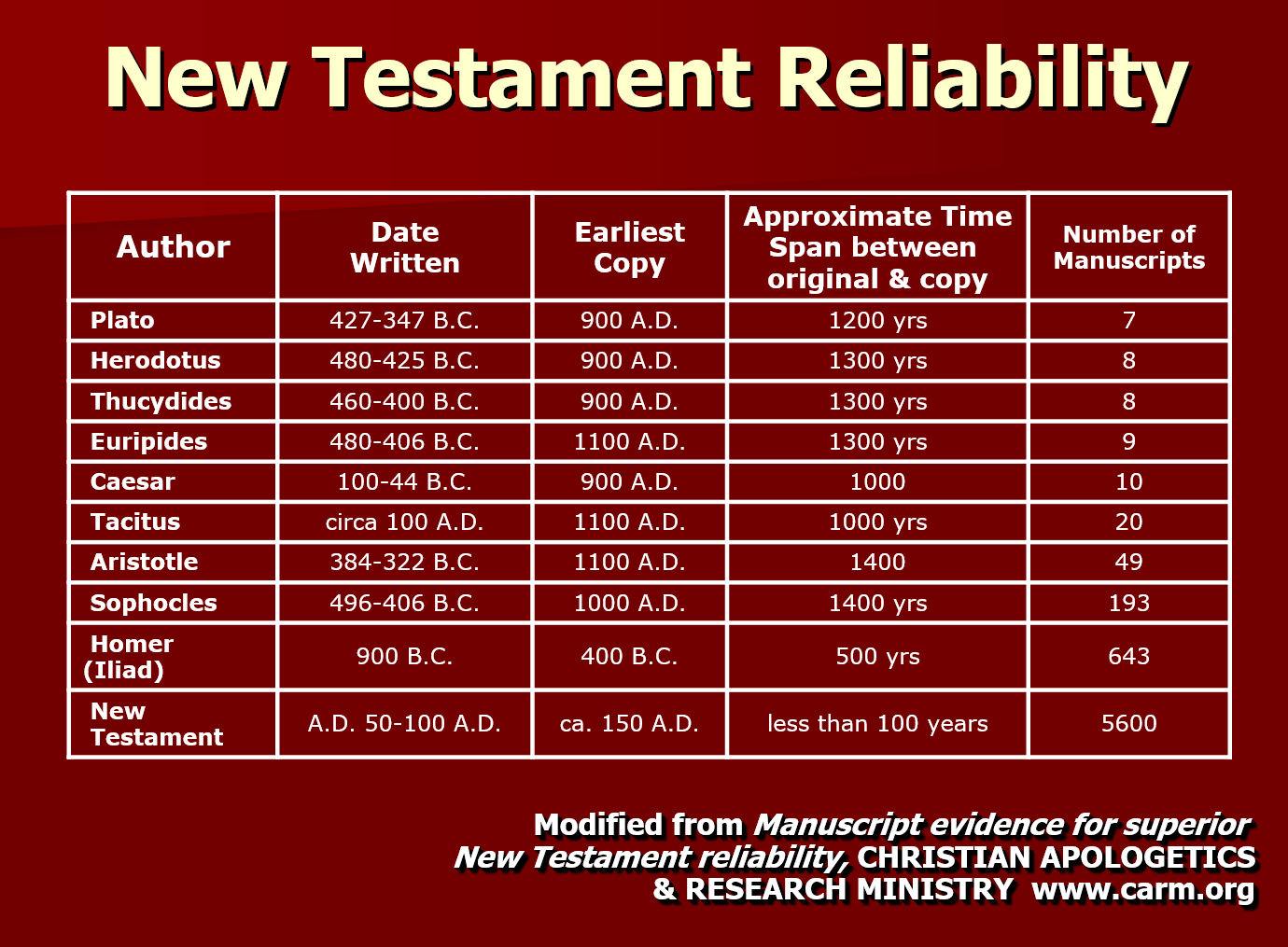
The Bible’s preservation across millennia stands as a testament to its enduring reliability, backed by an unmatched trove of manuscript evidence. With over 5,800 Greek New Testament manuscripts and more than 19,000 in other languages, the Bible dwarfs all other ancient texts in sheer volume. This vast collection, paired with its textual consistency, builds a logical and compelling case that today’s Scriptures faithfully echo their original form.

Take the New Testament: The Rylands Papyrus (P52), dated to around AD 125, preserves John 18:31-33, penned just decades after the Gospel’s origin. Contrast this with Caesar’s Gallic Wars, where the earliest copies lag 900 years behind the original, yet face little skepticism. The Bible’s early manuscripts, hundreds before AD 300, shrink the window for distortion. F.F. Bruce, in The New Testament Documents: Are They Reliable? (1943), asserts this abundance yields a text 99.5% accurate, with variants largely trivial (e.g., spelling in John 1:1).

For the Old Testament, the Dead Sea Scrolls, like the Great Isaiah Scroll (1QIsa^a) from 125 BC, showcase precision. Isaiah 7:14, foretelling a virgin birth, aligns almost perfectly with the 10th-century Masoretic Text across 66 chapters. Minor shifts, like phrasing in Isaiah 40:3, leave meaning intact. Daniel B. Wallace’s Revisiting the Corruption of the New Testament (2011) praises the scribes’ meticulousness, reflecting their obedience to Deuteronomy 4:2’s command against altering God’s Word.

This consistency holds across key doctrines. Christ’s divinity (John 1:14), God’s covenant (Genesis 17:7), and salvation through faith and baptism (Acts 2:38, preserved in Codex Vaticanus, 4th century AD) remain unshaken. In Acts 2:38, Peter’s call to “repent and be baptized… for the remission of your sins” mirrors countless manuscripts, showing no doctrinal drift despite centuries of copying. The volume of texts enables rigorous comparison, a privilege rare among ancient works like Homer’s Iliad (643 copies).

Such preservation stems from deliberate effort, not chance. Jewish scribes counted letters per line, while early Christians, under persecution, shared copies widely—Paul even instructed in 1 Thessalonians 5:27, “I charge you by the Lord that this letter be read to all the brethren,” fostering circulation among congregations. This dedication ensured texts endured, as urged in 2 Timothy 2:15 to handle truth diligently. The Codex Sinaiticus (4th century AD) and later Byzantine manuscripts align closely, bridging continents and eras.

Skeptics may doubt miracles, but the manuscript evidence refutes claims of textual unreliability. From desert caves to medieval scriptoriums, the Bible’s words have weathered time, emerging intact. In a sea of ancient literature, Scripture stands as a rock—its message preserved not by chance, but by a legacy of care that echoes its own call to endure.

Agape

Sources:
Bruce, F.F. The New Testament Documents: Are They Reliable? Eerdmans, 1943.
Wallace, Daniel B. Revisiting the Corruption of the New Testament. Kregel Academic, 2011.

Evidence for our Faith: The Dead Sea Scrolls: Evidence for the Bible’s Reliability

The discovery of the Dead Sea Scrolls in 1947 ranks among the most significant archaeological finds in history, offering a profound window into the reliability of the Bible. Hidden in caves near Qumran, these ancient manuscripts, dating from the 3rd century BC to the 1st century AD, include fragments of nearly every Old Testament book. Their remarkable preservation and textual consistency with later biblical manuscripts provide compelling evidence that the Scriptures we read today faithfully reflect their ancient origins.

One of the most striking finds is the Great Isaiah Scroll (1QIsa^a), a nearly complete copy of the Book of Isaiah dating to around 125 BC. When compared to the Masoretic Text, the standard Hebrew Bible from the 10th century AD, the scroll shows astonishing fidelity. For instance, Isaiah 53, a messianic prophecy central to both Jewish and Christian theology (Isaiah 53:5-6), differs only in minor spelling or stylistic variations—none altering the meaning. This consistency across a millennium demonstrates that scribes meticulously preserved the text, countering claims of rampant corruption over time.

The scrolls also include fragments of Deuteronomy, such as 4QDeut^j, which preserves Deuteronomy 32:43. This passage, part of Moses’ song, aligns closely with the Septuagint (Greek translation) suggesting a textual tradition predating later standardization. Yet, its core message—God’s covenant with Israel—remains intact, as seen in Deuteronomy 32:8-9. Such findings reveal a diversity of ancient texts but affirm their essential unity, reinforcing the Bible’s reliability as a transmitted document.

Beyond specific books, the scrolls reflect a broader cultural and religious context matching biblical accounts. The Community Rule (1QS) and other sectarian writings echo the ascetic lifestyle of groups like the Essenes, resonating with descriptions of John the Baptist’s wilderness ministry (Matthew 3:1-4). While not direct proof of New Testament events, this alignment anchors the biblical world in historical reality, showing that its narratives were not invented centuries later.

Critics once argued that the Bible’s text evolved significantly over time, but the Dead Sea Scrolls challenge that notion. Scholarly analysis, such as Millar Burrows’ The Dead Sea Scrolls (1955), notes that discrepancies are minimal—often mere scribal errors—while Frank Moore Cross’s The Ancient Library of Qumran (1995) highlights the scrolls’ role in tracing textual transmission. These manuscripts predate the Masoretic Text by over a thousand years, yet their agreement is uncanny, suggesting a disciplined copying tradition rooted in reverence for the Word.

The Dead Sea Scrolls do not prove every biblical claim, but they powerfully affirm the Old Testament’s textual integrity. They bridge centuries, showing that what was written in antiquity endures today with remarkable accuracy. In an age of skepticism, these fragile fragments whisper a timeless truth: the Bible’s words have been guarded through the ages, as if etched in stone and sealed in clay.

Agape

Sources:
Burrows, Millar. The Dead Sea Scrolls. Viking Press, 1955.
Cross, Frank Moore. The Ancient Library of Qumran. Sheffield Academic Press, 1995.

Evidence for our faith: conversion of Skeptics

Skeptics Turned Believers

The resurrection of Jesus Christ stands as a pivotal claim of Christianity, and its credibility is bolstered by the transformations of skeptics like Simon Greenleaf and Frank Morison, who, through rigorous examination of evidence, became convinced of its truth. These non-biblical figures—initially doubters—offer compelling, logical arguments rooted in historical and legal scrutiny, making their conclusions a powerful case for the resurrection.

Simon Greenleaf, a 19th-century Harvard law professor and co-founder of its law school, was a skeptic of Christianity. Known for his work A Treatise on the Law of Evidence, Greenleaf applied legal standards to the Gospel accounts. He argued that the testimonies of Matthew, Mark, Luke, and John (e.g., Matthew 28:1-10, John 20:1-18) hold up as credible eyewitness reports. In his book The Testimony of the Evangelists (1874), Greenleaf noted the consistency of the resurrection narratives despite minor variations, a hallmark of authentic, uncoached testimony. He emphasized that the disciples’ willingness to die for their claims, as tradition records (e.g., Peter’s crucifixion), defies the behavior of liars protecting a hoax. Greenleaf concluded that the resurrection met the burden of proof beyond reasonable doubt, converting him from skeptic to believer.

Similarly, Frank Morison, a 20th-century British journalist, set out to disprove the resurrection in his book Who Moved the Stone? (1930). Initially viewing the story as myth, Morison approached it with a detective’s mindset, analyzing historical context and psychological plausibility. He found the empty tomb (Matthew 28:11-15) particularly persuasive—Roman and Jewish authorities, with every incentive to produce Jesus’ body, failed to do so. Morison also grappled with the transformation of the disciples, from despairing cowards (John 20:19) to bold proclaimers (Acts 2:14-36), a shift he deemed inexplicable without a real event. The sudden conversion of Paul, a former persecutor (Acts 9:1-19), further convinced Morison that only a tangible encounter with the risen Christ could account for such a reversal. His investigation led him to faith.

Both men highlight the resurrection’s evidential strength outside biblical bias. Greenleaf’s legal lens underscores the reliability of the Gospel witnesses, while Morison’s historical probe reveals the improbability of alternative explanations (like theft or hallucination) given the cultural and political pressures of the time. The rapid spread of Christianity, despite persecution, aligns with their findings: a fabricated tale wouldn’t inspire such conviction. Paul’s own testimony in 1 Corinthians 15:3-8, listing over 500 witnesses, adds weight, as Greenleaf and Morison noted its early circulation, too soon for legend to distort fact.

These skeptics-turned-believers demonstrate that the resurrection withstands intellectual scrutiny. Their journeys from doubt to conviction rest on evidence (eyewitness accounts, an empty tomb, and transformed lives) that defies dismissal.

Agape

spencer

Evidence for our Faith: The Spread of Christianity Despite Persecution

A Logical Case for Jesus’ Resurrection

The rapid spread of Christianity in its early years, despite relentless persecution, offers a compelling and logical argument for the resurrection of Jesus Christ. In the first century, followers of Jesus faced hostility from both Jewish authorities and the Roman Empire, yet their movement not only survived but flourished. This phenomenon defies natural explanation unless the resurrection, a transformative event, provided the catalyst for such resilience and growth.

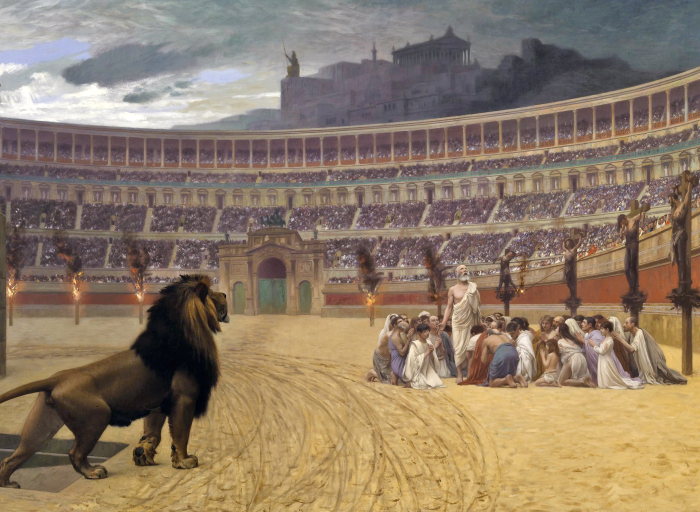
First, consider the historical context. Early Christians endured brutal persecution, including detention, affliction, and execution. The Roman historian Tacitus records that under Emperor Nero, Christians were blamed for the Great Fire of Rome in 64 AD and subjected to horrific deaths (Tacitus, Annals 15.44). Despite this, Christianity grew from a small sect in Judea to a dominant force across the empire within three centuries. Sociologically, movements based on fabricated claims typically collapse under such pressure, as followers abandon a cause that offers no tangible reward. Yet, the unwavering commitment of Jesus’ disciples suggests they witnessed something extraordinary—something worth dying for.

This leads to the second point: the transformation of the disciples. The New Testament describes them as fearful and scattered after Jesus’ crucifixion (John 20:19), yet post-resurrection, they boldly proclaimed His rising, even at the cost of their lives. Peter, who denied Jesus three times (Luke 22:54-62), later preached fearlessly in Jerusalem (Acts 2:14-36). Tradition holds that most disciples faced martyrdom—Peter crucified upside-down, James beheaded—yet none recanted their testimony. Psychologically, people do not die for a known lie. The resurrection, as recorded in all four Gospels (Matthew 28:1-10, Mark 16:1-8, Luke 24:1-12, John 20:1-18), provides a logical explanation: they saw the risen Christ.

Third, the conversion of skeptics like Paul strengthens the case. Initially a persecutor of Christians (Acts 8:1-3), Paul’s dramatic turnaround after encountering the risen Jesus on the road to Damascus (Acts 9:1-19) turned him into the faith’s greatest missionary. His epistles, such as 1 Corinthians 15:3-8, affirm the resurrection as a historical event witnessed by over 500 people. Paul’s shift from enemy to advocate, risking death himself (2 Corinthians 11:23-27), underscores the event’s credibility. A fabricated story would hardly sway a hostile intellectual like Paul without overwhelming evidence.

Finally, the empty tomb, acknowledged even by Jesus’ opponents (Matthew 28:11-15), poses a challenge. If the body remained, producing it would have crushed the movement. Instead, the claim of resurrection fueled Christianity’s expansion, despite every effort to suppress it. The Jewish and Roman authorities, with motive and means to disprove it, could not.

The spread of Christianity under persecution defies logic unless anchored in a real event. The resurrection, attested by transformed lives, historical records, and an empty tomb, emerges as the most reasonable explanation. In a world bent on silencing them, early Christians didn’t just survive—they thrived, because a dead man walked out of His grave.

Agape
Spencer

Sources:
Morris, Henry M. The Biblical Basis for Modern Science. Baker Books, 1984.
Montgomery, John W. Evidence for Faith. Probe Books, 1991.
Uman, Martin A. The Lightning Discharge. Academic Press, 1987.

Evidence for our faith: the Cambrian Explosion

The Cambrian Explosion presents one of the most compelling challenges to evolutionary theory and a powerful argument for sudden creation. This event, characterized by the sudden appearance of diverse and complex animal forms in the fossil record, aligns with the Cosmological Argument, suggesting a Creator’s intervention in the origins of life.

During the Cambrian Explosion, nearly all the major animal phyla appeared abruptly without clear evolutionary precursors. Trilobites, arthropods, mollusks, echinoderms, and many other complex organisms emerged fully formed with distinct body plans. This event contradicts Darwinian expectations of gradual transitions through intermediate forms over long periods. Instead, the fossil evidence supports the idea of sudden creation, where life forms were introduced in a fully functional and diverse state.

One of the most striking examples is the trilobite, which possessed highly complex compound eyes with dozens of lenses. These eyes required precise anatomical and biochemical systems to function, challenging the idea of their gradual evolution. Such sophisticated designs appearing suddenly in the fossil record point toward intelligent design rather than chance processes.

The abruptness of the Cambrian Explosion highlights the inadequacy of naturalistic explanations. Evolutionary models have struggled to account for the lack of transitional fossils leading to these diverse life forms. Attempts to explain this event, such as the “genetic toolkit” hypothesis, fail to address why the genetic information and mechanisms for such diversity appeared so suddenly and simultaneously.

From a biblical perspective, the Cambrian Explosion aligns with the narrative of creation as described in Genesis. Genesis 1:20-21 declares, “And God said, Let the waters bring forth abundantly the moving creature that hath life… And God created great whales, and every living creature that moveth, which the waters brought forth abundantly, after their kind.” This description of life appearing abundantly and fully formed mirrors the pattern observed in the Cambrian Explosion.

The Cambrian Explosion provides compelling evidence for sudden creation, challenging the gradualism central to Darwinian evolution. The abrupt appearance of complex organisms, lacking evolutionary precursors, suggests a Creator who brings forth life in abundance and complexity.

Another theory for the Cambrian explosion held by some creationists interprets it as consistent with the biblical account of a worldwide flood, as described in Genesis 6–9.

Sources:

  • Stephen C. Meyer, Darwin’s Doubt: The Explosive Origin of Animal Life and the Case for Intelligent Design

Agape, Spencer

Evidence for our Faith: Irreducible Complexity

A Mousetrap represents an example of irreducible complexity

The concept of irreducible complexity presents a powerful argument for the existence of a Designer. Coined by biochemist Michael Behe, irreducible complexity refers to biological systems composed of multiple interdependent parts, all of which must function simultaneously for the system to work. Such systems cannot arise through gradual evolutionary processes, as removing even one component renders the system nonfunctional. This hallmark of intentional design points to the existence of an intelligent Creator.

One of the most cited examples of irreducible complexity is the bacterial flagellum, a microscopic rotary motor used by bacteria for propulsion. The flagellum comprises over 40 distinct protein components, including a rotor, stator, drive shaft, bushing, and propeller. Each part is precisely shaped and positioned to interact with the others, enabling the flagellum to rotate at incredible speeds—up to 100,000 revolutions per minute in some species.

The flagellum’s functionality depends on the presence of all its components working together. If even one protein is missing, the entire system fails, offering no advantage to the organism. This contradicts Darwinian evolutionary mechanisms, which propose gradual modifications and natural selection as the means of developing complex structures. As Behe argues in his book Darwin’s Black Box, such irreducible systems could not have evolved step-by-step, as intermediate stages would confer no benefit to survival.

The Bible supports the idea of intentional design in creation. Job 12:7-9 invites us to consider the evidence of God’s hand in the natural world: “But ask now the beasts, and they shall teach thee; and the fowls of the air, and they shall tell thee: Or speak to the earth, and it shall teach thee: and the fishes of the sea shall declare unto thee. Who knoweth not in all these that the hand of the Lord hath wrought this?” The intricacy of the flagellum echoes this truth, revealing the handiwork of a Creator. The bacterial flagellum, a marvel of engineering, stands as evidence of God’s power and wisdom.

Scientifically, attempts to explain the flagellum through evolutionary mechanisms remain inconclusive. Proposals like co-option, which suggest that existing proteins were repurposed for new functions, fail to account for the precise timing, positioning, and coordination required to assemble the flagellum. Such precision implies design, not chance.

Irreducible complexity in systems like the bacterial flagellum provides compelling proof of a Designer. Its intricate structure and functionality defy evolutionary explanations, aligning with biblical declarations of God’s creative work. This undeniable complexity reflects the harmony between science and faith, pointing to the Creator behind the design.

Agape,

Spencer

Evidence for our Faith: DNA

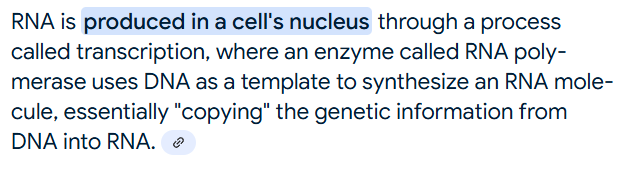
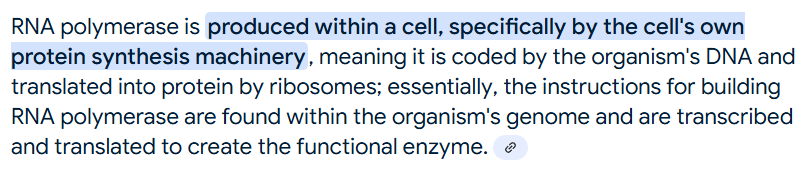
RNA is necessary to produce the proteins, like RNA polymerase, that are required to transcribe RNA from DNA, creating an interdependent system that could not function without all parts existing simultaneously.

Evidence of God in DNA

DNA, deoxyribonucleic acid, serves as the molecular basis of heredity and the blueprint for all living organisms. Within its structure lies an extraordinary amount of information encoded in sequences of nucleotide bases. This informational content directs the development, functioning, and reproduction of living beings, showcasing a complexity that defies random chance.

The intricate information stored in DNA speaks to the concept of intelligent design proposed by the Cosmological Argument. This argument posits that the order and complexity observed in the universe, including biological systems like DNA, imply a purposeful design rather than mere random processes. The information-rich nature of DNA points towards a mind behind its creation—a mind that comprehends and engineers complex systems far beyond human understanding.

Biblically, the narrative supports this idea of intentional design. Psalm 139:14 states, “I praise you, for I am fearfully and wonderfully made. Wonderful are your works; my soul knows it very well.” This verse acknowledges the intricate craftsmanship evident in human beings, echoing the complexity found in DNA. Moreover, Genesis 1:27 affirms that mankind is created in the image of God, implying a deliberate act of creation imbued with purpose and design.

Scientifically, the discovery of DNA’s structure and function has revolutionized our understanding of biology and genetics. Francis Crick and James Watson’s explanation of its double helix structure in 1953 marked a watershed moment in science, revealing the elegance and complexity of this molecule. Since then, advancements in genomic research have uncovered layers of complexity within DNA that continue to astonish scientists.

Moreover, the concept of irreducible complexity, as proposed by biochemist Michael Behe, further bolsters the argument for intelligent design in DNA. Irreducible complexity posits that certain biological systems are composed of multiple intricate parts that must all be present and functioning for the system to work. This challenges the idea of gradual evolution through natural selection alone, suggesting instead a purposeful arrangement of components.

Romans 1:20 declares, “For his invisible attributes, namely, his eternal power and divine nature, have been clearly perceived, ever since the creation of the world, in the things that have been made.” This verse emphasizes that the intricacies of creation, such as DNA, bear witness to God’s existence and creative power.

The study of DNA provides compelling evidence for the Cosmological Argument, pointing towards an intelligent designer behind the complexity of life.

Agape,

Spencer

Evidence for our faith: Ontological Argument

The ontological argument, first articulated by St. Anselm of Canterbury in the 11th century, explores the concept of God as a necessary being whose existence is self-evident through reason. Unlike other arguments that rely on empirical evidence, the ontological argument is a philosophical proof, rooted in the nature of God as “that than which nothing greater can be conceived.” Modern developments in philosophy and science reinforce the logic of this timeless argument.

The Concept of Necessary Existence. The argument begins with the definition of God as the greatest conceivable being. Such a being must exist not only in the mind (as a concept) but also in reality, for existence in reality is greater than existence solely in thought. If God existed only as a concept, then a greater being—one that exists in reality—could be imagined, contradicting the original definition. Thus, God must exist in reality.

This concept aligns with the biblical understanding of God as self-existent and eternal. Exodus 3:14 encapsulates this when God declares, “I AM THAT I AM,” signifying His independent and necessary existence.

Modern Philosophical Insights. Contemporary philosophers like Alvin Plantinga have refined the argument, framing it within modal logic. Plantinga’s version argues that if it is possible for a maximally great being to exist, then such a being exists in some possible world. If it exists in one possible world, its necessary nature means it exists in all possible worlds—including our own.

This formulation strengthens the argument by considering God’s existence as necessary rather than contingent. A necessary being is one that must exist; its non-existence is impossible. This necessity aligns with the biblical portrayal of God as eternal and unchanging (Malachi 3:6).

Scientific Corroboration of a Necessary Cause. While the ontological argument is primarily philosophical, modern science lends indirect support. The universe, with its intricate fine-tuning, suggests a source that exists outside time and space. This aligns with the concept of a necessary being who undergirds all reality. Romans 1:20 reflects this idea: “For the invisible things of him from the creation of the world are clearly seen, being understood by the things that are made.”

Implications of God’s Necessary Existence. If God’s existence is necessary, He is the source of all contingent reality—everything that depends on something else to exist. This explains not only the existence of the universe but also the rationality, order, and purpose evident in creation.

Conclusion. The ontological argument, grounded in reason and supported by scripture, reveals God as the necessary being upon whom all existence depends. As Colossians 1:17 declares, “And he is before all things, and by him all things consist.” This philosophical proof, when coupled with scripture, underscores the truth of God’s eternal and unchanging nature.

Sources:
• Plantinga, A. The Nature of Necessity.
• Craig, W.L. Reasonable Faith: Christian Truth and Apologetics.
• Exodus 3:14, Romans 1:20, Malachi 3:6, Colossians 1:17 (KJV).


Agape,
Spencer