
Responding to PAIN

Responding to Pain with Faith: A Biblical Perspective

Pain is an inevitable part of the human experience, whether it stems from physical suffering, emotional turmoil, or spiritual trials. The Bible offers timeless guidance on how to navigate pain with faith, resilience, and trust in God. Four key principles emerge from Scripture to guide believers in responding to pain: never forsaking God, maintaining integrity, acting on God’s will, and praying without ceasing. These principles, rooted in the Word, provide a framework for enduring suffering while remaining anchored in faith.

First, irrespective of our trials, we ought never forsake God, trusting that He never forsakes His people. Deuteronomy 31:6 declares, “Be strong and courageous. Do not be afraid… for the Lord your God goes with you; he will never leave you nor forsake you.” This promise assures us that God’s presence is constant, even in our darkest moments. Similarly, Hebrews 13:5 reinforces this truth: “…Never will I leave you; never will I forsake you.” When pain threatens to overwhelm, these verses remind us that God is our refuge. Clinging to Him, rather than turning away in bitterness, strengthens our faith and provides hope. Pain may obscure our view of God, but His faithfulness remains unwavering, a steady anchor through life’s storms. God is not the source of our pain, but He can use it for our growth (Rom 8:28).

Second, maintaining integrity in the face of pain is essential. Persecution, betrayal, or injustice can tempt us to retaliate or compromise our values, but Scripture teaches us to maintain a higher standard. Romans 12:17-19 instructs, “Do not repay anyone evil for evil… Do not take revenge, my dear friends, but leave room for God’s wrath.” Likewise, 1 Peter 3:9 urges, “Do not repay evil with evil… but with blessing.” Integrity means reflecting God’s character, even when wronged. By refusing to curse our enemies or seek vengeance, we demonstrate trust in God’s justice and exemplify His love. Proverbs 20:22 echoes this: “Do not say, ‘I’ll pay you back for this wrong!’ Wait for the Lord, and he will avenge you.” Integrity in pain glorifies God and guards our hearts against resentment. Christ could have called 12 legions of angels (Matt 26:53; 1Pet 2:23)

Third, acting on God’s will by doing good is a powerful response to suffering. Pain can lead to self-focus, but Scripture calls us to persevere in righteousness. Galatians 6:9 encourages, “Let us not become weary in doing good, for at the proper time we will reap a harvest if we do not give up.” James 4:17 adds, “If anyone, then, knows the good they ought to do and doesn’t do it, it is sin for them.” Doing good (whether through kindness, service, or forgiveness) aligns us with God’s purposes and transforms pain into opportunities for service. By acting in obedience, we reflect Christ’s example, who endured suffering to accomplish God’s redemptive plan.

Finally, prayer is the lifeline of a believer in pain. 1 Thessalonians 5:17 commands, “Pray continually.” Philippians 4:6 further instructs, “Do not be anxious about anything, but in every situation, by prayer and petition, with thanksgiving, present your requests to God.” Colossians 4:2 adds, “Devote yourselves to prayer, being watchful and thankful.” Prayer connects us to God’s strength, aligns our hearts with His will, and brings peace that surpasses understanding. In pain, persistent prayer becomes a conduit for God’s comfort.

Responding to pain with faith involves trusting God’s presence, upholding integrity, doing good, and praying without ceasing. These biblical principles anchor us in God’s truth, enabling us to endure suffering with hope and purpose. By clinging to Scripture, we find the strength to navigate pain while glorifying God.

agape

Can we know too much Bible? pt1

Can we know too much Bible? 1/4

We need to know enough to be able to speak the SAME things.

Now I beseech you, brethren, by the name of our Lord Jesus Christ, that ye all speak the SAME thing, and that there be no divisions among you; but that ye be perfectly joined together in the SAME mind and in the SAME judgment. (1Cor1:10)

Can you know too much about SALVATION? Are all churches teaching the SAME thing as The Bible? Are we teaching the SAME thing as Jesus.

What did Jesus say about SALVATION?

Matthew 7:24 KJV

Therefore whosoever HEARS these sayings of mine, and doeth them, I will liken him unto a wise man, which built his house upon a rock:

John 8:24 KJV

I said therefore unto you, that ye shall die in your sins: for if ye BELIEVE not that I am he, ye shall die in your sins.

Luke 13:3,5 KJV

I tell you, Nay: but, except ye REPENT, ye shall all likewise perish. [5] I tell you, Nay: but, except ye REPENT, ye shall all likewise perish.

Matthew 10:32-33 KJV

Whosoever therefore shall CONFESS me before men, him will I CONFESS also before my Father which is in heaven. [33] But whosoever shall deny me before men, him will I also deny before my Father which is in heaven.

Mark 16:16 KJV

He that believeth and is BAPTIZED shall be saved; but he that believeth not shall be damned.

It’s water baptism. Notice what the first Christian evangelists taught.

Acts 8:35-36 KJV

Then Philip opened his mouth, and began at the same scripture, and preached unto him JESUS. [36] And as they went on their way, they came unto a certain WATER: and the eunuch said, See, here is WATER; what doth hinder me to be BAPTIZED?

Baptism is a burial in water.

Colossians 2:12 KJV

BURIED with him in BAPTISM, wherein also ye are risen with him through the faith of the operation of God, who hath raised him from the dead.

Matthew 28:20 KJV

Teaching them to OBSERVE ALL THINGS whatsoever I have COMMANDED you: and, lo, I am with you alway, even unto the end of the world. Amen.

Does your church teach the SAME as Jesus about how to be saved? Does it teach the SAME purpose?

Hear, Believe, Repent, Confess, water Baptism, & Faithfulness.

Which can you add, change, or remove and still be speaking the SAME thing as Jesus, Peter, Philip, Paul & the rest of the NT?

Agapa,

Spencer

Take a look at these self-directed bible studies. Let us know what you think.

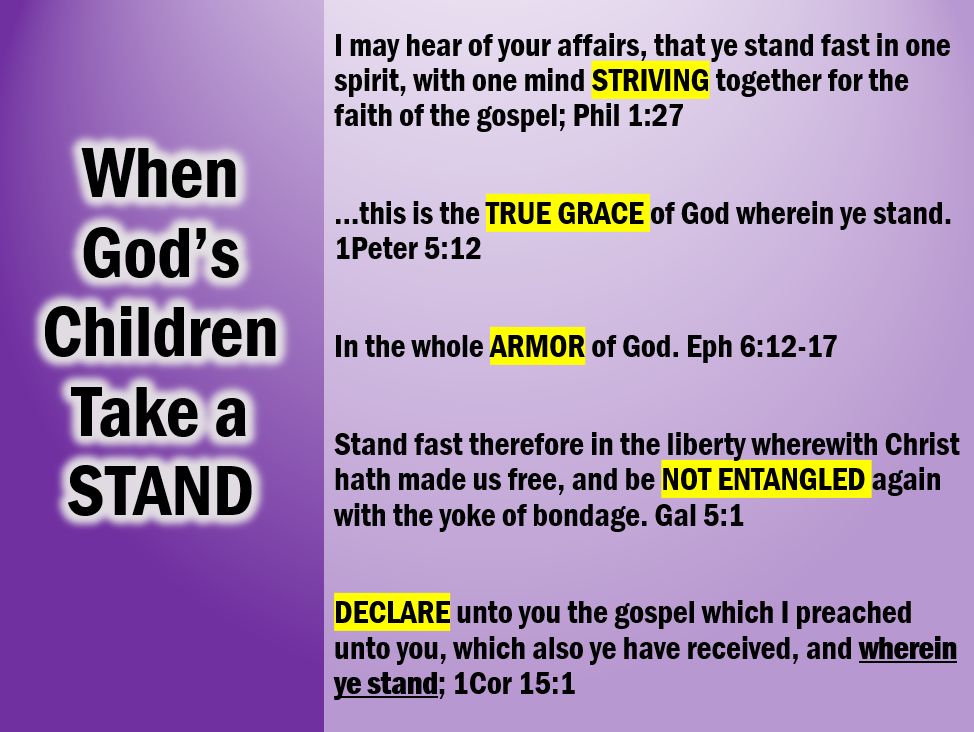
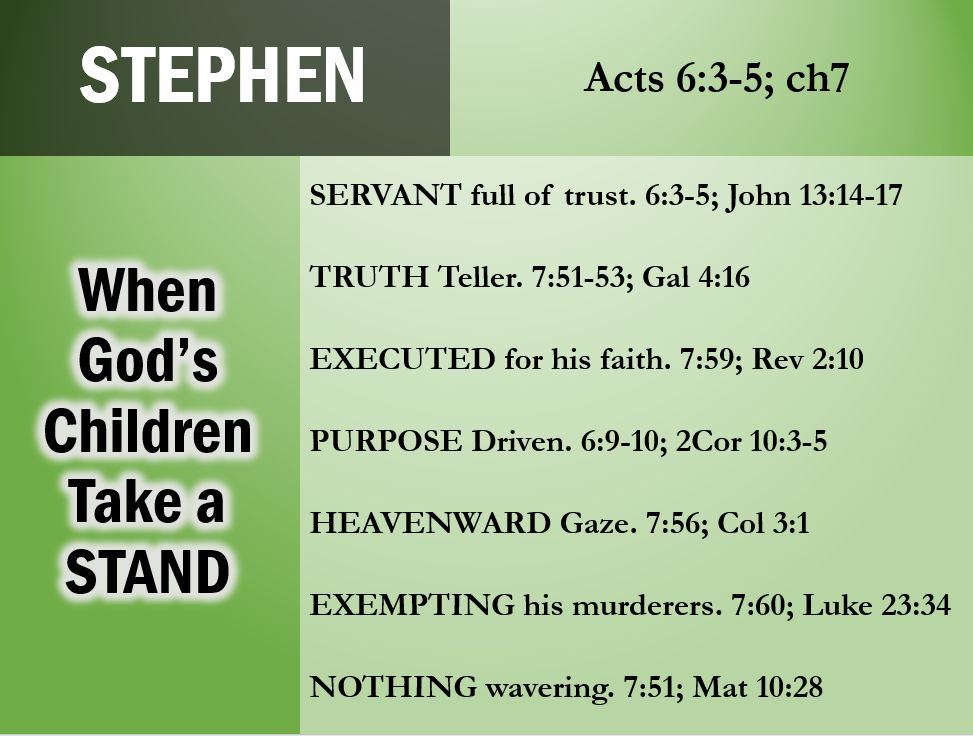
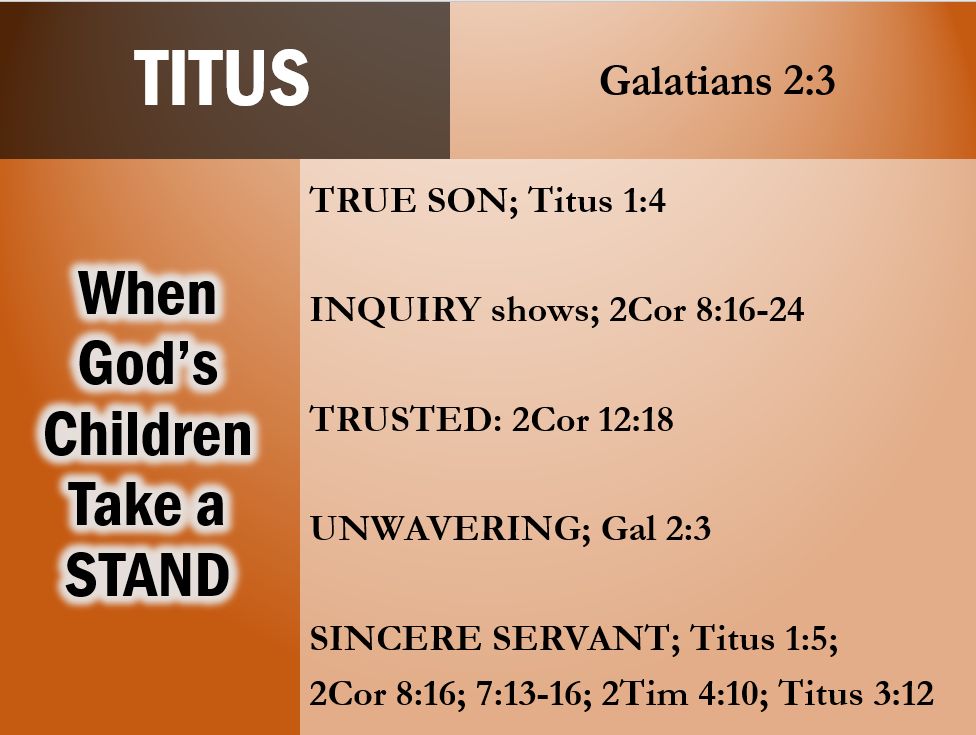
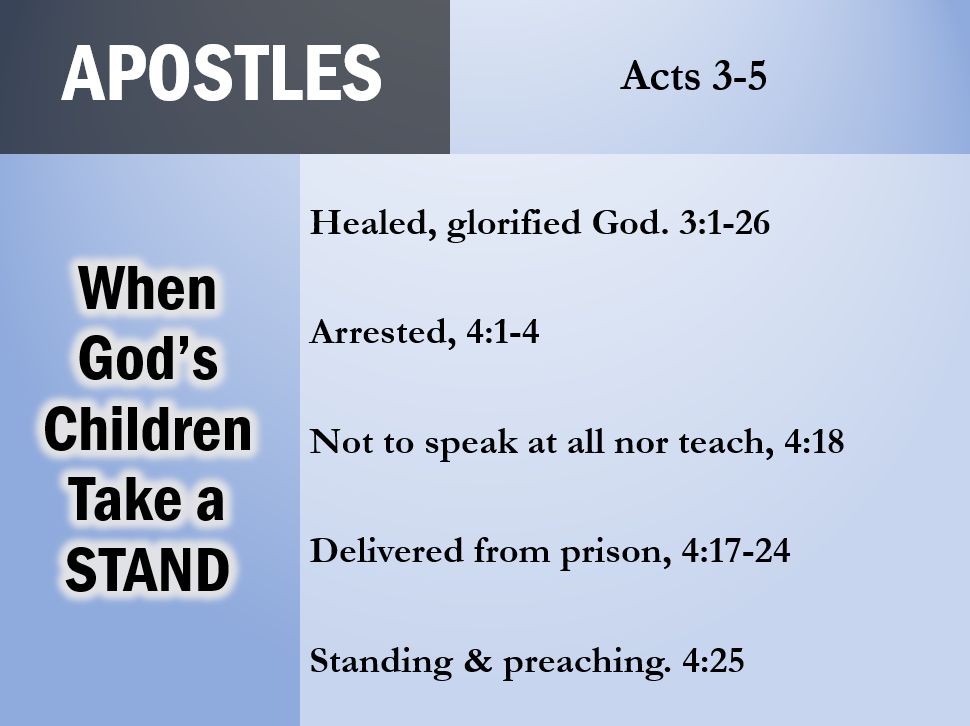
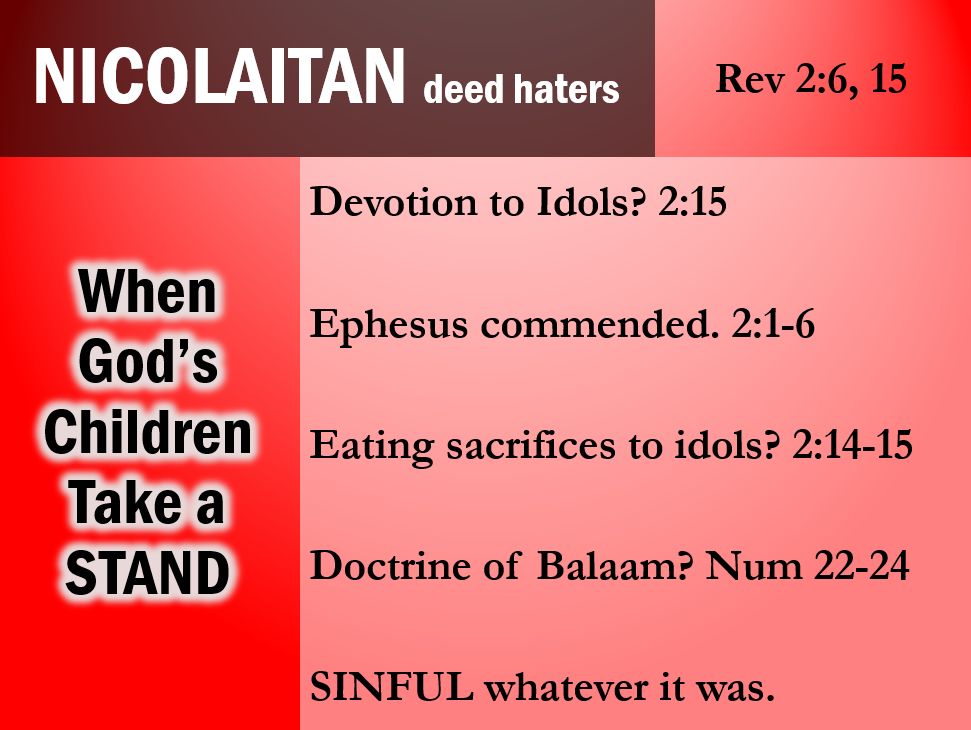
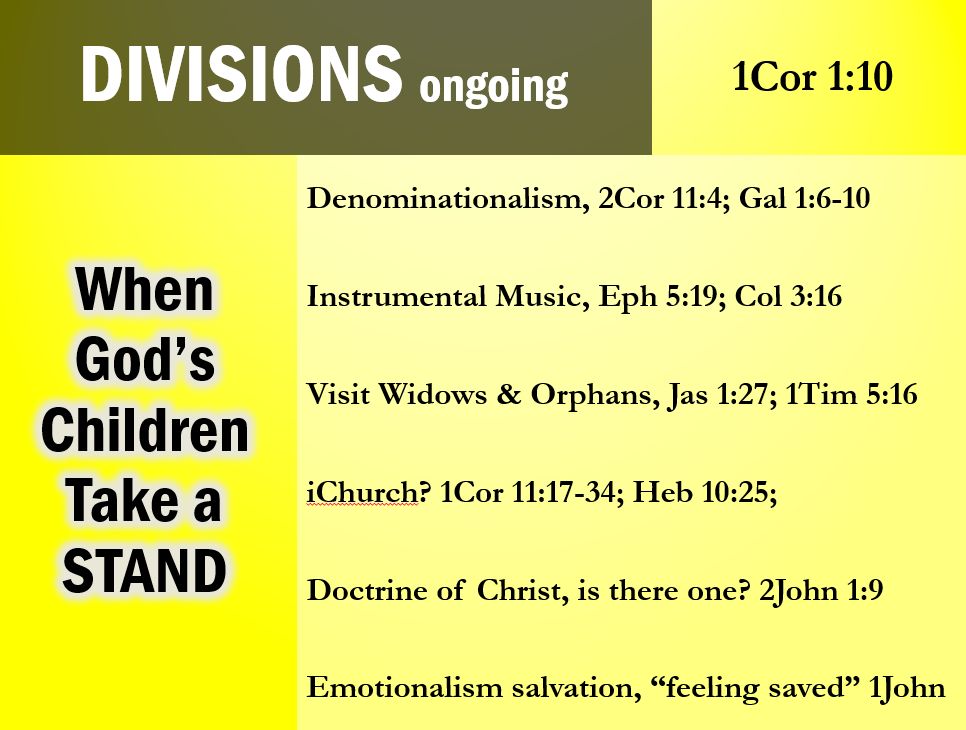
When God’s Children Take a Stand

The language of the bible is clear, we are to take a STAND for the cause of Christ, for the Gospel.

We can and must be KIND…

Col 4:6 Let your speech be alway with grace, seasoned with salt, that ye may know how ye ought to answer every man.

We can and must have LOVE…

1Co 13:1 If I speak with the tongues of men and of angels, but have not love, I am become sounding brass, or a clanging cymbal.

Today, the Christian must STAND…

against SIN. 1Peter 1:16 because it is written, Ye shall be holy; for I am holy.

for the TRUTH. Eph 6:14 Stand therefore, having your loins girt about with truth, and having on the breastplate of righteousness;

in AGAPE Love. Eph 4:15 But speaking the truth in love, may grow up into him in all things, which is the head, even Christ:

NOTHING wavering. Jas 4:8 Draw nigh to God, and he will draw nigh to you. Cleanse your hands, ye sinners; and purify your hearts, ye doubleminded.

Proclaiming the Lord’s DEATH til He come. 1Co 11:26 For as often as ye eat this bread, and drink the cup, ye proclaim the Lord’s death till he come.

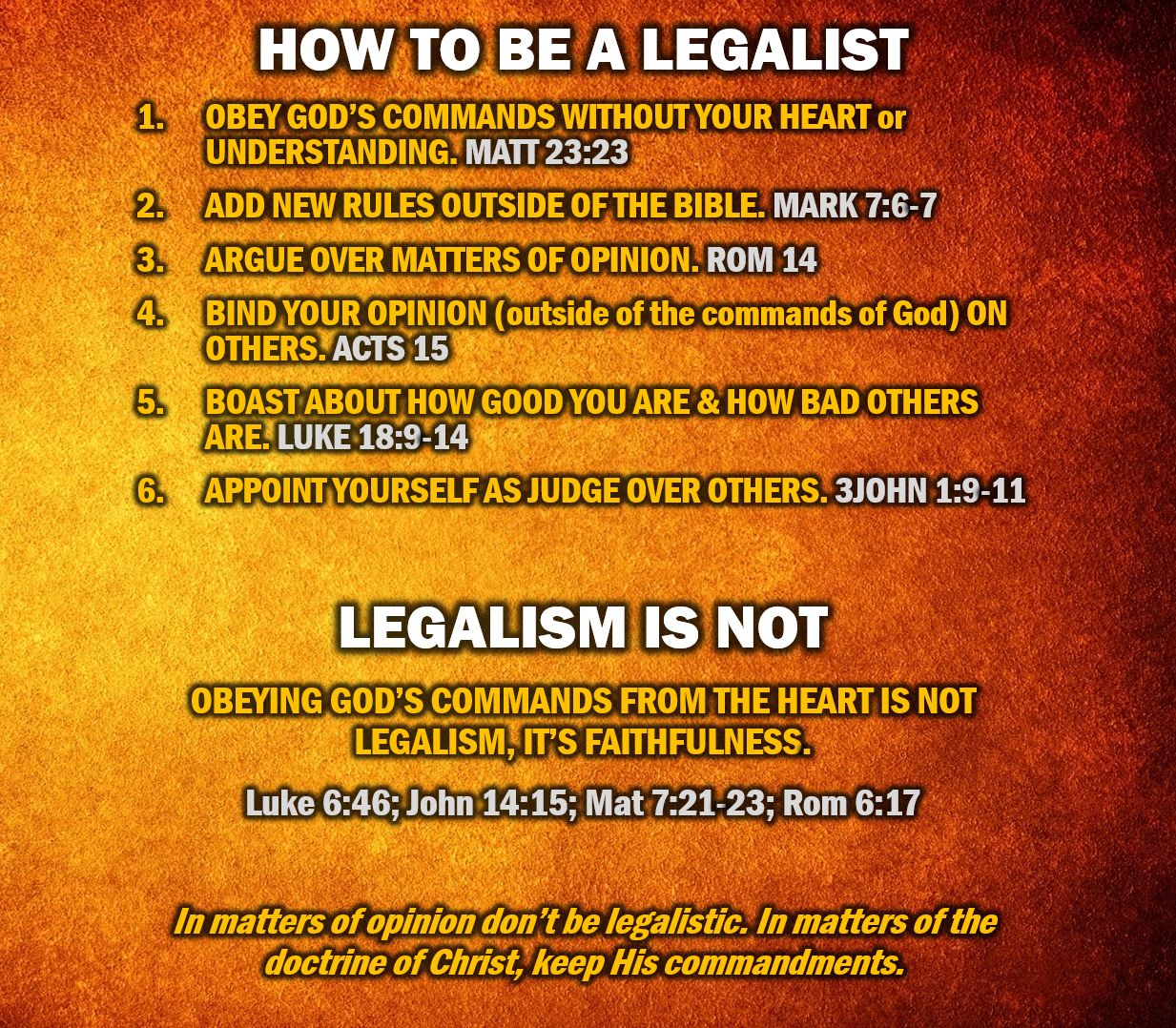
But I’m Not Legalistic About it

Yes, another bulletin on the meaning of ‘LEGALISM’ because it’s the standard argument used by those who refuse to repent.

The discussion goes like this;

  • Believer: Jesus commands us to keep His commandments [Luke 6:46; Mat 7:21-29].
  • Non-Believer: Yeah, but I’m not LEGALISTIC about it.

End of discussion.

To understand their argument as to why they believe that God is giving them license to sin (if not fully, at least partially) let’s look at how the reasoning goes.

THE RATIONALE GOES LIKE THIS:

  • Since nobody’s perfect [1John 1:10],
  • And since God is full of grace & mercy [Heb 4:16],
  • Then God doesn’t expect us to be perfect, So, we don’t have to try. “I’m not going to be LEGALISTIC about it.”

That’s not very good bible study. Paul addressed a similar question in his time. In Romans 6:1 he answers a rhetorical question, “shall we continue in sin that grace may abound?” His answer, “certainly not!” This may be why we have thousands of denominations with a nearly equal number of doctrines about how to live. It’s like they’re saying that since there’s a little room to sin regarding salvation, then we can intentionally be mediocre. That’s fine for unimportant things like dieting or quilting, but not a very good way to handle salvation.

Is GRACE & MERCY license to sin willfully? That’s just another way of saying “I’m not legalistic about it.” God is full of GRACE & He is MERCIFUL, but that’s no license to sin. The accurate way to look at it is that He has provided GRACE & MERCY to an imperfect people. This is the right way to understand Ephesians 2:8-9 and 1John 1:7-10. God sent His Son as a sacrifice for a sinful people that didn’t deserve it [Rom 5:8-10]. We obey the Gospel upon recognition of our need for the atoning blood of Jesus [2Thess 1:8-9; Acts 2:38; Heb 5:9]. Obeying the gospel & keeping His commandments [Mat 28:18-20] is not being legalistic, it’s being faithful.

WHEN NOT TO BE LEGALISTIC

There are 2 chapters in the New Testament that are telling folks not to be legalistic. They are, Romans 14 & 1Cor 8. These are dealing with issues that are NOT MATTERS OF DOCTRINE but matters of OPINION. If that’s what you mean by ‘I’m not going to be legalistic about it’ then we both agree with God and His word. If, however, you aren’t going to be legalistic with the doctrine of Christ, then you’re going to find yourself fighting against God.

“But I’m Not Legalistic About it”

People who say they’re not legalistic about the doctrine of Christ would never say the same thing in other areas of their lives. Below are just a few examples of how ridiculous this sounds.

  • I’m a VEGAN, but I’m not legalistic about it.
  • I love my wife, but I’m not legalistic about it.
  • I always do my job at work, but I’m not legalistic about it.
  • I want a great brain surgeon, but I’m not legalistic about it.
  • I take insulin to keep from dying, but I’m not legalistic about it.
  • I stop at red lights, but I’m not legalistic about it.
  • I watch over my kids when they swim, but I’m not legalistic about it.
  • I’m a bank teller, but I’m not legalistic about it.
  • I’m a judge, but I’m not legalistic about it.
  • I practice food safety at the restaurant I work, but I’m not legalistic about it.
  • I work with the nuclear warheads at Pantex, but I’m not legalistic about it.

So you see, we all can understand that in matters of importance we must stand firm. “Watch, stand fast in the faith, be brave, be strong.” [1Cor 16:13] Regarding the matters of style or opinion, don’t be legalistic about it, but with matters of the doctrine of Christ, be LEGALISTIC.

WRITTEN FOR OUR LEARNING

IT SAYS IN ROMANS 15v4, “For whatsoever things were written aforetime were written for our learning, that we through patience and comfort of the scriptures might have hope.” It also says in 1Corinthians 10v11 “Now all these things happened unto them for ensamples: and they are written for our admonition, upon whom the ends of the world are come.”

These passages refer to the Old Testament Scriptures. The meaning being, that we should read the OT and study how God deals with mankind, and gain knowledge of how God applies His laws.

One particular story of interest is found in Numbers chapters 13-14. It’s here we find the Israelites are approaching the promised land after just escaping Egyptian slavery. They were given permission to send in 12 men to spy out the land, each man a “ruler among them.” [Numbers 13:2]

Upon their return from spying out the land, all of them report that the land truly is a land as God had described, “a land flowing with milk and honey.” [Numbers 13:27; Ex 3:8]

However, 10 of the spies also reported that the inhabitants of the land were, “strong that dwell in the land, and the cities are walled, and very great:”, thus giving a bad report. Caleb, one of the 12 spies, said, “Let us go up at once, and possess it;” but the 10 went against him and against Joshua.

The children of Israel were persuaded by the bad report and refused to take possession of the land as the Lord had commanded, complaining about how it would have been better to remain in Egyptian slavery. [Num 14:1-4] They even said, “If only we had come to our death in the land of Egypt, or even in this waste land!” To this God said, OK. He gave them what they requested. “Your carcases shall fall in this wilderness;” [Num 14:29a]

So…What are we to learn?

There are some similarities between them and Christians today.

First, they had been freed from bondage. We Christians have also been freed from bondage, we were enslaved to sin. “Being then made free from sin, ye became the servants of righteousness.” [Romans 6:18] We have been freed from a hopeless situation, enslaved to sin.

Second, they were between two places. Their previous condition and their future home. They were pilgrims heading to a wonderful place “flowing with milk and honey.” Christians are also between two places.  We are not in heaven, but want to go there, and we’re no longer in a lost condition. We are warned, “Dearly beloved, I beseech you as strangers and pilgrims, abstain from fleshly lusts, which war against the soul;” [1Peter 2:11]

Lastly, some of them rejected the promises of God for this new home and refused to follow His commandments to attain it. God refused to allow these disobedient unbelievers to enter the land and obtain a rest. Christians can also reject the commands of the Lord and miss out on entering our rest, heaven. We do this be following their example of turning away from God’s commands. This comparison is drawn by the Hebrews writer in chapter 3, 7-19. This letter is addressed to Christians and has this warning, “Harden not your hearts, as in the provocation, in the day of temptation in the wilderness: When your fathers tempted me, proved me, and saw my works forty years. Wherefore I was grieved with that generation, and said, They do alway err in their heart; and they have not known my ways. So I sware in my wrath, They shall not enter into my rest.)”

So you see, their example should teach us to remain faithful to God. To never neglect our salvation [Hebrews 2:3], and to obey Him by “continuing in the apostles’ doctrine” [Acts 2:42; Matthew 28:20]

Can a Christian so sin as to lose their salvation?

If we do as they did, disobedience and unbelief [Heb 3:17-19], then we will have what they had, no other options. There remains no more sacrifice for sins. 

“For if we sin wilfully after that we have received the knowledge of the truth, there remaineth no more sacrifice for sins,” (KJV) [Hebrews 10:26]