
Beware of False Teacher: 4 Lessons from Colossians 2

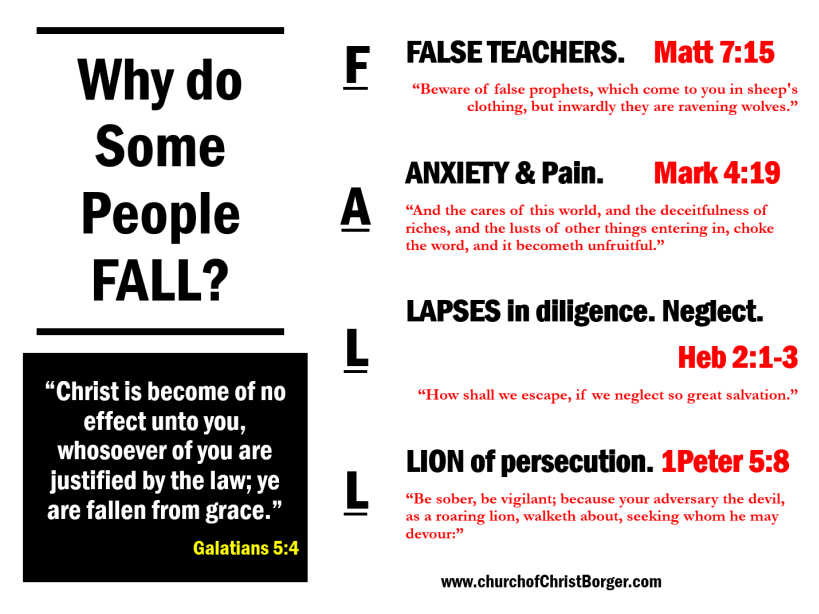
In Colossians 2, Paul issues a powerful warning to believers: “Stop letting people disqualify you” (Colossians 2:18). He urges the church to stand firm against deceptive influences that threaten to lead them astray from the truth of Christ. Paul identifies four types of false teachers, each with distinct tactics that remain relevant today. By understanding these dangers, we can guard our faith against those who distort the gospel.

1. Enticing Speech (Colossians 2:4-7)

False teachers often wield persuasive language to deceive. Paul warns against those who use “enticing words” to sway believers (Colossians 2:4). This tactic echoes Romans 16:18, where smooth talk and flattery manipulate the unsuspecting, and Ephesians 4:14, which describes cunning words that toss believers like waves. In our digital age, TikTok influencers, online preachers, and charismatic personalities can charm audiences with polished rhetoric, much like Satan’s subtle deception in Genesis 3 and Matthew 4. These voices may sound convincing, promising quick spiritual fixes or worldly success, but they often lead away from Christ’s sufficiency. Believers must root themselves in the truth of Scripture, as Paul encourages in Colossians 2:6-7, to discern and resist such deception.

2. Traditions of Men and the World (Colossians 2:8-10)

Another group of false teachers promotes human traditions and worldly philosophies over Christ’s authority. Paul cautions against being captivated by “philosophy and empty deceit, according to human tradition” (Colossians 2:8). Jesus confronted similar issues in Matthew 15:2, where religious leaders prioritized their traditions over God’s commands. Today, this manifests in appeals to “the way we’ve always done it” or the approval of experts, organizations, or governments. Philosophies like those Paul encountered in Acts 17 (stoicism, epicureanism, or modern ideologies) can subtly infiltrate the church. These traditions and ideas may seem appealing, but they lack the fullness of Christ, who is “the head of all rule and authority” (Colossians 2:10). Believers must test every teaching against the gospel, rejecting what elevates human wisdom over divine truth.

3. Judgments About the Old Law (Colossians 2:16-17)

Paul also warns against those who judge believers based on adherence to the Old Testament law, such as dietary rules or festivals (Colossians 2:16). Romans 14:2-3 and Galatians 4:10 highlight the danger of imposing outdated regulations, while Hebrews 8:13 declares the old covenant “obsolete.” False teachers may pressure Christians to follow Old Testament practices, claiming they are essential for righteousness (see Acts 15). Yet, Paul emphasizes that these are mere “shadows” of Christ, the true substance (Colossians 2:17). Some modern churches continue to impose the Law of Moses upon people. Why return to the shadows when the true Light has come into the world?

4. Puffed-Up Wisdom and Will Worship (Colossians 2:18-23)

The final type of false teacher Paul warns against is those who promote self-made spirituality and “puffed-up” wisdom (Colossians 2:18). These individuals boast of esoteric knowledge or mystical experiences, such as worshipping angels or embracing strange beliefs like sun gods or witchcraft. Paul describes such practices as “self-imposed worship” and “false humility” (Colossians 2:18, 23), which appear spiritual but lack true substance. Romans 6:3-6 and Ephesians 2:15 emphasize that believers are freed from such elemental principles through Christ’s death and resurrection. Paul warns against turning to weak and worthless spiritual systems. Today, this might look like New Age mysticism, occult practices, or prideful claims of exclusive spiritual insight. These teachings inflate human ego rather than exalting Christ, who alone is sufficient (Colossians 2:10). Paul urges believers to reject such distractions and cling to the gospel’s simplicity.

Guarding Against Deception

The common thread among these false teachers is their attempt to disqualify believers by shifting focus from Christ’s all-sufficient work. Whether through persuasive speech, human traditions, Old Testament practices, or puffed-up mysticism, they undermine the gospel’s power. Colossians 2 reminds us that Christ is the fullness of God, in whom all wisdom and knowledge reside (Colossians 2:3, 9-10). Believers are complete in Him, needing no additional rituals or philosophies to earn God’s favor.

In our modern context, these warnings are strikingly relevant. Social media amplifies enticing voices, from influencers peddling self-help spirituality to charismatic leaders pushing personal or mystical agendas. Cultural traditions (like prioritizing societal norms or “expert” consensus over biblical truth) can subtly erode faith. The Law of Moses persists in churches that impose Old Testament rules, while puffed-up wisdom appears in trendy spiritual fads that promise enlightenment apart from Christ.

To avoid being disqualified, believers must remain rooted in Christ (Colossians 2:6-7). This means immersing ourselves in Scripture and testing every teaching against God’s Word. Assembling with other believers provides accountability, helping us stay anchored in truth. Prayer is also vital, as we seek God’s wisdom in matters of truth.

Paul’s exhortation in Colossians 2 is a reminder for vigilance. False teachers will always arise, but we are not defenseless. By holding fast to Christ as our head, we can stand firm against enticing words, worldly traditions, Old Testament judgments, and prideful spirituality. Let us walk in the freedom and fullness of Christ, rejecting anything that seeks to disqualify us from the truth of His gospel.

agape

spencer

Faith, Hope, and Love: The Keys to Overcoming Troubles and Troublers

Life can throw some heavy punches, can’t it? For the believers in Thessalonica, those punches came in the form of persecutions, false teachings, and even some within their own community slacking off and stirring up trouble. Yet, in his second letter to them, Paul points to three timeless virtues (faith, hope, and love) as the keys to standing firm, no matter what others say or do. Rooted in knowing God’s word, these qualities enabled the Thessalonians to rise above their troubles and the “lowness” of their troublers.

Chapter 1: Enduring Through Faith, Hope, and Love

The Thessalonian church was under fire, literally and figuratively. They faced “persecutions and tribulations” (2 Thessalonians 1:4, KJV), likely from hostile neighbors or authorities who opposed their faith. Yet Paul couldn’t stop bragging about them: “We ourselves glory in you in the churches of God for your patience and faith in all your persecutions and tribulations that ye endure” (1:4). Their faith wasn’t just a Sunday morning nod to God; it was a steadfast trust in His promises, even when the world seemed against them. That faith, Paul says, was “growing exceedingly” (1:3), and their love for one another was increasing right alongside it.

But what kept them going? HOPE. Paul paints a vivid picture of hope tied to God’s justice and Christ’s return: “Seeing it is a righteous thing with God to recompense tribulation to them that trouble you; And to you who are troubled rest with us, when the Lord Jesus shall be revealed from heaven with his mighty angels” (1:6-7). The promise that God would deal with their troublers and grant them relief gave them a reason to hold on. This hope wasn’t wishful thinking, it was grounded in God’s word, which assured them that their suffering was “a manifest token of the righteous judgment of God” (1:5). Knowing God’s word fueled their faith to endure, their hope to look forward, and their love to care for one another, even under pressure. Paul prayed for this to continue, asking God to “fulfil all the good pleasure of his goodness, and the work of faith with power” (1:11).

So, what’s the lesson? When trouble comes (whether it’s people attacking your faith or life’s hardships piling up) lean into faith, hope, and love. Trust God’s word, hold fast to the promise of Christ’s return, and keep loving those around you. That’s how you stay faithful, no matter what others do.

Chapter 2: Standing Firm Against Deception

The troubles didn’t stop with persecution. Someone was spreading lies, maybe even claiming Paul’s authority, saying the day of the Lord had already come. This shook the Thessalonians, leaving them “troubled” and “shaken in mind” (2 Thessalonians 2:2). Imagine the confusion, thinking you missed the biggest event in history! But Paul steps in with clarity, urging them not to be “soon shaken in mind, or be troubled, neither by spirit, nor by word, nor by letter as from us” (2:2). He reminds them of God’s word, which he’d already taught: the day of the Lord won’t come until the “man of lawlessness” is revealed (2:3-4) and destroyed by Christ’s return (2:8).

Here’s where faith, hope, and love shine again. Their faith in the truth (God’s word) kept them from falling for deception. Paul calls them “brethren beloved of the Lord” (2:13), chosen for salvation “through sanctification of the Spirit and belief of the truth” (2:13; see John 17:17). That belief anchored them. Hope came from knowing Christ would return to set things right: “The Lord Jesus Christ… shall destroy with the brightness of his coming” (2:8). This hope steadied them against false alarms. And love? Paul prays for their hearts to be comforted and established “in every good word and work” (2:16-17), a call to keep loving and serving each other despite the chaos.

The troublers spreading lies were low, trying to unsettle God’s people. But Paul’s answer is clear: “Therefore, brethren, stand fast, and hold the traditions which ye have been taught, whether by word, or our epistle” (2:15). Stay rooted in God’s word. Let faith keep you grounded, hope keep you looking up, and love keep you moving forward. That’s how you abound, no matter what others say.

Chapter 3: Overcoming Internal Troubles

If external persecution and false teachings weren’t enough, the Thessalonians had trouble within their own ranks. Some believers were “walking disorderly,” refusing to work and meddling as busybodies (2 Thessalonians 3:6, 11). This idleness wasn’t just laziness, it disrupted the work of the church. Paul doesn’t mince words: “If any would not work, neither should he eat” (3:10). Yet even this discipline is rooted in love, as he urges the church to correct the idle “as a brother” (3:15), not an enemy.

Faith shows up in Paul’s confidence that the Thessalonians would stay faithful: “We have confidence in the Lord touching you, that ye both do and will do the things which we command you” (3:4). Their hope was tied to God’s word, which provided clear instructions for living, and to the promise of God’s peace: “Now the Lord of peace himself give you peace always by all means” (3:16). Love guided their response to the troublers within, balancing discipline with care, and Paul prayed that “the Lord direct your hearts into the love of God, and into the patient waiting for Christ” (3:5).

The idle were acting low, causing trouble by neglecting their responsibilities. But Paul calls the church to a higher standard: “Be not weary in well doing” (3:13). By staying faithful to God’s word (working diligently, loving one another, and holding fast to His commands) they could overcome even internal challenges.

Tying It All Together

What do we learn from the Thessalonians? Troubles and troublers come in many forms: persecutors who mock your faith, deceivers who twist the truth, or even fellow believers who let you down. But faith, hope, and love, rooted in knowing God’s word, are your strength. Faith keeps you trusting God’s truth, like the Thessalonians’ belief in the gospel (2:13) and obedience to Paul’s teaching (3:4). Hope lifts your eyes to God’s vengeance (1:6-9, 2:8) and Christ’s return (1:7, 2:8), assuring you that troubles won’t have the last word. Love binds you to your brothers and sisters, growing even in tough times (1:3) and guiding how you correct the wayward (3:15).

Knowing God’s word is the thread that ties it all together. It’s the foundation for faith, the source of hope, and the guide for love. The Thessalonians’ troubles didn’t define them, their faithfulness did. They stayed abounding, growing in faith and love (1:3), standing firm against lies (2:15), and doing good despite setbacks (3:13). So, when others try to drag you down with their words or actions, don’t stoop to their level. Hold fast to God’s word. Let faith, hope, and love keep you faithful and abounding, just as they did for the Thessalonians.

10 Traps Even Believers are Falling—Are You Next?

The Pitfalls of False Authority: A New Testament Perspective

In a world brimming with voices vying for influence, Christians must discern the true source of authority for faith and practice. The New Testament insists that all authority rests in Jesus Christ, who declared, “All authority in heaven and on earth has been given to me” (Matthew 28:18). Yet, both in Scripture and today, people frequently turn to counterfeit sources. These false authorities—ranging from human tradition to misapplied Scripture—promise guidance but lead astray. Let’s explore ten common wrong sources, grounded in biblical examples and reasoned insight, to sharpen our reliance on Christ alone.

First, human tradition often masquerades as authority. The Pharisees clung to their customs, prompting Jesus to rebuke them: “You leave the commandment of God and hold to the tradition of men” (Mark 7:8-9). Their rituals felt sacred, but without divine sanction, they were hollow. Today, churches may elevate practices—like specific holidays or dress codes—beyond Scripture, clouding God’s clear will.

Second, personal feelings or intuition can deceive. The sons of Sceva, zealous to cast out demons, assumed sincerity sufficed, only to be overpowered (Acts 19:13-16). Emotions sway us, especially in worship or moral choices, but they lack stability apart from God’s Word. A “gut feeling” might feel right yet contradict truth.

Third, religious leaders’ opinions tempt reliance. The Jewish leaders opposed Jesus, leaning on their titles, yet He exposed their hypocrisy (Matthew 23:2-7, 13). Charismatic pastors or scholars may inspire, but their words hold no weight unless tethered to Christ’s authority. Blind trust in human figures risks error.

Fourth, cultural norms exert subtle pressure. The Corinthians mirrored their society’s idolatry, needing Paul’s correction (1 Corinthians 10:14-21). Modern trends—materialism, relativism—shape morality or worship, but culture’s shifting sands lack divine permanence. What’s popular rarely aligns with God’s eternal standard.

Fifth, human reason or philosophy appeals to intellect. The Greeks mocked Paul’s resurrection message, trusting their logic (Acts 17:32). Today, skepticism dismisses miracles or grace when reason reigns alone. Without revelation, philosophy builds on a flawed foundation.

Sixth, false revelations or visions mislead. Paul warned against altered gospels, cursing their preachers (Galatians 1:8-9). False prophets then and now claim divine insight, but if it contradicts Scripture, it’s a lie. Modern “prophecies” must bow to the Bible’s completed authority.

Seventh, majority opinion sways the unwary. The crowd chose Barabbas over Jesus, driven by mob sentiment (Matthew 27:20-23). Polls or social consensus feel authoritative, yet they’re fickle. Truth isn’t a democracy; it stands with Christ, not the masses.

Eighth, wealth or power seduces. Simon the Sorcerer thought money could buy spiritual authority, earning Peter’s condemnation (Acts 8:18-23). Today, influential donors or leaders may dictate doctrine, but earthly clout holds no heavenly warrant.

Ninth, self-appointed authority usurps Christ’s place. Diotrephes craved control, rejecting apostolic guidance (3 John 1:9-10). Cults or lone wolves claim divine calling, but without Christ’s commission, their rule is baseless. True authority is delegated, not seized.

Finally, misapplied Scripture distorts truth. Satan twisted verses to tempt Jesus, who countered with proper context (Matthew 4:5-7). Quoting the Bible out of alignment—like the prosperity gospel—creates a false authority. God’s Word, rightly handled, is the only sure guide.

These false sources recur because they mimic legitimacy, exploiting human weakness. Yet, each fails the test of Christ’s mandate. The New Testament calls us to reject them, anchoring in Him who holds “all authority.”

Which of these do we lean on? How do we confront them? What’s the danger of feelings or crowds over Scripture? How does Satan’s tactic warn us? What steps ensure we follow Christ alone? In a world of counterfeits, only His Word endures.

agape

Spencer

This is the first part of a series of lessons on How to Determine Biblical Authority, or more simply, What does God want?

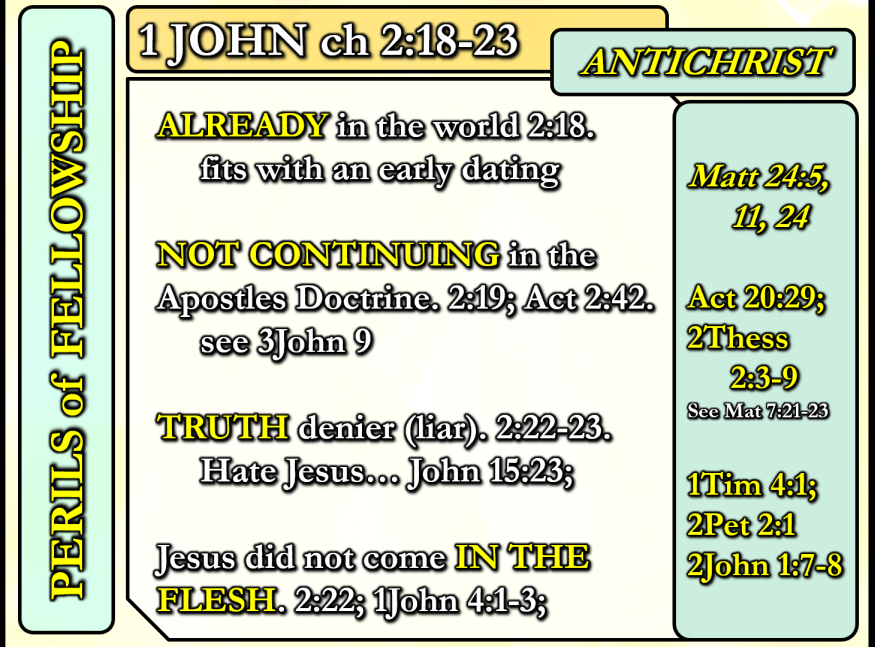
1JOhn 2:18-23 Who is the ANTICHRIST?

Who is the ANTICHRIST? 18-23

ALREADY in the world 2:18.
fits with an early dating

NOT CONTINUING in the Apostles Doctrine. 2:19; Act 2:42.
see 3John 9

TRUTH denier (liar). 2:22-23.
Hate Jesus… John 15:23;

Jesus did not come IN THE FLESH. 2:22; 1John 4:1-3;

Here’s a link to all the published studies from 1 John.

The Franklin and Juniper church of Christ begins an overview study of the book of 1John. If you live in the Borger area, We invite you to join us at 9:30am each Sunday Morning.

The book of JUDE overview

I: the EMERGENCY. [1-4]

(1-2) DESIGNATION of author & Readers.

(3-4) DANGER of apostates.

II: the EXAMPLES. [5-16]

(5-7) DESTINY of apostates.

(8-16) DESCRIPTION of apostates.

III: the EXHORTATION. [17-25]

(17-23) DUTY of believers.

(24-25) DOXOLOGY.

the Franklin & Juniper st church of Christ in Borger provides multiple bible study opportunities weekly.

Sunday morning at 9:30 followed by congregational worship at 10:30.

Wednesday night at 6:30.

We also provide individual private bible studies locally upon request.

Let us know how we can help you to know Christ through knowing His word.

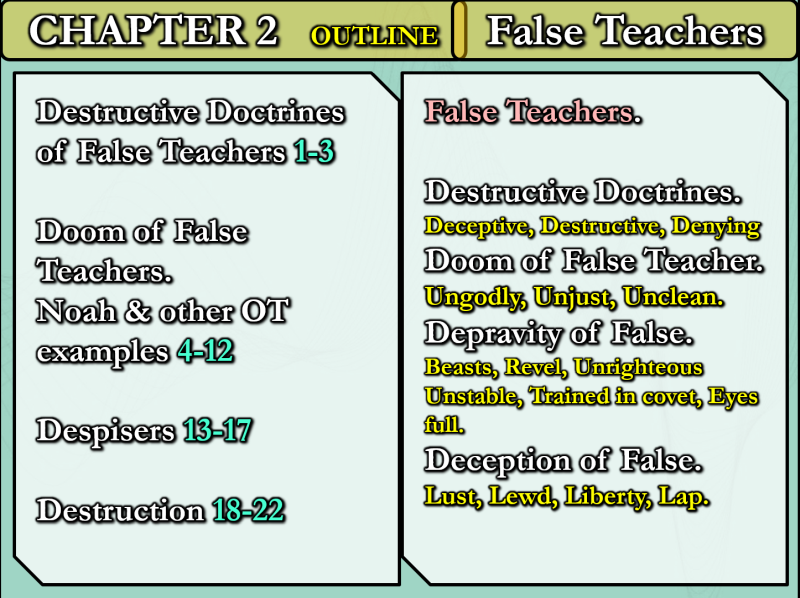
2Peter chp2 DESTRUCTIVE nature of False Teachers

DOCTRINE of FALSE TEACHERS 1-4.

2Pe 2:1 But there were also false prophets among the people, even as there will be false teachers among you, who will secretly bring in destructive heresies, even denying the Lord who bought them, and bring on themselves swift destruction.

False Teachers w/ FEIGNED words.

DOOM of False Teachers 4-11

2Pe 2:5 and did not spare the ancient world, but saved Noah, one of eight people, a preacher of righteousness, bringing in the flood on the world of the ungodly;
6 and turning the cities of Sodom and Gomorrah into ashes, condemned them to destruction, making them an example to those who afterward would live ungodly;

DEPRAVITY of False Teachers 12-16

2Pe 2:12 But these, like natural brute beasts made to be caught and destroyed, speak evil of the things they do not understand, and will utterly perish in their own corruption,

DESTINY of False Teachers 17-22

2Pe 2:22 But it has happened to them according to the true proverb: “A dog returns to his own vomit,” and, “a sow, having washed, to her wallowing in the mire.”

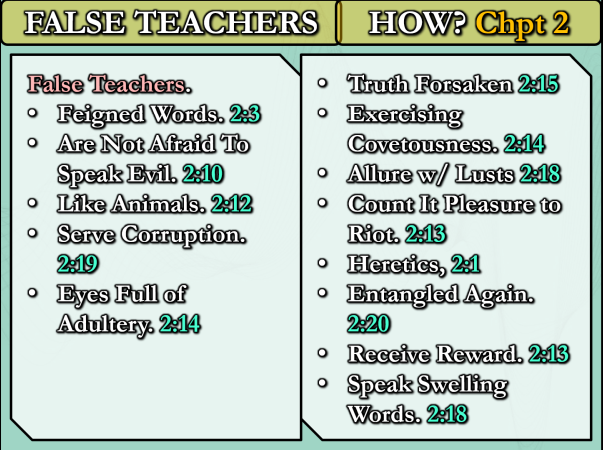
2Peter chp 2 FALSE TEACHERS

Warning of FALE TEACHERS.

FALSE.

Feigned Words. 2:3

Are Not Afraid To Speak Evil. 2:10  

Like Animals. 2:12

Serve Corruption. 2:19

Eyes Full of Adultery. 2:14

TEACHERS.

Truth Forsaken 2:15

Exercising Covetousness. 2:14

Allure w/ Lusts 2:18

Count It Pleasure to Riot. 2:13

Heretics, 2:1

Entangled Again. 2:20

Receive Reward. 2:13

Speak Swelling Words. 2:18

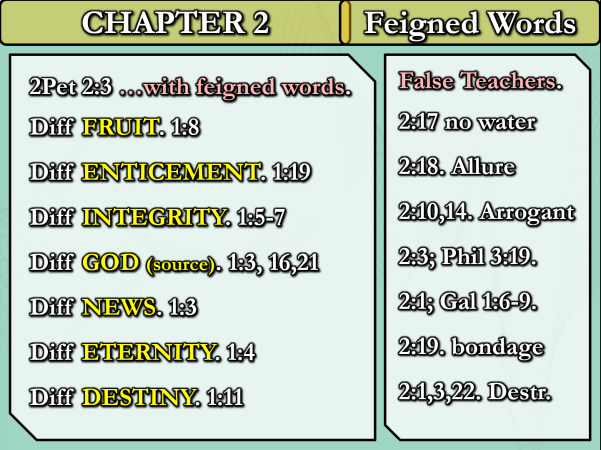
2Peter chp2 FEIGNED Preaching

2Pet 2:3 …with feigned words.

Diff FRUIT. 1:8 v 2:17 no water

Diff ENTICEMENT. 1:19 v 2:18 Allure with lusts

Diff INTEGRITY. 1:5-7 v 2:10,14 Arrogant

Diff GOD (source). 1:3, 16,21 v 2:3 see Phil 3:19

Diff NEWS. 1:3 v 2:1; see Gal 1:6-9

Diff ETERNITY. 1:4 v 2:19 Bondage

Diff DESTINY. 1:11 v 2:1, 3, 22 Destruction.

Can you Spot the DIFFERENCES?

Evangelism is a “can you find the differences” game

The difference between…

Your church vs the Lord’s church.

Gal 1:6 I marvel that ye are so soon removed from him that called you into the grace of Christ unto another gospel:
7 Which is not another; but there be some that trouble you, and would pervert the gospel of Christ.

2Cor 11:4 For if he that cometh preacheth another Jesus, whom we have not preached, or if ye receive another spirit, which ye have not received, or another gospel, which ye have not accepted, ye might well bear with him.

What you believe vs what the Bible teaches.

Acts 26:27 King Agrippa, believest thou the prophets? I know that thou believest.
28 Then Agrippa said unto Paul, Almost thou persuadest me to be a Christian.

What you did to be “saved” vs what the Bible says to be saved.

Mark 16:16 He that believeth and is baptized shall be saved; but he that believeth not shall be damned.

How you worship vs what the Bible teaches about worship.

Joh 4:24 God is a Spirit: and they that worship him must worship him in spirit and in truth.

Mark 7:6 He answered and said unto them, Well hath Esaias prophesied of you hypocrites, as it is written, This people honoureth me with their lips, but their heart is far from me. 7 Howbeit in vain do they worship me, teaching for doctrines the commandments of men.

CAN YOU SPOT THE DIFFERENCES?

The difference between what your pastor SAYS vs what the SCRIPTURE SAYS?

2Peter 2:1 But there were false prophets also among the people, even as there shall be false teachers among you, who privily shall bring in damnable heresies, even denying the Lord that bought them, and bring upon themselves swift destruction.

Acts 8:35 Then Philip opened his mouth, and began at the same scripture, and preached unto him Jesus. 36 And as they went on their way, they came unto a certain water: and the eunuch said, See, here is water; what doth hinder me to be baptized?

(when your pastor “preaches Jesus” would the listeners respond in the same way as the Eunuch?)

The difference between what you PRACTICE vs what the Bible says to PRACTICE?

1Cor 11:17 Now in this that I declare unto you I praise you not, that ye come together not for the better, but for the worse.
18 For first of all, when ye come together in the church, I hear that there be divisions among you; and I partly believe it.

The difference between not OBEYING the gospel vs OBEYING the Gospel?

2Thess 1:8 In flaming fire taking vengeance on them that know not God, and that obey not the gospel of our Lord Jesus Christ:

The difference between false TEACHING of me vs the TEACHING (doctrine) of Christ?

2John 1:10 If there come any unto you, and bring not this doctrine, receive him not into your house, neither bid him God speed: 11 For he that biddeth him God speed is partaker of his evil deeds.

For more study on this topic, click the link to the “we are different” page.

If you live in the Borger area, Would you like help to SPOT the differences and learn about true faith? Contact us and let us know.

Spencer is an evangelist for the Franklin & Juniper St church of Christ in Borger Texas.