Biblical FELLOWSHIP

The way most use the word “FELLOWSHIP” is in connection to a common meal. While having something in common is the meaning of fellowship, BIBLICAL FELLOWSHIP is far more. To reduce it to a common meal is to miss it altogether.

What does the bible say about FELLOWSHIP? Here are all the words for fellowship, beginning with the English word, then a breakdown of its various Greek forms.

FELLOWSHIP in English.

Le 6:2 If a soul sin, and commit a trespass against the LORD, and lie unto his neighbour in that which was delivered him to keep, or in fellowship, or in a thing taken away by violence, or hath deceived his neighbour;

 Ps 94:20 Shall the throne of iniquity have fellowship with thee, which frameth mischief by a law?

 Ac 2:42 And they continued stedfastly in the apostles’ doctrine and fellowship, and in breaking of bread, and in prayers.

 1Co 1:9 God is faithful, by whom ye were called unto the fellowship of his Son Jesus Christ our Lord.

 1Co 10:20 But I say, that the things which the Gentiles sacrifice, they sacrifice to devils, and not to God: and I would not that ye should have fellowship with devils.

 2Co 6:14 Be ye not unequally yoked together with unbelievers: for what fellowship hath righteousness with unrighteousness? and what communion (same word) hath light with darkness?

 2Co 8:4 Praying us with much intreaty that we would receive the gift, and take upon us the fellowship of the ministering to the saints.

 Ga 2:9 And when James, Cephas, and John, who seemed to be pillars, perceived the grace that was given unto me, they gave to me and Barnabas the right hands of fellowship; that we should go unto the heathen, and they unto the circumcision.

 Eph 3:9 And to make all men see what is the fellowship of the mystery, which from the beginning of the world hath been hid in God, who created all things by Jesus Christ:

 Eph 5:11 And have no fellowship with the unfruitful works of darkness, but rather reprove them.

 Php 1:5 For your fellowship in the gospel from the first day until now;

 Php 2:1 If there be therefore any consolation in Christ, if any comfort of love, if any fellowship of the Spirit, if any bowels and mercies,

 Php 3:10 That I may know him, and the power of his resurrection, and the fellowship of his sufferings, being made conformable unto his death;

 1Jo 1:3 That which we have seen and heard declare we unto you, that ye also may have fellowship with us: and truly our fellowship is with the Father, and with his Son Jesus Christ.

 1Jo 1:6 If we say that we have fellowship with him, and walk in darkness, we lie, and do not the truth:

 1Jo 1:7 But if we walk in the light, as he is in the light, we have fellowship one with another, and the blood of Jesus Christ his Son cleanseth us from all sin.

KOINONIA. using a different English word than above.

Rom 15:26 For it hath pleased them of Macedonia and Achaia to make a certain contribution for the poor saints which are at Jerusalem.

1Cor 10:16 The cup of blessing which we bless, is it not the communion of the blood of Christ? The bread which we break, is it not the communion of the body of Christ?

2Co 9:13 Whiles by the experiment of this ministration they glorify God for your professed subjection unto the gospel of Christ, and for your liberal distribution unto them, and unto all men;

2Co 13:14 The grace of the Lord Jesus Christ, and the love of God, and the communion of the Holy Ghost, be with you all. Amen.

Phm 1:6 That the communication of thy faith may become effectual by the acknowledging of every good thing which is in you in Christ Jesus.

Heb 13:16 But to do good and to communicate forget not: for with such sacrifices God is well pleased.

KOINONOS, koy-no-nos’

Mt 23:30 And say, If we had been in the days of our fathers, we would not have been partakers with them in the blood of the prophets.

Lu 5:10 And so was also James, and John, the sons of Zebedee, which were partners with Simon.

1Co 10:18 Behold Israel after the flesh: are not they which eat of the sacrifices partakers of the altar?

1Co 10:20 But I say, that the things which the Gentiles sacrifice, they sacrifice to devils, and not to God: and I would not that ye should have fellowship with devils.

2Co 1:7 And our hope of you is stedfast, knowing, that as ye are partakers of the sufferings, so shall ye be also of the consolation.

2Co 8:23 Whether any do enquire of Titus, he is my partner and fellowhelper concerning you:

Phm 1:17 If thou count me therefore a partner, receive him as myself.

Heb 10:33 Partly, whilst ye were made a gazingstock both by reproaches and afflictions; and partly, whilst ye became companions of them that were so used.

1Pe 5:1 ¶ The elders which are among you I exhort, who am also an elder, and a witness of the sufferings of Christ, and also a partaker of the glory that shall be revealed:

2Pe 1:4 Whereby are given unto us exceeding great and precious promises: that by these ye might be partakers of the divine nature, having escaped the corruption that is in the world through lust.

KOINOS, koy-nos’ COMMON / UNCLEAN.

Jude 1:3 Beloved, when I gave all diligence to write unto you of the common salvation,

Titus 1:4 To Titus, mine own son after the common faith: Grace, mercy, and peace, from God the Father and the Lord Jesus Christ our Saviour.

There are other verses using this root word, all mean common or unclean.

Mark 7:2; Acts 2:42; 4:32; 10:14,28; 11:8; Rom 14:14; Heb 10:29;

A clear picture emerges about SPIRITUAL FELLOWSHIP.

And they continued stedfastly in the apostles’ doctrine and fellowship, and in breaking of bread, and in prayers.

fellowship of his Son Jesus Christ our Lord.

partakers of the sufferings,

the right hands of fellowship;

the fellowship of the mystery,

your fellowship in the gospel

any fellowship of the Spirit

the fellowship of his sufferings,

partaker of the glory that shall be revealed

partakers of the divine nature,

common salvation,

common faith:

contribution for the poor saints

the fellowship of the ministering to the saints.

liberal distribution unto them,

the communication of thy faith

do good and to communicate

communion of the blood of Christ?

communion of the body of Christ?

the communion of the Holy Ghost,

But if we walk in the light, as he is in the light, we have fellowship one with another

that ye also may have fellowship with us: and truly our fellowship is with the Father, and with his Son Jesus Christ.
1John 2:3-11: 2 tests of fellowship.

TESTS of FELLOWSHIP:

Test ONE: 1John 2:3-6. If we keep His commandments.

And hereby we do know that we know him, if we keep his commandments. He that saith, I know him, and keepeth not his commandments, is a liar, and the truth is not in him. But whoso keepeth his word, in him verily is the love of God perfected: hereby know we that we are in him. He that saith he abideth in him ought himself also so to walk, even as he walked.

Test TWO: 1John 2:7-11. If we love the brethren.

Brethren, I write no new commandment unto you, but an old commandment which ye had from the beginning. The old commandment is the word which ye have heard from the beginning. Again, a new commandment I write unto you, which thing is true in him and in you: because the darkness is past, and the true light now shineth. He that saith he is in the light, and hateth his brother, is in darkness even until now. He that loveth his brother abideth in the light, and there is none occasion of stumbling in him. But he that hateth his brother is in darkness, and walketh in darkness, and knoweth not whither he goeth, because that darkness hath blinded his eyes.

The Franklin and Juniper church of Christ had an overview study of the book of 1John. If you live in the Borger area, We invite you to join us at 9:30am each Sunday Morning for the next few weeks.

Click here for the Overview Chart and links to other study outlines in this series.

1John: chap 1 Fellowship defined

Biblical FELLOWSHIP is SHARED experiences.

We have SHARED in

SAME purpose. 1Cor 1:10; Eph 4:4-6.
HEART. Phil 1:7
ACTION. Phil 4:14-15
RESOURCES. Acts 2:42; Heb 10:34
EACH MEMBER. does its part. Rom 12; 1Cor 12:12-25; Eph 4:16.
DIFFICULTY. Heb 10:33

The Franklin and Juniper church of Christ begins an overview study of the book of 1John. If you live in the Borger area, We invite you to join us at 9:30am each Sunday Morning for the next few weeks.

Click here for the Overview Chart and links to other study outlines in this series.

Conversing at the Lord’s Table

We all know, that on the night of Jesus betrayal, He implemented what is commonly called the Lord’s supper: “He said unto them, With desire I have desired to eat this passover with you before I suffer: For I say unto you, I will not any more eat thereof, until it be fulfilled in the kingdom of God. And he took the cup, and gave thanks, and said, Take this, and divide it among yourselves: For I say unto you, I will not drink of the fruit of the vine, until the kingdom of God shall come. And he took bread, and gave thanks, and brake it, and gave unto them, saying, This is my body which is given for you: this do in remembrance of me. 20 Likewise also the cup after supper, saying, This cup is the new testament in my blood, which is shed for you.” [Luke 22:15-20; cr. Matthew 26:26-29]

A most important topic but, have you ever considered what ELSE He taught at that last supper? When we read all the gospel accounts regarding the supper, we find 5 other topics of discussion.

1 – The Hurt of Betrayal Among them. [Matthew 26:20-25] As they sat down for supper, Jesus said, “Verily I say unto you, that one of you shall betray me.” They all wondered aloud, “is it I?” Jesus goes on to say, “woe unto that man by whom the Son of man is betrayed! it had been good for that man if he had not been born.” So many lessons could be drawn, but one question keeps haunting me, “Is it I?” Could we betray our Lord? The Hebrew writer expresses this idea when he wrote about “crucifying afresh” the Son of God when we fall away. [Hebrews 6:6]

2 – The Value of Service. [John 13:3-17] While the twelve are all still there, Jesus humbles Himself and washes each of the disciple’s feet, INCLUDING JUDAS. Jesus tells them, “For I have given you an example, that ye should do as I have done to you.” He is not commanding us to perform a ritual of foot washing, (that was a custom of that day), rather He is demonstrating service toward one another. To love one another. After this example He said, “By this shall all men know that ye are my disciples, if ye have love one to another.” [John 13:36]. The lesson is clear, have we such a love for each other?

3 – The Promise of Comfort. [John 14:26; 15:26; 16:13] At this supper He was telling them about His coming departure. As they wondered where He would be going, and how they might follow Him, He said, “I will not leave you comfortless: I will come to you.” He then spoke about a Comforter who would come to “guide them into all truth.” He was speaking about the revelation of the New Testament scriptures, brought to them through the guidance of the Holy Spirit. Today, we have the complete word of God. Can we still find comfort in them, just as the Apostles? I’d say we can.

4 – The Need to Bear Fruit. [John 15:1-8] As He was telling them of the Comforter, He also gave an illustration about being profitable disciples. He spoke of “bearing much fruit.” Connected with His word, and the words the Holy Spirit shall speak, the disciple can abide in Jesus, and He in us. Just as a branch bears fruit when attached to the vine, we too can bear fruit when attached to Jesus through His word. But there was also a warning, “If a man abide not in me, he is cast forth as a branch, and is withered; and men gather them, and cast them into the fire, and they are burned.” What a terrible thought, to be cast away and burned for failing to bear fruit. We can only bear fruit through obedience to His word. [cr. Matthew 7:21-29]

5 – The Power of Spiritual Unity. [John 17:11-23] Prior to their departure to the garden of Gethsemane, Jesus prayed to the Father in their presence. He prayed, “Holy Father, keep through thine own name those whom thou hast given me, that they may be one, as we are.” Some today have the false notion that unity is found in just getting along and overlooking sin. This can never be right. Spiritual Unity is also called “fellowship.” Scriptural fellowship with God is achieved through heartfelt obedience to the Word of God. Jesus said it this way, “He that hath my commandments, and keepeth them, he it is that loveth me: and he that loveth me shall be loved of my Father, and I will love him, and will manifest myself to him.” [John 14:21].  Do you and I love Jesus? Then we shall keep His commandments and have spiritual fellowship.

But if we walk in the light, as he is in the light, we have fellowship one with another, and the blood of Jesus Christ his Son cleanseth us from all sin. [1John 1:7]

What an amazing supper that must have been. These are the final words of the Master to His disciples before He is betrayed and crucified. They are important words with valuable lessons. Let us study them, learn from them and apply them into our lives.

What do I do Now?

After a person obeys the gospel, the most oft asked question is, “what do I do now?” However, this question is asked by both the new convert AND the members of the local congregation. The new convert, full of joy and gratitude, has a desire to serve and to do what is right. The older members want to help them, but where do you begin?

For the answer, let us turn to Acts 2, the place where the church of Christ began.

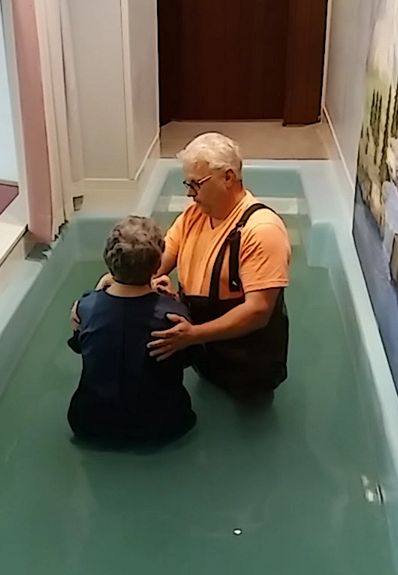
41 Then they that gladly received his word were baptized: and the same day there were added unto them about three thousand souls. That’s where we are with Margie, and all others who obeyed the gospel recently (a young man named Nick, was also baptized into Christ on the same day.) Nobody joins the church; the Lord adds to the church [47].

42 And they continued stedfastly in the apostles’ doctrine and fellowship, and in breaking of bread, and in prayers. Here’s where we find our answer to the question, “what do I do next?”

Continue in the apostles’ doctrine. The Apostles’ doctrine is Christ’s doctrine. Jesus said to the Apostles, that in addition to making disciples, as one who has all authority, teach them “to observe all things whatsoever I have commanded you” [Mat 28:19-20]. Paul said about his letters, “let him acknowledge that the things that I write unto you are the commandments of the Lord.” [1Cor 14:37]

So, the first thing we need to do is to continue to learn through study of the Scriptures what Jesus expects from us. The most effective way to do this is for the new convert and the “old” members to get together and study the scriptures. We need to note that “continue” means to do them. It’s not enough to learn what Jesus wants, we must obey Him [John 14:15]. We can also learn when we gather to worship on the first day of the week.

And Fellowship and in breaking of bread, and in prayers. The new Christians worshiped together. They had fellowship, which means that they were in partnership with one another. This partnership begins when we, “all speak the same thing, and that there be no divisions among you; but that ye be perfectly joined together in the same mind and in the same judgment” [1Cor 1:10]. The partnership also includes the collection of money for the work of the church. (As you continue to study, you’ll begin to understand the work God has given the church is to spread the Gospel, Teach the saints and practice limited benevolence). The Philippians gave money to spread the gospel, and were in fellowship in the gospel [Phil 1:3-7].

One of the parts of worship (there are 5 activities in sound worship) the disciples ‘broke bread’ which is to remember the death of our Lord and Savior, Christ Jesus. Commonly referred to as “The Lord’s Supper” the first Christians met on the 1st day of the week, Sunday, where they would take unleavened bread and fruit of the vine to commemorate His death. The Apostle Paul wrote the early Christians how to properly observe this important part of our worship [1Cor 11:23-34].


They also prayed. Prayer is the privilege of the saints. Christians are called saint in the Scriptures [Rom 1:7; Eph 1:1; Phil 1:1; Col 1:1]. In obeying the gospel through baptism, we have “put on Christ” [Gal 3:27] and have been given access through Him to the “throne of grace” [Heb 4:16]. Prayer is an incredible part of becoming a child of God. We know that God does not listen to sinners [John 9:31] but He hears us!

God is not our “genie in a bottle,” to gift us with everything we want like a spoiled child. Rather, He wants to help us in our time of need. It says in Hebrews 4:16; “that we may obtain mercy, and find grace to help in time of need.” Temptation doesn’t stop when we become Christians, neither do troubles & pains, “but God is faithful, who will not suffer you to be tempted above that ye are able; but will with the temptation also make a way to escape, that ye may be able to bear it” [1Cor 10:13]. So, all Christians need to pray.

Finally, let us note one more thing from Acts 2…

47 Praising God, and having favour with all the people. As you begin your journey as a new Christian, and every Christian, let us never forget from whom we received the gift of grace. We received it from God through Christ Jesus [Eph 2:8-10]. May we never forget, may it never grow old and may we never grow tired of praising God for His indescribable gift.

Thanks be unto God for his indescribable gift.

2Corinthians 9:15

What do I do now?

The Franklin St church of Christ in Borger, Tx

IT IS WITH GREAT joy that we announce a new sister in Christ, Margie. Just as there is joy in the heart of the one who obeys the gospel, there is also much joy in heaven and we are also full of joy for her [Luke 15:7, 10].

After a person obeys the gospel, the most oft asked question is, “what do I do now?” However, this question is asked by both the new convert AND the members of the local congregation. The new convert, full of joy and gratitude, has a desire to serve and to do what is right. The older members want to help them, but where do you begin?

For the answer, let us turn to Acts 2, the place where the church of Christ began.

41 Then they that gladly received his word were baptized: and the same day there were added unto them about three thousand souls. That’s where we are with Margie, and all others who obeyed the gospel recently (a young man was also baptized into Christ on the same day.) Nobody joins the church; the Lord adds to the church [47].

42 And they continued stedfastly in the apostles’ doctrine and fellowship, and in breaking of bread, and in prayers. Here’s where we find our answer to the question, “what do I do next?”

Continue in the apostles’ doctrine. The Apostles’ doctrine is Christ’s doctrine. Jesus said to the Apostles, that in addition to making disciples, as one who has all authority, teach them “to observe all things whatsoever I have commanded you” [Mat 28:19-20]. Paul said about his letters, “let him acknowledge that the things that I write unto you are the commandments of the Lord.” [1Cor 14:37]

So, the first thing we need to do is to continue to learn through study of the Scriptures what Jesus expects from us. The most effective way to do this is for the new convert and the “old” members to get together and study the scriptures. We need to note that “continue” means to do them. It’s not enough to learn what Jesus wants, we must obey Him [John 14:15]. We can also learn when we gather to worship on the first day of the week.

And Fellowship and in breaking of bread, and in prayers. The new Christians worshiped together. They had fellowship, which means that they were in partnership with one another. This partnership begins when we, “all speak the same thing, and that there be no divisions among you; but that ye be perfectly joined together in the same mind and in the same judgment” [1Cor 1:10]. The partnership also includes the collection of money for the work of the church. (As you continue to study, you’ll begin to understand the work God has given the church is to spread the Gospel, Teach the saints and practice limited benevolence). The Philippians gave money to spread the gospel, and were in fellowship in the gospel [Phil 1:3-7].

One of the parts of worship (there are 5 activities in sound worship) the disciples ‘broke bread’ which is to remember the death of our Lord and Savior, Christ Jesus. Commonly referred to as “The Lord’s Supper” the first Christians met on the 1st day of the week, Sunday, where they would take unleavened bread and fruit of the vine to commemorate His death. The Apostle Paul wrote the early Christians how to properly observe this important part of our worship [1Cor 11:23-34].

They also prayed. Prayer is the privilege of the saints. Christians are called saint in the Scriptures [Rom 1:7; Eph 1:1; Phil 1:1; Col 1:1]. In obeying the gospel through baptism, we have “put on Christ” [Gal 3:27] and have been given access through Him to the “throne of grace” [Heb 4:16]. Prayer is an incredible part of becoming a child of God. We know that God does not listen to sinners [John 9:31] but He hears us!

God is not our “genie in a bottle,” to gift us with everything we want like a spoiled child. Rather, He wants to help us in our time of need. It says in Hebrews 4:16; “that we may obtain mercy, and find grace to help in time of need.” Temptation doesn’t stop when we become Christians, neither do troubles & pains, “but God is faithful, who will not suffer you to be tempted above that ye are able; but will with the temptation also make a way to escape, that ye may be able to bear it” [1Cor 10:13]. So, all Christians need to pray.

Finally, let us note one more thing from Acts 2…

47 Praising God, and having favour with all the people. As you begin your journey as a new Christian, and every Christian, let us never forget from whom we received the gift of grace. We received it from God through Christ Jesus [Eph 2:8-10]. May we never forget, may it never grow old and may we never grow tired of praising God for His indescribable gift.

Thanks be unto God for his indescribable gift.

2 Corinthians 9:15

The Lonely Ember

A MEMBER OF A certain church, who previously had been attending services regularly, stopped going. After a few weeks, the pastor decided to visit him. It was a chilly evening. The pastor found the man at home alone, sitting before a blazing fire.

Guessing the reason for his pastor’s visit, the man welcomed him, led him to a big chair near the fireplace and waited. The pastor made himself comfortable but said nothing. In the grave silence, he contemplated the play of the flames around the burning logs.

After some minutes, the pastor took the fire tongs, carefully picked up a brightly burning ember and placed it to one side of the hearth all alone. Then he sat back in his chair, still silent. The host watched all this in quiet fascination.

As the one lone ember’s flame diminished, there was a momentary glow and then its fire was no more. Soon it was cold and “dead as a doornail.”

Not a word had been spoken since the initial greeting.

Just before the pastor was ready to leave, he picked up the cold, dead ember and placed it back in the middle of the fire. Immediately it began to glow once more with the light and warmth of the burning coals around it.

As the pastor reached the door to leave, his host said, “Thank you so much for your visit and especially for the fiery sermon. I shall be back in church next Sunday.”

Source: unknown.

It would be difficult to add much to this simple illustration, but there’s a little room so I must. This story demonstrates an important reality regarding our role in the worship. Sure, you can see yourself as the lone ember, desiring to be uplifted by the others, but do you see yourself as a part of the larger fire?

Many complain, “I get nothing from the worship” or “that church is so cold” looking only at how it affects THEM. The illustration also shows what we GIVE to each other, of which you are a part.

Rather than asking, “what do I get” ask, what do I give? When we come together, as the Lord commanded, we give so much to each other. The New Testament writers presented a picture of giving in our coming together (I’m not referring to the monetary collection). You say that you gain nothing from the worship, but what do you keep with you in your absence?

Here’s what you give us

  • Love – And let us consider one another to provoke unto love and to good works: Hebrews 10:24
  • Exhortation – not forsaking our own assembling together, as the custom of some is, but exhorting one another; and so much the more, as ye see the day drawing nigh. Hebrews 10:25
  • Teaching – Teaching and admonishing one another in psalms and hymns and spiritual songs, singing with grace in your hearts to the Lord. Colossians 3:16
  • Proclaim the Lord’s death – For as often as ye eat this bread, and drink the cup, ye proclaim the Lord’s death till he come. 1Corinthians 11:26, 30
  • Fellowship – And they continued stedfastly in the apostles’ teaching and fellowship, in the breaking of bread and the prayers. Acts 2:42
  • Edification – Let all things be done unto edifying. 1Corinthians 14:26b

Do you see it? We need each other. I need you as much, or more than, you need me. The worship is an assembly of the local saints together in one place. We can’t do it alone. Matt 18:20.