
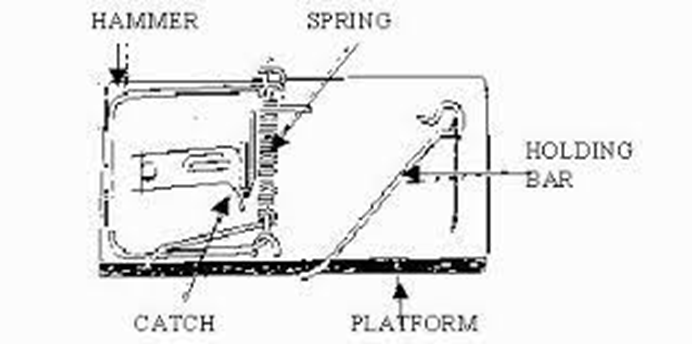
The concept of irreducible complexity presents a powerful argument for the existence of a Designer. Coined by biochemist Michael Behe, irreducible complexity refers to biological systems composed of multiple interdependent parts, all of which must function simultaneously for the system to work. Such systems cannot arise through gradual evolutionary processes, as removing even one component renders the system nonfunctional. This hallmark of intentional design points to the existence of an intelligent Creator.
One of the most cited examples of irreducible complexity is the bacterial flagellum, a microscopic rotary motor used by bacteria for propulsion. The flagellum comprises over 40 distinct protein components, including a rotor, stator, drive shaft, bushing, and propeller. Each part is precisely shaped and positioned to interact with the others, enabling the flagellum to rotate at incredible speeds—up to 100,000 revolutions per minute in some species.
The flagellum’s functionality depends on the presence of all its components working together. If even one protein is missing, the entire system fails, offering no advantage to the organism. This contradicts Darwinian evolutionary mechanisms, which propose gradual modifications and natural selection as the means of developing complex structures. As Behe argues in his book Darwin’s Black Box, such irreducible systems could not have evolved step-by-step, as intermediate stages would confer no benefit to survival.
The Bible supports the idea of intentional design in creation. Job 12:7-9 invites us to consider the evidence of God’s hand in the natural world: “But ask now the beasts, and they shall teach thee; and the fowls of the air, and they shall tell thee: Or speak to the earth, and it shall teach thee: and the fishes of the sea shall declare unto thee. Who knoweth not in all these that the hand of the Lord hath wrought this?” The intricacy of the flagellum echoes this truth, revealing the handiwork of a Creator. The bacterial flagellum, a marvel of engineering, stands as evidence of God’s power and wisdom.
Scientifically, attempts to explain the flagellum through evolutionary mechanisms remain inconclusive. Proposals like co-option, which suggest that existing proteins were repurposed for new functions, fail to account for the precise timing, positioning, and coordination required to assemble the flagellum. Such precision implies design, not chance.
Irreducible complexity in systems like the bacterial flagellum provides compelling proof of a Designer. Its intricate structure and functionality defy evolutionary explanations, aligning with biblical declarations of God’s creative work. This undeniable complexity reflects the harmony between science and faith, pointing to the Creator behind the design.
Agape,
Spencer
 Borger church of Christ @ Franklin & Juniper