Gratitude Rejoices at Repentance

Gratitude; Rejoicing in Restoration.
(Luke 15:25–32)

The music was already swelling when the elder brother approached the house. Rejoicing drifted through the air along with the scent of roasted calf. Inside, the father had opened the storeroom of joy. A son once dead was alive, once lost was found. Yet one voice refused to join in the chorus: the brother who had never left.

Ingratitude begins as a whisper: “I’ve been overlooked.” The elder son could not restrain himself. “This son of yours came, who has devoured thy living with harlots, thou hast killed for him the fatted calf!” (v. 30). Notice the language: this son of yours. In one breath, ingratitude severed the tie of brotherhood. The repentant prodigal became a stranger, and the elder brother became judge.

Restoration requires rejoicing with those who rejoice (Romans 12:15), but ingratitude demands a ledger: What have I received? What has he lost? The father’s answer should have been enough: “Son, thou art ever with me, and all that I have is thine” (v. 31). But ingratitude counts deficits.

He overlooked existing blessings the way a man starves beside a banquet. Every day he had walked the fields that were already his, and had eaten from tables never denied him. Yet ingratitude rewrote history: “these many years do I serve thee, neither transgressed I at any time thy commandment: and yet thou never gavest me a kid…” (v. 29). The lie is breathtaking. He had not been a slave but a son. He had not been denied but entrusted. Ingratitude turned sonship into servitude and generosity into grudge.

The elder brother’s complaint was not about goats or calves; it was about merit. I stayed. I worked. I deserved. The prodigal’s return exposed the elder’s idolatry. Bitterness judges repentance and finds it wanting (cf. Hebrews 12:15). The father’s feast became an offense because it celebrated restoration without recognition for himself.

Worst of all, his ingratitude led to a self-imposed separation from the repentant. The prodigal had come home repentant, rehearsing confession. The father had run, embraced, restored. But the elder brother refused to cross the threshold. His ingratitude built a wall where none existed. The repentant son was inside, clothed in the best robe, ring on his finger, sandals on his feet. The unrepentant brother stood outside, arms crossed, heart closed. The father left the rejoicing to plead with him; a heartbreaking moment of reversal. His prodigal son was inside, but his faithful son was now outside.

We never learn if the elder brother ever softened, we’re left to examine ourselves. When someone returns, when someone repents, when someone is restored, will we stand outside, cataloging slights? Or will we hear the music, remember the blessings, and join the rejoicing (Luke 15:7)?

Agape
spencer
4 things we’ll never Regret doing


In a world where choices often weigh heavy with consequence, there are actions so pure, so aligned with the human spirit, that they stand beyond regret or the need for repentance. These are the timeless acts that enrich lives, and those around us, and echo with eternal resonance.

These 4 principles are easy with people we like, it’s much more challenging to hold these qualities with folks who don’t like you.

Speaking EDIFYING Words
Words have power to build or break. Choosing to speak words that uplift, encourage, and inspire is a gift that lingers in hearts. Imagine a weary soul, burdened by doubt, lifted by your gentle affirmation. We’ll never regret offering hope through our speech. When we choose words that breathe life, we reflect divine creativity. Ephesians 4:29 urges, “Let no corrupting talk come out of your mouths, but only such as is good for building up.” Our words can be a beacon, guiding others through darkness, and we’ll never wish we’d held them back.

Showing KINDNESS and Forgiveness
Kindness is a currency of the soul, and forgiveness its greatest transaction. Extending a hand to someone in need or releasing a grudge can transform lives. Picture the moment you forgave someone who hurt you; their eyes softening, your heart lightening. We’ll never regret choosing compassion over bitterness. Colossians 3:12-13 reminds us to “put on compassionate hearts, kindness, humility… forgiving one another.” These acts free us from resentment’s chains, leaving peace in their wake.

Acting with INTEGRITY
Integrity is the compass of a life well-lived. Standing firm in truth, even when it’s costly, brings a quiet confidence that never fades. Consider the employee who refuses to cut corners, earning trust that outlasts fleeting gain. We’ll never regret honoring what’s right. Proverbs 11:3 declares, “The integrity of the upright guides them.” Living with integrity aligns us with our deepest values, ensuring we rest easy, untroubled by guilt. (See 2Peter 1:5-10)

LOVING Others as Yourself
To love others as we love ourselves is to mirror the divine (Matt 22:37-39). Loving those who don’t love you is the real challenge. There’s no credit in Loving only those who love you (Luke 6:32). This love, selfless and bold, leaves no room for regret. Imagine the joy of seeing someone flourish because you chose to care. Mark 12:31 commands, “Love your neighbor as yourself.” This love weaves a legacy that endures.

These choices carry no shadow of regret. They are the qualities of living with purpose and peace.

agape

Do you love your enemies?

you LOVE your ENEMY?

But I say unto you which hear, Love your enemies, do good to them which hate you, Bless them that curse you, and pray for them which despitefully use you.”    (Luke 6:27-36).

All this month we’ve been talking about LOVE. Here’s a recap.

Love the LORD week 1;

First, GOD IS LOVE. (1John 4:8)

Second, GOD LOVES. (1John 4:9)

Third, HE LOVED US FIRST. (1John 4:19)

Last, GOD DIED FOR US. (1John 3:16)

Love OTHERS week 2:

Love The Brethren. (John 13:34)

Love Others. (1Thess 3:12)

Love to Visit the needy. (Jas 1:27)

Love our Enemies. (Luke 6:27)

Love His Appearing week 3:

We Look for His return. (Luke 12:37)

We Obey Him. (Luke 6:46)

We add Virtue, etc. (2Pet 1:5-11)

We Endure this life. (Matt 10:24)

This week we’ll look at the Lord’s command to Love our Enemy.

It’s unambiguous that we are to love our enemies. Who our enemies are varies. As much as it lies within us, we try to live at peace with all men (Rom 12:18), but there are some that just don’t like us, are rude, mean, or antagonistic to the church. It matters not why; Jesus taught us to LOVE our ENEMIES.

How are we to LOVE an ENEMY?

First, with EMPATHY. We need to have empathy for we were once enemies to the Lord.

For if, when we were enemies, we were reconciled to God by the death of his Son, much more, being reconciled, we shall be saved by his life” (Romans 5:10).

And such were some of you: but ye are washed, but ye are sanctified, but ye are justified in the name of the Lord Jesus, and by the Spirit of our God” (1Cor 6:9-11).

No matter what a person may say to provoke us, we must remain NICE. The anger of man does not produce the righteousness of God (Jas 1:20)

And if ye do good to them which do good to you, what thank have ye? for sinners also do even the same” (Luke 6:33).

This teaching doesn’t mean we put ourselves in harm’s way. Paul avoided many attacks on his life by the Jews, but he still desired they be saved.

Brethren, my heart’s desire and prayer to God for Israel is, that they might be saved” (Rom 10:1).

This next one is difficult, but we need to have a heart to EVANGELIZE.

Some will, some wont, but you’ll never know until you try. We seldom think about, nor even desire to teach an enemy the truth of the gospel.

I ask myself this question whenever interacting with an “enemy;” Could I invite them to worship despite our conflict? Look at this example:

Jesus sent Ananias to Saul of Tarsus to teach him the gospel. “Then Ananias answered, Lord, I have heard by many of this man, how much evil he hath done to thy saints at Jerusalem” (Acts 9:10-16).

Within the command to love our enemy is to be Merciful.

Be ye therefore merciful, as your Father also is merciful” (Luke 6:36).

Merciful means… compassionate, experiencing deep pity (lamentation) as God has for people who look to Him for help in their difficult situations. Consider the example of the stolen servant girl who told Naaman of a cure for leprosy. (2Kings 5:1-3). “Would God my lord were with the prophet that is in Samaria! for he would recover him of his leprosy.”

Finally, and very importantly, YOUR forgiveness depends on it. Let’s read from our passage in Luke:

For if ye love them which love you, what thank have ye? for sinners also love those that love them. And if ye do good to them which do good to you, what thank have ye? for sinners also do even the same. And if ye lend to them of whom ye hope to receive, what thank have ye? for sinners also lend to sinners, to receive as much again. But love ye your enemies, and do good, and lend, hoping for nothing again; and your reward shall be great, and ye shall be the children of the Highest: for he is kind unto the unthankful and to the evil” (Luke 6:32-35). To love only those that love us is no better than the enemies themselves. Look at what Jesus taught:

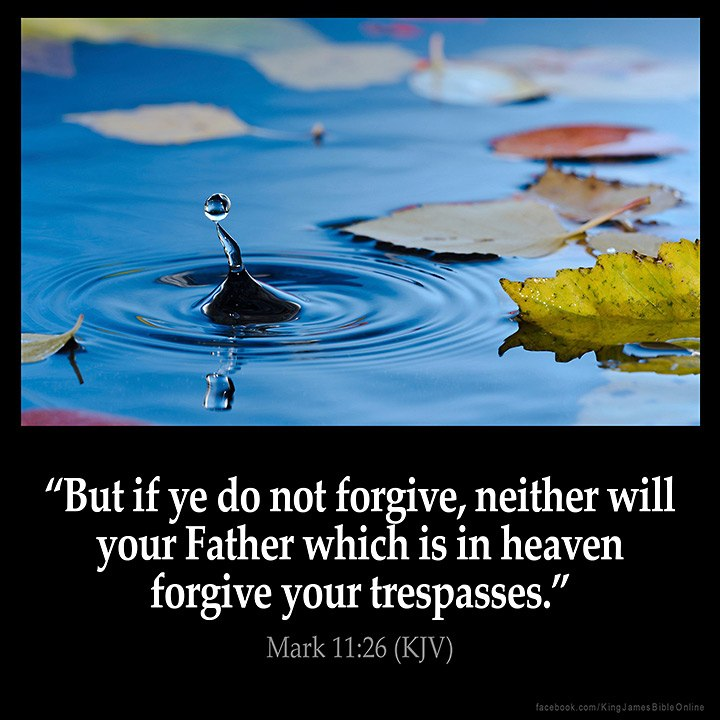
For if ye forgive men their trespasses, your heavenly Father will also forgive you: But if ye forgive not men their trespasses, neither will your Father forgive your trespasses

(Matt 6:14-15; Mt 18:35; Mr 11:25-26; Eph 4:32; Col 3:13).

People mistake these concepts as having to take abuse, pain, etc. That’s a mistake. We have authority to avoid our enemies attacks, if we do it without sin, and without denying the Lord.

Think about the Apostle Paul in Acts 23:12-31. Some of the very people he was trying to reach with the Gospel had sworn to lie in wait for him so they would have occasion to ambush and kill him. He loved those in Judaism who were persecuting him (Rom 10:1-3), but that didn’t mean he had to be killed if it could be avoided (see, Acts 9:25; 2Cor 11:33).

Dearly beloved, avenge not yourselves, but rather give place unto wrath: for it is written, Vengeance is mine; I will repay, saith the Lord. Therefore if thine enemy hunger, feed him; if he thirst, give him drink: for in so doing thou shalt heap coals of fire on his head. Be not overcome of evil, but overcome evil with good

(Rom 12:19-21).

–Spencer

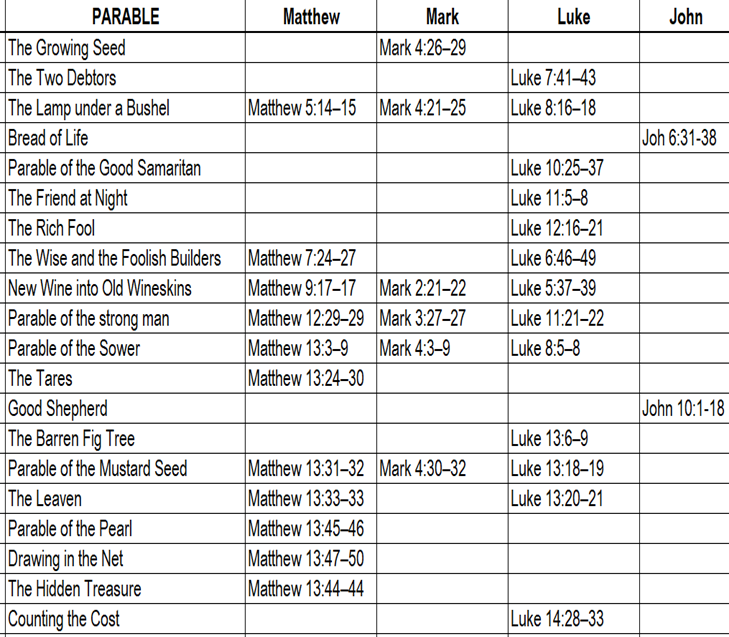
the PARABLES of Jesus

Just about everyone knows that Jesus taught with parables. If you were to say the world parable, folks would automatically think of Jesus.

The PURPOSE of the parables is explained in scripture.

And the disciples came, and said unto him, Why speakest thou unto them in parables? He answered and said unto them, Because it is given unto you to know the mysteries of the kingdom of heaven, but to them it is not given. For whosoever hath, to him shall be given, and he shall have more abundance: but whosoever hath not, from him shall be taken away even that he hath. Therefore speak I to them in parables: because they seeing see not; and hearing they hear not, neither do they understand. And in them is fulfilled the prophecy of Esaias, which saith, By hearing ye shall hear, and shall not understand; and seeing ye shall see, and shall not perceive:” (Matt 13:10-14).

We will notice that parables were part of PROPHECY which contributed to identifying Jesus as the Christ. “I will open my mouth in a parable:” (Psalm 78:2)

We will also notice that parables ASSIST people in understanding the lessons from Christ. We can easily identify the example in the parable to discover His teaching.

If you’ll look at the list of the parables you notice that Christ uses REAL life scenarios to explain His teachings. (ie. a sower)

Parables will ALLOW the seekers to see, but the BLIND not to see. Christ never keeps life saving truth from anyone, but some just don’t want it, hence they’re BLIND.

The meaning of the word parable is; to LAY along side. (cf. W.E. Vines). “And he said, Whereunto shall we liken the kingdom of God? or with what comparison shall we compare it?” (Mark 4:30)

Another way to describe a parable is as an EXTENDED metaphor or simile. It’s not intended to be mysterious, concealing, nor prevent the truth seeker from understanding.

Ultimately, a parable is a SPIRITUAL lesson using an understood physical scenario. Jesus uses a known thing to explain SPIRITUAL things.

And he said unto them, Know ye not this parable? and how then will ye know all parables?” (Mark 4:13)

On the following page is a list of all the parables (I think). Luke carries the most parables. While many people categorize them in different ways, I’ve identified seven. Prayer Parables, Kingdom Parables, Forgiveness Parables, Christ Parables, Parables of the Lost, Readiness Parables, and Stewardship Parables.

THE TRUTH HAS SET US FREE…FROM WHAT?

JESUS SAID TO the believing Jews, “If ye continue in my word, then are ye my disciples indeed; And ye shall know the truth, and the truth shall make you free.” [John 8:31-32]

From this passage, as disciples, we must continue in His word, and from this word we will know the truth. Then this truth will set us free. Later on Jesus will say that God’s word is truth. [John 17:17]

The first question you should ask is; “From what are we being set free?”

WE ARE FREE FROM…
  • The curse of the Law of Moses. Galatians 3:10 points out “Cursed is every one that continueth not in all things which are written in the book of the law to do them.” This was referring to the Law of Moses, for in chapter 5v4 Paul then says that a person seeking to return to that law “has fallen from Grace.”
  • The power of the Law. Romans 7:1-7 teaches us that until Christ’s death, burial and resurrection that the Law of Moses was still in effect. It wasn’t until His death were we freed from the power of the Law, “nailing it to his cross.” [Colossians 2:14]
  • The dominion of sin.Being then made free from sin, ye became the servants of righteousness.” [Romans 6:17-18] Without the death, burial & resurrection of Jesus, “ye are yet in your sins.” [1Corinthians 15:17]
  • The guilt of sin. The guilt that most people experience is dependent upon a future punishment. In Christ, who paid the debt for our sins, Christians have been made free from the condemnation of sin. “Who shall lay any thing to the charge of God’s elect? It is God that justifieth.” [Romans 8:33] Does this mean that we can continue to sin? No sir. Rather, we have someone who cleanses us of our sin, but only if we’re in Christ. [1John 1:9]
  • The power of darkness. Because we are His disciples, having obeyed the Gospel, God has “…delivered us from the power of darkness, and hath translated us into the kingdom of his dear Son:” [Colossians 1:13] Many say that the kingdom will begin sometime later, but this scripture teach that Christians are in His kingdom now and free from the darkness of this world.
  • The fear of man. No longer bound by sin, under the power of darkness of this world, Christians are also free of what man can do to us. The Apostles faced persecution, beatings and imprisonments, even being commanded to stop speaking about Jesus. Yet, they had no fear saying, “We ought to obey God rather than men.” [Acts 5:29; 4:18-20] Though we may be persecuted or threatened for our faith, no man can ever take away our salvation. “The LORD is on my side; I will not fear: what can man do unto me?” [Psalm 118:6]
  • The fear of death’s sting. Because we are in Christ, and freed from the bondage of sin, we no longer have the fear of death. “O death, where is thy sting? O grave, where is thy victory?” [1Corinthians 15:56,57] Being in Christ, we look forward to a day when we can be with the Lord even if He comes sometime after our life on this Earth. [1Thessalonians 4:14-17]
  • The position of no hope. Becoming a Christian puts us into a living hope. This hope becomes a part of our lives and is demonstrated to the world through our lives. Peter noted that this hope shall be seen by those around us to the point that they may ask us of this hope. [1Peter 3:15]
  • The state of separation from God. Christians become children of God through adoption. Prior to our obedience to the gospel, we are separated from God because of sin, but now we are reconciled to God by the death of His son. [Romans 5:10] What a wonderful thing it is to be called a child of God. “For ye are all the children of God by faith in Christ Jesus.” [Galatians 3:26]
WE HAVE BEEN SET FREE IF….

…we become one of His disciples. This begs the next question, How do I become a disciple of Christ? Remember, Jesus said, ““If ye continue in my word, then are ye my disciples indeed; And ye shall know the truth, and the truth shall make you free.” [John 8:31-32] To become His disciple we must obey the Gospel. Before He ascended into heaven He gave this command, “Go ye therefore, and make disciples of all the nations, baptizing them into the name of the Father and of the Son and of the Holy Spirit:” [Mt 28:19 (ASV)]

The Gospel is what calls us [2Thessalonians 2:14]. Leaving sin, we obey the Gospel which shall deliver us [Romans 6:17]. The gospel is about the Death, burial and resurrection of Jesus [1Corinthians 15:1-4]. When Jesus is preached [Acts 8:35], one will conclude the need to be baptized [Acts 8:36].

If you “love the Lord thy God with all thy heart, and with all thy soul, and with all thy mind.” [Matthew 22:37] then you will also do whatever he commands.

And why call ye me, Lord, Lord, and do not the things which I say?” [Luke 6:46]

What saves you?

Forgiveness

EVERY ONE of us have failed another and were in dire need of their forgiveness. We also know the pain of another that has failed us. This is all too clear when we look at our close relationships such as with our spouses, children and the like. Without forgiveness, we could never have lasting relationships. It’s only through forgiving others can we ever expect to receive forgiveness [Matthew 6:14-15].

            We learn from this scripture, that forgiveness is an essential aspect of our walk with God, and we desire He forgive us our trespasses against Him. We also urge folks to forgive others, citing this same passage. This is an easy teaching, that is, until we are the ones that need to forgive. Forgiveness is much more difficult to practice than it is to teach.

            God knows us better than we know ourselves. He left us instructions on how to practice forgiveness, even giving us His Son as the perfect example [Ephesians 4:32 …. forgiving one another, just as God in Christ forgave you]. Jesus is incredibly merciful, having given His life while we were ungodly sinners and enemies [Romans 5:6-10].

Let’s consider the Scriptures regarding how to practice forgiveness.

            First, we need to face the facts that even after we’ve forgiven someone, they very likely will need to be forgiven again. We need look no further than our own mirrors to realize this truth. Jesus was asked how many times one should forgive their brother. His answer, “…up to seventy times seven.” [Matthew 18:22]. Before you start counting down to 490, understand that the lesson is that there’s no limit to the number of times we are to extend forgiveness.

­­­­­­­­­­­­­­­­_______________________________________________________________

“I do not say to you, up to seven times, but up to seventy times seven.”

_______________________________________________________________

Praise the Lord that there’s no upper limit on the number of times HE WILL FORGIVE YOU. Look again at the command on forgiveness in Matthew 6, there’s no cap. How often will He forgive you? He is faithful and just to forgive us our sins and to cleanse us from all unrighteousness. [1John 1:9] If forgiveness were a number where then is mercy, grace, compassion and kindness?

            Next, we need to show compassion toward the one seeking our forgiveness. Empathy is a part of forgiveness. Looking again at Matthew 6, we see that The Lord is connecting a reminder of your own sin to that of the one we need to forgive.

            Do you recall your sins against Him? How do you feel, guilty? David wrote that, “my sin is ever before me.” [Psalm 51:2] Did you feel that way? How much did you need God’s forgiveness? How long did you desire to return to Joy, knowing that you were out of fellowship with God?

            When someone is seeking your forgiveness, remind yourself of your own shortcomings toward God. YOU MAY FIND THAT YOU NEED FORGIVENESS FROM THE VERY PERSON SEEKING IT FROM YOU!

            Lastly, we need to let it go. Some folks say they forgive but when they’re sinned against again, they will drudge up the past failings. Why do you suppose sayings like, “Bury the hatchet, but remember where you buried it in case you need it” exist? It’s hard to let go when we’ve been wronged.

            The Lord has shown us through His own forgiveness toward us, how we are to complete the process. “And their sins and iniquities will I remember no more.” [Hebrews 10:17] Without this last step, forgiveness hasn’t really occurred. When we hang onto the memory of the wrong, it will fester in our hearts, hardening us against them, preventing forgiveness.

            If we fail to forgive, fully, we are in jeopardy of losing our own salvation. Our very hope of eternal life is dependent upon God forgiving us our own sins, and His forgiveness is contingent upon US FORGIVING OTHERS.

I said that to say this…….

            As a preacher, I am commanded to preach, “…in season, out of season…” [2Timothy 4:2]. This means that I need to teach whether or not it’s liked by the hearer, preaching the truth in love. [Ephesians 4:15]  Paul continues by saying to, “reprove, rebuke, exhort with all longsuffering and doctrine.” People never like to be rebuked (sharp disapproval), nor do they enjoy being reproved (reprimanded), but that is my charge.

            In the process of doing my duty, I’m placed in a very precarious situation, so I follow the example of the early preachers who prayed for boldness [Acts 4:29]. This boldness I request, may come across as arrogance, the rebuke as closed minded and the reproof as downright meanness. I’ve been accused of preaching too negatively by one and rebuked for not enough fire and brimstone by another.

            I beg you therefore, give me the benefit of the doubt. When I preach, I may touch a touchy subject. I may step on your toes (though I was aiming for your heart). Paul struggled with this as well, “For even if I made you sorry with my letter, I do not regret it; though I did regret it. For I perceive that the same epistle made you sorry, though only for a while.” [2Corintheans 7:8] I may even hurt your feelings. PLEASE, PLEASE, PLEASE forgive me! My brother, please know that I do my job out of a deep love for you, that you and I may go to Heaven.

            As a human being, I may even say something wrong. WHEN I do, please love me and FORGIVE me as I repent of those things. We’ll learn how to do this together, to forgive one another.

spencer