What is the Value of your Soul?

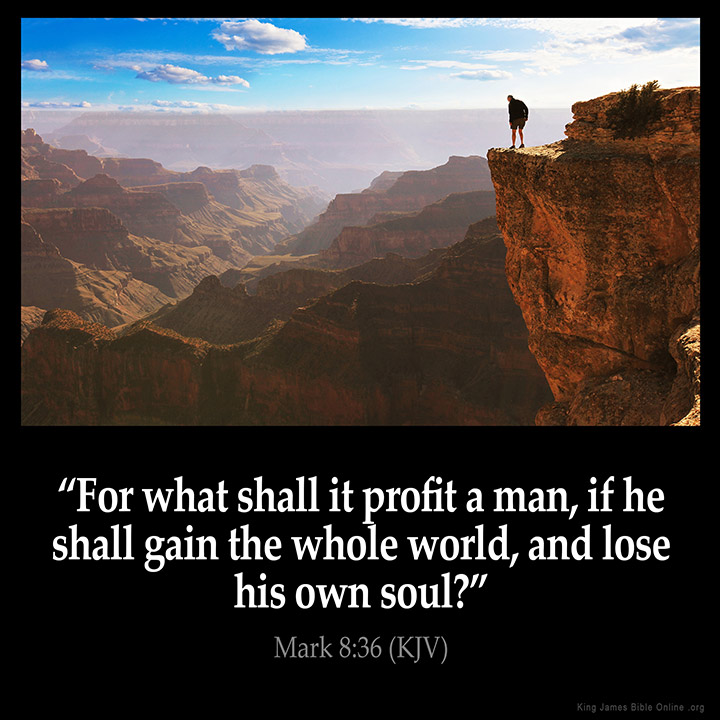
For what shall it profit a man, if he shall gain the whole world, and lose his own soul? Or what shall a man give in exchange for his soul?” (Mark 8:36-37).

The question of the soul’s worth is one that transcends time and culture, touching the very essence of human existence. Jesus Himself addressed this profound query in Mark 8:34-38 and Matthew 16:24-26, challenging us to consider the eternal value of our souls. Let us explore four pivotal aspects that underscore the immeasurable worth of a soul.

As living souls, we have much greater potential than all others of God’s creation. Technology, Arts, and Mercy are unique to humans. More than these, we have the potential to become like Christ. “So also is the resurrection of the dead. It is sown in corruption; it is raised in incorruption: It is sown in dishonour; it is raised in glory: it is sown in weakness; it is raised in power: It is sown a natural body; it is raised a spiritual body. There is a natural body, and there is a spiritual body” (1Cor 15:42-44). When we obey the gospel, we look forward to eternal life with our Savior and to see Him as He is, (cf. Rev 22:4).

In Matthew 10:28, Jesus admonishes, “And fear not them which kill the body, but are not able to kill the soul: but rather fear him which is able to destroy both soul and body in hell.” This declaration underscores the eternal nature of the soul, distinguishing it from our temporal physical bodies. The body may perish, but the soul endures beyond the grave, facing either eternal life or eternal punishment as stated in Matthew 25:46: “And these shall go away into everlasting punishment: but the righteous into life eternal.”

The everlasting nature of the soul is a solemn reminder of its infinite value. Our earthly concerns often distract us from this reality, yet Jesus calls us to prioritize our spiritual well-being. The choices we make in this life have eternal consequences, emphasizing the need for a life aligned with God’s will.

Jesus highlighted the incomparable worth of a soul by pointing to God’s providence over creation. In Matthew 6:26-30, He illustrates His care for the birds and the flowers, reminding us that we are of far greater value: “Are ye not much better than they?” Jesus also said that “the very hairs of your head are all numbered” (Matt 10:30). These passages underscore the unique and cherished place humanity holds in God’s creation.

I am fearfully and wonderfully made” (Psalm 139:14). This divine craftsmanship reflects the soul’s worth, a masterpiece of God’s creative power. Unlike the rest of creation, the human soul bears a unique value.

The soul’s worth is further magnified by its divine origin. Acts 17:29 declares, “Forasmuch then as we are the offspring of God, we ought not to think that the Godhead is like unto gold, or silver, or stone, graven by art and man’s device.” We are not merely physical beings but spiritual offspring of God, created in His image.

Genesis 1:26-27 records God’s decision to create humanity in His likeness, endowing us with attributes that reflect His nature: “And God said, Let us make man in our image, after our likeness.” The Preacher reminds us that at death, “Then shall the dust return to the earth as it was: and the spirit shall return unto God who gave it” (Ecc 12:7). The soul’s divine origin and destiny underscore its unparalleled worth, calling us to live in a manner that honors our Creator.

The ultimate measure of the soul’s worth is found in the sacrifice of Jesus Christ. John 3:16, perhaps the most well-known verse in the Bible, proclaims, “For God so loved the world, that he gave his only begotten Son, that whosoever believeth in him should not perish, but have everlasting life.” This profound act of love underscores the soul’s value, worthy of the highest price (cf. Rom 5:8-10).

2Peter 3:9 emphasizes God’s desire for our salvation, stating, “The Lord is not slack concerning his promise, as some men count slackness; but is longsuffering to us-ward, not willing that any should perish, but that all should come to repentance.” The sacrificial death of Christ on the cross is the ultimate testament to the worth of our souls, offering us redemption and eternal life.

In contemplating the worth of a soul, we must recognize its eternal nature, its unparalleled value in creation, its divine origin, and the supreme sacrifice made for its salvation. As we reflect on these truths, let us heed Jesus’ call in Mark 8:34-38 and Matthew 16:24-26 to deny ourselves, take up our cross, and follow Him. For in doing so, we affirm the immeasurable worth of our souls and align our lives with God’s eternal purpose.

Agape,
Spencer

This article is from a series of sermons on the Gospel of Mark. Click here for the list of available articles on the Gospel of Mark.

Lest we DRIFT away, Heb 2:1-3

Therefore we ought to give the more earnest heed to the things that were heard, lest haply we drift away from them. For if the word spoken through angels proved stedfast, and every transgression and disobedience received a just recompense of reward; how shall we escape, if we neglect so great a salvation?” (Heb 2:1-3a ASV)

In the swiftly changing currents of life, it is all too easy to drift away from the secure anchor of hope, “which we have as an anchor of the soul, a hope both sure and stedfast and entering into that which is within the veil” (Heb 6:19).

Let us explore five guiding principles from the book of Hebrews that can help us avoid spiritual drift and ensure our steadfastness in the faith.

The first one is found in Hebrews 6:11, “And we desire that each one of you may show the same diligence unto the fulness of hope even to the end.”

Think of diligence as the steady hand guiding the helm of a ship through treacherous waters. It is not enough to start well; we must persist, with our eyes fixed on the horizon of God’s promises.

Hebrews 4:11 exhorts us, “Let us labour therefore to enter into that rest, lest any man fall after the same example of unbelief.” The necessity of constant effort to avoid spiritual shipwreck is a recurring theme (Hebrews 10:22; 12:1). Are we laboring earnestly, or merely drifting along?

Reading and studying the Bible is the second way we will be able to remain on course, avoiding drift. The writer reminds us, “For the word of God is quick, and powerful, and sharper than any twoedged sword” (Heb 4:12). To avoid drift we must become skilled in the word. Hebrews 5:12-6:8 reveals the peril of spiritual immaturity and the dire consequences of neglecting the deeper teachings of Christ. Is our Bible a well-worn map or an unused artifact?

Another aid in avoiding drift is imitation which calls us to follow the examples of those who have walked the path of faith before us. Hebrews 6:12 instructs us to be “followers of them who through faith and patience inherit the promises.” We should emulate the faithful who have demonstrated unwavering trust in God. Consider the heroes of faith outlined in Hebrews 11. Their lives serve as beacons, illuminating the way for us to follow. By imitating their faith and perseverance, we reinforce our commitment to Christ. Whose shipping lane are we following today? (1Cor 11:1; 3John 11)

A healthy reverence for God is the fourth in our efforts to maintain our spiritual course. Hebrews 4:1 warns, “Let us therefore fear, lest, a promise being left us of entering into his rest, any of you should seem to come short of it.” Godly fear keeps us vigilant. It reminds us of the gravity of our salvation and the importance of living in a manner worthy of our calling. Does our reverence for God inspire vigilance or apathy?

Finally, we ought to take heed. Taking heed requires self-awareness and caution. Hebrews 3:12 cautions, “Take heed, brethren, lest there be in any of you an evil heart of unbelief, in departing from the living God.” The vigilance of the watchman who stands in the crow’s nest of the ship is akin to the spiritual alertness we must maintain to remain on course. By taking heed, we guard against the drift caused by doubt and sin. Are we watchful or wandering?

Let us heed the wisdom of Hebrews and apply these principles diligently. Through our earnest efforts we anchor our souls firmly in Christ, avoiding the perilous drift that leads away from so great a salvation.

Agape,

Spencer

What do we GAIN if we GAIN the whole world?

Matthew 16:26 says, “For what is a man profited, if he shall gain the whole world, and lose his own soul? or what shall a man give in exchange for his soul?”

The world often tells us that success is measured by our wealth, our status, our accomplishments. But Jesus flips this notion on its head. He asks us to consider the value of our soul. What good is it if we gain everything the world offers, but lose the most precious thing we have—our eternal soul?

We Give up our Soul

Our soul is so valuable that God gave His own Son that we have the opportunity to be saved. Jesus died on the cross not to make us rich or famous, but to save our souls. He paid the ultimate price so that we might have eternal life. This is the greatest treasure, far surpassing anything the world can offer. (Rom 5:8-10)

We gain the affection of the World

When we set our affections on worldly gains over our spiritual well-being, we risk losing our soul. We can become so consumed by the pursuit of success, wealth, and approval that we neglect what is pleasing to God. We might find temporary happiness, but it’s fleeting and shallow compared to the deep, abiding joy that comes from knowing Christ. Romans 12:2 tells us, “And be not conformed to this world: but be ye transformed by the renewing of your mind, that ye may prove what is that good, and acceptable, and perfect, will of God.” We are to live differently, to set our minds on things above, not on earthly things.

The Illusion of Worldly Gain

The world tells us to chase after material wealth, to seek power and fame. It tells us that the more we have, the happier we will be. But how often have we seen people who seem to have it all, yet are deeply unhappy, unfulfilled, and lost? They’ve gained the world but lost their soul’s true purpose and joy.

Jesus reminds us that our souls are eternal, while the things of this world are temporary. In 1 Timothy 6:7, we are reminded, “For we brought nothing into this world, and it is certain we can carry nothing out.” No amount of money, fame, or power can accompany us beyond this life. What truly matters is the condition of our soul.

We gain nothing except what we deserve

So, what do we win if we win the world but lose our soul? We gain nothing of true value. But when we seek first the kingdom of God and His righteousness, all these things will be added unto us (Matthew 6:33). When we focus on serving God, we find true peace, joy, and fulfillment.

Revelation 3:21 promises, “To him that overcometh will I grant to sit with me in my throne, even as I also overcame, and am set down with my Father in his throne.” This is the ultimate reward—eternity with Jesus, reigning with Him in glory. This is worth far more than anything the world can offer.

This article is part 1 of a series titled, God’s Moral Law. click here for part one.

You’re invited to attend one of our services at the church of Christ on Franklin and Juniper in Borger Texas.

the mystery of all religious error

Brothers and sisters, let me take you on a journey through the ages, a journey marked by error! We’re going to examine some of the grandest missteps in the Good Book, and I pray you’ll learn and love the Lord all the more by the time we’re done. Now, let’s start in the Garden of Eden.

GARDEN: And when the woman saw that the tree was good for food… Genesis 3:6
Eve, sweet Eve, saw that forbidden fruit and thought it looked mighty tasty. You know what they say, “Forbidden fruit is the sweetest.” But oh, how wrong she was! That bite led to the fall of man. When you think you know better than God, you’re just about to trip over your own pride. Brothers and sisters, remember this: the snake in the grass often has the best sales pitch, but his product never delivers what it promises!

CAIN: And Cain was very wroth, and his countenance fell. Genesis 4:5
Then we have Cain. Cain got madder than a hornet because God liked Abel’s offering better. His face was longer than a wet week! Instead of asking, “Lord, how can I do better?” he chose murder. Remember, when jealousy gets your goat, it’s just a short walk to the sin pasture. God’s ways aren’t always our ways, but they are always right.

PHARAOH: Who is the LORD, that I should obey his voice to let Israel go? I know not the LORD, neither will I let Israel go. Exodus 5:2
Pharaoh—now there was a man who thought he was all that and a bag of chips. He thought he could stand toe-to-toe with the Almighty. “Who is the Lord?” he scoffed. Let me tell you, when you hear someone ask that, you better stand. Pharaoh found out the hard way with ten plagues and a parted sea. Friends, when God says, “Let my people go,” you better step aside!

The more we know of God, the more we will obey Him. Conversely, the less we know of God, the less we will obey Him. Jesus himself pointed out the mystery of man’s error: “Ye do err, not knowing the scriptures, nor the power of God” (Matthew 22:29). This is a profound truth, my friends.

Sadducees and the Resurrection Errors
The Sadducees were trying to stump Jesus with riddles. They concocted a story about a woman who married seven brothers, each one dying in turn. “Whose wife will she be in the resurrection?” they asked, thinking they’d outsmarted Him. Jesus set them straight, reminding them that God’s word and His power transcends their earthly imaginations. Folks are still tying themselves in knots over theological riddles instead of trusting God’s word.

READING REQUIREMENTS in the OT law
In ancient Israel, God commanded His people to write His laws on stones and read them aloud. Deuteronomy 6:6-9 and 31:10-13 remind us that these words should be in our hearts, taught diligently to our children, spoken of at home and on the road. Yet Israel neglected this command.

We are also to read the word in the New Covenant, (John 20:30-31; Eph 3:3-4; 2Tim 3:15-17).

OT EXAMPLES of ERROR.
In the periods of Judges and Kings, they fell into cycles of forgetting, repenting, and deliverance. Not once do we read of the Israelites gathering to hear the law read, except under Jehoshaphat (2 Chronicles 17:7-9). When the word is neglected, the people perish!

David’s mishandling of the Ark of the Covenant, resulting in Uzzah’s death (1 Chronicles 13:5, 15:11-15), serves as a stern reminder of the importance of knowing and obeying God’s instructions. The failure to follow God’s law led to Israel’s captivity (Isaiah 5:13, Hosea 4:6).

REJECTING JESUS, Then and Now
Even in Jesus’ time, ignorance led to His rejection. The rulers didn’t recognize Him as the Lord of glory (1 Corinthians 2:6-8). Today, many still cling to errors—whether it’s misunderstanding salvation (Acts 15), mixing law and grace (Colossians 2:10), or holding onto traditions that contradict Scripture. From infant baptism to unnecessary church hierarchies, people err because they do not know the Scriptures nor the power of God.

So, do you value your soul? Jesus asked, “For what is a man profited, if he shall gain the whole world, and lose his own soul?” (Matthew 16:26). If we value our souls, we must study God’s word reverently, with fear, love, and care, and apply it daily.

Let’s avoid the errors of the past by immersing ourselves in God’s holy word. Read it, teach it, live it! And remember, when in doubt, God’s way is always the best way! Amen!

Agape, Spencer

you’re invited to one of our services at the Franklin and Juniper st church of Christ.

Who are we? We are just CHRISTIANS.

Then Agrippa said unto Paul, Almost thou persuadest me to be a Christian. And Paul said, I would to God, that not only thou, but also all that hear me this day, were both almost, and altogether such as I am, except these bonds.” (Acts 26:28,29).

We’re often asked to show our ID’s. From getting on a plane, to buying things on credit, or to the police officer that pulled me over looking for my autograph.

We use identification to gain access to banking accounts, safety deposit boxes, and the like.

When we speak about locating the Lord’s church, we look for its identifying marks. What does it teach about salvation, assembling together for worship, morality, and eschatology.

The Christian has an identity also. It’s interesting to note that our identity is in relationship to our God and to fellow Christians.

Let us explore our multifaceted identity as outlined in God’s Word.

When viewed in relation to God we are His children. “And will be a Father unto you, and ye shall be my sons and daughters, saith the Lord Almighty.” (2Cor 6:18)

When viewed in relation of hope we are heirs. “And if children, then heirs; heirs of God, and joint-heirs with Christ; if so be that we suffer with him, that we may be also glorified together.” (Rom. 8:17)

When viewed in relation to each other we are brethren. “I beseech you therefore, brethren, by the mercies of God, that ye present your bodies a living sacrifice, holy, acceptable unto God, which is your reasonable service.” (Rom. 12:1)

When viewed in relation to character we are saints. “To all that be in Rome, beloved of God, called to be saints: Grace to you and peace from God our Father, and the Lord Jesus Christ.” (Rom. 1:7)

If viewed as fighters we are soldiers. “Thou therefore endure hardness, as a good soldier of Jesus Christ.” (2Tim. 2:3)

When viewed in relation to our abode upon earth we are pilgrims. “Dearly beloved, I beseech you as strangers and pilgrims, abstain from fleshly lusts, which war against the soul.” (1Pet. 2:11.)

When viewed as the Image of Christ we are persecuted. “But rejoice, inasmuch as ye are partakers of Christ’s sufferings; that, when his glory shall be revealed, ye may be glad also with exceeding joy.” (1Pet 4:13; cf. Matt 10:24,25; 2Tim 3:12).

When viewed as learners of Christ we are disciples (adherents). “Go ye therefore, and make disciples of all the nations, baptizing them into the name of the Father and of the Son and of the Holy Spirit” (Matt. 28:19 ASV).

When viewed in relation to Christ we have a name; we are called Christians. “And the disciples were called Christians first in Antioch.” (Acts 11:26b).

When viewed as workers for the Lord we are servants of Christ. “For, brethren, ye have been called unto liberty; only use not liberty for an occasion to the flesh, but by love serve one another.” (Gal. 5:13).

Agape,

Spencer

We are striving to be undenominational and non-sectarian. We plead for a restoration of New Testament Christianity. It is our sincere conviction that one cannot be right in the sight of God by ignoring and disregarding the teaching of God’s word. Let us strive to “do all in the name of the Lord Jesus” (Col. 3:17).

God Gave them Up

Wherefore God also gave them up to uncleanness through the lusts of their own hearts, to dishonour their own bodies between themselves” (Rom 1:24).

People often cite the Letter to the Romans for their erroneous view on election and predestination. While these concepts are here, their view that God preselects individuals to be lost or saved before they were born and without any reason is error.

We can answer this erroneous view beginning with chapter one where we are told why God gave them up to their sin. People are not lost because God randomly chose them to be lost. People are lost because of their disobedience to Him (sin), neither does He cause them to sin.

Note verse 26, “For this cause God gave them up.” Paul is telling us WHY God gave them up, and the reason is not because God just didn’t want them to be saved. There are reasons.

For God to give someone up to sin, there must be some standard by which the guilt is determined.

God gave them up to their sins because they gave Him up. Notice what people had done BEFORE God gave them up.

Because that which may be known of God is manifest in them; for God hath shewed it unto them. For the invisible things of him from the creation of the world are clearly seen, being understood by the things that are made, even his eternal power and Godhead; so that they are without excuse: Because that, when they knew God, they glorified him not as God, neither were thankful; but became vain in their imaginations, and their foolish heart was darkened. Professing themselves to be wise, they became fools, And changed the glory of the uncorruptible God into an image made like to corruptible man, and to birds, and fourfooted beasts, and creeping things. Wherefore God also gave them up to uncleanness through the lusts of their own hearts, to dishonour their own bodies between themselves” (Rom 1:19-24 emphasis mine seb).

God had revealed to mankind His existence through His creation. Instead of glorifying Him, they were ungrateful, turned to their own wisdom, and then to idolatry. They took a piece of creation and worshiped it.

Jeremiah described their foolishness this way; “For the customs of the people are vain: for one cutteth a tree out of the forest, the work of the hands of the workman, with the axe. They deck it with silver and with gold; they fasten it with nails and with hammers, that it move not. They are upright as the palm tree, but speak not: they must needs be borne, because they cannot go. Be not afraid of them; for they cannot do evil, neither also is it in them to do good” (Jer 10:3-5). Jeremiah then warns them, “Every man is brutish in his knowledge: every founder is confounded by the graven image: for his molten image is falsehood, and there is no breath in them. They are vanity, and the work of errors: in the time of their visitation they shall perish” (10:14-15; cf, Isa 44:9-20).

Think about it. Created humans rejected their creator, then created a wooden image to worship, and did not give the God of Heaven thanks nor glory for His great might. Do we see anything different happening today? The only difference is the object of worship.

For many walk, of whom I have told you often, and now tell you even weeping, that they are the enemies of the cross of Christ: Whose end is destruction, whose God is their belly, and whose glory is in their shame, who mind earthly things” (Phil 3:18-19).

Agape,

Spencer

This article is part 1 of a series titled, God’s Moral Law. click here for part two.

You’re invited to attend one of our services at the church of Christ on Franklin and Juniper in Borger Texas.

Preaching through the Gospel of Mark in 2024

Lord Willing, Each first Sunday of the month in 2024 will come from the Gospel of Mark. While there are 16 chapters in Mark and only 12 first Sundays, we will follow each chapter until chapter 12-16 which will have one sermon in December.

January: Mark 1. My Beloved SON.

February: Mark 2. Jesus is GOD.

March: Mark 3. Sinning against the Holy Spirit.

April: Mark 4. What Kind of SOIL am I?

May: Mark 5. Fearing Jesus, Mocking Jesus, Seeing Jesus.

June: Mark 6. How well do we TRUST Jesus?

July: Mark 7. LIP Service toward God.

August: Mark 8. The Value of a SOUL.

September: Mark 9. HEAR Him.

October: Mark 10. What do you WANT me to do?

November: Mark 11. From Heaven for from Men?

December: Mark 12-16. What did Judas BRING to the garden?

We invite you to attend one of our services at the Franklin & Juniper St church of Christ in Borger Texas.

Why do we DOUBT? p3

Would ye also go away?

John 6:67-68

They went away because of His Teaching.

John 6:53

Some go away because of Fear of men.

John 12:42

Some go away because of Doubts or Questions.

John 7:52-53

Some go away out of procrastination.

Matt 8:21

Why did you doubt?” p3

(Matt 14:24-31).

Why do we doubt? What is the source of doubt? This series of articles seeks to search the scriptures for the answer, and to learn how to combat, or to Overcome Doubt.

The first article showed that Doubt is based on Disbelief, and the way to overcome disbelief is through knowledge of the Lord Jesus Christ. The second article spoke about obstacles that reveal doubt. This article will attempt to Overcome Doubt that arises when we turn away from the truth toward uncertainties. 

When we begin to DOUBT, our response is often to take matters into our own hands. Think of those examples when folks didn’t know how God was going to fulfill a promise, so they tried to “help” Him out. Sarah’s suggesting Hagar (Gen 16:1-4). King Saul making an unlawful sacrifice when Samuel was delayed (1Sam 13:8-13).

When life becomes uncertain, we may place our trust in more UNCERTAINTIES. We try to walk by sight instead of by faith. When doubts arise and fears dismay, we place our trust in earthly resources.

Paul charged Timothy to warn the rich of this. “But they that will be rich fall into temptation and a snare, and into many foolish and hurtful lusts, which drown men in destruction and perdition. Charge them that are rich in this present world, that they be not highminded, nor have their hope set on the uncertainty of riches, but on God, who giveth us richly all things to enjoy” (1Tim 6:9, 17).

For many of us, instead of the NOTHING wavering faith of James 1, we become tossed about by every wind of doctrine. “That we henceforth be no more children, tossed to and fro, and carried about with every wind of doctrine, by the sleight of men, and cunning craftiness, whereby they lie in wait to deceive” (Eph 4:14). We turn from the truth of God’s word to the opinions of others.

When doubt increases, others place their trust in SELF. “I’ll do it my way.” “Daring, self-willed, they tremble not to rail at dignities” (2Pet 2:10; Lu 12:15-21).

These things may appear helpful, but they are UNFRUITFUL. The deceit of the world leads to being unfruitful, “And some fell among thorns; and the thorns sprung up, and choked them: He also that received seed among the thorns is he that heareth the word; and the care of this world, and the deceitfulness of riches, choke the word, and he becometh unfruitful” (Matt 13:7,22; Mark 4:18,19).

For some they turn to seemingly successful & happy people that end up ROBBING them of whatever faith they have remaining. “Let no man deceive you with empty words: for because of these things cometh the wrath of God upon the sons of disobedience” (Eph 5:6; Col 2:4,8,18; 3:6; 2Th 2:3).

Paul wrote about these deceptive people, “holding a form of godliness, but having denied the power therefore. From these also turn away. For of these are they that creep into houses, and take captive silly women laden with sins, led away by divers lusts, ever learning, and never able to come to the knowledge of the truth” (2Tim 3:5-7).

Each of the above strategies smack of an EARTHLY wisdom from beneath that moves away from the wisdom of God’s word that comes from above. “This wisdom is not a wisdom that cometh down from above, but is earthly, sensual, devilish. For where jealousy and faction are, there is confusion and every vile deed” (James 3:15-16).

What is the remedy to doubt?

The first and main thing we need to do to answer doubt is to continue to SEEK the kingdom of God and his righteousness. In the famous passage on worry, Jesus said, “But seek ye first his kingdom, and his righteousness; and all these things shall be added unto you” (Matt 6:33). Just because we sometimes doubt, doesn’t mean we stop doing the right thing. Sin is never the answer to doubt.

Look UP, set your affections on things above. Developing hope is a great strategy for overcoming or alleviating doubt. “If then ye were raised together with Christ, seek the things that are above, where Christ is, seated on the right hand of God. Set your mind on the things that are above, not on the things that are upon the earth. For ye died, and your life is hid with Christ in God. When Christ, who is our life, shall be manifested, then shall ye also with him be manifested in glory” (Col 3:1-4). When we have a big enough why, we can endure any how.

We can READ the word of the Lord. When we don’t know what to do, instead of turning to the earthly advice, turn to the word of God, or to people that will give godly advice (Titus 2:1-8). His word gives us all things pertaining to life and godliness (2Pet 1:3). Doubt is the opposite of faith, and faith comes by hearing (Rom 10:17). Read the bible for insight into this life. We can learn how to handle fear and doubt by reading of the examples of those that faced the same things. “Every scripture inspired of God is also profitable for teaching, for reproof, for correction, for instruction which is in righteousness. That the man of God may be complete, furnished completely unto every good work” (2Tim 3:16-17).

While doubt is uncomfortable, there is still hope. Doubt tends to focus on what’s missing. There are still things to ENJOY. The wise advice of one of our songs is to “count your many blessings.” Look for what is good, and watch for the good that may come from our continued faithfulness in times of trial. James wrote for us to count it all joy when we face trials. “Count it all joy, my brethren, when ye fall into manifold temptations; Knowing that the proving of your faith worketh patience” (James 1:2-3).

Every good gift and every perfect gift is from above, coming down from the Father of lights, with whom can be no variation, neither shadow that is cast by turning” (James 1:17).

Agape,

Spencer

This is part 3 of a series on Overcoming Doubt.

1John 3:19-24, The CHILD of God

The CHILD of God can know. 1John 3:19-24

19-24) The child of God can know

# CLEAR Conscience. 3:20-21.

# HEAR Him. 4:6; 1:1-5; 2:7,24; 3:11.

# IF we walk, confess, keep, hear, love. 1:7; 9; 2:3,24; 4:12;

# LOVE Him and those He Loves. 3:18-23.

# DO those things pleasing to Him. 3:22.

xxxxxxxxxxxxxxxxxxxxxxx

Here’s a link to all the published studies from 1 John.

The Franklin and Juniper church of Christ did a study of the book of 1John in the summer and fall of 2023. If you live in the Borger area, We invite you to join us at 9:30am each Sunday Morning for similar Bible studies.

1John 3:14-15 How do we KNOW?

HOW DO WE KNOW IF WE’VE PASSED FROM DEATH INTO LIFE?

KEEP HIS COMMANDS. 2:3-5, 24; 1:5-10.

NO Love of the World. 1John 2:15-17.

OUGHT TO LOVE AS HE LOVED.
3:16 Lay down our lives for the Brethren.
4:11 Love the Brethren.

WALK as He walked. 1John 2:6.

xxxxxxxxxxxxxxxxxxxxxxx

Here’s a link to all the published studies from 1 John.

The Franklin and Juniper church of Christ did a study of the book of 1John in the summer and fall of 2023. If you live in the Borger area, We invite you to join us at 9:30am each Sunday Morning for similar Bible studies.