“And now why tarriest thou? Arise, and be baptized, and wash away thy sins, calling on the name of the Lord.”
This verse records Ananias’ instructions to Saul (later Paul) regarding his conversion. To understand what it means to “call on the name of the Lord,” we must look at how the Bible defines and uses this phrase.
1. Calling on the Name of the Lord Involves Obedience
Acts 22:16 ties “calling on the name of the Lord” directly to baptism, which is the moment when Saul’s sins were washed away. This aligns with Jesus’ own words in Mark 16:16:
“He that believeth and is baptized shall be saved; but he that believeth not shall be damned.”
Calling on the name of the Lord, then, is not merely a verbal plea but involves obedient action. This is further clarified by Romans 10:13-14:
“For whosoever shall call upon the name of the Lord shall be saved. How then shall they call on him in whom they have not believed? and how shall they believe in him of whom they have not heard? and how shall they hear without a preacher?”
Paul, writing later, shows that calling on the Lord’s name requires hearing the gospel, believing, and responding in obedience.
2. Calling on the Name of the Lord Is Not Just Prayer
Some assume that calling on the Lord’s name is merely saying a prayer for salvation, but Scripture does not support this idea. Consider Jesus’ words in Matthew 7:21:
“Not every one that saith unto me, Lord, Lord, shall enter into the kingdom of heaven; but he that doeth the will of my Father which is in heaven.”
Merely addressing Jesus as Lord does not save—doing His will does. This is consistent with Acts 22:16, where Paul had already been praying (Acts 9:11), yet he still needed to be baptized to wash away his sins.
3. Biblical Examples of Calling on the Name of the Lord
The phrase “call on the name of the Lord” is used throughout Scripture in connection with worship and obedience.
• Genesis 4:26 – “Then began men to call upon the name of the LORD.” This refers to worship and devotion to God.
• Joel 2:32 (quoted in Acts 2:21) – “Whosoever shall call on the name of the Lord shall be delivered.” This was fulfilled in Acts 2, where Peter preached that repentance and baptism in Jesus’ name were necessary for salvation (Acts 2:38).
In Acts 2, the people called upon the Lord by obeying Peter’s command to repent and be baptized. This directly parallels Acts 22:16, where Paul was instructed to do the same.
So what now?
To “call on the name of the Lord” is to appeal to Him for salvation by faithful obedience to His commands. Acts 22:16 shows that Saul (Paul) did this when he was baptized, at which point his sins were washed away. This is consistent with how the phrase is used throughout the Bible—faith in action, not merely words.
The Cambrian Explosion presents one of the most compelling challenges to evolutionary theory and a powerful argument for sudden creation. This event, characterized by the sudden appearance of diverse and complex animal forms in the fossil record, aligns with the Cosmological Argument, suggesting a Creator’s intervention in the origins of life.
During the Cambrian Explosion, nearly all the major animal phyla appeared abruptly without clear evolutionary precursors. Trilobites, arthropods, mollusks, echinoderms, and many other complex organisms emerged fully formed with distinct body plans. This event contradicts Darwinian expectations of gradual transitions through intermediate forms over long periods. Instead, the fossil evidence supports the idea of sudden creation, where life forms were introduced in a fully functional and diverse state.
One of the most striking examples is the trilobite, which possessed highly complex compound eyes with dozens of lenses. These eyes required precise anatomical and biochemical systems to function, challenging the idea of their gradual evolution. Such sophisticated designs appearing suddenly in the fossil record point toward intelligent design rather than chance processes.
The abruptness of the Cambrian Explosion highlights the inadequacy of naturalistic explanations. Evolutionary models have struggled to account for the lack of transitional fossils leading to these diverse life forms. Attempts to explain this event, such as the “genetic toolkit” hypothesis, fail to address why the genetic information and mechanisms for such diversity appeared so suddenly and simultaneously.
From a biblical perspective, the Cambrian Explosion aligns with the narrative of creation as described in Genesis. Genesis 1:20-21 declares, “And God said, Let the waters bring forth abundantly the moving creature that hath life… And God created great whales, and every living creature that moveth, which the waters brought forth abundantly, after their kind.” This description of life appearing abundantly and fully formed mirrors the pattern observed in the Cambrian Explosion.
The Cambrian Explosion provides compelling evidence for sudden creation, challenging the gradualism central to Darwinian evolution. The abrupt appearance of complex organisms, lacking evolutionary precursors, suggests a Creator who brings forth life in abundance and complexity.
Another theory for the Cambrian explosion held by some creationists interprets it as consistent with the biblical account of a worldwide flood, as described in Genesis 6–9.
Sources:
Stephen C. Meyer, Darwin’s Doubt: The Explosive Origin of Animal Life and the Case for Intelligent Design
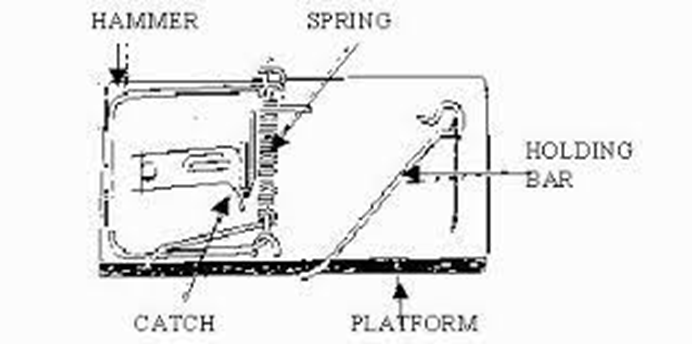
A Mousetrap represents an example of irreducible complexity
The concept of irreducible complexity presents a powerful argument for the existence of a Designer. Coined by biochemist Michael Behe, irreducible complexity refers to biological systems composed of multiple interdependent parts, all of which must function simultaneously for the system to work. Such systems cannot arise through gradual evolutionary processes, as removing even one component renders the system nonfunctional. This hallmark of intentional design points to the existence of an intelligent Creator.
One of the most cited examples of irreducible complexity is the bacterial flagellum, a microscopic rotary motor used by bacteria for propulsion. The flagellum comprises over 40 distinct protein components, including a rotor, stator, drive shaft, bushing, and propeller. Each part is precisely shaped and positioned to interact with the others, enabling the flagellum to rotate at incredible speeds—up to 100,000 revolutions per minute in some species.
The flagellum’s functionality depends on the presence of all its components working together. If even one protein is missing, the entire system fails, offering no advantage to the organism. This contradicts Darwinian evolutionary mechanisms, which propose gradual modifications and natural selection as the means of developing complex structures. As Behe argues in his book Darwin’s Black Box, such irreducible systems could not have evolved step-by-step, as intermediate stages would confer no benefit to survival.
The Bible supports the idea of intentional design in creation. Job 12:7-9 invites us to consider the evidence of God’s hand in the natural world: “But ask now the beasts, and they shall teach thee; and the fowls of the air, and they shall tell thee: Or speak to the earth, and it shall teach thee: and the fishes of the sea shall declare unto thee. Who knoweth not in all these that the hand of the Lord hath wrought this?” The intricacy of the flagellum echoes this truth, revealing the handiwork of a Creator. The bacterial flagellum, a marvel of engineering, stands as evidence of God’s power and wisdom.
Scientifically, attempts to explain the flagellum through evolutionary mechanisms remain inconclusive. Proposals like co-option, which suggest that existing proteins were repurposed for new functions, fail to account for the precise timing, positioning, and coordination required to assemble the flagellum. Such precision implies design, not chance.
Irreducible complexity in systems like the bacterial flagellum provides compelling proof of a Designer. Its intricate structure and functionality defy evolutionary explanations, aligning with biblical declarations of God’s creative work. This undeniable complexity reflects the harmony between science and faith, pointing to the Creator behind the design.
Life is full of hardship. Suffering, loss, and disappointment are part of the human experience. Some struggle with grief, others with betrayal, loneliness, or physical pain. No one is immune to the trials of life. Yet, in the midst of sorrow, there is One who offers healing, hope, and peace—Jesus Christ.
Jesus understands suffering because He experienced it firsthand. Isaiah 53:3 describes Him as “a man of sorrows, and acquainted with grief.” He knew what it was like to be rejected, betrayed, and physically tormented. He endured humiliation and pain on the cross, bearing the weight of humanity’s sin. Because of this, He is uniquely qualified to comfort those who are hurting. Hebrews 4:15 assures us that we have a Savior who can sympathize with our weaknesses, for He was “tempted like as we are, yet without sin.”
Hope in Christ for the Hurt of This Life
Pain can make life feel unbearable. The world offers temporary distractions, but they cannot bring lasting peace. Only Christ provides true hope. John 16:33 reminds us of this reality: “In the world ye shall have tribulation: but be of good cheer; I have overcome the world.” The suffering of this present life is temporary, but the joy found in Christ is eternal. Paul declares in Romans 8:18, “For I reckon that the sufferings of this present time are not worthy to be compared with the glory which shall be revealed in us.” When we trust in Christ, we gain a perspective that allows us to endure, knowing that something far greater awaits.
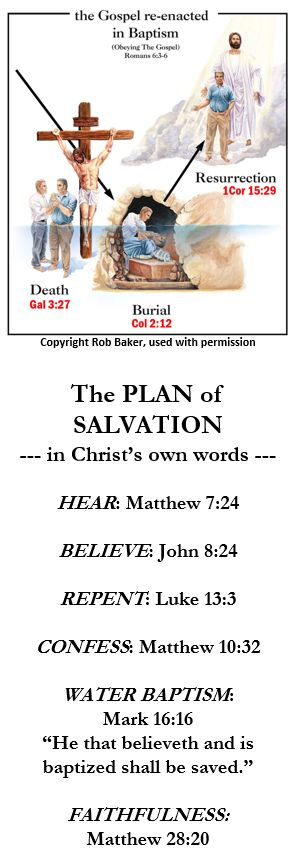
“For as many of you as have been baptized into Christ have put on Christ.” (Galatians 3:27)
Understanding from Christ, Who Endured Suffering
One of the most comforting truths about Jesus is that He understands human suffering. He was betrayed by a close friend (Luke 22:48; Psalm 41:9), falsely accused (Matthew 26:59-60), mocked (Matthew 27:29-31), and crucified (Luke 23:33). He knows what it feels like to be abandoned, rejected, and mistreated. This means that when we pour out our hearts to Him, we are speaking to One who truly understands. Psalm 34:18 assures us, “The Lord is nigh unto them that are of a broken heart.”
“Know ye not, that so many of us as were baptized into Jesus Christ were baptized into his death?” (Romans 6:3)
Rest and Peace in His Forgiveness and Mercy
Many suffer not only from external circumstances but also from the weight of guilt and shame. Sin leaves scars, and the burden of past mistakes can feel overwhelming. Yet, Jesus offers complete forgiveness. Matthew 11:28 invites us, “Come unto me, all ye that labour and are heavy laden, and I will give you rest.” Through His sacrifice, we are freed from sin’s condemnation. Psalm 103:12 declares, “As far as the east is from the west, so far hath he removed our transgressions from us.” In Christ, we find peace, knowing that our past does not define us.
“And now why tarriest thou? arise, and be baptized, and wash away thy sins, calling on the name of the Lord.” (Acts 22:16)
Truth, Life, and True Joy
Many search for meaning in temporary pleasures, but Jesus alone is the source of true life. He declares in John 14:6, “I am the way, the truth, and the life.” The joy He gives is not dependent on circumstances but is rooted in a relationship with Him. John 15:11 states, “These things have I spoken unto you, that my joy might remain in you, and that your joy might be full.”
“And when they were come up out of the water, the Spirit of the Lord caught away Philip, that the eunuch saw him no more: and he went on his way rejoicing.” (Acts 8:39)
Jesus, Our Intercessor
For those who feel distant from God, Jesus bridges the gap. 1 Timothy 2:5 tells us, “For there is one God, and one mediator between God and men, the man Christ Jesus.” He intercedes for us before the Father, offering continual access to God’s grace and help.
“And whatsoever we ask, we receive of him, because we keep his commandments, and do those things that are pleasing in his sight.” (1John 3:22)
He Never Leaves nor Forsakes Us
Loneliness is one of the deepest forms of suffering. Yet, Jesus promises, “I will never leave thee, nor forsake thee” (Hebrews 13:5). Even when we feel abandoned, He is always near.
“And he that keepeth his commandments dwelleth in him, and he in him. And hereby we know that he abideth in us, by the Spirit which he hath given us.” (1John 3:24)
Good Can Come Despite the Pain
While suffering is hard, God can bring blessings out of trials. Romans 8:28 reassures us, “And we know that all things work together for good to them that love God.” Even when we don’t understand, we can trust that He can bring about good despite the pain and suffering in this life.
“My brethren, count it all joy when ye fall into divers temptations; Knowing this, that the trying of your faith worketh patience.” (James 1:2-3)
Conclusion
No matter what pain or sorrow you carry, Jesus offers hope and healing. Turn to Him, and you will find peace, understanding, and the strength to endure. “Casting all your care upon him; for he careth for you.” (1 Peter 5:7)
Agape
Spencer
There is a way you may know if you have eternal life.
The ontological argument, first articulated by St. Anselm of Canterbury in the 11th century, explores the concept of God as a necessary being whose existence is self-evident through reason. Unlike other arguments that rely on empirical evidence, the ontological argument is a philosophical proof, rooted in the nature of God as “that than which nothing greater can be conceived.” Modern developments in philosophy and science reinforce the logic of this timeless argument.
The Concept of Necessary Existence. The argument begins with the definition of God as the greatest conceivable being. Such a being must exist not only in the mind (as a concept) but also in reality, for existence in reality is greater than existence solely in thought. If God existed only as a concept, then a greater being—one that exists in reality—could be imagined, contradicting the original definition. Thus, God must exist in reality.
This concept aligns with the biblical understanding of God as self-existent and eternal. Exodus 3:14 encapsulates this when God declares, “I AM THAT I AM,” signifying His independent and necessary existence.
Modern Philosophical Insights. Contemporary philosophers like Alvin Plantinga have refined the argument, framing it within modal logic. Plantinga’s version argues that if it is possible for a maximally great being to exist, then such a being exists in some possible world. If it exists in one possible world, its necessary nature means it exists in all possible worlds—including our own.
This formulation strengthens the argument by considering God’s existence as necessary rather than contingent. A necessary being is one that must exist; its non-existence is impossible. This necessity aligns with the biblical portrayal of God as eternal and unchanging (Malachi 3:6).
Scientific Corroboration of a Necessary Cause. While the ontological argument is primarily philosophical, modern science lends indirect support. The universe, with its intricate fine-tuning, suggests a source that exists outside time and space. This aligns with the concept of a necessary being who undergirds all reality. Romans 1:20 reflects this idea: “For the invisible things of him from the creation of the world are clearly seen, being understood by the things that are made.”
Implications of God’s Necessary Existence. If God’s existence is necessary, He is the source of all contingent reality—everything that depends on something else to exist. This explains not only the existence of the universe but also the rationality, order, and purpose evident in creation.
Conclusion. The ontological argument, grounded in reason and supported by scripture, reveals God as the necessary being upon whom all existence depends. As Colossians 1:17 declares, “And he is before all things, and by him all things consist.” This philosophical proof, when coupled with scripture, underscores the truth of God’s eternal and unchanging nature.
Sources: • Plantinga, A. The Nature of Necessity. • Craig, W.L. Reasonable Faith: Christian Truth and Apologetics. • Exodus 3:14, Romans 1:20, Malachi 3:6, Colossians 1:17 (KJV).
Not Just another Bible Reading plan you won’t finish.
It’s that time of year again when we encourage folks to find the right Bible reading plan that works for them. If you’ve ever struggled to read the Bible consistently, having a structured plan can make all the difference.
Before we introduce the 2025 plan, let’s take a moment to reflect on why a regular approach to Bible reading is so valuable.
The Word of God is our spiritual nourishment (Matthew 4:4), and regular reading allows us to grow in knowledge, faith, and obedience. A well thought out plan provides consistency and focus, ensuring that we engage with the whole counsel of God (Acts 20:27). It also helps us build a daily habit of spending time in God’s Word, which strengthens our walk with Him and equips us for every good work (2 Timothy 3:16-17).
Following is a simplified version of the Bible Reading Plan I’ve followed for the last few years. This plan is both simple and engaging. By breaking up the reading between the Old and New Testaments it helps to break up any monotony that keeps many folks from finishing.
The Monday Through Friday 5-day Reading Plan This year’s plan has us reading the New Testament twice while incorporating the Old Testament and Poetry/Wisdom books. It is structured to give variety and balance:
• Mondays: Read 4 chapters from the Gospels (Matthew, Mark, Luke, and John – 89 chapters twice).
• Tuesdays: Read 4 chapters from Paul’s letters (Romans through Philemon – 87 chapters twice).
• Wednesdays: Read 4 chapters from the General Letters and Acts (Hebrews through Revelation and Acts – 84 chapters twice).
• Thursdays & Fridays: Read 7 chapters each on these two days from the Old Testament History & prophets (728 chapters total).
• Monday–Friday: Add 1 chapter each morning or evening from the Poetry and Wisdom books (Psalms, Proverbs, Ecclesiastes, Song of Solomon – 201 chapters total). With the 59 days to spare I’ll usually read Proverbs, Ecclesiastes, & Song of Solomon again.
By following this plan, you will read through the entire Bible in a year, with the New Testament covered twice.
Why This Plan Works As New Testament Christians, the focus on the New Covenant is especially meaningful. By reading the New Testament twice in a year—just 4 chapters a day—you’ll gain a deeper understanding of Jesus’ life and teachings, as well as learning about the Lord’s church. In about 15–20 minutes each day, you can reflect on God’s grace and truth revealed through His Word.
The plan also ensures exposure to the Old Testament, grounding us in God’s purpose, and wisdom. With its organized structure, each day brings fresh motivation and variety, helping you stay engaged.
Imagine this time next year, having read about the life of Jesus twice and journeyed through the entire Bible. You’ll gain not just knowledge, but also a richer, deeper relationship with God through His Word. Start your journey today, and see how consistent Bible reading transforms your life in 2025!.
Who Was in the Manger? The question, “Who was in the manger?” directs our thoughts to a singular event in human history: the birth of Jesus Christ. The identity of the One lying in that humble setting reveals profound truths about God’s plan for mankind.
The Messiah The child in the manger was the long-awaited Messiah, the Anointed One sent to save humanity. Andrew declared in John 1:41, “We have found the Messiah.” The angels echoed this truth to shepherds, proclaiming, “Unto you is born this day in the city of David a Saviour, which is Christ the Lord” (Luke 2:11). This Messiah came not just for Israel but for all mankind, as Matthew 1:21 reveals: “He shall save his people from their sins.” Paul emphasized in 1 Timothy 1:15 that Christ’s purpose was to save sinners.
Alpha and Omega The baby in the manger was more than just the Savior; He was the eternal God, the Alpha and the Omega, the beginning and the end (Revelation 1:8). While the world saw a helpless infant, in Him dwelled the fullness of deity. His coming was the intersection of the Creator stepping into His creation.
Name Above All Names The child born in Bethlehem carried the name above all names, one that is unequaled in power and significance. Acts 4:12 declares, “There is none other name under heaven given among men, whereby we must be saved.” Philippians 2:9 states that God exalted Jesus and gave Him a name above every name.
God’s Only and Beloved Son This infant was God’s only begotten and beloved Son, sent to fulfill His divine mission. Mark 9:7 records God’s declaration: “This is my beloved Son: hear him.” Peter confessed in Matthew 16:16, “Thou art the Christ, the Son of the living God.” As God’s Son, Jesus was uniquely qualified to reconcile humanity to the Father, demonstrating both God’s love and His justice.
Eternal Life Giver In the manger lay the giver of eternal life. John 1 portrays Him as the Word, the source of life and light for all. Jesus Himself said, “The words that I speak unto you, they are spirit, and they are life” (John 6:63). This eternal life is not only a future promise but a present reality for those who believe in Hime and obey the Gospel.
The Root and Offspring of David Finally, the child in the manger was both the root and offspring of David, fulfilling prophecy and confirming His rightful place as King. Revelation 22:16 proclaims, “I am the root and the offspring of David, and the bright and morning star.” He is the Lion of the tribe of Judah, worthy to reign forever (Revelation 5:5).
The one in the manger was no ordinary child. He was the Messiah, the Alpha and Omega, the name above all names, God’s beloved Son, the eternal life giver, and the root and offspring of David. While we don’t know when Jesus was born, we take this time of year as an opportunity to talk to folks because many are already thinking about Him. It’s an opportunity to remind the world of who Jesus truly is and why He came: to offer salvation and eternal hope to all who believe. Let’s use this season and every season to share the good news of the Savior who changed everything.
The basic error in the Calvinist understanding of God’s sovereignty lies in their assumption that God’s sovereignty means He must exercise absolute, irresistible control over every aspect of human will.
Calvinism argues that because God is sovereign, no created being could truly have the option to reject Him, as this would supposedly compromise His power. As a result, Calvinism teaches that God must first miraculously regenerate a person’s heart to make them capable of seeking Him, thus removing the genuine exercise of free will in the process of coming to faith.
However, this view misunderstands the nature of sovereignty. True sovereignty means God possesses ultimate authority and power, including the authority to grant His creation the freedom to choose, even if that choice involves rejection. By equating sovereignty with strict determinism, Calvinism limits God, suggesting He cannot be truly sovereign unless He exercises control in a particular way. But as seen in Scripture, God’s sovereignty encompasses the ability to bring about His purposes despite human choices, even when those choices oppose Him. This view implies God’s sovereignty cannot accommodate human freedom without being diminished. Biblically, God’s sovereignty is displayed in His supreme ability to accomplish His purposes through or in spite of human decisions.
The sovereignty of God is neither dependent on human response nor diminished by human rejection. To assert that God’s sovereignty is undermined if someone rejects Him is to misunderstand what sovereignty means. Sovereignty refers to supreme authority and power over all things, independent of external influence or acceptance. Here are key points to help understand this:
God’s Sovereignty as Absolute: Scripture portrays God’s sovereignty as all-encompassing and unchanging. In passages like Isaiah 46:9-10, God declares, “I am God, and there is none like me… My counsel shall stand, and I will do all my pleasure.” God’s authority and purpose are not contingent on human acceptance but are established solely by His will.
God Permits Free Will without Diminishing His Sovereignty: Sovereignty includes the authority to grant free will to humanity. In His omnipotence, God has chosen to allow individuals the freedom to accept or reject Him, but this choice does not lessen His power. In Acts 17:30-31, Paul speaks of God’s patient desire for repentance, showing that God’s authority remains, even as He allows humanity space for choice. “And the times of this ignorance God winked at; but now commandeth all men every where to repent: Because he hath appointed a day, in the which he will judge the world in righteousness by that man whom he hath ordained; whereof he hath given assurance unto all men, in that he hath raised him from the dead.”
Judgment Demonstrates Sovereign Authority: When humans reject God, it doesn’t affect His sovereignty but rather reveals it. God’s authority is demonstrated through judgment as well as mercy. 2 Thessalonians 1:8-9 describes that those who “know not God” or “obey not the gospel” will face His judgment. This action affirms His authority over all creation, holding all accountable whether or not they choose to honor Him.
Christ’s Rejection Does Not Diminish God’s Power: Jesus Himself faced widespread rejection, yet God’s plan of salvation was fulfilled, displaying His sovereignty. John 1:11 says, “He came unto his own, and his own received him not,” yet the mission was accomplished by God’s power, demonstrating that rejection by some does not disrupt God’s overarching purpose.
Free Will Does Not Thwart God’s Sovereignty: God’s sovereignty is not threatened by human opposition or rejection, as He is fully capable of bringing His plans to fruition regardless of human response. In Luke 3:8, John the Baptist tells the crowds, “Bring forth therefore fruits worthy of repentance, and begin not to say within yourselves, We have Abraham to our father: for I say unto you, That God is able of these stones to raise up children unto Abraham.” This statement underscores that God’s purposes are not dependent on human lineage, acceptance, or compliance; if one avenue is closed, He has countless ways to fulfill His plan. God’s authority and ability remain supreme, unaffected by human resistance.
Therefore, God’s sovereignty is upheld through His supreme authority, His allowance of free will, and His ultimate judgment. Human rejection of God does not weaken His sovereignty but instead highlights the greatness of His rule over a world in which He allows choice, yet remains in complete control.
“For the grace of God that bringeth salvation hath appeared to all men, Teaching us that, denying ungodliness and worldly lusts, we should live soberly, righteously, and godly, in this present world; Looking for that blessed hope, and the glorious appearing of the great God and our Saviour Jesus Christ;”
In a world filled with a myriad of voices, opinions, and influences, it can be challenging to discern the truth. As Christians, we are to hear and follow the voice of Jesus above all others. The Bible provides the clear words of Jesus and how we should prioritize hearing Him over other voices that compete for our attention. Let’s explore why it’s essential to hear Jesus and how we can overcome the distractions that often lead us away from His teachings.
Listening to Self. In our modern culture, self-reliance and personal wisdom are often exalted. We’re told to “trust our gut” and “follow our hearts.” However, the Bible warns against leaning on our own understanding. Proverbs 3:5-6 reminds us, “Trust in the LORD with all thine heart; and lean not unto thine own understanding. In all thy ways acknowledge him, and he shall direct thy paths.”
Imagine a ship’s captain in the middle of the ocean who ignores his navigational charts and instruments, relying solely on his instincts. Despite his confidence, he quickly becomes lost, unable to find his way through the vast and treacherous waters. In the same way, when we rely solely on our own understanding and desires, we can easily lose our way spiritually.
Our hearts can be deceptive, leading us into paths that seem right but ultimately end in destruction. “The heart is deceitful above all things, and desperately wicked: who can know it” (Jeremiah 17:9)? Instead of placing our trust in ourselves, we are urged to submit to God and trust in His wisdom. When we choose to hear Jesus, we are placing our confidence in the One who knows all, sees all, and loves us all. By aligning our thoughts with His teachings, we find guidance and direction that are far beyond our limited human understanding.
Listening to Relationships Like Family & Friends. Family and friends often have a significant influence on our lives. While these relationships are important, they must not take precedence over our relationship with Christ. In Matthew 10:37, Jesus makes a bold statement: “Anyone who loves their father or mother more than me is not worthy of me; anyone who loves their son or daughter more than me is not worthy of me.”
This scripture isn’t a call to neglect our loved ones but rather a reminder to keep Jesus as our primary focus. When we elevate the opinions, traditions, and desires of others above the teachings of Christ, we risk compromising our faith. When we prioritize the voices of our loved ones over God’s Word, we become confused and unfocused in our walk with Christ
Our love for Jesus should surpass all other affections, ensuring that His voice is the loudest in our lives. By hearing Jesus first, we can love and serve our families better, rooted in the truth of the Gospel.
Listening to Authority Figures Without Verification. We live in a world where authority figures—be they religious leaders, politicians, or cultural icons—can significantly shape our beliefs. However, it’s crucial to remember that no human authority is infallible. Acts 17:11 praises the Bereans for their diligence in verifying Paul’s teachings: “These were more noble than those in Thessalonica, in that they received the word with all readiness of mind, and searched the scriptures daily, whether those things were so.”
This passage encourages us to be discerning listeners. We should respect authority but also verify their words against the ultimate authority—the Word of God. Hearing Jesus requires us to examine everything through the lens of Scripture, ensuring that we remain grounded in truth (see 1John 4:1; 1Thess 5:21).
Listening to Evil Spirits, Tarot Cards, Mediums, Psychics, and Astrology. In a quest for guidance and answers, some people turn to supernatural sources like tarot cards, mediums, psychics, and astrology. However, the Bible explicitly warns against such practices. Isaiah 8:19-20 says, “And when they shall say unto you, Seek unto them that have familiar spirits, and unto wizards that peep, and that mutter: should not a people seek unto their God? for the living to the dead? To the law and to the testimony: if they speak not according to this word, it is because there is no light in them.”
Imagine a traveler, seeking guidance, consults a broken compass, believing it will lead them to their destination. Instead, it leads them further into danger. When we turn to tarot cards, psychics, or astrology, we are like that traveler, misguided and led astray. These sources cannot truly communicate with us or guide us because they are not from God.
These practices are dangerous because they open the door to deception and spiritual harm. Instead of seeking answers from these sources, we are called to seek God directly. Jesus is the ultimate source of truth, and when we hear Him, we receive the guidance and wisdom that leads to life.
Hearing Jesus. Amidst all these competing voices, God’s command is clear: we must hear Jesus. In Matthew 17:5, during the Transfiguration, God the Father declares, “This is my beloved Son, in whom I am well pleased; hear ye him!” This directive emphasizes the authority and importance of Jesus’ teachings. When we listen to Jesus, we are hearing the voice of God Himself.
Jesus affirms this in John 14:6, where He states, “I am the way and the truth and the life. No one comes to the Father except through me.” By hearing and following Jesus, we find the true path to salvation and eternal life. His voice leads us to the Father, guiding us through the complexities of life with divine wisdom and love. We hear Jesus through the words that have been recorded for us in the New Testament. “He that rejecteth me, and receiveth not my words, hath one that judgeth him: the word that I have spoken, the same shall judge him in the last day” (John 12:48; cf. John 20:30-31).
Hearing Jesus above all others is not just a command; it is a necessity for every believer. By prioritizing His voice, we can navigate the challenges of life with clarity, purpose, and peace. Let us commit to tuning our ears to His teachings, allowing His words to shape our hearts and guide our steps.
“If any man think himself to be a prophet, or spiritual, let him acknowledge that the things that I write unto you are the commandments of the Lord”
The letter to the Colossians, penned by the Apostle Paul, serves as a profound guide for Christian living. In Colossians 3:1-4:6, Paul outlines the duties of saints, offering a roadmap for believers to follow. These duties can be encapsulated in six main directives: Seek things above, Abolish sin, Implement virtues, Act in the Name of the Lord, Treat your family well, and Serve with steadfastness.
Seek Things Above (Colossians 3:1-4) Paul begins by urging believers to set their minds on things above, where Christ is seated at the right hand of God. This heavenly focus requires a shift from earthly desires to a pursuit of spiritual growth and eternal truths. As Christians, our lives are hidden with Christ in God, and our ultimate hope is in His return and our future glory with Him. This perspective not only shapes our priorities but also transforms our daily actions, aligning them with God’s eternal purposes.
Abolish Sin (Colossians 3:5-9) The next step is to mortify, or put to death, sinful behaviors. Paul specifically mentions immorality, impurity, passion, evil desire, and greed. These vices are part of the old self, which believers are to shed. Additionally, anger, wrath, malice, slander, and obscene talk must be eradicated from our lives. By abolishing these sins, we break free from their destructive power and align ourselves with God’s holiness (cf 1Pet 1:16).
Implement Virtues (Colossians 3:10-14) Having discarded the old self, Paul instructs us to put on the new self, which is being renewed in knowledge after the image of its Creator. This new self is characterized by virtues such as compassion, kindness, humility, meekness, and patience. Forgiveness and love are paramount, with love binding all these virtues together in perfect harmony. These qualities reflect the character of Christ and foster a spirit of unity and peace within the church.
Act in the Name of the Lord (Colossians 3:15-17) In every action, whether in word or deed, believers are to do everything in the name of the Lord Jesus, giving thanks to God the Father through Him. This command underscores the importance of living a life that seeks the authority of Christ in all circumstances. The peace of Christ should rule in our hearts, and the word of Christ should dwell richly among us, teaching and admonishing one another with wisdom. Our lives become a model of God’s grace and truth when we consistently act in His name.
Treat Your Family Well (Colossians 3:18-21) Paul then addresses family relationships, emphasizing the importance of treating each other well. Wives are called to submit to their husbands as is fitting in the Lord, and husbands are instructed to love their wives and not be harsh with them. Children are to obey their parents in everything, as this pleases the Lord, while fathers are cautioned not to provoke their children, lest they become discouraged. These instructions promote faithfulness to God and love within the home, reflecting God’s design to lead them to heaven.
Serve with Steadfastness (Colossians 3:22-4:6) Finally, Paul speaks to servants and masters, urging them to serve and lead with integrity and devotion. Servants are to obey their earthly masters with sincerity of heart, as if serving the Lord, while masters are to treat their servants justly and fairly, knowing they too have a Master in heaven. This principle extends to all areas of life, encouraging believers to serve wholeheartedly, remain steadfast in prayer, and conduct themselves wisely towards outsiders, making the most of every opportunity.
Conclusion The duties outlined in Colossians 3:1-4:6 provide a comprehensive framework for Christian living. By seeking things above, abolishing sin, implementing virtues, acting in the name of the Lord, treating our families well, and serving with steadfastness, we fulfill our calling as saints. These principles guide us to live lives that are pleasing to God, edifying to the church, and impactful to the world around us. May we, as followers of Christ, diligently pursue these duties, growing in faith and reflecting the glory of our Savior in all we do.






 Borger church of Christ @ Franklin & Juniper