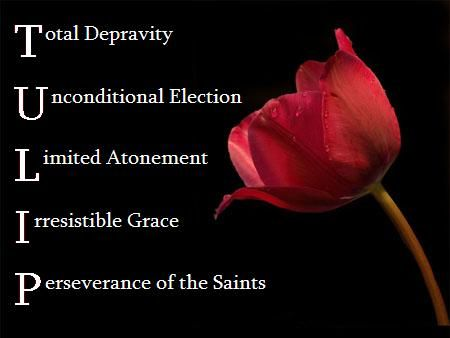
God is not for CALVINISM

God Is Not a Calvinist

The Bible presents a God of boundless love, genuine invitation, and impartial justice. Yet Calvinism (through its doctrines of unconditional election, limited atonement, and irresistible grace) paints a different portrait: a God who sovereignly chooses some for heaven and others for hell, apart from their response. This article examines nine biblical truths that directly contradict core Calvinist claims. God is not a Calvinist because…

1. He Teaches Man Is Free to CHOOSE

God does not mock His creatures with illusory commands. Joshua’s charge assumes real moral ability to choose between serving God or idols. Calvinism’s unconditional election denies this freedom, claiming the unelect cannot choose God. But Scripture places responsibility squarely on human shoulders.

2. He Desires ALL to Be Saved

Paul roots evangelism in God’s universal salvific will. Calvinism redefines “all” as “all kinds of people” (i.e., the elect from every nation). But the Greek pantas anthrōpous means every human without exception. God’s desire conflicts with their decree that guarantees most will perish.

3. He LOVES the Whole World

Calvinism limits Christ’s death to the elect. Yet “world” (kosmos) here is all-encompassing (every sinner, not a pre-selected subset). Salvation hinges on whoever believes, not whoever was chosen before time.

4. Jesus Is the Propitiation for the Whole World

John destroys limited atonement in one sentence. Christ’s blood satisfies God’s wrath for every sin of every person. The offer of forgiveness is universal and sufficient—though not universally applied (due to unbelief, not divine decree; see Romans 1:20-32).

5. Jesus Was Willing, but ISRAEL Was Not

Jesus’ lament exposes the myth of irresistible grace. Divine will (“I would”) clashes with human refusal (“you were not willing”). Grace woos, but does not compel. The same crowd that rejected Christ could have repented; if they had been willing.

6. He Is NOT Willing That Any Should Perish

Peter ties God’s patience to a universal hope for repentance. Calvinism inserts “any of the elect” and “all of the elect,” but the text says any and all—period. God delays judgment to give every sinner opportunity (2Peter 3:15).

7. He Warns Believers of the Possibility of Falling

Calvinism’s perseverance of the saints teaches true believers cannot fall away. Yet Paul warns the Corinthian church—regenerate Christians—of real spiritual danger. Apostasy is possible; perseverance is commanded, not guaranteed. The Bible is full of warnings against apostasy.

8. He Says Baptism Saves

Calvinism often treats baptism as a mere symbol with no saving efficacy. Peter disagrees: baptism saves—not magically, but as the God-ordained moment of calling on the name of the Lord (cf. Acts 2:38; 22:16; Romans 10:13; Mark 16:16). It is the normative entry into Christ’s death and resurrection (Rom 6:3–4; Colossians 2:11-12).

9. He Teaches Babies Are Safe—We Do Not Inherit Adam’s Guilt

Calvinism’s total depravity includes inherited guilt—infants are “vipers in diapers,” born condemned. But:

  • David said of his dead infant, “I shall go to him, but he will not return to me” (2 Sam 12:23)—implying the child was saved.
  • Jesus held up children as models of the kingdom, not objects of wrath.
  • Ezekiel rejects transgenerational punishment.

Sin’s consequence is death (Rom 5:12), but guilt is personal. Babies are safe until the age of accountability.

Conclusion: A God Worth Proclaiming

The God of Scripture loves every sinner, died for every sin, and pleads with every heart. He does not play favorites (Acts 10:34–35). He does not mock with insincere offers. He does not damn the innocent.

Calvinism’s God decrees reprobation before birth of certain individuals and spares selected individuals.


The Bible’s God says, “Choose this day… Turn to me and be saved, all the ends of the earth!” (Isa 45:22)

agape

spencer

Evidence for our Faith: Free Will

Let’s talk about this Calvinist idea of predestination. Basically, that God pulls every string, deciding who’s in and who’s out, with free will just a side note because God’s Sovereignty demands it. Sounds tidy, right? But the Bible keeps pushing back, shouting from the rooftops that we’ve got real choices to make. It’s not some robotic rerun; it’s a dynamic story where God hands us the reins and says, “Your move.”

God repeatedly tells individuals to make choices, implying free will. In Joshua 24:15, Joshua exhorts the Israelites, “Choose this day whom you will serve,” presenting a clear decision between serving God or idols. This command assumes the ability to choose freely, not a predetermined outcome. Similarly, Deuteronomy 30:19 declares, “I have set before you life and death, blessing and curse. Therefore choose life.” The imperative to “choose” underscores human responsibility to respond to God’s call, incompatible with a view where every decision is divinely dictated.

In the New Testament, Jesus’ invitations affirm free will. Matthew 11:28 says, “Come to me, all you who are weary and heavy laden, and I will give you rest.” This open invite requires a voluntary response, suggesting individuals can accept or reject it. Likewise, John 7:17 states, “If any man will do his will, he shall know of the doctrine, whether it be of God, or whether I speak of myself.” Jesus emphasizes choice as central to faith, countering the idea that God irresistibly determines belief.

Calvinists often cite Romans 9:16-18, which highlights God’s sovereignty in showing mercy, to support predestination. However, Paul’s broader argument in Romans emphasizes human responsibility. Romans 10:9 declares, “If you declare with your mouth, ‘Jesus is Lord,’ and believe in your heart… you will be saved.” (Paul will continue on in the text pointing to baptism & faith). The conditional “if” implies that salvation hinges on personal choice, not divine coercion. Furthermore, 2 Peter 3:9 reveals God’s desire that “not willing that any should perish, but that all should come to repentance,” suggesting universal opportunity for salvation through free response, not selective predetermination.

Ephesians 1:4-5, another Calvinist cornerstone, states God chose believers “before the foundation of the world.” Yet, this should be understood corporately; God predestining the church as a body for salvation, while individuals freely choose to obey the Gospel and are added to the church through faith (Ephesians 2:8-9; Acts 2:38,41,47). This harmonizes with passages like Revelation 3:20, where Jesus says, “I stand at the door and knock. If anyone hears my voice and opens the door, I will come in.” The imagery of opening the door underscores human agency in responding to divine initiative.

Moreover, Calvinism’s strict determinism raises concerns about God’s character. If God ordains all actions, including sin, it conflicts with James 1:13, which states, “God cannot be tempted by evil, nor does he tempt anyone.” Free will allows humans to bear responsibility for sin, preserving God’s holiness and justice. Neither the devil nor God made us do it. Scripture consistently portrays God as inviting, not compelling, human response. Scripture paints God as the ultimate pursuer, not puppet-master. Free will aligns with a God who desires genuine relationship over robotic obedience.

agape

spencer

Unshakable Sovereignty: How God’s Will and Human Will Coexist

The basic error in the Calvinist understanding of God’s sovereignty lies in their assumption that God’s sovereignty means He must exercise absolute, irresistible control over every aspect of human will.

Calvinism argues that because God is sovereign, no created being could truly have the option to reject Him, as this would supposedly compromise His power. As a result, Calvinism teaches that God must first miraculously regenerate a person’s heart to make them capable of seeking Him, thus removing the genuine exercise of free will in the process of coming to faith.

However, this view misunderstands the nature of sovereignty. True sovereignty means God possesses ultimate authority and power, including the authority to grant His creation the freedom to choose, even if that choice involves rejection. By equating sovereignty with strict determinism, Calvinism limits God, suggesting He cannot be truly sovereign unless He exercises control in a particular way. But as seen in Scripture, God’s sovereignty encompasses the ability to bring about His purposes despite human choices, even when those choices oppose Him. This view implies God’s sovereignty cannot accommodate human freedom without being diminished. Biblically, God’s sovereignty is displayed in His supreme ability to accomplish His purposes through or in spite of human decisions.

The sovereignty of God is neither dependent on human response nor diminished by human rejection. To assert that God’s sovereignty is undermined if someone rejects Him is to misunderstand what sovereignty means. Sovereignty refers to supreme authority and power over all things, independent of external influence or acceptance. Here are key points to help understand this:

God’s Sovereignty as Absolute: Scripture portrays God’s sovereignty as all-encompassing and unchanging. In passages like Isaiah 46:9-10, God declares, “I am God, and there is none like me… My counsel shall stand, and I will do all my pleasure.” God’s authority and purpose are not contingent on human acceptance but are established solely by His will.

God Permits Free Will without Diminishing His Sovereignty: Sovereignty includes the authority to grant free will to humanity. In His omnipotence, God has chosen to allow individuals the freedom to accept or reject Him, but this choice does not lessen His power. In Acts 17:30-31, Paul speaks of God’s patient desire for repentance, showing that God’s authority remains, even as He allows humanity space for choice. “And the times of this ignorance God winked at; but now commandeth all men every where to repent: Because he hath appointed a day, in the which he will judge the world in righteousness by that man whom he hath ordained; whereof he hath given assurance unto all men, in that he hath raised him from the dead.”

Judgment Demonstrates Sovereign Authority: When humans reject God, it doesn’t affect His sovereignty but rather reveals it. God’s authority is demonstrated through judgment as well as mercy. 2 Thessalonians 1:8-9 describes that those who “know not God” or “obey not the gospel” will face His judgment. This action affirms His authority over all creation, holding all accountable whether or not they choose to honor Him.

Christ’s Rejection Does Not Diminish God’s Power: Jesus Himself faced widespread rejection, yet God’s plan of salvation was fulfilled, displaying His sovereignty. John 1:11 says, “He came unto his own, and his own received him not,” yet the mission was accomplished by God’s power, demonstrating that rejection by some does not disrupt God’s overarching purpose.

Free Will Does Not Thwart God’s Sovereignty: God’s sovereignty is not threatened by human opposition or rejection, as He is fully capable of bringing His plans to fruition regardless of human response. In Luke 3:8, John the Baptist tells the crowds, “Bring forth therefore fruits worthy of repentance, and begin not to say within yourselves, We have Abraham to our father: for I say unto you, That God is able of these stones to raise up children unto Abraham.” This statement underscores that God’s purposes are not dependent on human lineage, acceptance, or compliance; if one avenue is closed, He has countless ways to fulfill His plan. God’s authority and ability remain supreme, unaffected by human resistance.

Therefore, God’s sovereignty is upheld through His supreme authority, His allowance of free will, and His ultimate judgment. Human rejection of God does not weaken His sovereignty but instead highlights the greatness of His rule over a world in which He allows choice, yet remains in complete control.

“For the grace of God that bringeth salvation hath appeared to all men, Teaching us that, denying ungodliness and worldly lusts, we should live soberly, righteously, and godly, in this present world; Looking for that blessed hope, and the glorious appearing of the great God and our Saviour Jesus Christ;”

Agape,
Spencer

Hearing the VOICE of Jesus pt1

Hearing the VOICE of Jesus?

My sheep hear my voice, and I know them, and they follow me” (John 10:27)

The Hebrew writer wrote, “God, who at sundry times and in divers manners spake in time past unto the fathers by the prophets, Hath in these last days spoken unto us by his Son, whom he hath appointed heir of all things, by whom also he made the worlds” (Heb 1:1-2).

We now live under the New Testament of Jesus Christ. The Old Covenant was nailed to the cross and is obsolete (Col 2:14; Heb 8:13).

Any who desire to go back to do one part of the Old Law of Moses is obligated to do the whole; “For I testify again to every man that is circumcised, that he is a debtor to do the whole law. Christ is become of no effect unto you, whosoever of you are justified by the law; ye are fallen from grace” (Gal 5:3-4).

But that is not good, for that Law was a shadow of the good things we have in Christ now (Heb 10:1; Col 2:17).

God Himself said, “This is my beloved Son: hear him” (Mark 9:7). Seeing that all this is true, believers are to hear Jesus. What does it mean to hear the VOICE of Jesus? Some claim He will speak directly, personally, and miraculously to us. What is the truth?

Hearing the VOICE of Jesus.

Contrary to mainstream belief, the sheep that follow Jesus do so of their own volition. God is seeking those that seek Him. “But seek ye first the kingdom of God, and his righteousness; and all these things shall be added unto you” (Matt 6:33). God’s desire that all to come to repentance and be saved (2Pet 3:9) is evidence that we have free choice. We voluntarily seek Him, listen to His voice, and it’s His voice (words) that will judge us in the last day. “He that rejecteth me, and receiveth not my words, hath one that judgeth him: the word that I have spoken, the same shall judge him in the last day” (John 12:48).

Therefore, all are invited to follow the Good Shepherd of our own free will.

Those that choose to follow Jesus also Obey His VOICE. “If ye love me, keep my commandments” (John 14:15; 15:14). “And why call ye me, Lord, Lord, and do not the things which I say” (Luke 6:46)? “Not every one that saith unto me, Lord, Lord, shall enter into the kingdom of heaven; but he that doeth the will of my Father which is in heaven. Many will say to me in that day, Lord, Lord, have we not prophesied in thy name? and in thy name have cast out devils? and in thy name done many wonderful works? And then will I profess unto them, I never knew you: depart from me, ye that work iniquity” (Matt 7:21-23).

It makes zero sense to call oneself a “follower” of Christ, and not actually follow Him in obedience to His word. People keep using that word “follower” without doing anything He says. I constantly hear folks living in sin claiming also to be a follower of Jesus. Paul warned; “Know ye not that the unrighteous shall not inherit the kingdom of God? Be not deceived: neither fornicators, nor idolaters, nor adulterers, nor effeminate, nor abusers of themselves with mankind, Nor thieves, nor covetous, nor drunkards, nor revilers, nor extortioners, shall inherit the kingdom of God. And such were some of you: but ye are washed, but ye are sanctified, but ye are justified in the name of the Lord Jesus, and by the Spirit of our God” (1Cor 6:9-11). If these cannot inherit the kingdom of God, how can we say at the same time that we are followers of Christ while continuing in them?

Therefore, all true followers of Jesus are obedient to His voice.

This next point is vital to understand. Some also claim that Jesus will speak to us personally, miraculously, and separately from the Inspired word. Jesus never made this claim.

In His prayer in the garden, while praying for His Apostles, He then prayed for folks that would believe in Him after His death. He said, “Neither pray I for these alone, but for them also which shall believe on me THROUGH THEIR WORD; That they all may be one; as thou, Father, art in me, and I in thee, that they also may be one in us: that the world may believe that thou hast sent me” (John 17:20-21). We who come to Jesus after His death will believe based on the words of the Apostles. The Apostles were given the promise of divine Holy Spirit Inspiration (John 16:13; cf, 14:26; 15:26), not us.

We hear the voice of the Chief Shepherd in as much as we read His inspired word delivered through the Inspired writers. Paul wrote through inspiration; “If any man think himself to be a prophet, or spiritual, let him acknowledge that the things that I write unto you are the commandments of the Lord” (1Cor 14:37). He also wrote; “How that by revelation he made known unto me the mystery; (as I wrote afore in few words, Whereby, when ye read, ye may understand my knowledge in the mystery of Christ)” (Eph 3:3-4; cf 2Tim 3:15-17).

The Apostle John wrote, “And many other signs truly did Jesus in the presence of his disciples, which are not written in this book: But these are written, that ye might believe that Jesus is the Christ, the Son of God; and that believing ye might have life through his name” (John 20:30-31). He also wrote, “These things have I written unto you that believe on the name of the Son of God; that ye may know that ye have eternal life, and that ye may believe on the name of the Son of God” (1John 5:13; emph mine seb).

Therefore, all true followers of Jesus hear His VOICE through the reading, studying, and memorizing His written inspired word.

Next week we’ll look at a few more points regarding the VOICE of Jesus. To recap; we Voluntarily hear His voice. We who hear it will Obey His voice. Those that hear, and obey are Informed of His will through the reading, study, and memorizing of His Inspired word.

–Spencer

the FREE WILL of man will not be infringed

the MANIFOLD wisdom of God pt 5

the FREE WILL of man will not be infringed.

Some would have you believe that grace is Irresistible, and that grace is Limited to only those that the Holy Spirit saves.

Another way of saying this is; God has predetermined (predestined) those individuals who will be saved and those who will be lost.

Yet another way of saying the same thing; A person chosen to be saved by God cannot reject Him, and a person chosen to be lost by God cannot so act as to be saved.

Any rational thinking person can see that this is error to extreme proportions.

While it is true that God Calls [Acts 2:39], it is also true that the calling is done by the gospel. “Whereunto he called you by our gospel, to the obtaining of the glory of our Lord Jesus Christ.” [2Thess 2:14].

Does God’s call go against a person’s FREE WILL? We shall show that God will never infringe upon a person’s FREE WILL to follow or reject Him.

We have been given the

Freedom to choose. Throughout scripture are examples of God presenting man with a choice, to follow or not. “Choose for yourselves this day whom you will serve,” [Josh 24:15]. “therefore choose life, that both thou and thy seed may live:” [Deut 30:15-19]

It is possible to

Resisting the Holy Spirit is possible. Scripture teaches that it’s possible for a person to “resist the Holy Spirit.” Error says the His grace is irresistible.

“You always resist the Holy Spirit;” [Acts 7:51-55]

There has always been an

Expectation of God that all men repent. God does not will that any perish but all be saved. If it’s not possible to choose to walk away from God, then universalism (all saved) must be true.

Tit 2:11; 1 Tim 2:4; 2Pet 3:9

this idea of Irresistible Grace renders

EVANGELISM unnecessary. He that is drawn automatically by the Holy Spirit working directly on their mind against their will shall be saved. Why waste our time evangelizing if all is predestined. How can we know who to preach to? “Whereunto he called you by our gospel, to the obtaining of the glory of our Lord Jesus Christ.” [2Thess 2:14; cf. Mat 28:18-20]

Irresistible Grace makes God a respecter of persons.

We’ve covered this in the last lesson, God is NOT a respecter of persons. [Acts 10:34; Rom 2:11-12; 1Pe 1:17] If He chooses SOME to be saved and the REST to be lost, then God is unjust.

“Why do you call me Lord & don’t do what I say?”  [Luke 6:46] This saying from Jesus will be spoken to some on the judgment day. If we are saved or lost against our will, this question makes zero sense.

Lose free will and God is responsible for my actions.

The devil made me do it? Nay, Nay; God made me do it!!!

“Let no man say when he is tempted, I am tempted of God: for God cannot be tempted with evil, neither tempteth he any man: But every man is tempted, when he is drawn away of his own lust, and enticed. Then when lust hath conceived, it bringeth forth sin: and sin, when it is finished, bringeth forth death.” [James 1:13-15]. “We must all appear before the judgment that each may be repaid for his deeds in the body, according to what he has done, whether good or bad.” [2 Cor 5:10]

We have free will and we are to

Learn of Jesus. Jesus said, “Take my yoke upon you, and learn of me;” [Mat 11:29; cf. John 6:45]. We are drawn to God by HEARING (understanding through learning) the word of God. [Rom 10:17; John 20:30-31], we are called through gospel [1Thess 2:14] which some will accept, while others will reject!

Jesus & the Holy Spirit had opportunity to teach the Gospel to Paul personally, yet he had to hear the good news through the agency of the word through a person. [cf. Acts 8, 9, 10 et al.]

Scriptural Predestination is that God has predetermined HOW mankind will be saved. The method is predetermined, and all those that obey the Gospel shall be saved. [2Thess 1:8-9]