Evidence for our Faith: I Ain’t ‘fraid of no Ghosts

Comfort in Christ: I aint ‘fraid of no Ghosts. The Ghost of Jacob Marley vs. the Truth of Luke 16:19-31

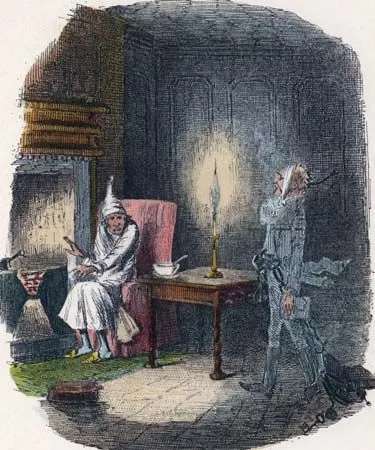
Charles Dickens’ “A Christmas Carol” paints a vivid picture of Jacob Marley’s ghost returning from the dead to warn Ebenezer Scrooge of his selfish ways, hoping to spare him a grim afterlife. Marley’s clanking chains and desperate plea grip our imaginations, but how does this fictional tale stack up against the truth of God’s Word in Luke 16:19-31, the story of Lazarus and the rich man? The Bible offers a different, more comforting reality for believers: Neither the faithful nor the lost return as ghosts.

In “A Christmas Carol”, Marley’s ghost is a restless spirit, burdened by chains forged from his greed and indifference in life. He returns to haunt Scrooge, warning him to change his ways to avoid eternal torment. The story suggests the dead can cross back to the living (or never cross over to the realm of the dead), intervening to deliver messages of repentance or hope. This makes for a compelling plot, stirring Scrooge to transform, but it leans on a cultural idea of ghosts lingering to settle unfinished business. Marley’s return implies the afterlife allows such spectral visits, with the dead actively influencing the living. This concept has enriched Hollywood with movies like “Ghost” and “The sixth sense.”

Contrast this with Luke 16:19-31, where Jesus tells of Lazarus, a poor man, and a rich man who die. Lazarus rests in peace at Abraham’s side, while the rich man suffers in torment. The rich man begs Abraham to send Lazarus back to warn his brothers, hoping to save them from his fate. Abraham says, “They have Moses and the prophets; let them hear them” (Luke 16:29). When the rich man insists a return from the dead would convince them, Abraham replies, “If they hear not Moses and the prophets, neither will they be persuaded, though one rose from the dead” (Luke 16:31). Unlike Marley, Lazarus doesn’t haunt the earth (nor does the rich man); he’s at rest, and the rich man’s plea for a ghostly messenger is denied. God’s Word, not supernatural visits, is sufficient for guidance. Ironically, a man named Lazarus did come back from the dead, “But the chief priests consulted that they might put Lazarus also to death; Because that by reason of him many of the Jews went away, and believed on Jesus” (John 12:10-11). So also did ANOTHER come back from the dead and it’s HIS WORD that either warns or haunts us today. “He that rejecteth me, and receiveth not my words, hath one that judgeth him: the word that I have spoken, the same shall judge him in the last day” (John 12:48). The message today is the same; if we hear not Christ, neither will we be persuaded, though one rose from the dead.

Marley’s story fuels the idea that the dead roam to fix past wrongs, reflecting a human longing for second chances or closure. But this clashes with Scripture’s truth: the faithful, like Lazarus, are immediately in comfort, not wandering as spirits. Hebrews 9:27 states, “And as it is appointed unto men once to die, but after this the judgment,” with no provision for ghostly returns. For believers, this is a warm comfort; the faithful in Christ aren’t trapped or restless but safe with God.

Dickens’ tale captivates, but it’s fiction. Luke 16:19-31 grounds us in truth: God’s Word guides the living, and the faithful find eternal rest, not a ghostly mission.

agape

Sources:

  • Holy Bible KJV.
  • Dickens, Charles. “A Christmas Carol” (1843).

Final Thought: Marley’s ghost makes a great story, but God’s Word assures us there are no ghosts haunting the earth. I aint ‘fraid of no Ghosts.

I ain’t afraid of no Ghosts

IT’S THAT TIME of year again here in Borger Texas, Halloween. The time when many decorate their homes with ghosts, goblins and witches.  Even Netflix is promoting a plethora of scary zombie movies. The conversations about ghosts and goblins increase as well. I’ve spoken to several folks who actually believe in a potential zombie apocalypse. A zombie is a corpse said to be revived by witchcraft, in other words, the walking dead.

Regardless of the pop culture surrounding zombies, I ain’t afraid of no zombies either. I’m not afraid by faith. When we say “by faith”, what we mean is that we have revelation from God on any given subject. “So then faith comes by hearing, and hearing by the word of God” [Romans 10:17; Deut 29:29]. God has told us a few things about the evil spiritual realm.

[This article revisits a theme I wrote about in June, “Is demon possession possible].

What does the Bible say about the evil spirit world?

God revealed through the scriptures some things about spirit beings, or angels. Angels are beings with a higher nature than man [Psalm 8:5; Heb 2:7, 9], but some of them sinned against God [2Peter 2:4; Jude 1:6]. This fallen group seem to be identified as the devil’s angels [Matt 25:41; Rev 12:7,9]. They are identified by other terms as well; “demons” [Luke 11:15], “evil spirits” (Acts 19:12-13], “unclean spirits” [Matthew 10:1], or Satan’s angels [Matt. 25:41; Rev. 12:7, 9].

Though very little is said about the demonic & demon possession in the OT, in the NT it appears to have increased. Jesus, along with his disciples, frequently encountered the demonic and were able to cast them out of possessed peoples [Matt 1:21-27; Mark 9:14-29]. Jesus said, “I saw Satan fall like lightning from heaven” [Luke 10:18-20]. The context shows that He was speaking about the disciples’ power over evil spirits and the weakening of Satan’s power, including his influence.

This ability matches the prophecy from Zechariah; “I will also cause the prophets and the unclean spirit to depart from the land” [Zech 13:2]. Peter & Jude refer to evil spirits being in chains and bound [2Peter 2:1-4; Jude 1:6]. Revelation describes Satan being “bound” during the time in which Christ reigns over His kingdom—which is the church [Rev. 20:2]. This evidence points to the conclusion that demonic activity does not happen today, because the evil spirit realm has been “bound” awaiting the final judgement.

Then there’s the living dead…

Most of what we declare about ghosts is from the imaginations of the minds eye of fiction and not by faith (by revelation from God). Even in the Bible, we see the disciples “imagining” that they saw a ghost when they were actually seeing Jesus walk upon the water [Matt 14:26]. But it was their fear of the unknown that created the thought of a ghost, for they had never witnessed anyone ever walking upon the water. It’s important to note that the spirits of the dead are not the same as angels or demons. It is only after the resurrection of the righteous dead that they become “equal to the angels” [Luke 20:36]. Just because the disciples “supposed it was a ghost” is no evidence that ghosts exist [Mark 6:49].

Where do our spirits go when we die?

According to the word of God, all of the dead go to a place of the dead called in New Testament Greek, “Hades”, (translated either; hell, Hades, or grave) the place of departed souls [Luke 16:19-30; Acts 2:27]. All of the sinful angels are bound in a part of Hades called “Tartarus” [2Peter 2:4]. We conclude from these passages that the spirits of the dead & bound are not allowed to roam the Earth nor haunt us. In Jesus’ parable of the rich man and Lazarus, [Luke 16:19-30], the rich man begged that Lazarus be sent back to warn his brothers, but this request was denied.

There are only 2 instances in the New Testament where departed spirits, other than Jesus Himself, were allowed to return. The first was the return of Moses & Elijah in Matt 17:3. This was to show that the Law of Moses & the prophets are fulfilled in Christ Jesus, for God spoke and said, “This is my beloved Son, in whom I am well pleased; hear ye him.”  The second, when the graves of the saints were opened after the resurrection of Jesus in Matt 27:52-54. In both instances they were for a very specific purpose, to testify to the validity of Jesus’ claims, and have since ceased. We can have confidence in the scriptures that we need not be afraid nor be deceived about any evil spirit, zombie or ghost [Eph 5:6, Col 2:4,8,18; 3:6; 2Th 2:3], sound theology has a way of doing that!